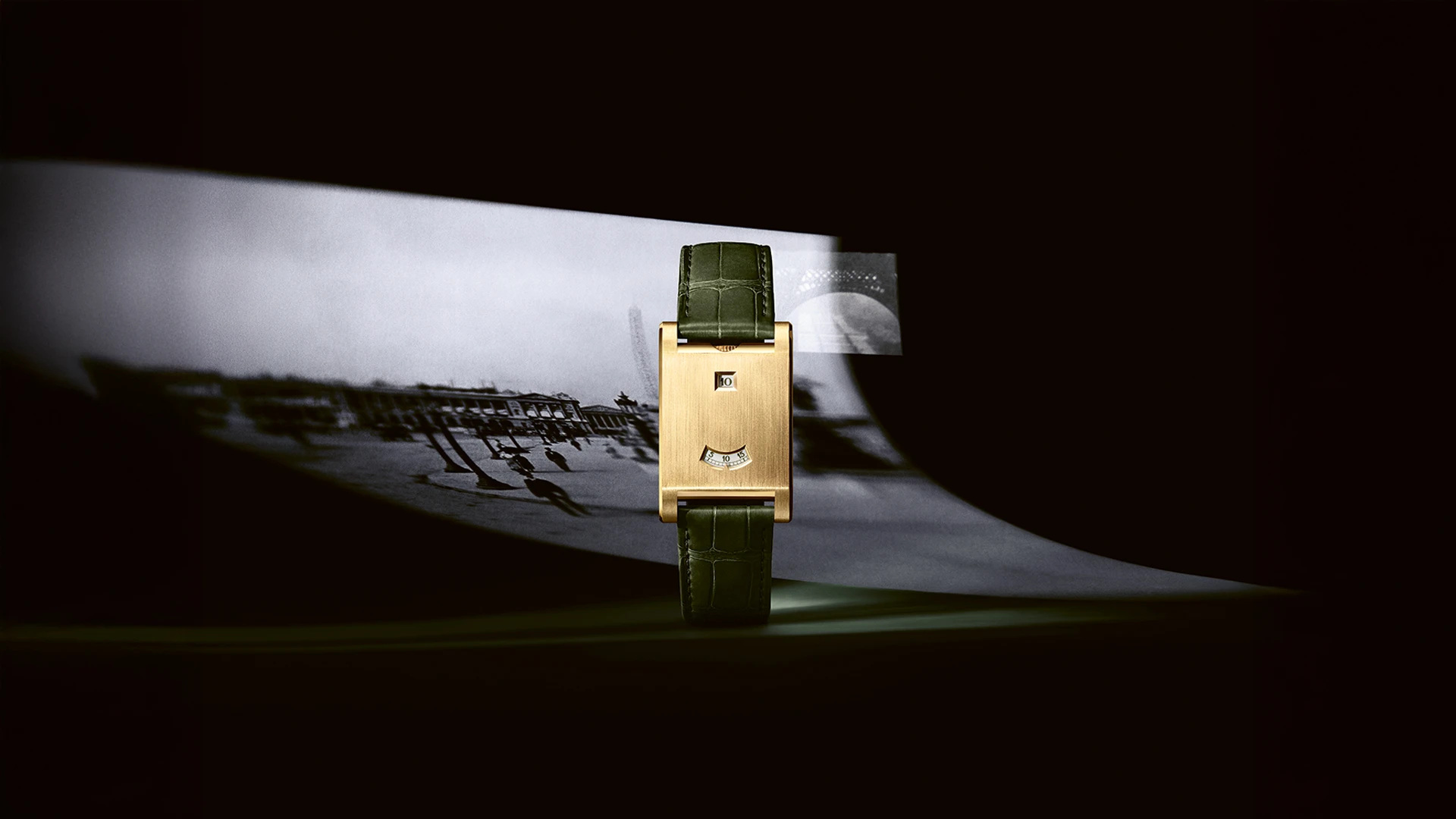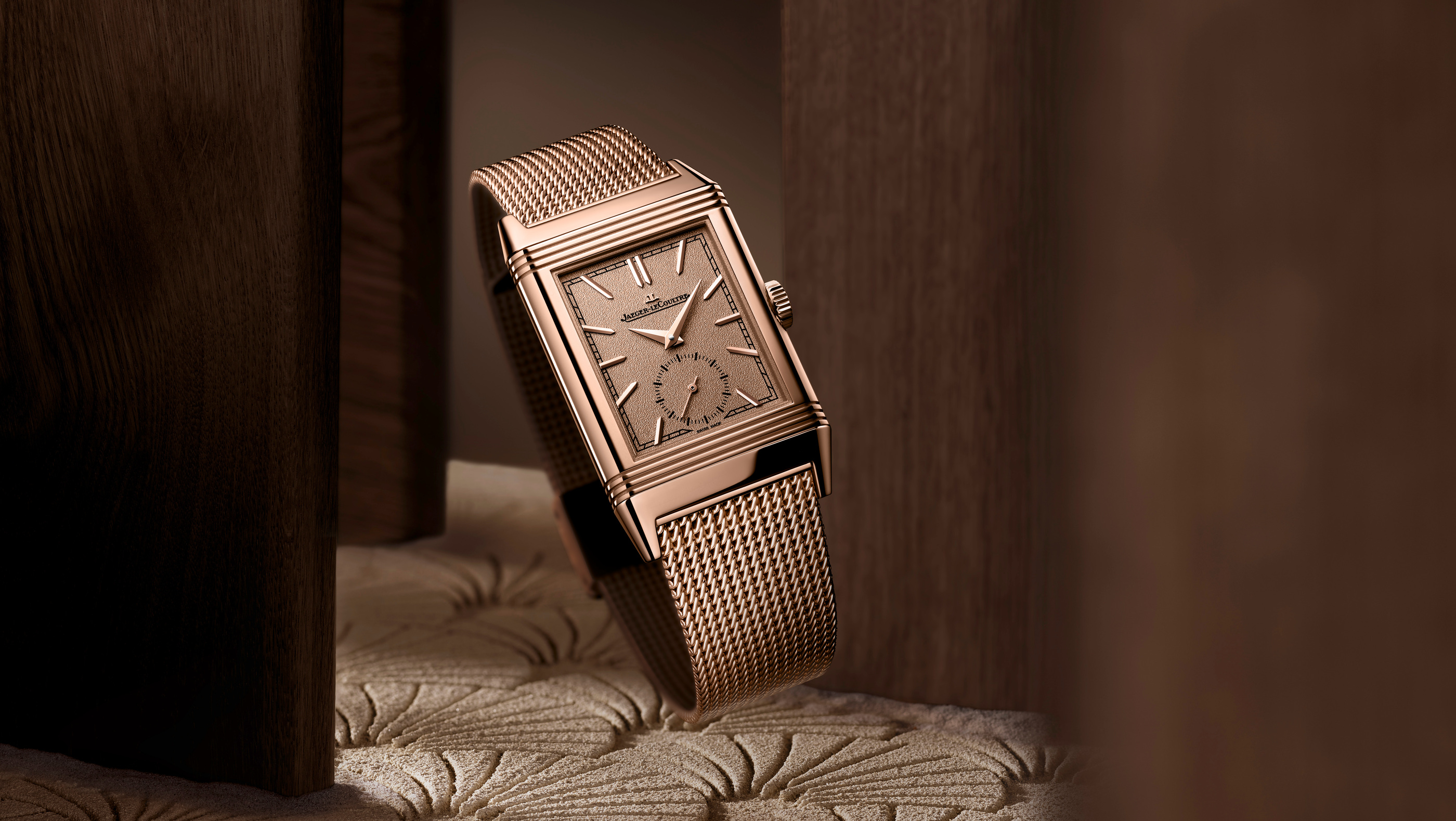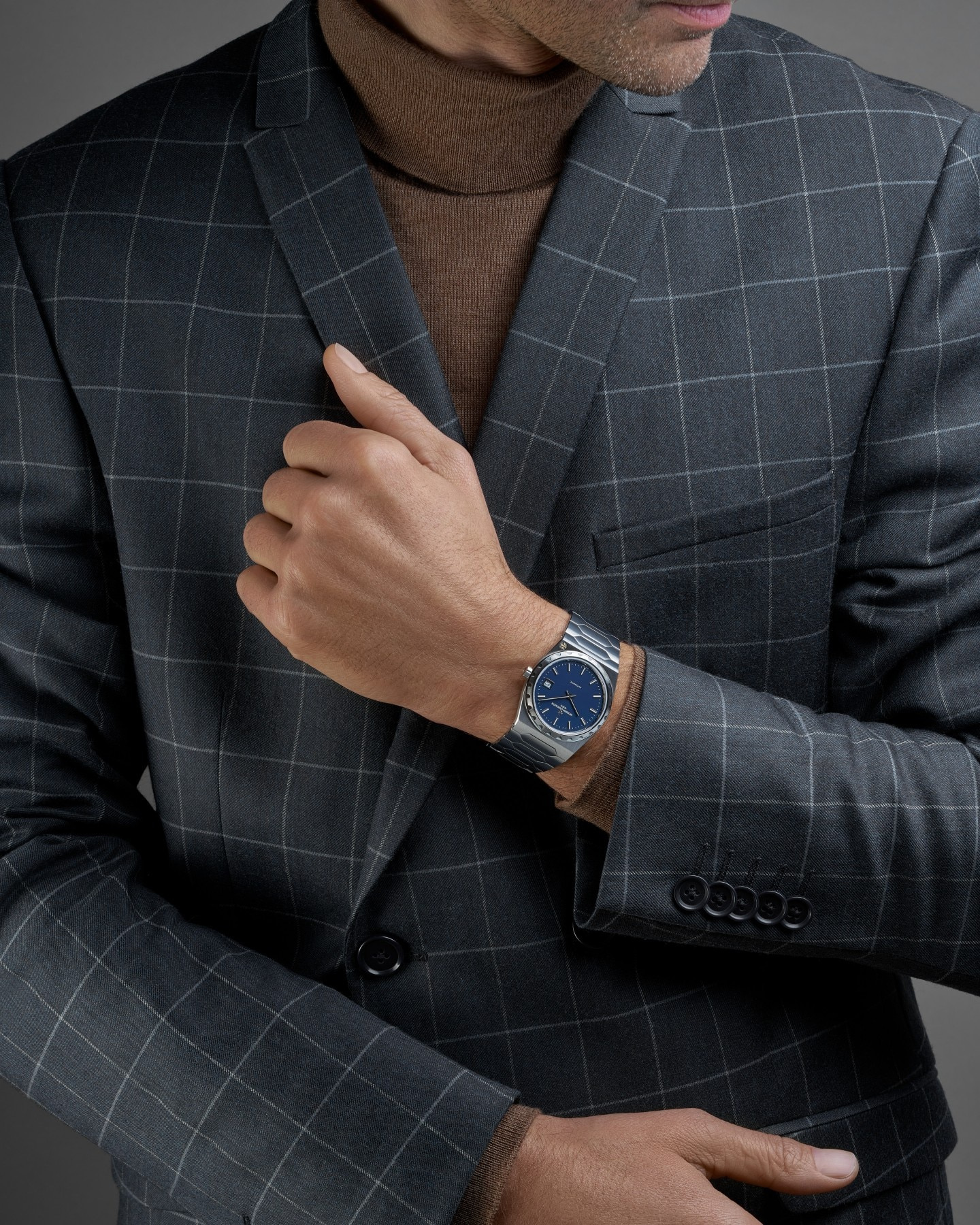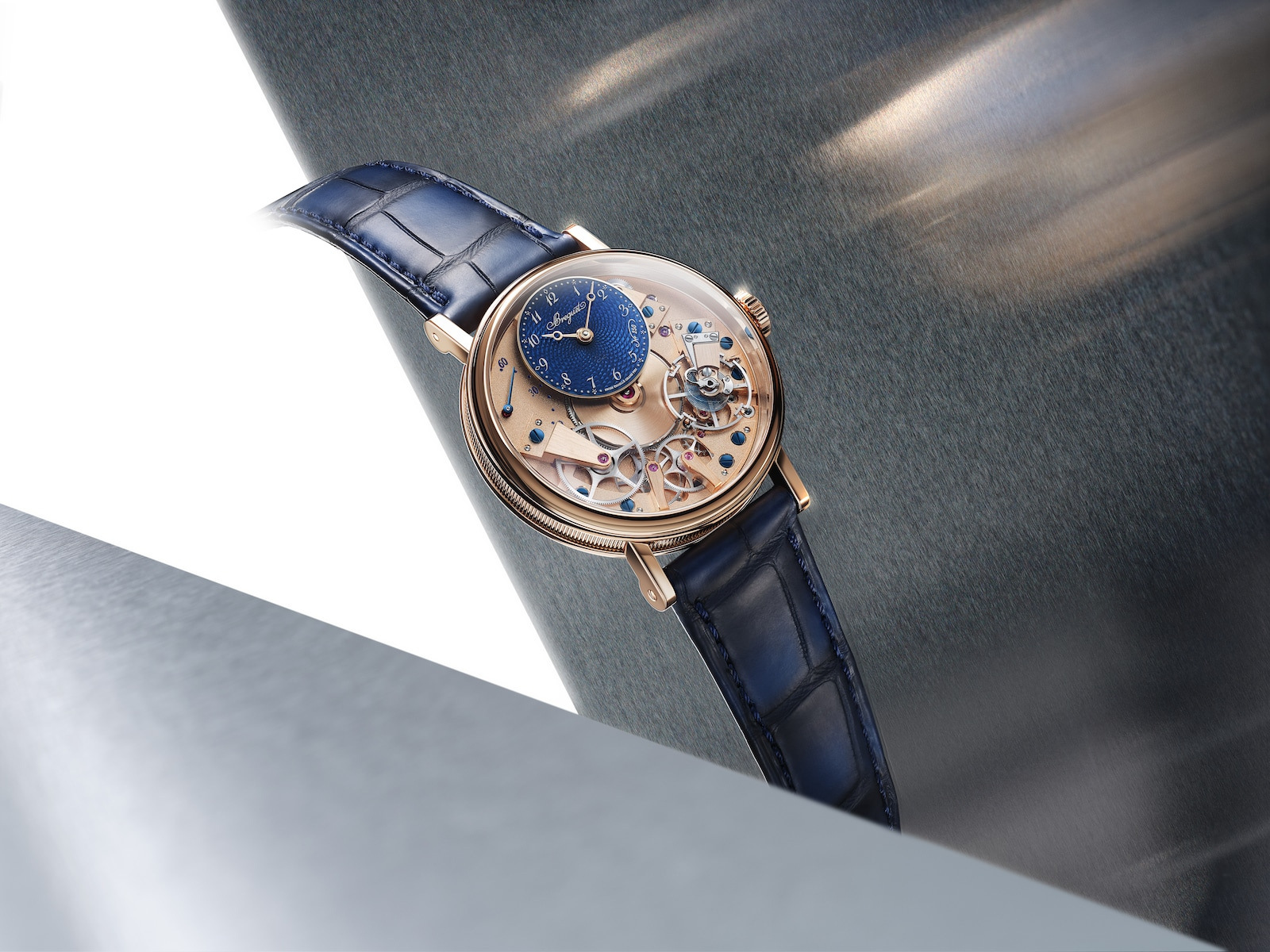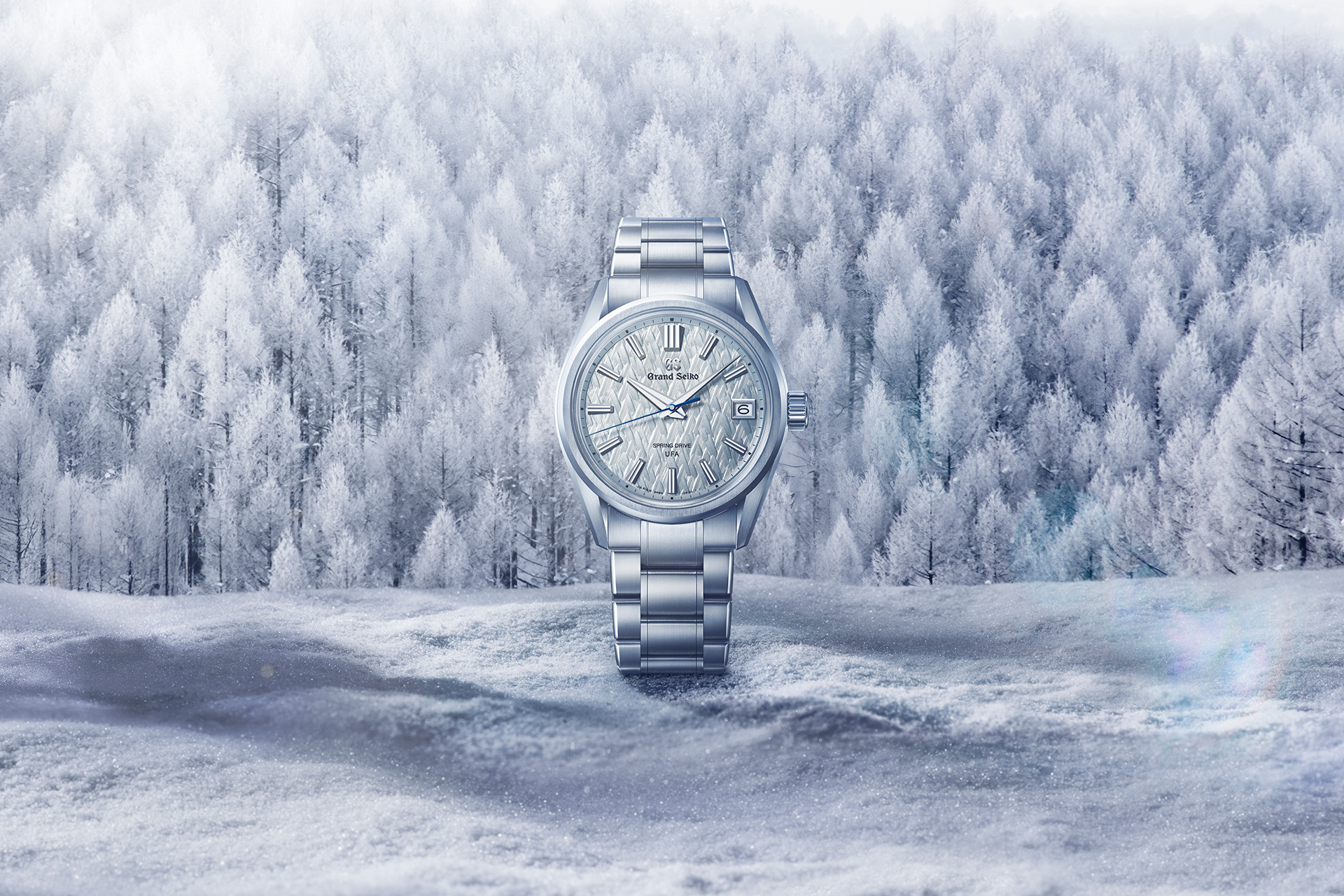
Read a watch’s dimensions as a group. Diameter describes the width of the case, but length, thickness, dial opening and the way a strap or bracelet leaves the head can all change its presence on the wrist. A useful comparison therefore moves between the specification, a complete side view and the actual object being tried on.
Diameter is a beginning
A case diameter is useful because it gives a repeatable starting point. It helps identify a reference and distinguish versions within a family. The difficulty begins when the number is asked to describe everything about scale, fit and visual character.
Two watches with similar diameters can give the eye different amounts of dial, bezel and surrounding material. Their lugs may extend by different distances, and the first links of an integrated bracelet may continue the head’s shape before the bracelet begins to curve.
The better question is therefore what the stated diameter actually measures on the named reference. Begin with that record, then establish the other dimensions and the complete configuration. A familiar model name can cover several sizes, materials or fastening arrangements, so the exact identifier remains important even in a comparison focused mainly on appearance.
Length explains what happens beyond the circle
NOMOS publishes a particularly useful group of dimensions for Tangente 2date reference 135: 37.5 mm diameter, 6.8 mm height and 47.7 mm lug-to-lug. The last figure makes explicit how far the watch extends beyond the circular part most apparent in a frontal photograph.
That distinction matters with long, clearly defined lugs. The dial may appear compact, while the complete head occupies a greater distance along the wrist. The same principle applies to other shapes, even when a manufacturer’s specification does not provide a separate length field.
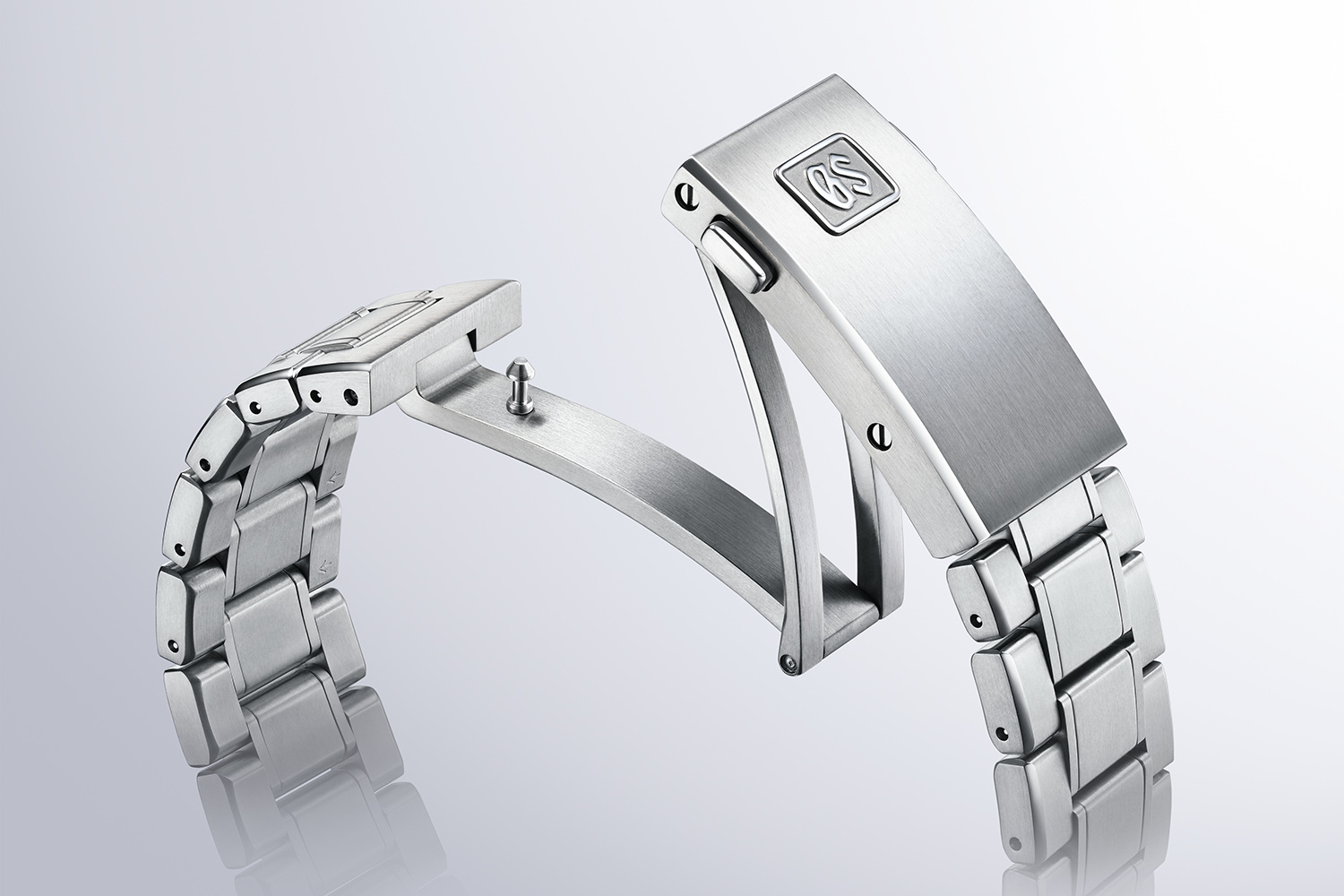
If the length is absent, request clarification for the exact reference rather than borrowing a measurement from a similar watch. A bracelet version, another case generation or a different material can introduce a meaningful change. Keep a confirmed measurement separate from an estimate made from an image.
Thickness has a shape
Thickness is another useful figure that becomes more informative beside a profile view. A single maximum measurement does not explain how much belongs to the case, the crystal or the back, nor how those elements meet the wrist.
Piaget’s current Polo 79 reference G0A49150 lists a thickness of 7.45 mm and a diameter of 38 mm. Its integrated bracelet then asks a separate question about the complete object’s curve. The case dimensions are precise, but the design continues beyond the case.
When trying a watch, look at it from the side in the position in which it will actually be worn. Observe where the back sits, how the ends leave the head and whether the clasp occupies a comfortable position. The measurements help organise that inspection; the actual fit supplies information the table cannot contain.
The dial opening changes visual scale
A large visible dial can make a watch read differently from another case of similar external diameter with a broader surrounding bezel. Numerals, hands and the amount of open surface also affect the impression of scale.
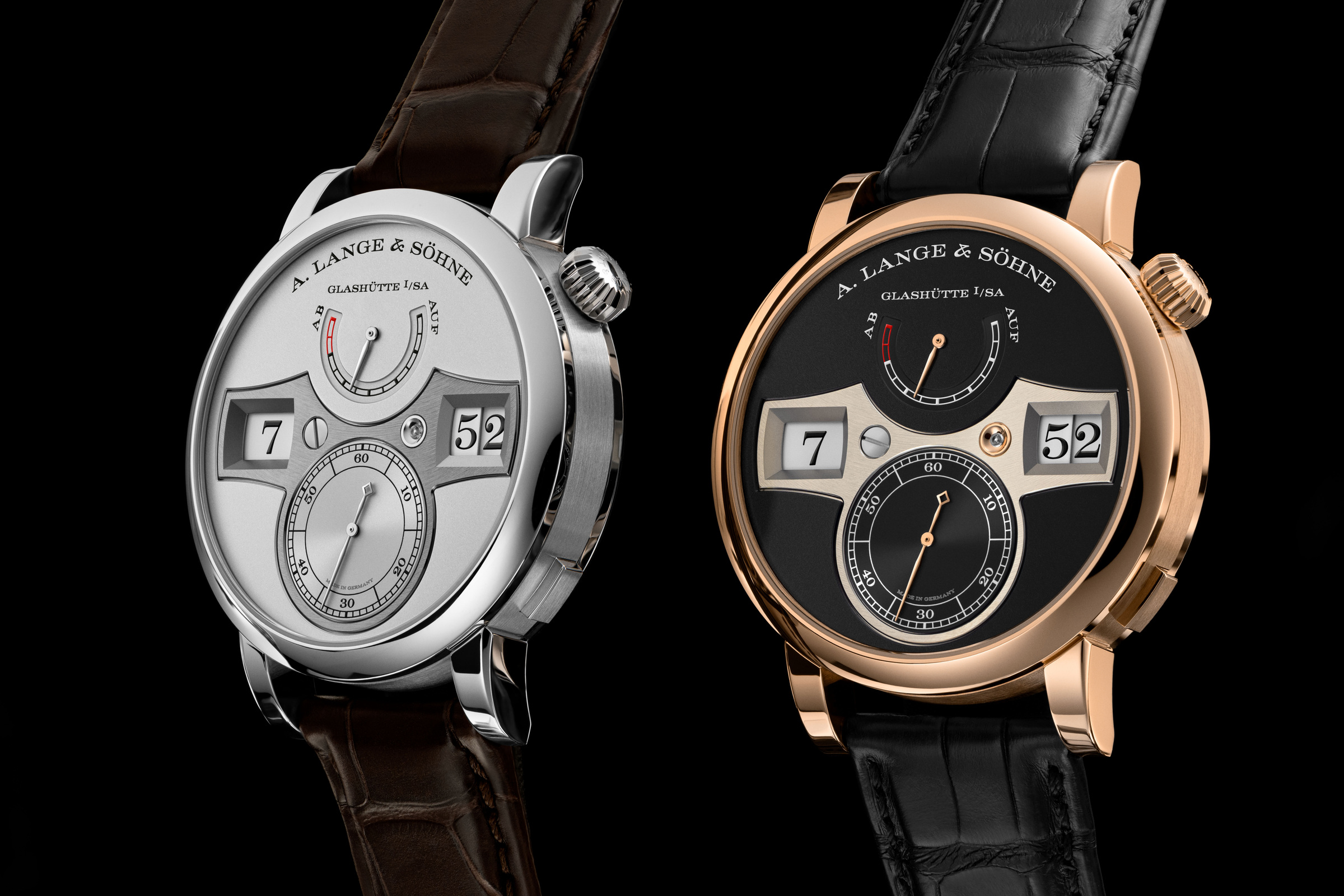
This is a visual relationship rather than a universal rule about which watch will fit. A spare face may give the eye more uninterrupted space, while a chronograph divides the same area into several smaller centres. Colour and contrast can change how those centres are perceived at ordinary viewing distance.
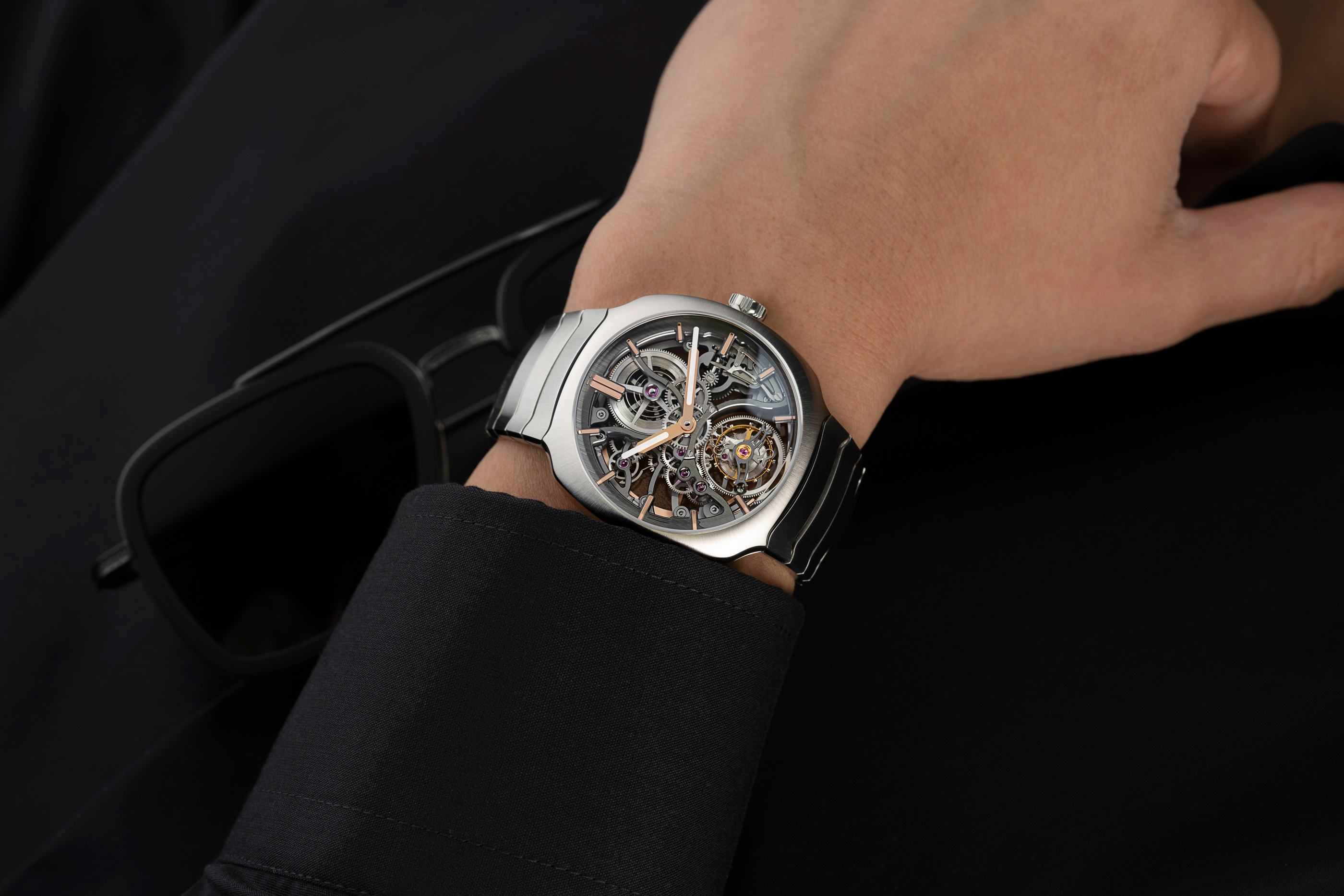
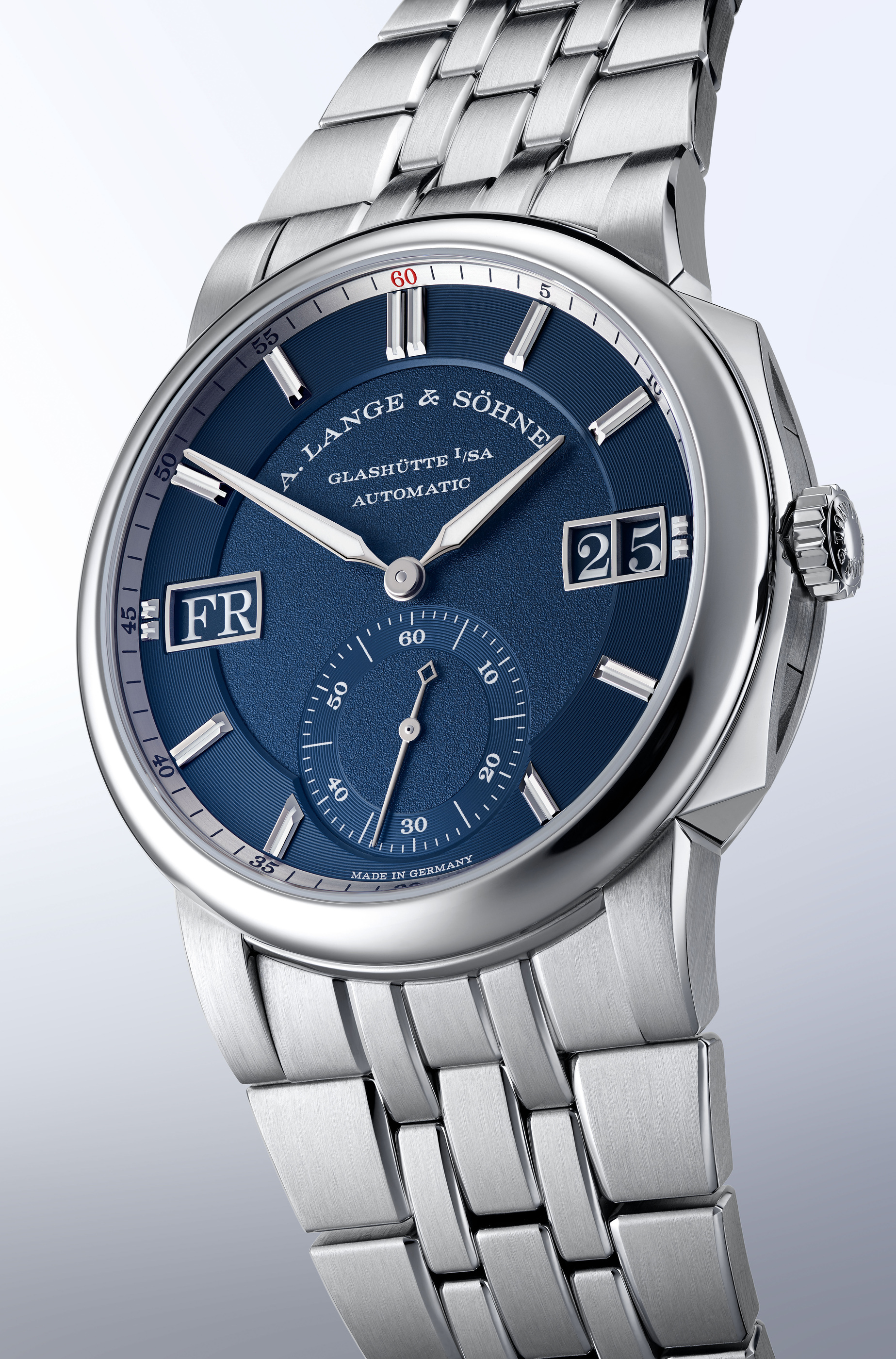
Use a complete frontal image to understand the arrangement, then look at the watch without enlarging it. A macro photograph is useful for finishing and print detail, but it deliberately changes the scale at which the object is being encountered. It should complement the ordinary view rather than replace it.
A bracelet can extend the case
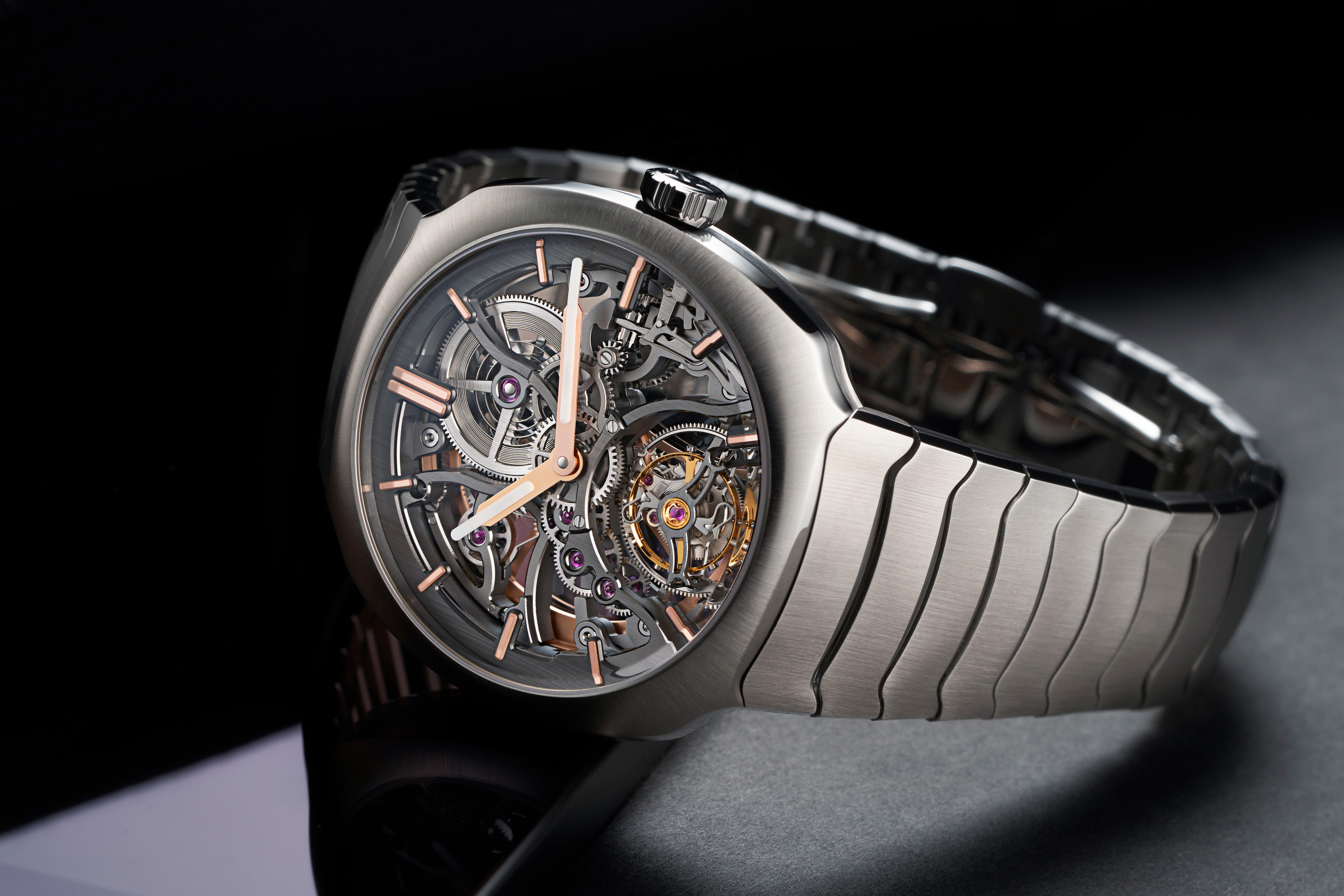
An integrated bracelet makes the first connection particularly important. The visible line of the head may continue into the first links before the assembly begins to wrap around the wrist. A conventional strap can create a more immediate visual break at the lugs.
Neither arrangement is inherently preferable. The relevant questions concern the actual shape, articulation and fastening of the reference being considered. A bracelet’s adjustment options and clasp position are part of its design, just as a leather strap’s length and buckle arrangement are part of its own wearing configuration.
Compare like with like when using photographs. The same watch on a bracelet and a strap can appear to have a different overall footprint, even when the case itself is unchanged. Label the configuration first, then decide what the difference means for the intended use.
Family choices are not reference details
Longines currently offers the Ultra-Chron Classic in 37 mm and 40 mm sizes. That provides a useful example of a family-level choice. The two versions share a visual language, while each still needs to be identified through its own reference and specification.
A photograph of the smaller watch should not be used to establish the larger model’s fit. Nor should a dimension found on one product record be assumed to apply to every colour or bracelet combination carrying the family name. The task is modest but important: connect each number with the actual object it describes.
For an online shortlist, keep a small record with reference, configuration and the measurements explicitly published. Mark missing information as missing. That makes the subsequent viewing more efficient and reduces the temptation to turn a photograph into a precise measurement it cannot provide.
A comparison that preserves the distinctions
The following table separates published measurements from observations and questions. It does not rank the watches or infer fit from a wrist circumference alone. Its purpose is to make the next stage of inspection more deliberate.
| Field | What it establishes | What still needs inspection |
|---|---|---|
| Diameter | One stated width of the case | The visible dial and surrounding bezel |
| Lug-to-lug | The named reference’s length, when supplied | The angle and behaviour of the ends |
| Thickness | A maximum profile dimension | How case, crystal and back distribute that height |
| Strap or bracelet | The specified wearing configuration | Articulation, length and fastening position |
| Dial arrangement | The location and scale of indications | Readability at ordinary distance and light |
| Reference | The exact object discussed | Whether the viewed example matches that record |
After the table, return to the wrist. Look from above and from the side, with the fastening adjusted appropriately. If the watch will often be worn with a particular kind of clothing, consider that context during the fitting. The most useful result is a specific observation about the individual combination, rather than a general declaration about an ideal diameter.
The Luxe Digital view
Proportion is a relationship between dimensions, surfaces and the person wearing the watch. The specification supplies part of that relationship, while the complete object supplies the rest. Neither a single number nor a flattering wrist photograph is sufficient on its own.
The practical method is straightforward: identify the exact reference, gather the published dimensions and inspect the complete wearing configuration. Use the profile and the dial as separate sources of information, then connect them through a properly adjusted fitting.
That approach leaves room for personal preference without making it vague. A watch can be selected for the particular way its face, length and bracelet work together on an individual wrist. Diameter remains useful, but it becomes one well-understood part of a much more complete decision.
Proportion is a relationship between dimensions, surfaces and the person wearing the watch.
Sources & credits
Sources and methodology
Independent design and reference analysis of the named official records and imagery, checked on 15 October 2026. Launch specifications and later product records retain their own dates and references. Images show the identified configurations. No independent handling or timing test is implied.
- LuxeDigital — named reference and design record.
- LuxeDigital — named reference and design record.
- LuxeDigital — named reference and design record.
Illustrations also accompany these published LuxeDigital studies: