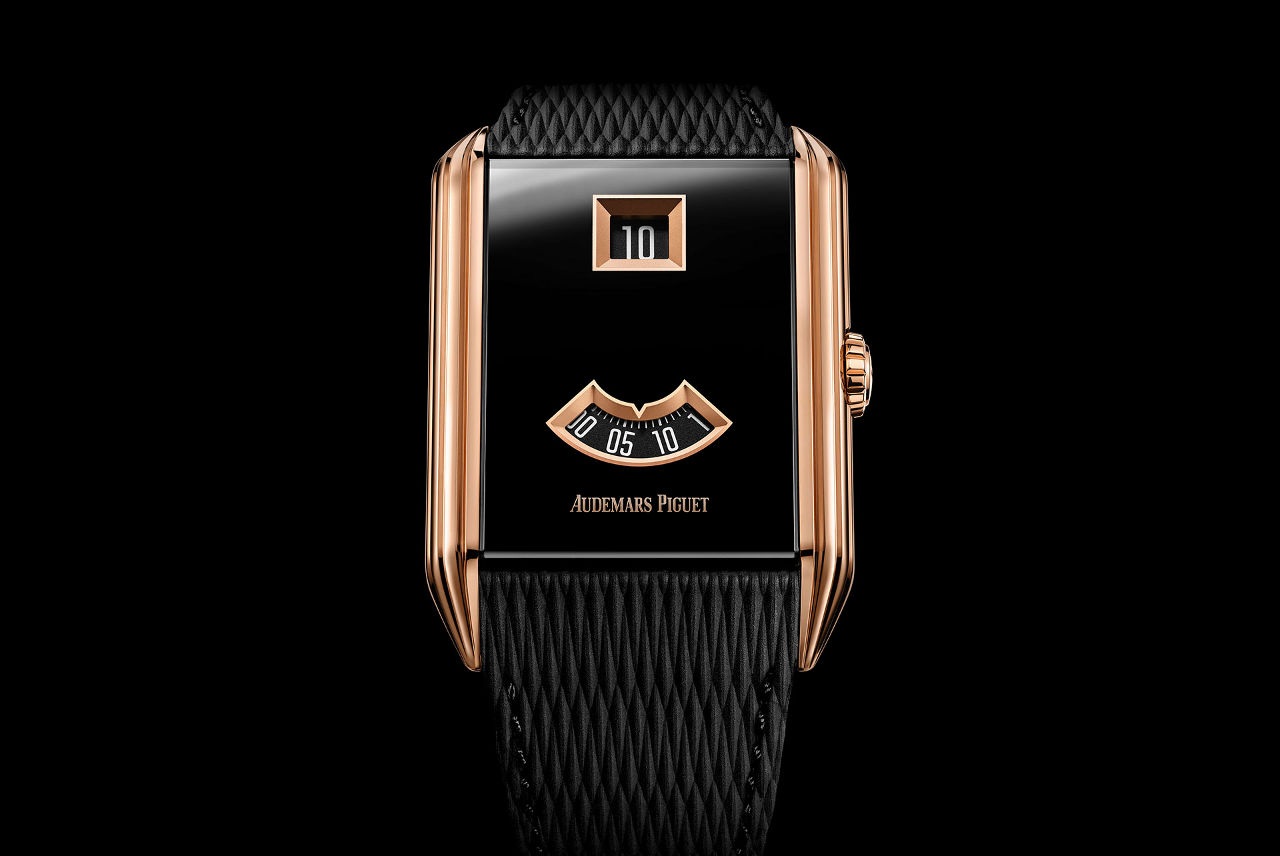
The Neo Frame is most interesting at the boundary between watch and wardrobe. Black sapphire, pink gold and a deeply patterned strap make a small composition of surfaces; the two windows interrupt it with remarkably little ceremony. Audemars Piguet has built a watch whose character changes as the eye moves from its outline to the wrist beneath it.
A silhouette drawn from the edge
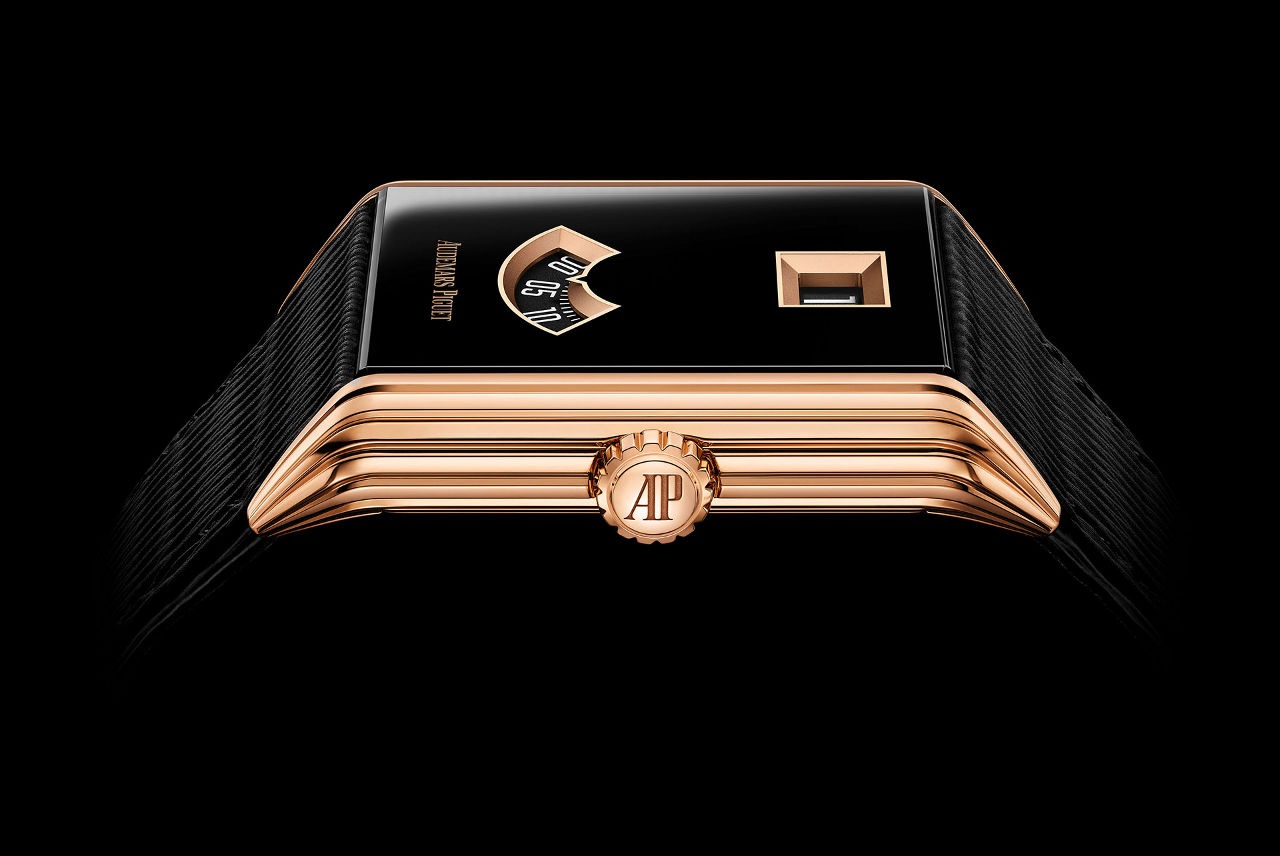
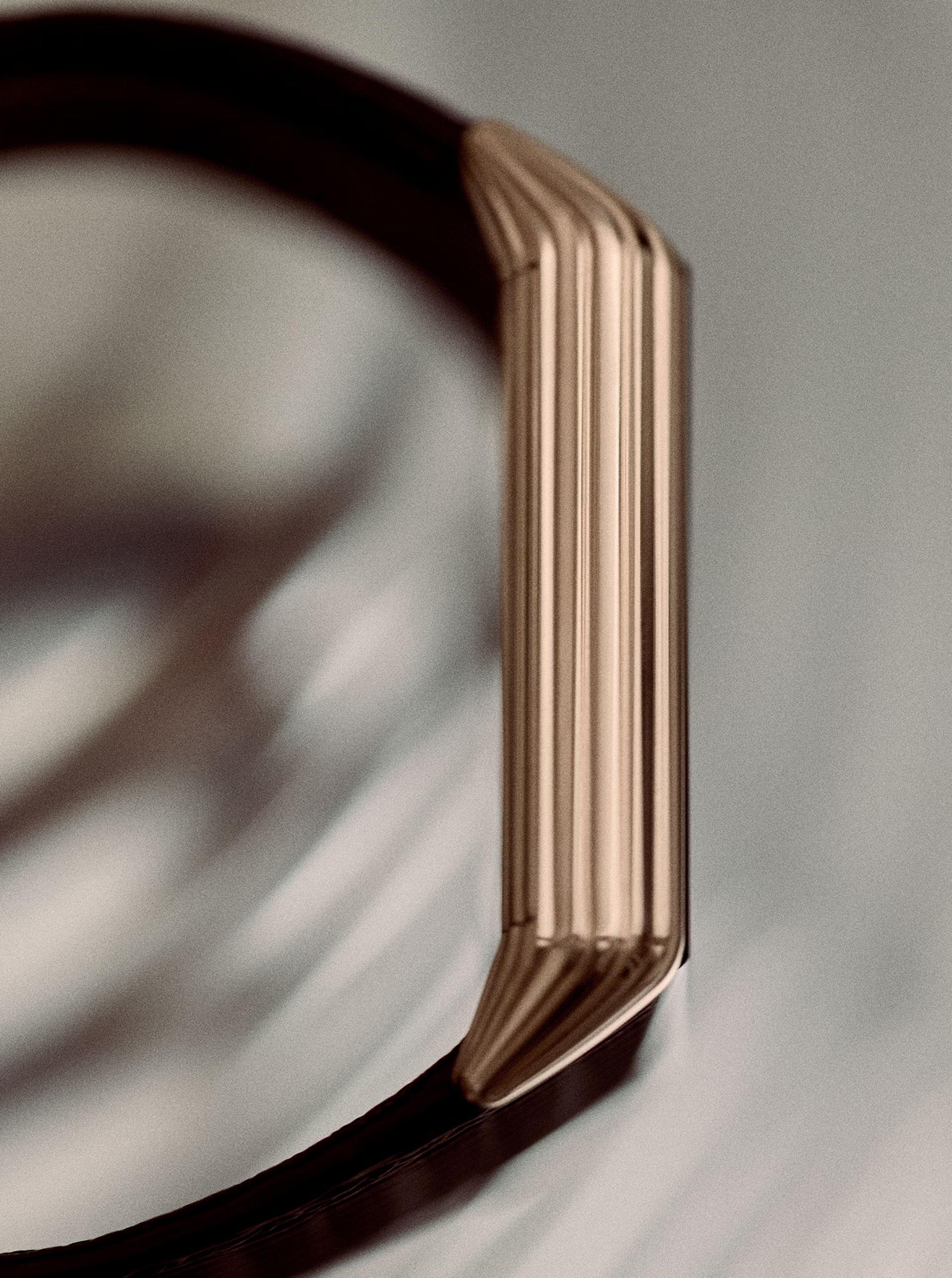
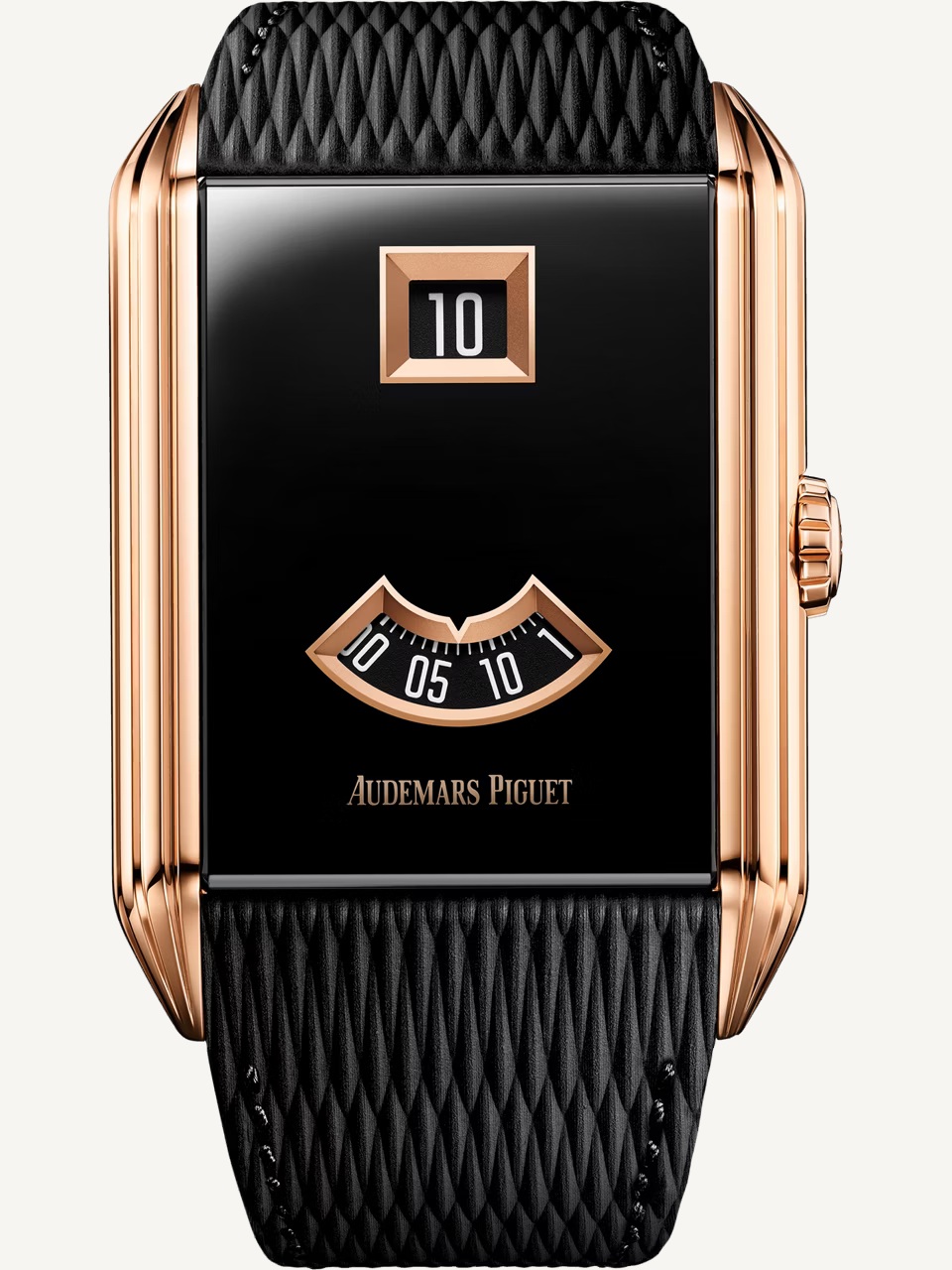
Seen straight on, the black centre is almost silent. The gold at either side does the work of describing the object: parallel ridges, rounded transitions and lugs that continue the direction of the case. In the official side photograph, those lines become a layered profile. It is a useful second view because the frontal image alone cannot explain how much of the design belongs to the perimeter.
This is where a shaped watch rewards a slower look. A round case supplies a familiar boundary almost automatically; here the long sides, corners and attachment points have to establish their own balance. The Neo Frame’s gadroons give the eye something to follow without filling the face with decoration. Their repetition also prepares the transition into the strap, so that the watch reads as a continuous object rather than a precious rectangle suspended between two unrelated pieces of leather.
The combination is not dependent on an elaborate colour scheme. Warm metal is set against a large, dark field. A third, quieter element comes from the texture of the leather. That restricted palette makes changes of light and angle unusually consequential: a polished edge can become more noticeable than an additional colour would have been.
Two small interruptions in a dark surface
The hour appears through the upper aperture, while the minute indication occupies a curved opening below. Instead of arranging hands around a central pivot, the design distributes the information between two separate locations. The black space between them is therefore part of the composition. It gives the indications room to register without surrounding them with a full set of visible hour markers.
Audemars Piguet specifies a black PVD-treated sapphire dial and pink-gold-toned, microblasted apertures. The difference in surface treatment matters visually. The small frames catch and soften light differently from the large black surface, establishing a hierarchy that is easier to appreciate in a close view than in a specification list. The watch asks the eye to find two bright points, then reconnect them as a time.
For a prospective wearer, the useful question is whether that sequence feels natural. Look at the watch once, return to another task, then read it again. An unfamiliar display should be considered through repeated glances, rather than only through the pleasure of seeing its mechanical change demonstrated at a boutique. An attractive opening can still require a different reading habit.
The strap belongs in the drawing
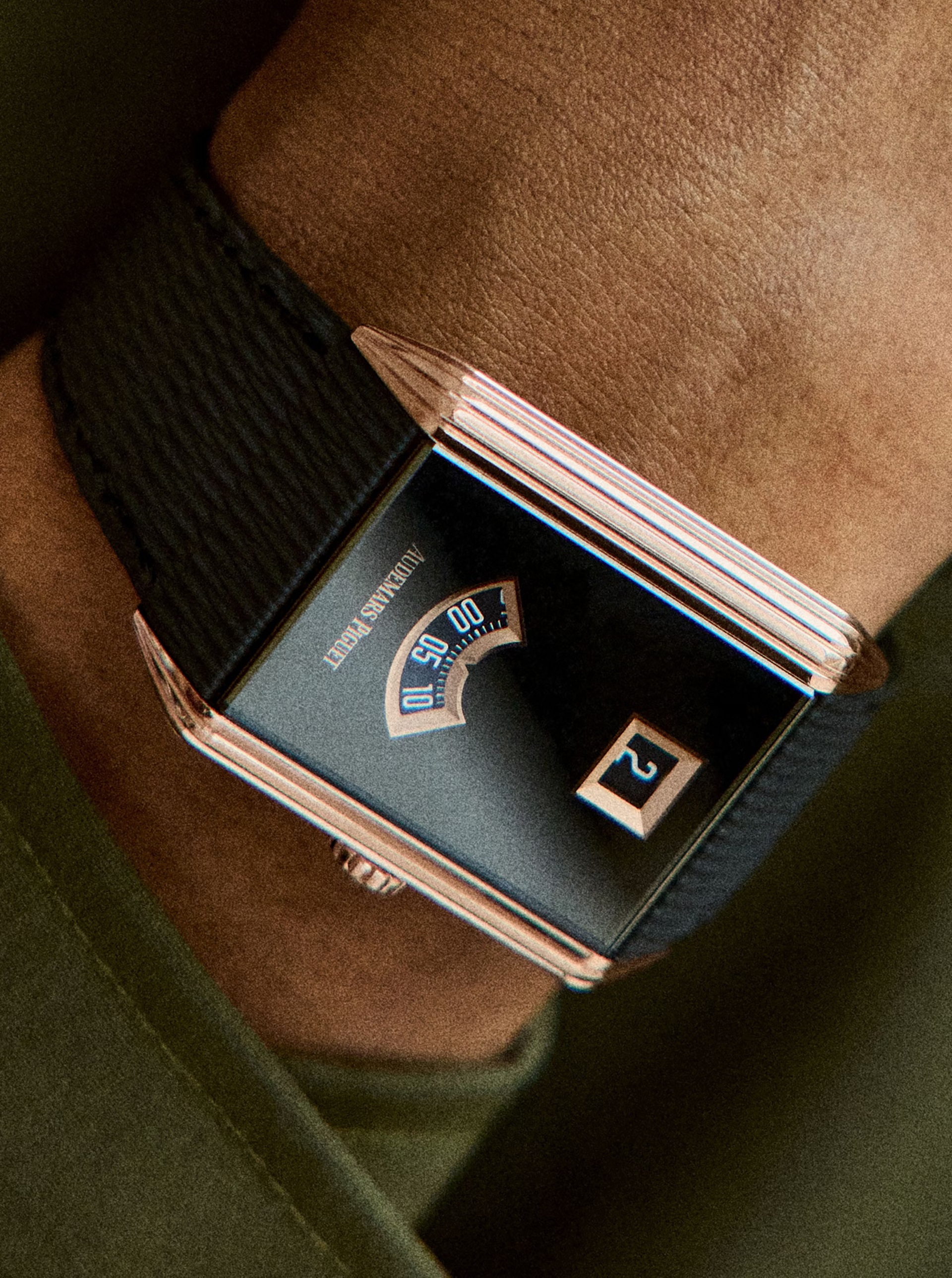
The black calfskin strap is not visually neutral. Its repeating pattern extends the watch’s graphic discipline beyond the case, while the integration at the lugs avoids a sharp interruption between smooth metal and textured leather. The official wrist photograph shows why this matters: the lower strap does not simply disappear into clothing. It becomes part of the watch’s presence on the arm.
That makes the meeting between cuff and case especially worth examining. A close-fitting sleeve, a softer knit and an open shirt cuff will frame the same object differently. These are practical observations to make while trying the actual watch, not conclusions that can be settled from a rendered wrist-size comparison. The published thickness is 8.8mm, but the feel beneath a sleeve also depends on the shape of its edges and the way the strap is fastened.
The palette offers an interesting kind of flexibility. Pink gold brings warmth; the black face and strap keep the object sharply defined. Rather than matching every accessory to the case metal, it can be more revealing to see how the watch sits among the textures already worn regularly. The case, strap and clothing should form a convincing whole at ordinary viewing distance.
The work behind the quiet face
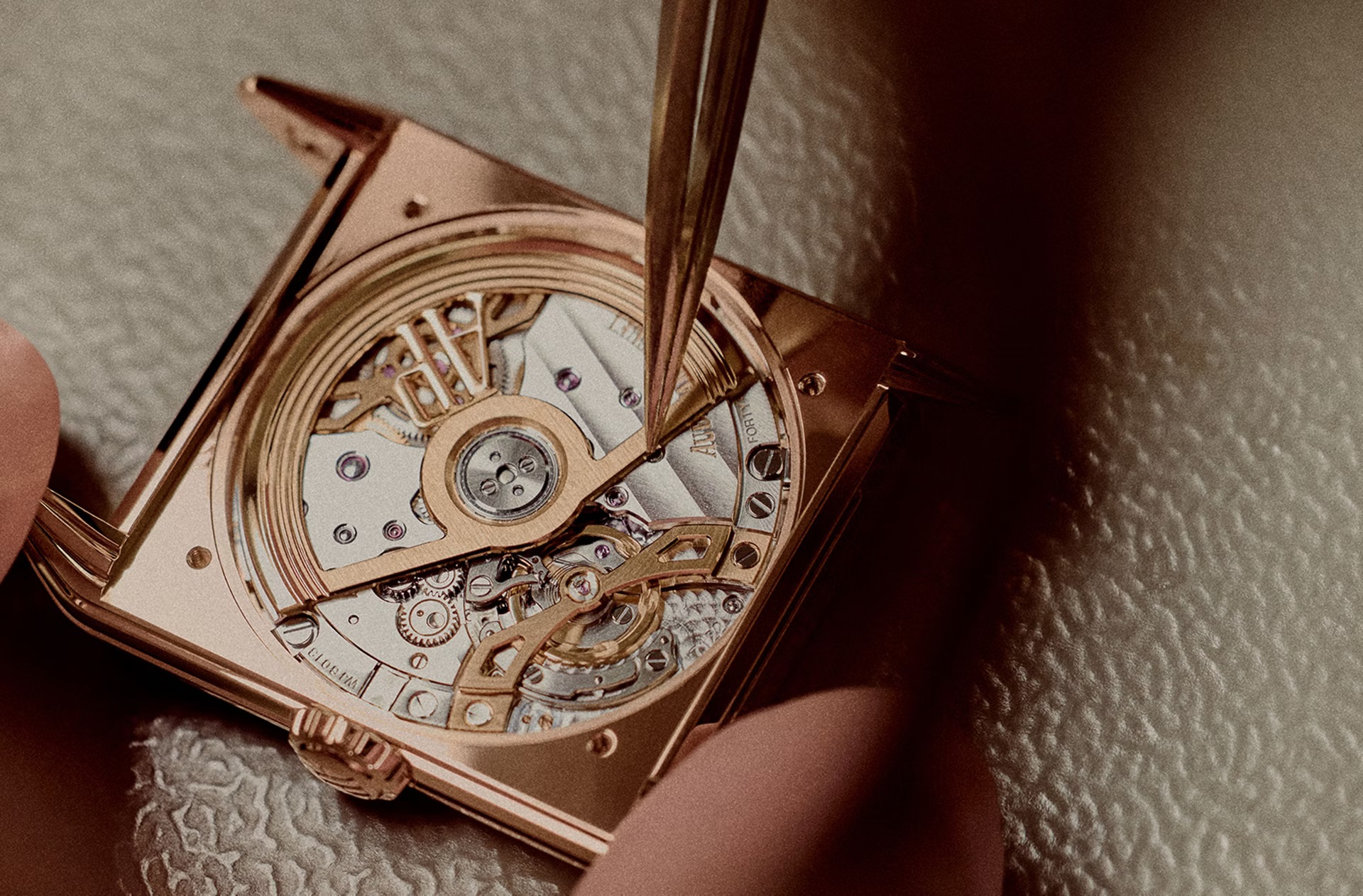
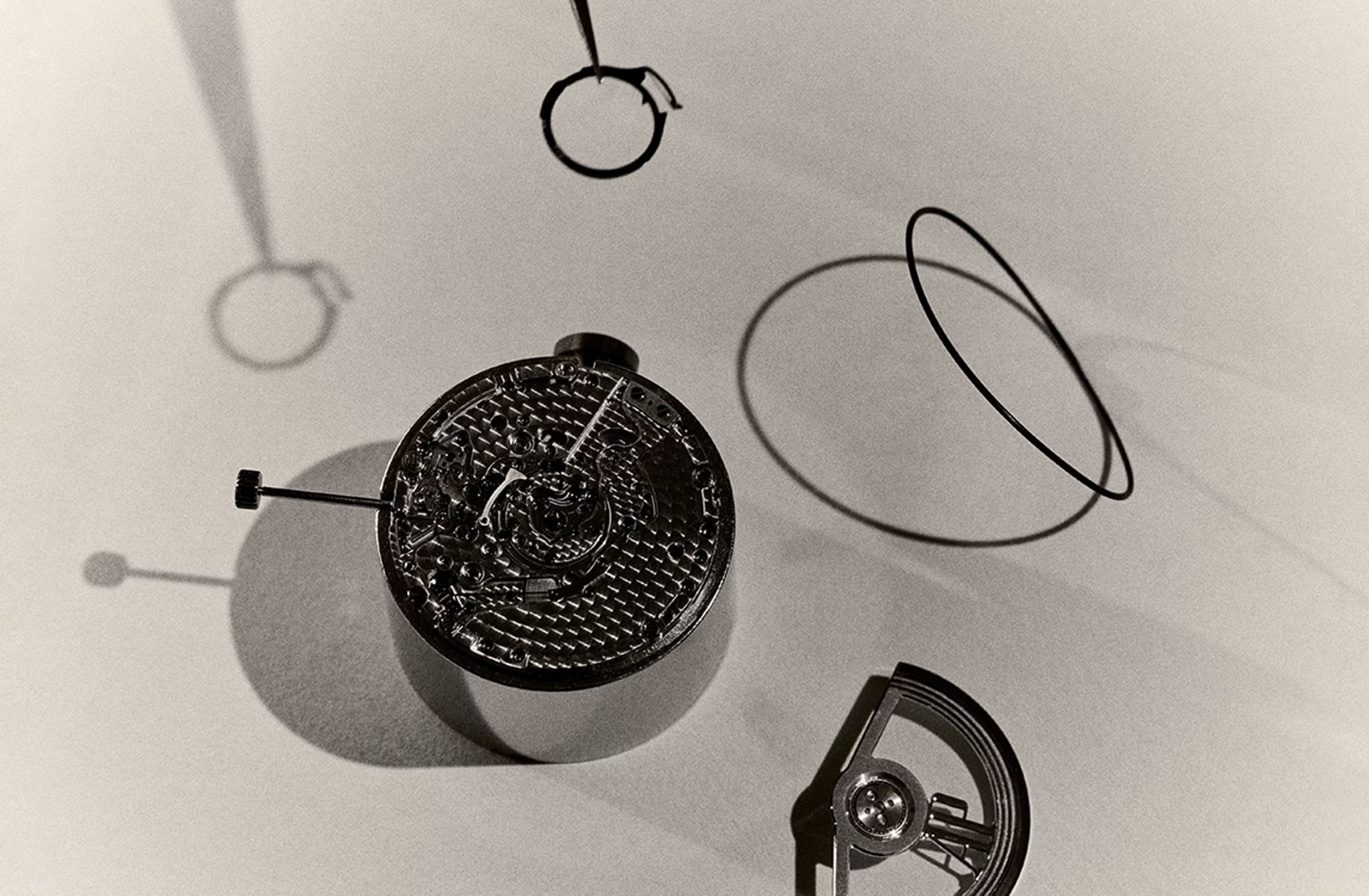
The official workshop sequence supplies a useful change of scale. Loose components, assembly and a closer view of the movement shift attention away from the polished exterior. The point is not to turn a design story into an inventory of parts. It is to show the distinction between the visual economy of the finished face and the work required to organise information behind it.
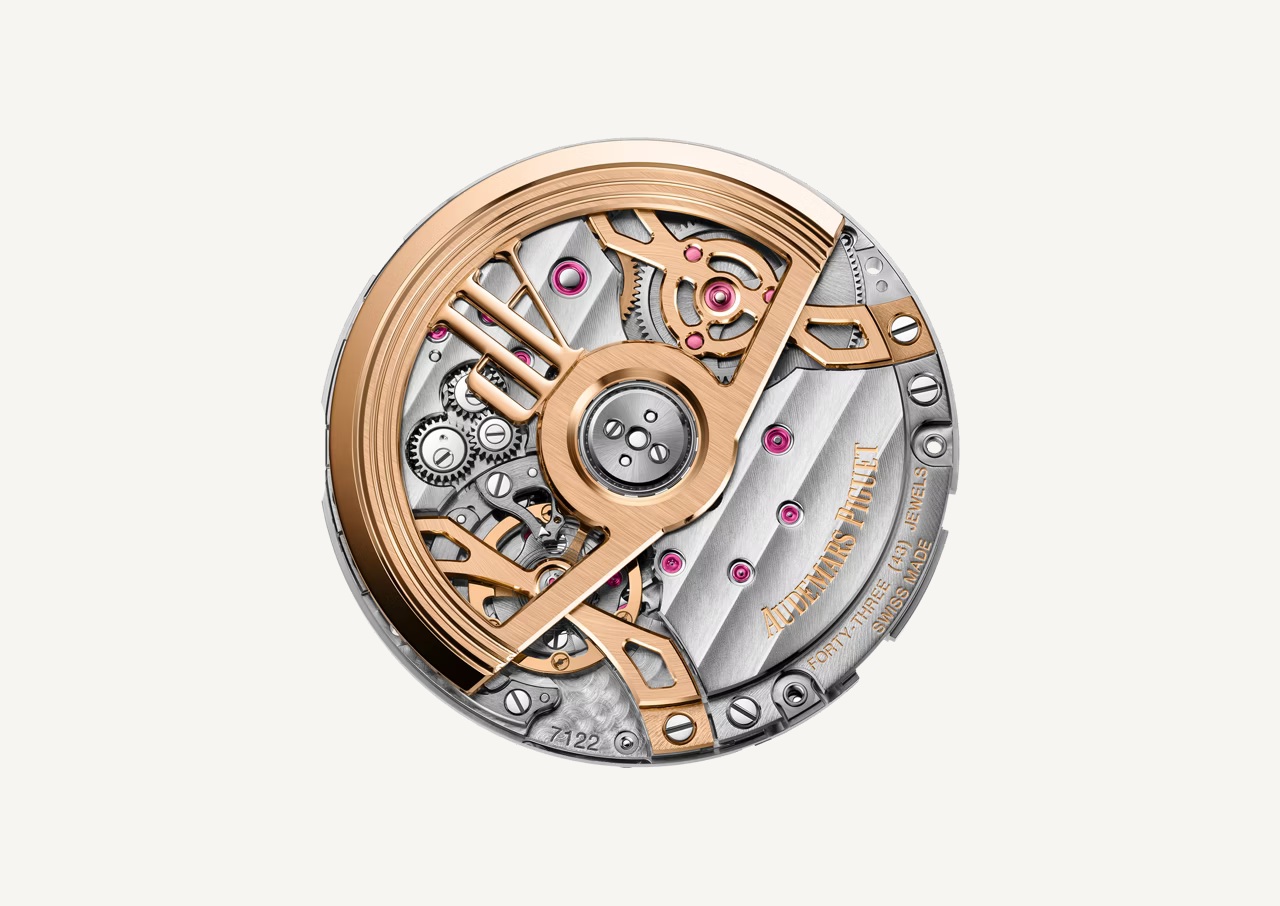
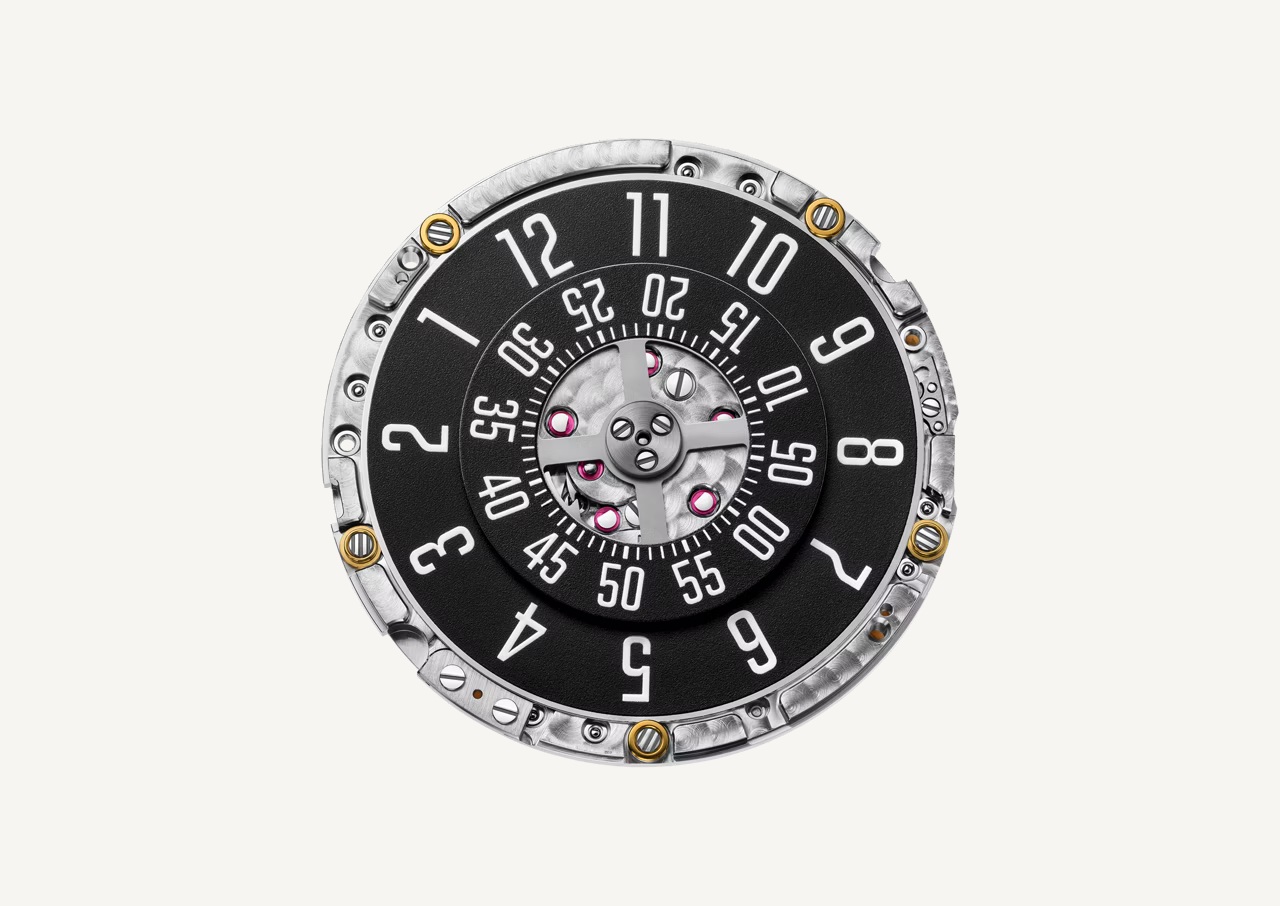
Calibre 7122 is Audemars Piguet’s first selfwinding jumping-hour movement; the manufacture quotes a 52-hour power reserve. The two movement views shown together here make a different contribution from another beauty photograph. One exposes the display side, the other the winding side. They let the reader compare two functional arrangements without mistaking either for what is visible through the front of the completed watch.
The comparison also keeps decorative and functional readings together. Finishing is visible in the movement photograph, but it is not the same thing as a performance test. This article has not measured accuracy, reserve or shock behaviour. Its interest is the relationship between the documented mechanism, the two indications it supplies and the deliberately restrained appearance of the object around them.
A useful brief for the appointment
| Detail | Published specification | A useful observation |
|---|---|---|
| Reference | 15245OR.OO.A206VE.01 | Confirm the exact watch being shown |
| Case | 18-carat pink gold and sapphire construction | Examine the long edge as well as the face |
| Thickness | 8.8mm | Try the watch with a regularly worn cuff |
| Display | Jumping hour and minute indication | Read both openings through several ordinary glances |
| Movement | Selfwinding Calibre 7122; quoted 52-hour reserve | Ask for a demonstration of setting and the hour change |
| Strap | Black calfskin with a pink gold pin buckle | Check the fastening and the transition at the lugs |
The table is a starting brief, not a verdict on how the watch will wear. Its most valuable use is to keep the appointment focused on relationships: dial to edge, case to strap, strap to wrist. Ask to see the watch from the side and at a distance, as well as directly under the bright light used to show a complication.
Restraint is an active design choice
The Neo Frame’s strongest visual quality is the way it concentrates attention. The time occupies two small areas. The case directs light along its edges. The strap continues the pattern while changing the material. Each part has a distinct role, and the whole becomes more legible because those roles do not compete for the same space.
That is also the reason to return from the detail photographs to the complete watch. A beautiful corner or a fascinating mechanism can make an excellent isolated image. The more demanding question is whether the entire object remains persuasive when the wrist moves, the light changes and the watch becomes part of an ordinary day. The Neo Frame offers an unusually clear set of design decisions to examine in that setting.
Sources & credits
Methodology and sources
Independent design and wearing-context analysis of reference 15245OR.OO.A206VE.01, checked on 4 November 2026 against Audemars Piguet’s collection and product pages. Official photographs include complete-watch, wrist, workshop and separate movement views, identified in their captions. No hands-on trial, timing test, availability or investment claim is implied. TheTimeo’s existing specialist Neo Frame coverage was checked; this feature concentrates on visual hierarchy, wardrobe and the relationship between case and strap.