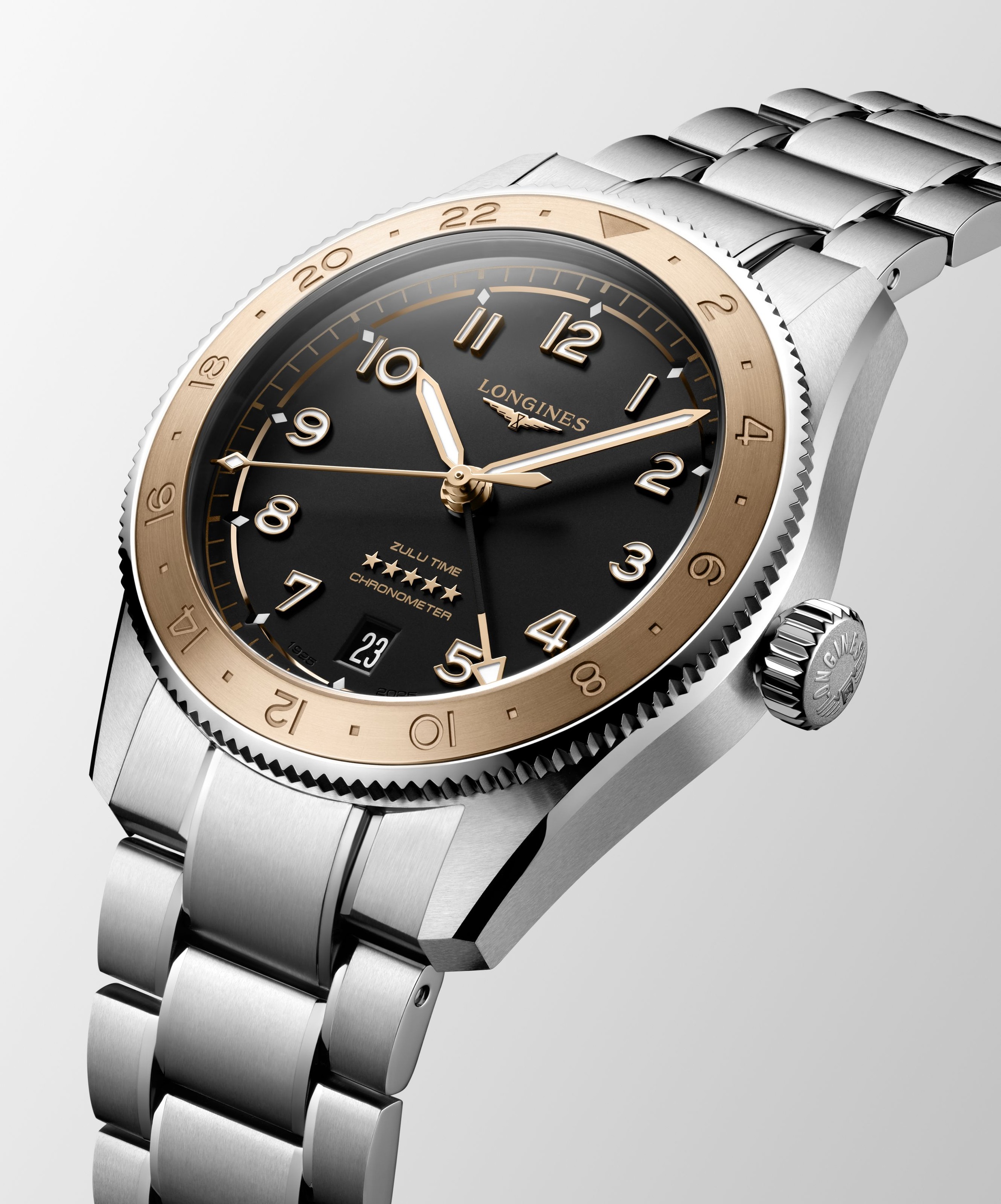
The most useful second time is often a familiar one: the hour at home when you land somewhere else. Longines gives that relationship a particularly legible form in the Spirit Zulu Time 1925. Its black dial, warm metal bezel and distinct GMT arrow organise two readings on one face. The interesting question for a traveller is how those readings will fit the journey.
Decide which time stays with you
Before looking at a complication, consider a day away. You may need the local hour for a meeting and the time at home before making a call. That is already a clear brief for a two-time display. If your work involves several places, choose which relationship matters most on the wrist; a phone or calendar can carry the rest without making the watch less useful.
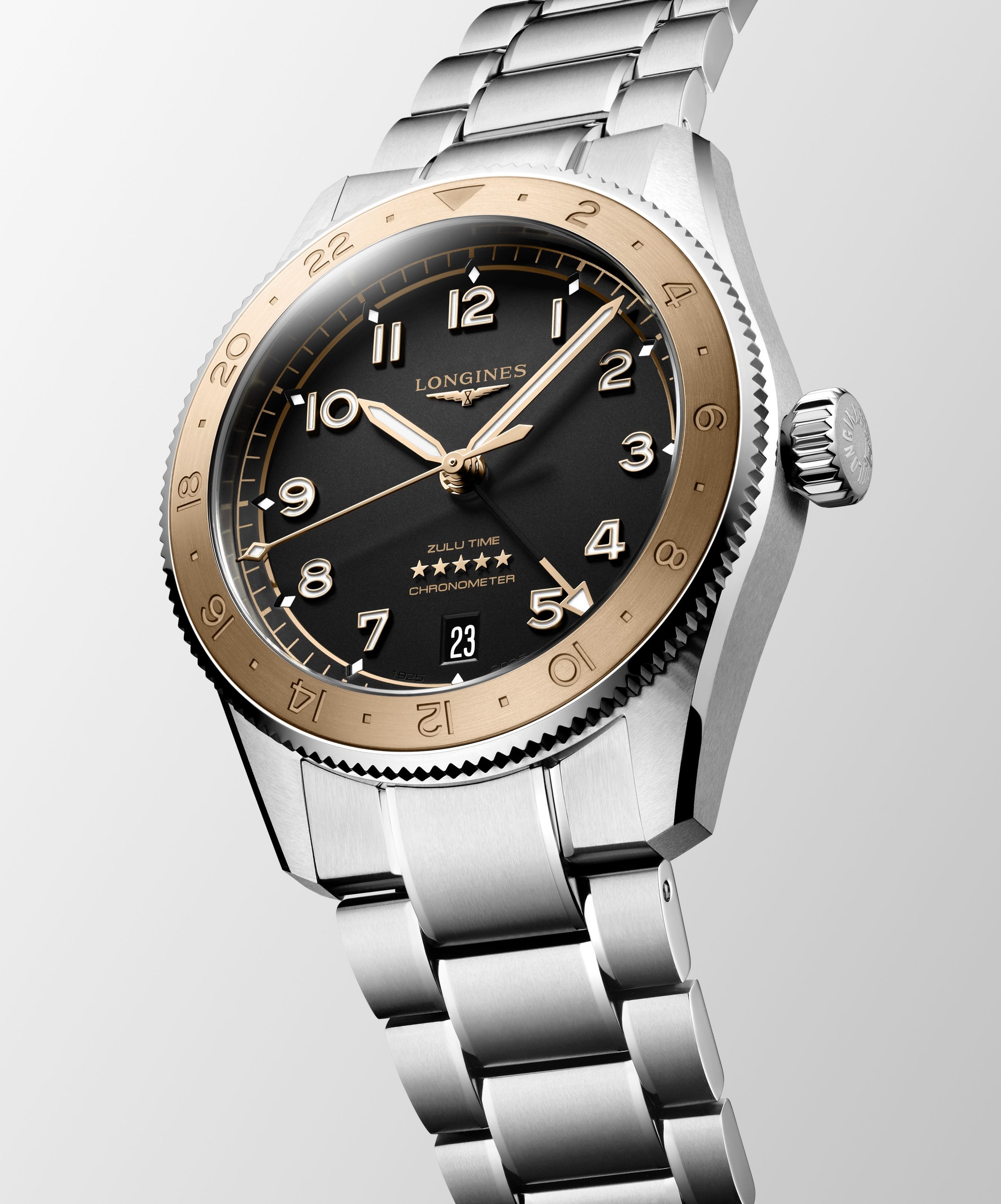
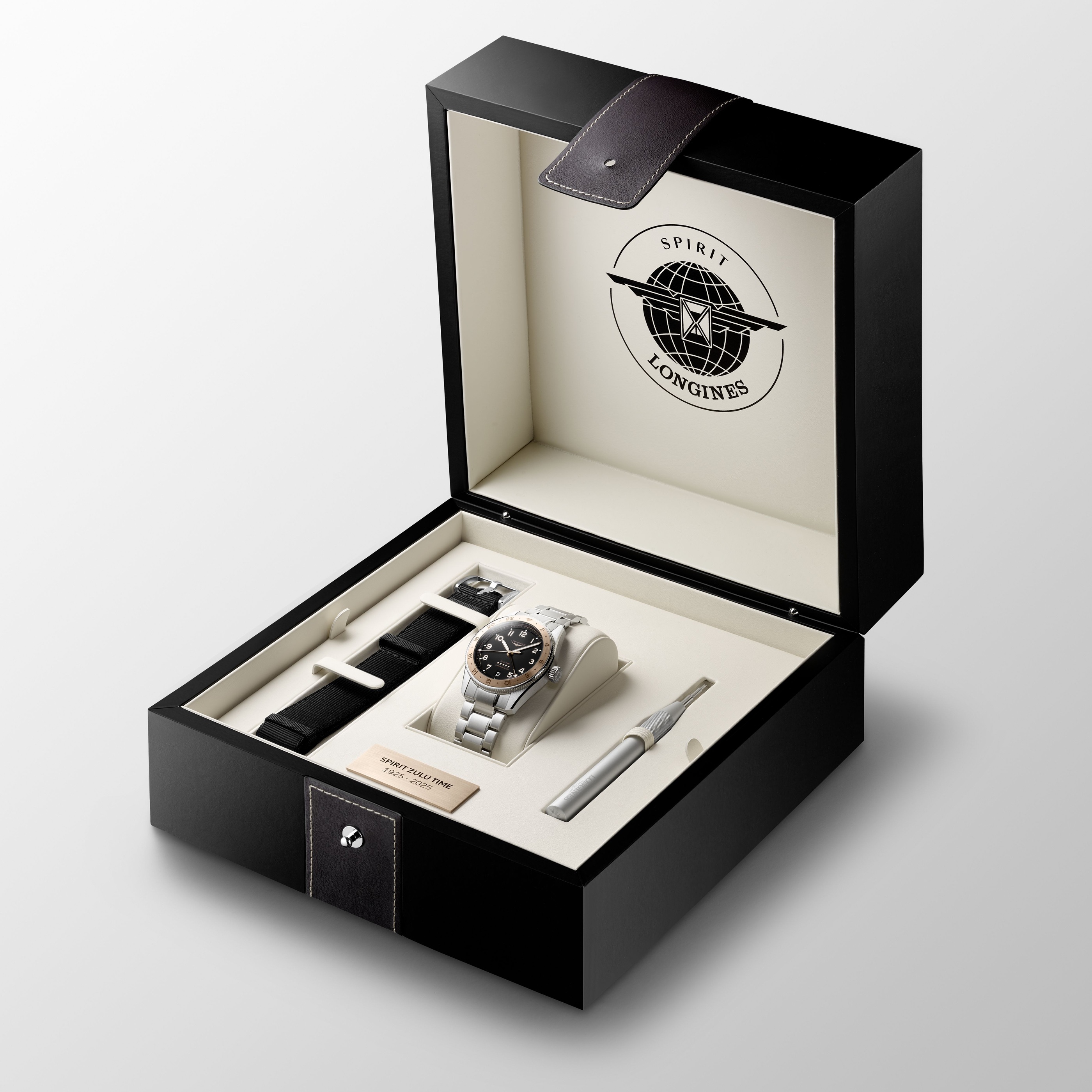
The Spirit Zulu Time 1925 belongs to a collection with an overt travel vocabulary. Longines introduced this commemorative edition in May 2025, marking a century since its first dual-time wristwatch. We are looking at the steel-and-rose-gold-cap reference L3.803.5.53.6, rather than treating every black-dial Spirit Zulu Time as the same watch. Its identity matters because neighbouring versions differ in materials and presentation.
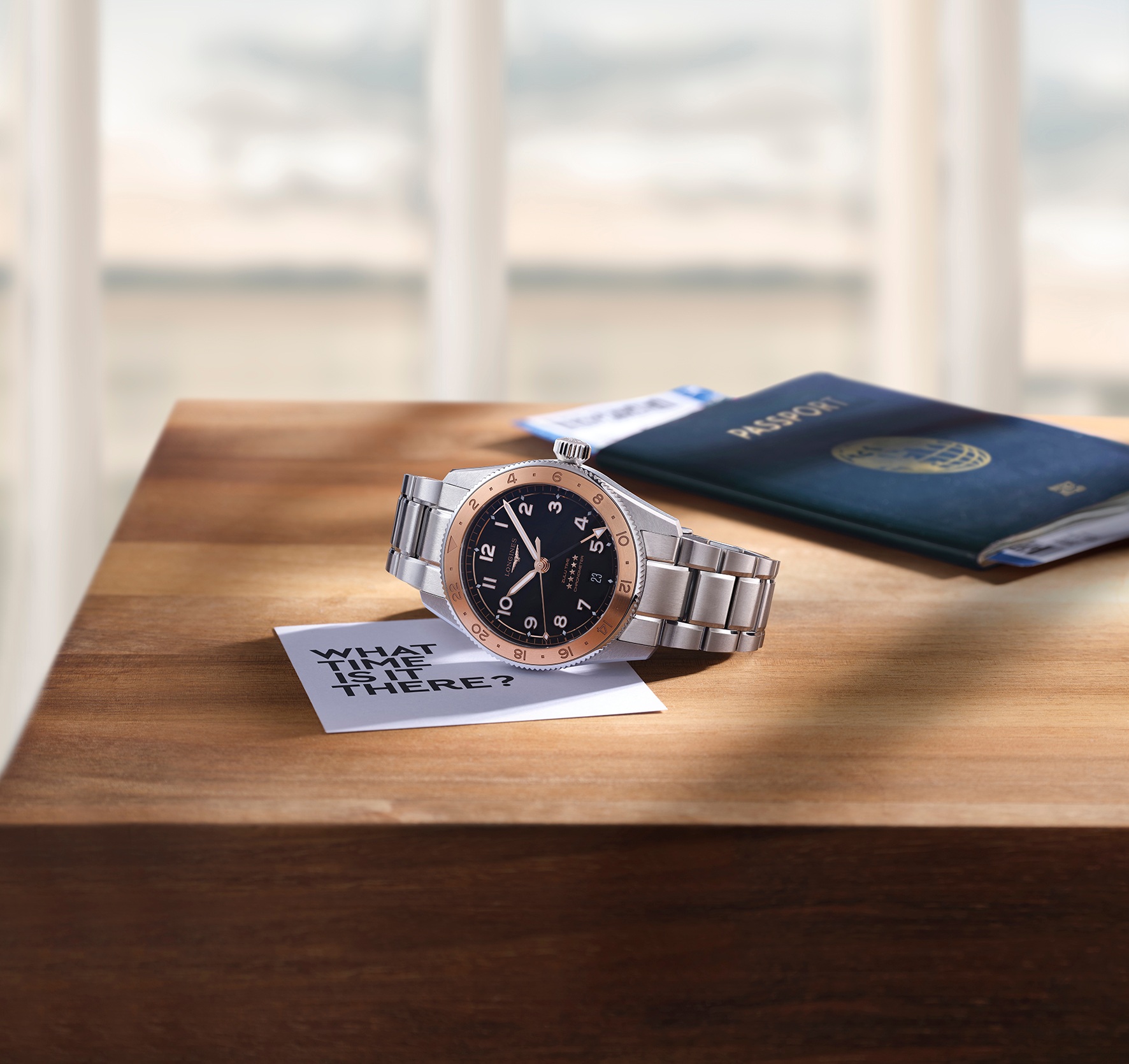
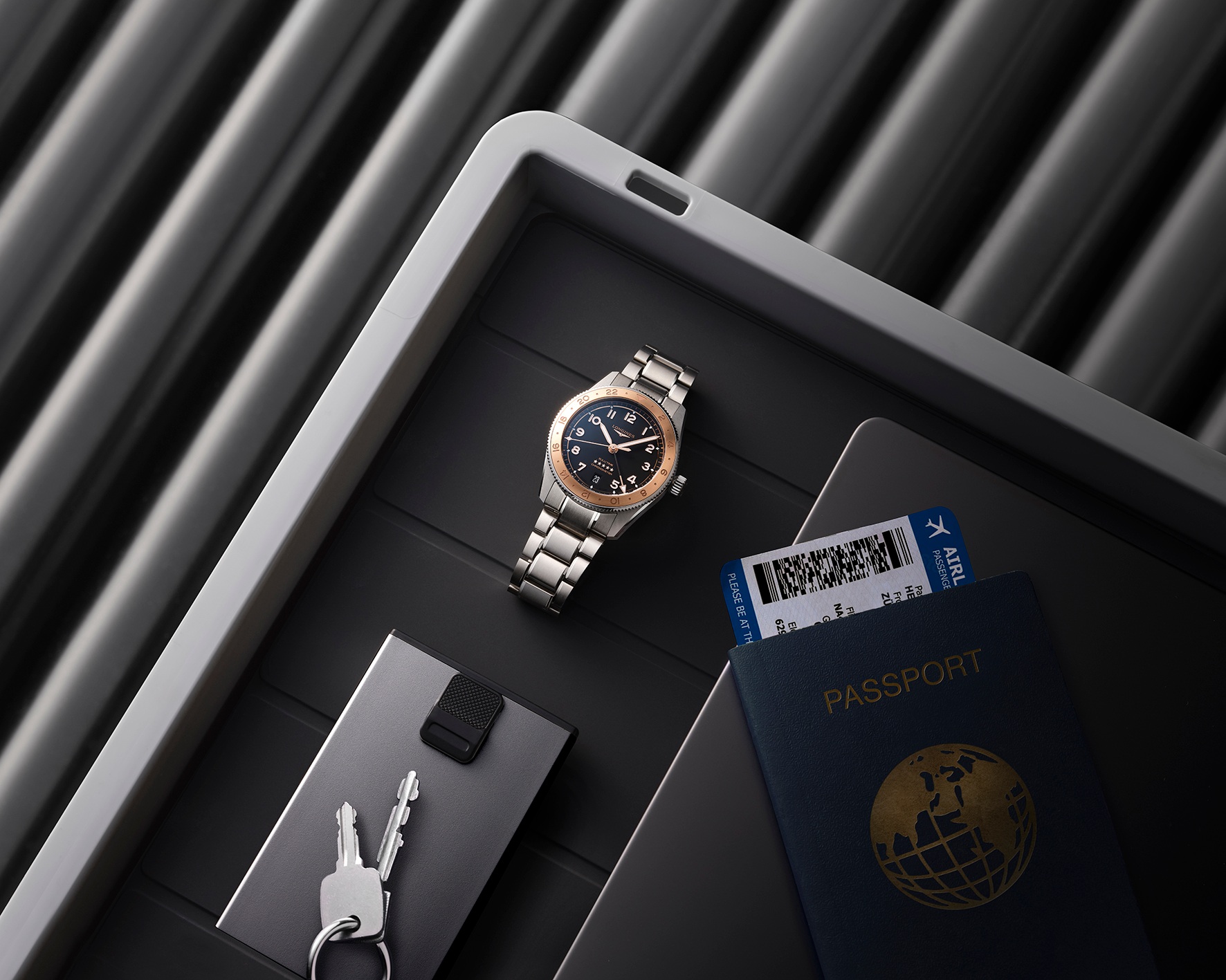
The official campaign stages the watch among luggage, travel documents and the quieter intervals around departure. Read those scenes as a proposition about use: the object is close enough to see while the rest of the journey is still being organised. They are campaign photographs, not evidence of our own time in an airport lounge or of a particular route travelled with the watch.
A face organised around a second reading
Look first at the relationship between the numerals and the bezel. The ordinary hour scale stays inside the dial; the 24-hour scale occupies the outer ring. The GMT arrow has its own shape, giving the eye a way to separate that longer cycle from the principal hands. Across the matt black face, warm-coloured details connect the two zones visually without making them identical.
The distinction between a twelve-hour reading and a twenty-four-hour one is useful when the question is whether somebody is awake, rather than merely what number their clock shows. The traveller’s task is to decide what that second reading represents and to keep the convention consistent. A system that changes meaning every morning is harder to trust at a glance, however attractive the display.
Longines specifies a bidirectional bezel and its L844.4 automatic calibre for this reference. The brand’s current product description gives a reserve of up to 72 hours and identifies a silicon balance spring. Those are maker specifications, not measurements from a watch we have tested. For the owner, the practical conversation is about setting and checking the display before departure, with the exact instruction manual to hand.
The case is part of the travel plan
A travel watch spends long periods against a sleeve, a desk or the edge of a bag. Its proportions and fastening therefore deserve the same attention as the complication. The specified case diameter is 39 mm. That number begins a fitting conversation; it does not settle how the complete watch will sit on your wrist or pass beneath your own cuff.
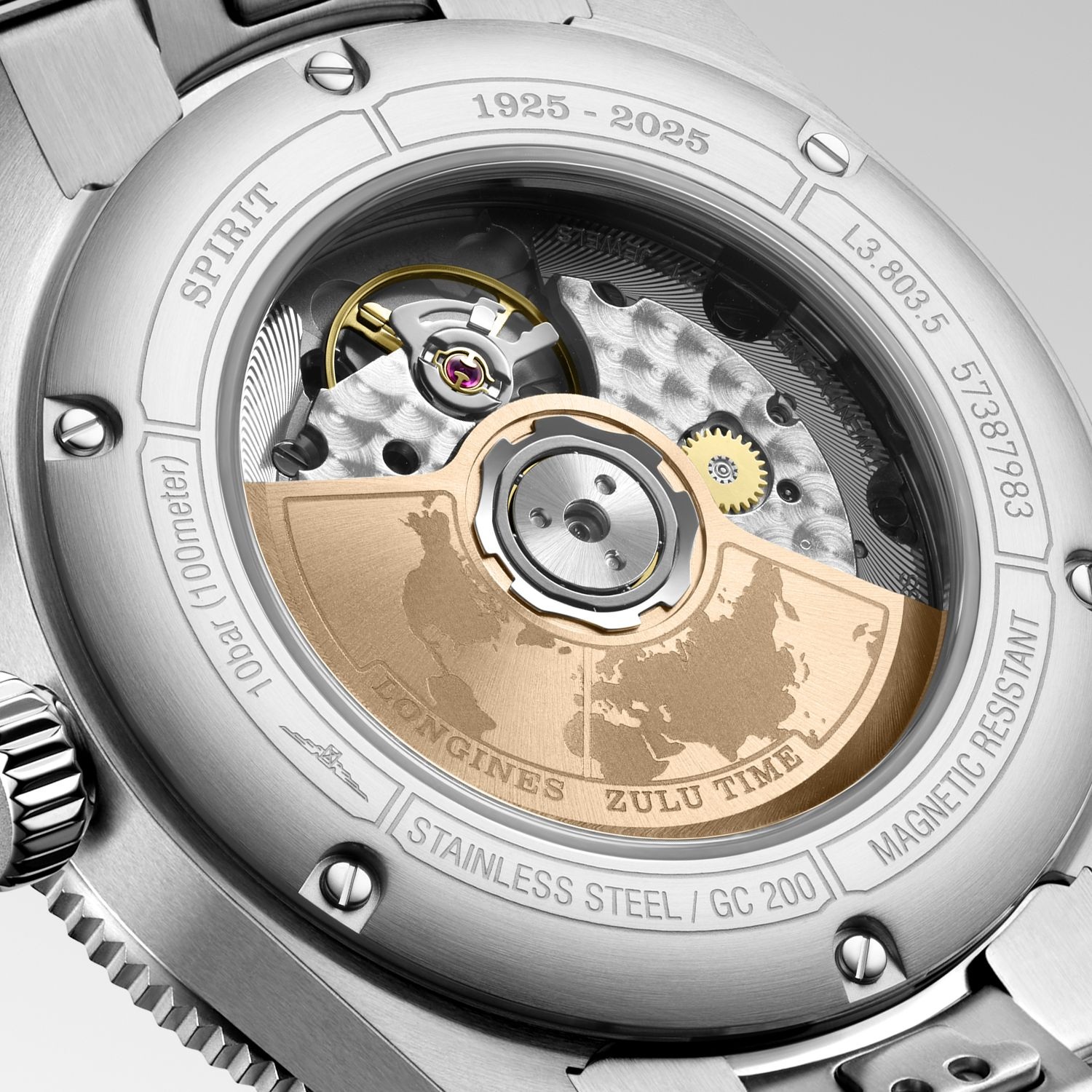
The exposed case back offers a different view of the same travel theme. A planisphere and prime-meridian motif decorate the rotor in Longines’ official imagery. On the face, the design makes a second time readable; on the reverse, geography becomes an image. Keeping those two jobs distinct allows the watch to have an expressive side without asking the decoration to explain the mechanism.
Try the bracelet at a considered fit and move the wrist through ordinary gestures. Read the dial at the angle it actually takes while you are seated, rather than only square-on beneath a boutique light. A useful fitting appointment can tell you more about daily compatibility than a photograph cropped tightly around the case. These are questions to take to a retailer, not a substitute for wearing the individual watch.
One watch, two ways to wear it
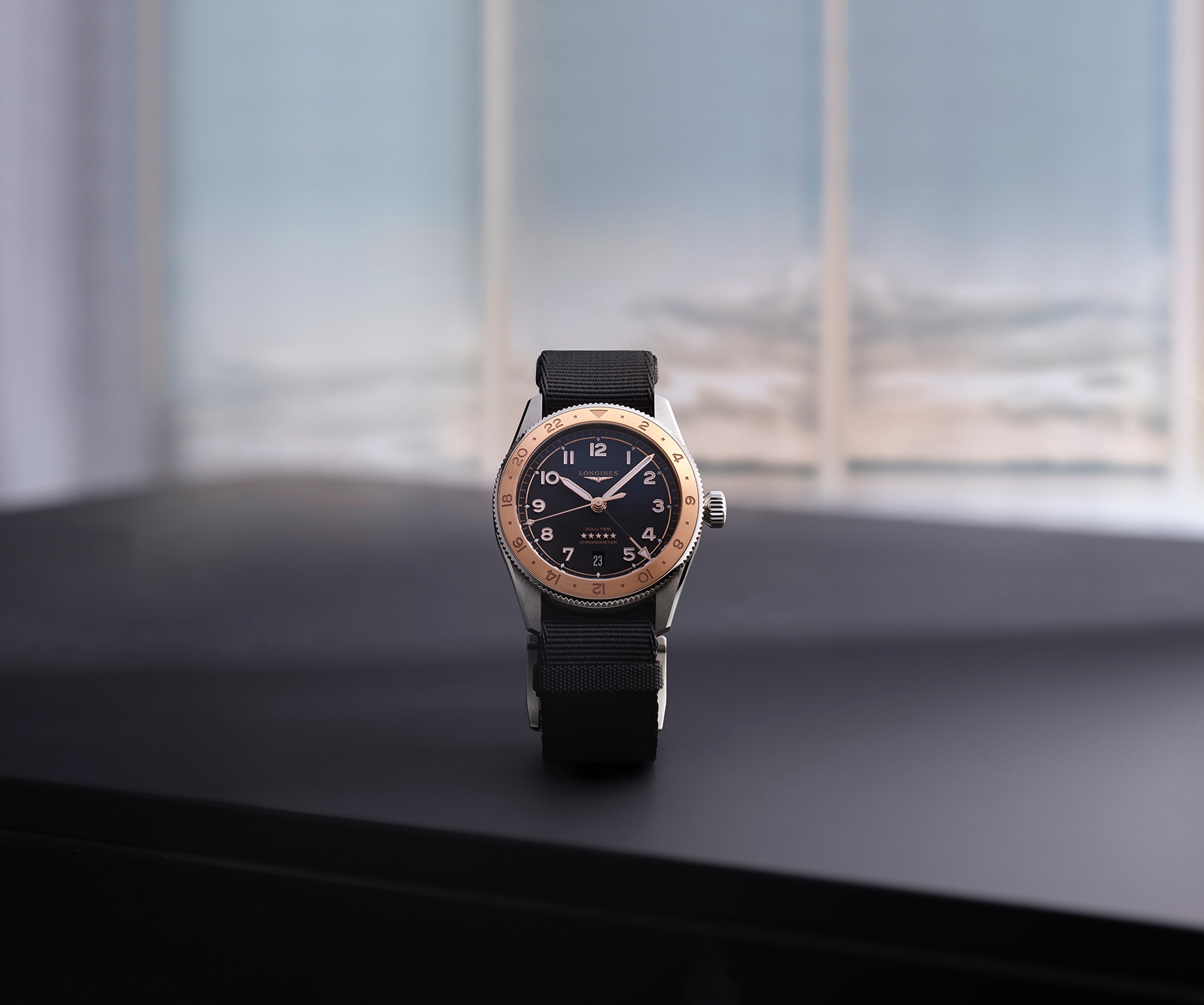
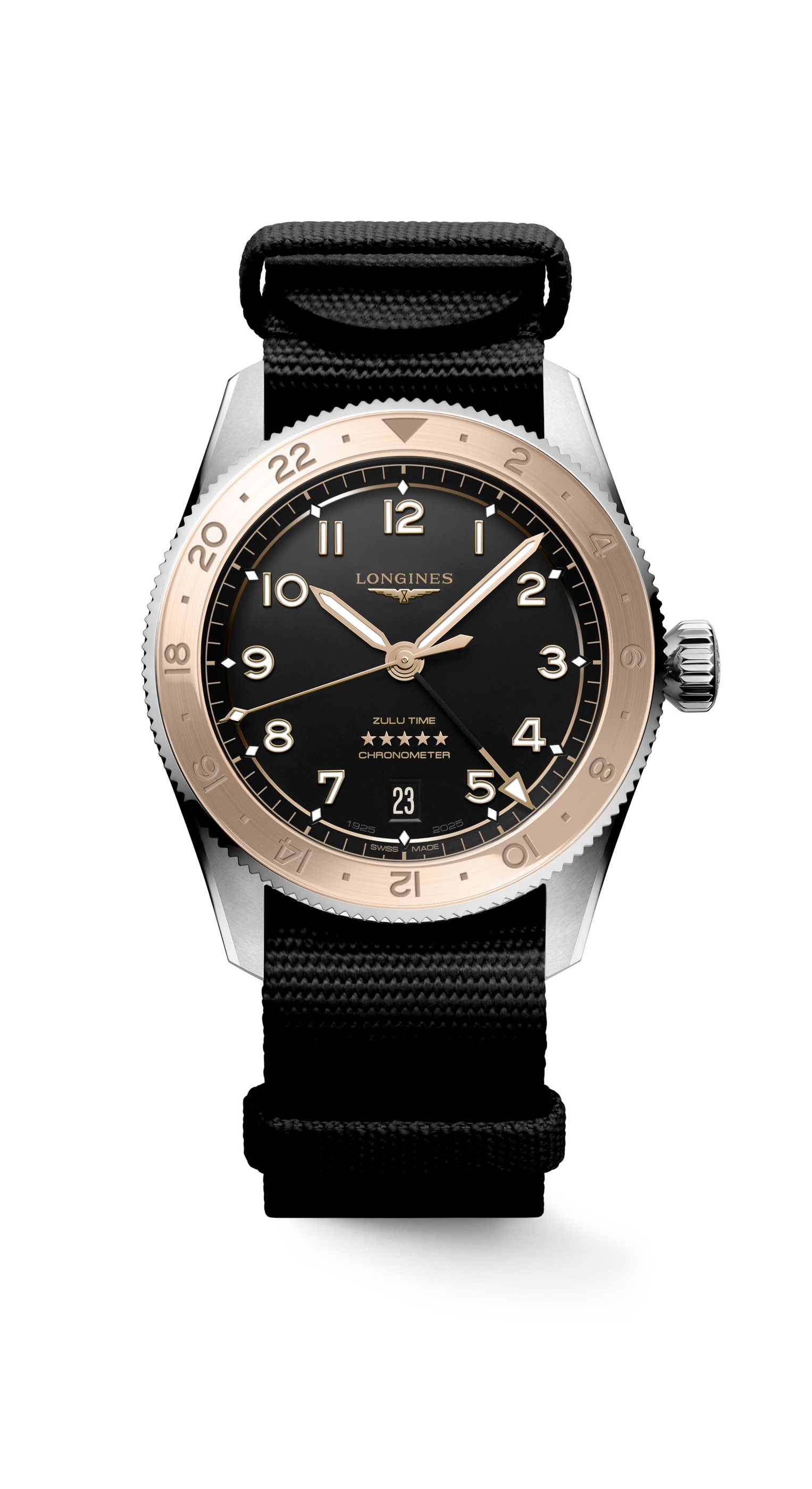
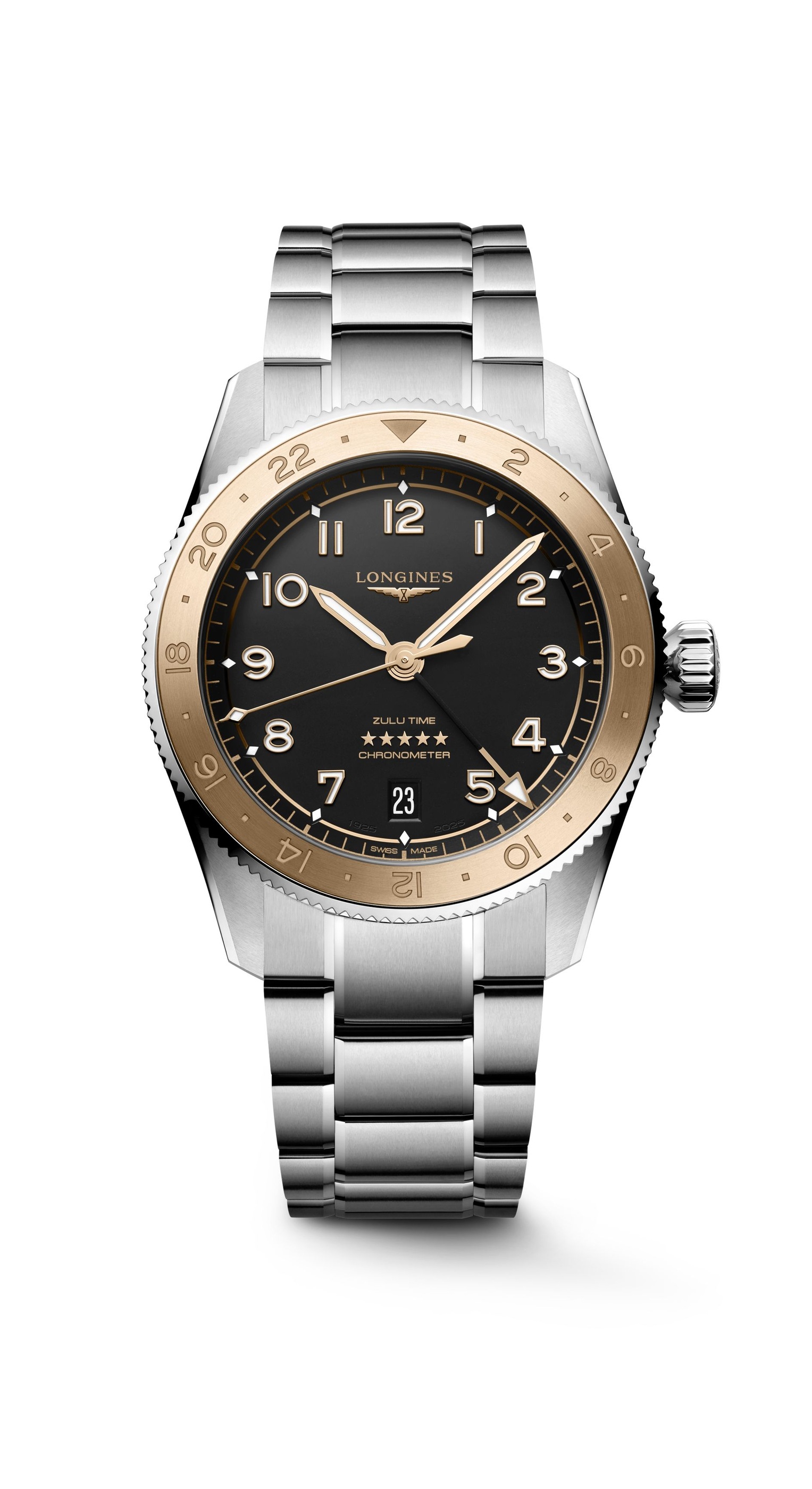
Longines presents this reference with a steel bracelet and a black NATO strap. The complete object photographs show the change clearly. The bracelet carries the case’s metallic surface further around the wrist; the textile creates a stronger visual boundary below it. Neither requires a new dial to alter the character of the watch.
Deciding which to use begins with the trip. Consider the clothes you will actually pack and the occasions between arrival and departure. A bracelet can suit the continuity of an urban working week; the textile may be the appearance you prefer for a less formal schedule. These are choices of fit and style, rather than a claim that either option guarantees comfort in every climate.
Discuss changing the attachment and checking its security with the retailer before attempting it during a hurried departure. If the watch is going to accompany water activities, obtain guidance for that specific reference and condition. A destination photograph and a water-resistance specification cannot, on their own, establish the condition of the watch on your wrist.
A useful departure conversation
The best demonstration connects the watch’s controls to a realistic journey. Ask the retailer to show the exact reference’s setting sequence, then explain it back in your own words using home and destination as the examples. That makes it easier to notice an uncertainty while help is still available.
| Journey question | What to decide before leaving | What to check on the actual watch |
|---|---|---|
| Two places | Which location the second reading will represent | How you distinguish it from the principal hands |
| Arrival | Which display you want to read as local time | The reference-specific setting sequence |
| Day and date | Which calendar day applies after the journey | The date indication after adjustment |
| Wearing | Bracelet or textile for the planned occasions | Fit, fastening and attachment security |
| Days off the wrist | When the watch will next be worn | Winding and setting instructions |
An itinerary can cross a date boundary or pass through a half-hour offset. Bring the actual destinations into the conversation rather than assuming that a generic GMT demonstration covers every situation. The point is to learn whether the display suits your journeys and how you will use it alongside the information already on your phone.
The pleasure of a settled convention
There is an appealing restraint to carrying one familiar hour with you. It makes the watch a small point of continuity between otherwise different days, whether the occasion is a business trip or time away with family. The Spirit Zulu Time 1925 supplies a distinct visual language for that connection: black, warm metal and a long arrow whose purpose is immediately worth asking about.
Its success for an owner will rest on a routine as much as on a specification. Know which place each reading represents, learn the correct setting method and choose a fit you want to keep wearing. Then the complication can become part of the journey’s rhythm, rather than another item that needs explaining whenever the itinerary changes.
Sources & credits
Methodology and sources
An editorial reading of the 2025 reference L3.803.5.53.6 and Longines’ official campaign and product imagery. There was no wear trial, timing test or trip with the watch. Current price, allocation and regional availability are not assessed. Product-setting instructions must come from the manufacturer for the exact reference.