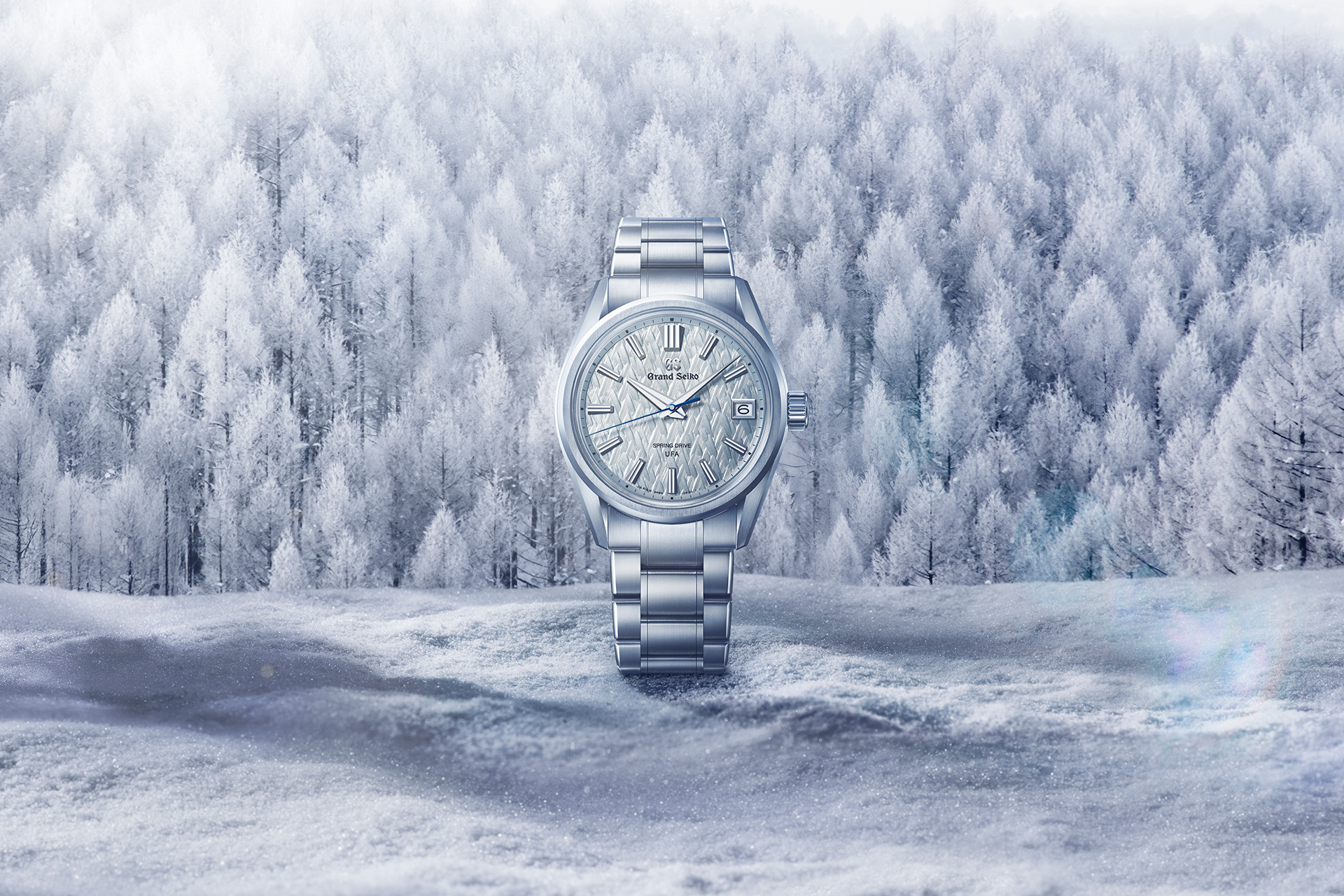
The dial of Grand Seiko’s SLGB003 holds two different measures of time. Its fine, branching texture is a visual reference to ice forests; the movement behind it is specified through an annual accuracy figure. Between those two accounts sits the complete watch: case, bracelet, clasp and the proportions through which a technical achievement becomes something intended for a wrist.
A dial with a different scale
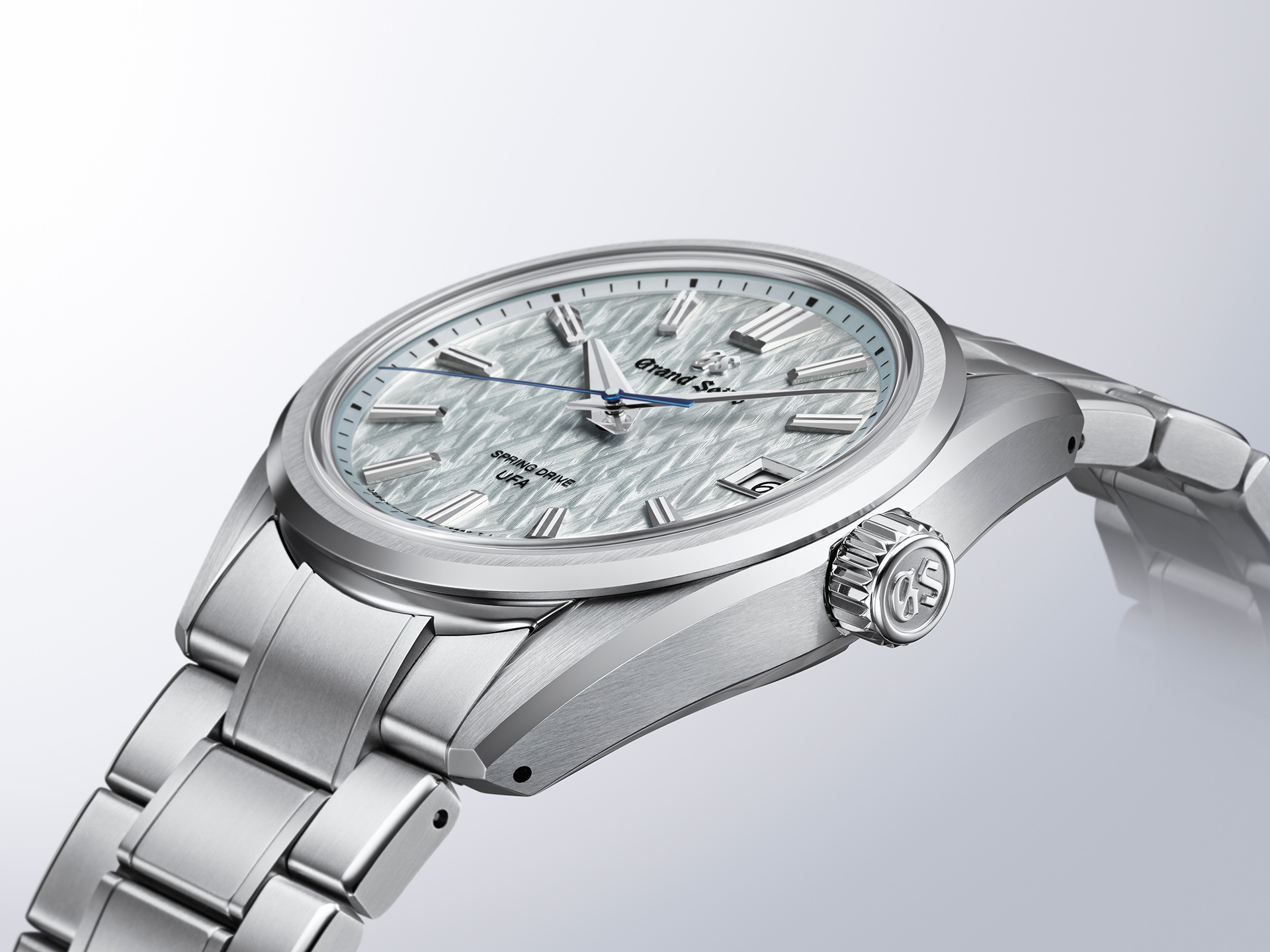
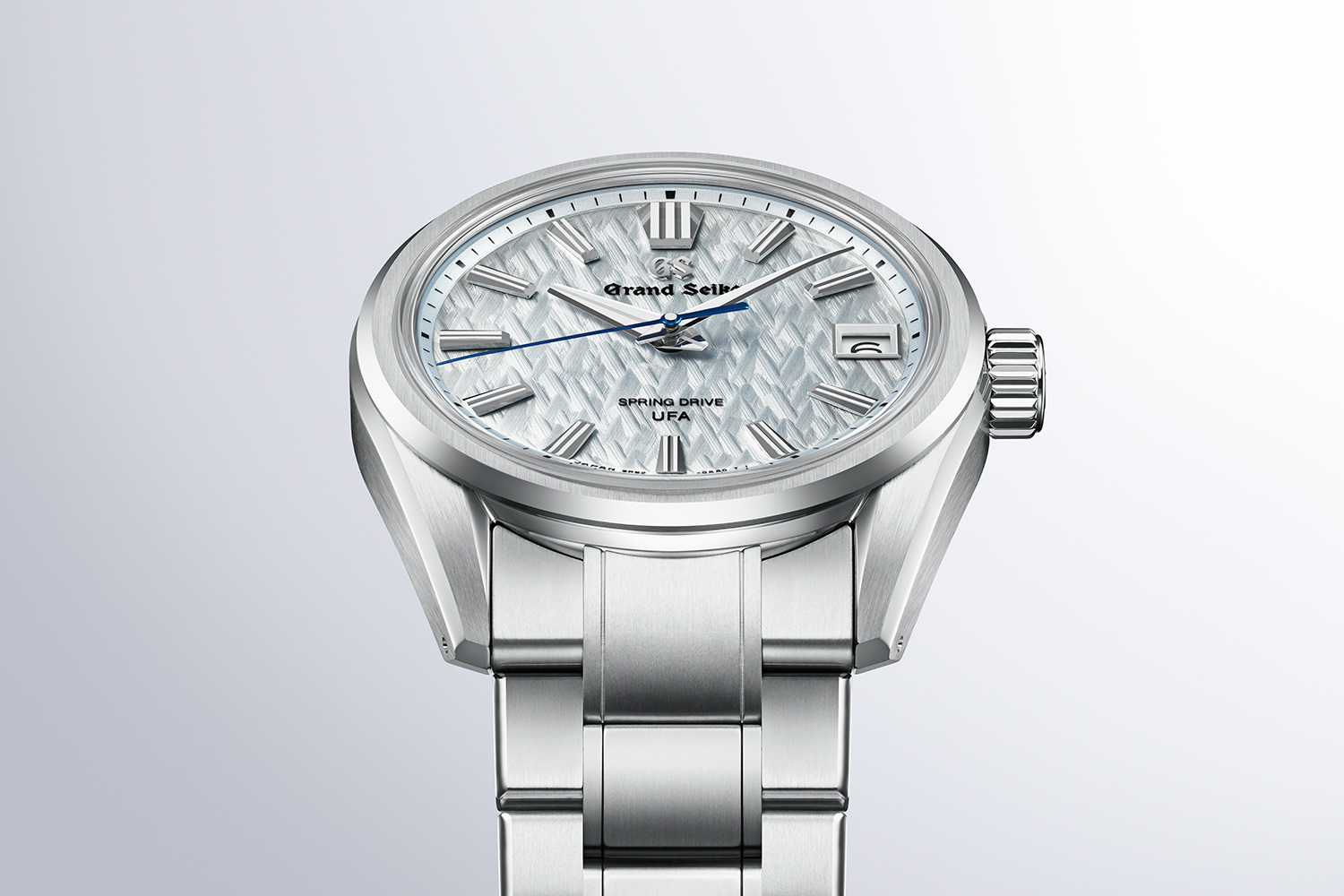
Grand Seiko places the SLGB003 in its Evolution 9 collection. The maker links the dial pattern to winter scenery near the Shinshu Watch Studio in Shiojiri. In the official close view, the surface is organised through fine linear marks, with a pale tone that catches light differently from the polished hands and applied indexes.
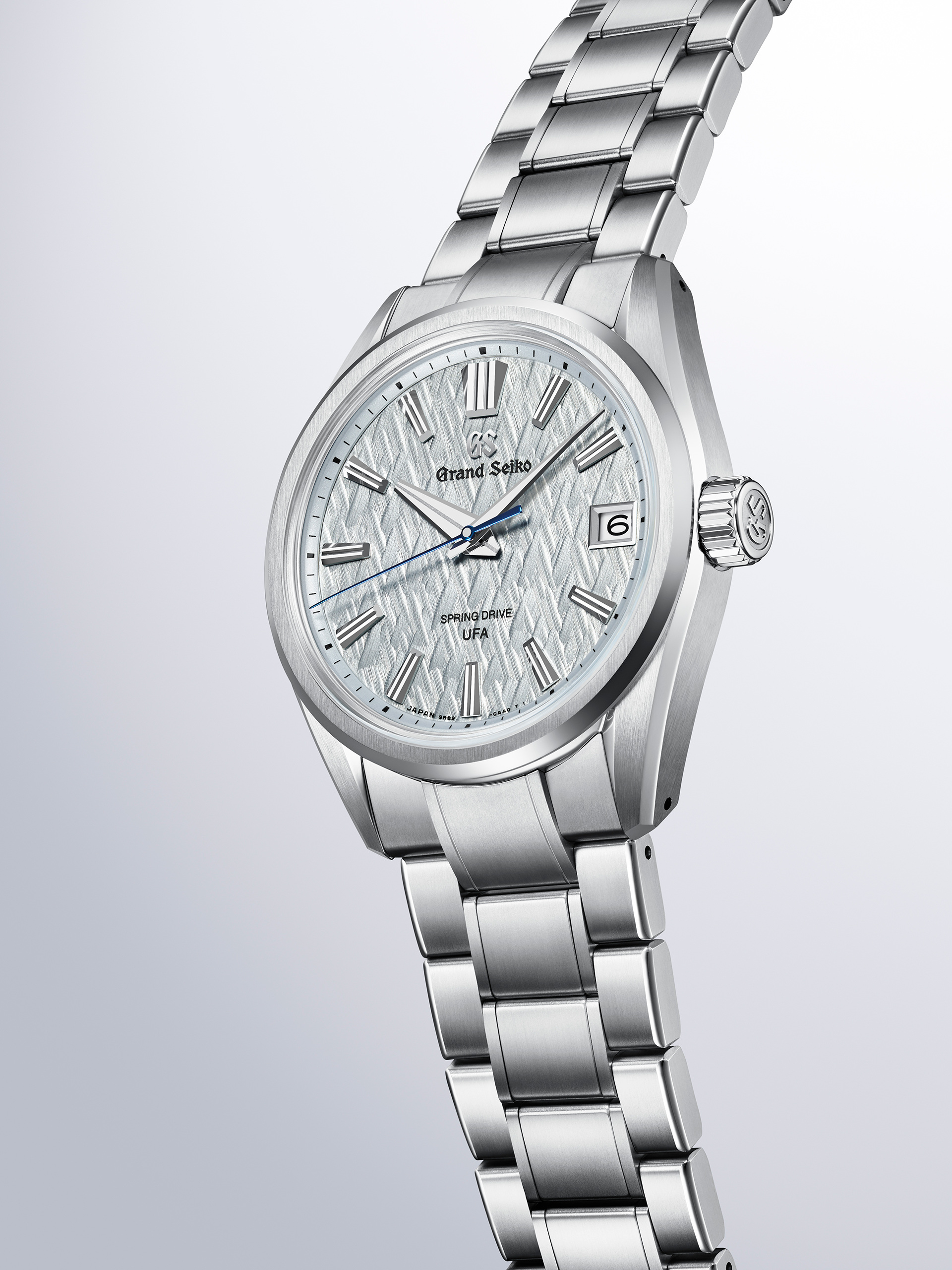
The effect is best considered at two distances. Close to the dial, the pattern is the subject. Step back to the complete watch and the hands, markers and surrounding case establish another hierarchy. A dial texture has to coexist with the information placed above it; the photograph allows those different elements to be examined together.
The blue seconds hand supplies a further point of distinction within the pale composition. Its role in the visual account is local and precise. It gives the eye a line to follow without changing the overall character of the dial. The rest of the watch can then be read through the quieter contrast between polished surfaces, brushed planes and the background of the face.
Thirty-seven millimetres, read as a whole
The published case diameter is 37 mm, with a listed thickness of 11.4 mm. Those dimensions give a useful starting point, but a diameter on its own is an incomplete description of a watch. The way the case meets its lugs, the opening around the dial and the bracelet’s width all contribute to the complete silhouette.
The angled official photographs are particularly useful here. They show the crystal above the face and the transition from the case into the bracelet. A straight-on image explains the dial’s organisation; an oblique view adds the third dimension. Both are needed to understand why a compact numerical diameter does not tell the whole story of the object.
This is a design reading rather than a claim about how the watch feels on a particular wrist. Fit still depends on the wearer and adjustment. The published dimensions and the complete-object photographs make that assessment more informed by giving the prospective owner several aspects of the same reference to consider.
Material continues beyond the case
Grand Seiko lists High-Intensity Titanium for the case and bracelet. Treating both as part of one material account is important: the visual and physical identity of a bracelet watch extends beyond the head of the watch. Its links, clasp and transitions belong to the complete design.
The official bracelet photographs show how the different finishes divide those surfaces. Broader planes establish the direction of the bracelet while narrower polished areas introduce a changing line of light. At the case, the same distinction between surface treatments helps define edges without relying on a large contrast in colour.
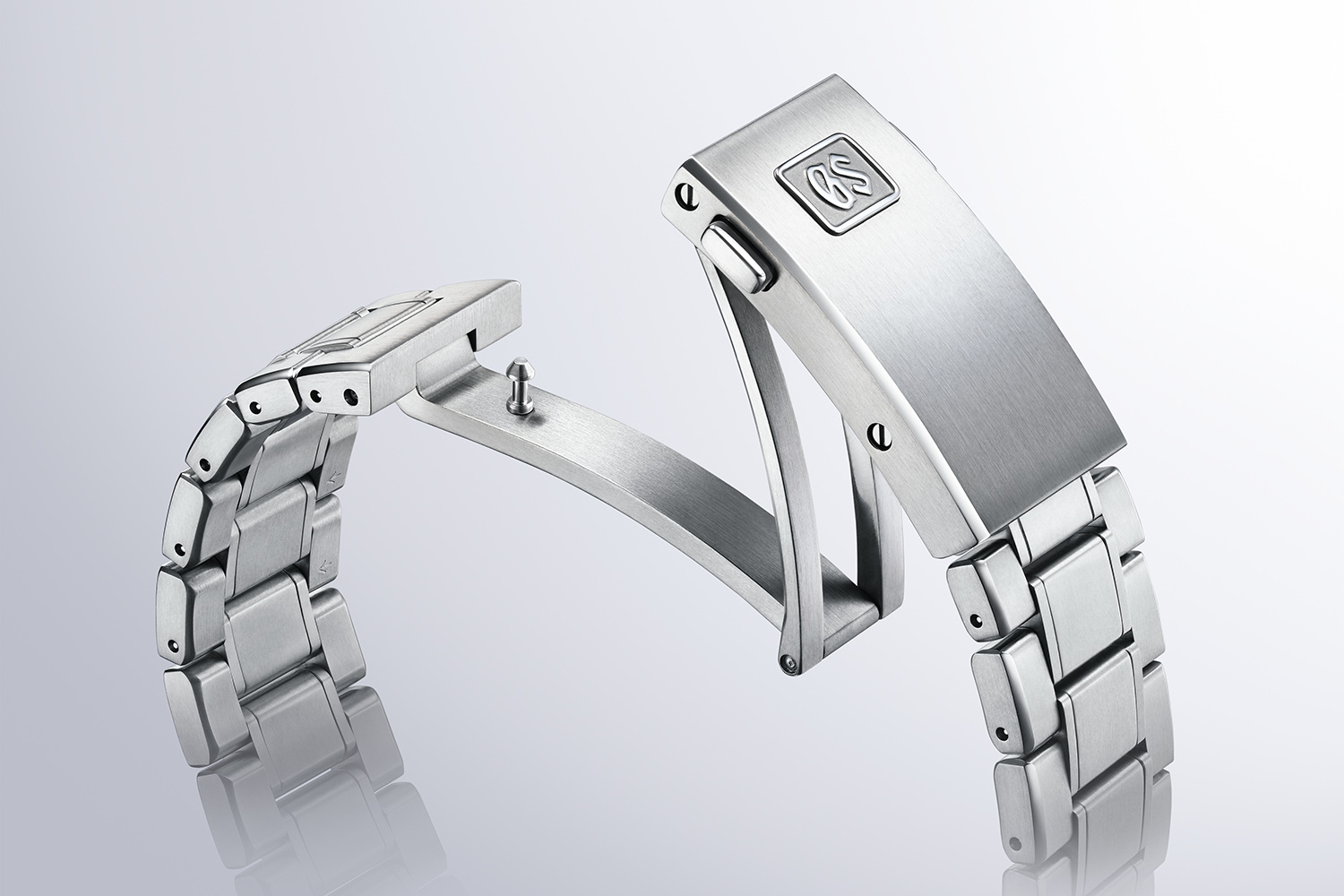
The clasp photograph adds an element that a dial-led presentation can overlook. It makes the underside of the object visible and shows the part through which the bracelet is closed and adjusted. For an intended owner, this is a useful scale of attention: the less visible components are still part of the watch’s daily use.
Accuracy belongs to another measurement
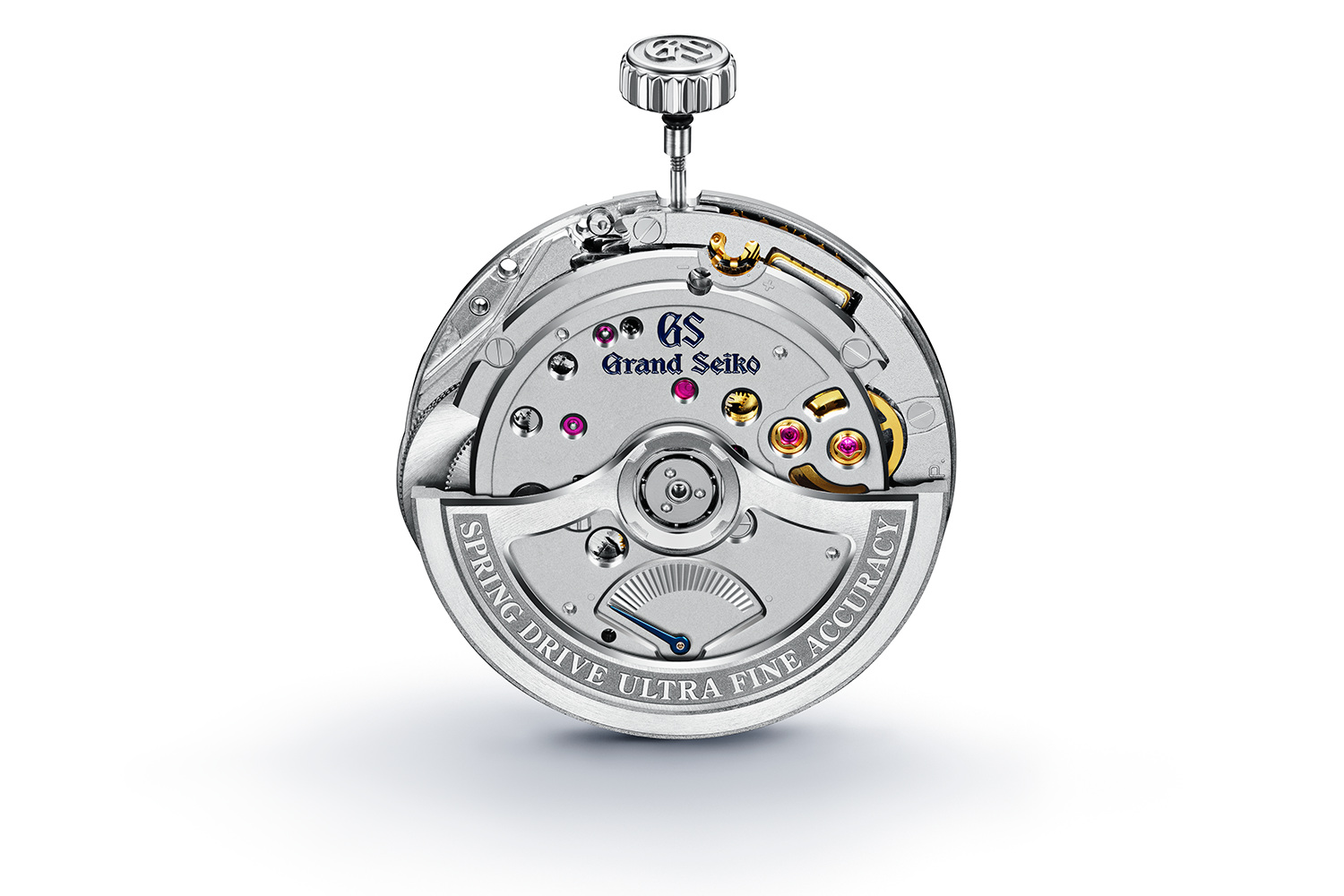
The SLGB003 uses Spring Drive Caliber 9RB2, carrying the U.F.A. designation. Grand Seiko specifies an annual accuracy of ±20 seconds and an approximate power reserve of 72 hours when fully wound. These are manufacturer specifications, with different functions: one describes the stated rate tolerance, the other the duration of stored running autonomy.
The movement account combines mainspring power with electronic regulation. That is a more precise description than placing the watch into a simple mechanical-versus-quartz opposition. The interest lies in the architecture of the regulator and its relationship to the source of energy, rather than in forcing the system into a label that loses those distinctions.
Grand Seiko’s current caliber description also discusses temperature compensation and the oscillator’s manufacturing process. They explain the maker’s account of how the stated rate is pursued. They do not constitute an independent timing trial of the particular watch a customer may receive. The figures here retain their published status rather than being converted into measured findings.
The reverse completes the object
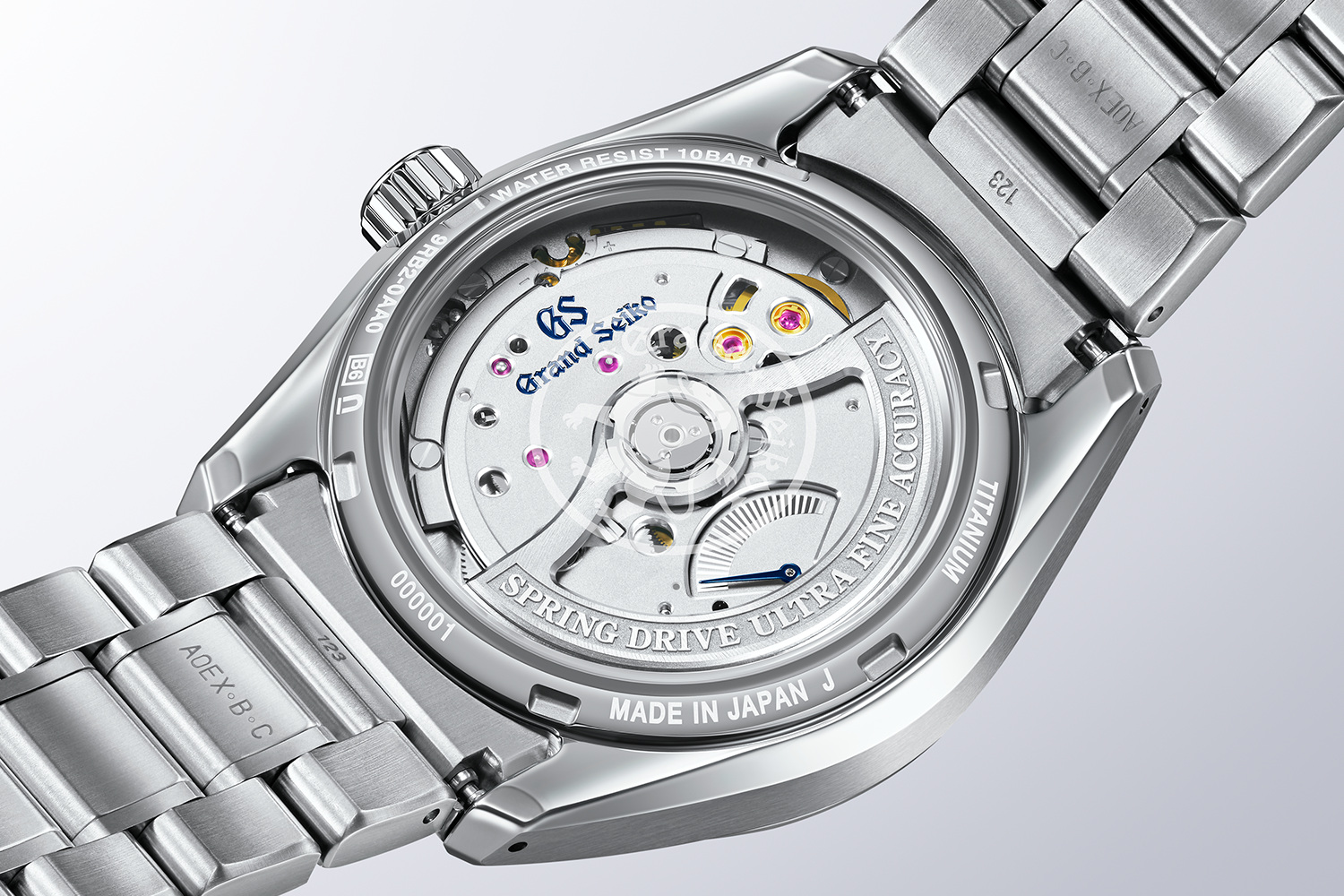
The case-back photograph gives the technical story a second face. The movement occupies the circular opening, with decorated surfaces and visible components arranged beneath the crystal. It is a different composition from the dial: the emphasis shifts from reading time to seeing part of the mechanism through which the watch runs.
That view is useful beside the clasp and the complete watch because it prevents the presentation from becoming a single repeated angle. A bracelet watch has a front, a profile, an underside and a set of joins between them. The photographs can give each a place in the account, even when the dial is the most immediate point of attraction.
The three-step micro-adjustment clasp is another published part of this reference, with tool-free adjustment in 2 mm increments. The mechanism belongs to the practical side of the design. A wearer can inspect its operation and suitability during a fitting, alongside the case dimensions and the way the bracelet is sized for that wrist.
Keep the references distinct
| Published reference | What it describes | How to use it |
|---|---|---|
| SLGB003 | The exact watch reference | Keep it attached to the specifications and selected photographs |
| 37 mm diameter / 11.4 mm thickness | Two dimensions of the case | Read alongside profile, lugs and bracelet |
| High-Intensity Titanium | Listed case and bracelet material | Consider the complete bracelet watch, including its finishes |
| Caliber 9RB2, Spring Drive U.F.A. | The movement and designation | Examine the maker’s technical account for the architecture |
| ±20 seconds per year | Manufacturer accuracy specification | Distinguish it from an independent test of an individual watch |
| Approximately 72 hours | Published running autonomy when fully wound | Keep the winding condition attached |
| Three adjustment steps, 2 mm increments | The clasp’s published adjustment mechanism | Confirm its operation during fitting |
The Luxe Digital view
The SLGB003 earns a fuller reading when accuracy, proportion and surface are given equal attention. Its annual rate specification is a substantial technical subject, but the dial, case and bracelet determine how that subject becomes a complete design. None needs to displace the others.
The strongest presentation therefore moves between scales. It begins with the dial’s texture, steps back to the watch, examines the clasp and returns through the case back to the movement. The result is a more useful picture of a particular reference: an object whose visual language and technical account can be understood together, with room left for the prospective wearer’s own fitting and assessment.
The SLGB003 earns a fuller reading when accuracy, proportion and surface are given equal attention.
Sources & credits
Sources and methodology
Independent editorial analysis of the documented product and official source imagery, checked on 14 October 2026. Visual interpretation is distinguished from manufacturer specifications. No visit, drive, handling session or independent performance test is implied; exact references and historical dates are retained.
- Grand Seiko — source 1: Exact37mm/11.4mm SLGB003,High-Intensity Titanium,9RB2,72h and micro-adjustment specifications.
- Grand Seiko — source 2: Current9RB2annual accuracy and temperature-compensation account.
- Grand Seiko — source 3: Evolution9/SpringDriveUFA context and distinct engineering explanation.