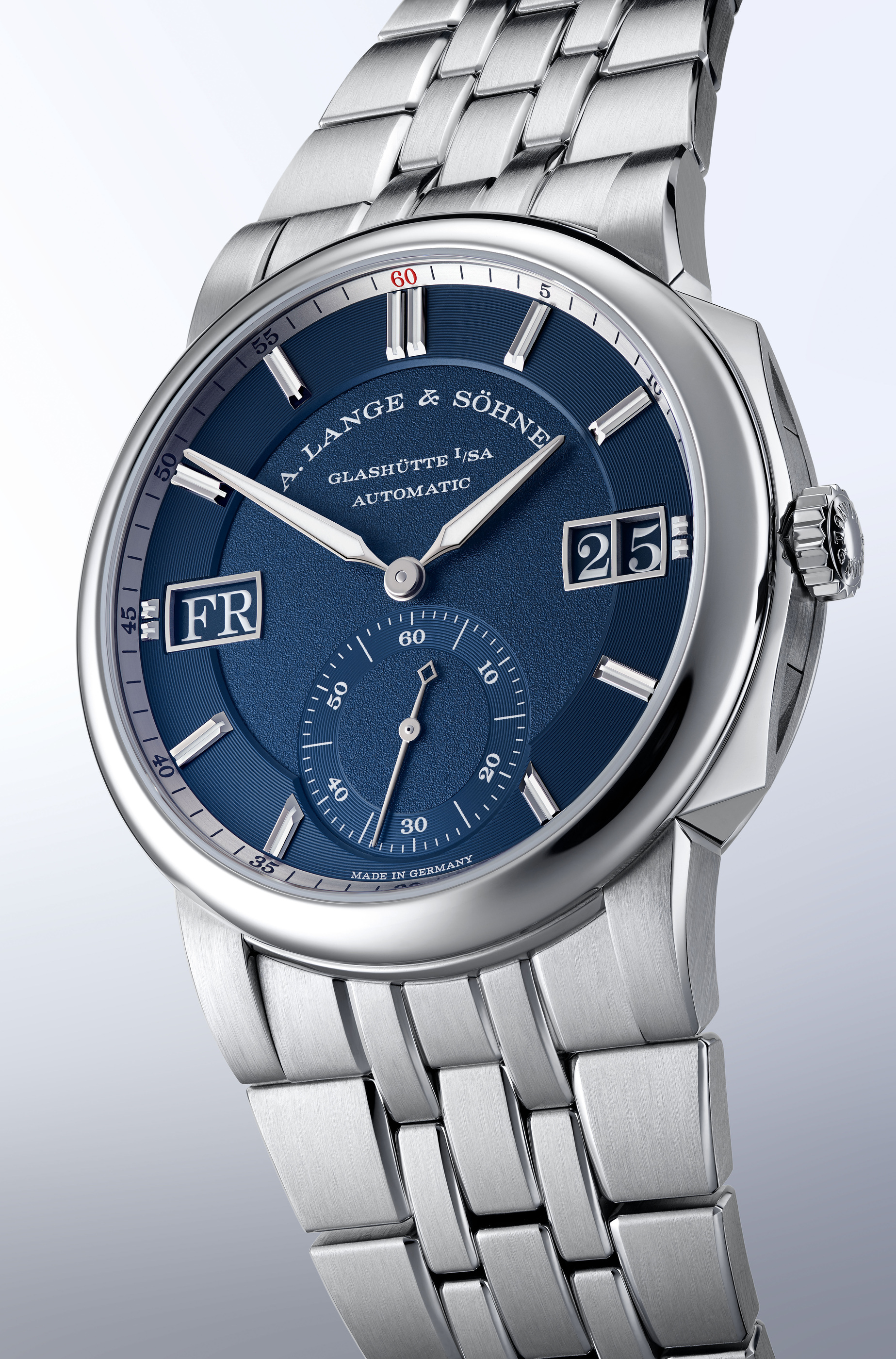
The first impression is steel and blue. The second is a calendar spread across the dial, with the day and date given more presence than a small aperture at the edge. In the Odysseus, those two readings belong together: a recognisably Lange way of organising information sits inside a different kind of silhouette.
The calendar holds the face together
This article concerns the stainless-steel Odysseus, reference 363.179, introduced in 2019 and documented on A. Lange & Söhne’s current model page. The official press photographs include images from that original introduction; they are not presented as a newly photographed 2026 release or as evidence of a Luxe Digital handling session.
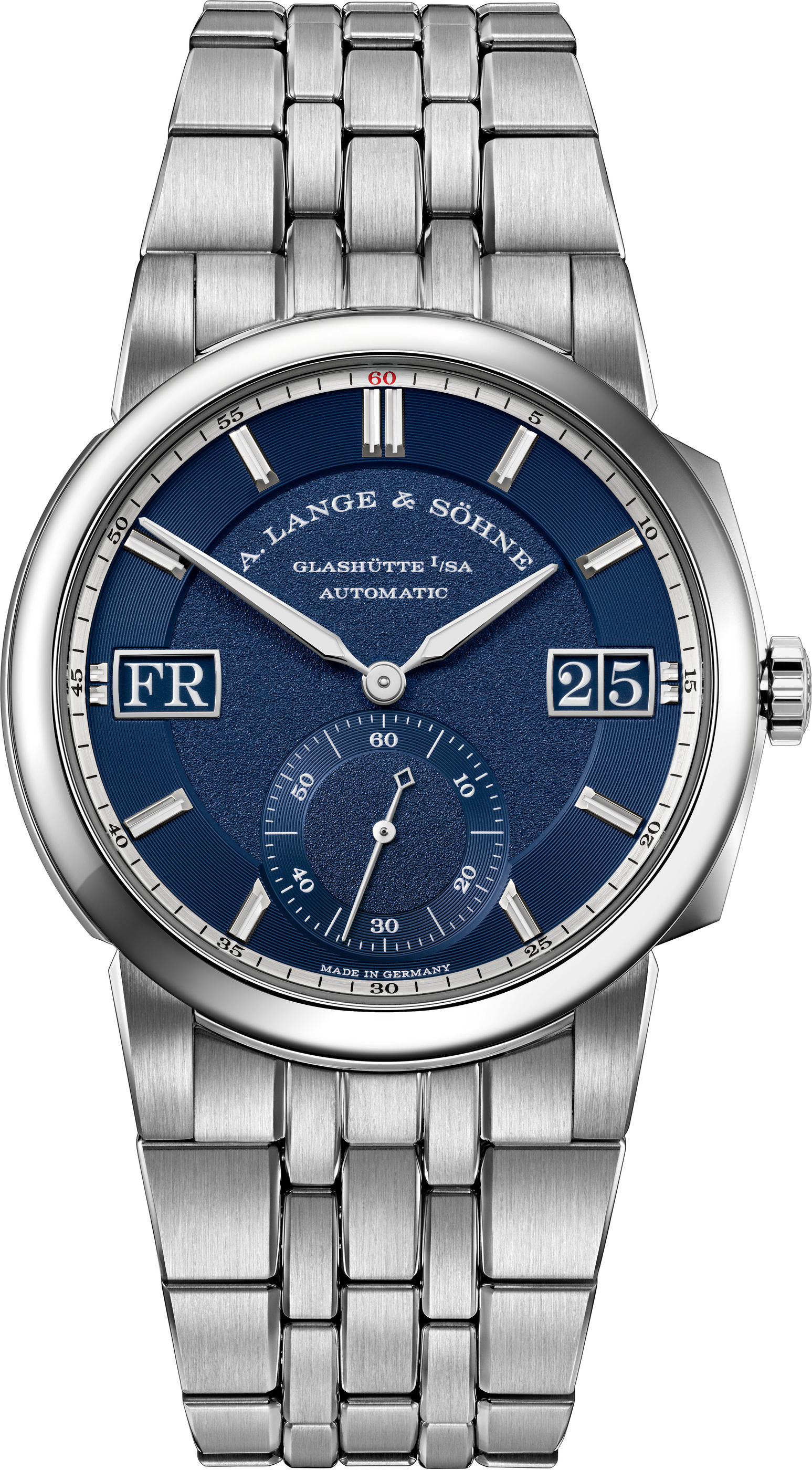
The large day and date displays create a clear horizontal relationship across the dial. Below them, the subsidiary seconds establish another centre, while the hands continue to give the time its ordinary hierarchy. The interest lies in the balance between these elements rather than the quantity of information alone.
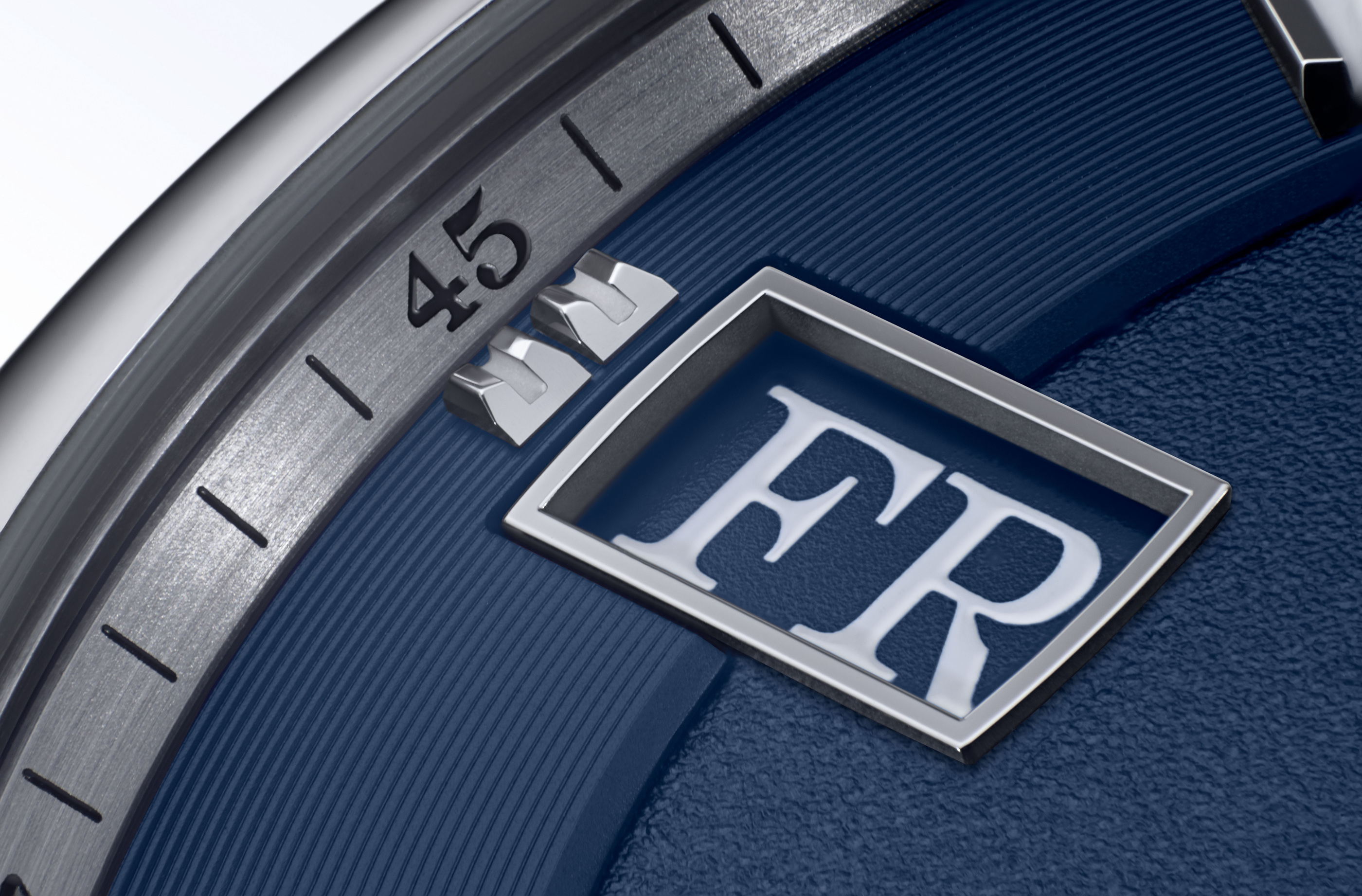
An enlarged dial detail can obscure how compact the composition is on the wrist. The complete product view restores that scale, showing how the displays relate to the case and bracelet. It is useful to move between the two: the detail explains the surfaces; the full watch explains how the surfaces remain part of one object.
Steel changes the outline
The current specification gives a case diameter of 40.5mm and a height of 11.1mm. Those dimensions identify the model, but they do not settle how it will sit on a particular wrist. The bracelet, the case profile and the shape of the wrist all contribute to that encounter.
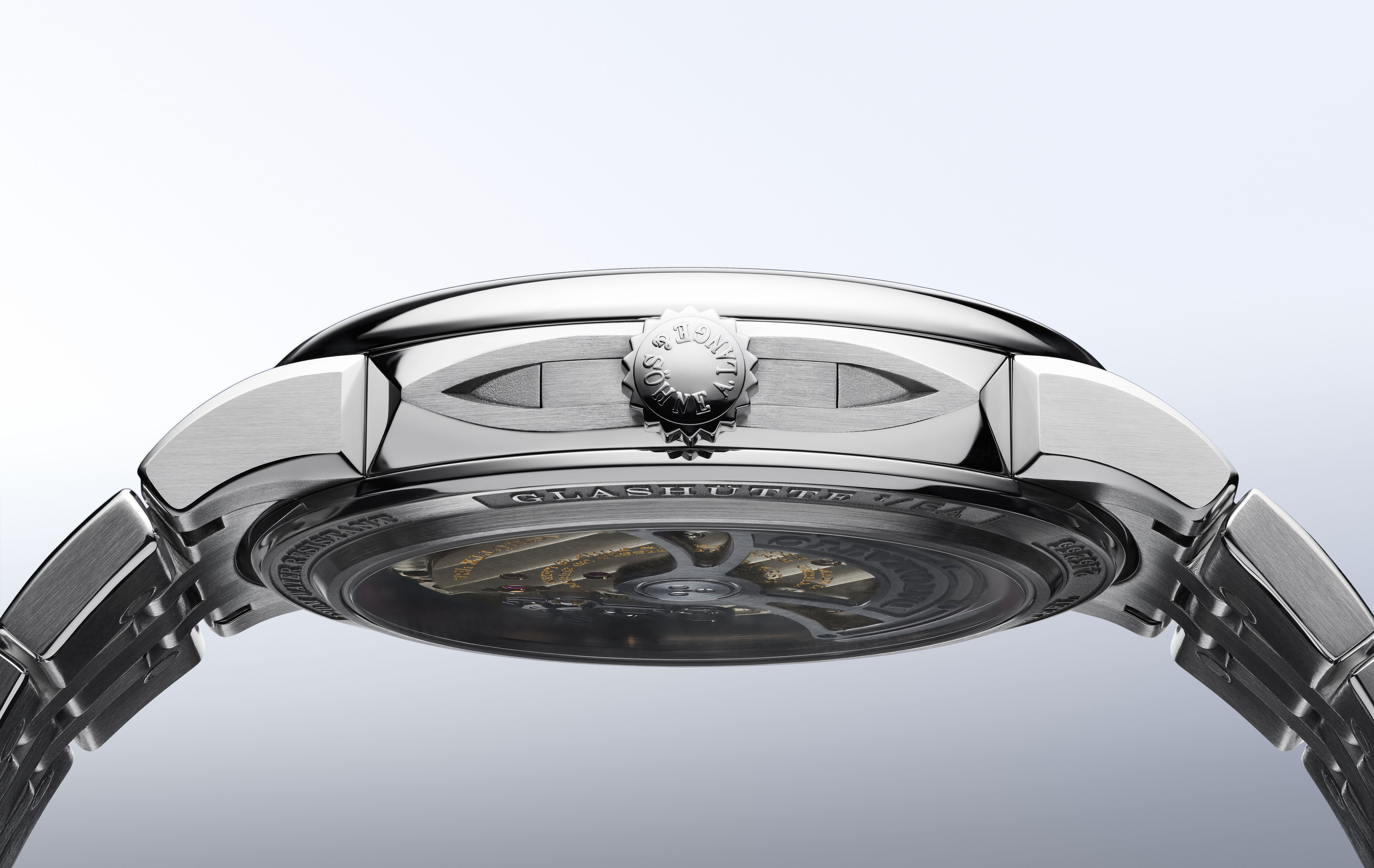
In the side photograph, the crown and adjacent controls make the middle of the case more prominent than the front view suggests. The polished edges contrast with broader brushed areas, giving the steel several visual registers. The case does not need a uniformly reflective surface to feel precisely defined.
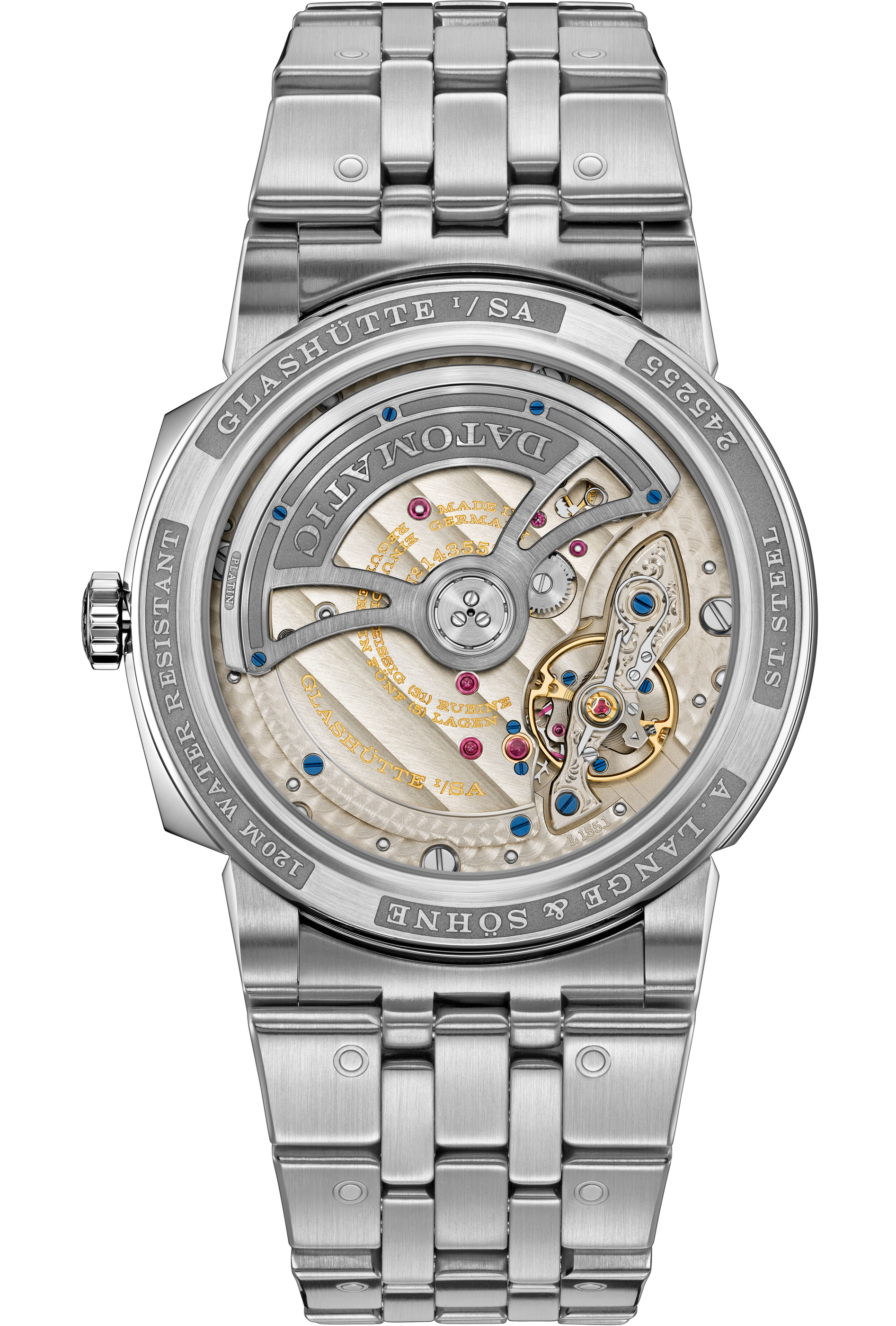
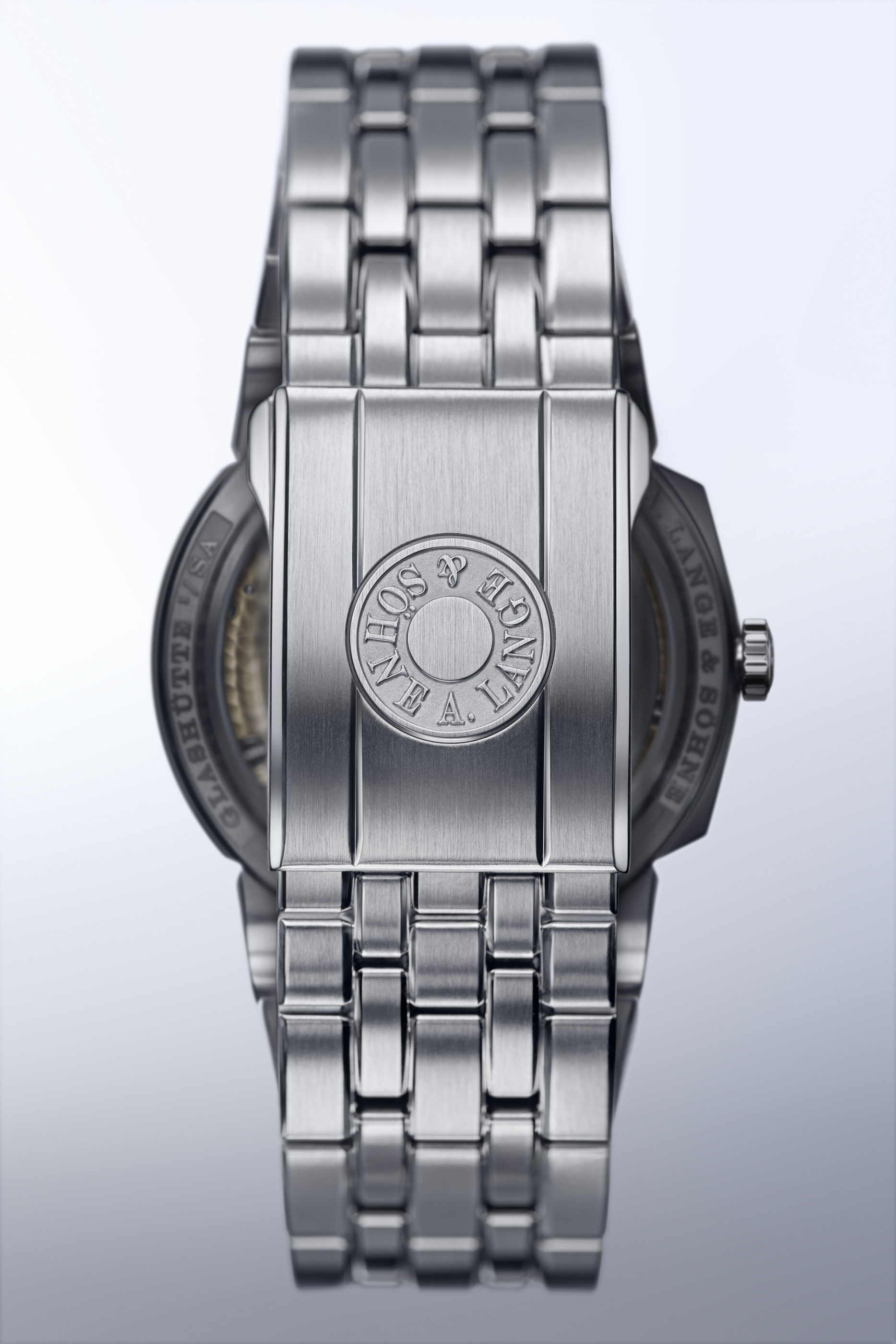
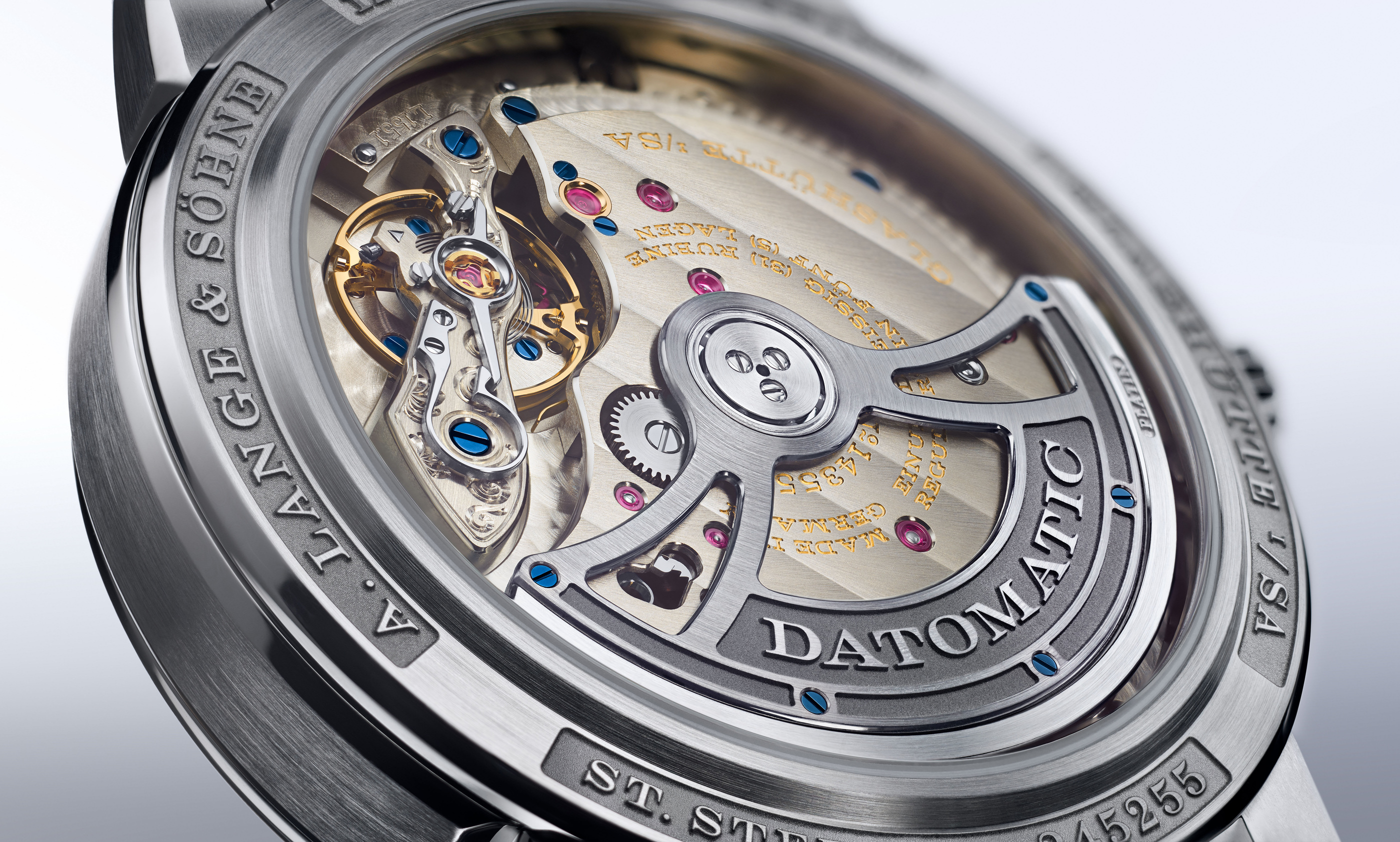
The rear view adds another relationship: the metal continues around the sapphire display back, connecting a practical exterior to a movement that remains visible. It is not necessary to decide that one side is the more important. The design gains interest from the fact that the working dial and the mechanical view have different kinds of order.
The bracelet is part of the watch
The steel bracelet carries the change in character beyond the case. Its broad links continue the alternation of surfaces seen at the edges of the watch, making the complete object read as one continuous assembly. A clasp photograph then reveals the part usually hidden in the most familiar front view.
Lange documents an adjustment system for the steel bracelet and provides current instructions for its use. The editorial value of that information is practical: fit is not merely a matter of choosing a model with attractive dimensions. It is a matter of understanding how the actual bracelet can be set for the wearer.
Ask for a demonstration with the exact watch. The appropriate length, the clasp’s position and the way the links meet the wrist should be assessed together. A large official photograph can explain a construction, but it cannot establish another person’s comfort or replace the manufacturer’s operating guidance.
Blue is more than a colour field
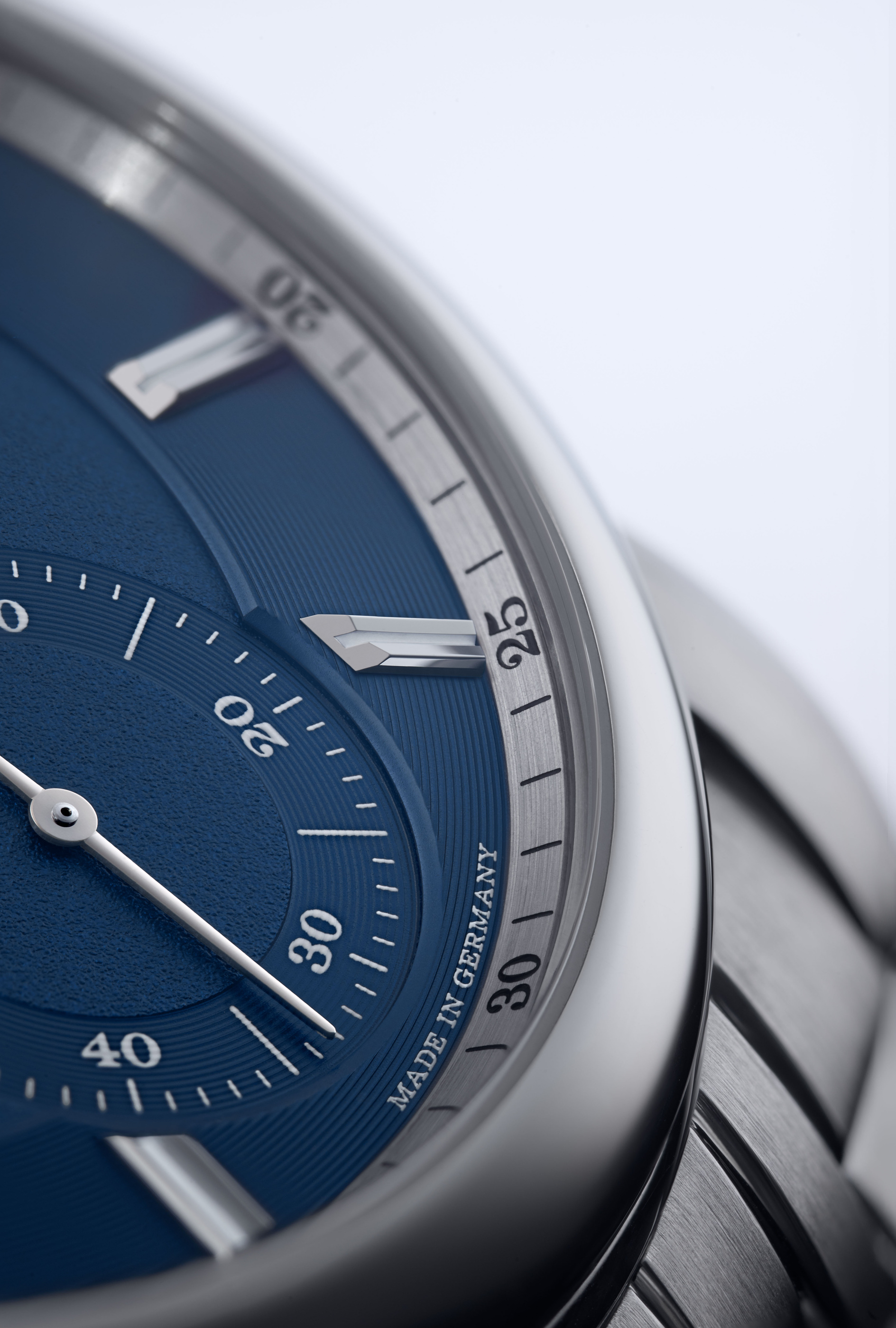
The current model page identifies the blue dial as brass. In the close photographs, different surface treatments make the blue appear deeper in some areas and quieter in others. The rings around the subsidiary seconds and the texture behind the hands prevent the dial from becoming one uninterrupted plane.
The result is a face that changes as the light moves, while the day and date remain clear visual anchors. That is an observation of the official images, not a laboratory statement about reflectivity or a promise of legibility under every condition. It also explains why a neutral product view and a close detail serve different editorial purposes.
The calendar photograph shows a particular language example. It should not be used to infer every market’s display configuration. For an order or an existing watch, the exact reference and its documentation must govern the identity rather than a general reading of a press image.
The movement beneath the silhouette
Lange identifies the self-winding movement as calibre L155.1 and publishes a 50-hour power reserve. Those are documented specifications, rather than a measured result from this publication. The movement photographs give another kind of information: a view of the arrangement and the contrast between broader bridges, polished elements and the visible rotor.
Mechanical detail can make a feature feel substantial, but it should not become an excuse to invent performance conclusions. A beautifully photographed balance assembly does not establish the timing result of an individual watch. For ownership, service history and the condition of the actual piece remain relevant alongside the model specification.
A reference for the steel model
| Element | Manufacturer record | Ownership question |
|---|---|---|
| Identity | Stainless-steel Odysseus, 363.179 | Does the documentation match the actual watch? |
| Case | 40.5mm diameter, 11.1mm height | How does the complete watch fit the wrist? |
| Displays | Large day-of-week and date | Which configuration belongs to the piece? |
| Movement | Self-winding calibre L155.1 | What service information accompanies it? |
| Reserve | Stated 50 hours | What winding routine suits its use? |
| Water rating | Stated test pressure of 12 bar | What current care and testing does the watch need? |
The Luxe Digital view
The Odysseus brings a generous calendar into a steel silhouette without losing the dial’s hierarchy. Its interest is not that it abandons Lange’s visual language, but that the language remains recognisable in another setting. The complete watch, the case profile and the movement deserve separate views because each explains a different part of that transformation.
The Odysseus brings a generous calendar into a steel silhouette without losing the dial’s hierarchy.
Sources & credits
Sources and methodology
Independent editorial analysis of the documented product and official source imagery, checked on 14 October 2026. Visual interpretation is distinguished from manufacturer specifications. No handling, driving or acoustic test is implied; exact references and archival dates are retained.
- A. Lange & Söhne — source 1: Current exact-reference identity, steel/blue brass dial, dimensions, L155.1, 50h and 12bar.
- A. Lange & Söhne — source 2: Original 2019 introduction and exact-reference official high-resolution press photographs.
- A. Lange & Söhne — source 3: Original model history and steel bracelet adjustment system.