| Founded | 1860 — Saint-Imier, Switzerland |
|---|---|
| Founder(s) | Edouard Heuer |
| Headquarters | La Chaux-de-Fonds, Switzerland |
| Parent Group | LVMH |
| Known For | Chronographs, motorsport timekeeping, Connected watches |
| Price Range | £1,200 to £10,000+, GBP, 2024 |
| Revenue / Production | N/A |
| Official Website | tagheuer.com |
TAG Heuer S.A., established in 1860 in Saint-Imier, Switzerland, is a Swiss luxury watch manufacturer renowned for its chronographs, pioneering role in sports timekeeping, and more recently, its line of connected smartwatches. Originally founded as Uhrenmanufaktur Heuer AG by Edouard Heuer, the company’s trajectory has been marked by innovation in timekeeping technology and a strong association with the world of motorsports.
History and Founding
Edouard Heuer, at the age of 20, founded Uhrenmanufaktur Heuer AG in 1860 in Saint-Imier, a town nestled in the Swiss Jura mountains. Heuer’s initial focus was on the production of pocket watches, and he quickly gained recognition for his innovative spirit and commitment to precision. In 1869, Heuer patented a crown-winding system for pocket watches, eliminating the need for a separate key. This invention streamlined the winding process and enhanced the practicality of pocket watches, contributing to Heuer’s early success.
The late 19th and early 20th centuries saw Heuer continue to refine its watchmaking capabilities. The company developed increasingly sophisticated movements and expanded its product line to include wristwatches as they gained popularity. Heuer’s dedication to accuracy and reliability made its timepieces attractive to professionals in various fields, including sports and industry.
Historical Timeline
- 1860: Edouard Heuer founds Uhrenmanufaktur Heuer AG in Saint-Imier, Switzerland.
- 1869: Heuer patents a crown-winding system for pocket watches.
- 1887: Heuer patents the oscillating pinion, a key component of chronograph mechanisms.
- 1911: Heuer patents the “Time of Trip,” the first dashboard chronograph for automobiles and aircraft.
- 1916: Heuer introduces the Mikrograph, the first stopwatch accurate to 1/100th of a second.
- 1920: Heuer becomes the official timekeeper for the Olympic Games in Antwerp.
- 1933: Heuer introduces the Autavia, a dashboard instrument for automobiles and aviation (a portmanteau of “AUTomobile” and “AVIAtion”).
- 1958: Jack Heuer, Edouard Heuer’s great-grandson, joins the company.
- 1962: Heuer becomes the first Swiss watchmaker in space, with a Heuer stopwatch accompanying John Glenn on his Mercury mission.
- 1963: The Carrera chronograph, designed by Jack Heuer, is launched.
- 1969: Heuer, in collaboration with Breitling and Hamilton, introduces the Caliber 11, one of the first automatic chronograph movements.
- 1969: The Monaco chronograph, with its square case, is launched.
- 1985: Techniques d’Avant Garde (TAG) acquires a majority stake in Heuer, forming TAG Heuer.
- 1999: LVMH (Moët Hennessy Louis Vuitton) acquires TAG Heuer.
- 2015: TAG Heuer launches its first connected smartwatch.
Key Collections and Iconic References
TAG Heuer’s product portfolio is structured around several key collections, each with its own distinct design and target audience. These collections showcase the brand’s diverse capabilities, ranging from classic chronographs to technologically advanced smartwatches.
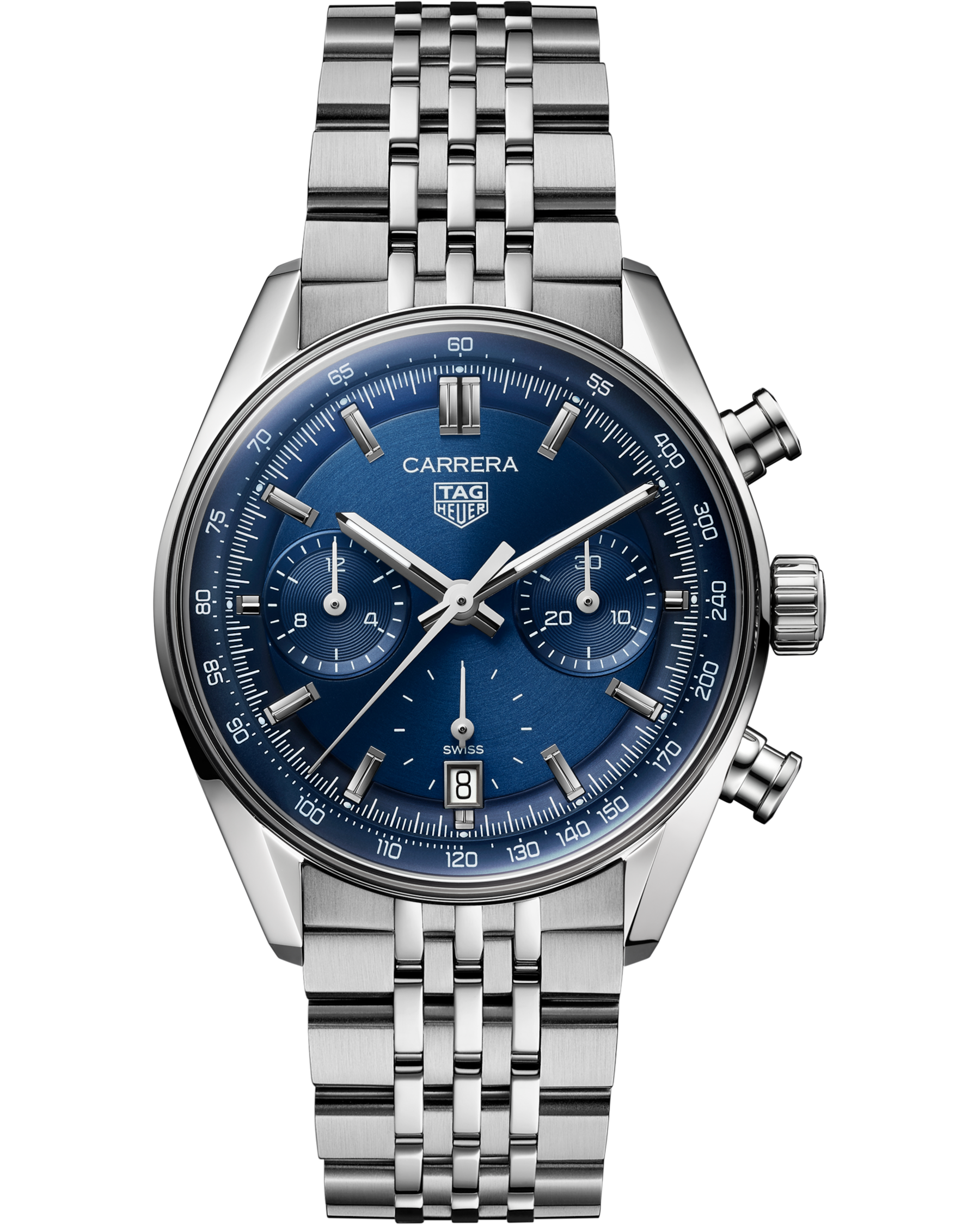
- Carrera: The Carrera collection, first introduced in 1963, is one of TAG Heuer’s most iconic and enduring lines. Designed by Jack Heuer, the Carrera was inspired by the Carrera Panamericana, a dangerous road race in Mexico. The Carrera chronographs are characterised by their clean, legible dials, robust construction, and focus on functionality. Notable Carrera references include the Carrera Chronograph, often featuring the Calibre Heuer 02 automatic movement, and limited-edition models commemorating the brand’s motorsport heritage.
- Monaco: The Monaco collection is instantly recognisable for its square case, a bold design choice that set it apart from traditional round watches. Launched in 1969, the Monaco gained further fame when Steve McQueen wore it in the film Le Mans (1971). The Monaco is often associated with its blue dial and the Calibre 11 automatic chronograph movement, a movement that was revolutionary for its time.
- Aquaracer: The Aquaracer collection represents TAG Heuer’s line of dive watches. These watches are designed for underwater use, featuring robust cases, unidirectional rotating bezels, and high levels of water resistance. The Aquaracer models typically feature luminous hands and markers for enhanced visibility in low-light conditions.
- Formula 1: The Formula 1 collection is inspired by TAG Heuer’s long-standing involvement in motorsport. These watches often feature sporty designs, vibrant colours, and materials such as stainless steel and rubber. The Formula 1 collection offers both chronograph and non-chronograph models, catering to a wide range of tastes.
- Connected: The Connected collection represents TAG Heuer’s foray into the world of smartwatches. These watches combine traditional Swiss watchmaking craftsmanship with advanced technology, offering features such as GPS, heart rate monitoring, and smartphone connectivity. The Connected watches are designed to be customizable, with interchangeable straps and watch faces.
- Link: The Link collection is distinguished by its signature bracelet, featuring S-shaped links that provide a comfortable and ergonomic fit. The Link watches are available in both chronograph and non-chronograph versions, with a focus on elegance and sophistication.
Technical Heritage and Innovation
TAG Heuer has a rich history of technical innovation in watchmaking, particularly in the development of chronographs and timing instruments. The company has consistently pushed the boundaries of precision and accuracy, earning numerous patents and accolades for its achievements.
- Oscillating Pinion (1887): Edouard Heuer’s invention of the oscillating pinion in 1887 was a significant breakthrough in chronograph design. This mechanism simplified the engagement and disengagement of the chronograph function, making it more reliable and efficient. The oscillating pinion remains a fundamental component of many chronograph movements today.
- Mikrograph (1916): In 1916, Heuer introduced the Mikrograph, the first stopwatch accurate to 1/100th of a second. This groundbreaking invention revolutionised sports timekeeping, allowing for unprecedented precision in measuring athletic performance. The Mikrograph was used to time events at the Olympic Games and other major sporting competitions.
- Calibre 11 (1969): Heuer, in collaboration with Breitling and Hamilton, developed the Calibre 11, one of the first automatic chronograph movements. This movement eliminated the need for manual winding, making chronographs more convenient and user-friendly. The Calibre 11 was a significant achievement in watchmaking technology and helped to popularise automatic chronographs.
- Monaco V4 (2004): The Monaco V4, introduced in 2004, was a revolutionary concept watch that showcased TAG Heuer’s innovative spirit. This watch featured a belt-driven movement, replacing traditional gears with a system of belts and linear weights. The Monaco V4 was a complex and technically challenging project, demonstrating TAG Heuer’s commitment to pushing the boundaries of watchmaking.
- Connected Watch Technology: TAG Heuer has been at the forefront of integrating technology into luxury timepieces with its Connected watch line. These smartwatches feature advanced sensors, GPS, and connectivity, offering a range of functionalities for sports tracking, communication, and personalization. TAG Heuer’s Connected watches represent a fusion of traditional watchmaking craftsmanship and modern technology.
Ownership and Corporate Structure
Originally founded as an independent family-owned business, TAG Heuer has undergone several ownership changes throughout its history. In 1985, Techniques d’Avant Garde (TAG), a group specialising in high-tech industries, acquired a majority stake in Heuer, leading to the company being renamed TAG Heuer. This acquisition brought new investment and expertise to the brand, helping it to expand its product line and global reach.
In 1999, LVMH (Moët Hennessy Louis Vuitton), the world’s largest luxury goods conglomerate, acquired TAG Heuer. This acquisition provided TAG Heuer with access to LVMH’s extensive resources and distribution network, further strengthening its position in the luxury watch market. As part of the LVMH group, TAG Heuer operates as a distinct brand with its own management team and creative direction.
Key Figures
- Edouard Heuer: The founder of Heuer, Edouard Heuer was a visionary watchmaker who laid the foundation for the company’s success. His innovative spirit and commitment to precision shaped the brand’s early identity.
- Jack Heuer: Jack Heuer, Edouard Heuer’s great-grandson, played a pivotal role in shaping TAG Heuer’s modern identity. He joined the company in 1958 and was responsible for designing some of its most iconic watches, including the Carrera and the Monaco. Jack Heuer also spearheaded the company’s involvement in motorsport, forging strong partnerships with racing teams and drivers.
- Antoine Pin: The current CEO of TAG Heuer, Antoine Pin is responsible for leading the company’s strategic direction and overseeing its global operations.
Auction Records
TAG Heuer watches, particularly vintage models, have performed well at auction, reflecting their historical significance and collectibility. Certain rare and historically important TAG Heuer watches have achieved significant prices at auction.
- In 2017, a Heuer Monaco worn by Steve McQueen in the film Le Mans sold for $2,208,000 at auction (according to Phillips 2017). This watch is one of the most iconic and sought-after Heuer models, and its association with Steve McQueen significantly enhances its value.
- Vintage Heuer chronographs, particularly those with rare dial variations or historical significance, often command high prices at auction. Collectors value these watches for their craftsmanship, historical importance, and connection to the world of motorsport.
Cultural Legacy and Influence
TAG Heuer has cultivated a strong cultural legacy, particularly through its association with motorsport and its presence in popular culture. The brand’s watches have been worn by prominent figures in sports, entertainment, and business, further enhancing its image and appeal.
- Motorsport: TAG Heuer has a long and storied history in motorsport, dating back to the early 20th century. The company has served as the official timekeeper for numerous racing events, including Formula 1, IndyCar, and the World Endurance Championship. TAG Heuer has also partnered with several racing teams and drivers, including Ferrari, McLaren, and Red Bull Racing. The brand’s involvement in motorsport has helped to establish its reputation for precision, reliability, and performance.
- Steve McQueen: Steve McQueen’s wearing of the Heuer Monaco in the film Le Mans cemented the watch’s status as a cultural icon. The Monaco’s association with McQueen, a symbol of cool and rebellion, has contributed to its enduring popularity.
- Sponsorships: TAG Heuer has a history of sponsoring high-profile athletes, celebrities, and events. These sponsorships have helped to raise brand awareness and reinforce its image as a luxury brand associated with success and achievement.
Legacy and Significance
TAG Heuer’s legacy lies in its pioneering contributions to watchmaking technology, its strong association with motorsport, and its ability to adapt to changing consumer preferences. From its early innovations in chronograph design to its embrace of smartwatch technology, TAG Heuer has consistently demonstrated a commitment to pushing the boundaries of watchmaking.
The brand’s iconic models, such as the Carrera and the Monaco, remain highly sought-after by collectors and enthusiasts. TAG Heuer’s watches are valued for their craftsmanship, historical significance, and connection to the world of sports and entertainment. As a member of the LVMH group, TAG Heuer is well-positioned to continue its legacy of innovation and excellence in the luxury watch market.