| Founded | 1791 — Geneva, Switzerland |
|---|---|
| Founder(s) | Jean-François Bautte, Constant Girard |
| Headquarters | La Chaux-de-Fonds, Switzerland |
| Parent Group | Sowind Group |
| Known For | Tourbillons, Three Bridges pocket watch, Laureato |
| Price Range | £7,000 to £600,000, 2024 |
| Revenue / Production | Approx. 12,000 pieces/year |
| Official Website | girard-perregaux.com |
Girard-Perregaux SA, established in 1791 in Geneva, Switzerland, is a Swiss luxury watch manufacturer renowned for its haute horlogerie timepieces. The brand is particularly recognised for its tourbillons, the iconic Three Bridges pocket watch design, and the Laureato collection. Girard-Perregaux operates as a subsidiary of the Sowind Group.
History and Founding
The history of Girard-Perregaux is rooted in the late 18th and 19th centuries, marked by the contributions of two key figures: Jean-François Bautte and Constant Girard. Jean-François Bautte, born in 1772, was a watchmaker, jeweller, and designer who established his own workshop in Geneva in 1791. Bautte’s company initially focused on producing cabinotier-style watches, highly intricate and bespoke timepieces crafted in small workshops. These watches were known for their elaborate designs and complications, catering to a wealthy clientele.
In 1852, Constant Girard founded Girard & Cie in La Chaux-de-Fonds. Girard, who would later marry Marie Perregaux, was a watchmaker with a keen interest in precision and innovation. In 1854, Constant Girard and Marie Perregaux merged their operations, giving rise to the name Girard-Perregaux. This union marked a significant step in the company’s development, combining Bautte’s established reputation for design with Girard’s technical expertise.
Historical Timeline
- 1791: Jean-François Bautte establishes his watchmaking workshop in Geneva.
- 1852: Constant Girard founds Girard & Cie in La Chaux-de-Fonds.
- 1854: Constant Girard marries Marie Perregaux, leading to the formation of Girard-Perregaux.
- 1867: Girard-Perregaux presents the Tourbillon with Three Bridges pocket watch, which later wins a gold medal at the Paris Universal Exhibition.
- 1880s: Girard-Perregaux produces one of the earliest examples of a wristwatch, commissioned by German Imperial Navy officer Girard for naval officers.
- Early 20th Century: The company continues to produce high-quality timepieces, including chronographs and complicated watches.
- 1930: The firm is taken over by Otto Graef, who also owns Mimo.
- 1960s: Girard-Perregaux is one of the first companies to develop and produce high-frequency movements, including the Gyromatic Chronometer HF.
- 1970: Girard-Perregaux unveils the first Swiss quartz wristwatch, the Elcron.
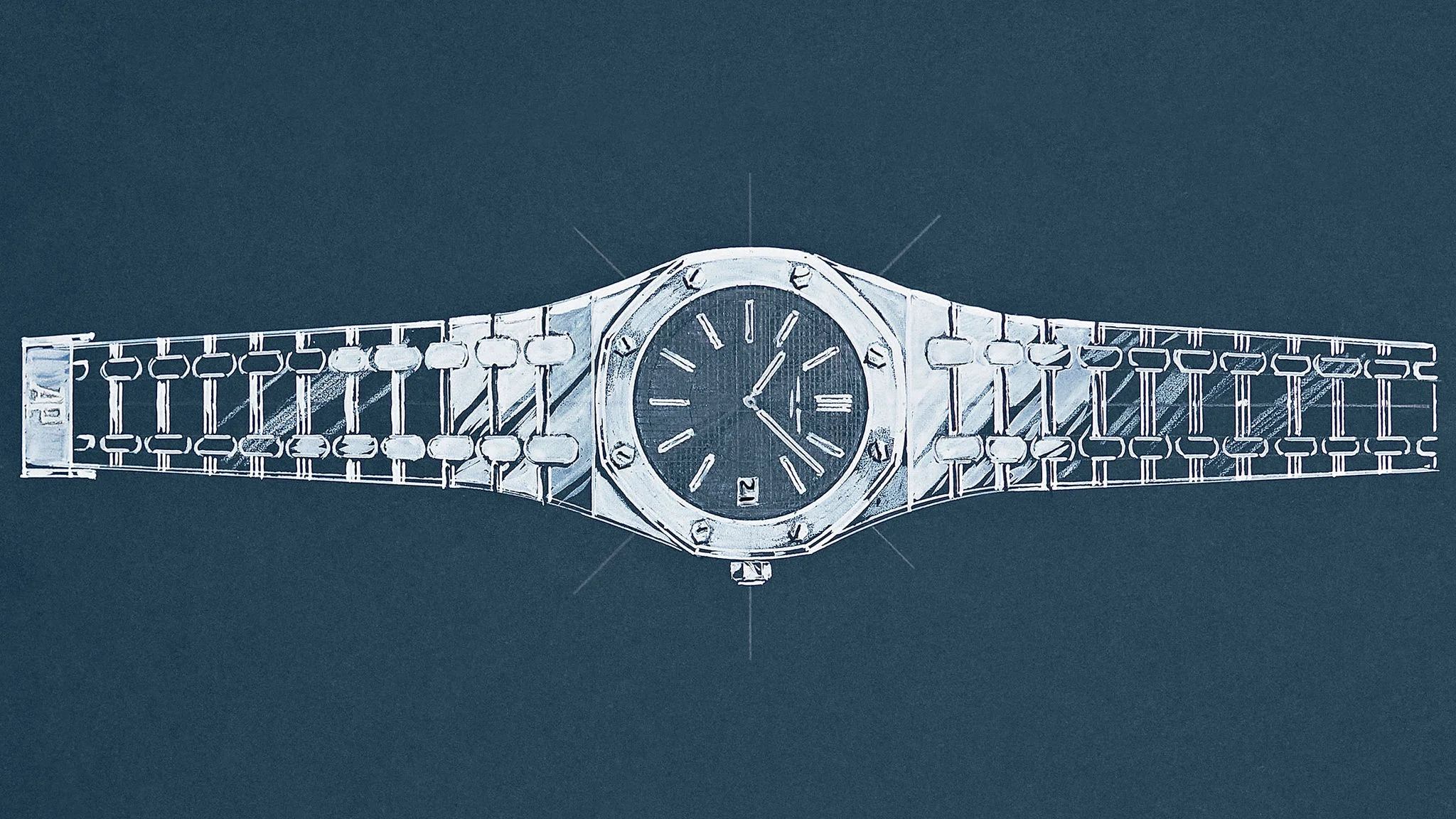
- 1975: The Laureato collection is launched, featuring an integrated bracelet and octagonal bezel.
- 1981: The revival of the Tourbillon with Three Gold Bridges as a wristwatch.
- 1992: Italian businessman and watch collector Luigi Macaluso acquires Girard-Perregaux.
- 2011: Sowind Group, owned by Kering (formerly PPR), acquires Girard-Perregaux.
- 2010s-Present: Girard-Perregaux continues to innovate with new materials, complications, and designs, while maintaining its historical legacy.
Key Collections and Iconic References
Girard-Perregaux’s portfolio includes several key collections that showcase the brand’s design and technical capabilities:
- Laureato: Introduced in 1975, the Laureato is characterised by its integrated bracelet and octagonal bezel. Originally a quartz watch, it was later produced with mechanical movements. The Laureato has become one of Girard-Perregaux’s most recognisable models, available in various materials, sizes, and complications, including chronographs and tourbillons.
- Bridges: The Bridges collection is directly inspired by the Tourbillon with Three Gold Bridges pocket watch from the 19th century. These watches feature the movement’s bridges as a prominent design element on the dial, showcasing the intricate mechanics of the watch. The collection includes models with tourbillons, as well as other complications.
- 1966: The 1966 collection is named after the year Girard-Perregaux introduced its high-frequency Gyromatic Chronometer movement. These watches are known for their classic and elegant designs, often featuring slim profiles and understated dials. The collection includes models with various complications, such as moon phases and date displays.
- Vintage 1945: The Vintage 1945 collection features rectangular cases inspired by Art Deco designs from the 1940s. These watches often have curved cases and dials, offering a distinctive and vintage-inspired aesthetic.
- Cat’s Eye: The Cat’s Eye collection is specifically designed for women, featuring oval-shaped cases and elegant designs. These watches often incorporate diamonds and other precious materials, with models featuring moon phases and other complications.
- Grand Complications: This collection encompasses Girard-Perregaux’s most complex and technically advanced timepieces, including minute repeaters, tourbillons, and astronomical complications. These watches represent the pinnacle of Girard-Perregaux’s watchmaking expertise.
Iconic References:
- Tourbillon with Three Gold Bridges: Originally a pocket watch from 1867, the Tourbillon with Three Gold Bridges is one of Girard-Perregaux’s most iconic creations. The design features three parallel bridges made of gold, supporting the tourbillon, barrel, and gear train. This design has been adapted into wristwatch form and remains a signature element of the brand.
- Laureato Skeleton: A modern interpretation of the Laureato, the Skeleton model features a skeletonised movement that reveals the inner workings of the watch. This design combines the Laureato’s distinctive case and bracelet with a contemporary, technical aesthetic.
Technical Heritage and Innovation
Girard-Perregaux has a long history of technical innovation in watchmaking:
- High-Frequency Movements: In the 1960s, Girard-Perregaux was among the first companies to develop high-frequency movements. The Gyromatic Chronometer HF operated at 36,000 vibrations per hour (5 Hz), offering improved accuracy and stability.
- Quartz Technology: In 1970, Girard-Perregaux unveiled the Elcron, one of the first Swiss quartz wristwatches. This demonstrated the company’s willingness to embrace new technologies.
- Constant Escapement: In 2008, Girard-Perregaux introduced the Constant Escapement, a revolutionary escapement design that provides a constant supply of energy to the oscillator, improving accuracy. This innovation was the result of several years of research and development.
- Silicon Technology: Girard-Perregaux has also been involved in the use of silicon components in its movements, including silicon escapements and balance springs. Silicon offers advantages such as being lightweight, anti-magnetic, and resistant to temperature variations.
Ownership and Corporate Structure
Girard-Perregaux is part of the Sowind Group, a Swiss watchmaking group that also includes the watch brand JeanRichard. The Sowind Group is owned by Kering, a French luxury group that owns brands such as Gucci, Saint Laurent, and Bottega Veneta.
Under Kering’s ownership, Girard-Perregaux has continued to operate as a high-end watch manufacturer, focusing on its historical strengths and technical innovations. The brand benefits from Kering’s resources and distribution network, while maintaining its independence in terms of design and production.
Key Figures
- Jean-François Bautte: Founder of the original watchmaking workshop in Geneva in 1791.
- Constant Girard: Founder of Girard & Cie and key figure in the development of Girard-Perregaux.
- Marie Perregaux: Wife of Constant Girard, whose name contributed to the Girard-Perregaux brand.
- Luigi Macaluso: Italian businessman and watch collector who acquired Girard-Perregaux in 1992, revitalising the brand.
- Patrick Pruniaux: Current CEO of Girard-Perregaux (as of 2024).
Auction Records
Girard-Perregaux watches have performed well at auction, reflecting their collectibility and historical significance. Examples include:
- Tourbillon with Three Gold Bridges: Vintage examples of the Tourbillon with Three Gold Bridges pocket watch have achieved high prices at auction, particularly those in exceptional condition or with unique features.
- Vintage Chronographs: Girard-Perregaux chronographs from the mid-20th century are also sought after by collectors, with rare models fetching significant sums.
- Unique Pieces and Limited Editions: Unique pieces and limited edition Girard-Perregaux watches, especially those with complex complications or unusual designs, often attract strong interest from collectors at auction. According to Phillips in 2024, a platinum Girard-Perregaux Opera One sold for CHF 302,000 in Geneva.
Cultural Legacy and Influence
Girard-Perregaux has made several contributions to the field of watchmaking, solidifying its cultural legacy:
- Design Innovation: The Tourbillon with Three Gold Bridges is recognised as a design icon, influencing the aesthetics of many subsequent watches. The Laureato’s integrated bracelet and octagonal bezel also set a trend in the 1970s.
- Technical Advancement: Girard-Perregaux’s work on high-frequency movements and the Constant Escapement has contributed to the advancement of watchmaking technology.
- Preservation of Craftsmanship: Girard-Perregaux has maintained its commitment to traditional watchmaking techniques, preserving the skills and knowledge required to produce high-quality mechanical watches.
Legacy and Significance
Girard-Perregaux stands as a significant player in the world of haute horlogerie, with a history spanning over two centuries. The brand’s legacy is built on a combination of design innovation, technical expertise, and a commitment to traditional watchmaking values.
The Tourbillon with Three Gold Bridges remains a symbol of Girard-Perregaux’s design prowess, while the Laureato has become a modern icon. The company’s contributions to high-frequency movements and escapement technology demonstrate its commitment to technical advancement.
As part of the Sowind Group and Kering, Girard-Perregaux is positioned to continue its legacy as a leading manufacturer of luxury watches, appealing to collectors and enthusiasts who appreciate the brand’s history, craftsmanship, and innovation.