| Founded | 1926 — Geneva, Switzerland |
|---|---|
| Founder(s) | Hans Wilsdorf |
| Headquarters | Geneva, Switzerland |
| Parent Group | Rolex SA |
| Known For | Robust tool watches, accessible luxury, historical re-editions |
| Price Range | £2,000 to £6,000 (2024) |
| Revenue / Production | N/A |
| Official Website | tudorwatch.com |
Tudor SA is a Swiss watch manufacturer based in Geneva, Switzerland, established in 1926 by Hans Wilsdorf, the founder of Rolex. Positioned as a more accessible alternative to its parent company, Tudor produces robust and reliable timepieces, often drawing inspiration from its historical models, and is known for its tool watches and commitment to mechanical movements.
History and Founding
The genesis of Tudor can be traced back to 1926 when “Veuve de Philippe Hüther,” a watch dealer, registered the trademark “The Tudor” on behalf of Hans Wilsdorf (Wikipedia). Wilsdorf, already renowned for establishing Rolex in 1905, envisioned Tudor as a brand that could offer the reliability and robustness of a Rolex, but at a more affordable price point. This strategic decision aimed to broaden the market reach and cater to a wider audience who appreciated quality watchmaking but were perhaps constrained by budget.
Initially, Tudor watches used movements sourced from external suppliers while leveraging Rolex’s case designs and overall quality control. This approach allowed Tudor to establish a reputation for dependability without incurring the full costs associated with in-house movement production. The early Tudor watches were primarily distributed through Rolex’s existing network, further solidifying the brand’s credibility and market presence.
The official establishment of “Montres Tudor SA” occurred in 1946, marking a significant step in Tudor’s evolution as an independent entity, albeit still under the Rolex umbrella. This formal incorporation provided Tudor with greater autonomy in design, marketing, and overall brand strategy. Wilsdorf’s vision for Tudor was clear: to create watches that could withstand the rigours of active lifestyles and professional use, all while maintaining a high standard of quality and aesthetic appeal.
Historical Timeline
- 1926: The trademark “The Tudor” is registered by “Veuve de Philippe Hüther” on behalf of Hans Wilsdorf.
- 1930s: Early Tudor watches are launched, utilising movements from external suppliers and Rolex-designed cases.
- 1946: “Montres Tudor SA” is officially established, granting Tudor greater autonomy.
- 1952: The Tudor Oyster Prince is launched, featuring Rolex’s Oyster case and a self-winding movement. This model is famously subjected to rigorous endurance tests during a British scientific expedition to Greenland.
- 1954: The first Tudor Submariner (reference 7922) is introduced, marking Tudor’s entry into the dive watch market.
- 1957: The Tudor Advisor is launched, featuring an alarm complication.
- 1960s: Tudor continues to develop its Submariner line, introducing models with crown guards and different dial variations.
- 1970s: Tudor introduces the Chronograph, marking its entry into the sports chronograph market.
- 1980s – 1990s: Tudor continues to produce a range of watches, including dive watches, chronographs, and dress watches, while remaining under the shadow of Rolex.
- Early 2000s: Tudor experiences a period of relative dormancy in some markets, with limited new releases and reduced marketing efforts.
- 2009: Tudor is relaunched with a renewed focus on its heritage and a commitment to producing high-quality, accessibly priced watches.
- 2015: Tudor introduces its first in-house movement, the calibre MT5621, signalling a significant step in its independence and technical capabilities.
- 2010s – Present: Tudor experiences a resurgence in popularity, driven by the success of its Black Bay collection and other heritage-inspired models. The brand continues to expand its range with new models and complications, solidifying its position as a major player in the luxury watch market.
- 2023: Tudor announces its partnership with Alinghi Red Bull Racing, becoming the team’s official timing partner (TudorMag).
Key Collections and Iconic References
Tudor’s product line is characterised by a blend of heritage-inspired designs and modern technical innovations. Several collections stand out as particularly significant:
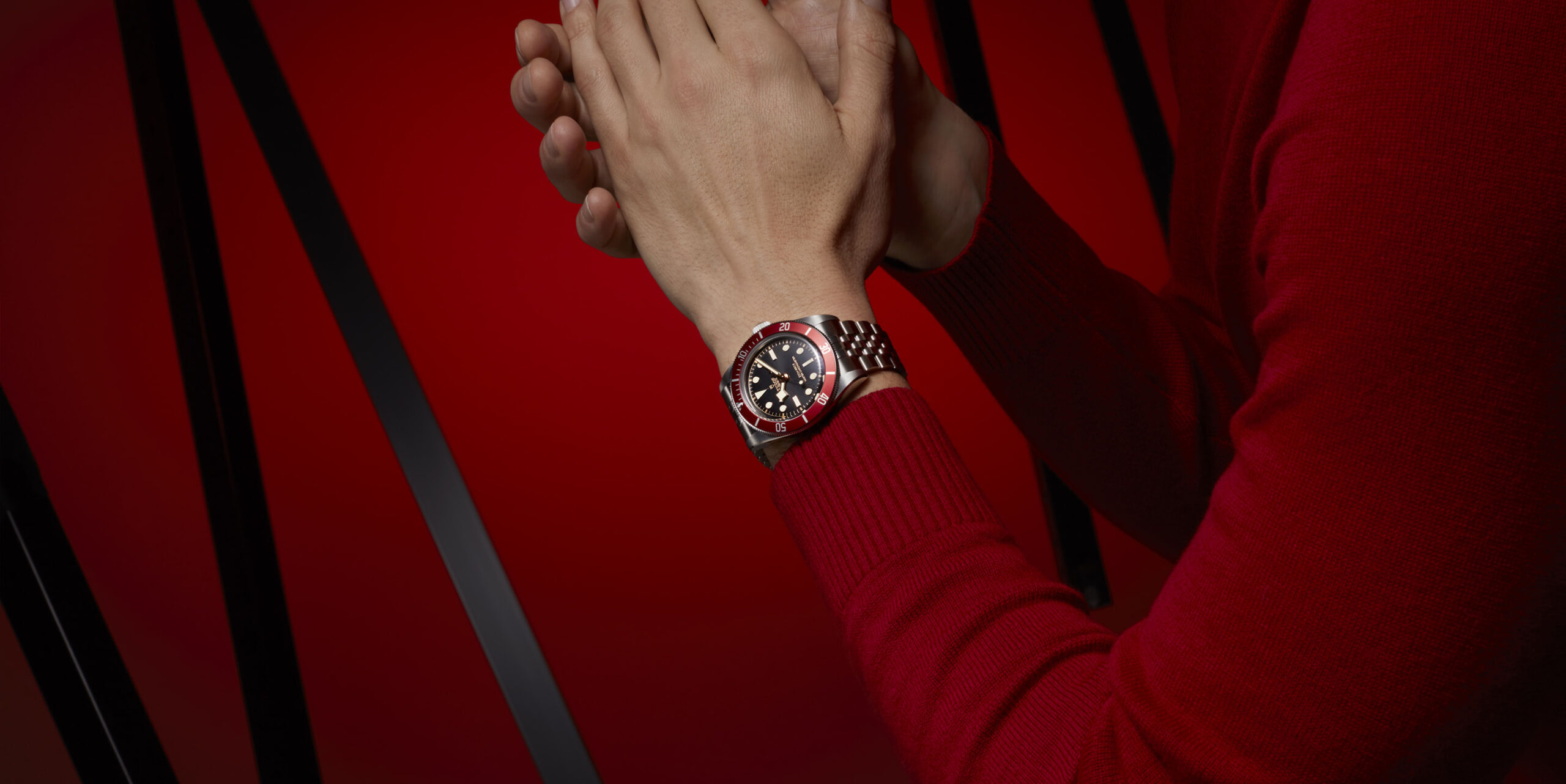
- Black Bay: The Black Bay collection is arguably Tudor’s most successful and recognisable line. Inspired by Tudor’s vintage Submariner dive watches, the Black Bay models feature a distinctive design with snowflake hands, domed dials, and a range of colour options. The collection includes various models, such as the Black Bay Fifty-Eight, a smaller and more vintage-inspired version, and the Black Bay GMT, which features a dual-time zone complication. The Black Bay collection is known for its versatility and appeal to both vintage watch enthusiasts and modern watch buyers. The Black Bay 58 Burgundy was released in 2024, featuring a METAS-certified movement (tudorwatch.com).
- Pelagos: The Pelagos collection represents Tudor’s line of professional-grade dive watches. These models are characterised by their titanium cases, matte ceramic bezels, and high levels of water resistance. The Pelagos watches are designed for serious divers and feature a number of technical innovations, such as a patented auto-adjusting clasp that compensates for changes in wetsuit thickness. The Pelagos FXD models, developed in collaboration with the French Navy, are particularly noteworthy for their fixed strap bars and focus on underwater navigation. The Pelagos Ultra was released in 2024, engineered to reach new depths (tudorwatch.com).
- Tudor Royal: The Tudor Royal collection presents a line of sporty and elegant watches with integrated bracelets. These models feature a distinctive notched bezel and are available in a range of sizes and dial colours. The Tudor Royal watches are designed to be versatile and suitable for both casual and formal occasions. In 2024, the Tudor Royal was released in a striking blue colour with diamonds (tudorwatch.com).
- Ranger: The Ranger collection pays homage to Tudor’s history of producing robust and reliable tool watches for explorers and adventurers. The Ranger models feature a simple and functional design with a focus on legibility and durability. These watches are designed to withstand the rigours of outdoor use and are a popular choice for those who appreciate a no-nonsense aesthetic. New Ranger watches were released in 2024, expanding the lineup of Tudor’s original expedition watch (tudorwatch.com).
- 1926: The 1926 collection offers a more classic and dressy option within the Tudor range. These models feature a textured dial, applied hour markers, and a range of case sizes and metal options. The 1926 watches are designed to be elegant and timeless, appealing to those who appreciate traditional watchmaking aesthetics. In 2024, the Tudor 1926 Luna was released, featuring Tudor’s first-ever moon phase complication (tudorwatch.com).
- Heritage Chrono: The Heritage Chrono collection draws inspiration from Tudor’s vintage chronographs of the 1970s. These models feature a distinctive design with contrasting sub-dials, a tachymeter scale, and a range of colour options. The Heritage Chrono watches combine vintage aesthetics with modern technology, offering a compelling option for chronograph enthusiasts.
Iconic References:
- Oyster Prince (Ref. 7922): One of Tudor’s earliest and most significant models, the Oyster Prince established Tudor’s reputation for robustness and reliability. Its association with the British North Greenland Expedition further cemented its image as a capable tool watch.
- Submariner (Ref. 7922, 7924, 7016): The Tudor Submariner, produced in various iterations, is a cornerstone of Tudor’s history. These dive watches were widely used by military personnel and professional divers, and they are highly sought after by collectors today. The Ref. 7016, with its “snowflake” hands, is particularly iconic.
- Monte Carlo Chronograph (Ref. 7169): Nicknamed “Monte Carlo” due to its resemblance to a roulette wheel, this chronograph is known for its colourful dial and distinctive design. It represents Tudor’s foray into the world of sports chronographs and remains a highly collectible model.
Technical Heritage and Innovation
While initially relying on external movement suppliers, Tudor has increasingly focused on developing its own in-house movements and incorporating innovative technologies into its watches. This shift represents a significant step in Tudor’s evolution as a watch manufacturer and demonstrates its commitment to technical excellence.
- In-House Movements: In 2015, Tudor introduced its first in-house movement, the calibre MT5621. This movement, which powers the Pelagos and Black Bay models, features a silicon balance spring, a variable inertia balance, and a 70-hour power reserve. The MT5621 is a COSC-certified chronometer, ensuring a high level of accuracy and reliability. Since then, Tudor has developed a range of in-house movements, including the MT5602 (found in the Black Bay Fifty-Eight) and the MT5652 (found in the Black Bay GMT).
- Silicon Balance Spring: The use of silicon balance springs in Tudor’s in-house movements is a significant technical innovation. Silicon is non-magnetic, resistant to temperature variations, and less susceptible to shocks than traditional metal balance springs. This results in improved accuracy and stability over time.
- Variable Inertia Balance: Tudor’s in-house movements feature a variable inertia balance, which allows for precise adjustment of the movement’s timing. This ensures optimal accuracy and stability.
- COSC Certification: Many of Tudor’s watches are COSC-certified chronometers, meaning they have undergone rigorous testing by the Swiss Official Chronometer Testing Institute (COSC) and meet strict accuracy standards.
- METAS Certification: The Black Bay 58 Burgundy was released in 2024, featuring a METAS-certified movement (tudorwatch.com).
- Titanium Construction: The Pelagos collection showcases Tudor’s expertise in using titanium, a lightweight and durable material that is ideal for dive watches. The titanium cases and bracelets of the Pelagos watches offer a comfortable and robust wearing experience.
- Patented Clasp Systems: Tudor has developed innovative clasp systems for its bracelets, such as the auto-adjusting clasp found on the Pelagos. This clasp automatically adjusts to changes in wetsuit thickness, ensuring a secure and comfortable fit.
- Collaboration with Specialists: Tudor collaborates with specialist companies to develop innovative materials and technologies. For example, the Pelagos FXD models were developed in collaboration with the French Navy, incorporating their specific requirements and expertise.
Ownership and Corporate Structure
Tudor SA operates as a subsidiary of Rolex SA, the renowned Swiss watch manufacturer. This ownership structure provides Tudor with access to Rolex’s extensive resources, expertise, and distribution network. While Tudor maintains its own distinct brand identity and product line, it benefits from the backing and support of its parent company.
The relationship between Tudor and Rolex is unique in the watch industry. While both brands operate independently, they share a common heritage and a commitment to quality. Tudor is positioned as a more accessible alternative to Rolex, offering a similar level of robustness and reliability at a lower price point. This allows the Rolex group to cater to a wider range of customers and market segments.
Tudor’s corporate structure is relatively lean, with a focus on efficiency and innovation. The company’s headquarters are located in Geneva, Switzerland, where it employs a team of designers, engineers, and watchmakers. Tudor also operates a network of authorised retailers and service centres around the world.
Key Figures
While Hans Wilsdorf is the founder of both Rolex and Tudor, several other individuals have played key roles in shaping Tudor’s history and success:
- Philippe Hüther: The watch dealer who initially registered the “The Tudor” trademark on behalf of Hans Wilsdorf.
- Jean-Paul Girardin: A former managing director of Tudor, Girardin played a key role in the brand’s relaunch in 2009. He is credited with revitalising Tudor’s heritage and repositioning it as a major player in the luxury watch market.
- Davide Cerrato: The current managing director of Tudor.
Auction Records
Tudor watches, particularly vintage models, have gained increasing attention from collectors in recent years, leading to some notable auction results. While Tudor watches do not typically command the same prices as vintage Rolex models, certain rare and historically significant Tudor watches have fetched impressive sums at auction.
- Tudor Submariner (Ref. 7924): This early Tudor Submariner model, characterised by its oversized crown and lack of crown guards, is highly sought after by collectors. Examples in excellent condition have sold for prices ranging from £20,000 to £40,000 at auction (estimate).
- Tudor Monte Carlo Chronograph (Ref. 7169): The “Monte Carlo” chronograph, with its distinctive dial design, is another popular model among collectors. Well-preserved examples have sold for prices ranging from £15,000 to £30,000 at auction (estimate).
- Tudor Oyster Prince Submariner (issued to the French Navy): Tudor Submariner watches issued to the French Navy (Marine Nationale) are particularly desirable due to their historical significance and rarity. These watches often feature unique markings and engravings, and they have sold for prices exceeding £50,000 at auction (estimate).
It is important to note that auction prices can vary significantly depending on the condition, provenance, and rarity of the watch.
Cultural Legacy and Influence
Tudor has cultivated a strong cultural presence through strategic partnerships and collaborations, aligning itself with individuals and organisations that embody its “Born To Dare” spirit. These partnerships have helped to raise Tudor’s brand awareness and reinforce its image as a brand for adventurers, athletes, and those who push boundaries.
- Partnerships with Sporting Events: Tudor has served as the official timekeeper for major sporting events, such as the World Endurance Championship and the Giro d’Italia. These partnerships provide Tudor with a platform to showcase its watches to a global audience and associate its brand with the values of precision, performance, and endurance.
- Collaborations with Athletes and Explorers: Tudor has partnered with a number of high-profile athletes and explorers, including David Beckham, Jay Chou, and members of the French Navy. These brand ambassadors embody Tudor’s “Born To Dare” spirit and help to promote the brand’s image as a brand for those who embrace challenges and push themselves to the limit.
- Sponsorship of Motorsports Teams: Tudor has a long history of involvement in motorsports, sponsoring racing teams and events. This association with motorsports reinforces Tudor’s image as a brand for those who appreciate speed, precision, and technical innovation. In 2023, Tudor announced its partnership with Alinghi Red Bull Racing, becoming the team’s official timing partner (TudorMag).
- Support for Conservation Efforts: Tudor has supported various conservation efforts, demonstrating its commitment to environmental responsibility. This aligns Tudor with a growing trend among luxury brands to engage in socially and environmentally conscious initiatives.
Legacy and Significance
Tudor has evolved from its origins as a more affordable alternative to Rolex into a respected and independent watch manufacturer with its own distinct identity. The brand’s commitment to producing robust, reliable, and accessibly priced watches has earned it a loyal following among watch enthusiasts and professionals alike.
Tudor’s significance lies in its ability to blend heritage-inspired designs with modern technology, creating watches that are both stylish and functional. The brand’s success in recent years is a testament to its ability to adapt to changing market trends and appeal to a new generation of watch buyers.
Tudor’s legacy is built on its history of producing tool watches for military personnel, explorers, and adventurers. These watches were designed to withstand the rigours of demanding environments, and they have become iconic symbols of Tudor’s commitment to quality and durability.
Looking ahead, Tudor is well-positioned to continue its growth and success in the luxury watch market. The brand’s strong brand identity, innovative products, and strategic partnerships provide a solid foundation for future expansion. As Tudor continues to develop its in-house movements and explore new materials and technologies, it is likely to further solidify its position as a major player in the watch industry.