| Founded | 1833 — Le Sentier, Switzerland |
|---|---|
| Founder(s) | Antoine LeCoultre |
| Headquarters | Le Sentier, Switzerland |
| Parent Group | Richemont |
| Known For | Reverso, Atmos clock, high complications |
| Price Range | £5,000 to £2,000,000+, 2024 |
| Revenue / Production | N/A |
| Official Website | jaeger-lecoultre.com |
Jaeger-LeCoultre (1833, Le Sentier, Switzerland, Antoine LeCoultre) is a Swiss manufacturer of luxury watches and clocks, renowned for its craftsmanship and innovation. As a fully integrated manufacture, Jaeger-LeCoultre distinguishes itself by producing all components in-house. The brand is celebrated for iconic models such as the Reverso, a watch with a reversible case, and the Atmos clock, which is powered by changes in air temperature. Jaeger-LeCoultre remains a significant player in high-end horology.
History and Founding
The history of Jaeger-LeCoultre began in 1833 in Le Sentier, a village in the Vallée de Joux, Switzerland. Antoine LeCoultre, a self-taught watchmaker, founded a small workshop where he initially produced watch components. LeCoultre’s early innovations included developing machines to cut watch pinions from steel. By 1844, he had developed the Millionomètre, the first instrument capable of measuring microns, significantly enhancing the precision of watchmaking. In 1847, LeCoultre invented a keyless winding system, eliminating the need for a separate key to wind and set watches.
As Antoine LeCoultre’s workshop grew, it became known as LeCoultre & Cie in 1866, when his son, Elie LeCoultre, joined the business. The company embraced industrial production methods, becoming one of the first manufacturers in the region to incorporate interchangeable parts. By the late 19th century, LeCoultre & Cie had grown into a significant manufacture, employing over 500 people and producing a wide range of watch movements.
In the early 20th century, LeCoultre & Cie began a partnership with Edmond Jaeger, a Parisian watchmaker who challenged Swiss manufacturers to develop ultra-thin movements. This collaboration led to the creation of some of the thinnest pocket watches of the time. In 1937, the company officially became Jaeger-LeCoultre, combining the names of the two watchmaking pioneers.
Historical Timeline
| Year | Event | Significance |
|---|---|---|
| 1833 | Antoine LeCoultre founds a watchmaking workshop in Le Sentier. | Marks the beginning of the LeCoultre manufacture. |
| 1844 | Invention of the Millionomètre. | First instrument to measure microns, enhancing precision. |
| 1847 | Development of a keyless winding system. | Eliminates the need for a key to wind watches. |
| 1866 | LeCoultre & Cie is established with Elie LeCoultre. | Embraces industrial production and interchangeable parts. |
| 1903 | Collaboration with Edmond Jaeger begins. | Leads to the creation of ultra-thin movements. |
| 1929 | Introduction of the Calibre 101. | One of the smallest mechanical movements ever made. |
| 1931 | Launch of the Reverso watch. | Iconic reversible case design. |
| 1937 | The company officially becomes Jaeger-LeCoultre. | Merges LeCoultre and Jaeger names. |
| 1950 | Introduction of the Memovox watch. | One of the first automatic alarm watches. |
| 2009 | Hybris Mechanica à Grande Sonnerie is released. | Features 1,300 parts and a Westminster chime. |
Key Collections and Iconic References
Jaeger-LeCoultre’s portfolio includes several notable collections, each distinguished by unique design elements and horological complications.
Reverso: Introduced in 1931, the Reverso was originally designed for polo players, featuring a reversible case to protect the crystal during matches. It has since become an icon of Art Deco design, available in various sizes and complications, including models with dual time zones, tourbillons, and minute repeaters. The Reverso Classic Monoface ‘Origin’ is a contemporary iteration that remains true to the original design.
Atmos: The Atmos clock, first developed in 1928 and commercialised by Jaeger-LeCoultre in the 1930s, is powered by minute changes in temperature and atmospheric pressure. A variation of just one degree Celsius can power the clock for approximately 48 hours. The Atmos is a symbol of horological innovation and energy efficiency.
Memovox: Launched in 1950, the Memovox was one of the first automatic alarm watches. Its name, derived from “Memory Voice,” reflects its function as a reminder. The Memovox evolved into a dive watch with the Memovox Deep Sea in 1959 and the Memovox Polaris in 1968, further cementing its place in horological history.
Master Ultra Thin: This collection showcases Jaeger-LeCoultre’s expertise in creating elegant and slim dress watches. These watches often feature minimalist designs and refined finishing, highlighting the brand’s commitment to traditional watchmaking.
Polaris: The Polaris collection is inspired by the 1968 Memovox Polaris dive watch. It offers a range of modern sports watches with features such as chronographs, world timers, and date functions, blending vintage aesthetics with contemporary functionality.
Rendez-Vous: The Rendez-Vous collection is designed specifically for women, featuring elegant designs and refined details. These watches often incorporate complications such as moon phases, date displays, and diamond settings, showcasing Jaeger-LeCoultre’s expertise in combining horology and jewellery.
Duomètre: The Duomètre collection is known for its Dual-Wing movement, which separates the power supply for the timekeeping functions and the complications. This innovative design ensures greater precision and stability.
| Reference | Years Produced | Key Feature | Original Price | Current Secondary Market |
|---|---|---|---|---|
| Reverso | 1931-Present | Reversible case | Varies by model | £3,000 – £200,000+ |
| Atmos | 1928-Present | Powered by temperature changes | Varies by model | £5,000 – £50,000+ |
| Memovox | 1950-Present | Automatic alarm | Varies by model | £2,000 – £30,000+ |
| Master Ultra Thin | 2000s-Present | Slim profile | Varies by model | £6,000 – £50,000+ |
| Polaris | 2018-Present | Sports watch inspired by Memovox Polaris | Varies by model | £5,000 – £20,000+ |
Technical Heritage and Innovation
Jaeger-LeCoultre has a long history of technical innovation in watchmaking. The company has developed over 1,200 calibres, a testament to its expertise in movement design and manufacturing. These include some of the most complicated and innovative movements in the industry.
One of Jaeger-LeCoultre’s most notable achievements is the Calibre 101, introduced in 1929. It remains one of the smallest mechanical movements ever created. Weighing approximately one gram and comprising 98 parts (later versions have 102 parts), the Calibre 101 is a marvel of miniaturisation and is often used in high jewellery watches.
The Dual-Wing concept, featured in the Duomètre collection, is another example of Jaeger-LeCoultre’s technical prowess. This design uses two separate barrels and gear trains, one for timekeeping and the other for complications, ensuring that the complications do not affect the accuracy of the time display.
Jaeger-LeCoultre has also made significant contributions to the development of automatic winding systems. The Gyrotourbillon, introduced in 2004, features a multi-axis tourbillon that compensates for the effects of gravity in all positions, improving accuracy. The brand continues to push the boundaries of horological innovation with new materials, designs, and complications.
Ownership and Corporate Structure
Jaeger-LeCoultre is part of Richemont, a Swiss luxury goods holding company founded in 1988 by Johann Rupert. Richemont owns several leading luxury brands, including Cartier, Van Cleef & Arpels, and IWC Schaffhausen. As a subsidiary of Richemont, Jaeger-LeCoultre benefits from the group’s resources and expertise in marketing, distribution, and retail.
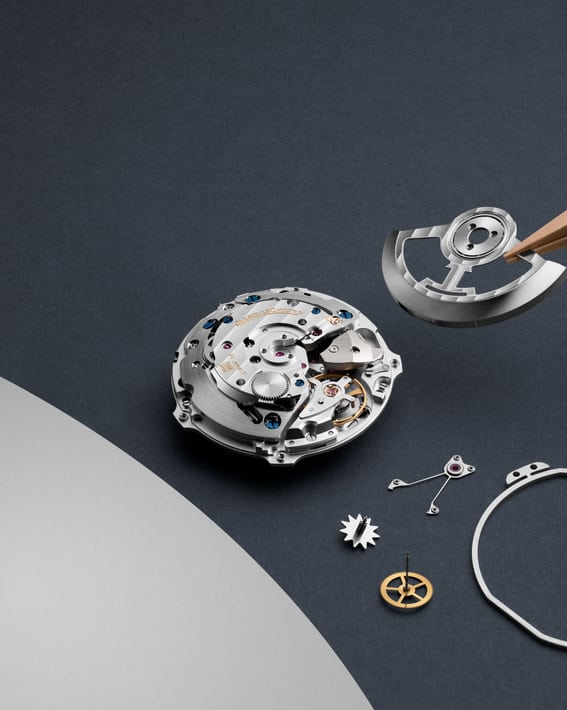
Jaeger-LeCoultre operates as a manufacture, meaning it produces its own movements and components in-house. This level of vertical integration allows the brand to maintain control over quality and innovation. The company’s headquarters and main production facilities are located in Le Sentier, in the Vallée de Joux, Switzerland.
Key Figures
| Name | Role | Tenure | Key Contribution |
|---|---|---|---|
| Antoine LeCoultre | Founder | 1833-1866 | Established the LeCoultre workshop and developed key innovations. |
| Elie LeCoultre | Co-founder | 1866-Late 19th Century | Expanded the manufacture and embraced industrial production. |
| Edmond Jaeger | Partner | 1903-1930s | Collaborated on ultra-thin movements. |
| Jérôme Lambert | CEO | 2013-2017 | Oversaw brand strategy and product development. |
Auction Records
Jaeger-LeCoultre watches have performed well at auction, with rare and historically significant pieces fetching high prices. The Reverso, in particular, is a popular choice among collectors, with limited editions and unique models commanding significant premiums.
| Year | Auction House | Reference | Description | Hammer Price |
|---|---|---|---|---|
| 2011 | Antiquorum | Reverso Gyrotourbillon 2 | Platinum case, limited edition | $362,500 |
| 2013 | Christie’s | Atmos 568 by Maarten Baas | Limited edition clock | $50,000 |
| 2015 | Sotheby’s | Memovox Polaris | Vintage dive watch | $37,500 |
Cultural Legacy and Influence
Jaeger-LeCoultre has established a significant cultural legacy through its contributions to watchmaking and design. The Reverso, with its Art Deco styling and reversible case, has become a symbol of elegance and innovation. It has been worn by notable figures in sports, entertainment, and business, further enhancing its iconic status.
The Atmos clock has also achieved cultural significance as a symbol of perpetual motion and environmental consciousness. Its unique mechanism, powered by changes in air temperature, has made it a popular gift for dignitaries and leaders, including presidents and royalty.
Jaeger-LeCoultre has collaborated with artists and designers to create limited edition watches and clocks, further solidifying its position in the cultural landscape. These collaborations have resulted in unique and collectible pieces that blend horology with art and design.
Legacy and Significance
Jaeger-LeCoultre’s legacy is rooted in its commitment to technical innovation, craftsmanship, and design. As a fully integrated manufacture, the brand has consistently pushed the boundaries of horology, developing groundbreaking movements and iconic timepieces. Its contributions to watchmaking have earned it a place among the most respected and influential brands in the industry.
The Reverso, Atmos, and Memovox are just a few examples of Jaeger-LeCoultre’s enduring impact on watch design and technology. The brand’s dedication to quality and innovation ensures that it will continue to be a leader in the luxury watch market for generations to come.