Rolex: History, Models, and Value of the Iconic Watch Brand
Rolex SA was founded in London in 1905 and is now based in Geneva. The company is known for precision timekeeping, durable construction, and iconic designs.
Rolex SA (1905, London), is a Swiss watch manufacturer renowned for its precision, durability, and iconic designs. Founded by Hans Wilsdorf and Alfred Davis, the company initially operated as Wilsdorf and Davis in London before later moving to Geneva. Rolex is recognised globally for its contributions to watchmaking, including the first waterproof wristwatch, and remains a symbol of status and technical innovation.
History and Founding
Rolex’s origins trace back to 1905 when Hans Wilsdorf and his brother-in-law Alfred Davis established Wilsdorf and Davis in London. The company initially focused on importing Swiss movements and placing them in watch cases made by other firms. These watches were then sold to jewellers, who retailed them under their own brand names.
Wilsdorf’s vision extended beyond mere assembly. He aspired to create reliable and precise timepieces that could be trusted in any environment. In 1908, Wilsdorf registered the brand name “Rolex,” seeking a short, memorable, and aesthetically pleasing name that could be easily pronounced in multiple languages. The exact origin of the name remains unconfirmed, with various anecdotes suggesting it was either inspired by the sound of a watch being wound or was a purely inventive creation.
The early focus on quality and precision led Rolex to become one of the first wristwatch companies to be officially certified for chronometric precision. In 1910, a Rolex watch received the Swiss Certificate of Chronometric Precision from the Official Watch Rating Centre in Bienne. Four years later, in 1914, Rolex received a “Class A” precision certificate from the Kew Observatory in Great Britain, an honour previously reserved for marine chronometers. These certifications validated Wilsdorf’s commitment to accuracy and established Rolex as a leader in the burgeoning wristwatch industry.
Historical Timeline
Year
Event
Significance
1905
Wilsdorf and Davis founded in London.
Marks the beginning of the company that would become Rolex.
1908
“Rolex” registered as a brand name.
Establishes the distinctive identity of Rolex watches.
1910
Rolex watch receives Swiss Certificate of Chronometric Precision.
Demonstrates early commitment to accuracy and precision.
1914
Rolex receives “Class A” precision certificate from Kew Observatory.
Company moves to Geneva and becomes Montres Rolex SA.
Establishes the brand’s long-term base in Switzerland.
1926
The Oyster, the first waterproof wristwatch, is launched.
Revolutionises watchmaking with its innovative case design.
1931
The Perpetual rotor self-winding mechanism is invented.
Enhances convenience and reliability of Rolex watches.
1945
The Datejust, the first self-winding wristwatch chronometer to indicate the date, is launched.
Introduces a new level of functionality and convenience.
1953
The Submariner, designed for diving, is launched.
Becomes an iconic dive watch, known for its durability and legibility.
1954
The GMT-Master, designed for pilots, is launched.
Offers simultaneous display of two time zones, catering to international travellers.
1960
The Hans Wilsdorf Foundation takes ownership of Rolex.
Ensures the company’s long-term independence and philanthropic mission.
1992
Launch of the first Rolex watch with a sapphire crystal.
Increases scratch resistance and durability.
2000
Rolex develops and manufactures the Parachrom hairspring.
Improves resistance to magnetic fields and temperature variations.
2023
Rolex acquires Bucherer.
Secures retail network and strengthens market position.
Key Collections and Iconic References
Rolex has developed several key collections, each with its own distinct identity and purpose. These collections have produced iconic references that are highly sought after by collectors and enthusiasts.
**Oyster Perpetual:** The foundation of Rolex’s reputation, the Oyster Perpetual is a direct descendant of the original Oyster, the first waterproof wristwatch. Known for its simplicity, reliability, and timeless design, it is a versatile watch suitable for any occasion.
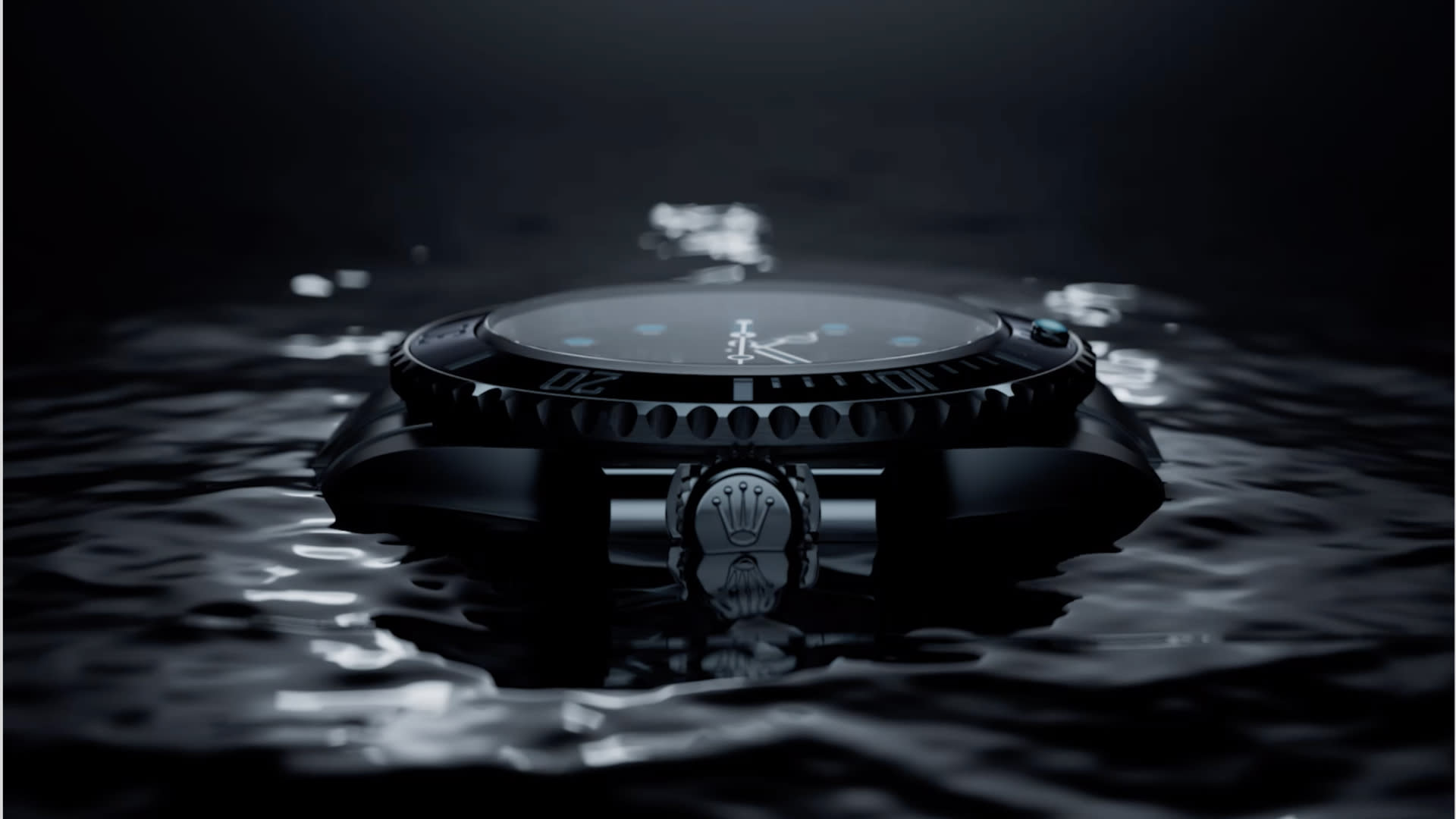
**Submariner:** Launched in 1953, the Submariner is one of the most recognisable and respected dive watches in the world. Its robust construction, unidirectional rotating bezel, and luminous display make it an essential tool for divers. The Submariner has evolved over the years, but its core design principles have remained consistent.
**GMT-Master:** Developed in collaboration with Pan American Airways in 1954, the GMT-Master was designed to meet the needs of pilots and international travellers. Its distinguishing feature is a 24-hour rotating bezel and a separate 24-hour hand, allowing the wearer to track two time zones simultaneously. The GMT-Master II, introduced later, allows for the independent setting of the 24-hour hand, further enhancing its functionality.
**Day-Date:** Introduced in 1956, the Day-Date is Rolex’s most prestigious model, crafted exclusively in precious metals (gold or platinum). It was the first wristwatch to display both the date and the day of the week spelled out in full on the dial. The Day-Date is often referred to as the “President’s Watch” due to its association with prominent world leaders.
**Datejust:** Launched in 1945, the Datejust was the first self-winding wristwatch chronometer to display the date in a window on the dial. Its elegant design, combined with its technical innovation, made it an instant classic. The Datejust is available in a variety of sizes, materials, and dial options, making it one of Rolex’s most versatile models.
**Cosmograph Daytona:** Introduced in 1963, the Cosmograph Daytona is a chronograph designed for racing drivers. Its tachymetric scale, combined with its precise chronograph movement, allows drivers to measure speeds accurately. The Daytona gained iconic status due to its association with actor and racing enthusiast Paul Newman.
Reference
Years Produced
Key Feature
Original Price (estimated)
Current Secondary Market (estimated)
Oyster Perpetual
1931-Present
Self-winding movement, waterproof case
£150 (1930s)
£5,000 – £10,000+
Submariner 6204
1954
First Submariner model, waterproof to 100m
£90 (1954)
£40,000 – £200,000+
GMT-Master 6542
1954-1959
First GMT-Master, Bakelite bezel
£120 (1954)
£50,000 – £300,000+
Day-Date 1803
1960s-1970s
President bracelet, precious metal case
£300 (1960s)
£8,000 – £25,000+
Datejust 1601
1960s-1970s
Date display, fluted bezel
£180 (1960s)
£3,000 – £8,000+
Cosmograph Daytona 6239
1963-1969
Chronograph, tachymeter scale
£200 (1960s)
£30,000 – £1,000,000+
Technical Heritage and Innovation
Rolex has consistently pushed the boundaries of watchmaking technology, developing numerous innovations that have become industry standards.
**The Oyster Case:** In 1926, Rolex introduced the Oyster case, the first waterproof wristwatch case. This innovation was achieved by screwing down the bezel, case back, and winding crown against the middle case, creating a hermetically sealed enclosure. The Oyster case provided unparalleled protection against water, dust, and other environmental factors, establishing Rolex as a pioneer in durable watchmaking.
**The Perpetual Rotor:** In 1931, Rolex invented the Perpetual rotor, a self-winding mechanism that automatically winds the watch’s mainspring using the motion of the wearer’s wrist. This innovation eliminated the need for manual winding, enhancing the convenience and reliability of Rolex watches. The Perpetual rotor has been continuously refined over the years and remains a core component of Rolex’s automatic movements.
**Chronometer Certification:** Rolex has a long history of submitting its movements for chronometer certification. The Swiss Official Chronometer Testing Institute (COSC) rigorously tests movements for accuracy and precision under various conditions. Rolex watches that pass these tests are certified as chronometers, guaranteeing their high level of performance.
**Parachrom Hairspring:** In 2000, Rolex developed and patented the Parachrom hairspring, made from a paramagnetic alloy of niobium and zirconium. This hairspring is highly resistant to magnetic fields and temperature variations, improving the accuracy and stability of the watch. The Parachrom hairspring is now used in most Rolex movements.
**Cerachrom Bezel Insert:** Rolex developed the Cerachrom bezel insert, made from a highly durable ceramic material that is virtually scratchproof and resistant to fading from ultraviolet light. This innovation ensures that the bezel retains its original appearance for many years, even under harsh conditions.
**Oysterflex Bracelet:** Rolex introduced the Oysterflex bracelet, a high-performance elastomer bracelet that combines the robustness of a metal bracelet with the comfort of a rubber strap. The Oysterflex bracelet features a flexible titanium or nickel alloy blade core, overmoulded with black elastomer.
Ownership and Corporate Structure
Rolex is owned by the Hans Wilsdorf Foundation, a private family trust established in 1960 by Hans Wilsdorf. The foundation’s primary mission is to ensure the long-term independence and stability of Rolex, as well as to support philanthropic causes.
The Hans Wilsdorf Foundation does not disclose detailed financial information, but it is estimated to be one of the largest charitable foundations in Switzerland. The foundation uses the profits from Rolex to fund various social and educational programs.
Rolex SA is the parent company of Montres Tudor SA, which produces Tudor watches. Tudor was originally established by Hans Wilsdorf in 1926 as a more affordable alternative to Rolex. While Tudor watches share some design elements with Rolex, they use different movements and materials.
In 2023, Rolex acquired Bucherer AG, a luxury watch and jewellery retailer with a global network of boutiques. This acquisition secures Rolex’s retail distribution channels and strengthens its market position.
Key Figures
Name
Role
Tenure
Key Contribution
Hans Wilsdorf
Founder
1905-1960
Established Rolex, pioneered waterproof and self-winding watches.
Alfred Davis
Co-founder
1905-1919
Partner in the founding of Wilsdorf and Davis.
Jean-Frédéric Dufour
CEO
2015-Present
Overseeing the company’s strategy and operations.
Auction Records
Rolex watches frequently achieve high prices at auction, reflecting their desirability among collectors. Several factors contribute to a Rolex watch’s value at auction, including its rarity, condition, provenance, and historical significance.
The Rolex Daytona, particularly those with a connection to Paul Newman, are among the most sought-after watches at auction. Paul Newman’s personal Rolex Daytona, Ref. 6239, sold for US$17.75 million at a Phillips auction in 2017, setting a record for the most expensive wristwatch ever sold at auction at the time, according to Phillips auction data.
Other Rolex models that frequently command high prices at auction include early Submariners, GMT-Masters, and Day-Dates. Watches with unique dials, rare complications, or interesting histories are particularly prized by collectors.
Year
Auction House
Reference
Description
Hammer Price
2017
Phillips
6239
Paul Newman’s personal Rolex Daytona
US$17.75 million
2018
Christie’s
6062
Rolex “Bao Dai” with black dial and diamond markers
CHF 5.06 million
2023
Phillips
6263
Rolex Daytona “Unicorn” in white gold
CHF 5.9 million
Cultural Legacy and Influence
Rolex has become a symbol of success, achievement, and status. Its watches are often associated with prominent figures in sports, entertainment, and business. The brand’s marketing campaigns frequently feature ambassadors who embody its values of excellence, perseverance, and innovation.
Rolex has a long history of supporting sports and exploration. It has been a sponsor of major sporting events, including golf tournaments, tennis championships, and yacht races. Rolex watches have also accompanied explorers on expeditions to some of the most challenging environments on Earth.
The design of Rolex watches has influenced countless other watch brands. Its iconic models, such as the Submariner and Daytona, have been widely imitated, solidifying Rolex’s position as a trendsetter in the watch industry.
Rolex’s commitment to quality and precision has earned it a reputation as one of the most respected watch brands in the world. Its watches are known for their durability, reliability, and timeless design, making them a popular choice for both collectors and everyday wearers.
Legacy and Significance
Rolex’s legacy extends beyond its technical innovations and iconic designs. The company has played a significant role in shaping the modern watch industry and has become a symbol of enduring quality and prestige.
Rolex’s commitment to independence, through its ownership by the Hans Wilsdorf Foundation, ensures that the company can continue to pursue its long-term vision without being subject to short-term financial pressures. This independence allows Rolex to invest in research and development, maintain its high standards of quality, and support philanthropic causes.
Rolex’s watches are more than just timekeeping instruments; they are objects of art, engineering, and cultural significance. They represent a commitment to excellence and a celebration of human achievement. As such, Rolex watches are likely to remain highly sought after by collectors and enthusiasts for generations to come.