| Founded | 1921 – Florence, Italy |
|---|---|
| Founder(s) | Guccio Gucci |
| Headquarters | Florence, Italy |
| Parent Group | Kering (French luxury group) |
| Known For | Luxury leather goods, fashion apparel, accessories |
| Price Range | Estimated €300 to over €50,000, 2024 |
| Revenue / Production | Approximately €9.9 billion in revenue (2023, per Kering Group annual report) |
| Official Website | gucci.com |
Gucci (1921, Florence, Italy, founded by Guccio Gucci) is an Italian luxury fashion house specializing in leather goods, ready-to-wear, and accessories. With over 600 stores globally documented in 2025, it operates as a subsidiary of the Kering group and holds a prominent position in the global luxury market, recognised for its design innovation and cultural impact.
History and Founding
Guccio Gucci established the eponymous house in 1921 in Florence, Italy, after being inspired by the luggage and sophistication of affluent guests during his employment at London’s Savoy Hotel. The initial enterprise, a small workshop and store on Via della Vigna Nuova, focused on producing high-quality travel trunks, saddlery, and leather accessories. Gucci incorporated English craftsmanship techniques, such as saddle stitching, and utilised durable materials like pigskin, which distinguished his products. The brand’s early growth was fuelled by demand from Italy’s equestrian and travelling elite. According to documented sources, by the 1930s, Gucci had expanded within Italy, opening a boutique in Rome in 1938. The founder’s sons—Aldo, Vasco, and Rodolfo—joined the business, facilitating its evolution from a regional artisan shop into an international luxury label.
Historical Timeline
| Year | Event | Significance |
|---|---|---|
| 1921 | Guccio Gucci opens first store in Florence | Marked the foundation of the brand, specialising in fine leather goods and luggage. |
| 1938 | Expansion to Rome with a new boutique | Initiated national growth within Italy, broadening the clientele base. |
| 1947 | Introduction of the bamboo-handle bag | Became an iconic design, showcasing innovation in material use during post-war resource scarcity. |
| 1953 | Death of Guccio Gucci; sons take over management | Transitioned leadership to the second generation, who pursued aggressive international expansion. |
| 1960s | Opening of flagship stores in New York (1953) and London (1961) | Established Gucci as a global luxury brand with a strong presence in key markets. |
| 1970s | Introduction of the double-G logo and Flora scarf | Created enduring brand symbols that remain central to product identity and marketing. |
| 1980s–1990s | Family disputes and management turmoil | Led to brand dilution, over-licensing, and financial decline, necessitating external intervention. |
| 1994 | Tom Ford appointed creative director | Revitalised the brand’s image with provocative, sleek designs, restoring its luxury cachet and profitability. |
| 1999 | Acquisition by the French group Pinault-Printemps-Redoute (later Kering) | Provided capital and corporate governance, ending family control and stabilising operations. |
| 2015 | Alessandro Michele appointed creative director | Introduced a maximalist, romantic aesthetic, driving a period of significant sales growth and cultural relevance. |
| 2022 | Stefano Cantino assumes role of CEO | Oversaw strategic initiatives focusing on digital expansion, retail optimisation, and sustainability goals. |
The Defining Collections
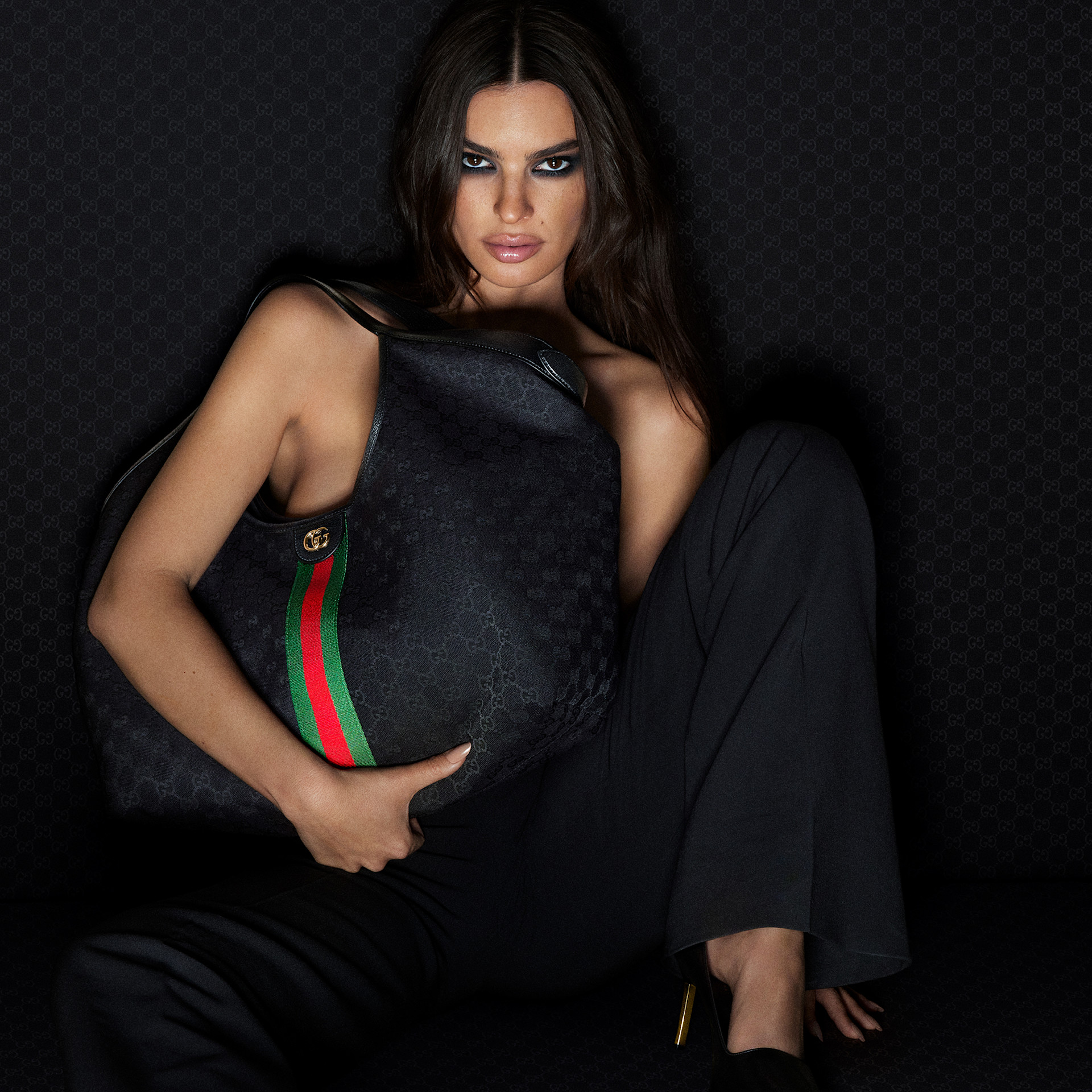
Gucci’s product portfolio is anchored by several iconic collections that have defined its aesthetic across decades. The leather goods category includes the Bamboo bag, first created in 1947, which remains in production with its signature curved bamboo handle. The Flora print, designed for Grace Kelly in 1966, is a recurrent motif on scarves, bags, and ready-to-wear. The double-G logo, introduced in the 1970s, is embossed or woven into numerous accessories, most notably the GG Marmont line of quilted bags. Under Tom Ford, collections like the Fall/Winter 1995 runway show redefined luxury with sensual silhouettes. Alessandro Michele’s tenure introduced key lines such as the Dionysus bag, featuring a tiger-head clasp, and the Ace sneaker with embroidered details. The contemporary Borsetto handbag, launched in 2024, represents the brand’s ongoing innovation in shape and hardware. According to the brand’s official communications, these collections are central to its seasonal offerings and retail strategy.
Craftsmanship, Materials, and Manufacturing
Gucci maintains a commitment to Italian craftsmanship, with the majority of its leather goods and footwear produced in proprietary facilities in Tuscany and Emilia-Romagna. The manufacturing process involves approximately 180 distinct steps for a single handbag, including cutting, stitching, and assembly by specialised artisans. Historically significant materials include treated bamboo for handles, as well as high-grade calfskin, suede, and exotic skins like python and crocodile, sourced under the Kering group’s sustainability standards. The brand’s canvas, often featuring the interlocking GG motif, is woven in Italy using specific looms. Quality control procedures involve rigorous inspection for colour consistency, stitching alignment, and hardware function. According to Kering’s annual reports, Gucci invests in artisanal training programmes and has implemented measures to reduce environmental impact, such as using recycled metals and organic cottons in selected lines.
Ownership and Corporate Structure
Gucci operates as a wholly-owned subsidiary of Kering SA, a French multinational luxury group listed on the Euronext Paris. Following a series of family disputes and financial struggles in the late 20th century, the brand was acquired in 1999 by the group then known as Pinault-Printemps-Redoute. This acquisition integrated Gucci into a corporate structure that provides centralised services for logistics, finance, and sustainability, while allowing creative and commercial autonomy. The brand’s governance includes a CEO, Stefano Cantino, who reports to Kering’s executive committee. Gucci’s retail network consists of directly operated stores, with 635 locations documented worldwide in 2025, alongside wholesale partnerships with select department stores and a robust e-commerce platform. Per Kering’s financial disclosures, Gucci contributes the largest share of revenue to the group, accounting for approximately 50% of total annual sales in recent years.
Key Figures
| Name | Role | Tenure | Key Contribution |
|---|---|---|---|
| Guccio Gucci | Founder | 1921–1953 | Established the brand’s foundation with a focus on quality leatherwork and equestrian-inspired luggage, setting early design codes. |
| Aldo Gucci | Managing Director | 1953–1986 | Spearheaded international retail expansion, introduced the double-G logo, and cultivated a jet-set clientele. |
| Tom Ford | Creative Director | 1994–2004 | Revolutionised Gucci’s image with provocative advertising and sleek, modern collections, reversing financial decline and defining 1990s luxury. |
| Frida Giannini | Creative Director | 2006–2015 | Steered the brand towards a more accessible, commercial aesthetic, focusing on heritage motifs like the Flora print. |
| Alessandro Michele | Creative Director | 2015–2022 | Reinvented Gucci with a vintage-inspired, gender-fluid design philosophy, driving double-digit sales growth and cultural buzz. |
| Stefano Cantino | Chief Executive Officer | 2022–present | Leads corporate strategy, overseeing retail expansion, digital transformation, and sustainability initiatives per Kering’s objectives. |
Investment and Resale Value
In the secondary luxury market, Gucci products generally experience depreciation from their retail prices, though certain vintage or limited-edition pieces can appreciate. Market performance varies by product category, condition, and rarity. The following table illustrates approximate values for three contemporary models, based on data from luxury resale platforms such as The RealReal and Vestiaire Collective in 2024.
| Model | New Retail (approx.) | Secondary Market (approx.) | 5-Year Appreciation |
|---|---|---|---|
| Gucci GG Marmont Matelassé Mini Bag | €1,200 | €800–€1,000 | Approximately -20% to -30% depreciation |
| Gucci Dionysus GG Supreme Shoulder Bag | €2,300 | €1,500–€2,000 | Approximately -15% to -20% depreciation |
| Gucci Ace Sneakers with Embroidered Bee | €600 | €300–€400 | Approximately -30% to -40% depreciation |
Documented auction records, such as those from Phillips Watches 2024 auctions, show that vintage Gucci items from the 1960s and 1970s, particularly well-preserved bamboo-handle bags or original Flora scarves, can sell for prices exceeding their original retail value, indicating appreciation over decades. However, for most modern accessories, resale value typically remains below original cost, reflecting their status as consumption goods rather than pure investment assets.
Cultural Legacy and Influence
Gucci has exerted considerable influence on global fashion and popular culture since the mid-20th century. Its products became symbols of status and glamour, favoured by figures such as Grace Kelly, Jackie Kennedy, and Tom Ford-era celebrities. The brand’s advertising campaigns, particularly under Ford and Michele, have often sparked public discourse for their provocative or narrative-driven imagery. Collaborations with artists and institutions, like the partnership with Dapper Dan in 2017 and the Gucci Garden museum in Florence, have blurred lines between fashion, art, and social commentary. According to industry analyses, Gucci’s embrace of gender-fluid styling under Michele resonated with shifting cultural norms. The brand’s sustainability pledges, including carbon neutrality goals announced under Kering’s framework, reflect its adaptation to contemporary ethical concerns. Its presence in film, music, and digital media continues to shape perceptions of luxury in the 21st century.