Audemars Piguet was founded in 1875 by Jules Louis Audemars and Edward Auguste Piguet, in Le Brassus, Switzerland. The brand is known for its haute horology and complicated movement designs.
By Luxe Digital13 min read
From the outset, Audemars Piguet distinguished itself by specialising in complicated watches, including chronographs, minute repeaters, and perpetual calendars. These high-complication timepieces required exceptional skill and precision to produce, and they quickly established Audemars Piguet as a leading manufacturer of haute horlogerie.
Historical Timeline
Year
Event
Significance
1875
Audemars Piguet is founded by Jules Louis Audemars and Edward Auguste Piguet in Le Brassus, Switzerland.
Marks the beginning of the company’s history of high watchmaking.
1882
The company creates its first grand complication pocket watch, featuring a perpetual calendar, minute repeater, and chronograph.
Demonstrates early expertise in complex horology.
1889
Audemars Piguet opens its first branch in Geneva.
Expands the brand’s presence and reach.
1915
Audemars Piguet creates the first jumping hour wristwatch.
Showcases innovation in watch display.
1918
Edward Auguste Piguet dies.
Marks a transition in leadership.
1919
Jules Louis Audemars dies.
The founders are succeeded by their descendants.
1921
Audemars Piguet introduces the world’s thinnest pocket watch movement.
Highlights the brand’s technical capabilities.
1930s
The company navigates the challenges of the Great Depression.
Demonstrates resilience during economic hardship.
1955
Audemars Piguet produces the first wristwatch with a perpetual calendar and leap year indication.
Further establishes the brand’s expertise in perpetual calendars.
1972
The Royal Oak, designed by Gérald Genta, is introduced.
Revolutionises the watch industry with its stainless steel luxury sports watch design.
1986
Audemars Piguet creates the first ultra-thin automatic tourbillon wristwatch.
Showcases innovation in tourbillon technology.
1993
The Royal Oak Offshore is launched.
Expands the Royal Oak collection with a larger, more robust design.
2000
Audemars Piguet acquires Renaud & Papi, a specialist in complicated watch movements.
Strengthens the brand’s capabilities in high complications.
2006
The Audemars Piguet Foundation is established to support forest conservation.
Reflects a commitment to environmental responsibility.
2015
Audemars Piguet celebrates its 140th anniversary.
Marks a significant milestone in the company’s history.
2019
The Code 11.59 collection is introduced.
Represents a new direction in design and innovation.
2024
Audemars Piguet continues to innovate with new models and complications.
Maintains its position as a leading manufacturer of haute horlogerie.
Key Collections and Iconic References
Audemars Piguet’s collections showcase a range of styles and complications, with the Royal Oak standing as its most recognisable and influential line. Other notable collections include the Royal Oak Offshore, Code 11.59, and the master01.
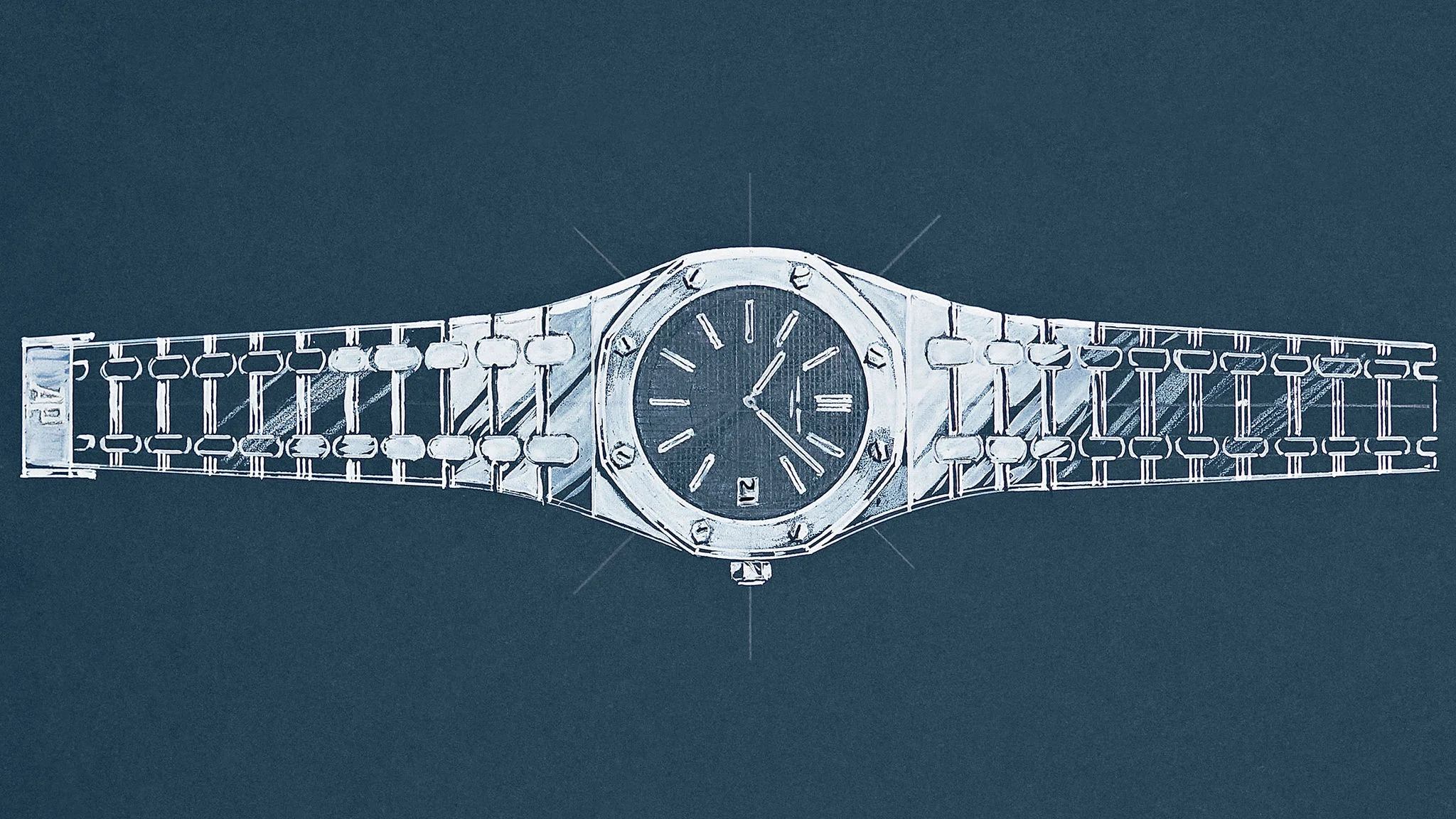
**Royal Oak:** Designed by Gérald Genta and introduced in 1972, the Royal Oak is a luxury sports watch distinguished by its octagonal bezel, exposed screws, and integrated bracelet. The Royal Oak defied convention by using stainless steel, a material typically associated with tool watches, for a high-end timepiece. Its design was inspired by a diving helmet, and it quickly became an icon of modern watchmaking.
**Royal Oak Offshore:** Launched in 1993, the Royal Oak Offshore is a bolder, more robust version of the original Royal Oak. With its larger case size and more aggressive styling, the Offshore appeals to a younger, more adventurous audience. It has been produced in a variety of materials, including titanium, carbon fibre, and ceramic.
**Code 11.59:** Introduced in 2019, the Code 11.59 collection represents a contemporary expression of Audemars Piguet’s watchmaking expertise. The collection features a distinctive case design with a round bezel and an octagonal middle case, as well as a range of complications, including chronographs, tourbillons, and perpetual calendars.
**master01:** The master01 is a vintage-inspired chronograph that pays homage to a 1940s Audemars Piguet model. It combines classic design elements with modern technology and finishing techniques.
Audemars Piguet has a long history of technical innovation in watchmaking. The company has developed numerous complications and movements, including some of the thinnest and most complex in the world.
In 1882, Audemars Piguet created its first grand complication pocket watch, featuring a perpetual calendar, minute repeater, and chronograph. In 1921, the company introduced the world’s thinnest pocket watch movement. In 1955, Audemars Piguet produced the first wristwatch with a perpetual calendar and leap year indication.
In 1986, Audemars Piguet created the first ultra-thin automatic tourbillon wristwatch. The tourbillon is a complex mechanism that compensates for the effects of gravity on the watch’s accuracy. Audemars Piguet’s ultra-thin tourbillon was a remarkable achievement of engineering and miniaturisation.
Audemars Piguet continues to invest in research and development, and the company is constantly pushing the boundaries of watchmaking technology. Recent innovations include new materials, such as Bulk Metallic Glass, and new movement designs, such as the Calibre 4401 integrated chronograph movement.
Ownership and Corporate Structure
Audemars Piguet remains an independent, family-owned company. The descendants of the founders, Jules Louis Audemars and Edward Auguste Piguet, continue to play an active role in the management of the company. This independence allows Audemars Piguet to maintain its long-term vision and focus on quality and innovation, without being subject to the short-term pressures of publicly traded companies.
The company is governed by a board of directors, which includes members of the Audemars and Piguet families. The CEO is responsible for the day-to-day management of the company.
Audemars Piguet operates a global network of boutiques and authorised retailers. The company also has a strong online presence, with a website and social media channels that showcase its products and brand values.
Key Figures
Name
Role
Tenure
Key Contribution
Jules Louis Audemars
Co-Founder
1875-1919
Technical expertise and watchmaking skills
Edward Auguste Piguet
Co-Founder
1875-1918
Business acumen and sales expertise
Gérald Genta
Watch Designer
1970s
Designed the Royal Oak
Auction Records
Audemars Piguet watches are highly sought after by collectors, and rare and historically significant examples often achieve high prices at auction. These auction results reflect the brand’s prestige and the desirability of its timepieces.
Year
Auction House
Reference
Description
Hammer Price
2015
Christie’s
Royal Oak A-Series
Original Royal Oak, stainless steel
CHF 275,000
2021
Phillips
Royal Oak Perpetual Calendar 25654BA
Yellow gold perpetual calendar
CHF 1,029,000
Cultural Legacy and Influence
Audemars Piguet has had a significant impact on the watch industry and popular culture. The Royal Oak, in particular, has been a trendsetter, influencing the design of countless other sports watches. Its distinctive octagonal bezel and integrated bracelet have become iconic design elements.
The brand has also been associated with numerous celebrities and athletes, further enhancing its image and appeal. Audemars Piguet has collaborated with artists, musicians, and designers on limited-edition watches and other projects.
Audemars Piguet supports various cultural and philanthropic initiatives, including the Audemars Piguet Foundation, which is dedicated to forest conservation. This commitment to social and environmental responsibility further enhances the brand’s reputation and legacy.
Legacy and Significance
Audemars Piguet’s legacy is one of innovation, craftsmanship, and independence. The company has consistently pushed the boundaries of watchmaking technology and design, while remaining true to its founding principles. Its watches are prized by collectors and enthusiasts for their quality, complexity, and beauty.
As one of the few remaining family-owned watch brands, Audemars Piguet has a unique perspective and a long-term vision. The company is committed to preserving its heritage and continuing to innovate for future generations. Its significance in the world of haute horlogerie is undeniable, and its influence will continue to be felt for years to come.
Founded
1875 — Le Brassus, Switzerland
Founder(s)
Jules Louis Audemars, Edward Auguste Piguet
Headquarters
Le Chenit, Switzerland
Parent Group
Independent (family-owned)
Known For
Haute horology, complicated movements, Royal Oak
Price Range
£18,000 to £800,000, 2024
Revenue / Production
45,000 pieces/year (estimated)
Official Website
audemarspiguet.com
Audemars Piguet (1875, Le Brassus, Switzerland, Jules Louis Audemars and Edward Auguste Piguet) is a Swiss manufacturer of luxury mechanical watches and clocks, revered for its complicated mechanisms, innovative designs, and high level of finishing. The brand remains family-owned and is particularly known for the Royal Oak, a groundbreaking sports watch that has become emblematic of the company.
History and Founding
Jules Louis Audemars and Edward Auguste Piguet, both from families with long histories in the Vallée de Joux, founded Audemars Piguet in 1875 in the village of Le Brassus, Switzerland. The two young watchmakers shared a passion for horology and a desire to create complex and innovative timepieces. Audemars focused on the technical aspects of watchmaking, while Piguet concentrated on the business and sales side of the company.
Prior to their partnership, both Audemars and Piguet worked independently as établisseurs, producing watch movements and components for other watch brands. This experience provided them with a solid foundation in horology and a deep understanding of the watchmaking process. Their decision to join forces allowed them to combine their skills and resources to create complete watches under their own name.
From the outset, Audemars Piguet distinguished itself by specialising in complicated watches, including chronographs, minute repeaters, and perpetual calendars. These high-complication timepieces required exceptional skill and precision to produce, and they quickly established Audemars Piguet as a leading manufacturer of haute horlogerie.
Historical Timeline
Year
Event
Significance
1875
Audemars Piguet is founded by Jules Louis Audemars and Edward Auguste Piguet in Le Brassus, Switzerland.
Marks the beginning of the company’s history of high watchmaking.
1882
The company creates its first grand complication pocket watch, featuring a perpetual calendar, minute repeater, and chronograph.
Demonstrates early expertise in complex horology.
1889
Audemars Piguet opens its first branch in Geneva.
Expands the brand’s presence and reach.
1915
Audemars Piguet creates the first jumping hour wristwatch.
Showcases innovation in watch display.
1918
Edward Auguste Piguet dies.
Marks a transition in leadership.
1919
Jules Louis Audemars dies.
The founders are succeeded by their descendants.
1921
Audemars Piguet introduces the world’s thinnest pocket watch movement.
Highlights the brand’s technical capabilities.
1930s
The company navigates the challenges of the Great Depression.
Demonstrates resilience during economic hardship.
1955
Audemars Piguet produces the first wristwatch with a perpetual calendar and leap year indication.
Further establishes the brand’s expertise in perpetual calendars.
1972
The Royal Oak, designed by Gérald Genta, is introduced.
Revolutionises the watch industry with its stainless steel luxury sports watch design.
1986
Audemars Piguet creates the first ultra-thin automatic tourbillon wristwatch.
Showcases innovation in tourbillon technology.
1993
The Royal Oak Offshore is launched.
Expands the Royal Oak collection with a larger, more robust design.
2000
Audemars Piguet acquires Renaud & Papi, a specialist in complicated watch movements.
Strengthens the brand’s capabilities in high complications.
2006
The Audemars Piguet Foundation is established to support forest conservation.
Reflects a commitment to environmental responsibility.
2015
Audemars Piguet celebrates its 140th anniversary.
Marks a significant milestone in the company’s history.
2019
The Code 11.59 collection is introduced.
Represents a new direction in design and innovation.
2024
Audemars Piguet continues to innovate with new models and complications.
Maintains its position as a leading manufacturer of haute horlogerie.
Key Collections and Iconic References
Audemars Piguet’s collections showcase a range of styles and complications, with the Royal Oak standing as its most recognisable and influential line. Other notable collections include the Royal Oak Offshore, Code 11.59, and the master01.
**Royal Oak:** Designed by Gérald Genta and introduced in 1972, the Royal Oak is a luxury sports watch distinguished by its octagonal bezel, exposed screws, and integrated bracelet. The Royal Oak defied convention by using stainless steel, a material typically associated with tool watches, for a high-end timepiece. Its design was inspired by a diving helmet, and it quickly became an icon of modern watchmaking.
**Royal Oak Offshore:** Launched in 1993, the Royal Oak Offshore is a bolder, more robust version of the original Royal Oak. With its larger case size and more aggressive styling, the Offshore appeals to a younger, more adventurous audience. It has been produced in a variety of materials, including titanium, carbon fibre, and ceramic.
**Code 11.59:** Introduced in 2019, the Code 11.59 collection represents a contemporary expression of Audemars Piguet’s watchmaking expertise. The collection features a distinctive case design with a round bezel and an octagonal middle case, as well as a range of complications, including chronographs, tourbillons, and perpetual calendars.
**master01:** The master01 is a vintage-inspired chronograph that pays homage to a 1940s Audemars Piguet model. It combines classic design elements with modern technology and finishing techniques.
Audemars Piguet has a long history of technical innovation in watchmaking. The company has developed numerous complications and movements, including some of the thinnest and most complex in the world.
In 1882, Audemars Piguet created its first grand complication pocket watch, featuring a perpetual calendar, minute repeater, and chronograph. In 1921, the company introduced the world’s thinnest pocket watch movement. In 1955, Audemars Piguet produced the first wristwatch with a perpetual calendar and leap year indication.
In 1986, Audemars Piguet created the first ultra-thin automatic tourbillon wristwatch. The tourbillon is a complex mechanism that compensates for the effects of gravity on the watch’s accuracy. Audemars Piguet’s ultra-thin tourbillon was a remarkable achievement of engineering and miniaturisation.
Audemars Piguet continues to invest in research and development, and the company is constantly pushing the boundaries of watchmaking technology. Recent innovations include new materials, such as Bulk Metallic Glass, and new movement designs, such as the Calibre 4401 integrated chronograph movement.
Ownership and Corporate Structure
Audemars Piguet remains an independent, family-owned company. The descendants of the founders, Jules Louis Audemars and Edward Auguste Piguet, continue to play an active role in the management of the company. This independence allows Audemars Piguet to maintain its long-term vision and focus on quality and innovation, without being subject to the short-term pressures of publicly traded companies.
The company is governed by a board of directors, which includes members of the Audemars and Piguet families. The CEO is responsible for the day-to-day management of the company.
Audemars Piguet operates a global network of boutiques and authorised retailers. The company also has a strong online presence, with a website and social media channels that showcase its products and brand values.
Key Figures
Name
Role
Tenure
Key Contribution
Jules Louis Audemars
Co-Founder
1875-1919
Technical expertise and watchmaking skills
Edward Auguste Piguet
Co-Founder
1875-1918
Business acumen and sales expertise
Gérald Genta
Watch Designer
1970s
Designed the Royal Oak
Auction Records
Audemars Piguet watches are highly sought after by collectors, and rare and historically significant examples often achieve high prices at auction. These auction results reflect the brand’s prestige and the desirability of its timepieces.
Year
Auction House
Reference
Description
Hammer Price
2015
Christie’s
Royal Oak A-Series
Original Royal Oak, stainless steel
CHF 275,000
2021
Phillips
Royal Oak Perpetual Calendar 25654BA
Yellow gold perpetual calendar
CHF 1,029,000
Cultural Legacy and Influence
Audemars Piguet has had a significant impact on the watch industry and popular culture. The Royal Oak, in particular, has been a trendsetter, influencing the design of countless other sports watches. Its distinctive octagonal bezel and integrated bracelet have become iconic design elements.
The brand has also been associated with numerous celebrities and athletes, further enhancing its image and appeal. Audemars Piguet has collaborated with artists, musicians, and designers on limited-edition watches and other projects.
Audemars Piguet supports various cultural and philanthropic initiatives, including the Audemars Piguet Foundation, which is dedicated to forest conservation. This commitment to social and environmental responsibility further enhances the brand’s reputation and legacy.
Legacy and Significance
Audemars Piguet’s legacy is one of innovation, craftsmanship, and independence. The company has consistently pushed the boundaries of watchmaking technology and design, while remaining true to its founding principles. Its watches are prized by collectors and enthusiasts for their quality, complexity, and beauty.
As one of the few remaining family-owned watch brands, Audemars Piguet has a unique perspective and a long-term vision. The company is committed to preserving its heritage and continuing to innovate for future generations. Its significance in the world of haute horlogerie is undeniable, and its influence will continue to be felt for years to come.