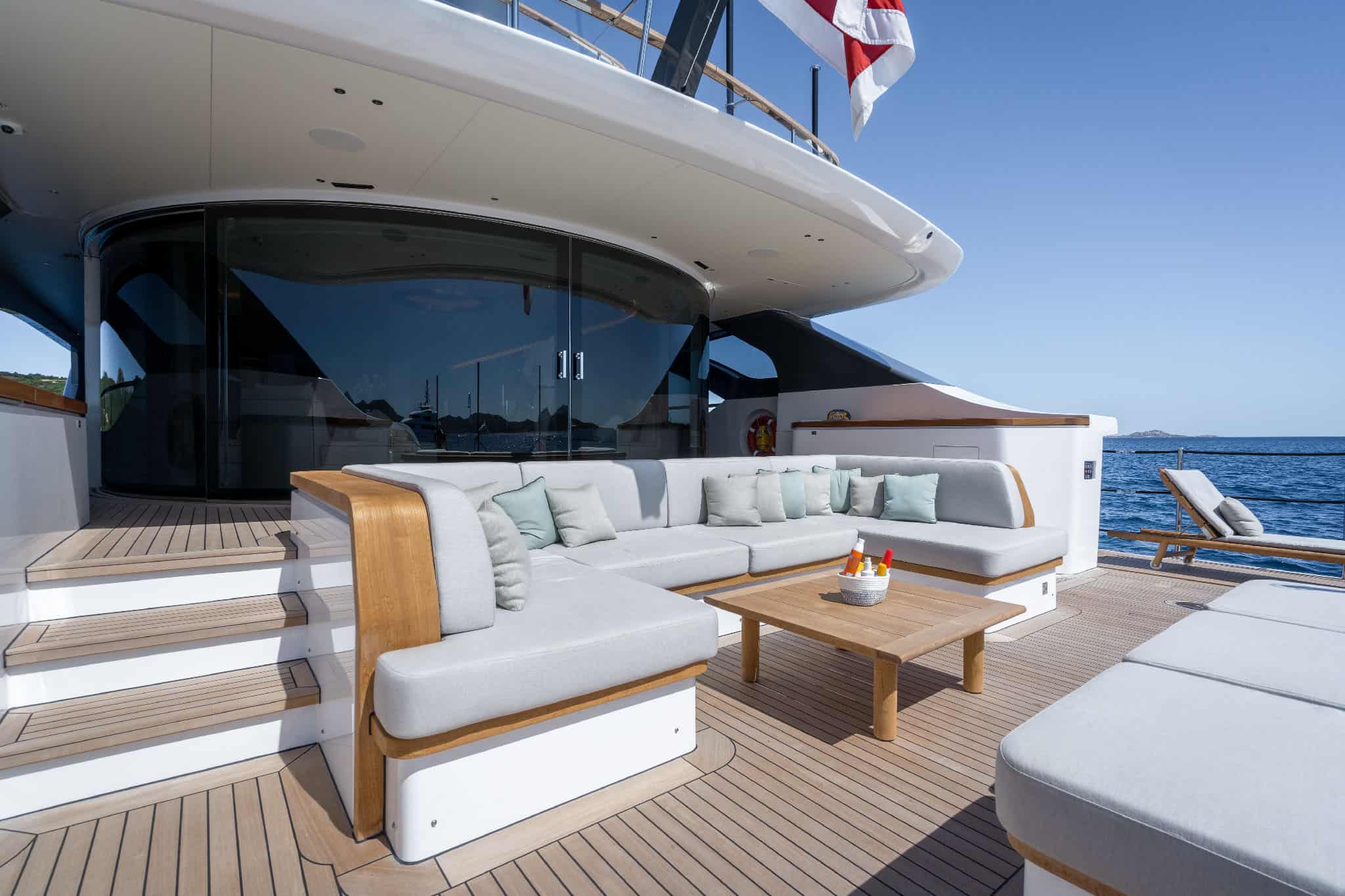
Choose a charter yacht around the way your party wants to live on board. Cabins, crew, stabilisation, tenders and toys matter most when they make private mornings, shared meals and days in the water work comfortably together.
Picture an ordinary day. Who wakes early, who wants privacy, who will spend the afternoon in the water and who would rather read in the shade? The cabin plan and service arrangements should accommodate those different rhythms. Length and an impressive equipment list matter when they improve the week your party wants to have.
Start with the layout and the way guests move through it, then examine the systems and people that support the experience. Ask for current confirmation of the features important to your dates. For the meaning of length, beam, draught and gross tonnage, see Superyacht Specifications Explained.
Start with the party, not the yacht
A useful shortlist begins with people. Write down who is travelling, how they relate to one another and how they expect to spend time on board before looking at length, gross tonnage or a photograph of the sundeck.
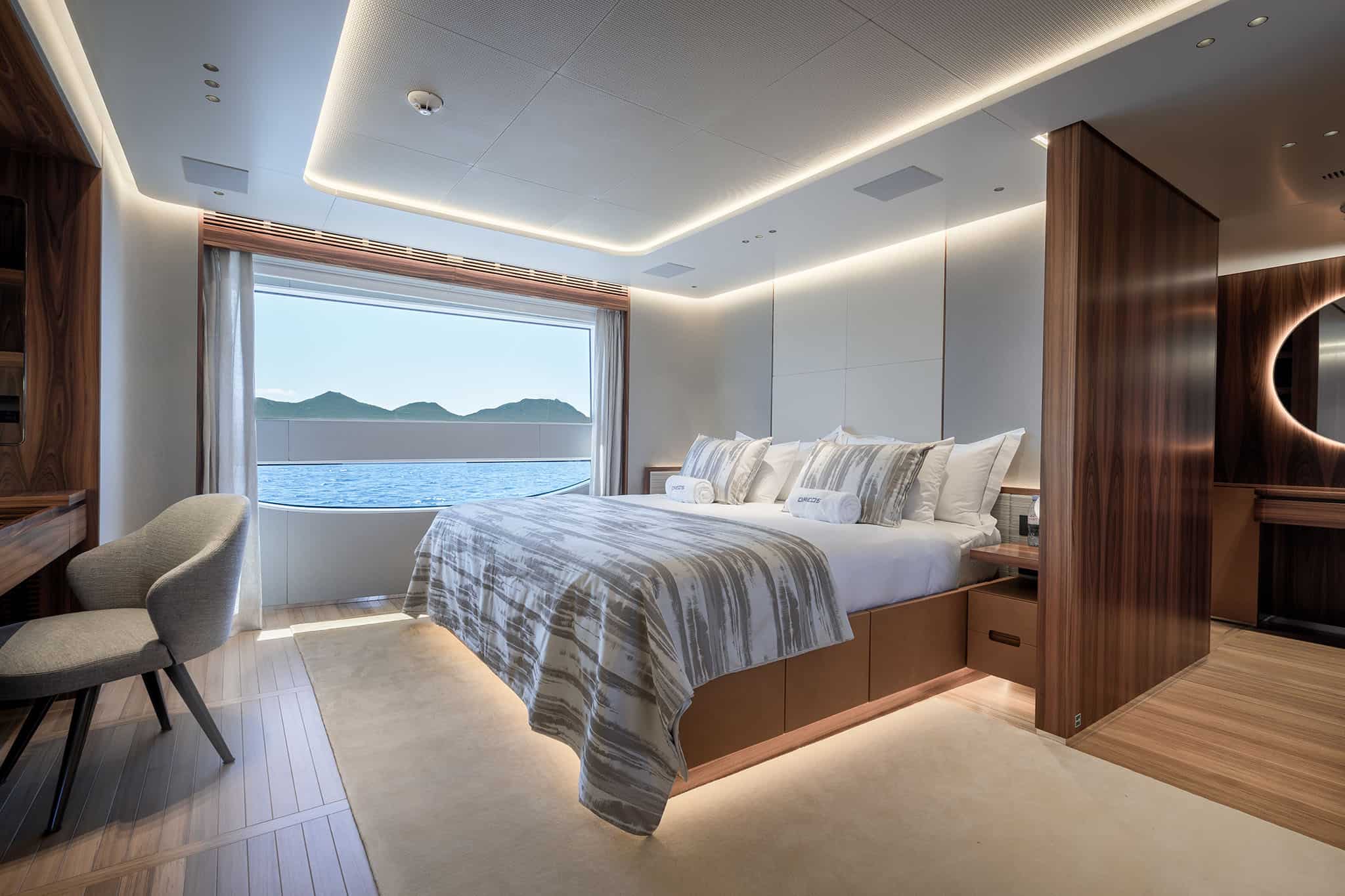
A group of three couples may care about three genuinely comparable double cabins and equal access to social areas. A family with young children may put greater weight on cabin adjacency, shaded exterior space and simple routes between sleeping, dining and swimming areas. A multigenerational party may need fewer level changes, secure handholds, a lift that serves the relevant decks and a realistic plan for boarding from both quay and tender. A group built around diving, foiling or long days on the water needs a different operational platform again.
The first brief should therefore define:
- the number of adults and children, and the ages that materially affect cabin or activity use;
- double, twin, convertible and adjacent-cabin requirements;
- privacy expectations between couples, family groups and staff;
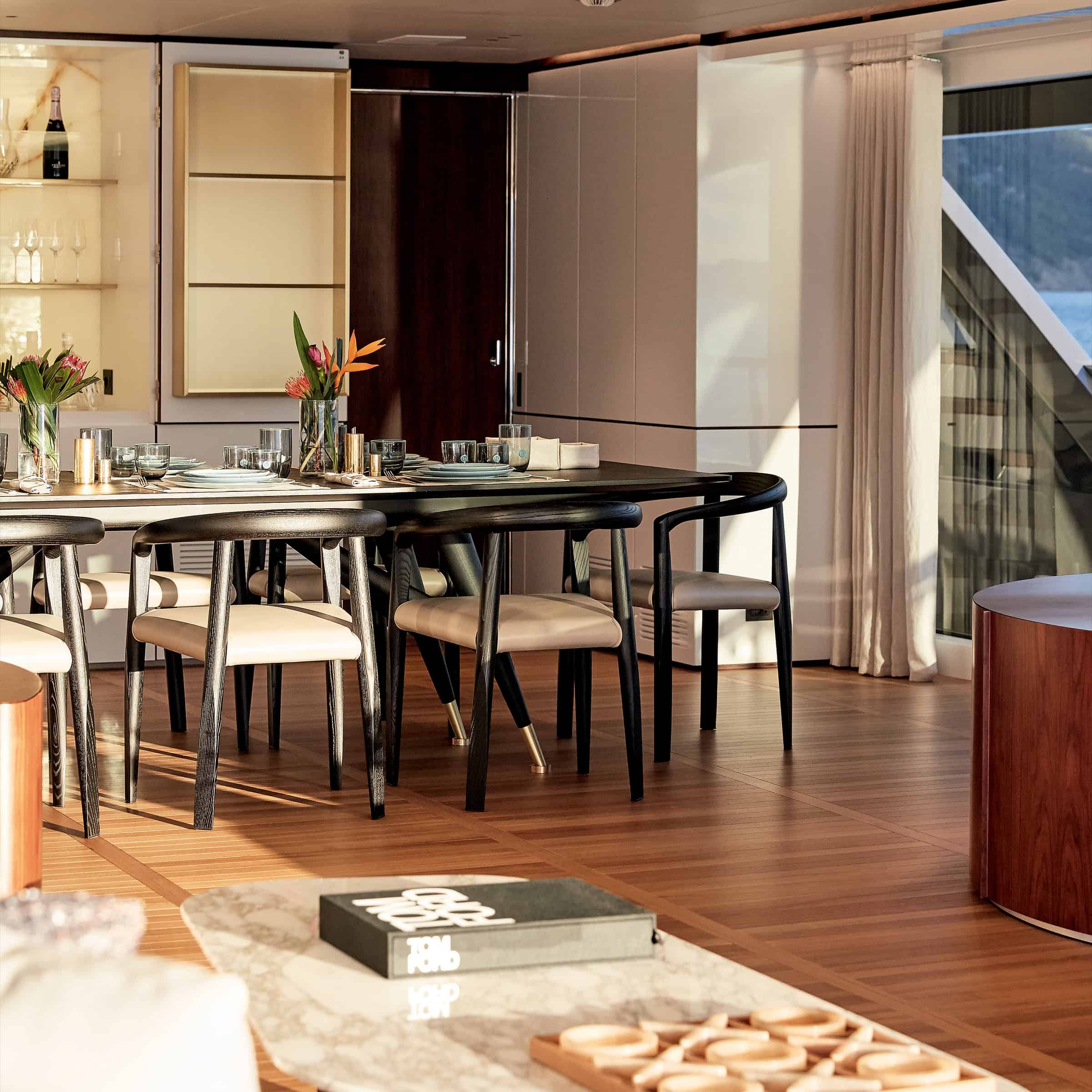
- preferred balance between formal dining, quiet retreat and open-air social space;
- mobility, sensory or medical constraints that affect movement on board;
- must-have activities, including whether several guests expect to use them at the same time;
- the likely rhythm of transfers ashore and whether tender journeys are part of the experience or merely transport.
This is the point at which “bigger is better” starts to break down. A smaller yacht with a more useful cabin plan and easier circulation can be a better fit than a larger yacht whose volume is devoted to spaces your party will barely use.
Read cabins as a sleeping plan, not a capacity number
Headline guest capacity tells you how many guests the yacht is presented or certificated to carry under a given operating regime; it does not tell you whether the sleeping plan suits your party.
Ask for the current cabin plan and identify each berth that would actually be used. A six-cabin yacht can include combinations of owner’s suite, VIP, doubles, twins, convertible rooms and Pullman berths. Those are not interchangeable for a party of six couples, parents with small children or guests who do not want to share.
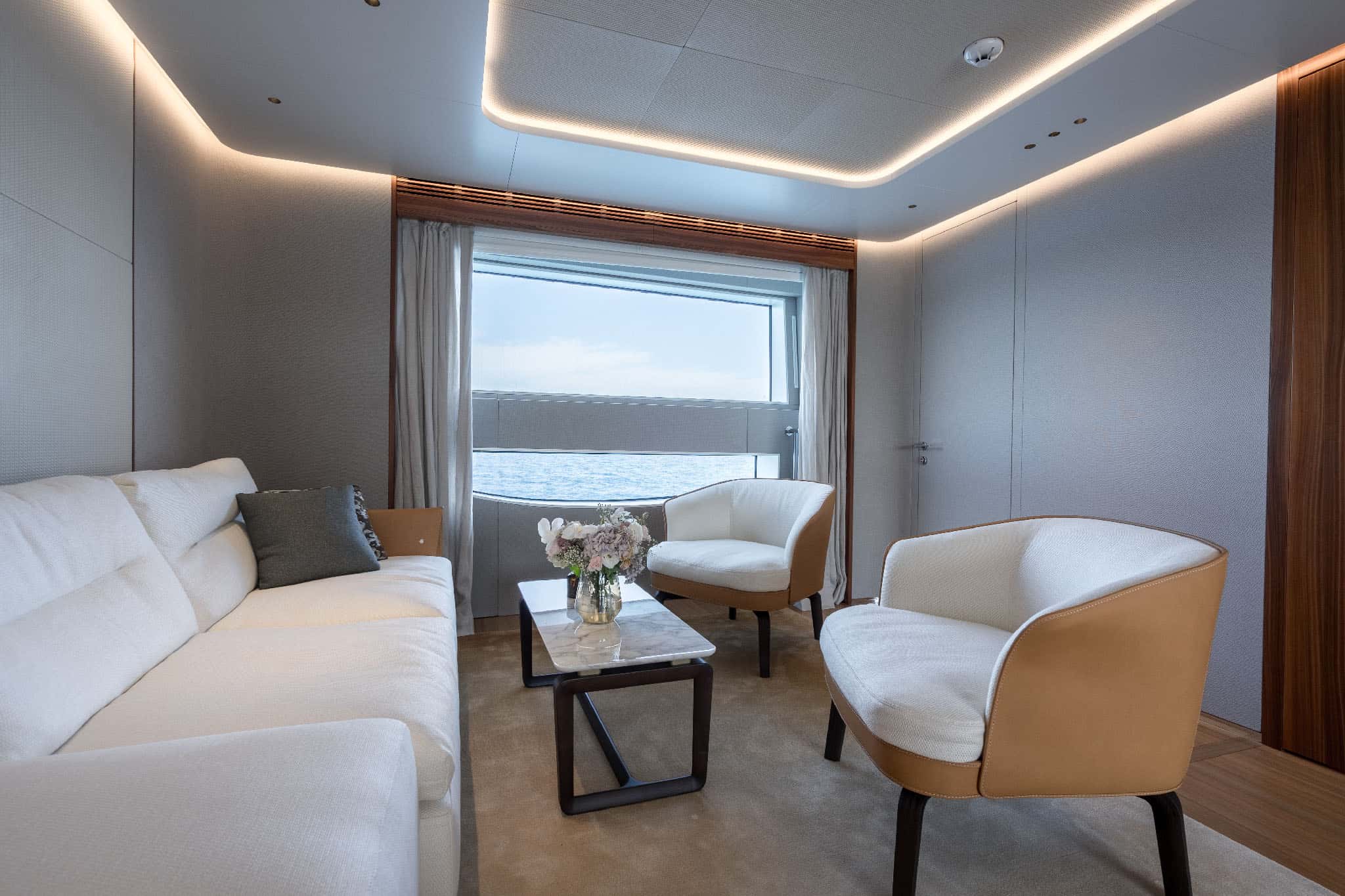
The current UK Red Ensign Group Yacht Code is a useful reminder that commercial-yacht passenger limits are regulatory facts, not marketing language: Part A applies, within its stated scope, to commercial yachts of 24 metres and over carrying no more than 12 passengers. Other vessels and flags can fall under different regimes. That does not make twelve the “ideal” charter number; it shows why a published maximum and a comfortable sleeping plan are different questions.
For each cabin, confirm bed configuration, en-suite access, deck position and any meaningful step or threshold. If a convertible cabin matters to the booking, ask what conversion means in practice and whether it will be configured before embarkation.
Map the day through the yacht
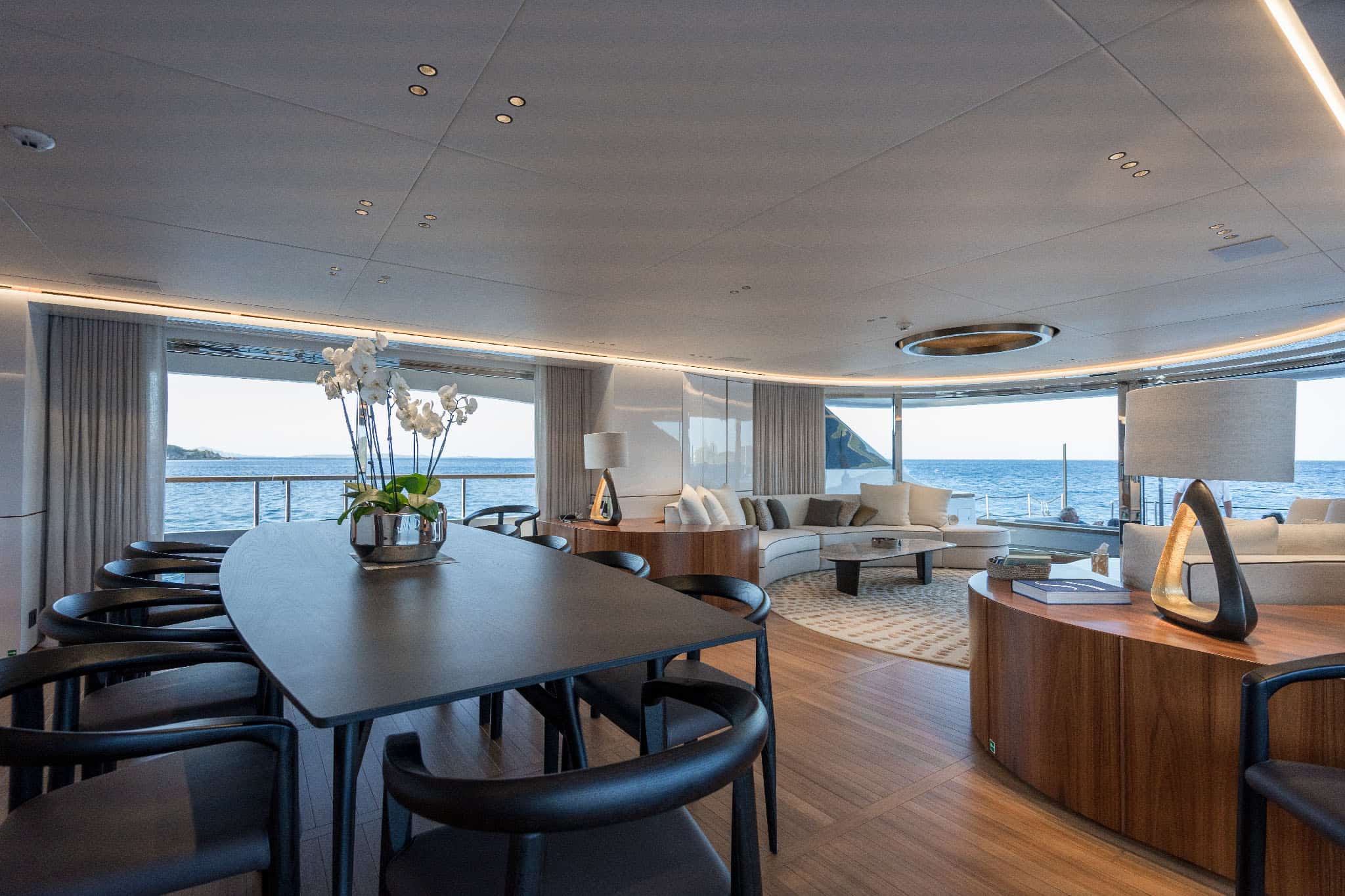
A general arrangement can reveal more about suitability than a long amenity list. Trace a typical day: cabin to breakfast, breakfast to swim platform, swim platform to tender, tender return to shower, then dinner and a late-evening retreat.
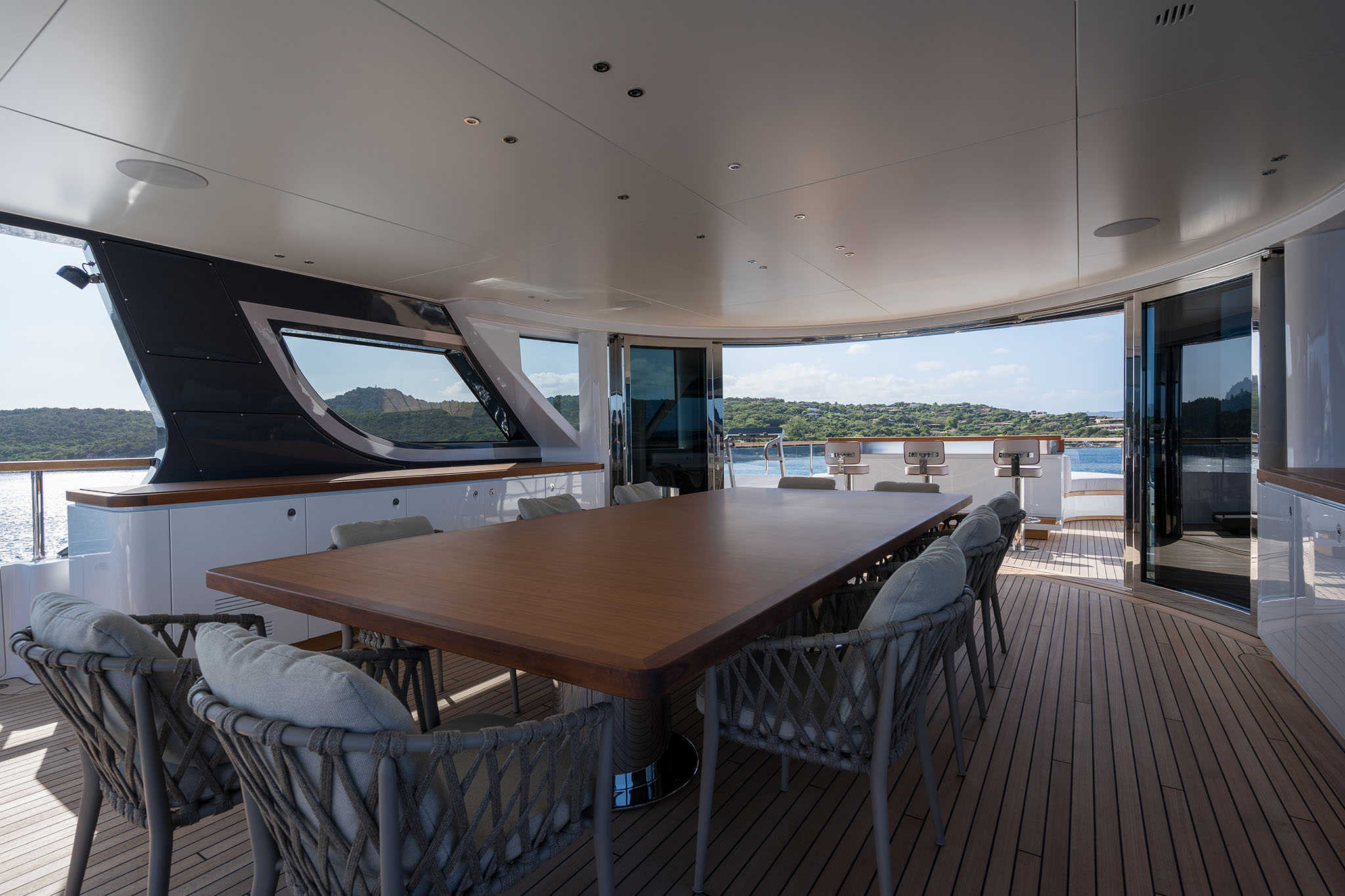
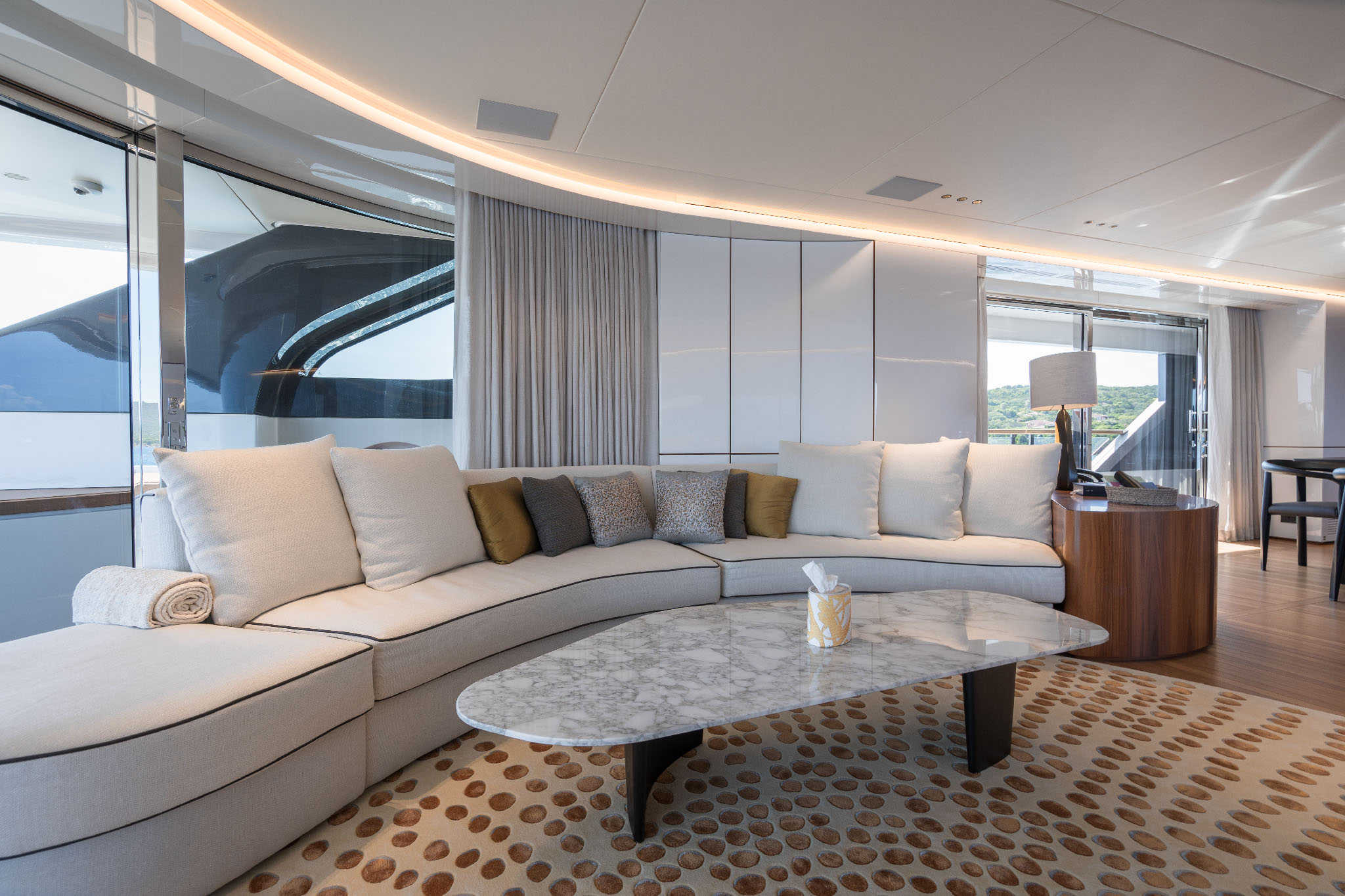
Look for friction. Does every movement route through one principal saloon? Can children move from a cabin deck to the main family space without crossing a formal dining area? Is there a quiet interior room when the main deck is busy? Are there shaded exterior zones as well as full-sun decks? Does the yacht have two genuinely separate social areas, or one large area photographed from several angles?
Benetti’s published Oasis concept is a useful design example rather than a charter recommendation. The builder describes a continuous aft social area linking the interior to a water-level deck, with opening wings and a pool integrated into the social space. The decision lesson is not that this layout is universally superior. It is that one architectural choice can materially change how a party circulates, supervises children and moves between interior, exterior and water access.
The same logic applies in reverse. A dramatic beach club can be irrelevant to guests who expect long lunches ashore and quiet evenings inside. A cinema is of little value if the group wants two independent conversation spaces. Judge architecture against the party’s day, not the brochure’s hierarchy of features.
Treat crew numbers as context, not a service score
Crew complement matters because people operate the yacht, tenders, toys, housekeeping, galley and guest programme. But the raw number is not a reliable quality ranking. Yacht size, flag requirements, technical complexity, watchkeeping, itinerary and the owner’s operating model all affect staffing.
The useful questions are operational. Who will look after the guests? Is there a dedicated chef team? How are interior service and housekeeping organised? Which deck crew are qualified to operate the tender and relevant watersports equipment? Are specialist activities dependent on particular crew being on board? If young children are travelling, do not assume ordinary yacht crew are childcare professionals.
Broker and captain commentary consistently treats crew as central to the charter experience, but service style remains yacht-specific. Some teams are formal; others are deliberately relaxed. Ask for the current crew profile and discuss the service rhythm you want rather than trying to infer it from nationality, age or crew count.
Ask exactly what the stabilisers do
“Stabilisers” is too vague for a charter comparison.
Fin stabilisers traditionally reduce roll while a vessel is moving. Modern systems can also be designed to reduce roll at very low or zero forward speed. Naiad Dynamics distinguishes its AtSpeed and AtRest functions and describes AtRest as roll control for a vessel at anchor or adrift. That is the kind of system-level evidence to request.
The charter question is therefore not simply “does the yacht have stabilisers?” Ask:
- what system is installed;
- whether it is designed for operation underway, at rest, or both;
- whether it is currently operational for the charter;
- whether there are operating restrictions relevant to swimming, tenders or the intended anchorage.
Do not treat any stabilisation system as a promise of a motion-free yacht. Roll response depends on hull form, sea state, heading, wave period, system design and how it is operated. The captain remains responsible for the yacht’s safe operation and for deciding whether conditions are suitable for the planned activity.
For motion-sensitive guests, stabilisation should sit alongside itinerary flexibility, cabin location and the option to choose more sheltered anchorages. Technology can improve the comfort envelope; it does not remove the sea.
Evaluate the tender as part of the guest experience
A tender is often the real front door of a charter yacht. It carries guests between yacht and shore, and on anchor-led itineraries that can happen several times a day.
The relevant questions are more specific than length and horsepower. How many guests can be transferred comfortably in the configuration used for the charter? Is the tender open, covered or enclosed? How easy is boarding from the yacht’s platform? What is the boarding arrangement at a low quay, a high quay or a beach landing? Is there a separate crew or rescue tender so that guest movements do not conflict with operations?
Range and speed matter only in context. A faster tender may make a distant shore transfer practical, but comfort, weather protection, noise, seating and boarding geometry can matter more for a multigenerational group. A large chase boat may add flexibility, yet it can also be region-specific or separately operated.
On OCTOPUS, Lürssen records an integrated dock for a principal 20-metre guest tender: a substantial part of the yacht's architecture is devoted to what happens beyond the main vessel. Most parties will need something less elaborate, but the principle travels well. Evaluate the tender as part of your daily experience, and confirm the arrangement currently offered with the yacht.
Separate the toy inventory from the activity plan
A list of toys is not the same thing as usable activities.
Start by identifying the experiences the party genuinely wants: personal watercraft, e-foils, diving, paddleboards, towables, sailing dinghies, climbing walls or an inflatable water park. Then ask what is currently on board, what is working, which sizes are available and how many guests can participate together.
Some activities require training or recognised qualifications. The Royal Yachting Association, for example, publishes a Personal Watercraft Proficiency course and separate superyacht-oriented personal-watercraft training. Its current course material includes minimum-age and supervision conditions. Local law, flag requirements, insurer conditions and the yacht’s own operating procedures can add further restrictions.
That creates a four-part check for every must-have activity:
- equipment — is the specific item physically on board and serviceable;
- people — is the required qualified or trained crew member present;
- guest eligibility — do age, competence or medical factors affect participation;
- conditions — do weather, sea state, local rules and the captain permit use.
The last point is important. A charter should never be selected solely because one activity appears in a marketing image. If that activity is central to the trip, it belongs in the written pre-charter verification.
Accessibility is a route, not an amenity label
A lift does not make a yacht accessible by itself.
For a guest with reduced mobility, trace the complete journey from arrival ashore to cabin, dining area, principal exterior spaces and tender. The weak link may be the passerelle, a steep gangway, a tender transfer, a raised sill, a narrow doorway or a flight of steps between two otherwise level decks.
UK Maritime and Coastguard Agency guidance for smaller passenger vessels considers embarkation, internal routes, lifts and passenger spaces together. Although it does not automatically govern every charter yacht, that whole-route approach is useful when discussing suitability with the broker and captain.
Ask for photographs, deck plans and dimensions where necessary, then have the broker and captain confirm the actual embarkation and tender arrangements expected for the itinerary. If a guest’s mobility or medical condition makes safe access uncertain, the final suitability decision needs to be made with the relevant professionals rather than inferred from an amenity list.
Speed and range should protect the itinerary, not dominate it
Published range and cruising speed can be useful, but they are not quality scores.
A higher cruising speed can help a yacht recover time or connect distant points, while longer published range may matter for remote cruising. Yet neither figure tells you how the yacht will feel at sea, what fuel or operating constraints apply, or whether the intended itinerary makes sense for the guests.
Use performance data to test resilience. Can the yacht complete the likely legs without turning the week into long passages? Is there enough margin to change the route if weather moves against the plan? Does the itinerary require a high-speed capability that the group may not enjoy?
Read draught against harbour and anchorage choices, beam against usable space, and range against the proposed cruising legs. A specification becomes useful when it helps explain where the yacht can take you and how comfortably the party can use it.
Installed, advertised and available are three different states
For every material feature, use three columns.
Installed means the yacht is documented as having the equipment or architectural feature. A builder specification, manufacturer record or current yacht document can support that statement.
Advertised means the feature appears in a broker listing, brochure or marketing page. Treat that as a current commercial representation, not independent proof.
Available for your charter means the broker, captain or authorised operator has confirmed the feature is present, serviceable and permitted to be used during the intended dates and cruising area, subject to operating conditions.
This distinction is especially important for tenders, chase boats, personal watercraft, diving equipment, inflatables, communications systems and specialist staff. Equipment can be changed, removed for service, replaced or restricted by location. A current written confirmation is more useful than an old brochure.
A comparison framework to send to your broker
Use the same questions for every yacht on the shortlist so that visual appeal does not distort the comparison.
| Decision area | Ask for | What to verify |
|---|---|---|
| Party fit | Current cabin plan and guest configuration | Actual beds, adjacency, privacy, deck position |
| Circulation | Current general arrangement | Routes between cabins, dining, exterior decks and water access |
| Crew | Current crew profile | Service roles, chef set-up, tender/toy qualifications relevant to your plans |
| Stabilisation | Manufacturer/system details | Underway, at-rest or both; current operational status |
| Tender | Current tender specification | Guest transfer capacity, weather protection, boarding and region/date availability |
| Toys | Dated inventory | Serviceable items, simultaneous use, training/age restrictions |
| Accessibility | Photos plus route walkthrough | Quay/tender boarding, thresholds, stairs, lift coverage, cabin and bathroom access |
| Performance | Current yacht specification | Cruising speed/range only as they affect the intended itinerary |
| Availability status | Written confirmation | Installed vs advertised vs operational for the charter dates |
| Operating limits | Captain/broker confirmation | Weather, local rules, qualifications and safety restrictions |
A good comparison should leave you able to describe the trade-offs in a sentence: more private cabin space versus larger communal areas; an enclosed tender versus a more open transfer; formal service versus a relaxed family rhythm. Ask the broker to close any important unanswered point before choosing.
Key takeaways
- Choose the yacht around the party’s real sleeping, social, mobility and activity needs, not headline size.
- A cabin count or guest maximum does not prove that the berth configuration works for your group.
- Ask what stabilisation system is installed and whether it is designed to work underway, at rest or both.
- Treat tenders as transport infrastructure: boarding, protection and operational availability can matter more than top speed.
- A toy list becomes useful only after equipment, crew capability, guest eligibility and conditions are checked.
- A lift is only one part of accessibility; verify the complete route from quay or tender to the spaces the guest will use.
- Keep installed equipment, advertised equipment and equipment confirmed operational for your dates as separate evidence states.
Sources & credits
Methodology and sources
Revised on 13 September 2026. Builder records support the design examples; manufacturer and RYA material supports the system and training distinctions. MCA guidance is used within its stated scope. Yacht examples illustrate ways to assess suitability, while the current captain and authorised charter team confirm arrangements for a particular booking.
- Maritime and Coastguard Agency — REG Yacht Code Part A, MSN 1895 (M)
- Naiad Dynamics — Products and AtRest stabilisation
- Naiad Dynamics — Luxury Yachts
- Royal Yachting Association — Personal Watercraft Proficiency Course
- MYBA — Press and documents register
- Northrop & Johnson — First-Time Charter Guide
- Northrop & Johnson — Which Type of Yacht Fits You Best?
- Benetti — Oasis family
- Lürssen — OCTOPUS
- UK Maritime and Coastguard Agency — Designing and operating smaller passenger vessels for persons with reduced mobility
- Luxe Digital — Yacht charter hub
- Luxe Digital — Yacht builders and verified models