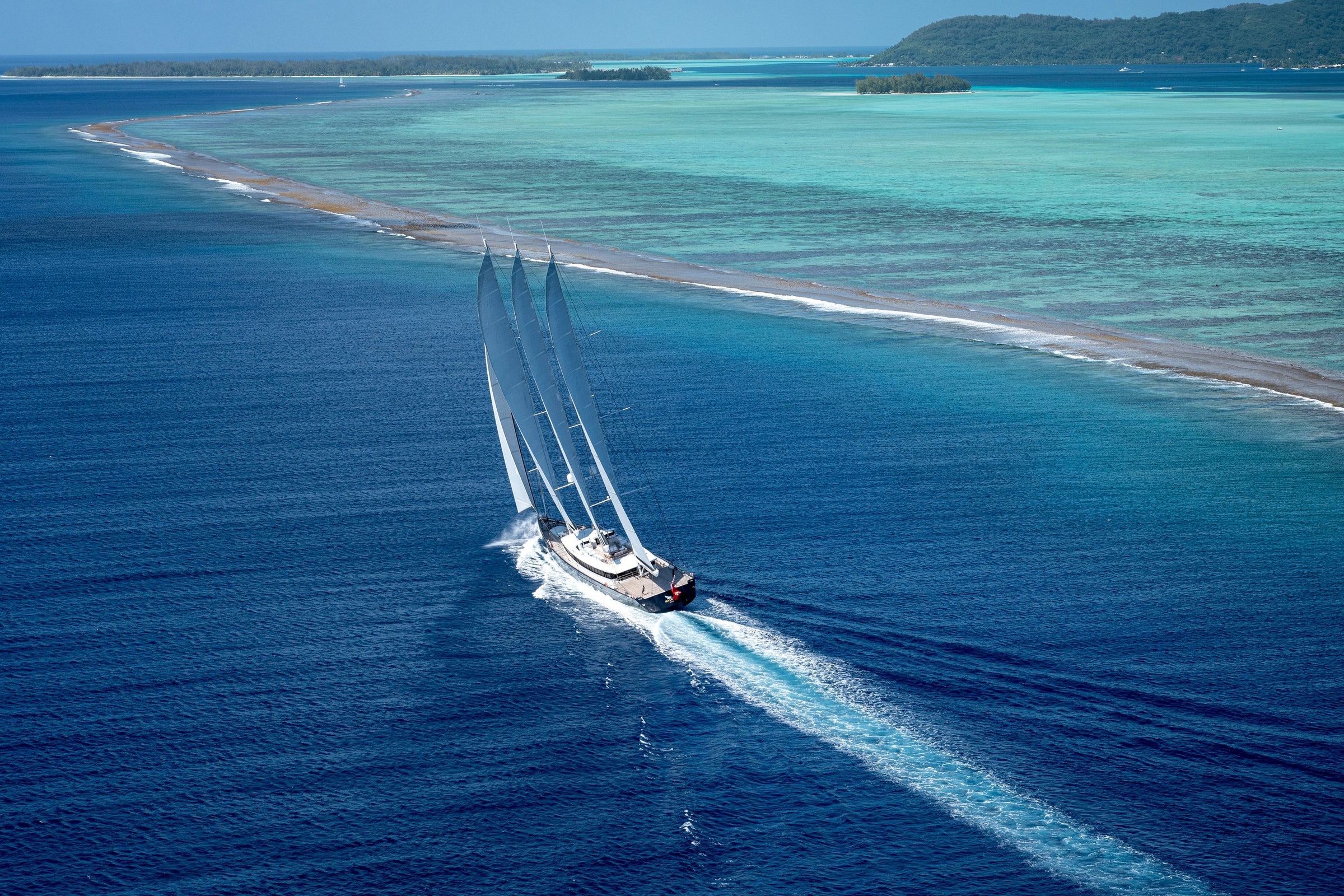
Sea Eagle’s three masts draw the eye upwards. Her charter photographs bring it back to the places where a day is spent: a table beneath the boom, a lounge framed by windows and a swim platform set for dinner. The attraction lies in how those different settings belong to one sailing yacht.
Begin with the day under sail
Royal Huisman identifies Sea Eagle as an 81-metre contemporary flybridge schooner, delivered in 2020 and previously named Sea Eagle II. Dykstra Naval Architects developed the naval architecture, with Dykstra and Mark Whiteley Design responsible for the exterior and Mark Whiteley for the interior. That established design is the starting point for this charter study. Present-day guest arrangements come from the current Burgess record.
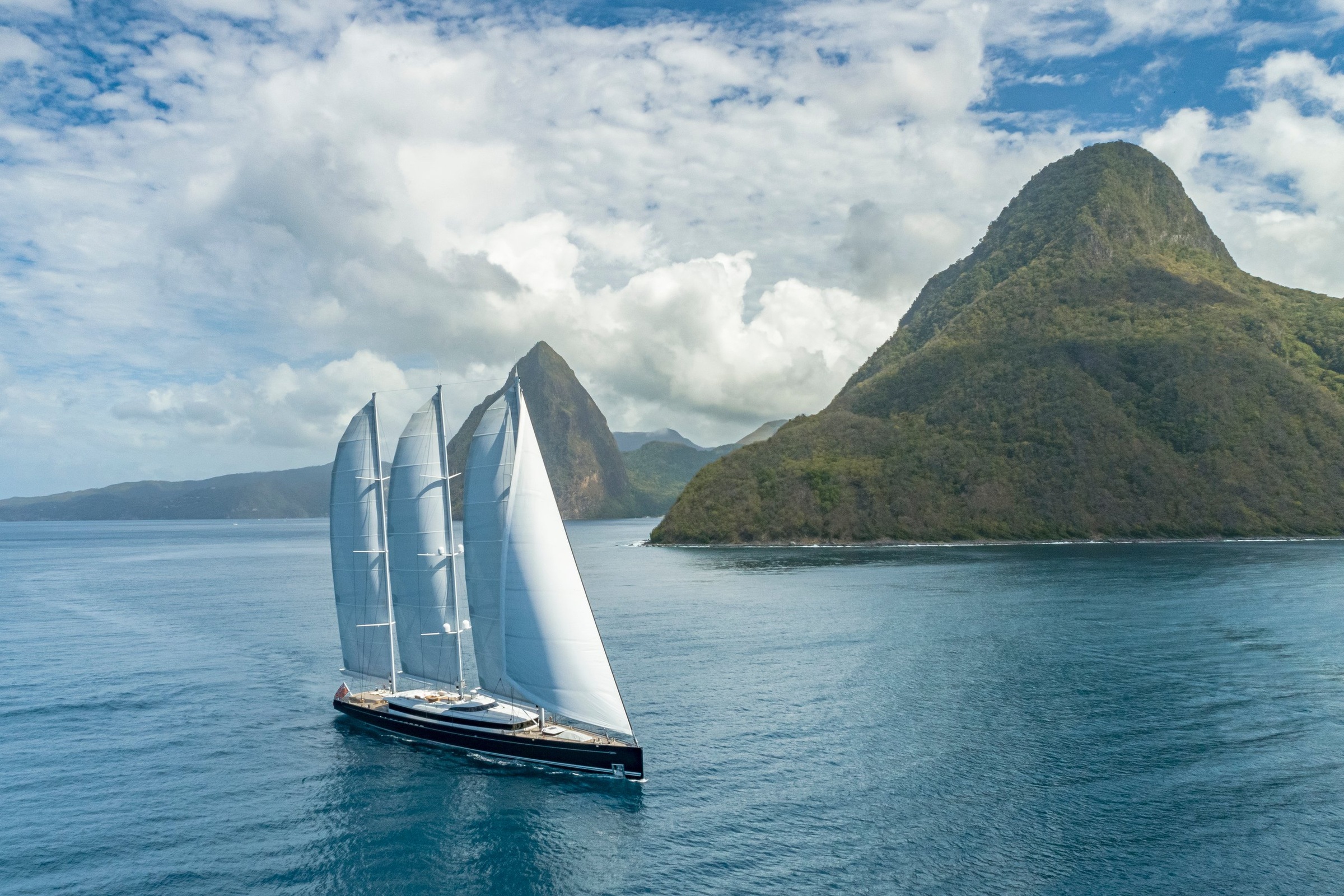
The opening sailing photographs give the yacht a strong relationship with her surroundings. The long hull and three-part rig remain readable against the coastline; in the aerial view, the darker water and the pale edge of the island make the vessel’s scale particularly clear. There is a sense of distance in the composition, without the need to turn a photograph into a claim about speed or conditions experienced by the reader.
For a prospective charter guest, the first question is how much the sailing itself should shape the holiday. A programme built around time underway has a different rhythm from one centred on short movements between anchorages. Explain that preference early. The yacht’s appearance can introduce the conversation; the captain and broker must help establish the programme that suits the party.
A table in the open air
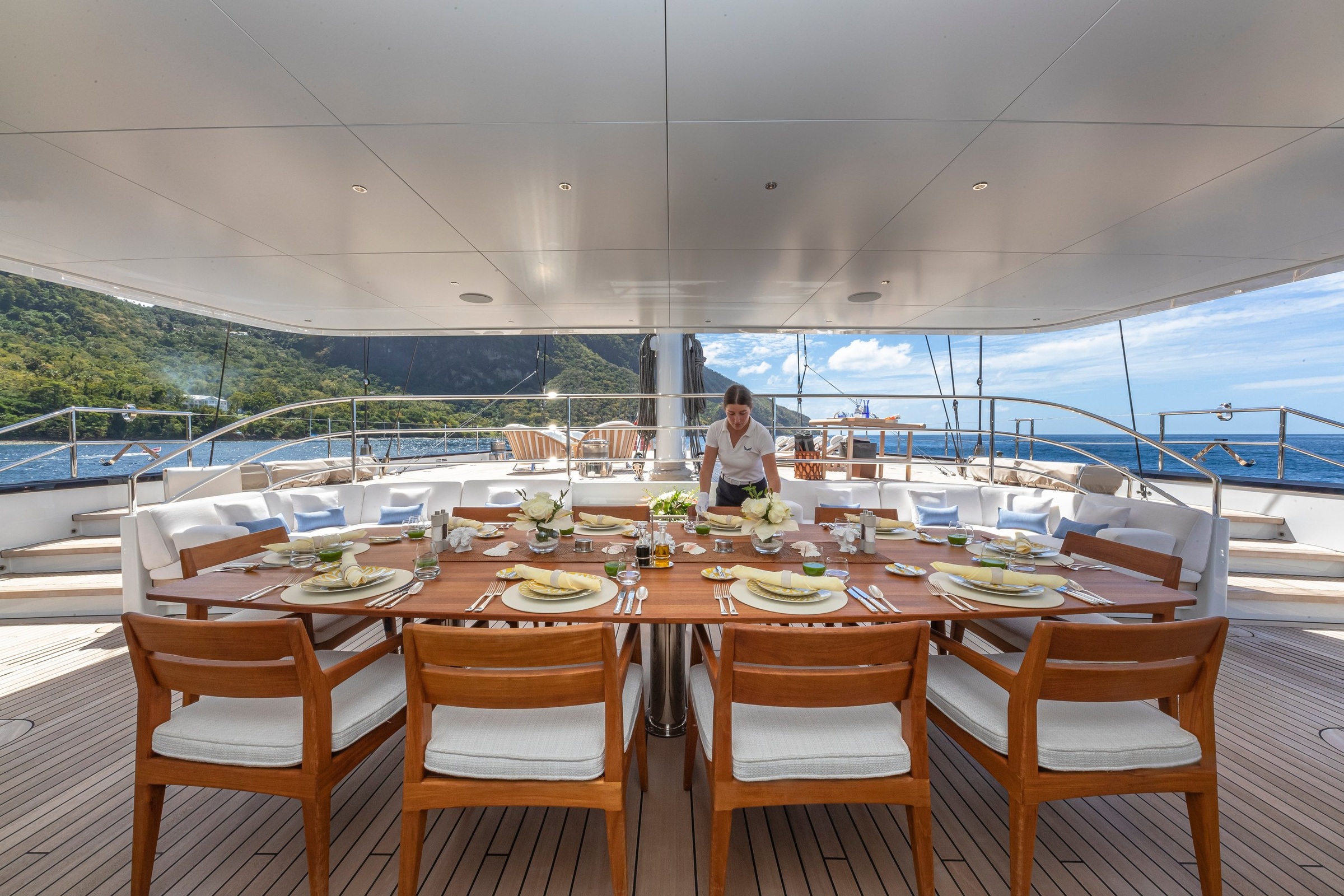
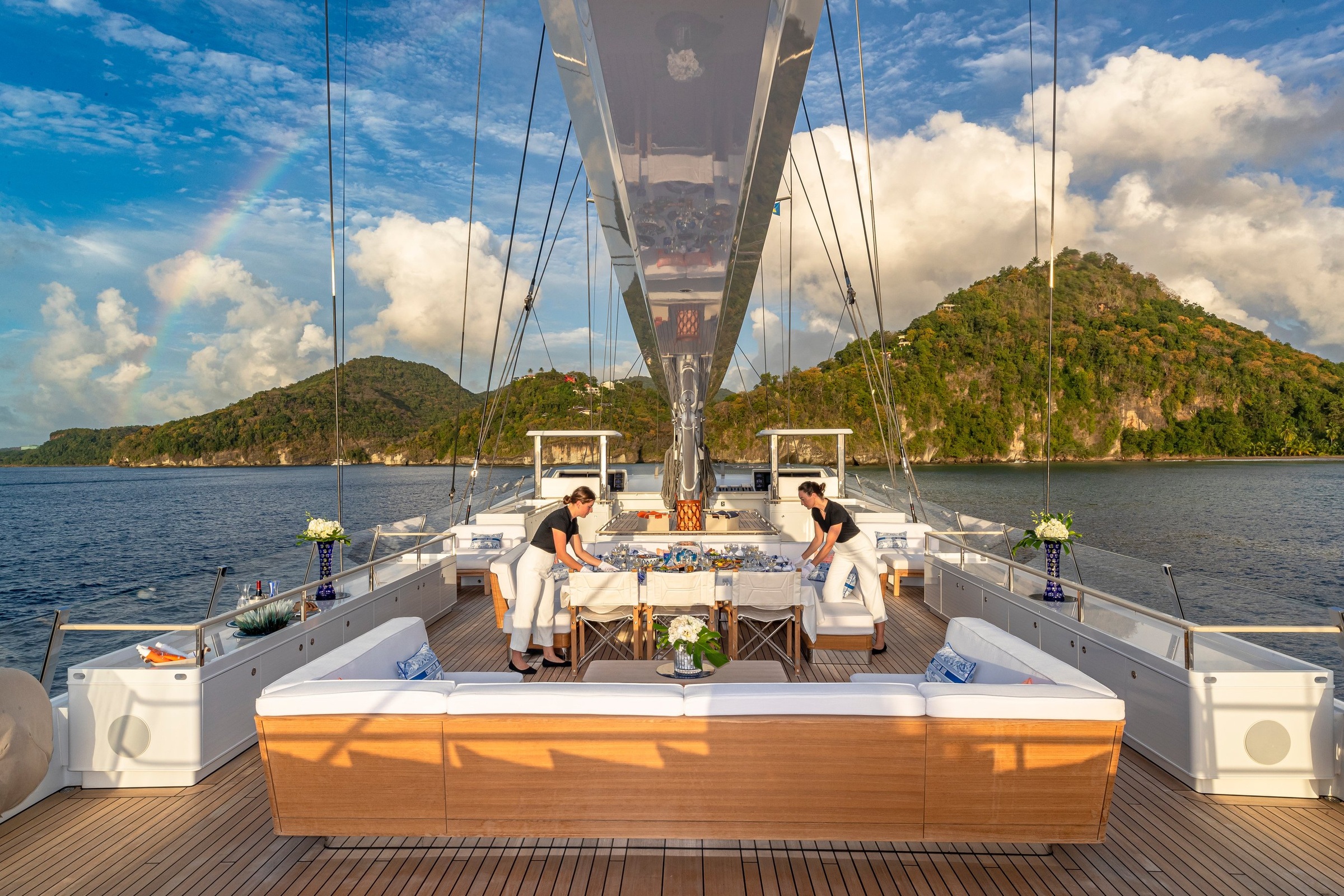
The aft dining photograph presents a large table beneath a sheltered overhead surface, with the coastline extending beyond it. Chairs, service and seating make it a place to occupy. The view matters, but so does the relationship between the table and the routes around it. This is one of the most useful ways to read a charter gallery: look at where a group can gather and what surrounds that setting.
Burgess describes a variety of indoor and outdoor arrangements. Its current photographs give those descriptions a physical setting, from the main deck to the flybridge. Rather than treating every dining image as a separate amenity, read them as choices within the day. A long lunch, an informal gathering and a more intimate evening can ask different things of the same party.
Bring those preferences into the brief. Tell the team whether the group usually eats together, how formal an evening should feel and which members value a quieter space. A good discussion can then connect the photographs with the particular arrangement being proposed. It should also leave room for the captain’s judgement about what is appropriate on the day.
Let the windows keep the destination present
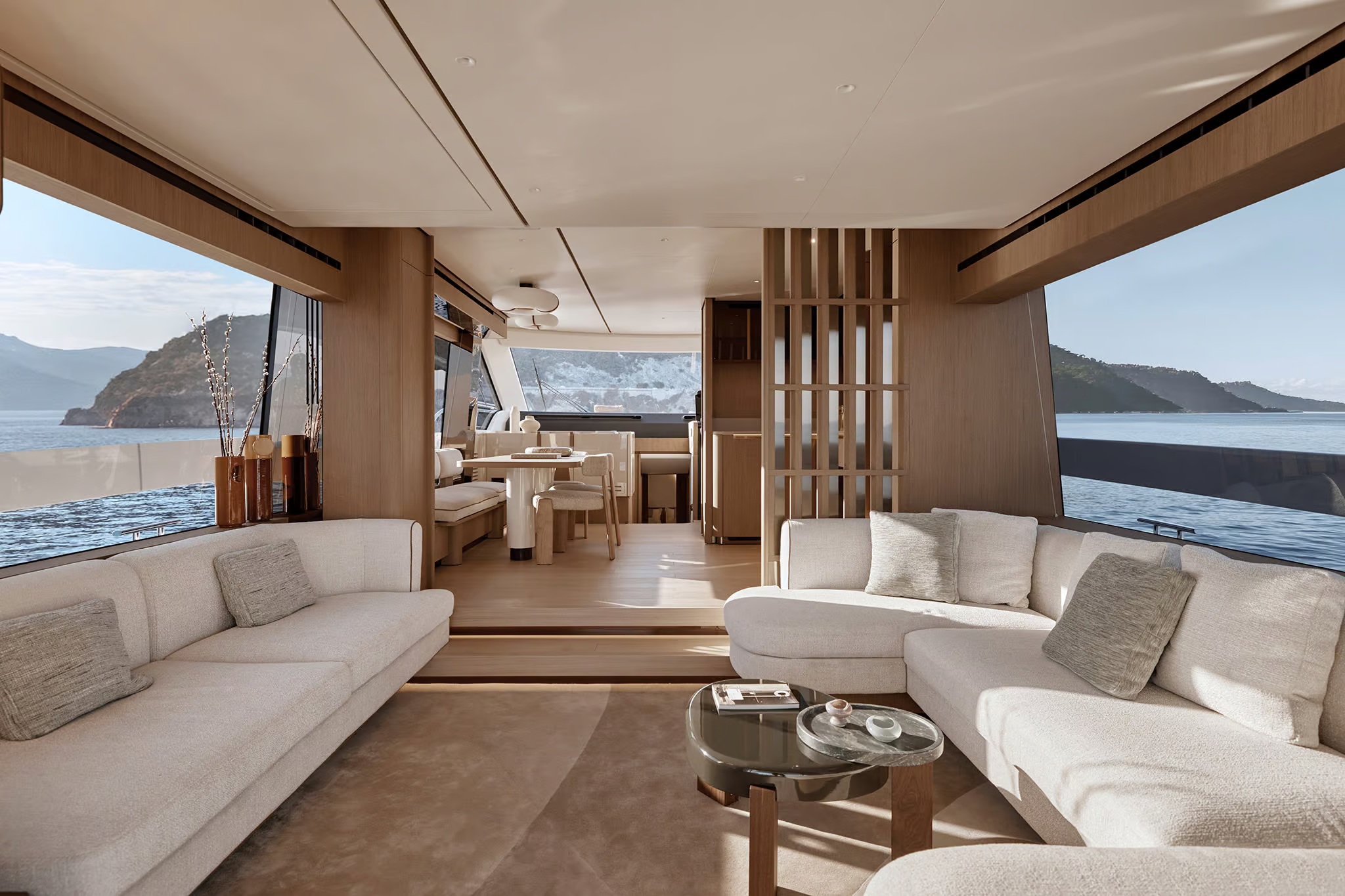
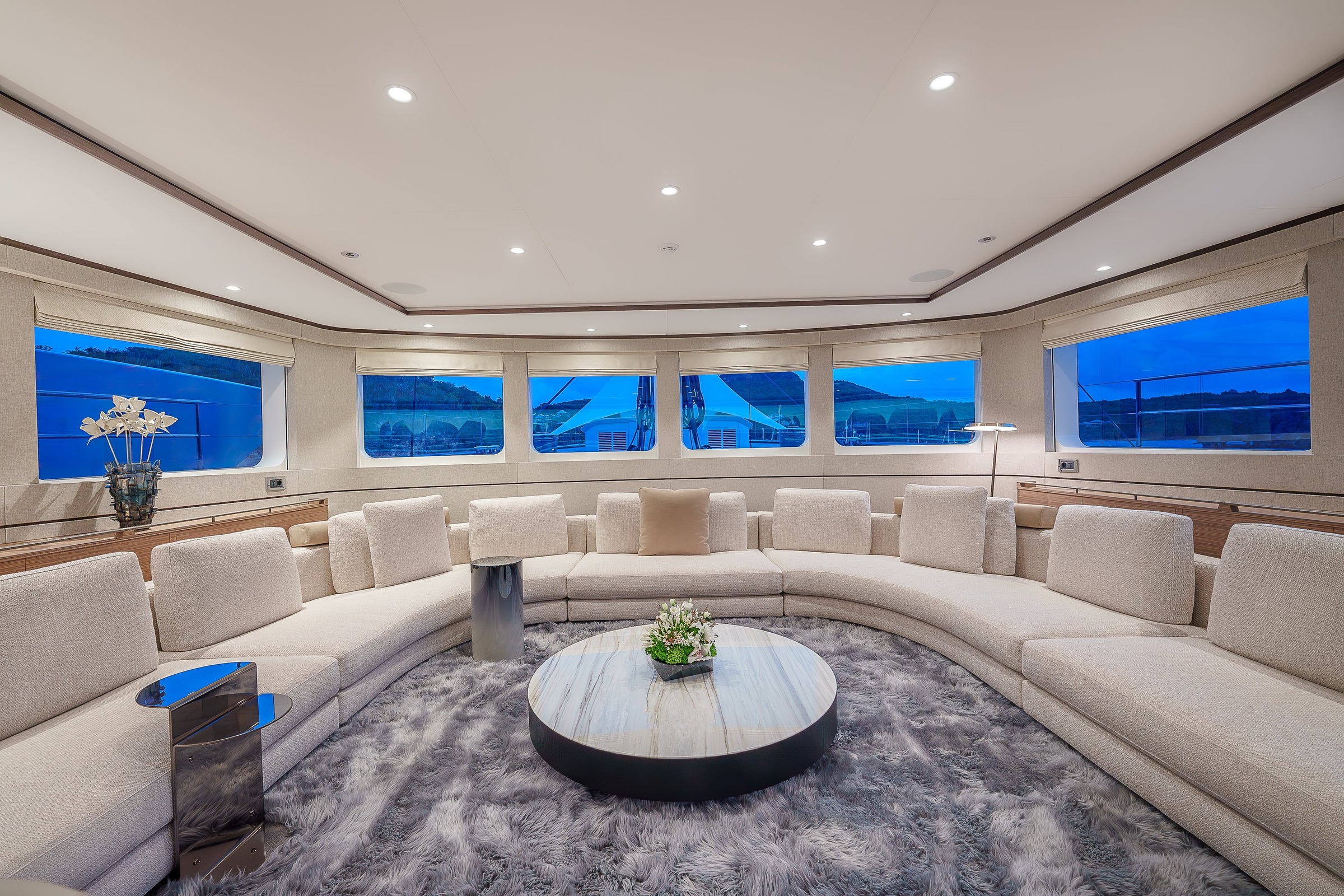
Inside, the lounge photographs show broad seating areas and a continuous sequence of windows. Pale upholstery, timber and a restrained ceiling treatment give the exterior view a clear role in the room. The interior feels connected to the water through those repeated openings, rather than relying on a single dramatic picture window.
The forward dining and lounge views offer another scale of occupation. A table can become the focus of the room, while the bar and surrounding seating provide different places to pause. In the published images, those settings feel complementary. The interior has enough visual calm to make the changing scene outside part of the experience.
For a mixed group, shared rooms deserve as much attention as the cabin list. Ask where the party can spend time together and how quieter moments can be accommodated. Photographs help identify the questions; a current plan and a conversation with the charter team help answer them. The aim is an arrangement that works for the people travelling, including the way their routines differ.
Read the cabins as a group
The current Burgess charter record lists 12 guests in six cabins and describes configuration flexibility. Those particulars belong to that present charter record. They should not be replaced by the accommodation figures in an earlier build presentation, which served a different purpose and described the yacht at another stage.
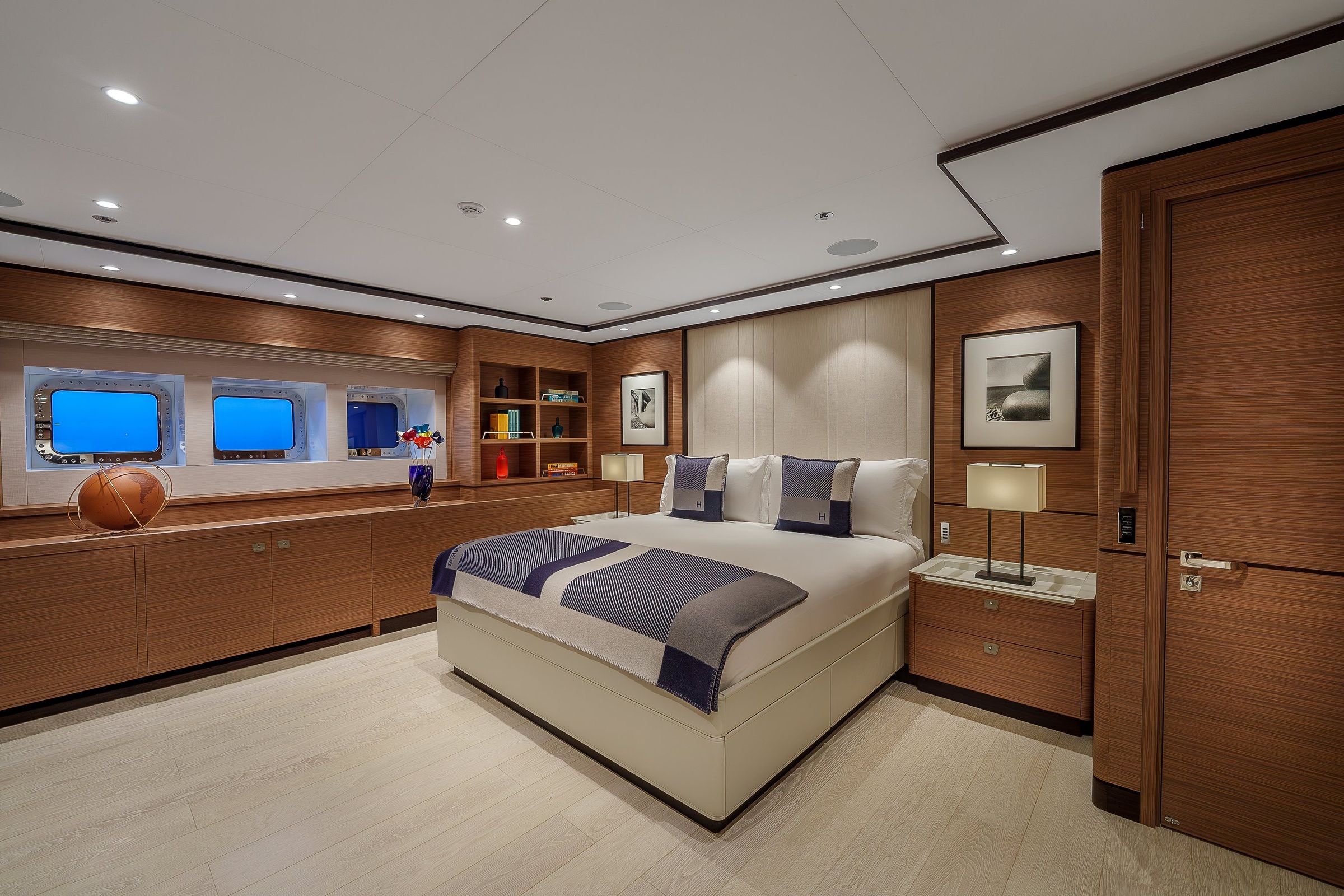
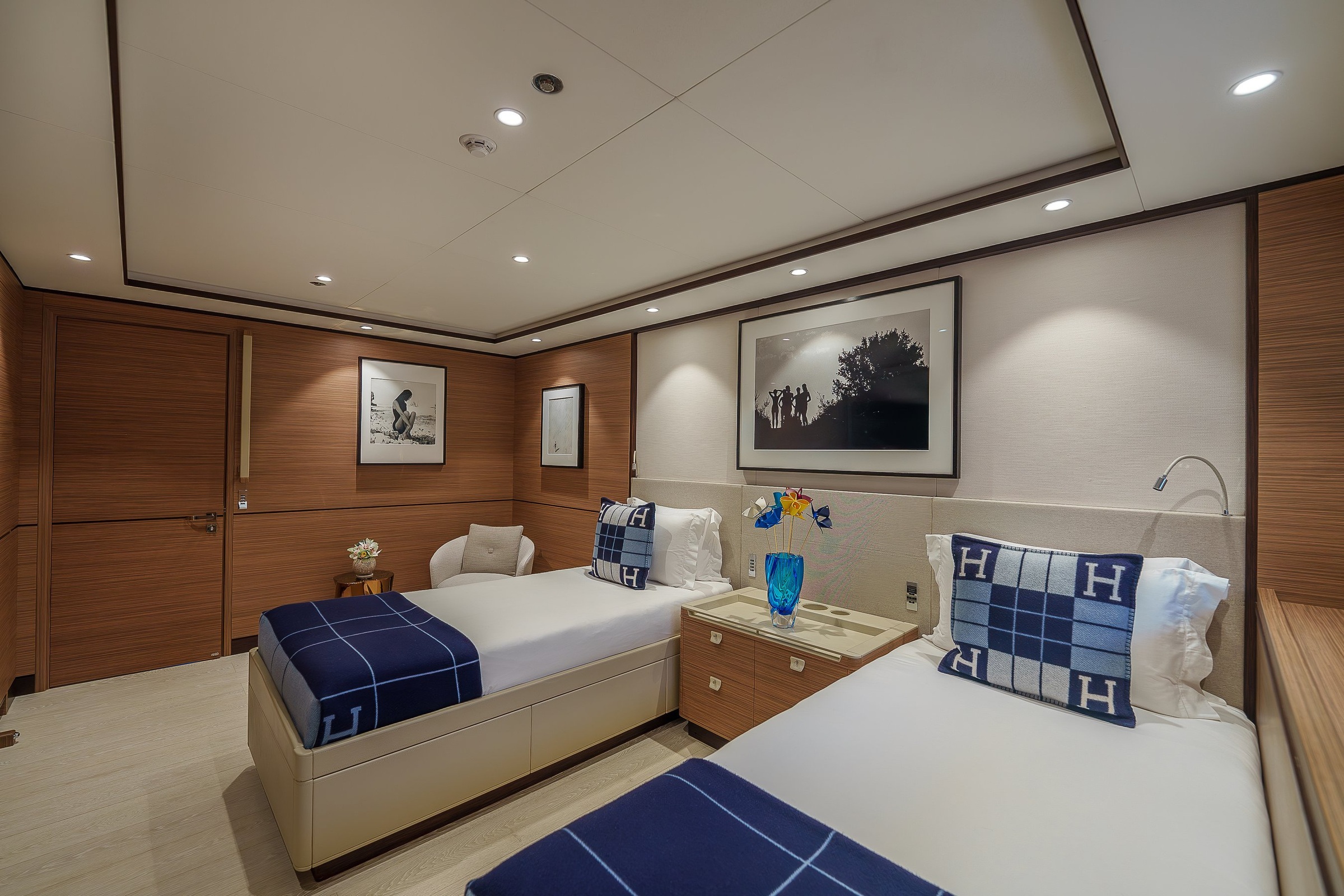
The selected master and twin-cabin photographs show a consistent interior language, with timber, pale surfaces and restrained colour. Their value in the story is comparative. They allow the reader to consider different kinds of room within the same overall atmosphere, without implying that all cabins have identical dimensions or an interchangeable arrangement.
A useful booking conversation begins with a rooming plan for the actual party. Confirm the proposed cabin configuration, the people assigned to each room and any specific access or family requirements. If a flexible room is relevant, ask how it will be arranged for the trip. A number in a specification becomes useful when it has been connected to the guests who will live with it.
The stern changes the scale
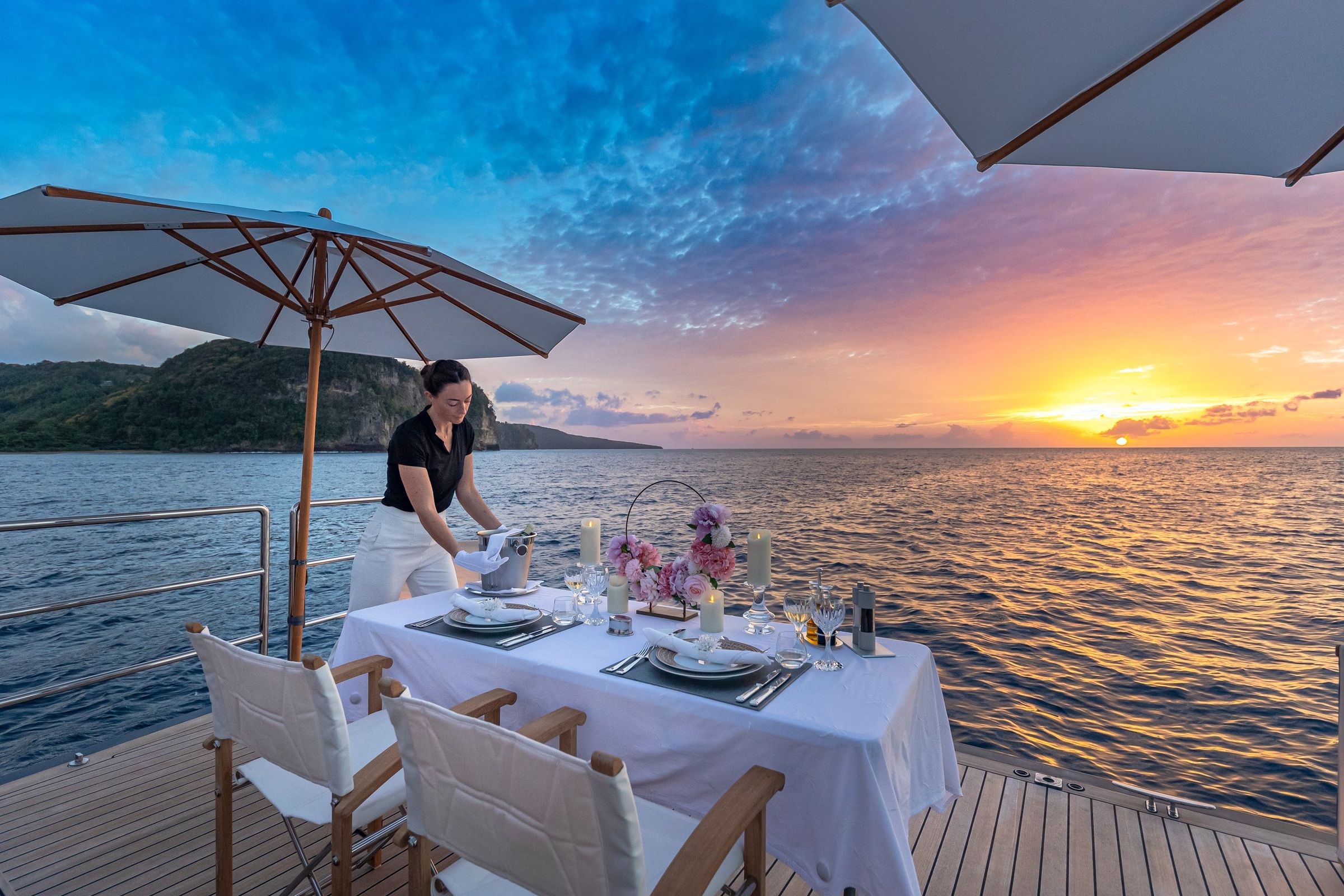
At the swim platform, the yacht is encountered much closer to the water. Burgess publishes both a broad stern view and a dinner setting photographed at sunset. The latter is especially intimate: a small table, chairs and service occupy a modest part of a much larger vessel, while the horizon provides the background.
It is an appealing change of scale after the long hull and tall rig. The setting shows how a large yacht can present a quieter moment without making the surrounding sea disappear. It also demonstrates why a charter story benefits from photographs of actual occupation, rather than a specification followed by interchangeable deck views.
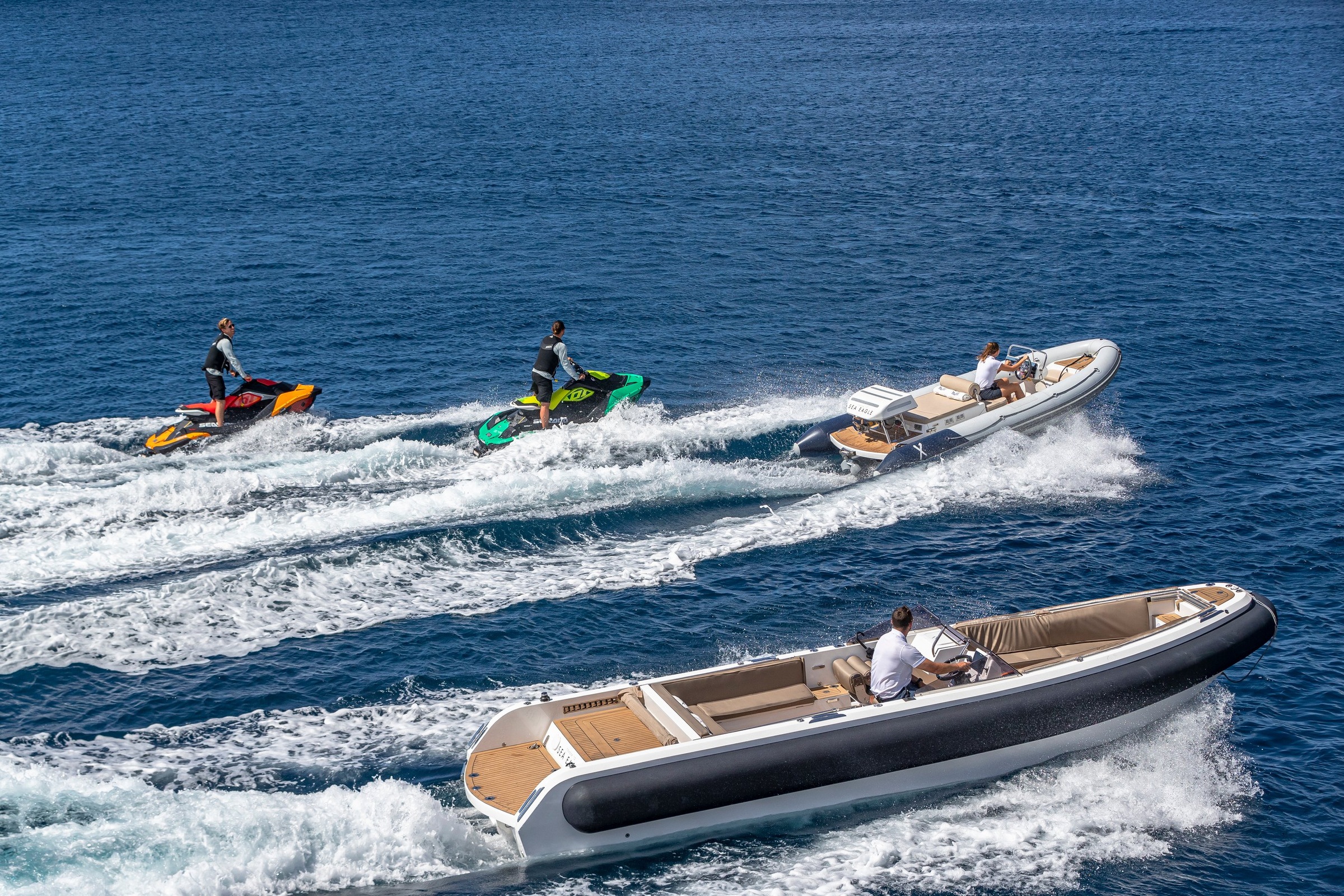
Treat that image as a published example of a setting. If it is important to the holiday, discuss it with the charter team. The same applies to tender use, going ashore and activities around the yacht: establish what is proposed for the party, how it will be organised and what depends on the conditions encountered. The photograph introduces the possibility; it does not settle the booking.
Keep the brief personal and precise
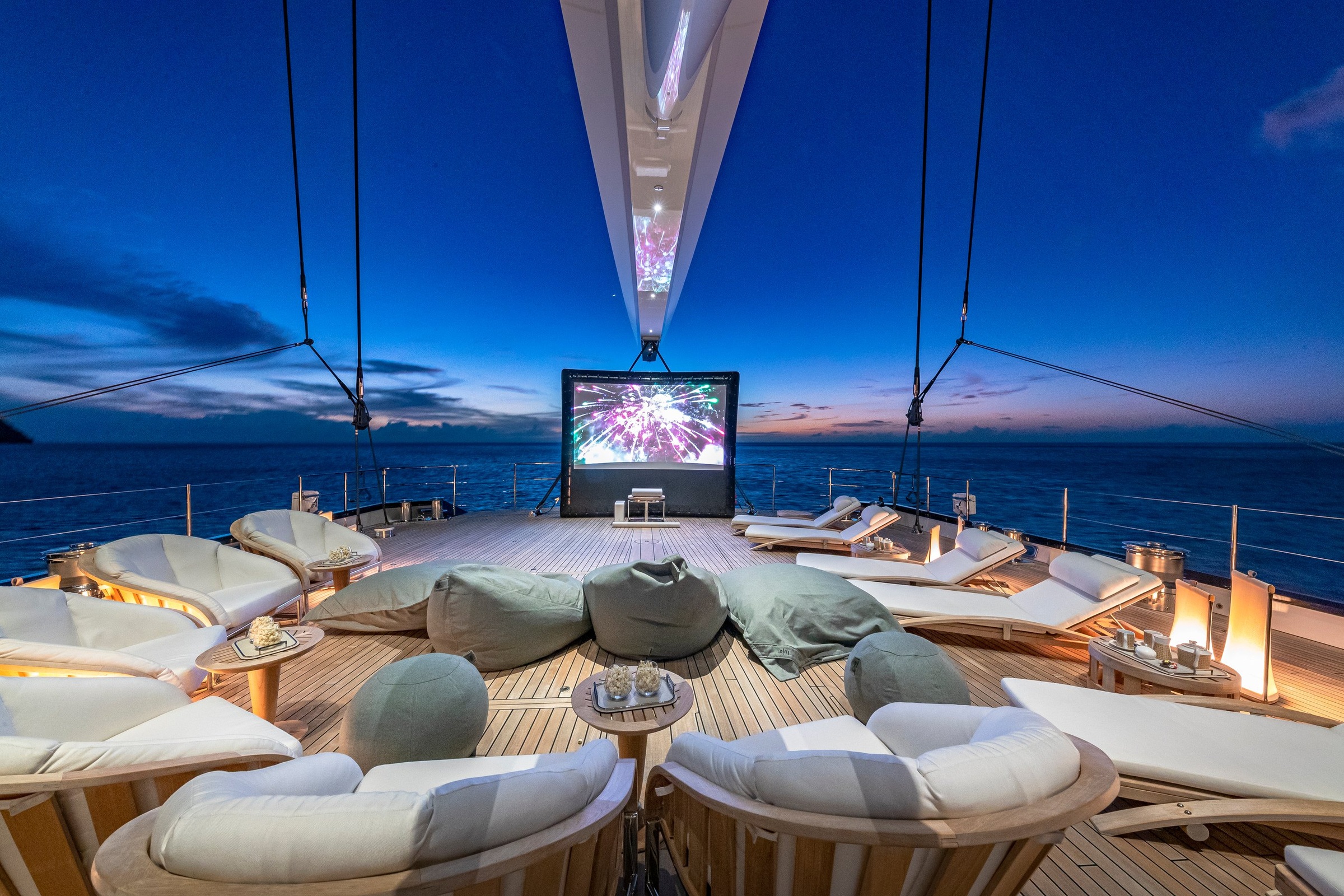
Sea Eagle’s current presentation includes spaces for exercise, relaxation and an outdoor cinema, as well as tenders and watersports. Such a range is most useful when priorities are clear. A party can value a few well-chosen activities more than a long list of equipment that is never used.
The gym and massage-room photographs also deserve to be read alongside the stated flexibility of the programme. Ask which arrangement is planned and which facilities or people form part of the specific proposal. Equipment, services and operating programmes can change. This article therefore avoids quoting availability, a weekly price or a guaranteed activity schedule.
| Starting point | Published evidence | Question for the charter brief |
|---|---|---|
| A sailing holiday | Three-masted 81-metre schooner, delivered in 2020 | How should time under sail shape the programme? |
| The travelling party | Current Burgess listing: 12 guests in six cabins | Which rooming arrangement is proposed? |
| Shared time | Interior, aft-deck and flybridge settings | Where does the group most enjoy gathering? |
| A quieter moment | Lounge, cabin and swim-platform photography | Which settings matter to individual guests? |
| Activities and shore time | Current broker description and gallery | What is included and appropriate for this trip? |
The table is a starting point for discussion, not a substitute for the charter documents. It keeps the attractive idea of the holiday connected to the details that will give it shape.
Leave the last view to the whole yacht
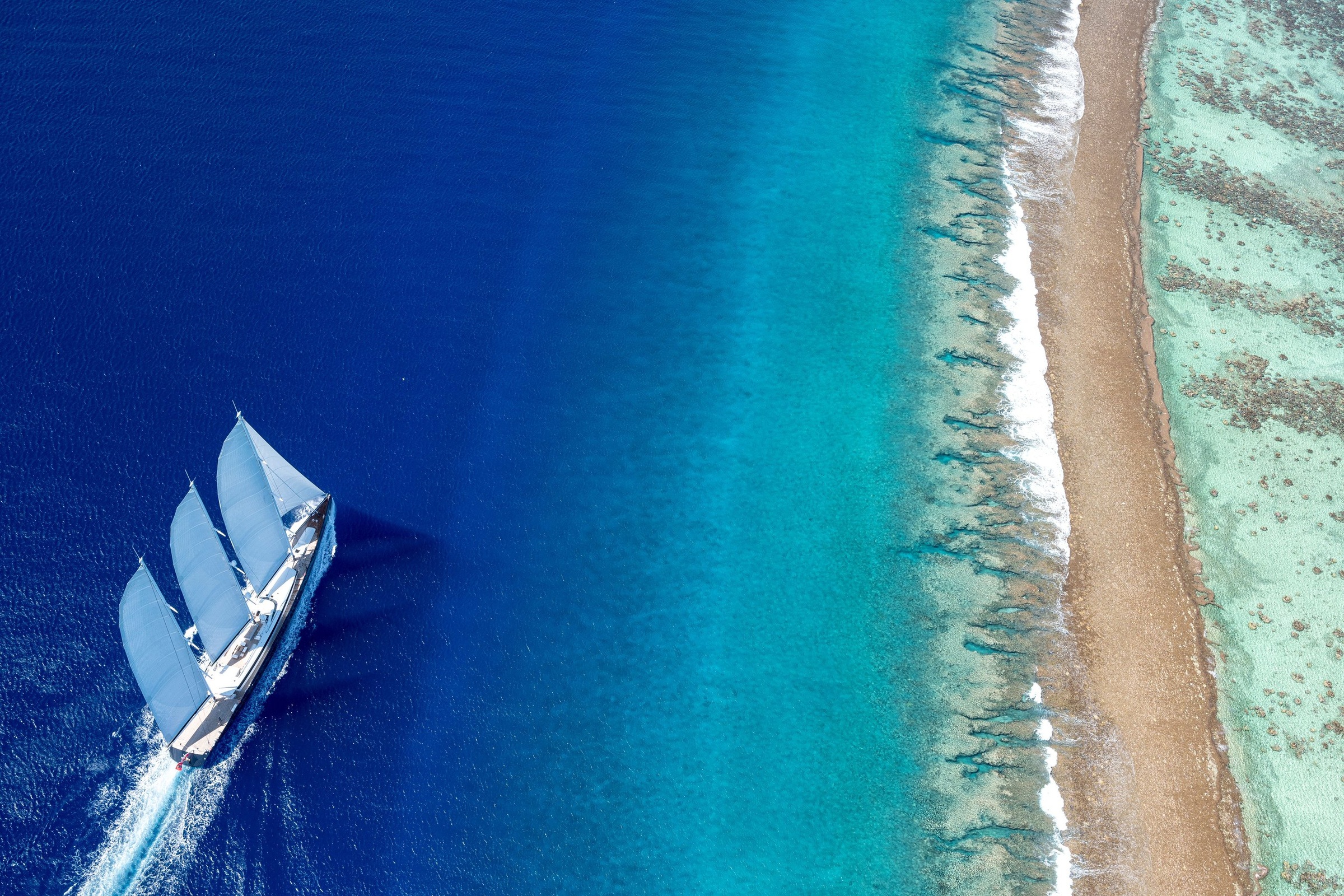
An overhead sailing photograph brings the different rooms, decks and routines back into one composition. Sea Eagle moves through darker water beside a pale shoreline, her rig and hull forming a clear line within the landscape. After the close reading of the guest spaces, that wider view carries more meaning.
The distinction of a sailing charter is partly in that relationship between the place occupied aboard and the vessel making the passage. Sea Eagle’s published collection makes both available to the imagination. The next step is a brief that gives the right balance to sailing, company, privacy and the places the party hopes to explore.
Sources & credits
Methodology and sources
Based on the primary publications below, accessed 5 November 2026, and the official photographs reproduced with captions. Build and rebuild dates are distinguished from current programme information. Spatial readings and commissioning questions are original editorial interpretation; no independent sea trial was undertaken.