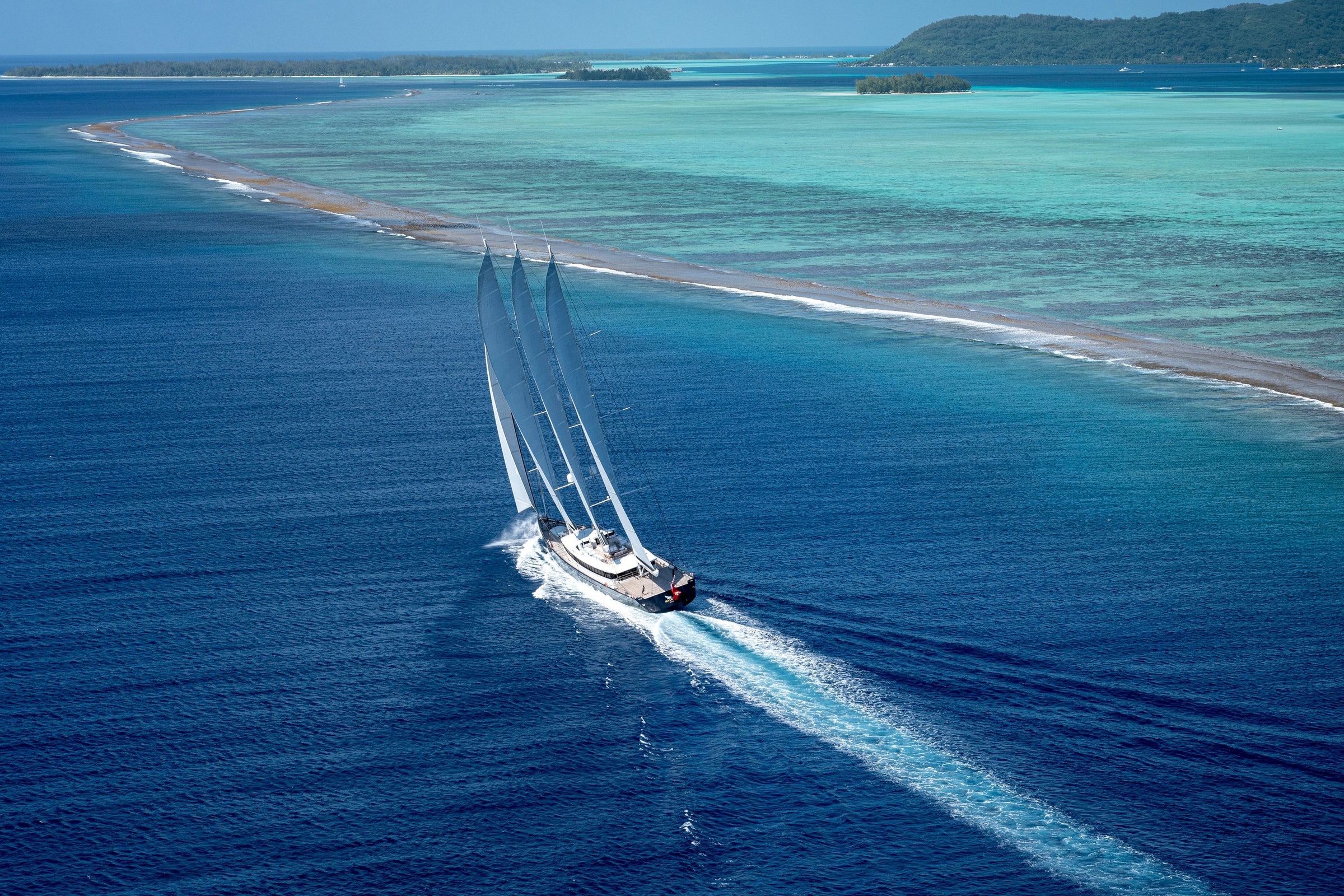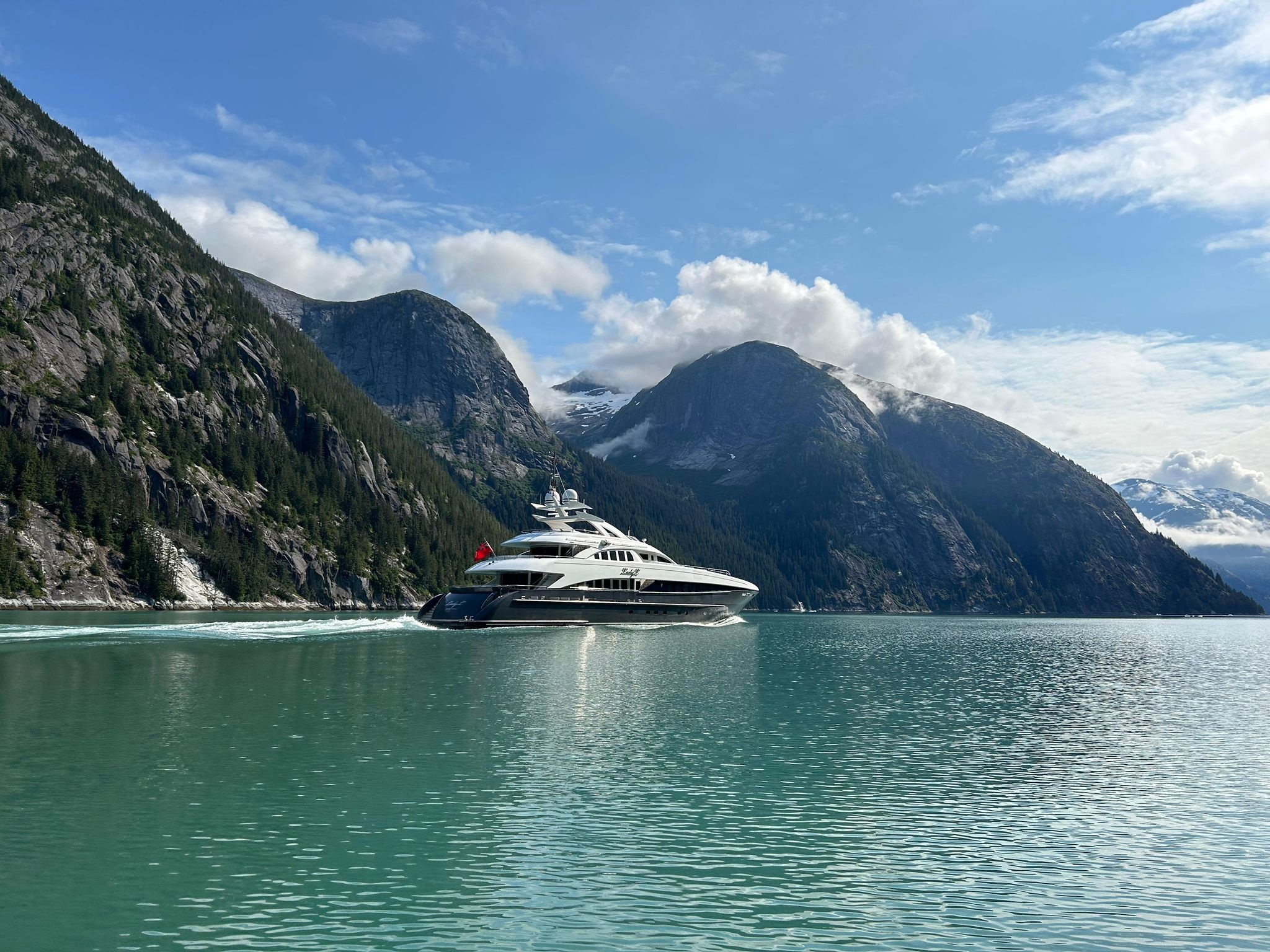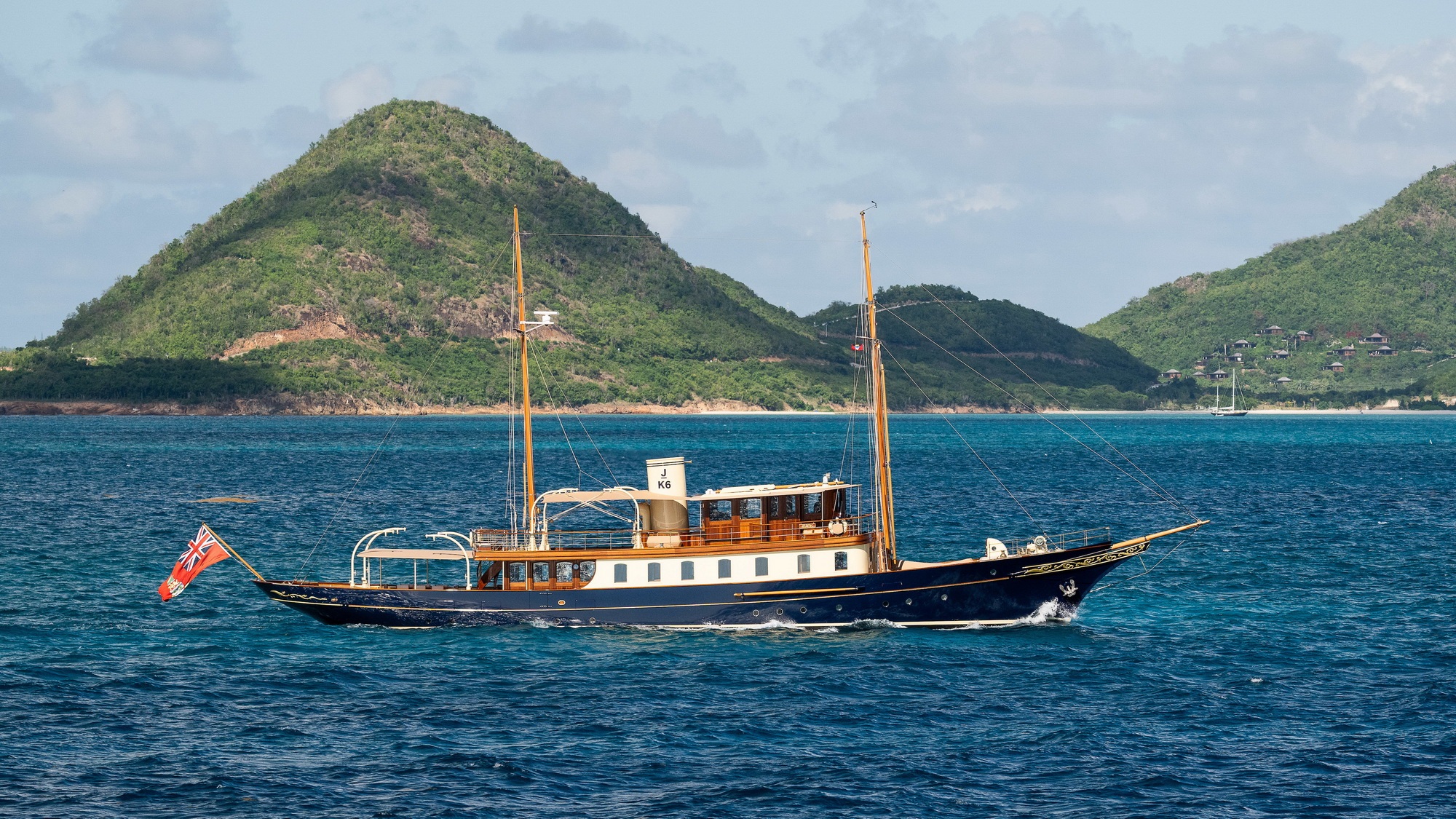
From the water, Atlantide keeps the outline of another age: a dark hull, low deckhouses and a slender rig, set against a green coastline. The photographs give the impression of a coherent little ship. Understanding the work behind that impression makes her far more interesting.
When the brief changes at the hull
Atlantide was designed by Alfred Mylne and built by Philip & Sons in 1930. Huisfit’s project record identifies her as a 37-metre motorsailer. She arrived in the Netherlands in January 2021 for repairs and interior work, then left in November 2023 after a much more substantial rebuilding programme. Those dates define the case: this is a completed project worth studying, rather than a new launch being announced today.
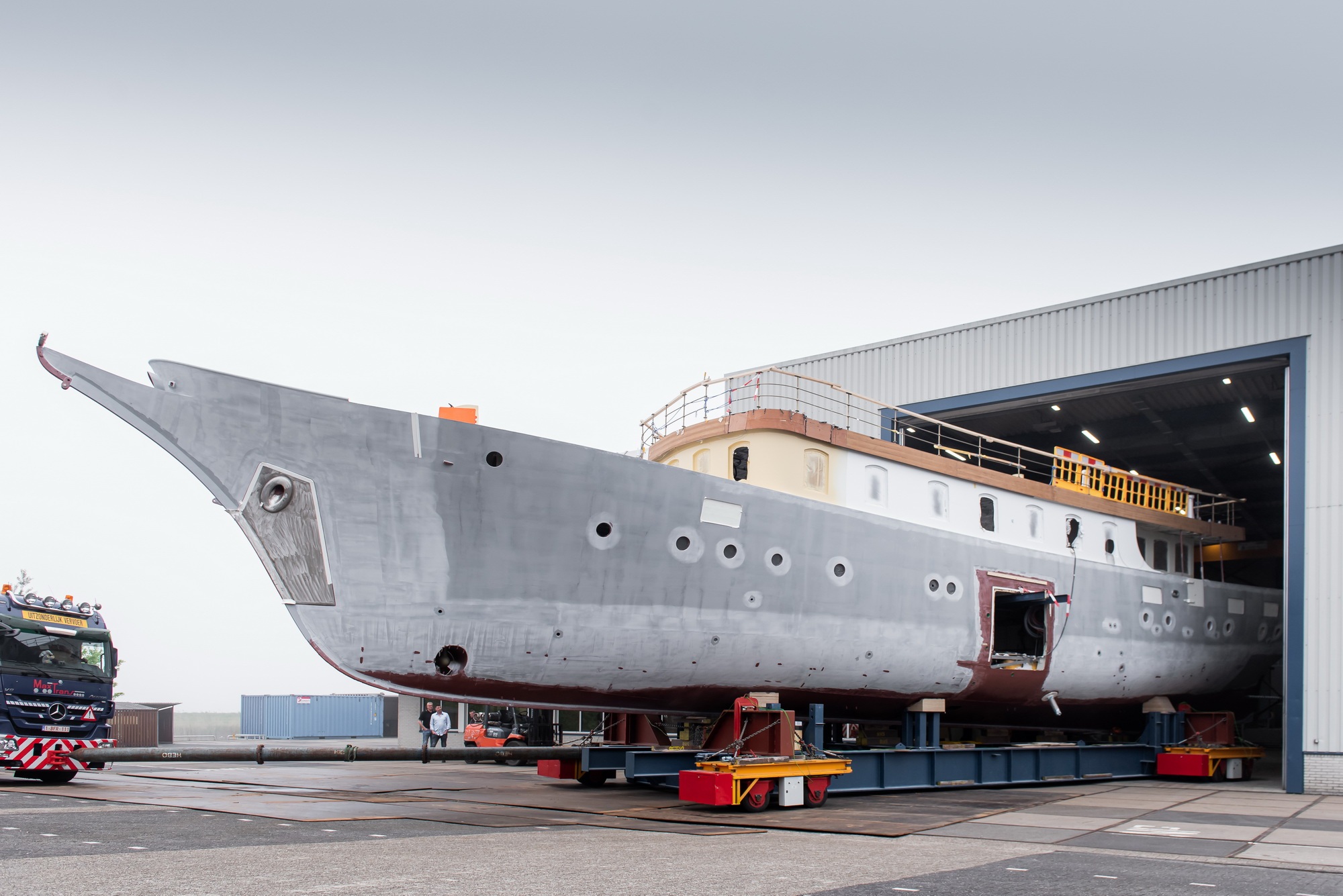
The important moment came when the vessel could be examined out of the water. In its account, Huisfit describes a gap that initially appeared to be a crack in the hull; investigation exposed a considerable thickness of filler. The discovery changed the team’s understanding of the structure beneath the appearance. It is a concrete example of how a restoration brief can develop as physical evidence becomes available.
The photograph of the stripped hull belongs at the centre of that discussion. The yacht is recognisable, but her polished surfaces have given way to the working structure. The difference is the reason this case deserves more than a sequence of finished interiors. An owner commissioning such work needs a way to respond when the project reveals something the original brief could not settle.
Decide what continuity means
Huisfit reports that 40 per cent of Atlantide’s hull, deck and frames were replaced. It also describes a fully reimagined interior and onboard systems overhauled or replaced, with the original Gardner diesels retained. The outcome joins substantial renewal to an immediately recognisable identity. The familiar outline does not tell the reader how much work lies behind it.
For an owner, continuity therefore needs a precise meaning. It can concern an exterior profile, a particular arrangement, a historical association or individual materials. Those are different ambitions. Keeping an appearance and keeping the original substance require different kinds of evidence, and a project team needs to know which matters in each part of the vessel.
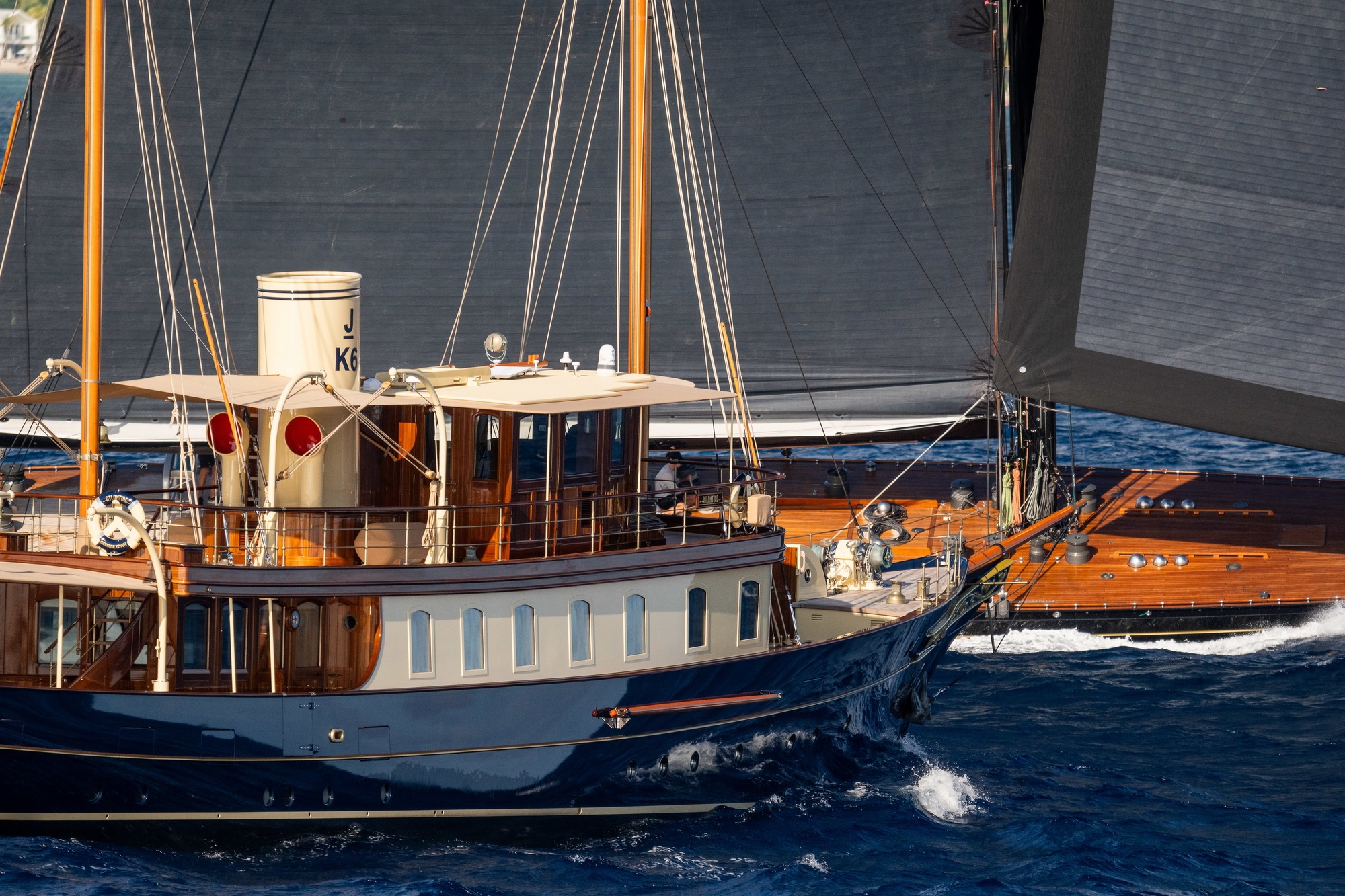
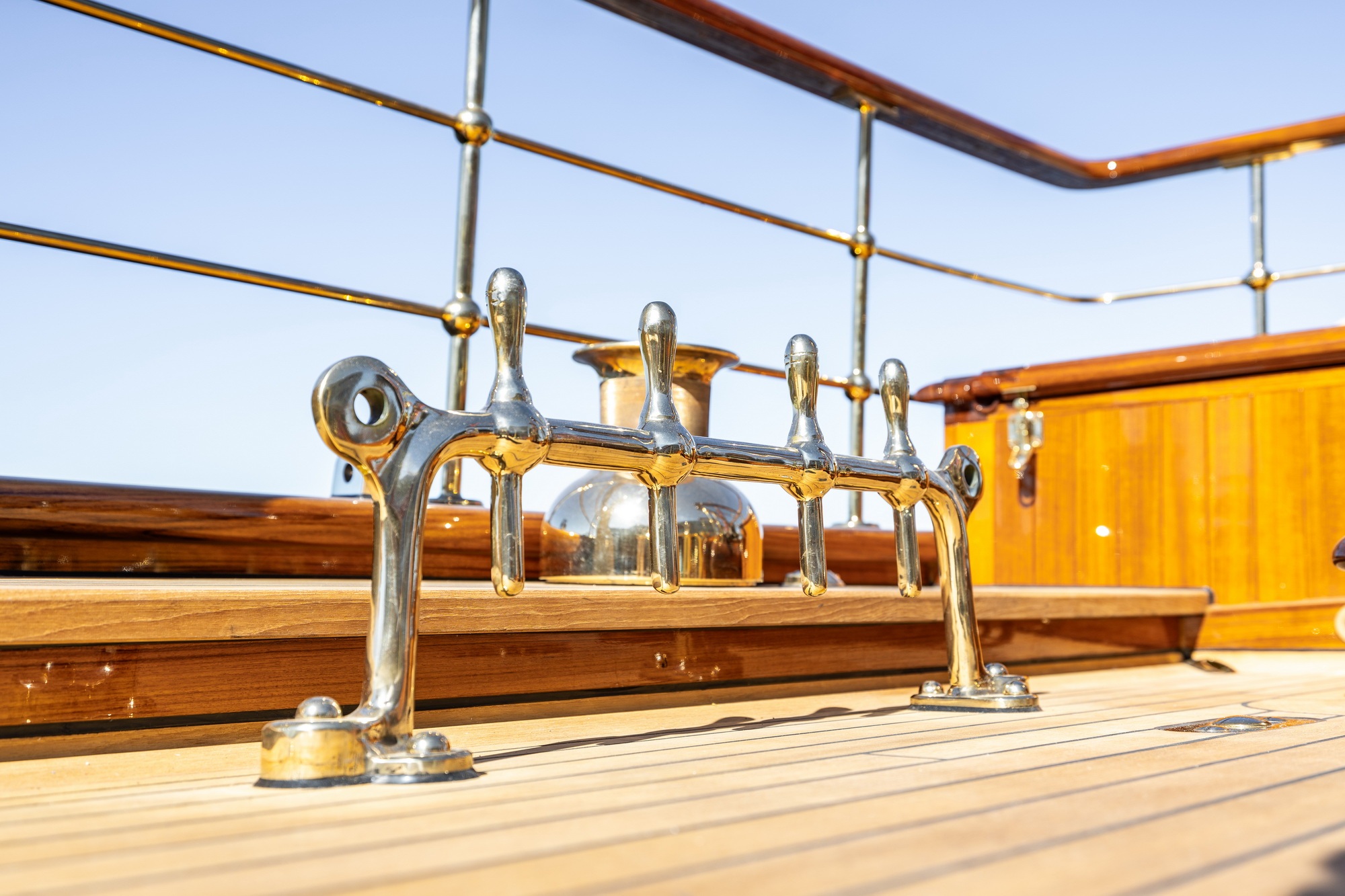
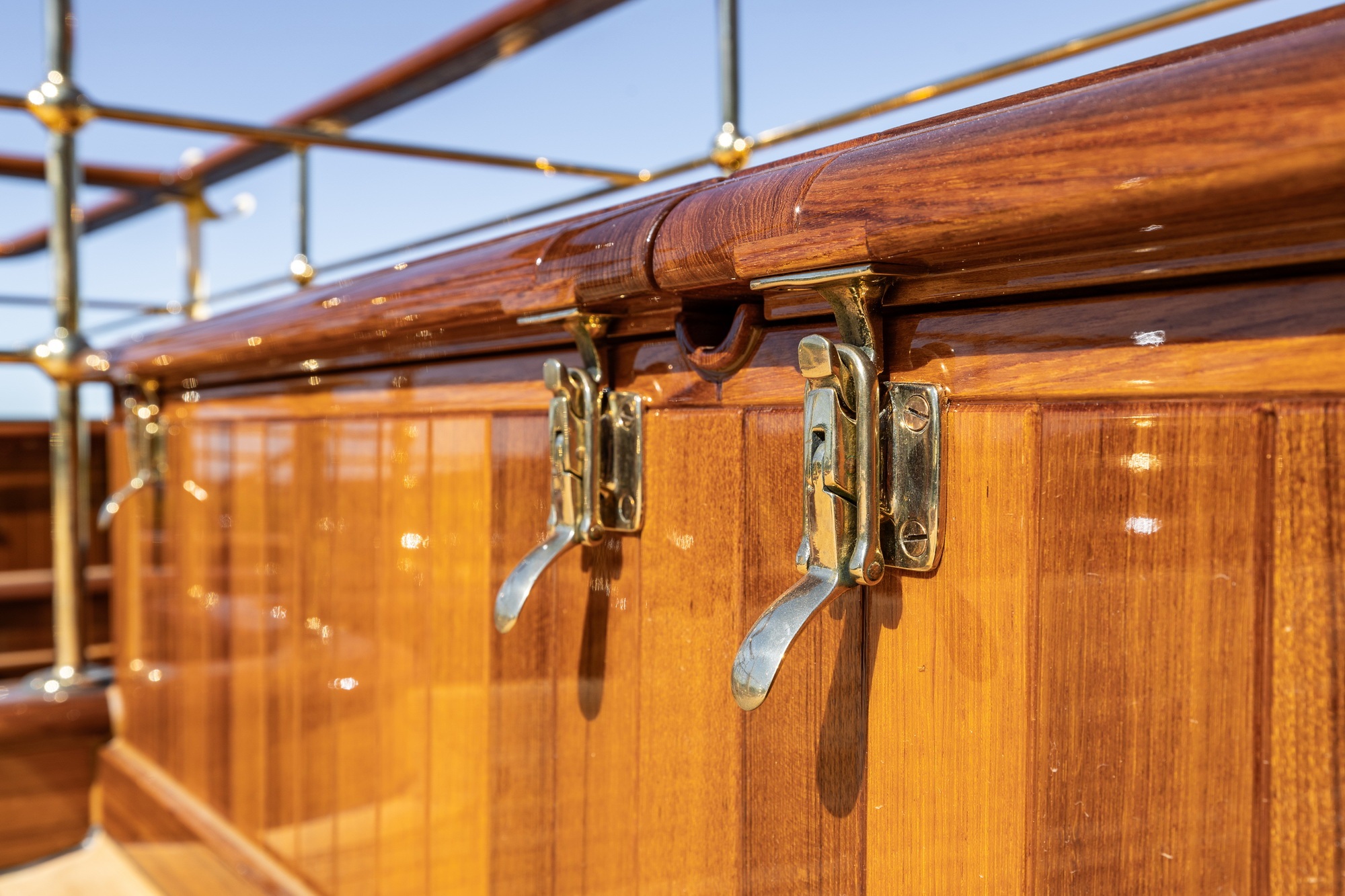
Atlantide’s completed deck photographs reward that close reading. Mahogany, pale overhead surfaces and polished metal establish a clear visual rhythm. They show the quality of the finished arrangement. A photograph alone cannot identify which piece of timber is original, which was renewed or how a hidden connection was resolved. Those questions belong to the project’s technical and conservation records.
Read the timber twice
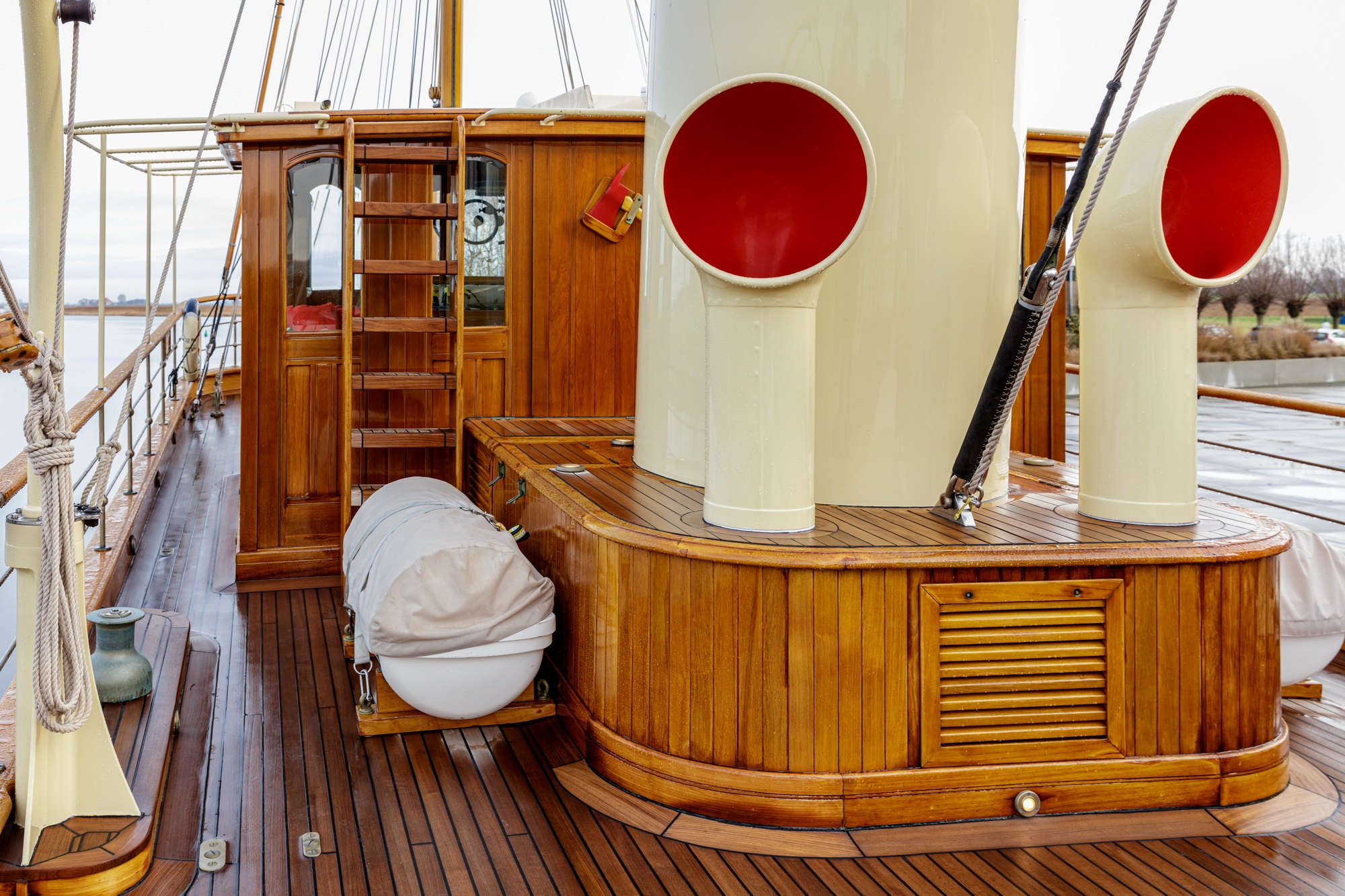
The yard’s before and after collections allow a more useful comparison than an isolated beauty shot. Earlier views show the deck structures and ventilators before the rebuild. Later photographs return to the vessel’s timber surfaces, fittings and circulation. Read together, they offer a record of change without requiring the two frames to pretend to be a perfectly aligned technical survey.
In the earlier imagery, individual fittings and the surrounding finish compete for attention. The completed sequence feels more composed: the warm joinery, straight deck lines and bright metal establish a shared order. That is an editorial observation about the published photographs. It should not be mistaken for a material-by-material account of the restoration.
This distinction is useful to a commissioning owner. Ask for the before photographs, the reasoning behind the work and the completed record together. A finished surface can then be understood as the result of a decision. The archive becomes particularly valuable where a part has been renewed to preserve a familiar shape: visual continuity is much easier to appreciate when the underlying choice remains legible.
A staircase holds the argument
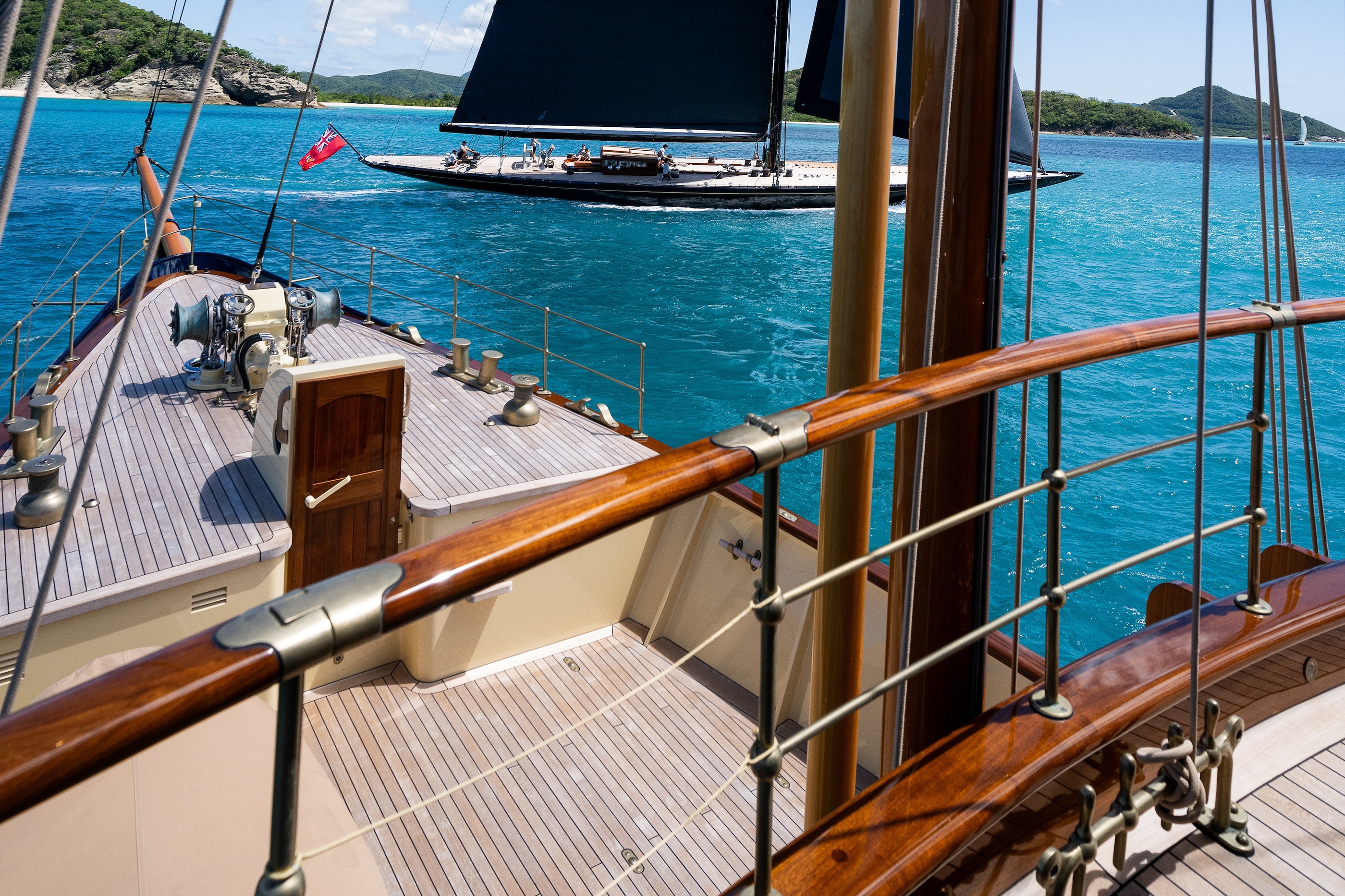
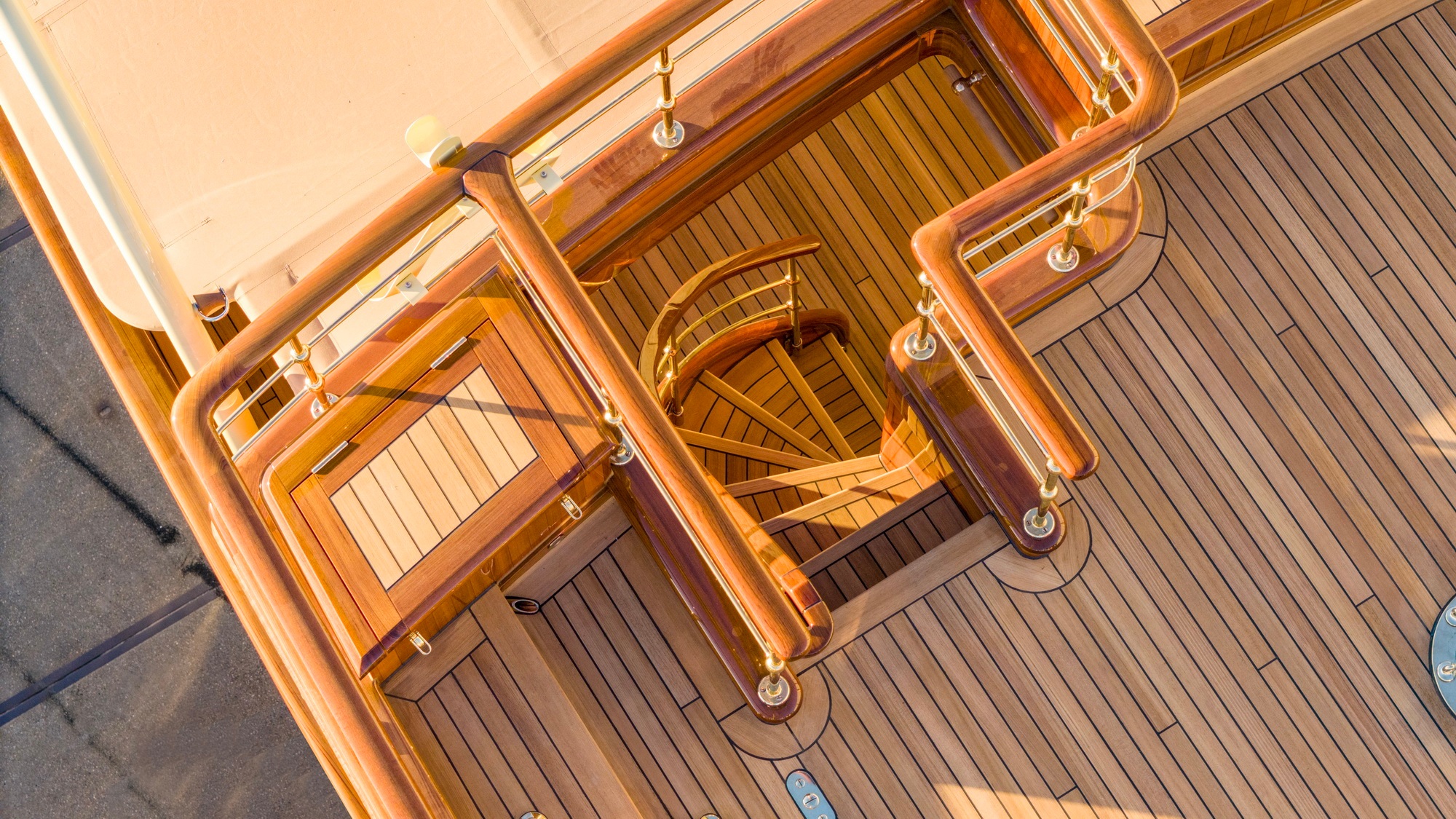
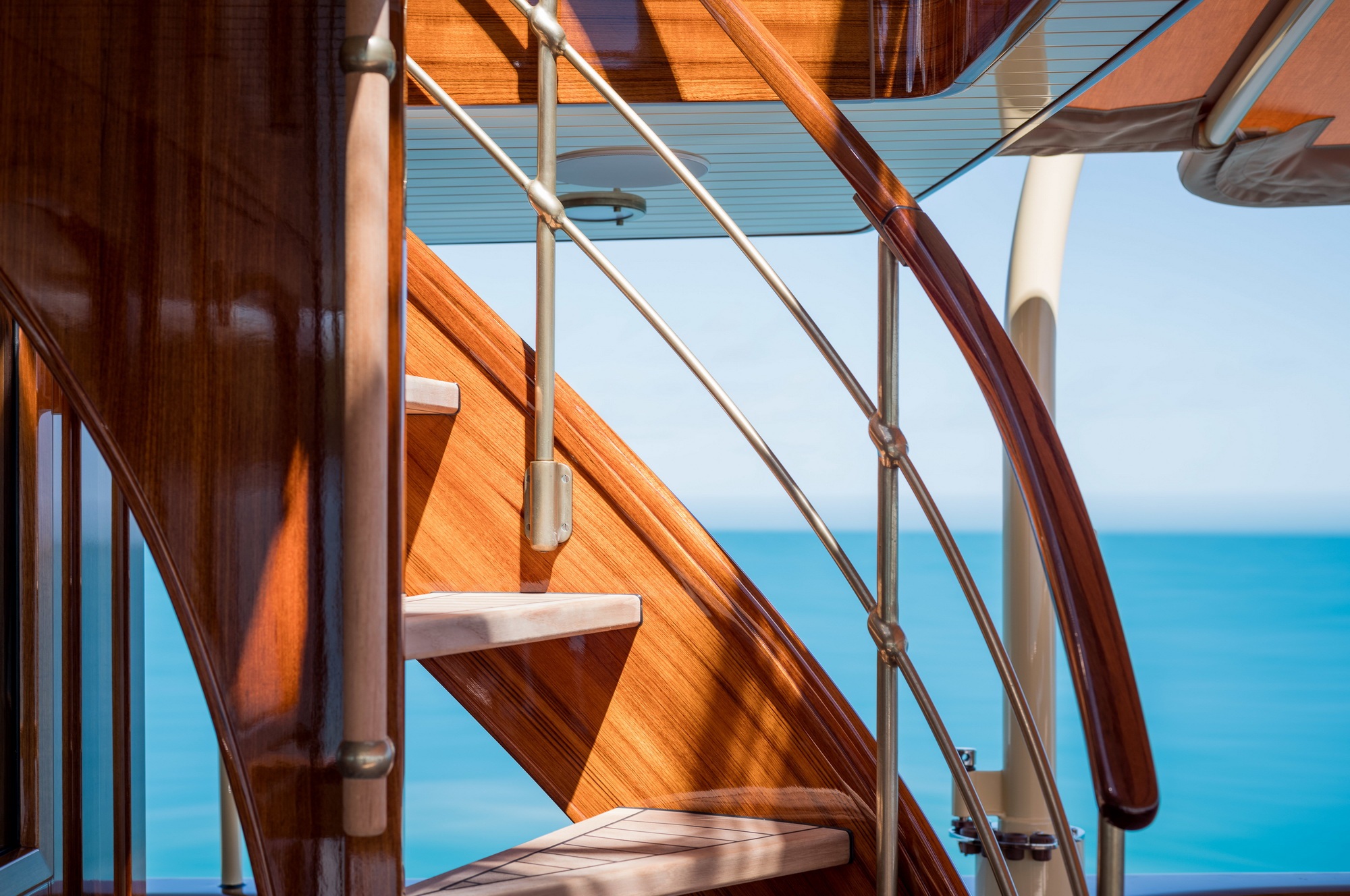
The exterior stair is a compact study of the rebuilt yacht. Seen from the side deck, it connects the strong horizontal line of the rail to an upper level, while the sea remains visible beyond. In a closer view, the sweep of timber and the metal supports create a more intricate composition. One frame explains movement through the vessel; another makes the workmanship the subject.
There is value in giving both scales room. The complete view places the stair within a route. The detail shows the attention that gives that route its character. An owner looking only at decorative samples would miss the relationship between the object and the way it is encountered aboard.
The same approach can shape a project review. Consider an element in context, then examine the work at a closer scale. Ask the team to explain its role in the finished arrangement and the records that establish how it was delivered. The point is not to turn every conversation into a design presentation. It is to keep the relationship between an intended experience and the completed work visible.
Give the hidden work its own record
Atlantide’s rebuilding makes an appealing finished photograph, yet the structural and systems work carries another part of the story. Huisfit’s reported scope reaches well beyond the deck furniture or finish. The owner’s understanding of the project should do the same.
An effective handover discussion can organise the evidence by area of work: what was inspected, what was changed and which documents explain the completed condition. Where equipment has been retained, ask how its place within the renewed vessel is recorded. Where systems have been replaced, ask what information the people operating and maintaining them will receive. These are useful commissioning questions, rather than claims about documents Luxe Digital has inspected for Atlantide.
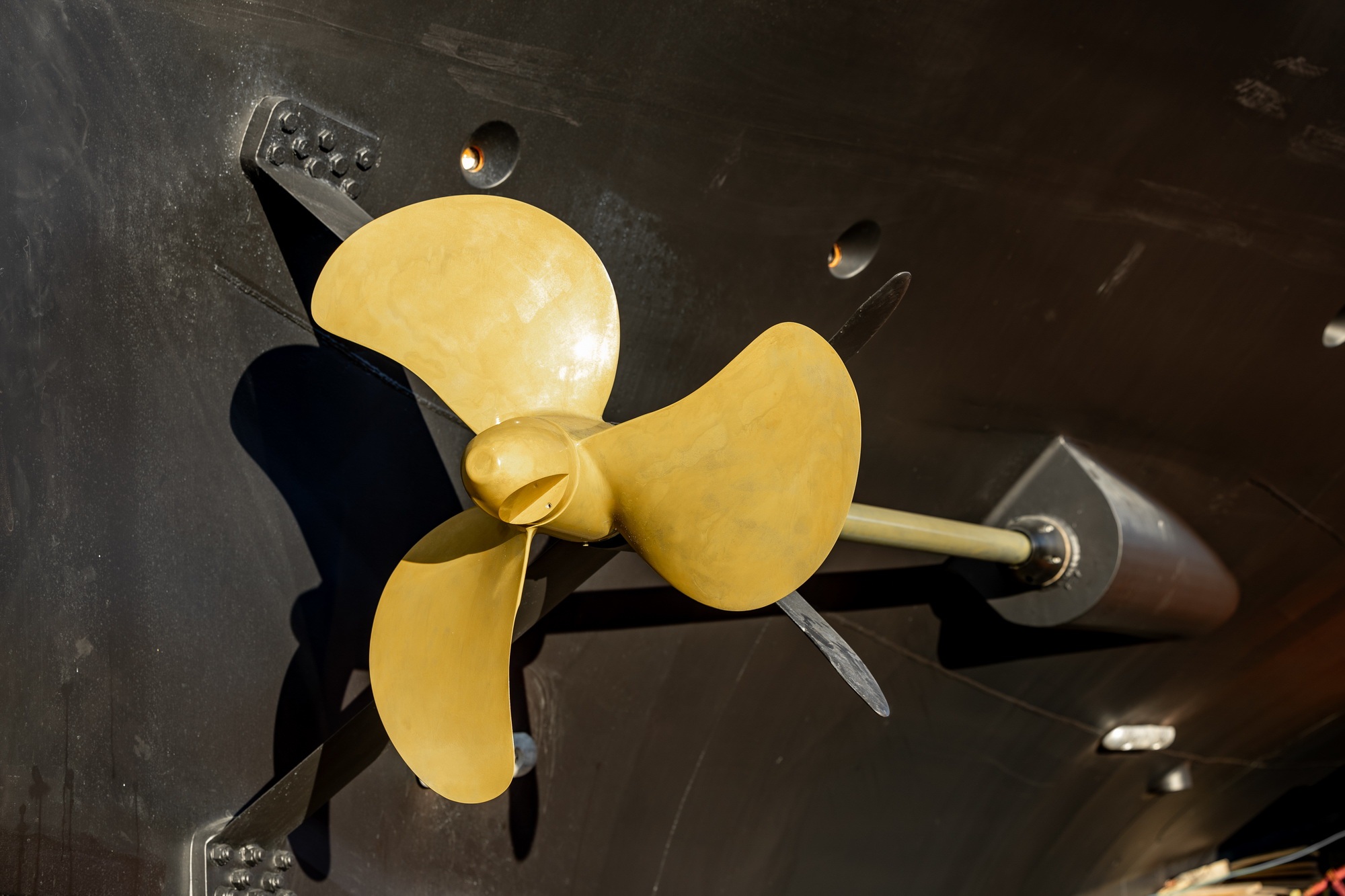
The relaunch photographs help reconnect that technical conversation with the physical vessel. Propellers beneath the dark hull, an anchor secured against it and the polished deck fittings show different scales of the finished ship. They do not certify the work. They make clear why a restoration needs several kinds of record, each doing a different job.
A project can be read in stages
The yard’s published chronology offers a compact framework for understanding the case. Keep the original build, arrival, completed rebuilding and later photographic presentation distinct. An image appearing in a later publication does not establish that the work itself happened then.
| Stage | Published record | Question for an owner considering similar work |
|---|---|---|
| Original yacht | Philip & Sons, 1930; design by Alfred Mylne | What identity is the project intended to preserve? |
| Arrival at Huisfit | January 2021 | Which parts of the initial brief remain dependent on inspection? |
| Developing scope | Structure and systems became part of a full rebuild | How will changes to scope be explained and agreed? |
| Departure | November 2023 | What establishes completion and informs future operation? |
| Published photography | Separate before, working and completed collections | Which image belongs to which stage? |
For a future project, the value of such a sequence is clarity. It gives decisions a place in time and makes it easier to understand why a brief developed. That remains useful long after the most dramatic photographs have been selected for publication.
A coherent ship, with a traceable story
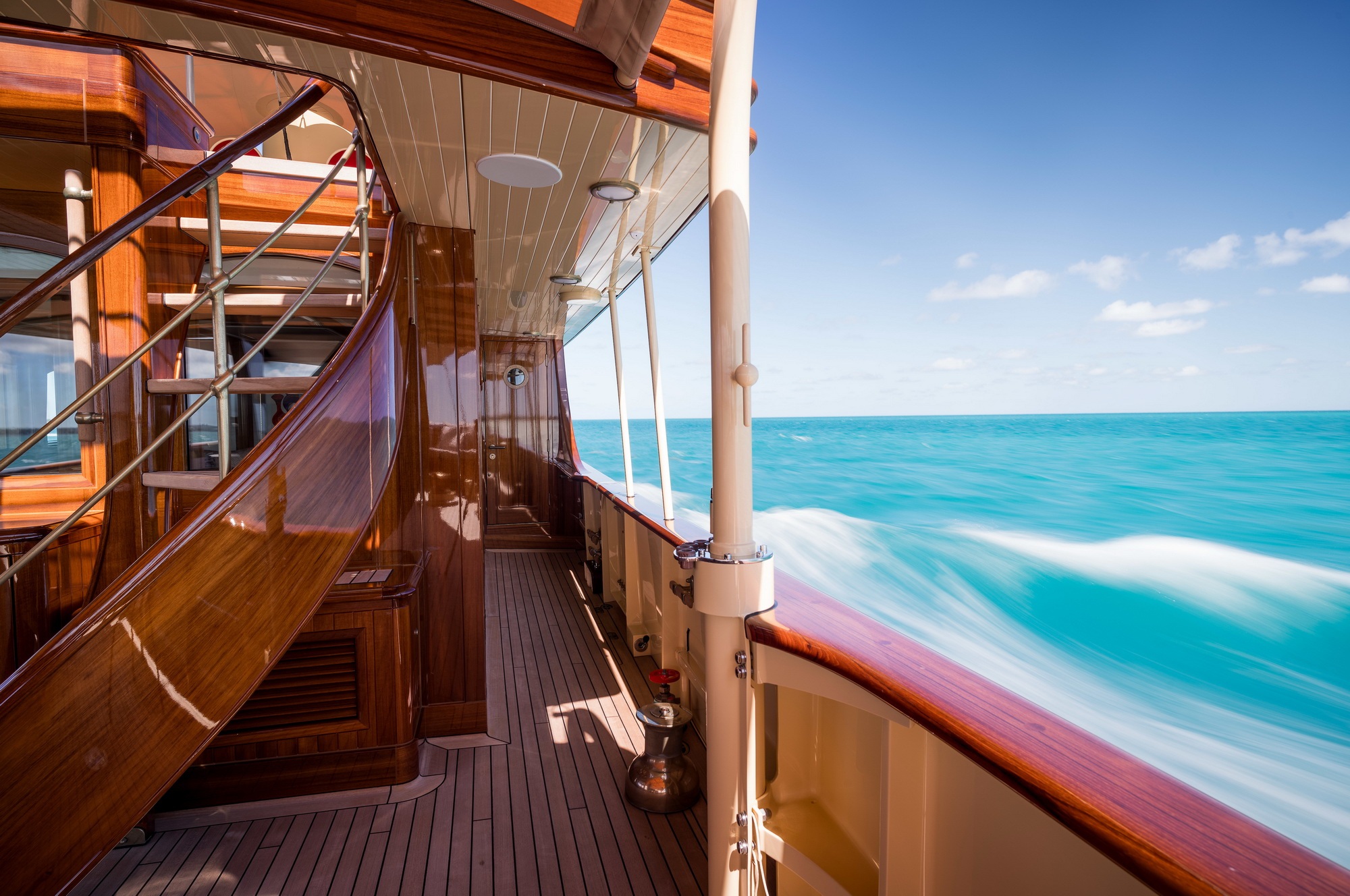
The finished Atlantide brings the eye back to the whole. A side deck leads towards open water; the timber gives the view a warm foreground; the low superstructure leaves the yacht’s familiar profile intact. The pleasure of the photograph comes from that coherence. The interest of the case comes from knowing that it was achieved through a far-reaching programme of work.
For readers considering a classic-yacht project, the useful ambition is a result whose appearance, intended use and recorded decisions belong together. Atlantide shows how much substance can sit behind a restrained outline. The best project story lets the reader appreciate both.
Sources & credits
Methodology and sources
Based on the primary publications below, accessed 5 November 2026, and the official photographs reproduced with captions. Build and rebuild dates are distinguished from current programme information. Spatial readings and commissioning questions are original editorial interpretation; no independent sea trial was undertaken.