A knot is a place where lines meet. In Tiffany Knot, that junction becomes the most concentrated part of an otherwise clear jewellery outline: a pair of curves crosses, one route seems to pass over another, and the eye pauses where they appear to hold together. The form can suggest softness, yet the studio objects show it rendered as a defined structure in metal.
A junction with a visible tension
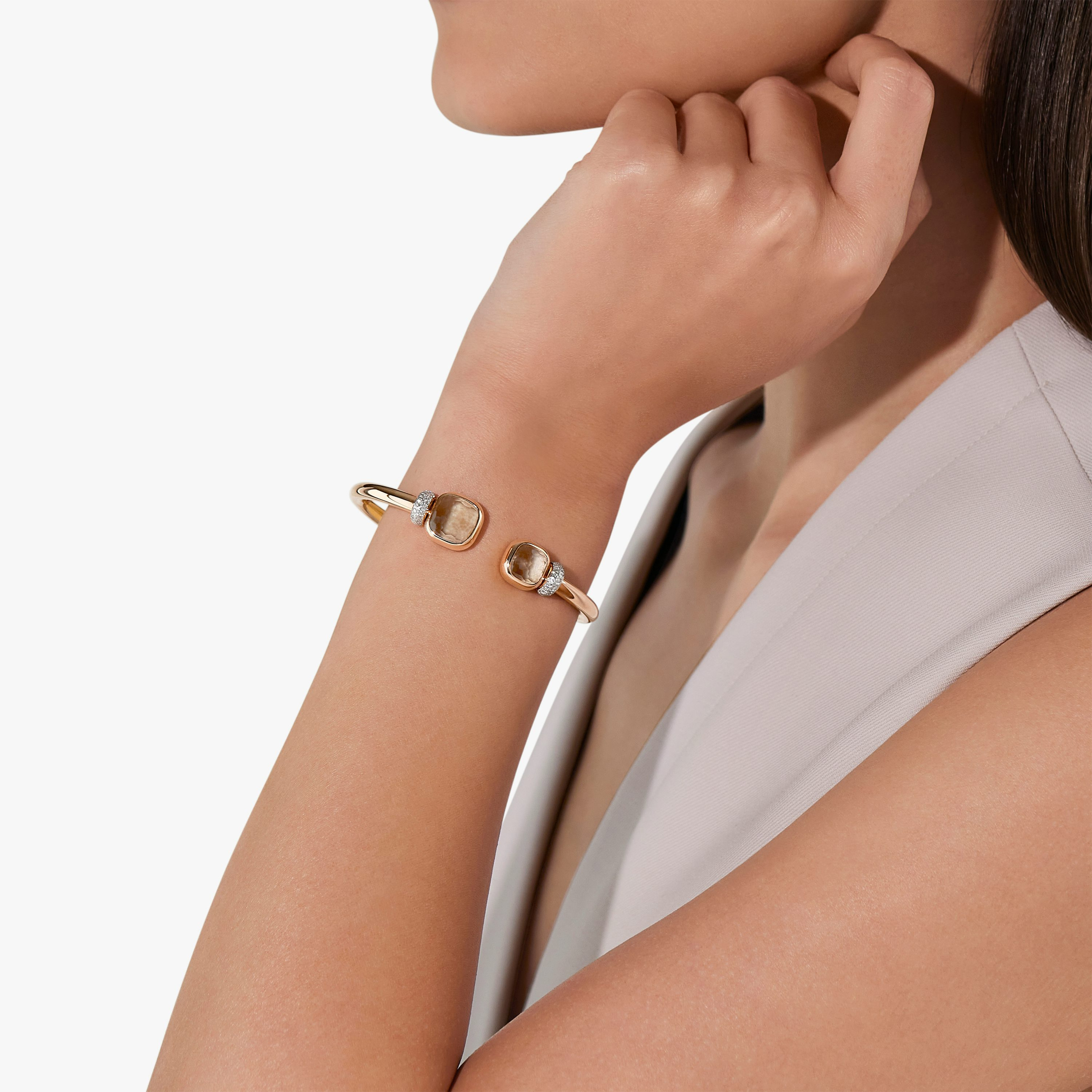
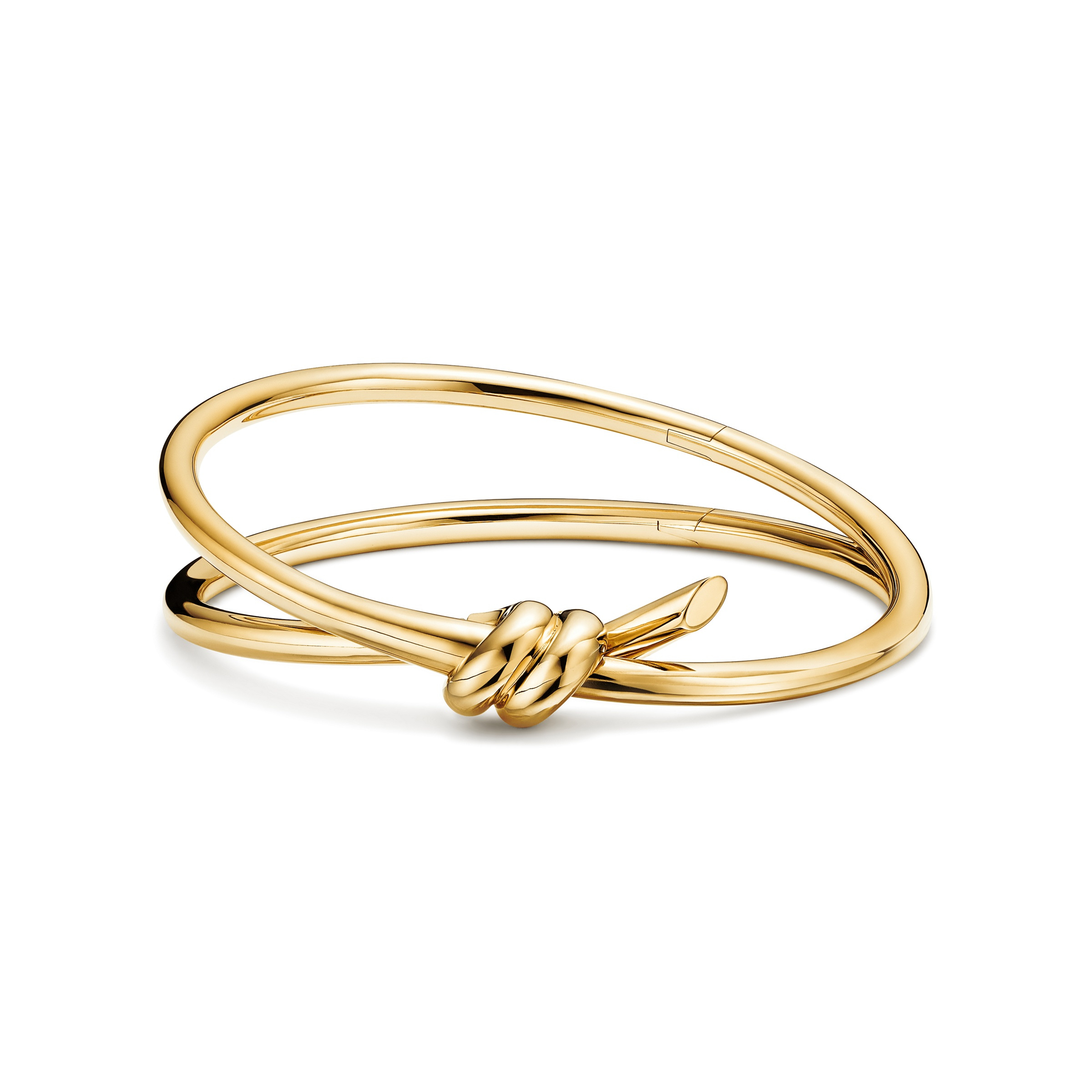
The wrist portrait is an effective introduction because the bangle retains a visible line around the arm. Its centre has more detail and density, but the surrounding curve gives that density a reason to exist. Remove the quieter line and the knot would become an isolated ornament. Keep the whole object in view and it is understood as a junction within a continuous route.
This article reads the current Tiffany Knot catalogue alongside the house’s present press account. The latter connects the collection with an 1889 bow in the archive and describes the hidden clasp of a bracelet interpretation. That is the current maker narrative used here. The visual analysis concerns the objects shown now, rather than treating an archival date as the manufacturing date of a contemporary jewel or implying that every Knot reference shares one closure.
The bangle gives the knot somewhere to belong
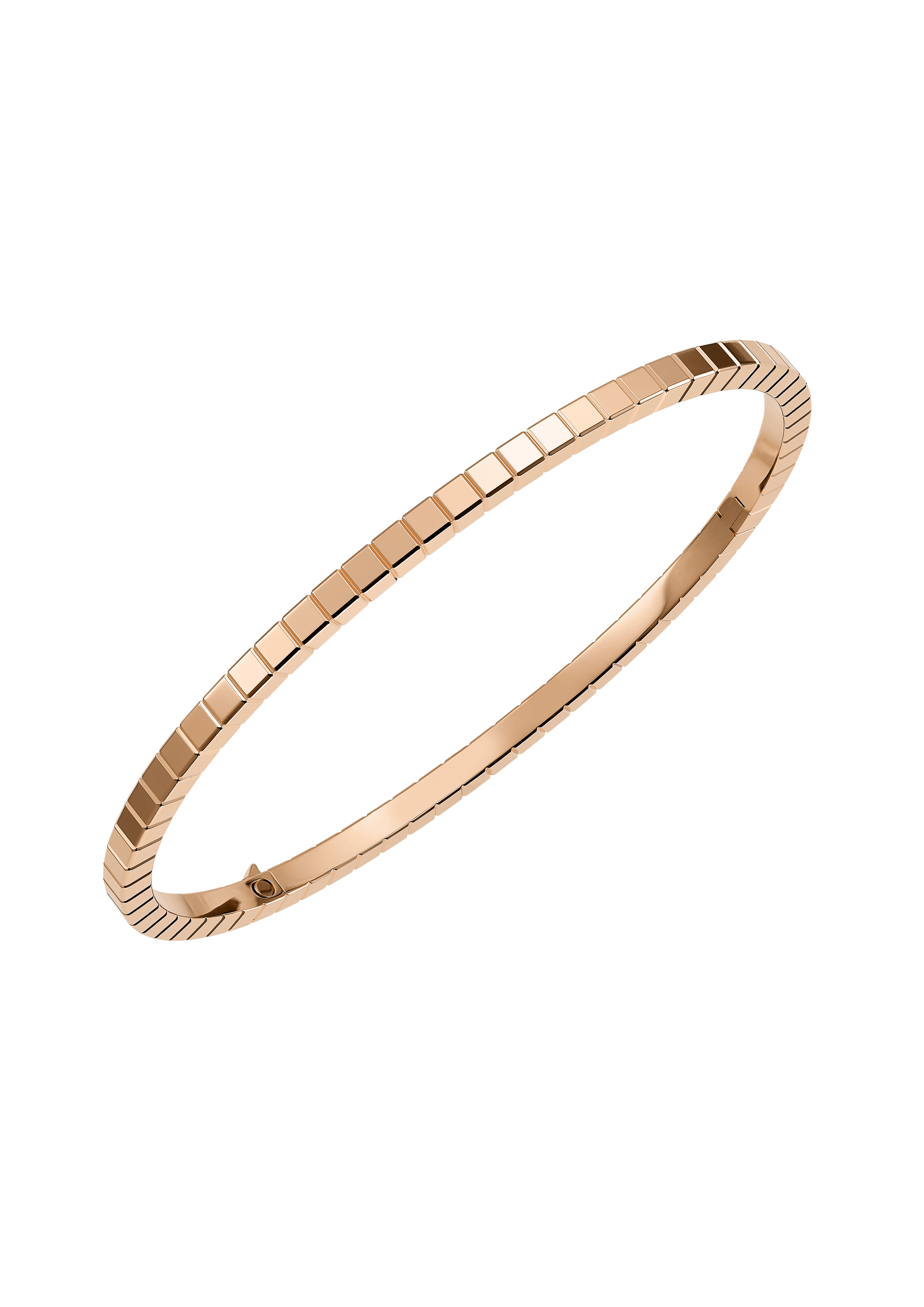
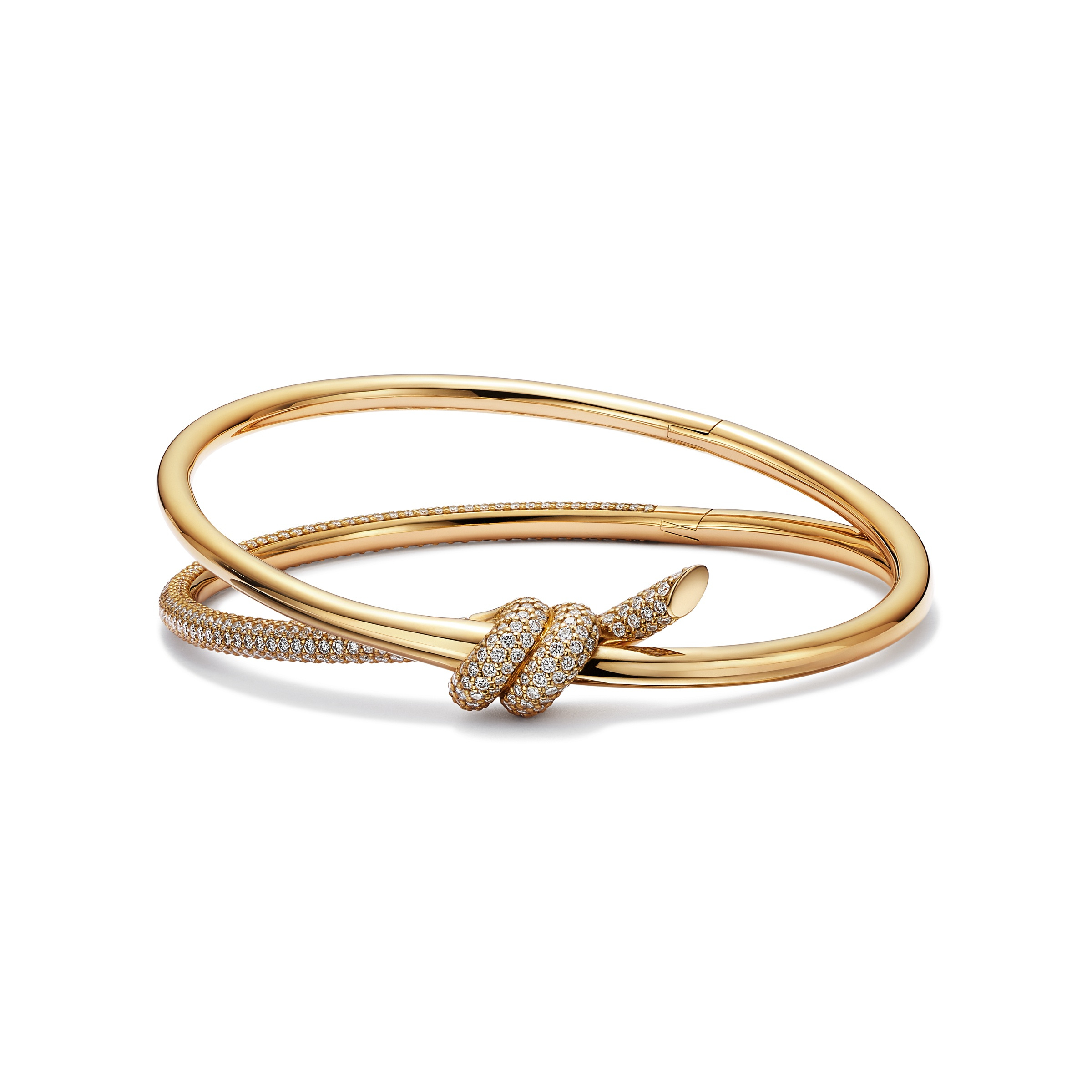
The complete double-wrap bangle is especially revealing. Two visible routes approach the central motif, creating a fuller silhouette than a single smooth circle. The knot then appears to organise those routes rather than merely decorate them. The product photograph lets the viewer follow the curves into the crossing, where the larger outline becomes a small arrangement of overlapping parts.
The diamond-set bangle changes the surface reading without removing that structure. Brightness becomes more continuous across some areas, while the shape of the crossing still establishes the centre. Seen beside the plainer gold-coloured product view, it offers a useful comparison between form and finish. The shared outline carries the family identity; the setting alters the visual texture and must retain its own reference-specific stone description.
The complete photographs also preserve the object’s interior. That inner opening is easy to overlook when jewellery is enlarged into a glamorous detail, but it is part of the bangle’s proportions. It defines the distance between the outside curves and the space occupied by the wrist. A fitting and the actual measurements are needed to understand that relationship physically. The studio view gives the eye a clear first reading, without claiming that one apparent shape will suit every wearer.
The clasp is a design decision, not a missing detail
Tiffany’s current press presentation describes a bracelet clasp concealed within the knot and released through it. This is a maker account of the mechanism, not an independent handling test. It nevertheless changes how the design is understood. The knot can have a functional role at the very point where the eye expects the strongest ornament. A closure need not be placed elsewhere as a separate interruption in the line.
That relationship between appearance and function is more interesting than a general claim that the clasp is invisible. The photograph may make a join discreet, but only instructions or a demonstration can explain exactly how the relevant bracelet opens. The useful question is where the lines divide and how they come together again. The maker’s account directs attention to the centre without encouraging the reader to infer a mechanism from a bright patch or an ambiguous seam.
It should also remain a bracelet-specific discussion. A Knot ring, necklace and earring can share the crossing motif without sharing that fastening arrangement. The family resemblance is visual; the closures belong to the actual objects. Keeping those levels distinct prevents a collection story from becoming an unreliable product manual, and it gives a prospective wearer a concrete point to ask about when considering the named bracelet.
At the face and neckline, the knot changes scale
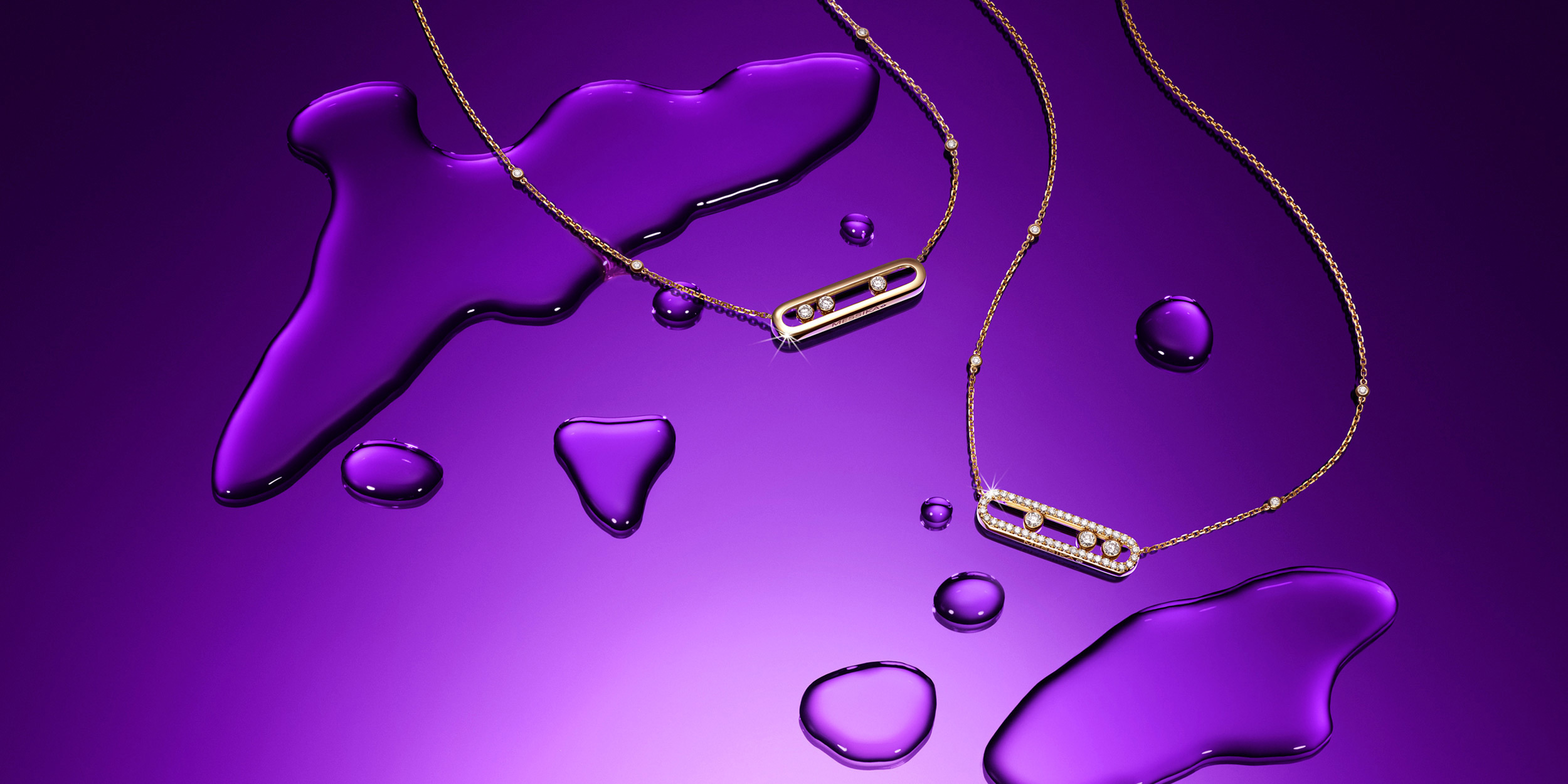
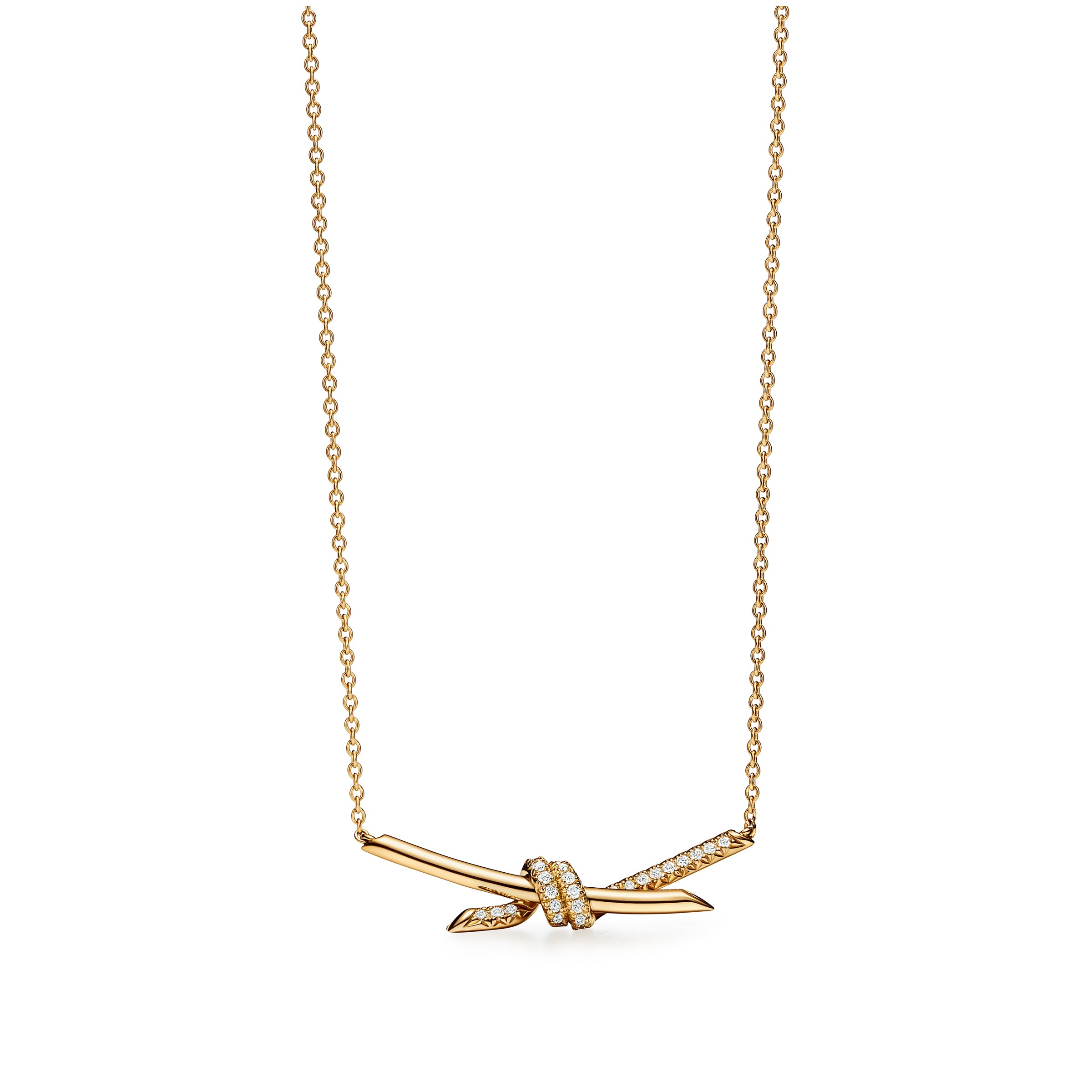
The necklace places the motif along a longer hanging line. Its knot becomes a concentrated accent within the open space below the neck, and the surrounding chain gives it a different kind of tension from the bangle’s curved routes. The complete product image makes the relationship clear. The motif remains recognisable, but it has become a point within a vertical arrangement rather than a junction spread across the wrist.
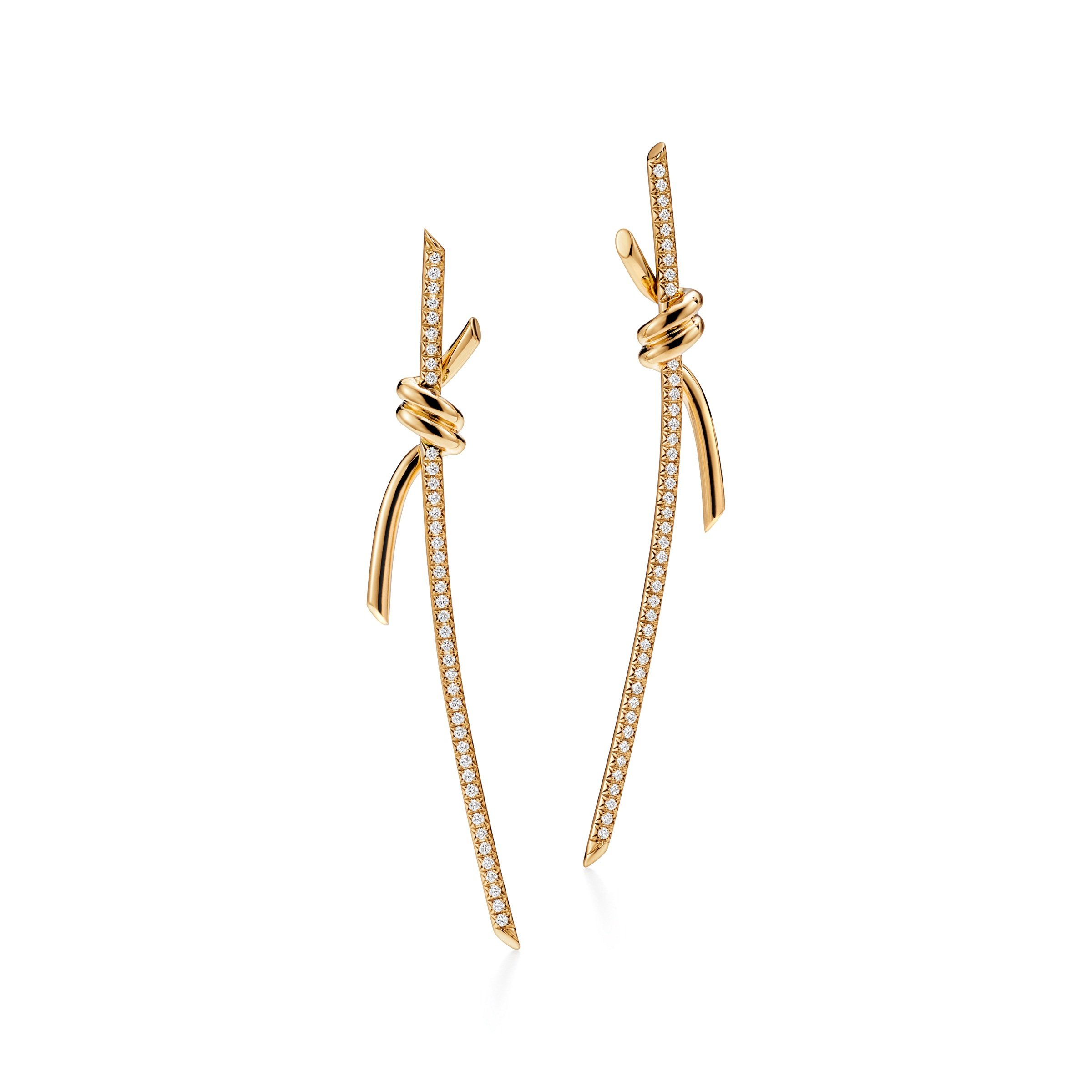
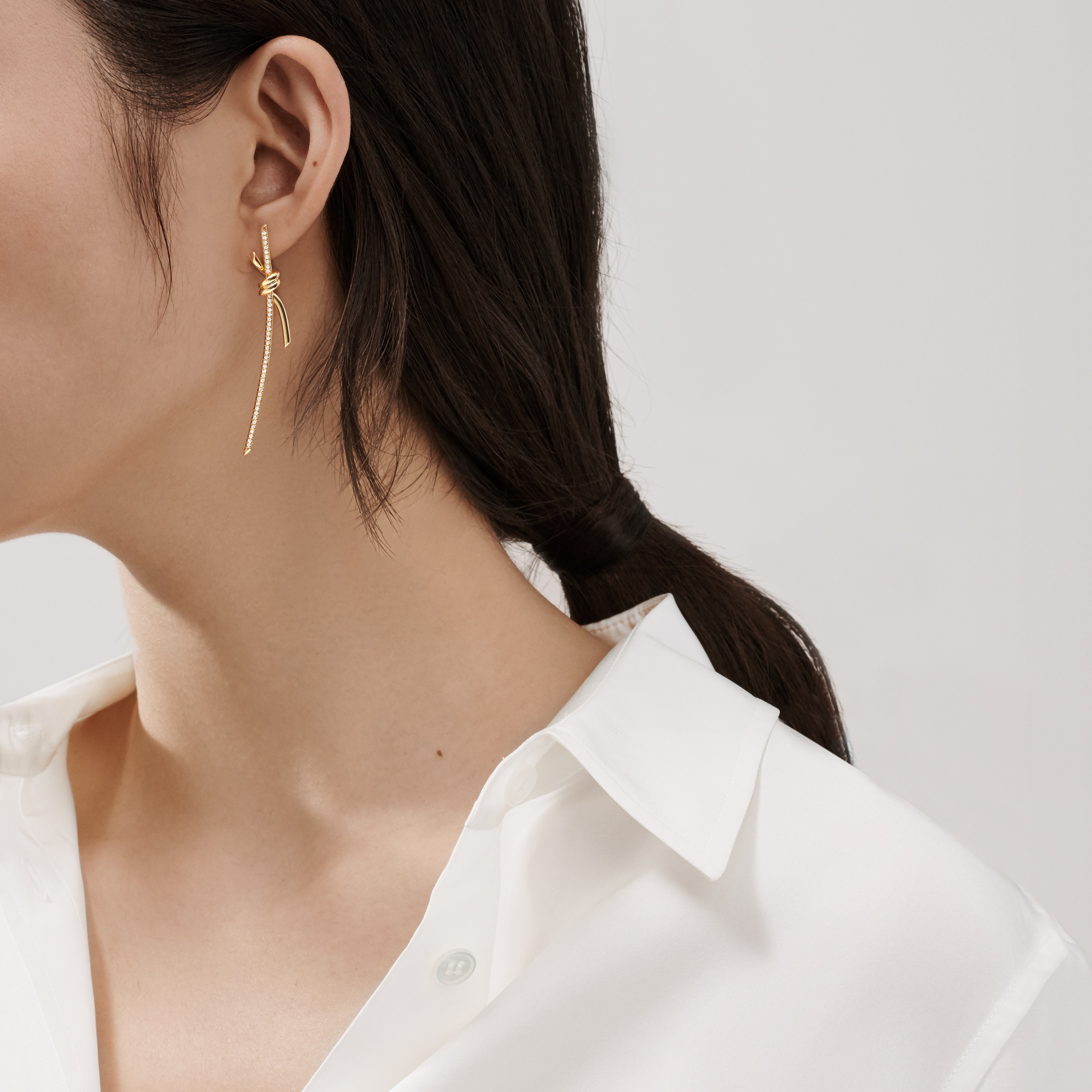
The earrings bring the crossing into the narrow space beside the face. Their product pair and worn portrait are complementary views: one establishes the complete objects, the other shows the distance between jewellery, cheek and surrounding hair. A recognisable form can have a different visual emphasis in that setting. It may read first as a curved bright accent, with the knot’s crossing becoming apparent only when the viewer moves closer.
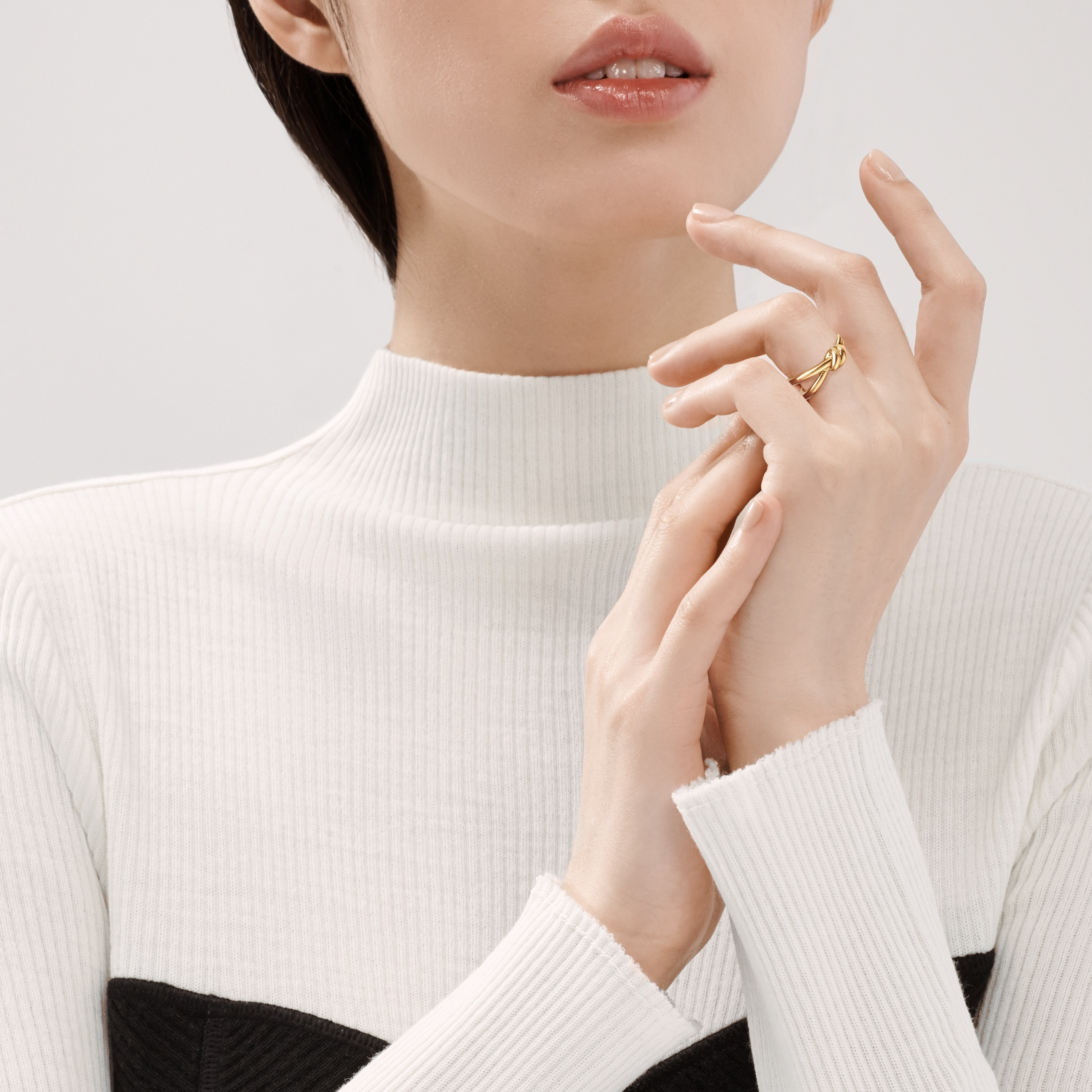
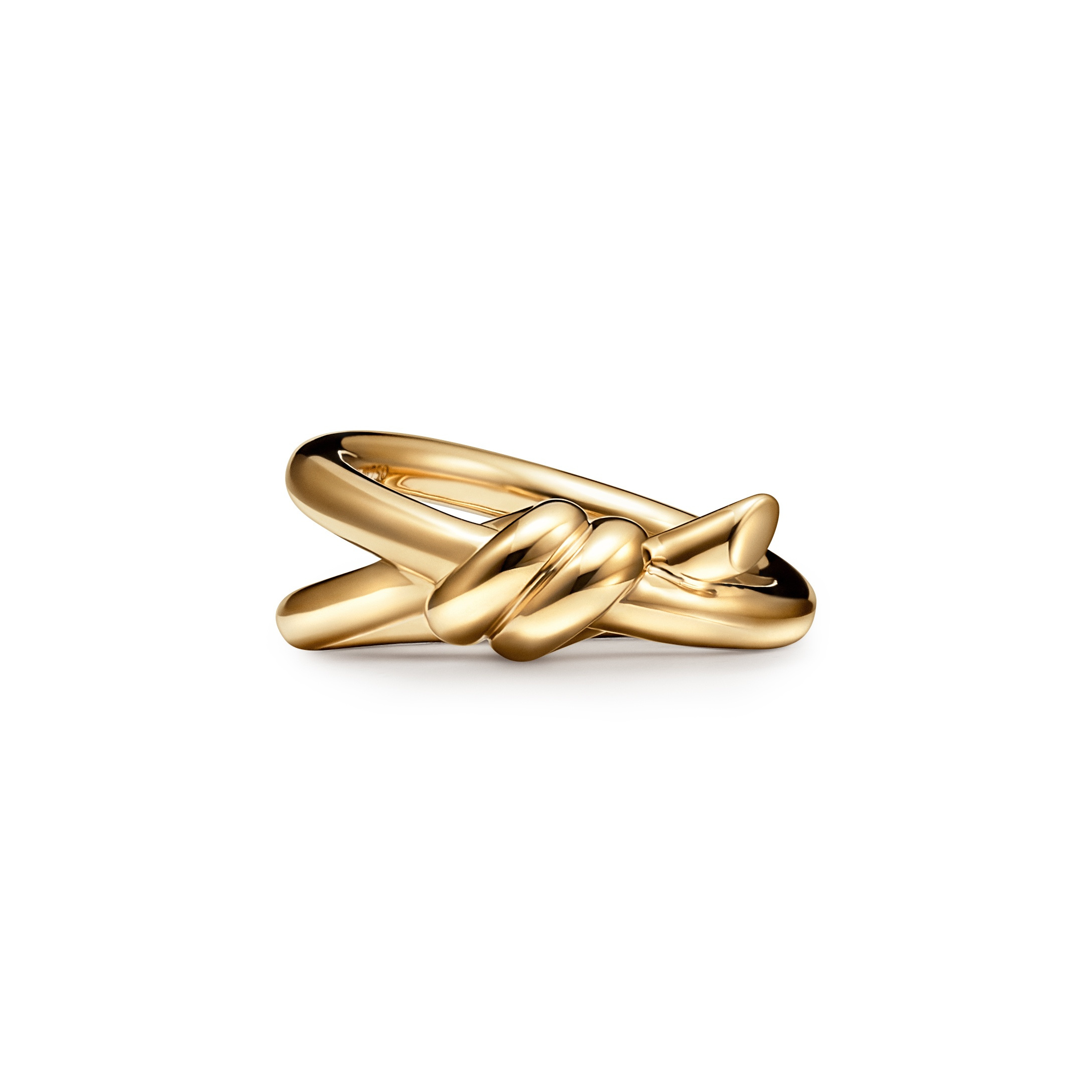
The ring returns the motif to a smaller curved field around a finger. Its studio view and the hand portrait show how the same crossing can sit within a more compact circumference. Taken together, the four object types demonstrate a useful collection principle: retain an identifiable junction, but change the route that leads towards it. The design language travels because it can organise different lines, rather than because a single ornament has been attached unchanged to every possible category.
One motif, several routes
| Object | Route towards the knot | Detail to confirm |
|---|---|---|
| Double-wrap bangle | Two curved lines around the wrist | Exact size and the specified clasp operation |
| Necklace | A longer suspended line | Length and the knot’s position at the neckline |
| Earrings | A compact form beside the face | Complete dimensions and earring closure |
| Ring | A short circumference around the finger | Width, projection and ring size |
The hidden-clasp account should not be extended to every product. Material, diamond-setting and closure descriptions remain attached to the reference that supplies them. Official worn photographs establish a visual arrangement, while a fitting and the maker’s instructions supply the physical information they cannot convey.
The Luxe Digital view
Tiffany Knot is most convincing when the crossing is understood as a junction within a larger line. The bangle makes that relationship particularly clear, and the maker’s clasp account gives the centre a further functional reading. Across the collection, the knot retains its character because the routes around it are allowed to change.
Tiffany Knot is most convincing when the crossing is understood as a junction within a larger line.
Sources & credits
Sources and methodology
Independent visual analysis of current official imagery and named product records, checked on 14 October 2026. Historical introductions, manufacturer specifications and visual observations are kept distinct. No visit, interview, independent handling or appraisal is implied.
- Tiffany & Co. — source 1: Current official collection, named designs, dated context and selected image provenance.
- Tiffany & Co. — source 2: Current maker account of the1889bow inspiration and hidden bracelet clasp.