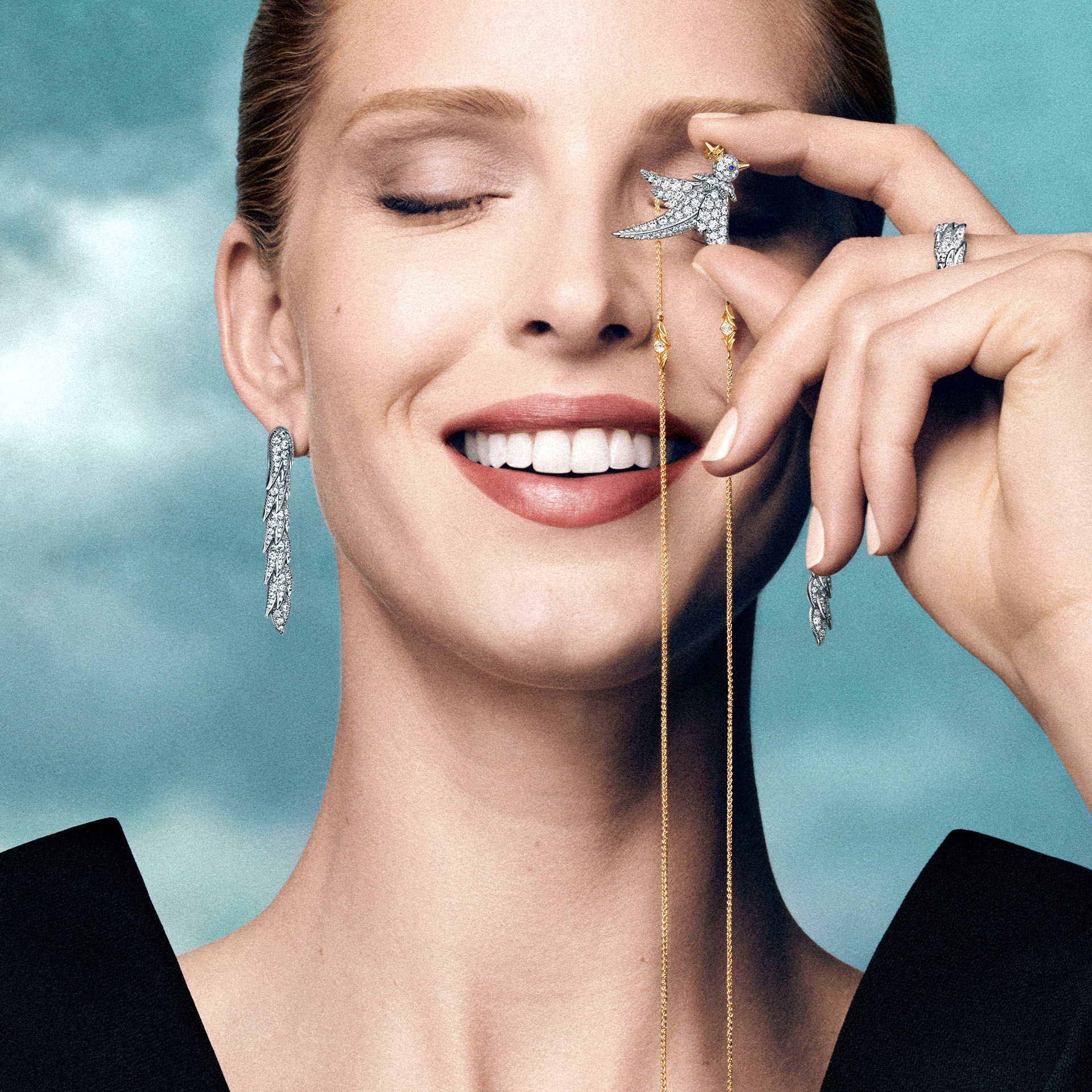
The smallest change in perspective can turn a familiar jewel into a different kind of object. Tiffany’s Bird on a Rock begins with a complete figure: a bird perched, attentive and unmistakably sculptural. The current collection also lets the eye move closer, until a wing, a feather or a curved edge becomes enough to carry the idea. The bird is still present, but it no longer has to appear in full.
A bird becomes a language
That movement between figure and fragment is the useful way into the collection. A figurative pendant can be read almost immediately; a broad Wings ring needs a slower look at its scalloped outline. On the body, the two produce different kinds of emphasis. One offers a small scene. The other gives a finger, wrist or neckline a repeated texture that can remain abstract even when the wearer knows its natural source.
Tiffany’s press introduction, dated 2 October 2025, described new high and fine jewellery interpretations of Jean Schlumberger’s Bird on a Rock. The current collection presentation is the basis for this visual reading in October 2026. Those dates should remain separate: this is a study of the collection available to view now, rather than a claim that every photographed design has just been launched.
The complete figure keeps its character
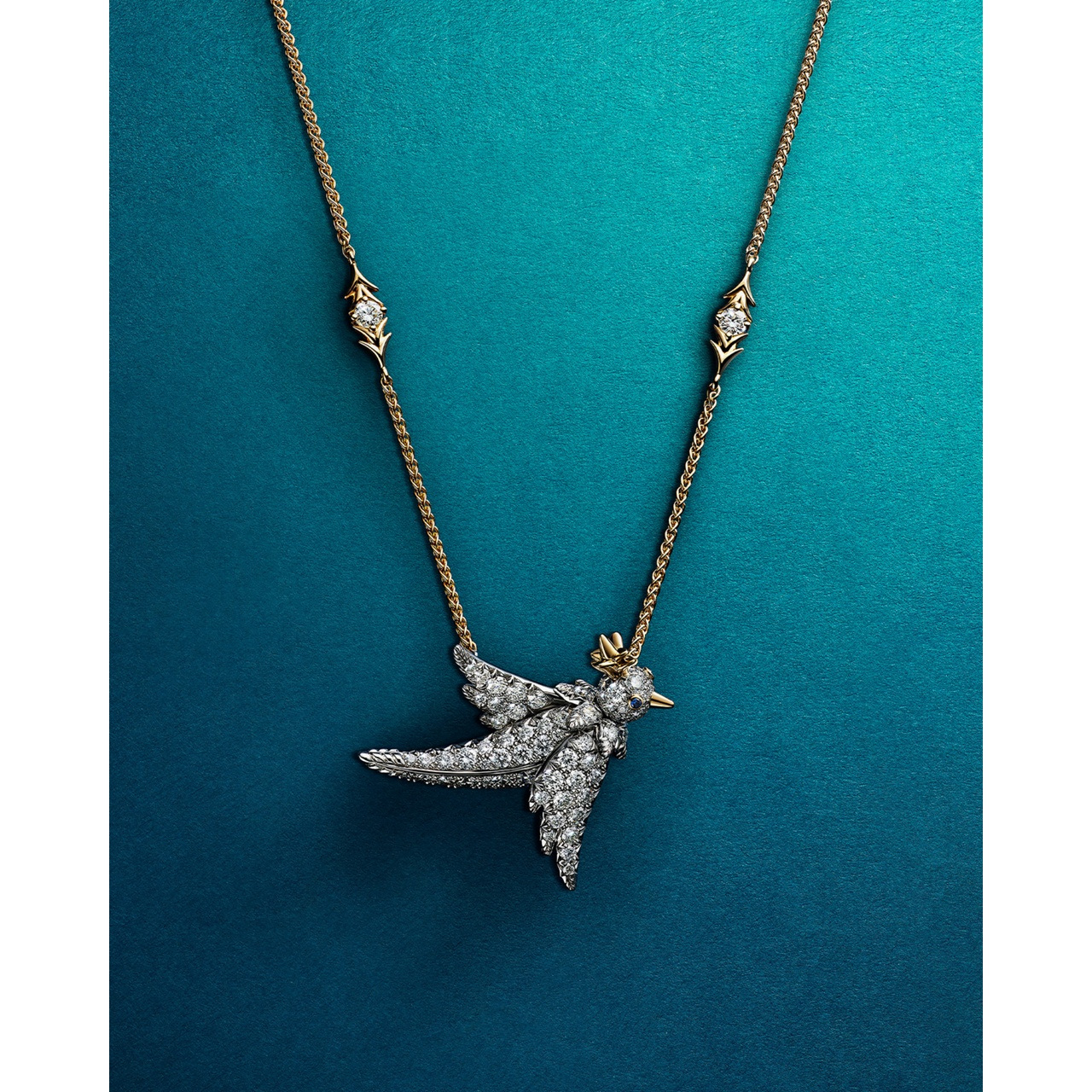
In the official pendant image, the bird supplies both identity and direction. Its head, beak and body are not interchangeable decorative marks. They establish a sense of posture, and that posture makes the jewel feel oriented rather than simply centred. A pendant may hang from a chain, but the figure appears to choose a direction within the space below it. The tension between suspended object and alert creature is what gives the image its character.
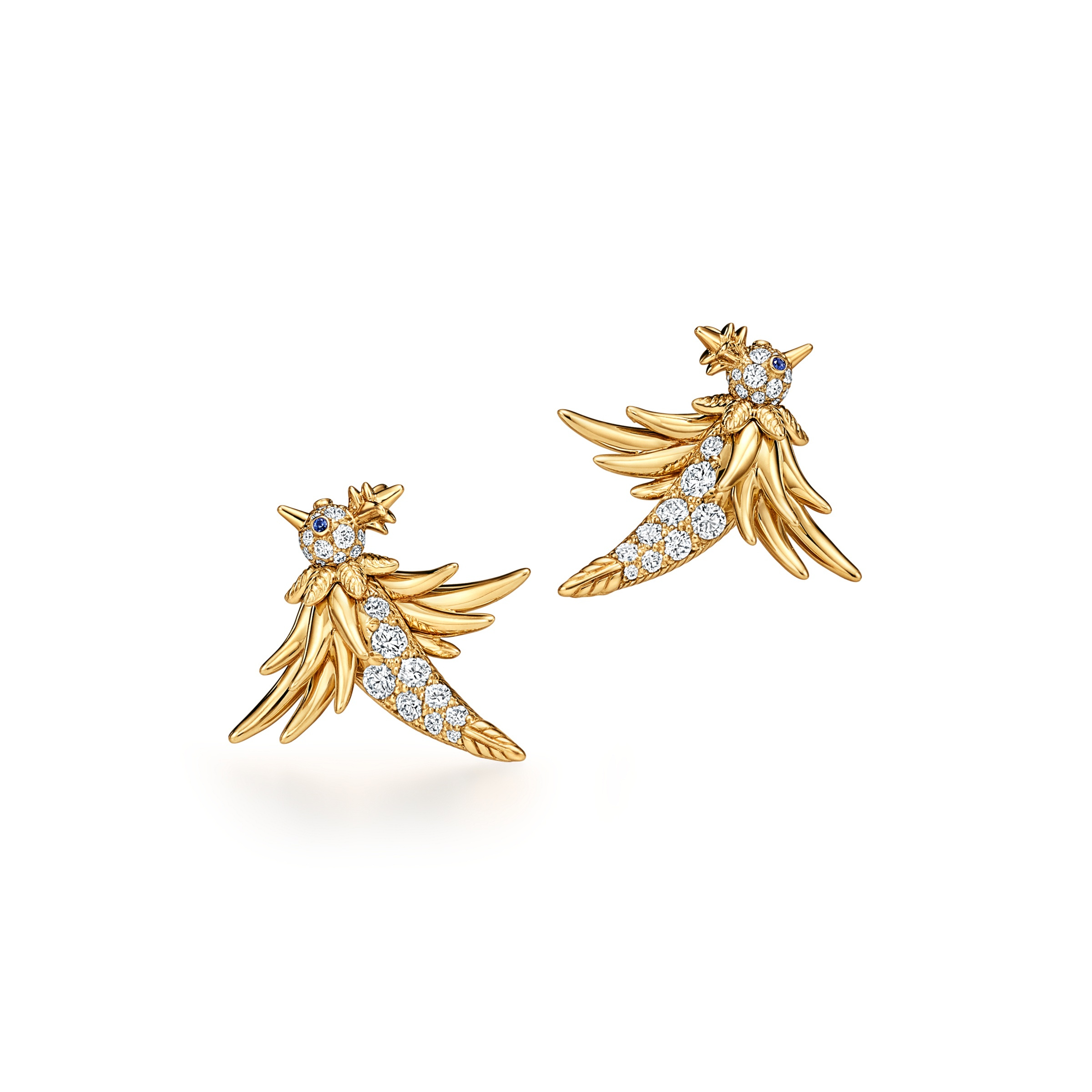
The paired golden bird earrings create another relationship. Seen as complete objects, they are a small conversation between forms, not merely two repetitions of a logo. Their contours carry the motif before the viewer begins to distinguish surface detail. The ring interpretation places the bird in a more intimate position, close to the movement of a hand. In each case, the figurative idea survives because its silhouette remains readable at a different scale.
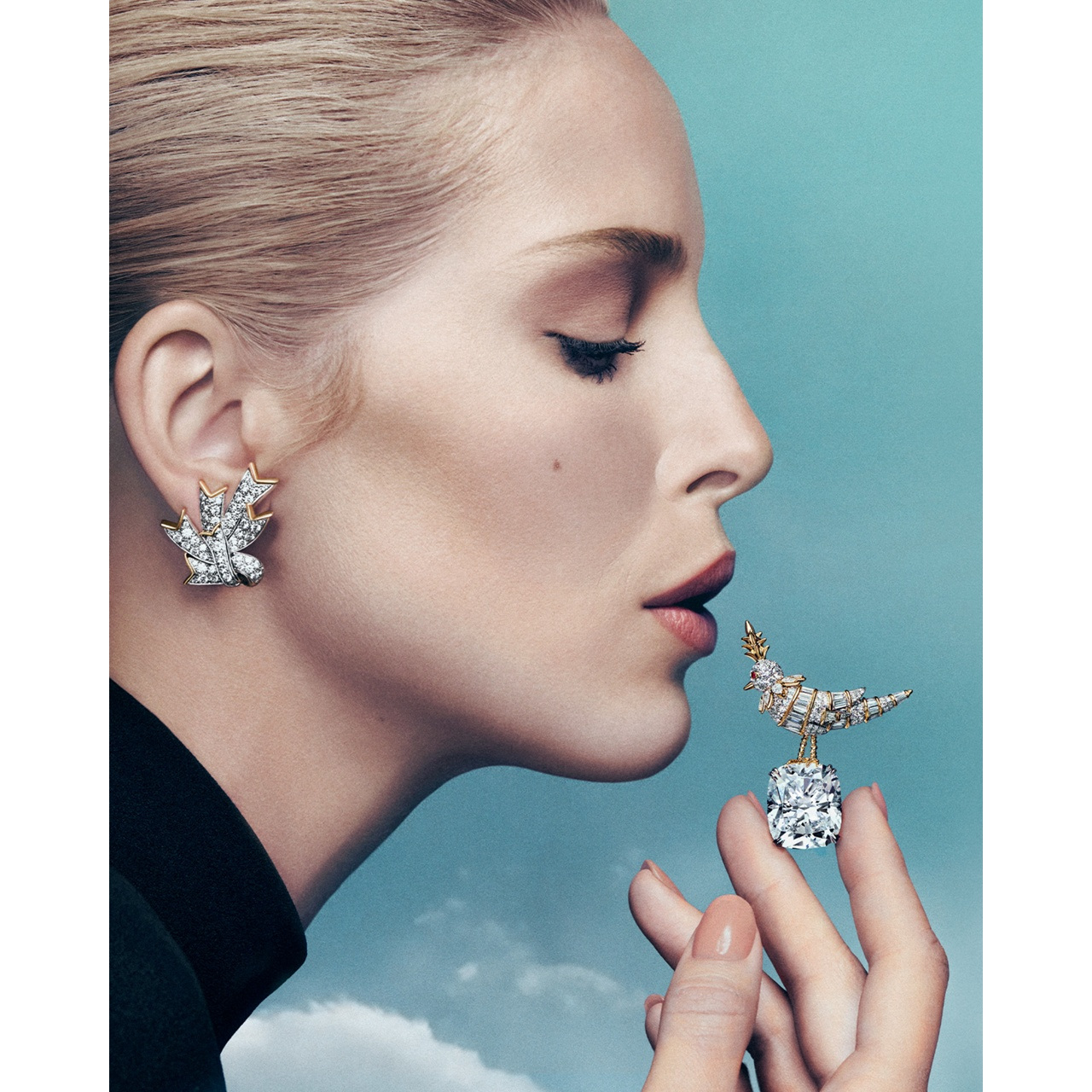
This is also where photographs deserve careful separation. The historical Bird on a Rock objects, the high-jewellery interpretations and the fine-jewellery designs share a family resemblance, but they are not the same reference. A celebrated gemstone or the identity of a specific high-jewellery brooch should not migrate into the specification of an adjacent product. The images selected here keep the smaller figurative objects distinct from broader collection portraits, allowing the design connection to remain visible without collapsing those differences.
Wings carry the idea without the bird
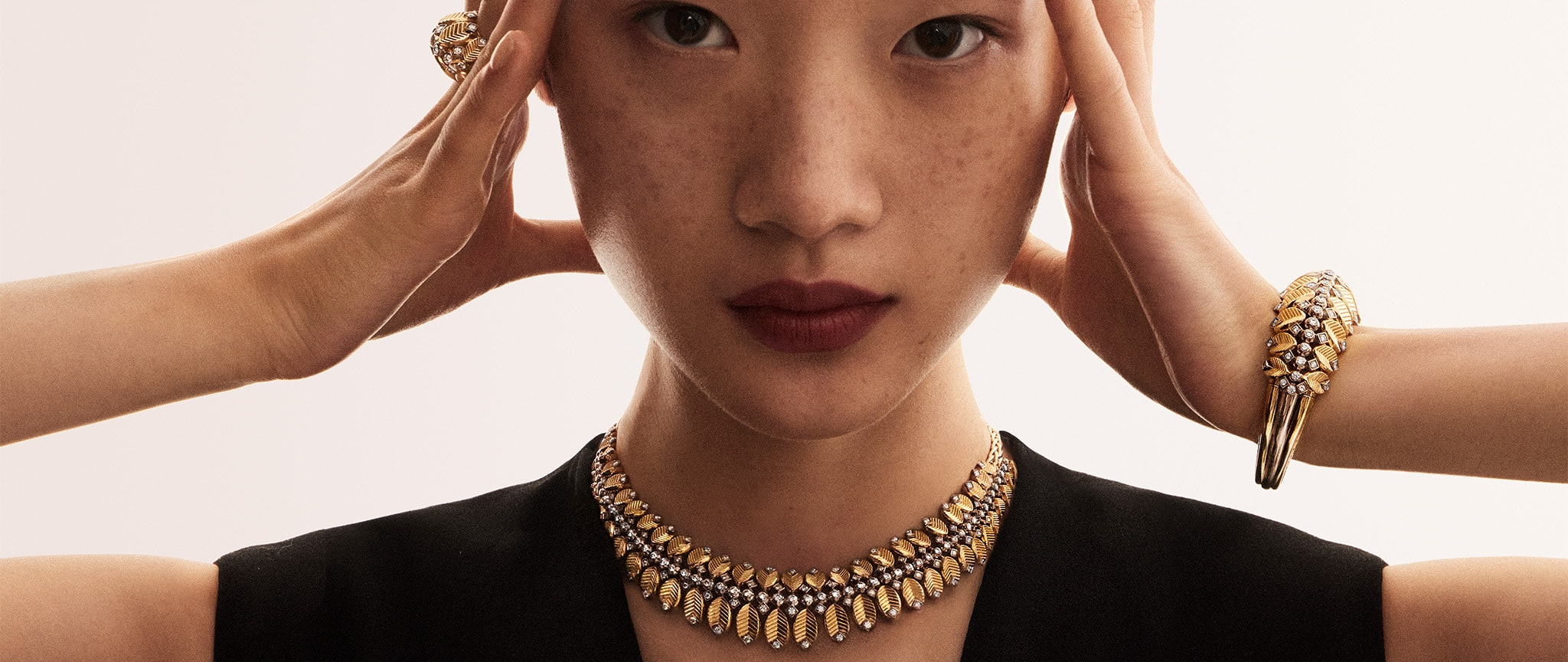
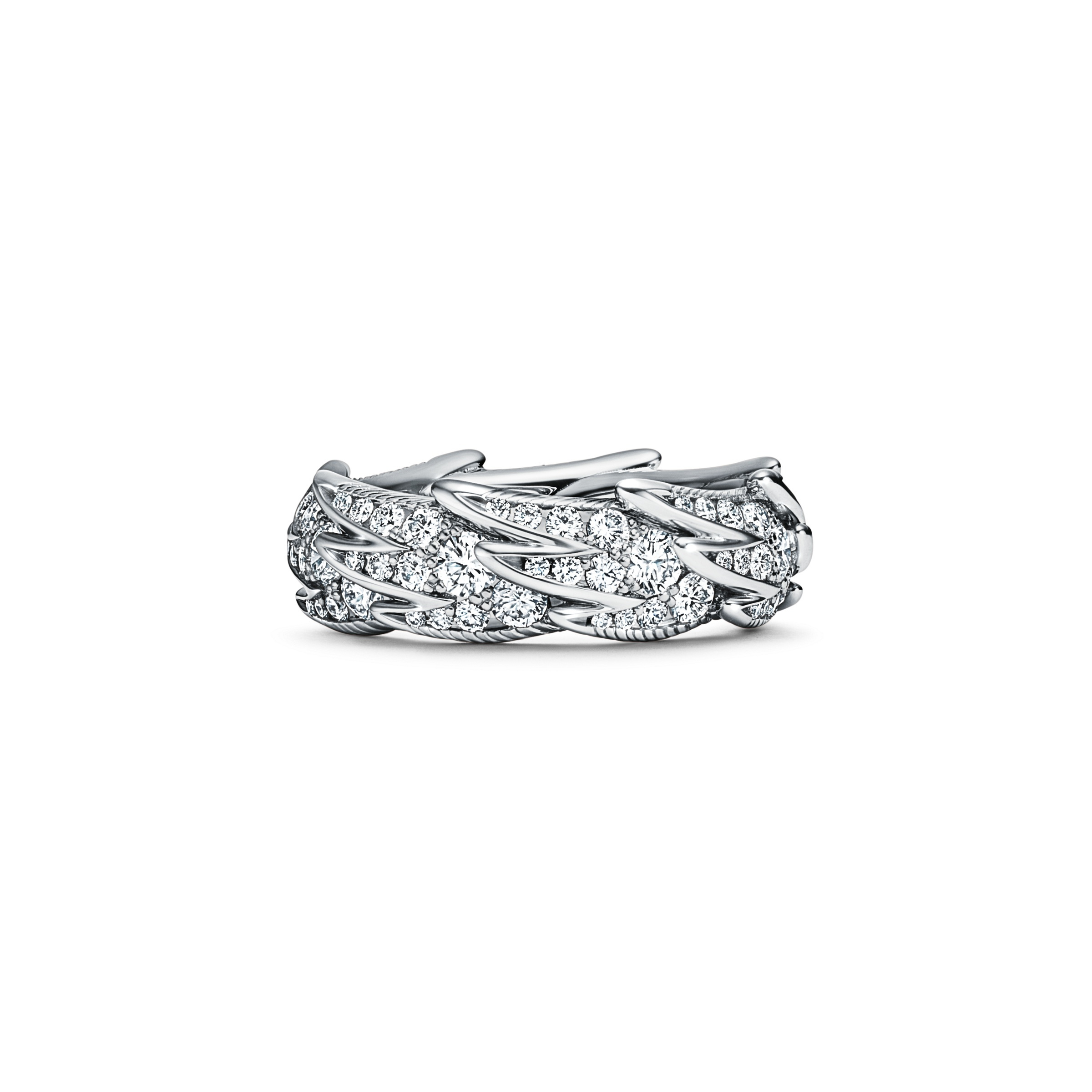
The Wings ring is persuasive because it does not need a tiny bird attached to explain itself. Its surface is organised by overlapping, feather-like forms, while the outer edge has a rhythm that interrupts the ordinary circle of a band. In the complete product photograph, that edge is as important as the light-catching surface. It turns a broad ring into a sequence of rises and dips, so the outline remains active even at a distance.
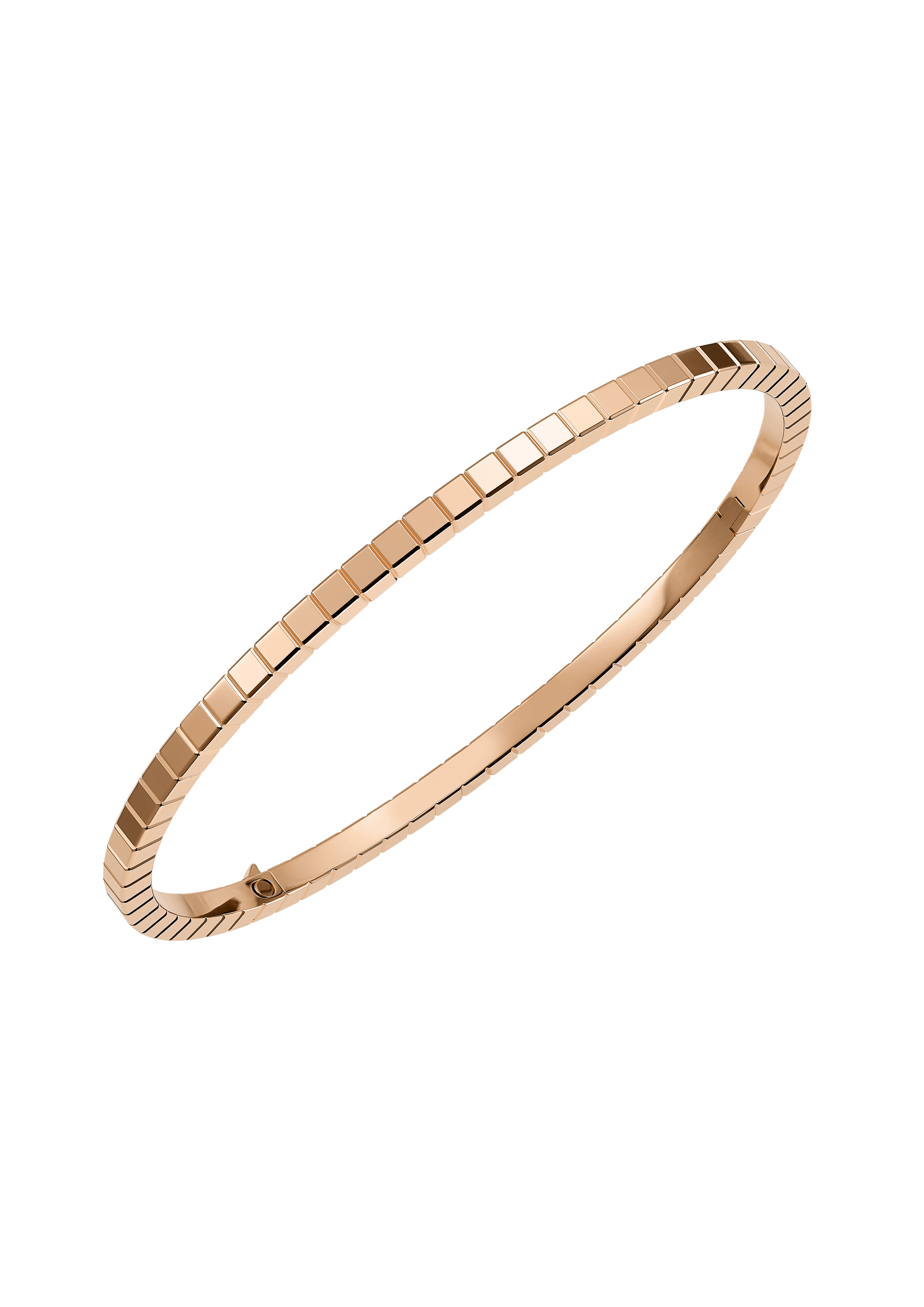
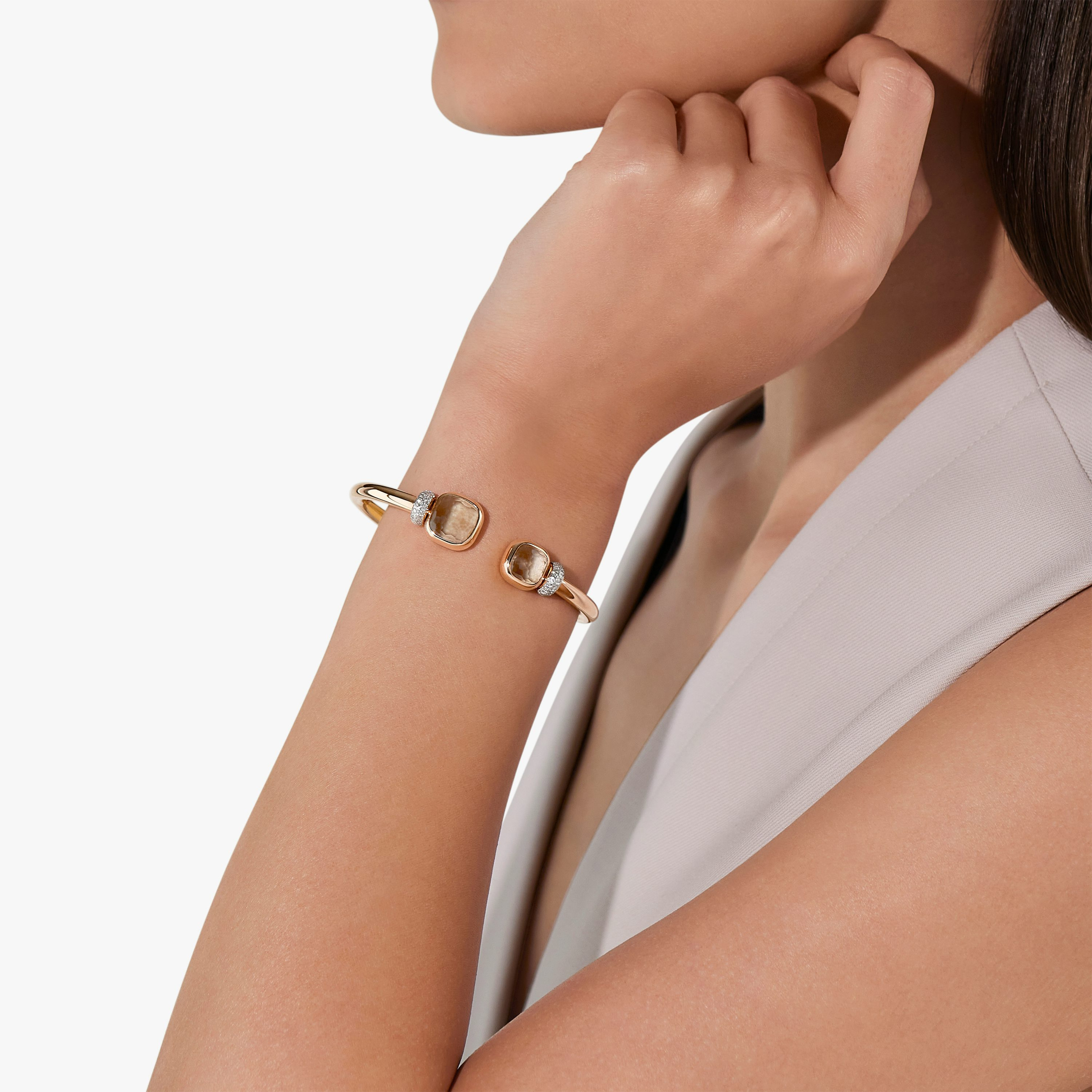
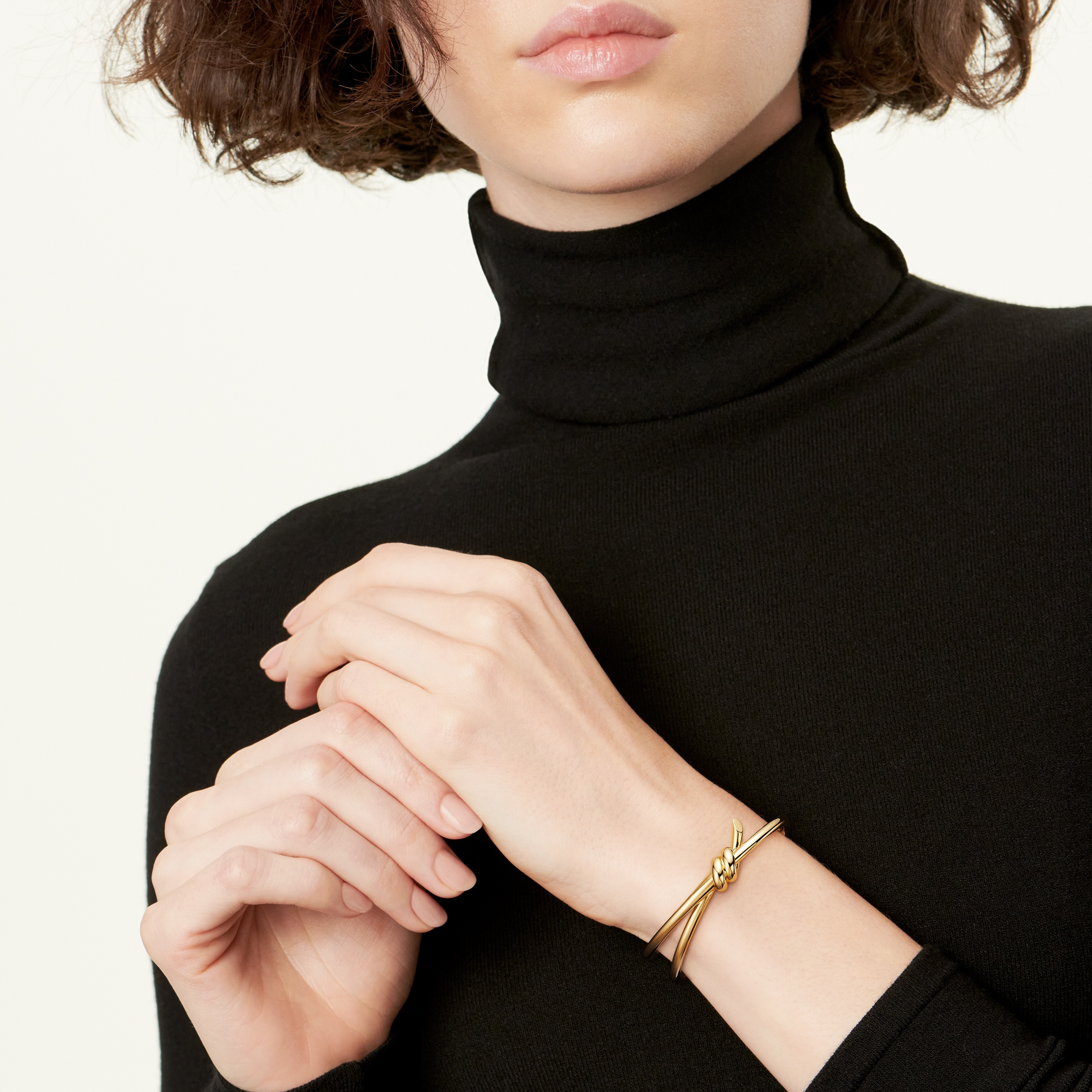
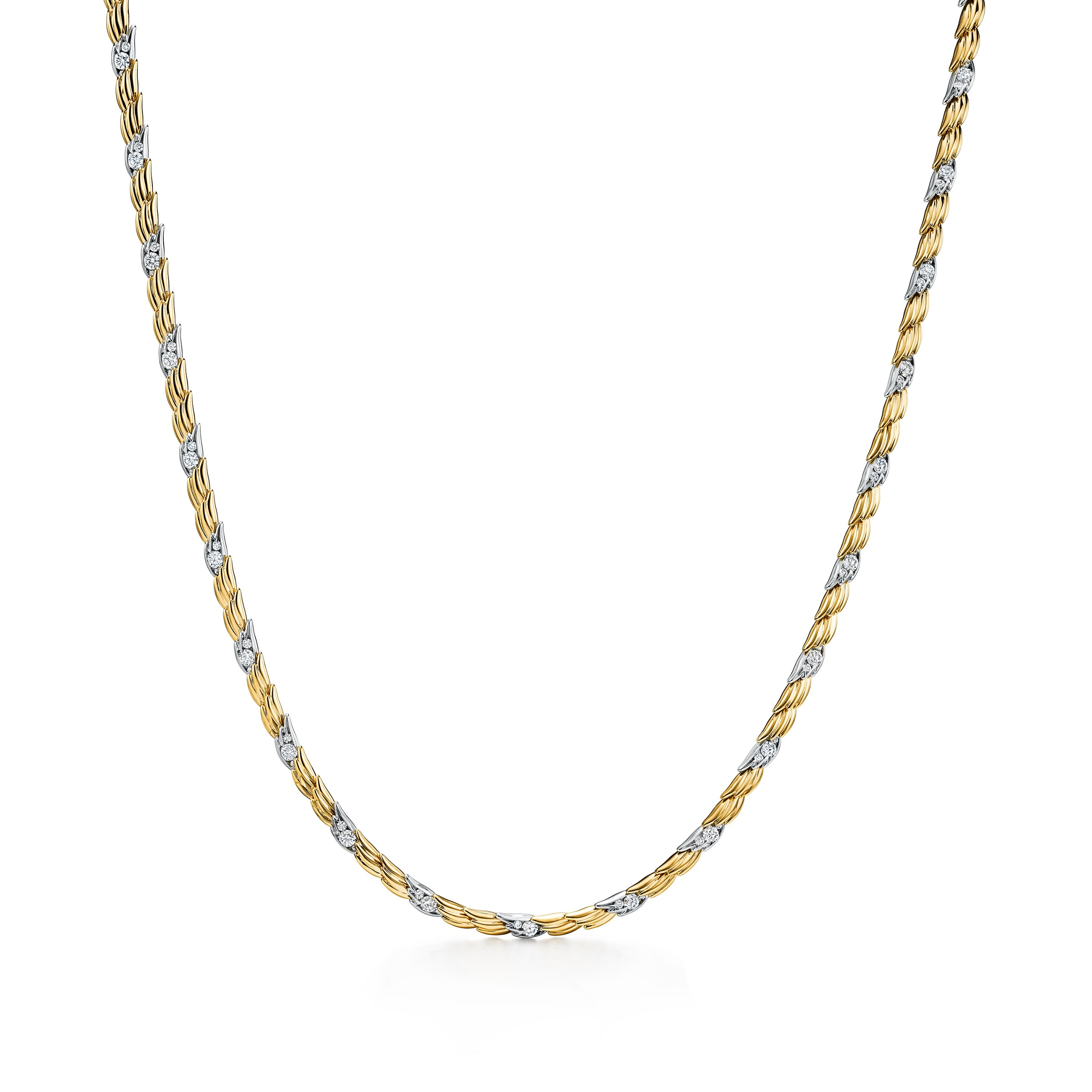
The bangle applies the same logic around the wrist. A bracelet has a larger curve and a different relationship to the body; repeating the feather-shaped language allows the collection to travel between the two without simply enlarging a ring. The necklace extends the motif further still. Seen complete, it becomes a line made from an accumulation of curved units. The viewer can move from the overall fall to an individual section and still find the same organising idea.
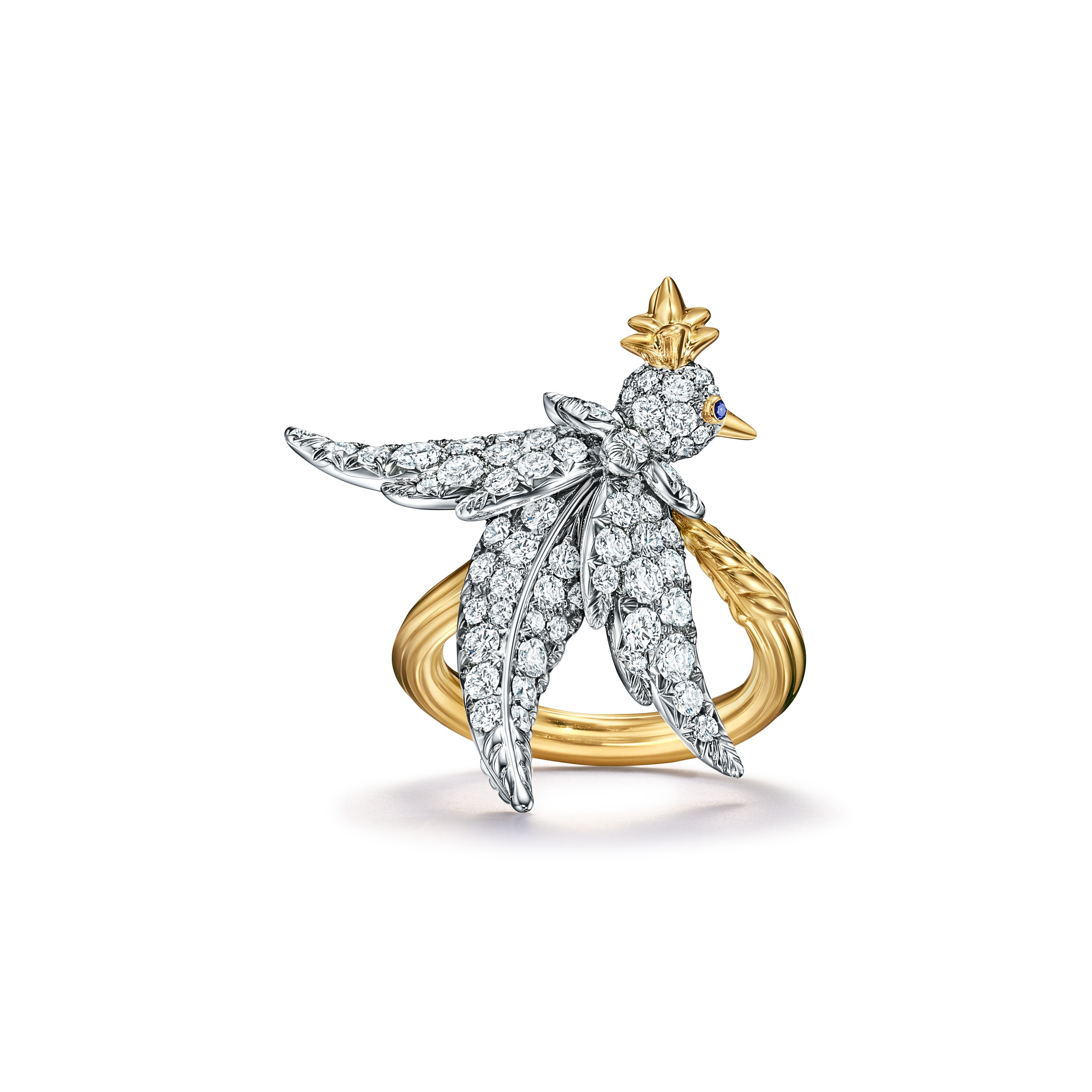
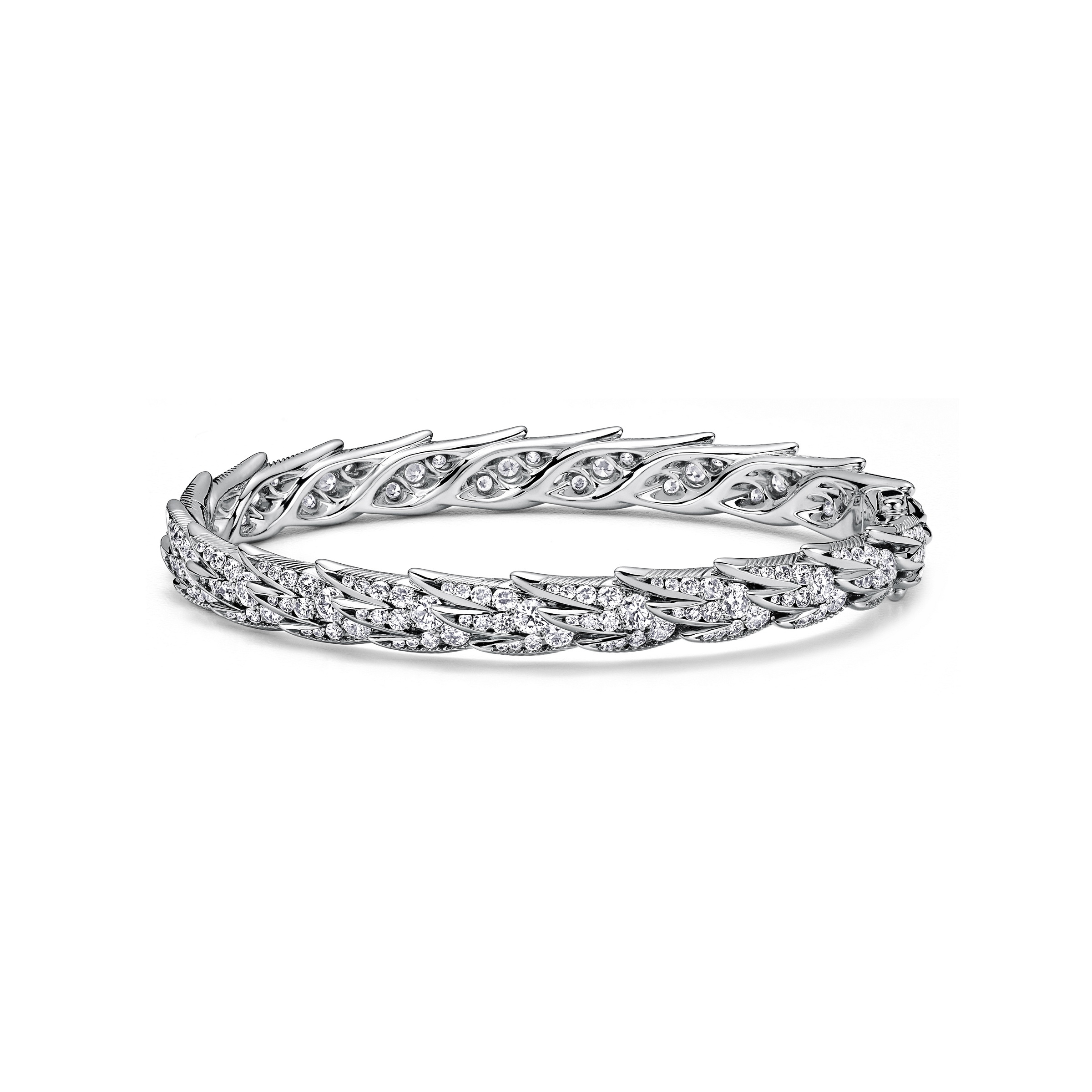
There is a useful distinction between texture and ornament here. Ornament can be placed on an otherwise conventional object. Texture can become the object’s identity. Wings works most clearly in the latter register: the edge, the overlaps and the surface appear to belong to the same decision. Diamonds and metal contribute to its brightness, but the form can be recognised from an outline. That is a stronger foundation for a collection than relying on a gemstone list to explain why each piece belongs.
Worn scale changes the hierarchy
The official portraits restore what a white-background product image removes: a neck, a hand, fabric, distance and posture. A broad ring can dominate its studio frame and still function as one concentrated accent when seen with the whole person. A necklace that seems intricate in isolation may read as a clear arc from further away. That shift in scale is part of the design, not an inconvenience to be edited out of the photograph.
The blue display fields in the collection imagery provide another useful contrast. Their colour gives the jewellery a defined setting while keeping the shape legible. Beside the worn portraits, they make the viewing sequence less repetitive: first the object is encountered as a form, then as an element of dress, then at the smaller scale where the feather-like construction can be considered. No single frame has to explain everything.
For a prospective wearer, the practical questions follow those changes of scale. How wide is the chosen ring across the finger? Where does a pendant sit with a particular neckline? Does a bracelet’s broadest section rest where expected, and how is it fastened? Those are reference-specific fitting questions, not conclusions that can be settled from a styled photograph. The collection imagery supplies a starting point, while the exact product record and a fitting provide the missing measurements and tactile information.
Three ways to read the collection
| Design reading | Visual evidence | Question for the exact reference |
|---|---|---|
| Figurative bird | Head, body and posture remain readable | Which materials and dimensions belong to this object? |
| Wing or feather | Overlapping forms organise surface and edge | How broad is the jewel when worn? |
| Collection portrait | Body and clothing establish scale | Where does the piece sit with the intended outfit? |
This table describes ways of looking, not a hierarchy of rarity or value. The high-jewellery and fine-jewellery branches should retain their own specifications. A shared motif does not imply shared stone weights, construction or availability. The photographs are official imagery; no independent handling or wear test is claimed.
The Luxe Digital view
Bird on a Rock is most interesting when the bird becomes a design language rather than a figure repeated at different sizes. The current collection makes that transition visible, from a perched creature to the curved architecture of a wing. Its strongest connection is the route between those two readings: recognisable enough to retain character, abstract enough to become a surface around the body.
Bird on a Rock is most interesting when the bird becomes a design language rather than a figure repeated at different sizes.
Sources & credits
Sources and methodology
Independent visual analysis of current official imagery and named product records, checked on 14 October 2026. Historical introductions, manufacturer specifications and visual observations are kept distinct. No visit, interview, independent handling or appraisal is implied.
- Tiffany & Co. — source 1: Current official collection, named designs, dated context and selected image provenance.
- Tiffany & Co. — source 2: Current official collection, named designs, dated context and selected image provenance.