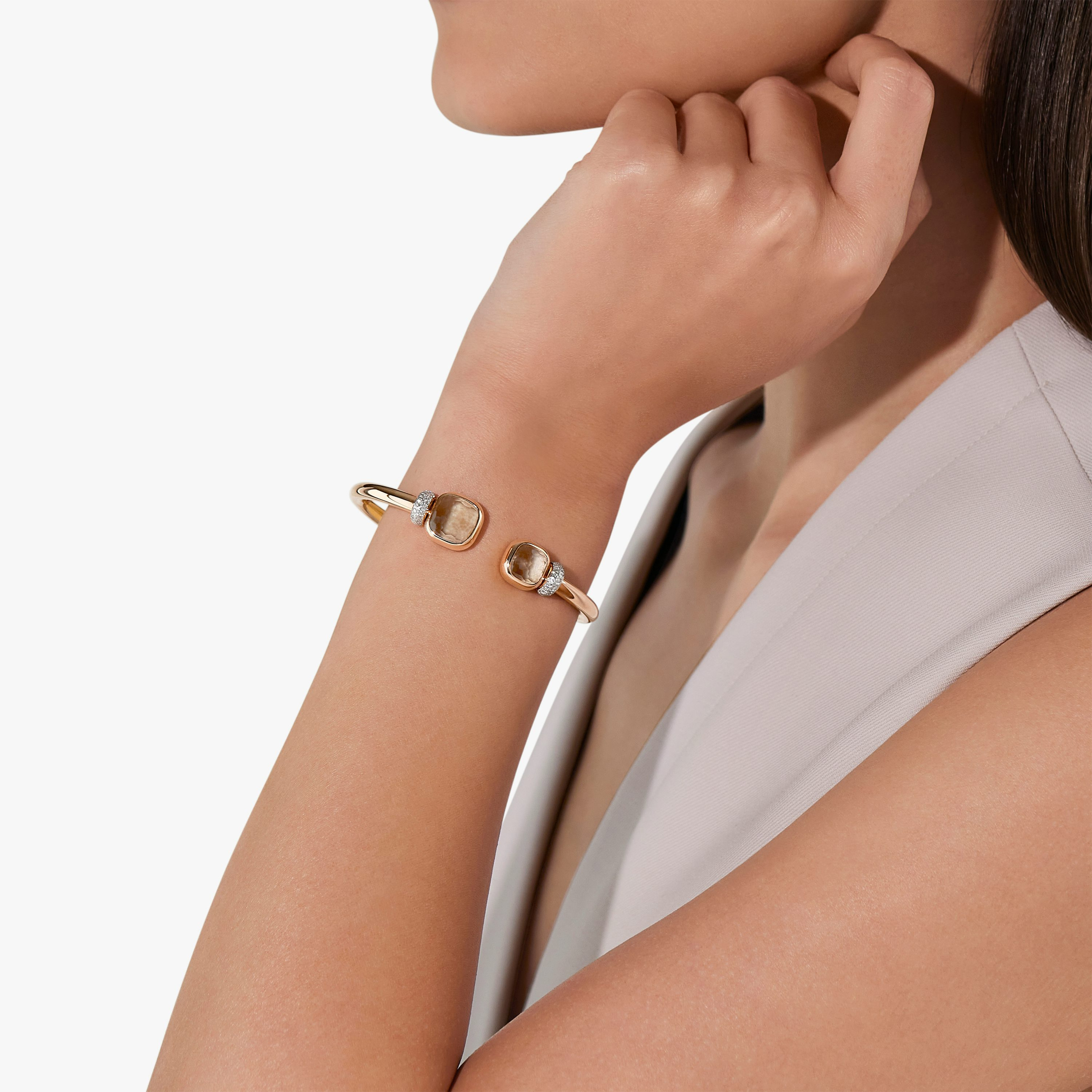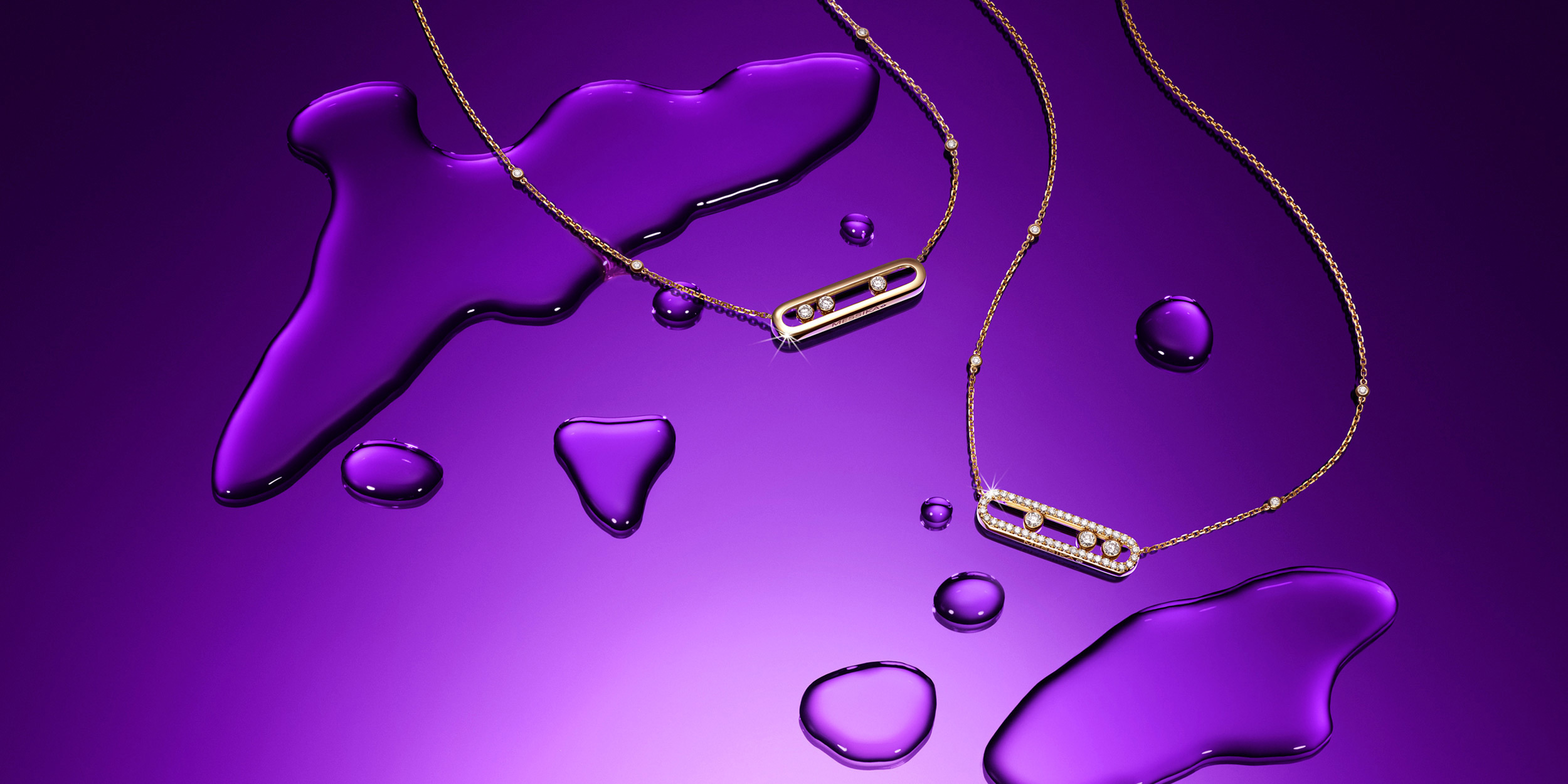
Ice Cube begins with a small geometric decision: an angular module that catches light differently across its faces. Chopard’s current bracelet presentation shows how that module can become a continuous line, a diamond-set surface or a single accent on a cord. The family resemblance is clear, yet the objects create markedly different outlines around the wrist.
The wrist as a line of facets
This visual study begins with complete studio photographs. Their quiet backgrounds keep the silhouette and the inner opening visible, rather than asking a campaign portrait to explain every construction. The comparison moves from plain rose-gold and yellow-gold views to partial and fuller diamond setting, then to a cord-mounted cube and an open bangle. Each frame contributes a different arrangement of the same geometric vocabulary.
The current bracelet and necklace catalogues are the source of the collection context. No claim is made that Ice Cube has just launched in 2026, and the materials of a particular piece remain tied to its own reference. The visual differences discussed here concern the official photographs, not an independent test of surface quality, wear resistance or comfort. A complete object can tell us a great deal about an outline without telling us everything about its use.
Plain metal makes the module legible
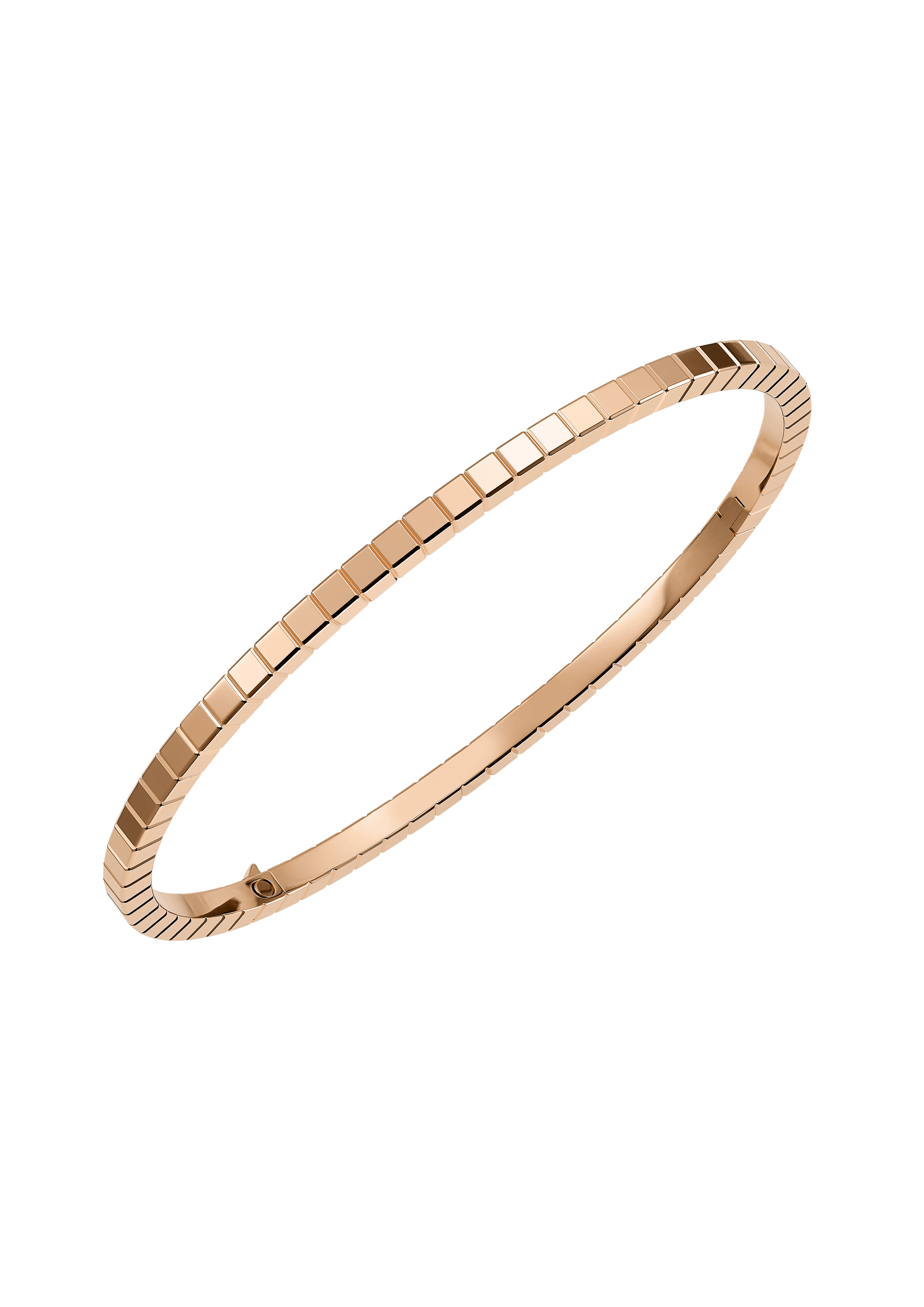
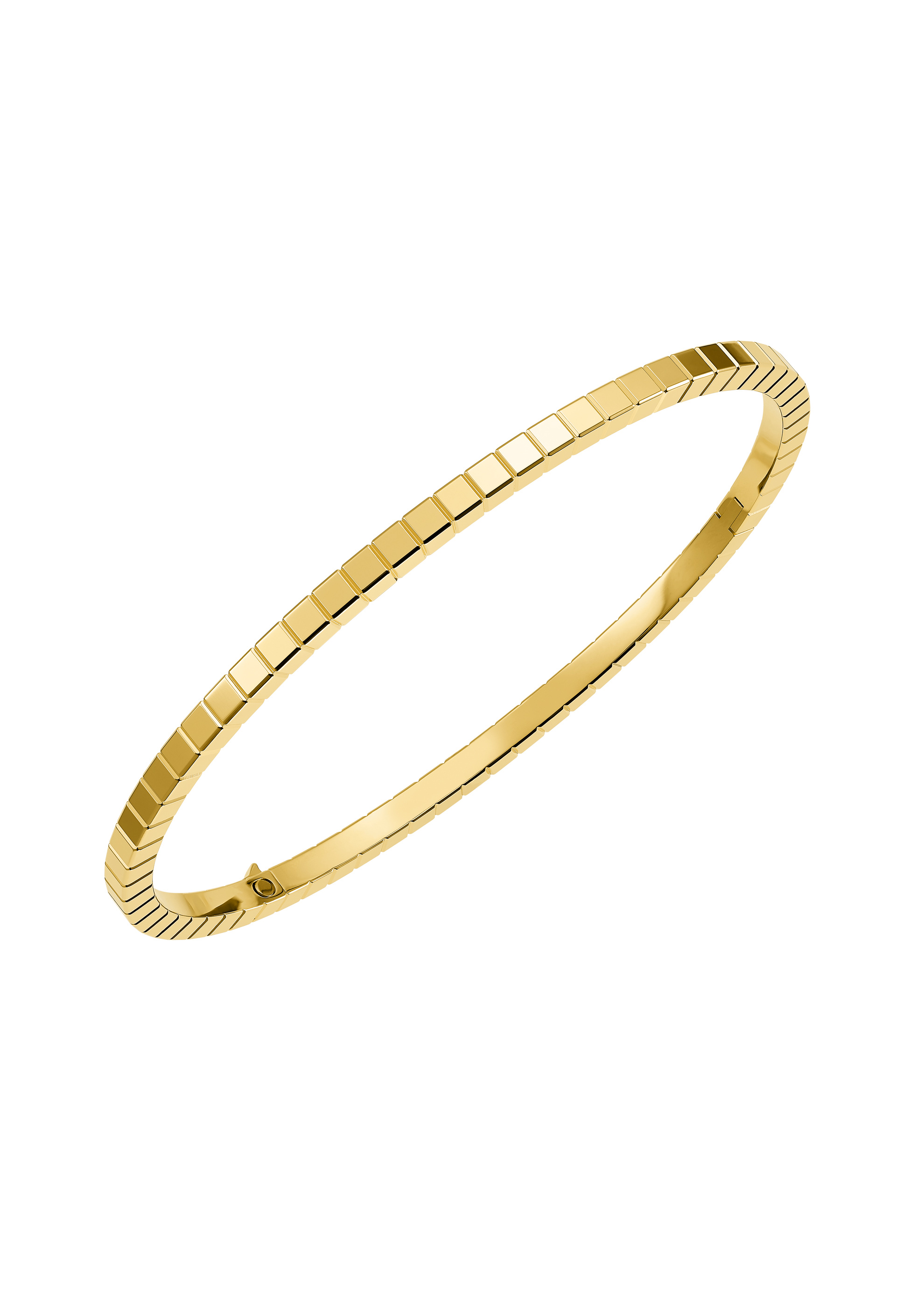
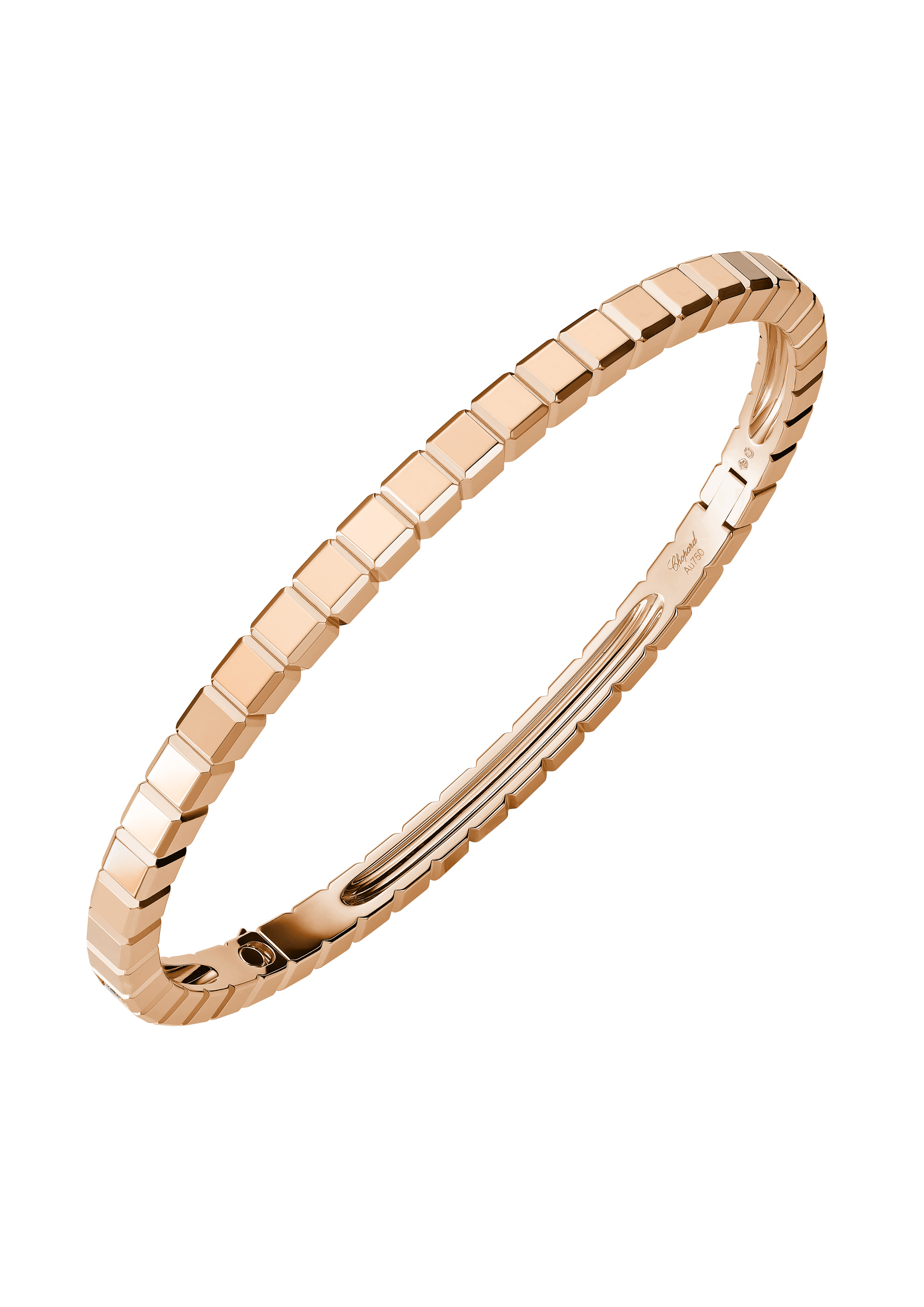
The plain bracelet is the clearest place to see the cube-like rhythm. A sequence of angular sections creates a line that is more articulated than a smooth bangle. The inner curve gives the object its overall shape, while the outer faces introduce smaller changes of direction. The two scales of geometry are visible at once: a continuous route around the wrist and a repeated series of planes along that route.
The rose-gold and yellow-gold product views offer a comparison of colour without requiring a change of silhouette. Against the studio background, the warmer or brighter gold tone changes the way the form separates from its surroundings. The module remains recognisable through its edges. This is a useful visual test for a design whose identity is geometric: it should survive a change in surface colour rather than depend entirely on a particular colour cast in one photograph.
The photographs do not establish identical dimensions or material composition for every similar-looking bracelet. Nor does a gold colour visible on a screen determine fineness or production method. Those belong to the chosen product record. The image’s contribution is more focused: it shows the complete curve, the succession of faces and the amount of space held inside the object. Keeping those functions distinct makes the comparison more informative than treating colour alone as a specification.
Diamonds change the surface without erasing the grid
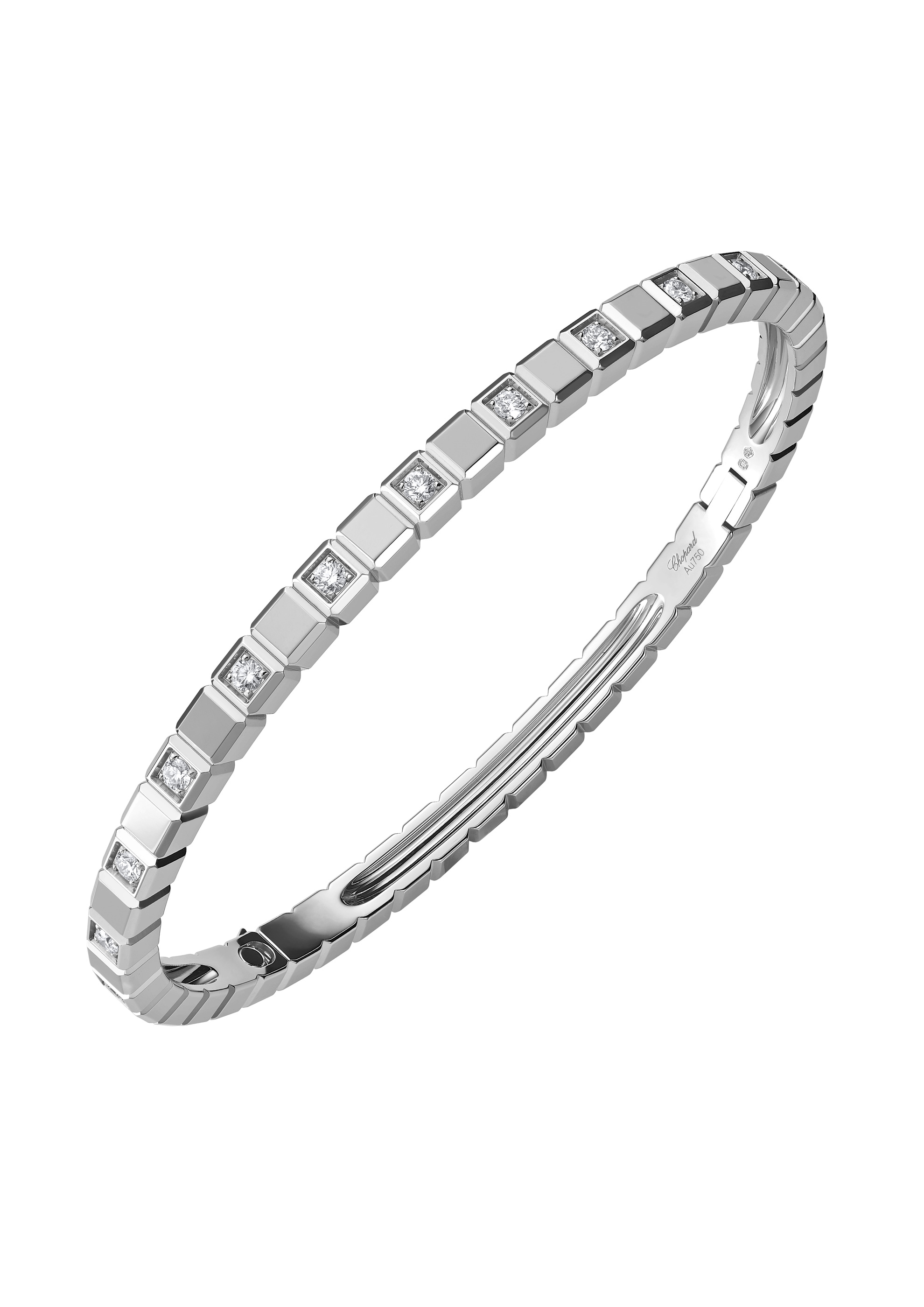
The partly diamond-set bracelet introduces a second rhythm within the first. Some areas retain a plain, uninterrupted metal surface; others become more granular and bright in the photograph. The geometric outline still holds the composition together. That balance is important because the collection’s identifying feature is the module, not simply the presence of diamonds. The stones alter how the surface reads while leaving the larger line available to the eye.
The more fully diamond-set view moves the object towards a continuous field of brightness. At this scale, the contrast between plain and set areas becomes less dominant, and the outer contour has more responsibility for retaining the Ice Cube identity. Comparing the complete objects side by side makes the difference visible without assigning a shared stone count or weight. Similar forms can carry different settings, and those differences should remain attached to the exact references.
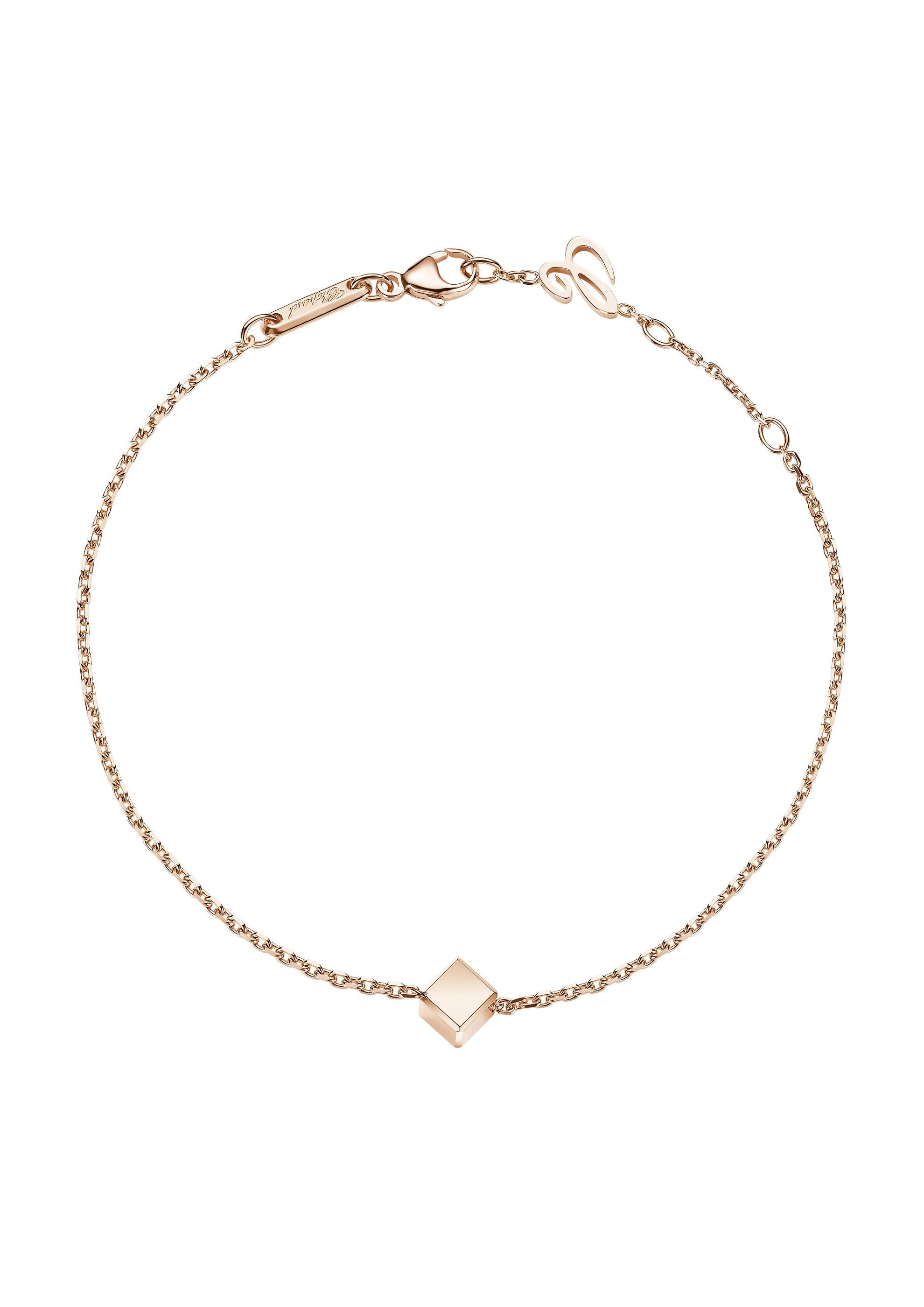
These photographs also suggest why close detail and whole-object views serve separate purposes. A detail could explain a setting’s small boundaries, but it would not show how the bracelet’s line closes around its inner opening. The full product frame keeps the geometry available for comparison. For an actual purchase decision, a closer view and the manufacturer’s specifications would then be needed to confirm the particular setting, dimensions and material details.
A single cube and an open bangle leave different spaces
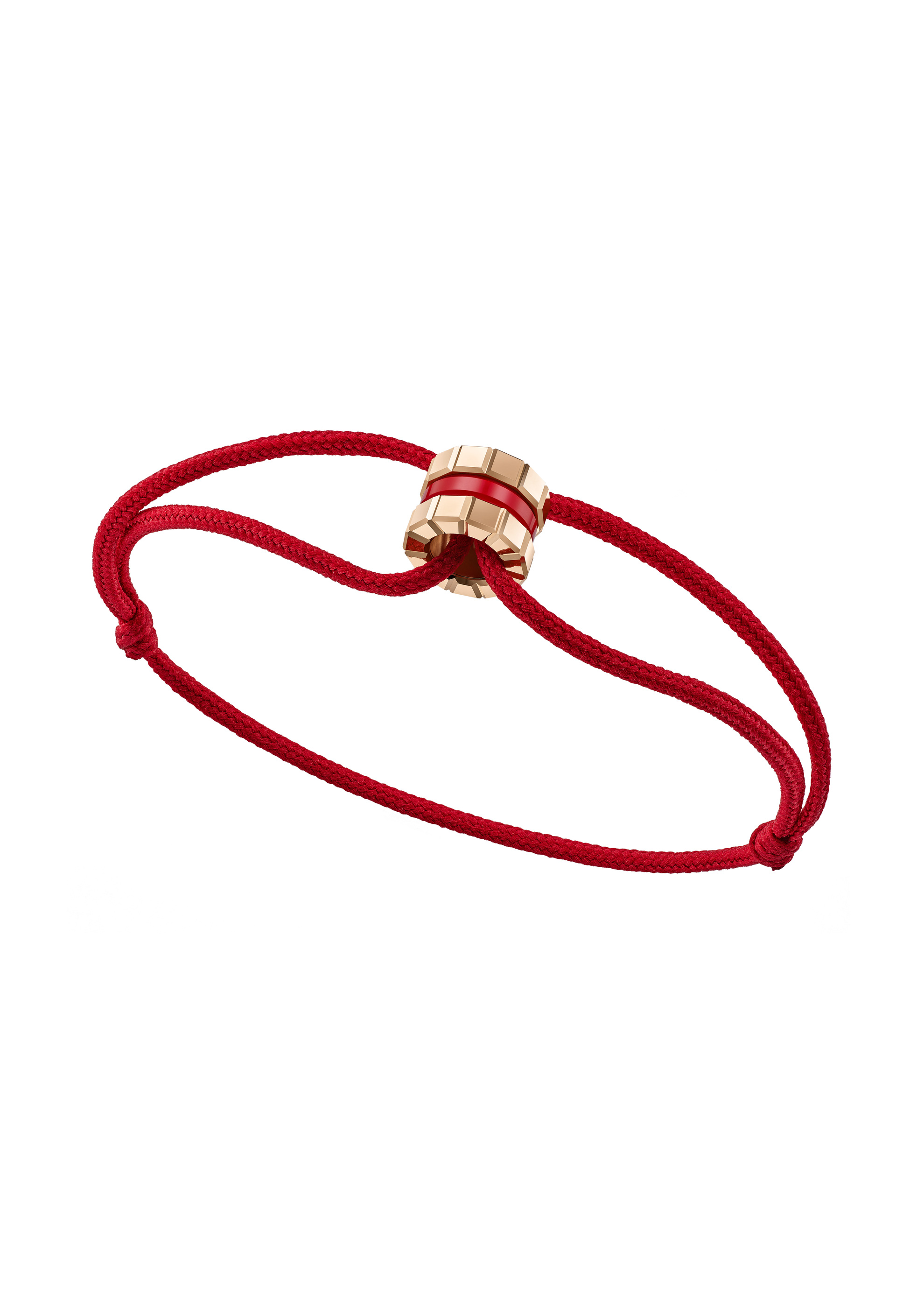
The red-cord interpretation isolates the module. Instead of repeating the geometry around the wrist, it places one concentrated element within a much quieter line. The colour of the cord adds a clear contrast, and the eye can read the angular form as a small centre rather than as one part of a continuous bracelet. The family language remains visible because the cube-like faces still organise that centre.
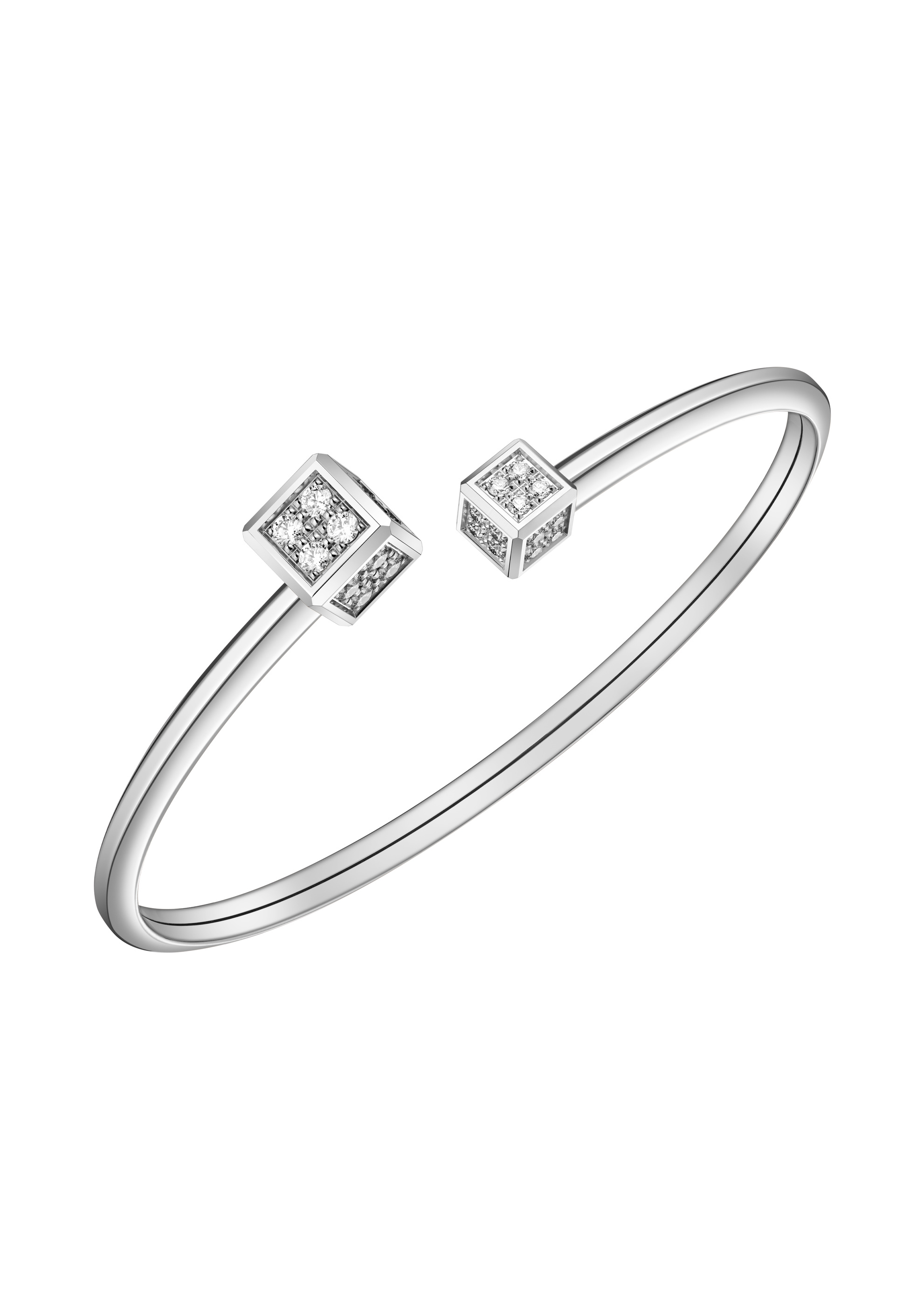
The open bangle changes the larger outline. Its separated ends leave a visible interval, so the object is no longer read as a fully closed curve in the studio photograph. That opening is a compositional feature as well as a practical point to discuss with the maker. A picture shows where the line stops; it does not demonstrate how the bangle should be put on, whether it is intended to flex or how much adjustment is permitted.
The chain-linked bracelet offers another transition, with smaller Ice Cube elements meeting a more familiar linked line. Taken together, these versions show that the collection is not limited to increasing or decreasing the amount of diamond setting. It can also change how frequently the geometric module appears and how much empty space surrounds it. That is a stronger design comparison: continuity, isolation, interruption and linkage each create a different relationship with the wrist.
Four arrangements of one geometric language
| Arrangement | What the complete view shows | Question for the exact piece |
|---|---|---|
| Plain bangle | A repeated angular line and clear inner curve | Material, internal size and closure |
| Diamond-set bangle | Brightness organised by the same outer geometry | Setting extent and reference-specific stone data |
| Cord-mounted cube | One module held within a coloured line | Cord adjustment and care instructions |
| Open bangle | A visible interval between the ends | Correct fitting and handling method |
The comparison concerns design arrangements rather than a universal ranking of value. No claim about recycled content, sourcing certification or alloy composition is inferred from a collection name or a photograph. Such claims require the documentation of the actual reference and should be checked separately from the visual study.
The Luxe Digital view
Ice Cube becomes more interesting when the module is considered alongside the empty space around it. Chopard’s current bracelets offer several clear ways to organise that relationship, from a continuous faceted curve to one cube on a cord. The design’s coherence lies in retaining a recognisable geometry while changing the rhythm of the whole object.
Ice Cube becomes more interesting when the module is considered alongside the empty space around it.
Sources & credits
Sources and methodology
Independent visual analysis of current official imagery and named product records, checked on 14 October 2026. Historical introductions, manufacturer specifications and visual observations are kept distinct. No visit, interview, independent handling or appraisal is implied.
- Chopard — source 1: Current official collection, named designs, dated context and selected image provenance.
- Chopard — source 2: Current official collection, named designs, dated context and selected image provenance.