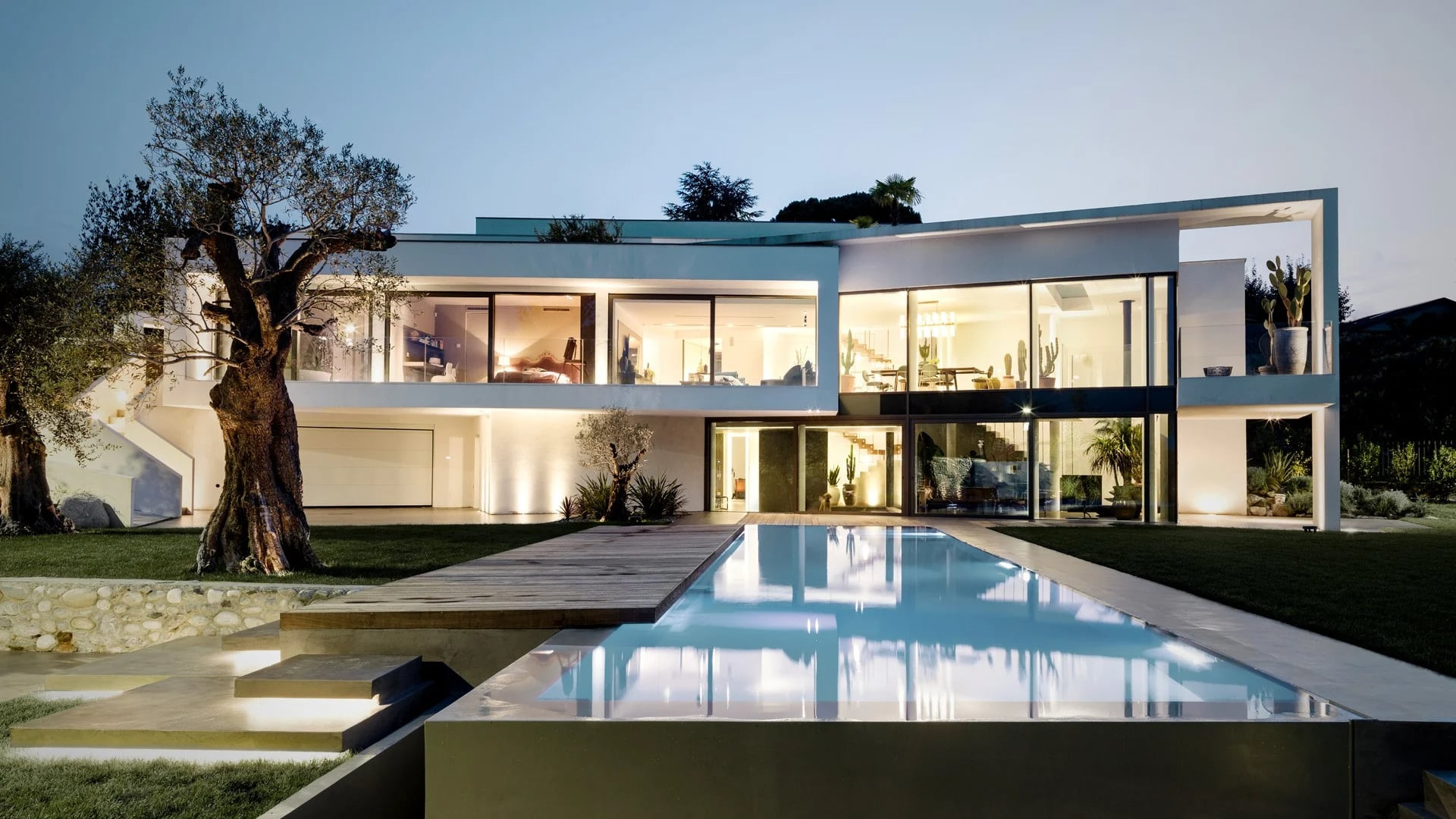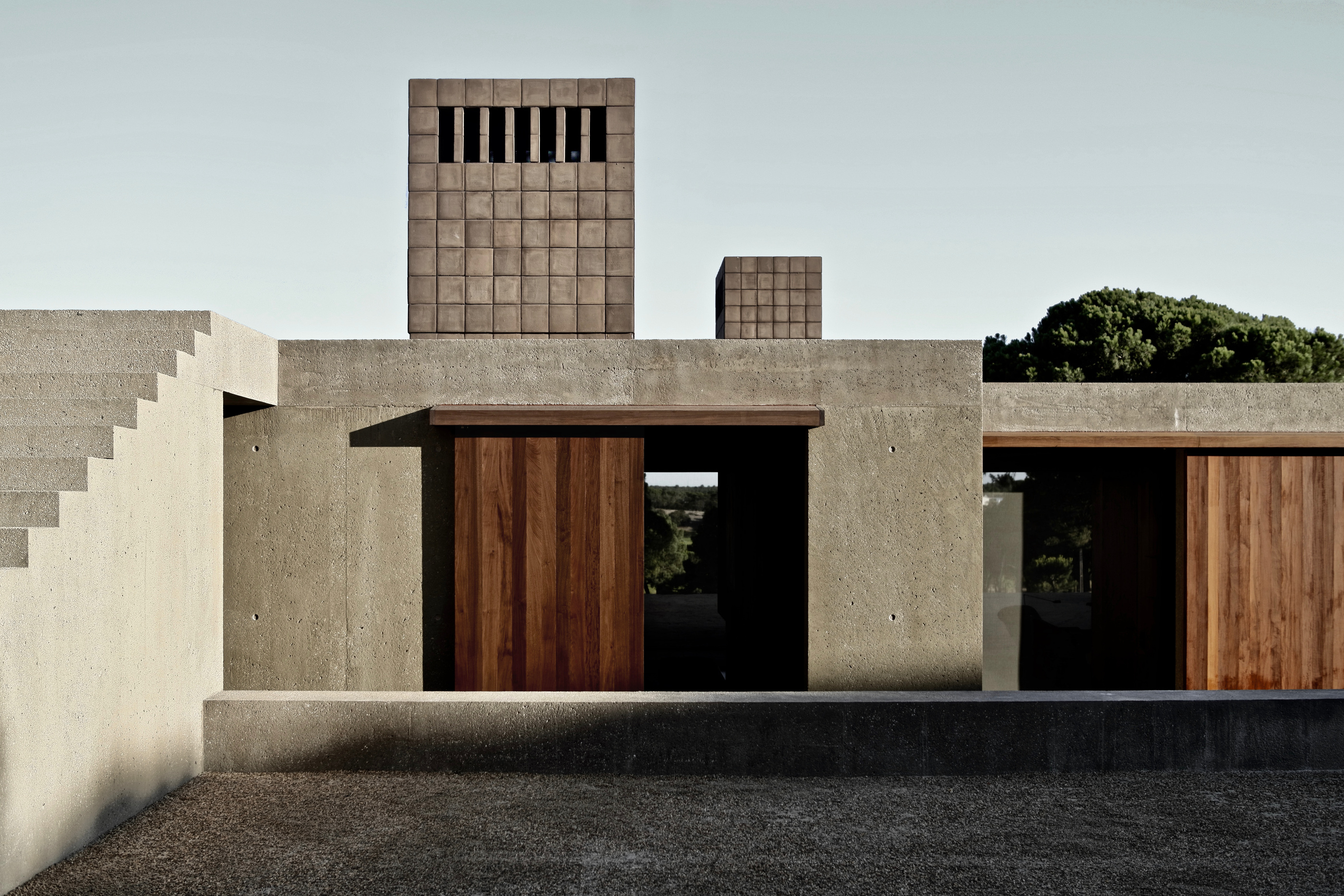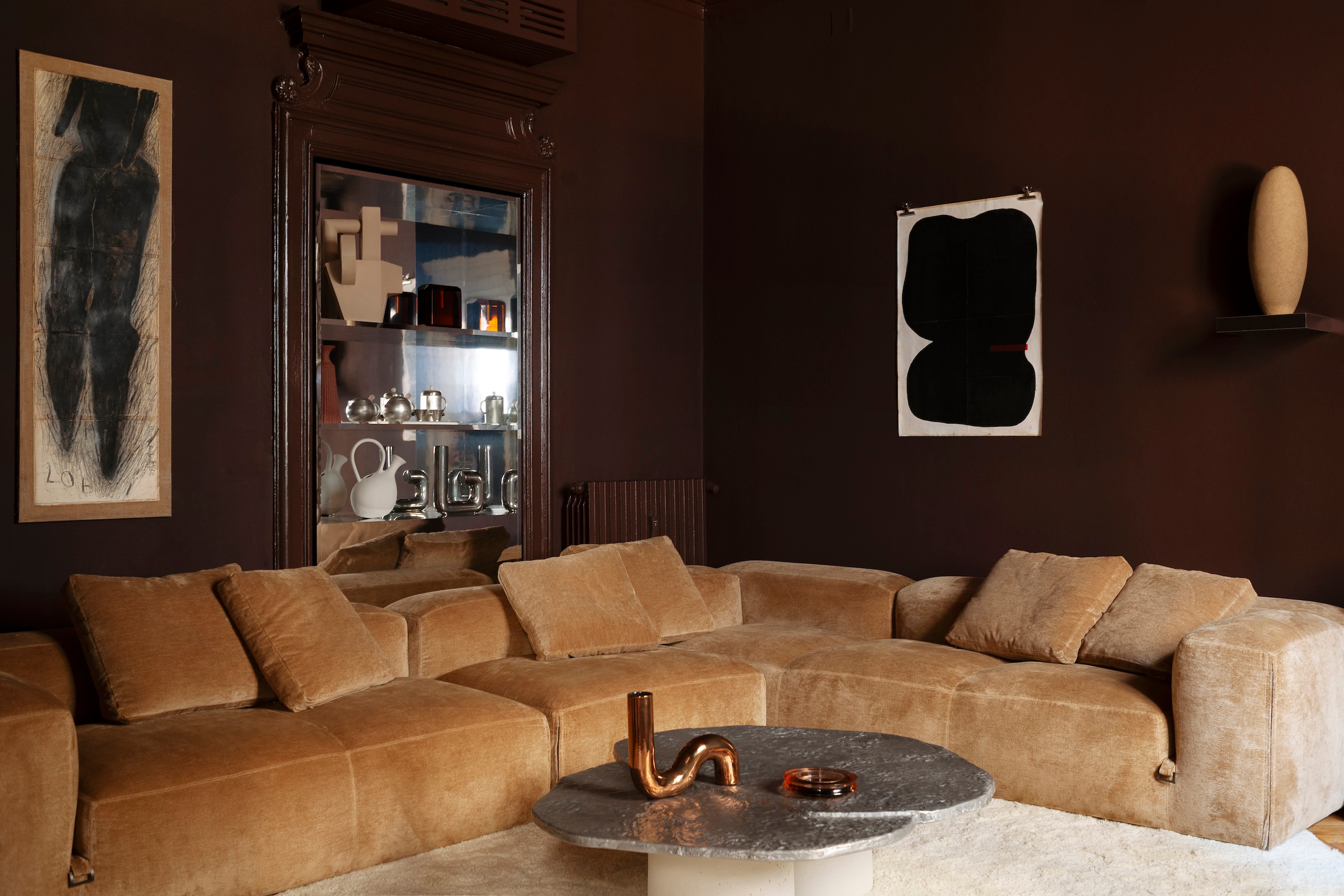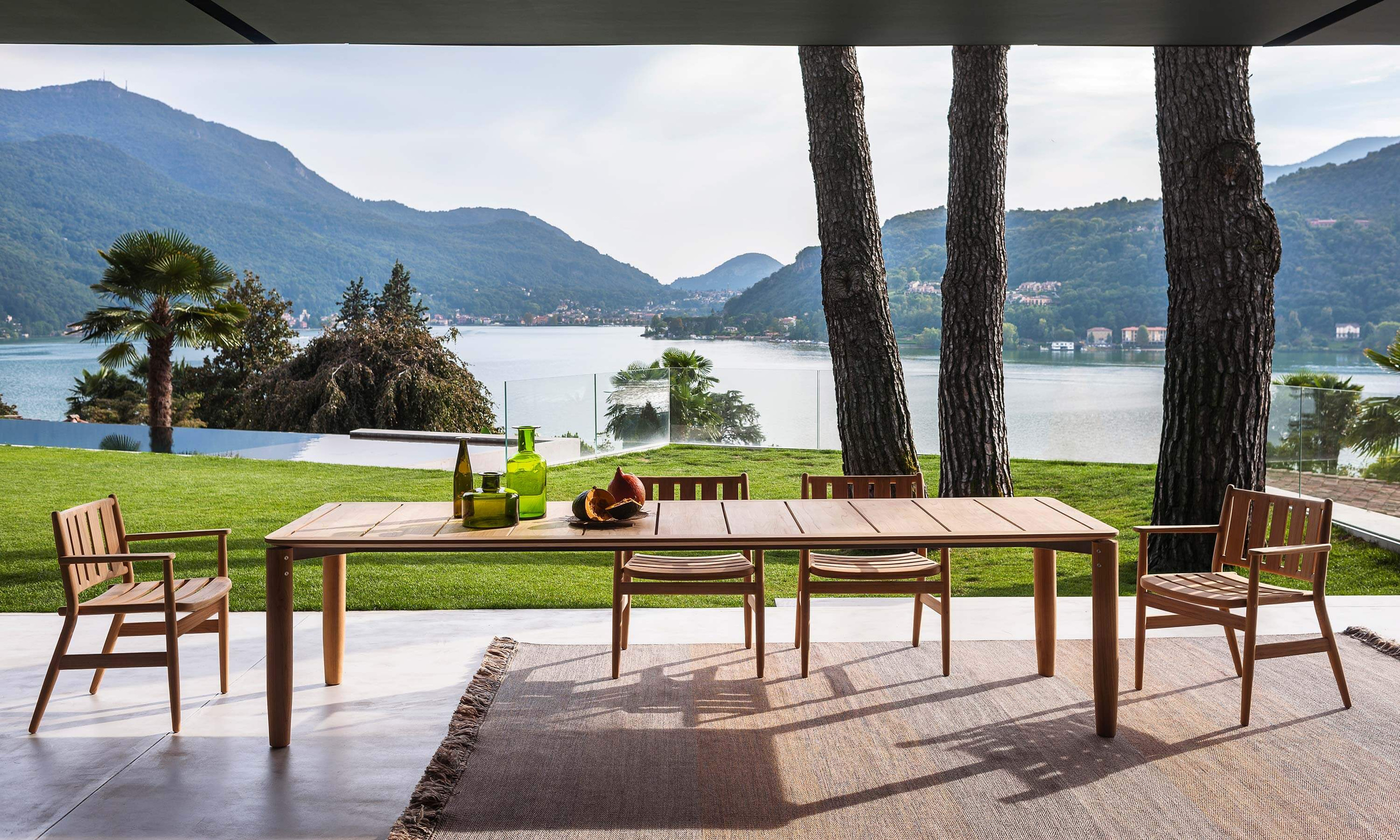
A terrace becomes a room when its furniture gives the day some structure. RODA’s Levante collection brings dining, sitting and reclining into a shared teak vocabulary. Its interest lies in how those settings remain related without making every activity occupy the same position in the landscape.
A collection as a plan for the day
RODA credits Levante to Piero Lissoni. The official collection spans sofas, armchairs, dining chairs, tables and loungers, offering a coherent group of outdoor pieces rather than a single signature object. In the published scenes, the timber framework remains recognisable as the setting changes from a table to a place beside a pool.
That breadth is useful when the outdoor area must serve more than one routine. Lunch, conversation and a quiet hour with a book involve different positions and relationships. A collection can provide continuity across them, but the plan still has to establish which activity belongs where. Matching products do not automatically create a well-organised terrace.
Start with the daily sequence: where does breakfast take place, when is shade needed, and which seats are intended for company? The photographs give those questions a physical reference. A table framed by a view, a cushioned sofa near planting and a recliner beside water all offer different ways to occupy the same broad idea of outdoor living.
Teak carries the common language
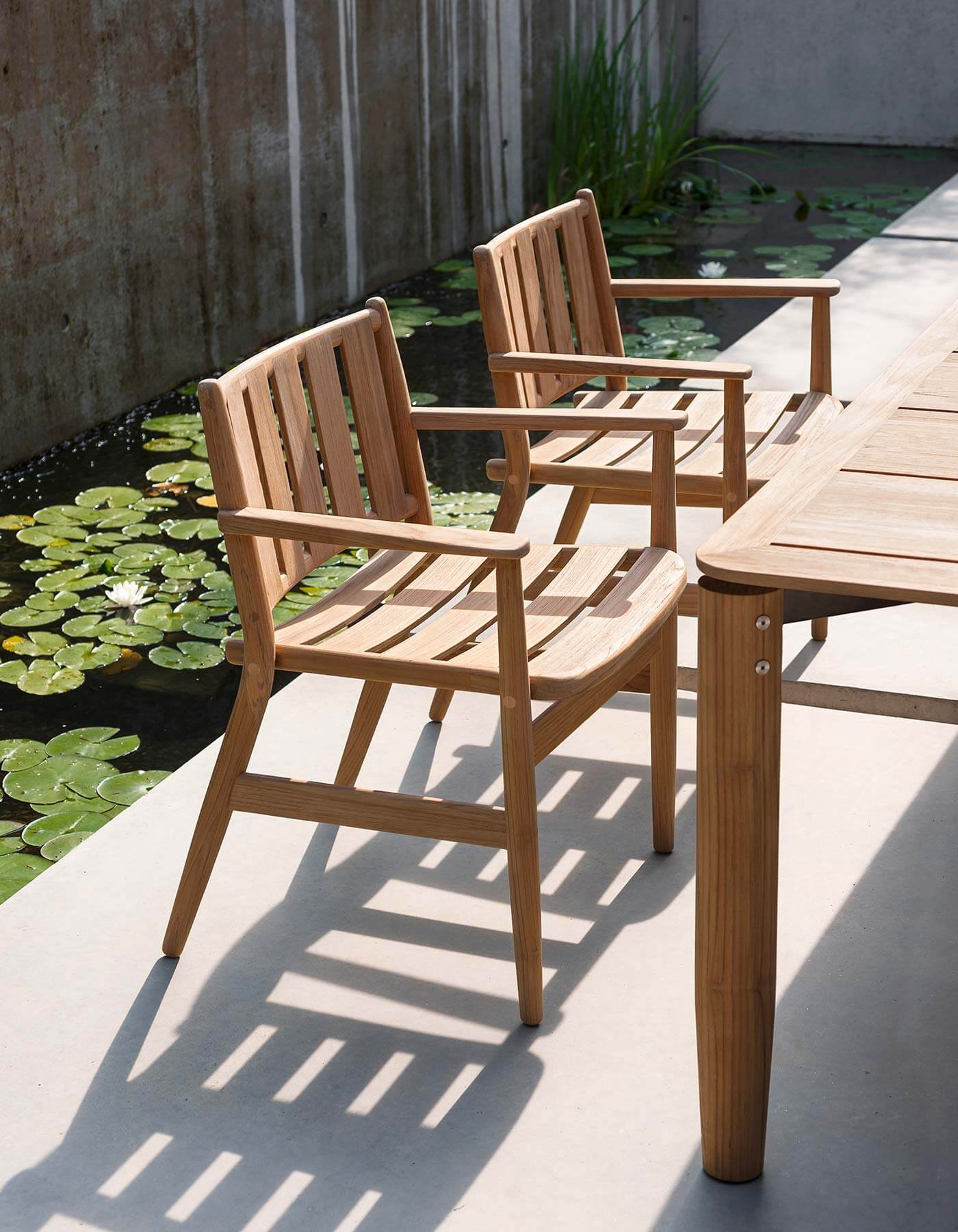
The visible timber frames give the pieces their relationship. Legs, rails and slats remain legible across the collection, while the proportions change with each task. That continuity allows a dining setting and a more relaxed group to sit within one project without requiring them to be identical in outline.
The material should be considered in the actual site conditions. Timber outdoors needs a care conversation specific to the product and exposure. Colour in an official photograph cannot establish how a particular piece will look throughout its life on a coastal terrace or in a sheltered courtyard. Obtain current care information and agree the appearance the owner wishes to maintain.
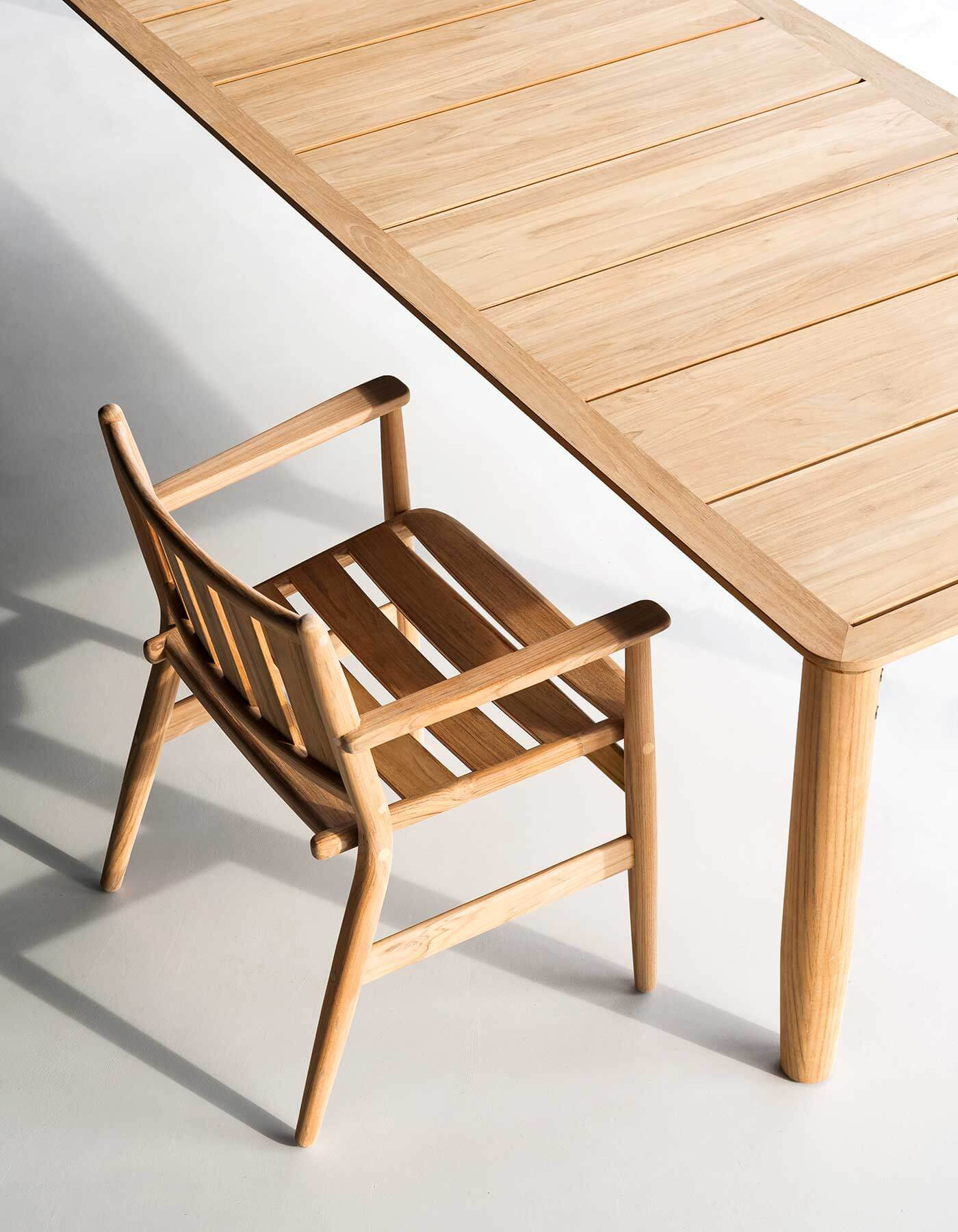
This is an opportunity for a more informed material decision. Compare a physical sample with the surrounding paving, the wall and the planting. Consider it in daylight rather than solely under showroom lighting. The quality of a palette comes from the relationships between materials, not from the prestige of each one assessed separately.
Give dining room to breathe
In the dining scenes, the tabletop provides a broad horizontal anchor while chair backs make a repeated rhythm around it. The images are appealing because the setting remains legible within its surroundings. The furniture is present without preventing the eye from moving towards the landscape.
The corresponding project question concerns movement. A chair takes more space when someone sits in it or pulls it back. A route that looks clear in a carefully arranged photograph may become less generous during a meal. Draw the occupied setting, including movement to the doors and any serving route, before fixing a table size.
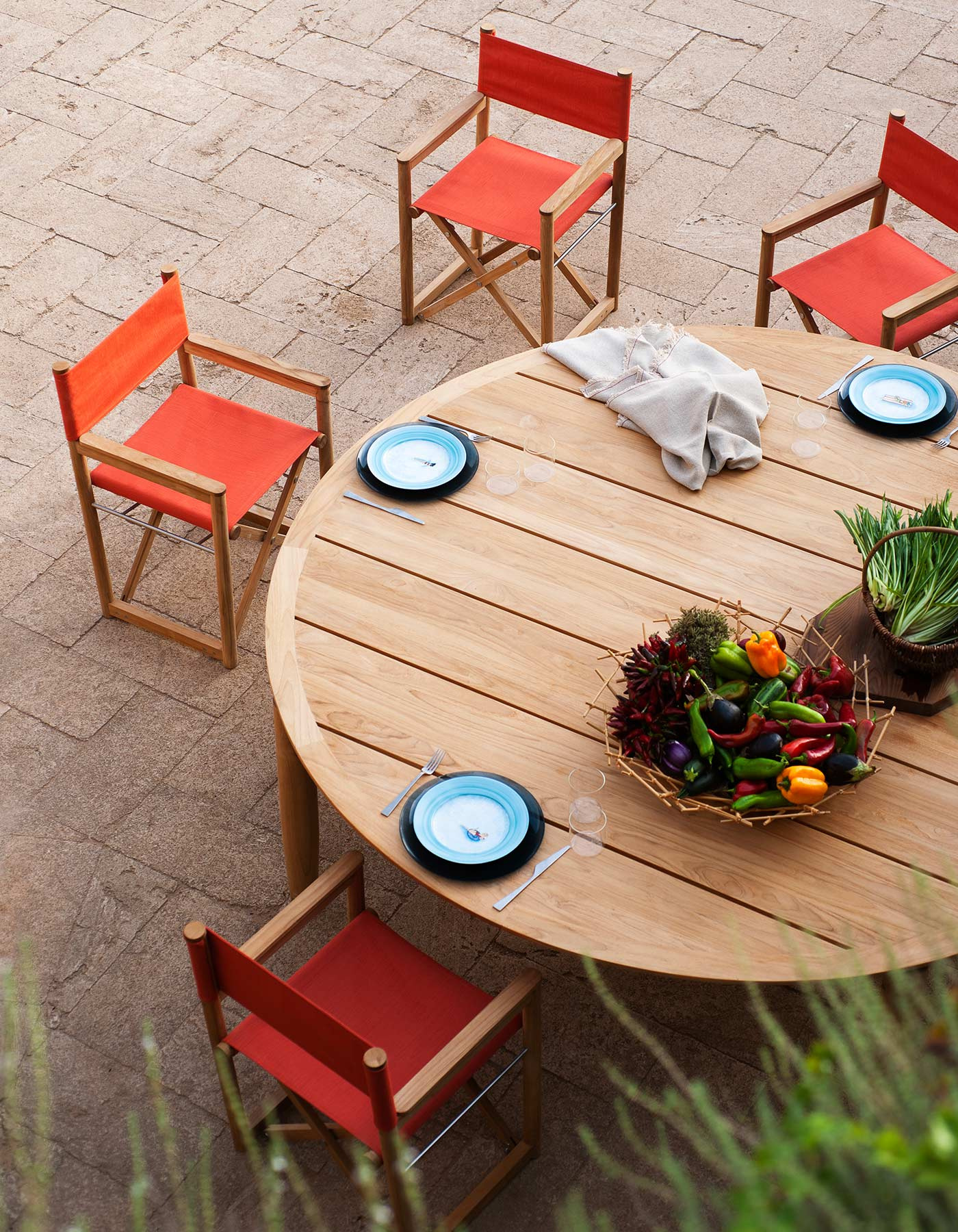
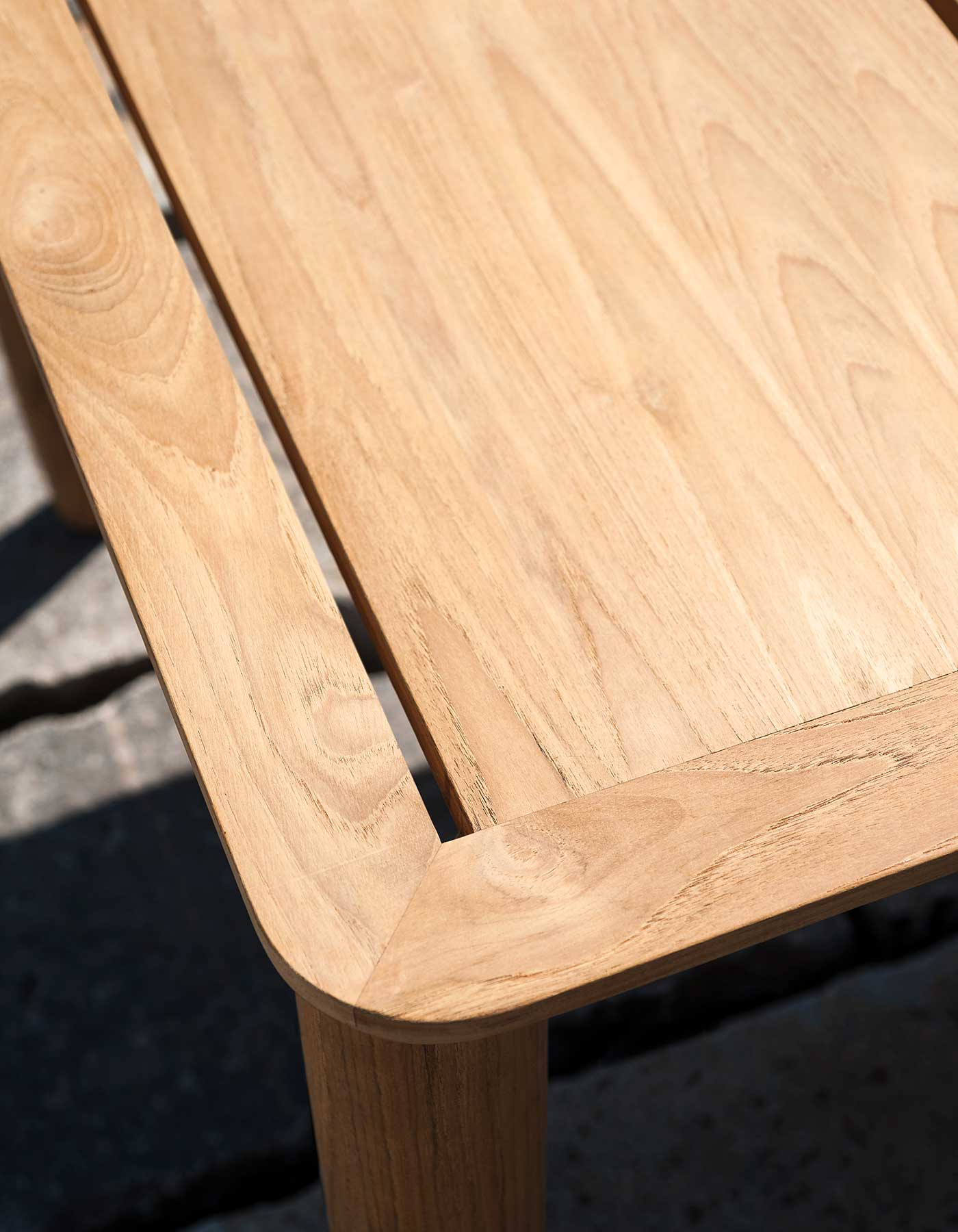
The collection page lists separate references with their own dimensions. Those records matter more than an overall family description. A compact chair and a lounge armchair are not substitutes just because they share teak and a similar design language. Choose the reference for the activity, then confirm its relationship to the table and available space.
The sofa needs a setting of its own
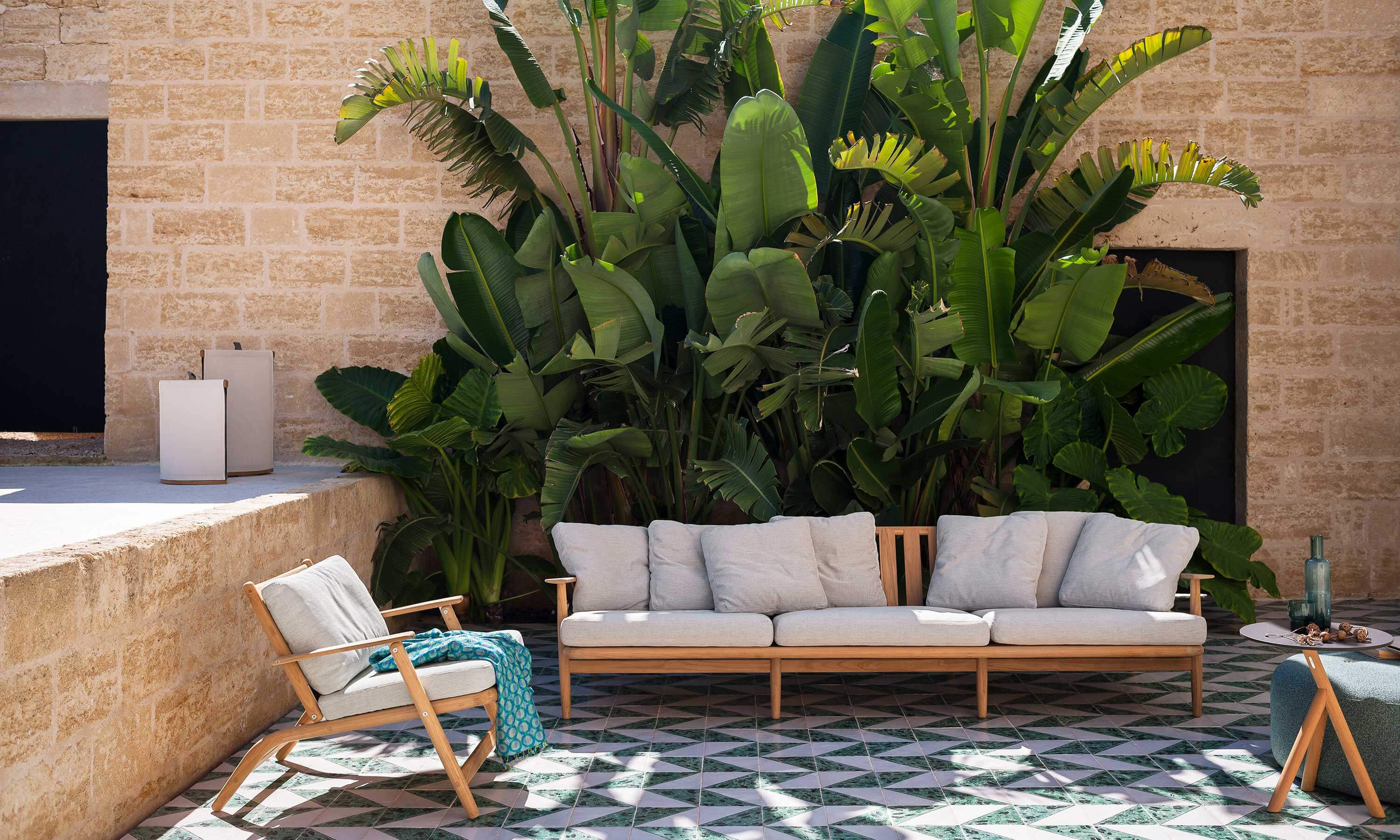
The sofa views are quieter and more enclosed. Cushions introduce a softer register, while the timber frame keeps the composition visually connected to the dining pieces. The planting and wall behind them help define a place to pause rather than a route to somewhere else.
For a real terrace, that sense of enclosure may come from a screen, a pergola edge, a change in planting or the building itself. Its role is to give the seating an orientation. Without one, a group can feel as though it has been placed in leftover space, however accomplished the individual pieces may be.
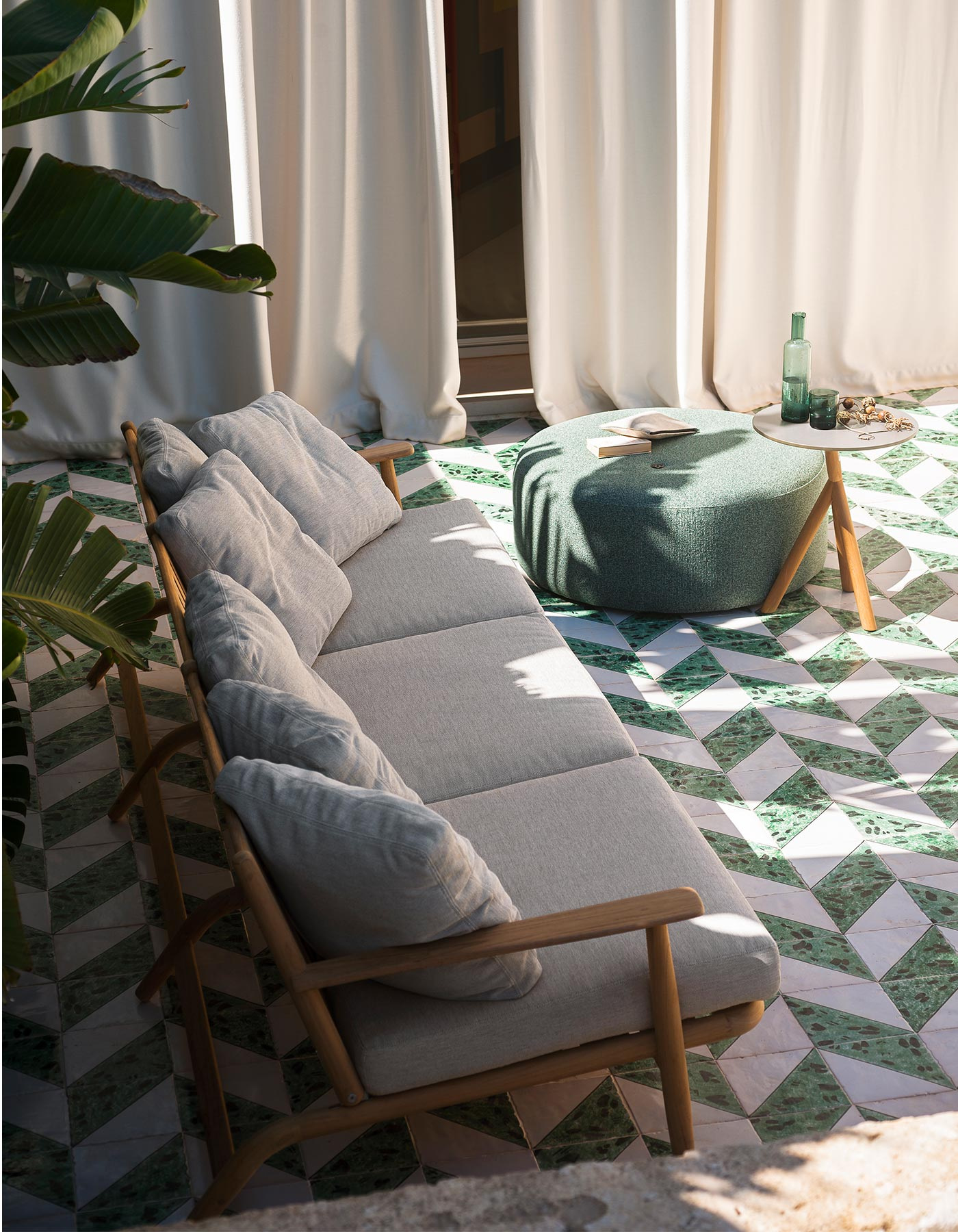
RODA lists hydro-draining cushions on several Levante references, with reference-specific details elsewhere in the range. Confirm the selected cushion construction, upholstery, covers and storage expectations for the actual order. A useful specification makes those choices explicit. It avoids treating the attractive phrase ‘outdoor living’ as proof that every component can be cared for in the same way.
A lounger changes the pace
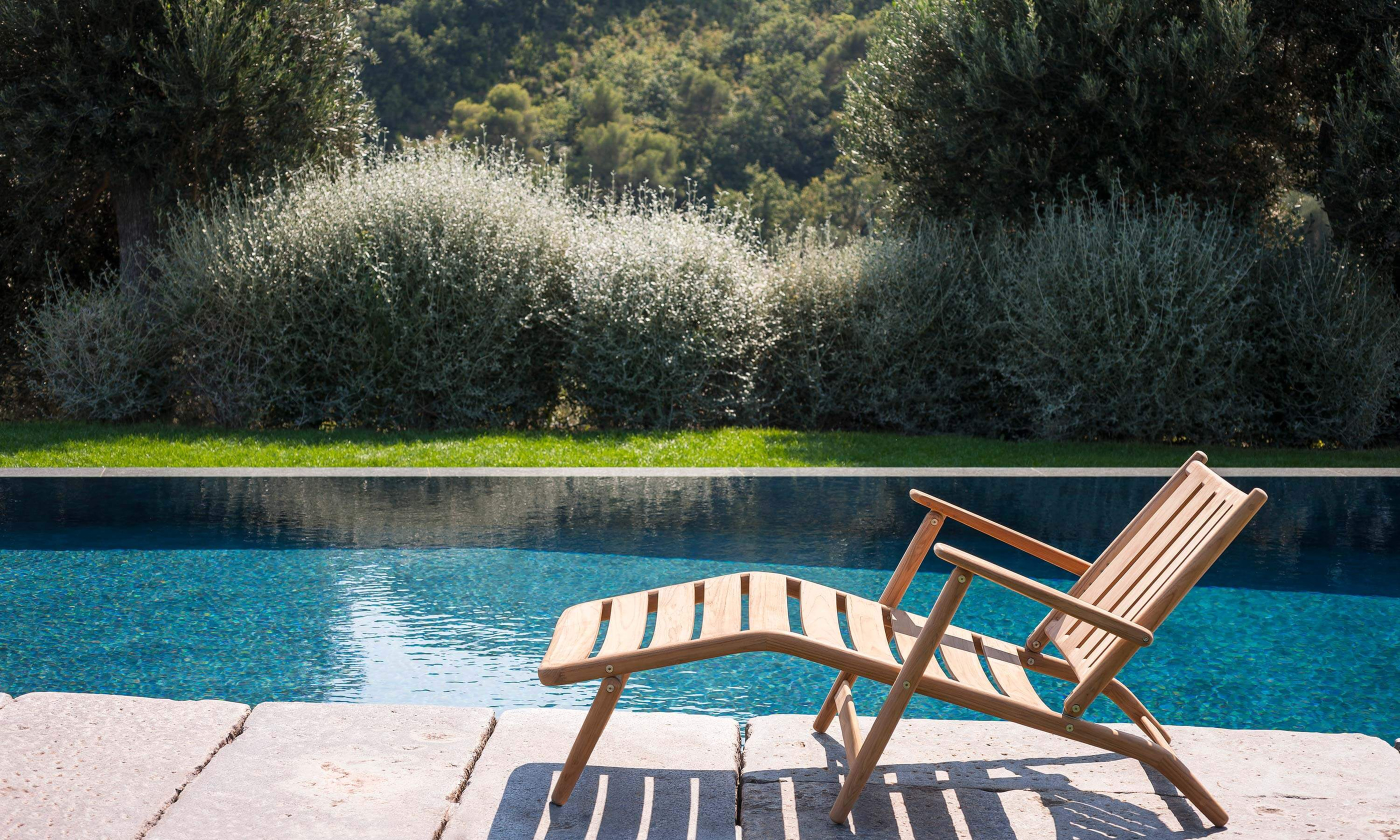
The recliner beside the pool extends the collection into a different posture and a different relationship to the sun. Its longer outline makes the available floor area especially relevant. The furniture’s visual lightness does not remove the need for a comfortable approach or a clear circulation route around the setting.
This is also where the whole landscape plan becomes important. The ideal orientation for looking out may differ from the preferred position at the brightest time of day. Furniture selection should be discussed alongside shade, planting and the ways in which the terrace will be used. The product cannot resolve those decisions in isolation.
| Setting | What to read in the images | What to settle in the project |
|---|---|---|
| Dining | Repeated chairs around a shared horizontal plane | Occupied clearances and serving routes |
| Conversation | Cushions and timber within a defined edge | Orientation, shade and access |
| Reclining | A longer posture beside the landscape | Approach and time-of-day position |
| Material palette | Teak against paving and planting | Samples and product-specific care |
| Collection continuity | Related frames across different uses | Exact references and upholstery schedule |
The table is a planning aid, not a claim that one collection suits every exterior. The most convincing choice depends on the site, the household and the level of care expected over time. Those conditions should be part of the first brief rather than discovered after delivery.
The Luxe Digital view
Levante’s value is in the continuity it gives to different ways of spending time outdoors. A shared material language can make several settings feel related while allowing each to support its own activity. The design is strongest when that continuity serves a clear plan for the terrace.
For an owner, the useful ambition is to create places rather than simply purchase pieces. For a designer, the collection offers a consistent vocabulary within which the site can keep its identity. The landscape, shade and routes should remain active parts of the composition. When those relationships are resolved, the furniture helps make outdoor life feel considered without turning the garden into another crowded interior.
Levante’s value is in the continuity it gives to different ways of spending time outdoors.
Sources & credits
Sources and methodology
Independent design and reference analysis of the named official records and imagery, checked on 15 October 2026. Launch specifications and later product records retain their own dates and references. Images show the identified configurations. Original visual and commissioning analysis of the exact official product/project records and identified images. No visit, interview, comfort test or performance measurement claimed. Existing projects retain their dates; product versions, showroom photographs, sample images and official visualisations are identified separately.