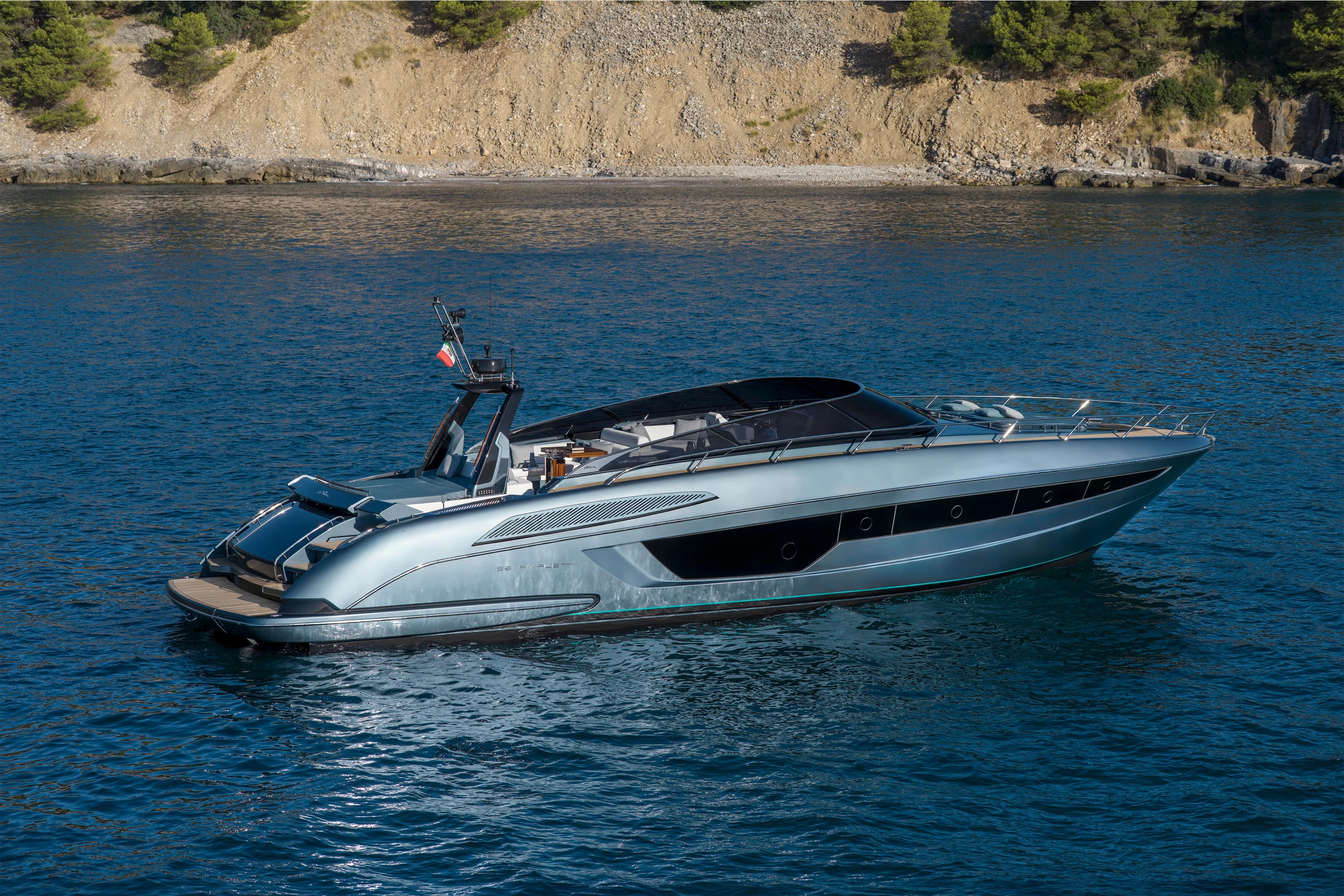
An open Riva has to work as a line and as a place to spend a day. The 56’ Rivale Super makes that double brief especially clear around its windscreen: a long dark curve gives the profile its direction, while the cockpit gathers seating, a table and the helm within the same sheltered outline. The new model’s interest lies in how those two readings remain connected, whether the yacht is seen from the shore or from a seat on board.
The line above the cockpit
Ferretti Group’s 2 September 2026 announcement presented the 56’ Rivale Super and 96’ Argo Super as new models for that year’s Cannes festival. It identifies Officina Italiana Design, founded by Mauro Micheli and Sergio Beretta, as the design studio working with the group’s product and engineering teams. For the Rivale, the release draws particular attention to a counter-curve in the windscreen area.
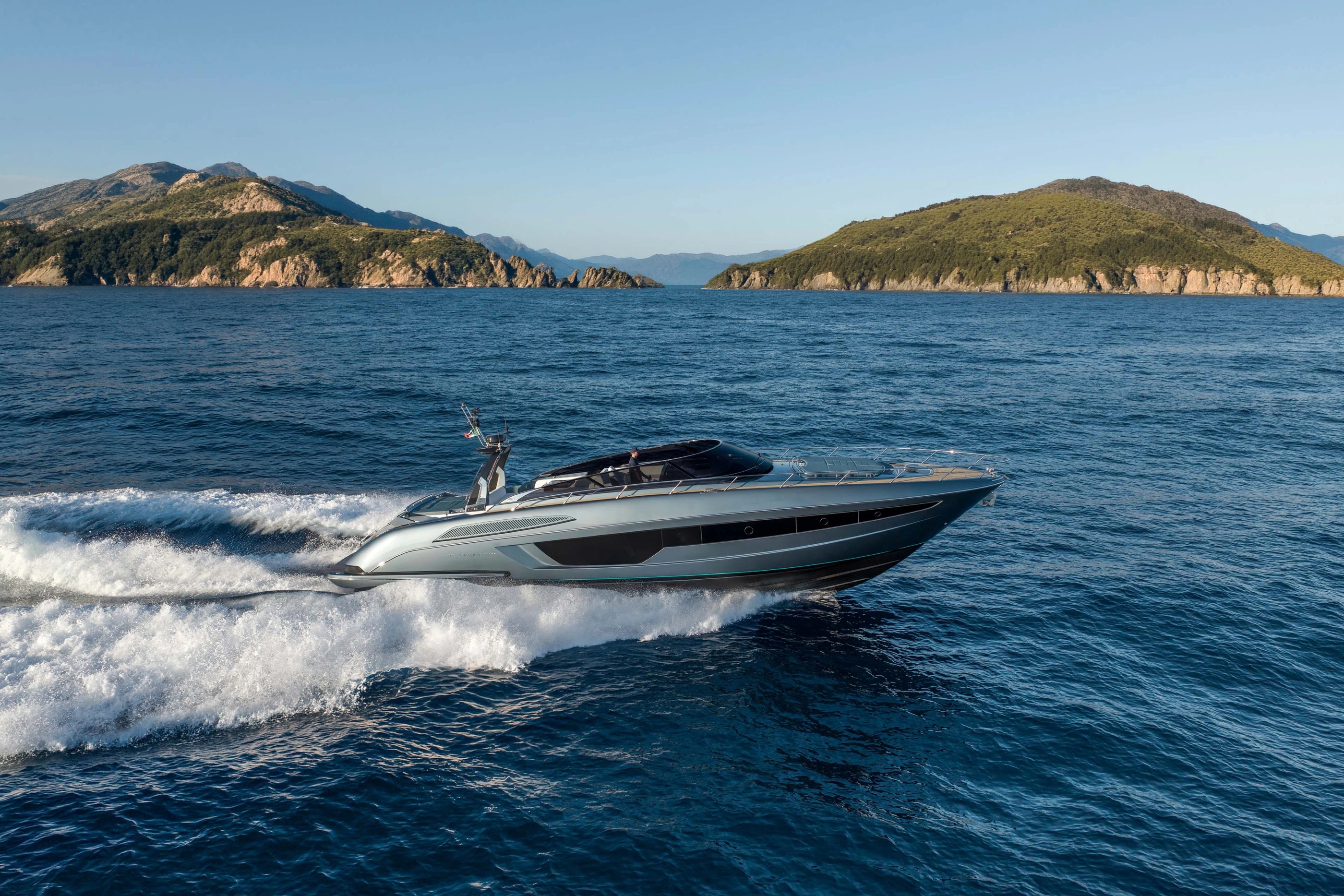
The profile photograph gives that change a useful context. The dark upper edge travels through the cockpit and towards the stern, held above a long hull window. Timber at the bow and bathing platform introduces a warmer horizontal plane below it. The silhouette remains recognisable at a distance because those relationships are kept clear, rather than interrupted by too many competing accents.
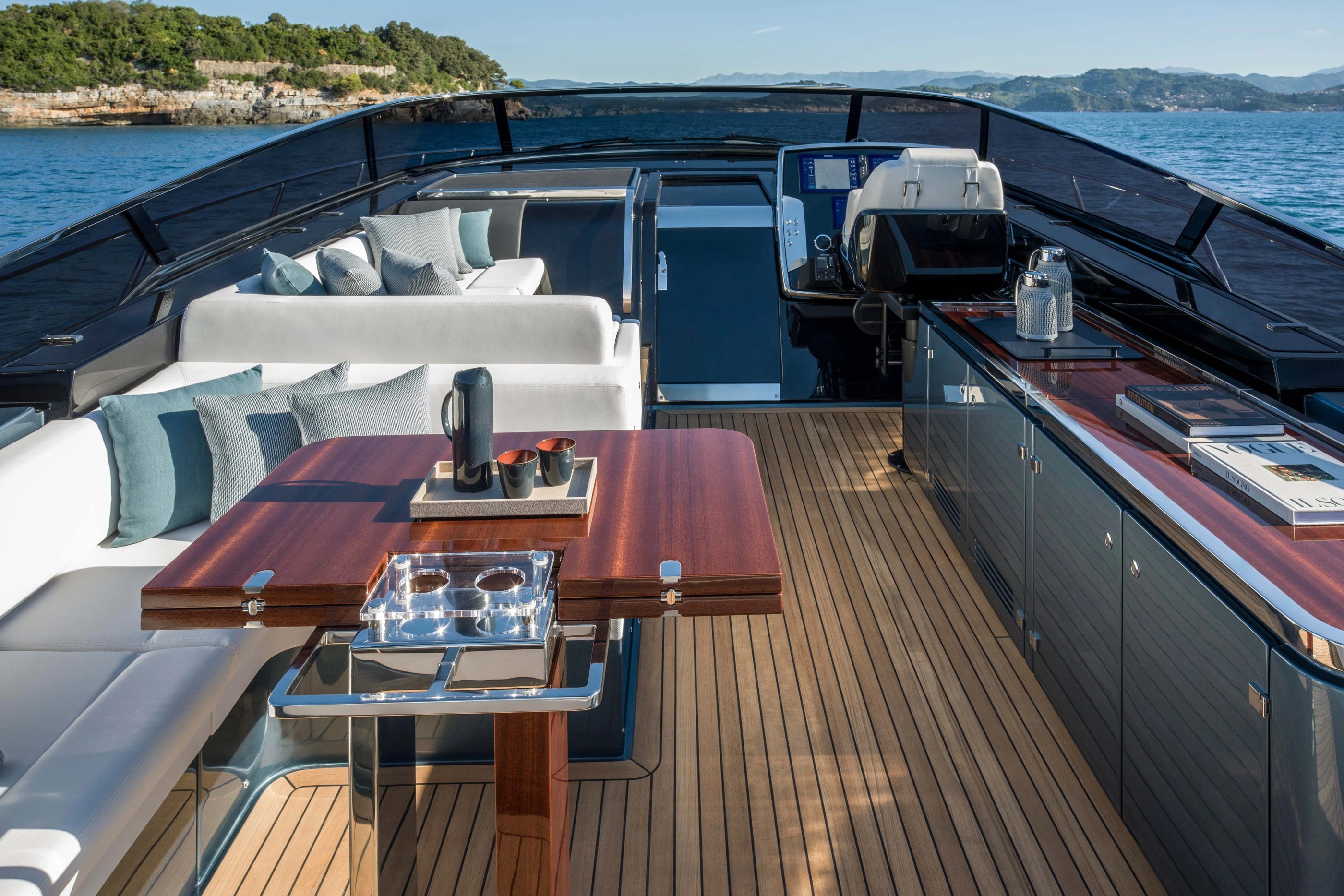
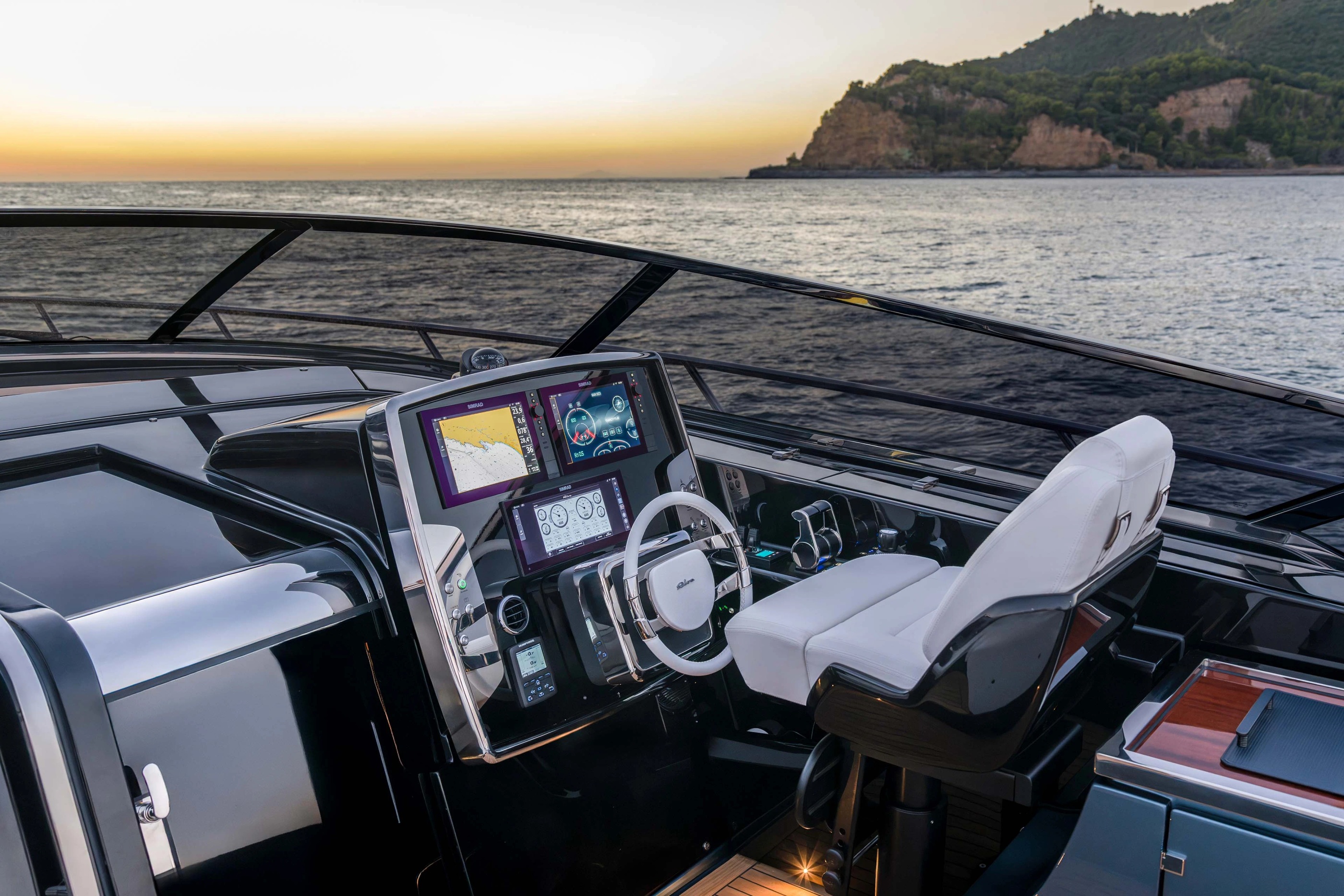
The helm image then brings the same line close to the person. Glass, frame and control position become parts of one arrangement. This is where exterior styling earns a second reading: the element seen as a contour from outside is also the boundary around an occupied space. The photographs allow that relationship to be considered without claiming a particular result in a sea trial.
A cockpit that has a centre
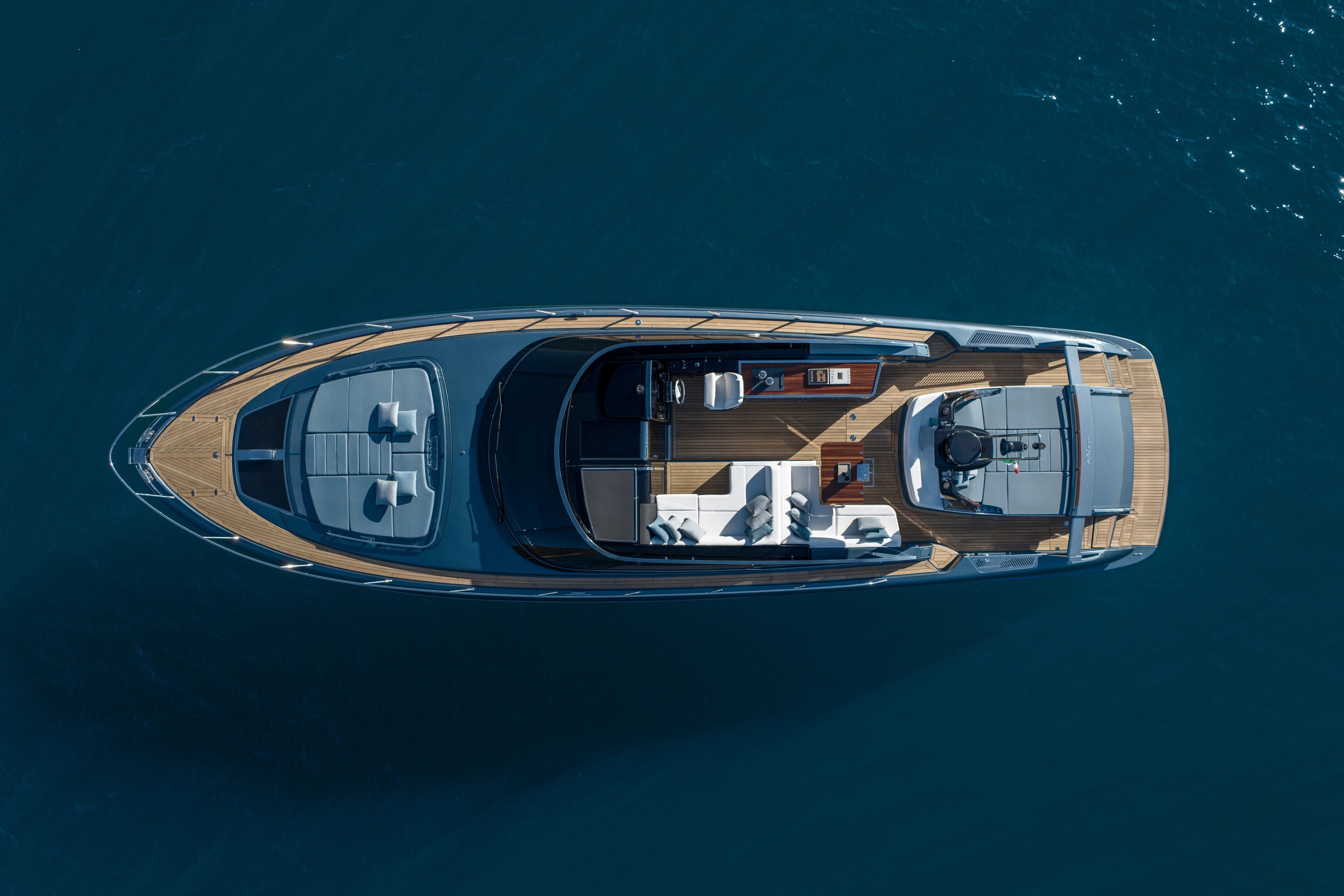
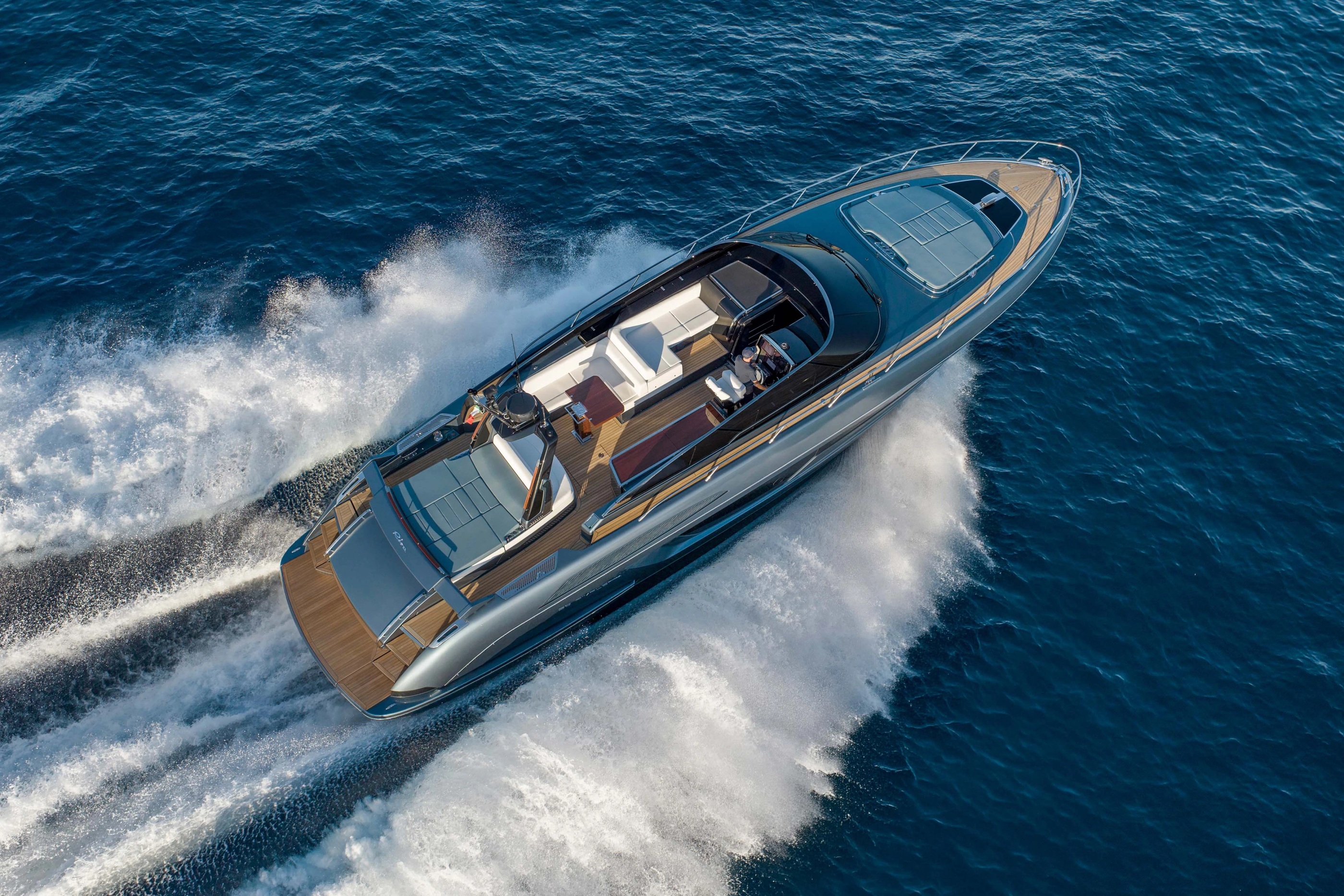
From above, the cockpit’s different activities remain legible. Seating and a table establish a gathering place aft of the helm, while the route through the boat stays visible as a separate movement. The layout is compact enough to be read as one composition, with the table giving the social area a definite centre.
In the closer cockpit photograph, pale upholstery stands against darker surfaces and the warm timber underfoot. The contrast does more than decorate the room. It helps the eye distinguish the places to sit from the surrounding structure, giving each element a clear role within the broader outline of the open yacht.
For an owner, the useful question is how the arrangement corresponds to the intended day. A short outing for two and a longer afternoon with guests place different demands on a cockpit. Consider where people sit, how they pass one another and which surfaces become part of everyday use. The photograph becomes a practical design reference when it helps make those movements imaginable.
The view from above
The aerial image is particularly revealing because it removes the drama of a running profile. Bow, windscreen, cockpit and stern can be read together, with each occupying a clearly defined part of the boat. The changing width and shape of those spaces give the eye a route from one end to the other.
This is the pleasure of a well-chosen overhead view: it adds information rather than repeating the same silhouette at a slightly different angle. The relationship between the sunbathing area and the central cockpit becomes clearer, as does the position of the helm within the upper structure. The image offers a plan-like reading while remaining a photograph of the actual model.
The running photographs provide a complementary scale. They show how the whole composition sits on the water, with the coastline supplying a larger frame. They belong to the manufacturer’s model presentation. The visible wake is not a measurement of speed, range, comfort or efficiency, and no such result is inferred from it here.
Below the open deck
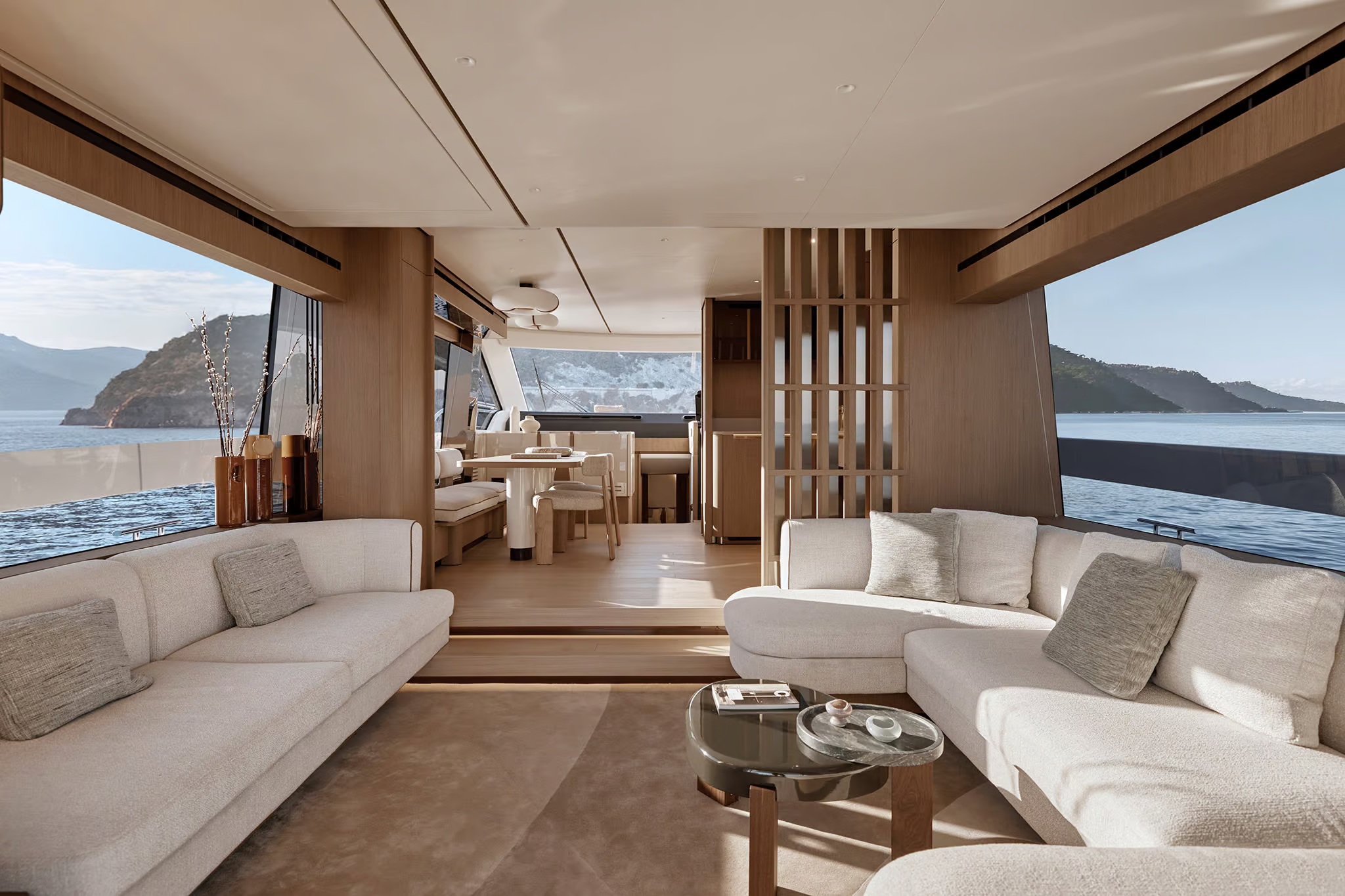
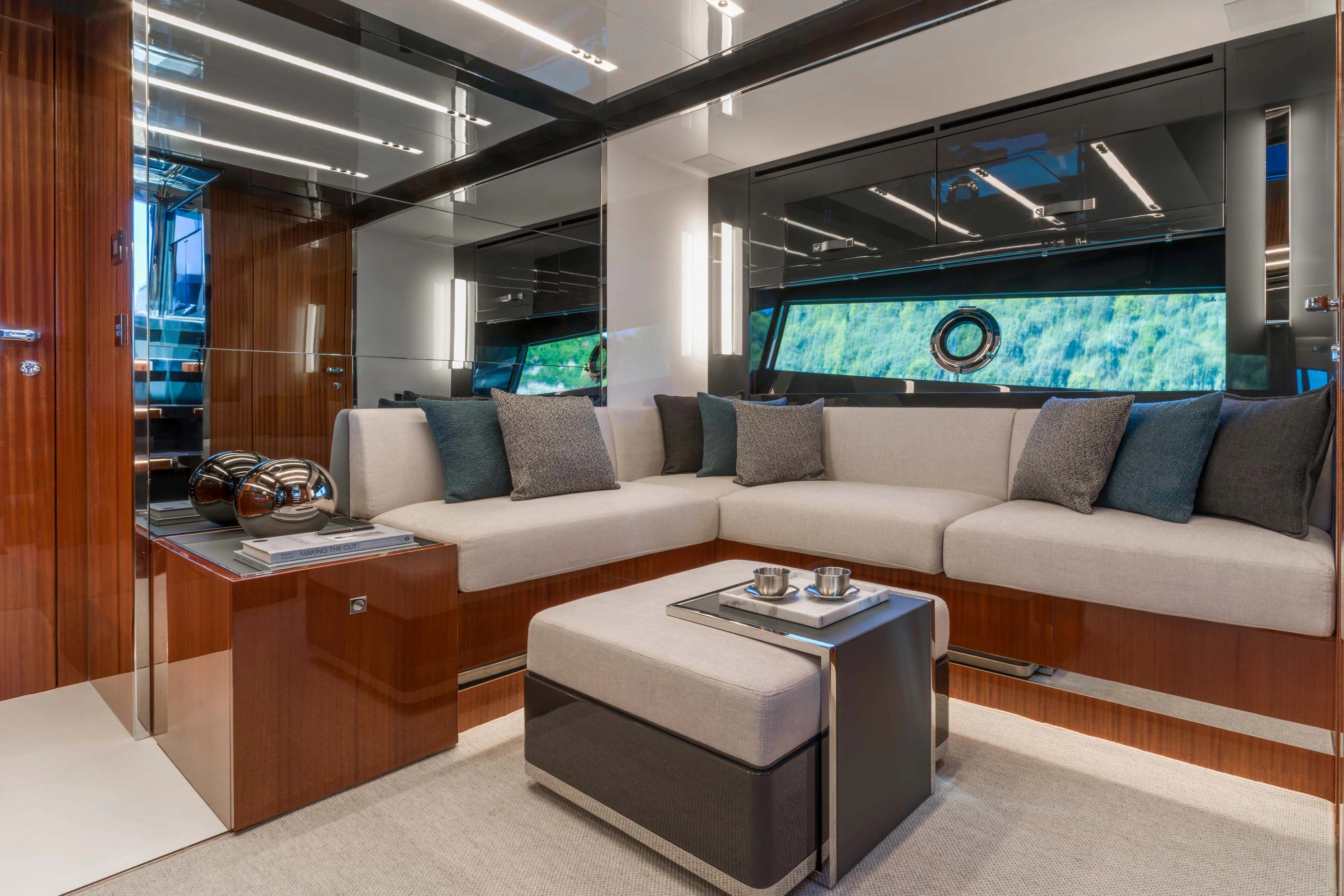
The saloon photograph changes the mood without abandoning the exterior’s clear contrasts. Pale seating sits within polished timber and darker detailing. A substantial side window brings daylight into the room, while smaller lines of light and joinery organise the space overhead. The room feels related to the yacht above it through the treatment of surfaces and edges.
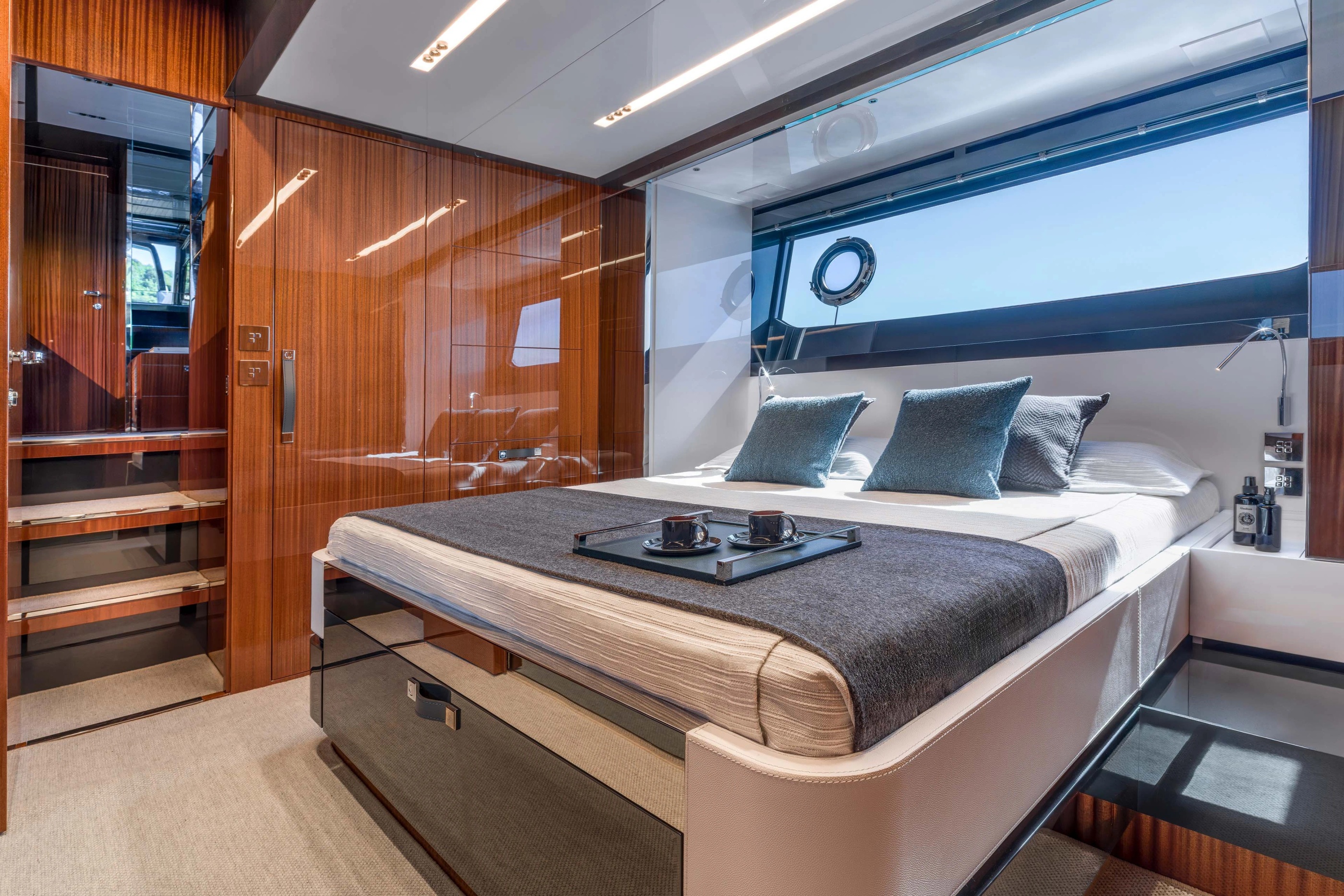
The cabin view is more contained. Upholstery gives the bed a softer centre, with cabinetry and the window defining the surrounding architecture. Comparing these two interiors is useful because a day aboard can extend beyond the open cockpit. A place to withdraw, change or remain indoors becomes part of how the yacht is understood.
Riva’s current model page lists two-cabin-plus-crew and three-cabin configurations, alongside two engine selections. These combinations should be kept separate. The selected cabin photograph does not establish the precise layout of every available arrangement. A prospective owner should compare the appropriate drawings and the intended use of each space before treating one configuration as the default.
A precise model identity
The current technical record labels its figures preliminary. It gives an overall length of 17.27 metres and a maximum beam of 4.74 metres, with separate entries for the available engine and accommodation combinations. That structure is worth preserving in any comparison: a model name is not an exact measurement, and a figure from one power package should not migrate into another.
The design story does not need every available number to remain useful. Its central subject is the connection between an open profile and its occupied spaces. Dimensions and configuration identify the boat being discussed; the photographs explain why its arrangement deserves attention. Each type of evidence contributes something the other cannot supply alone.
The configuration, kept clear
| Item | Current published record | Before comparing or ordering |
|---|---|---|
| Overall length | 17.27 m | Distinguish LOA from hull and waterline length |
| Maximum beam | 4.74 m | Read alongside the current arrangement drawings |
| Accommodation | Two cabins plus crew or three cabins | Confirm the exact selected layout |
| Engine choices | MAN V8 1000 or MAN V8 1200 | Keep configuration-specific figures together; data is preliminary |
The table is an orientation to the manufacturer’s record, not a quotation or a sea-trial report. A considered comparison begins with the actual layout and equipment combination. It then becomes possible to discuss the daily life of the boat with a clearer picture of which version is under consideration.
An open boat with a complete outline
The 56’ Rivale Super is most persuasive when its images change scale. A broad profile establishes the line; the overhead view explains the arrangement; the helm and interior photographs show how the outline becomes an occupied setting. The story moves through the boat rather than circling the same running shot.
That is a substantial design ambition for an open yacht. The silhouette remains the immediate attraction, but the cockpit gives it a daily purpose. The renewed windscreen belongs to both: a recognisable contour from afar and a closely considered edge around the people who will spend time within it.
Sources & credits
Methodology and sources
Independent design interpretation of Riva’s current model record, Ferretti Group’s September 2026 announcement and official model photographs. Technical data is labelled preliminary by the maker; engine and cabin combinations remain distinct. No onboard visit, measured performance or personal handling assessment is claimed.