The Range Rover SV offers a useful lesson in how a large, restrained object can acquire character through small surfaces. A pale ceramic control, a narrow metal finish and a field of patterned wood do not need to change the silhouette to change the interior’s emphasis. The original SV material programme is worth revisiting as a design study in touchpoints, contrast and the relationship between front and rear.
Start with the material, not the badge
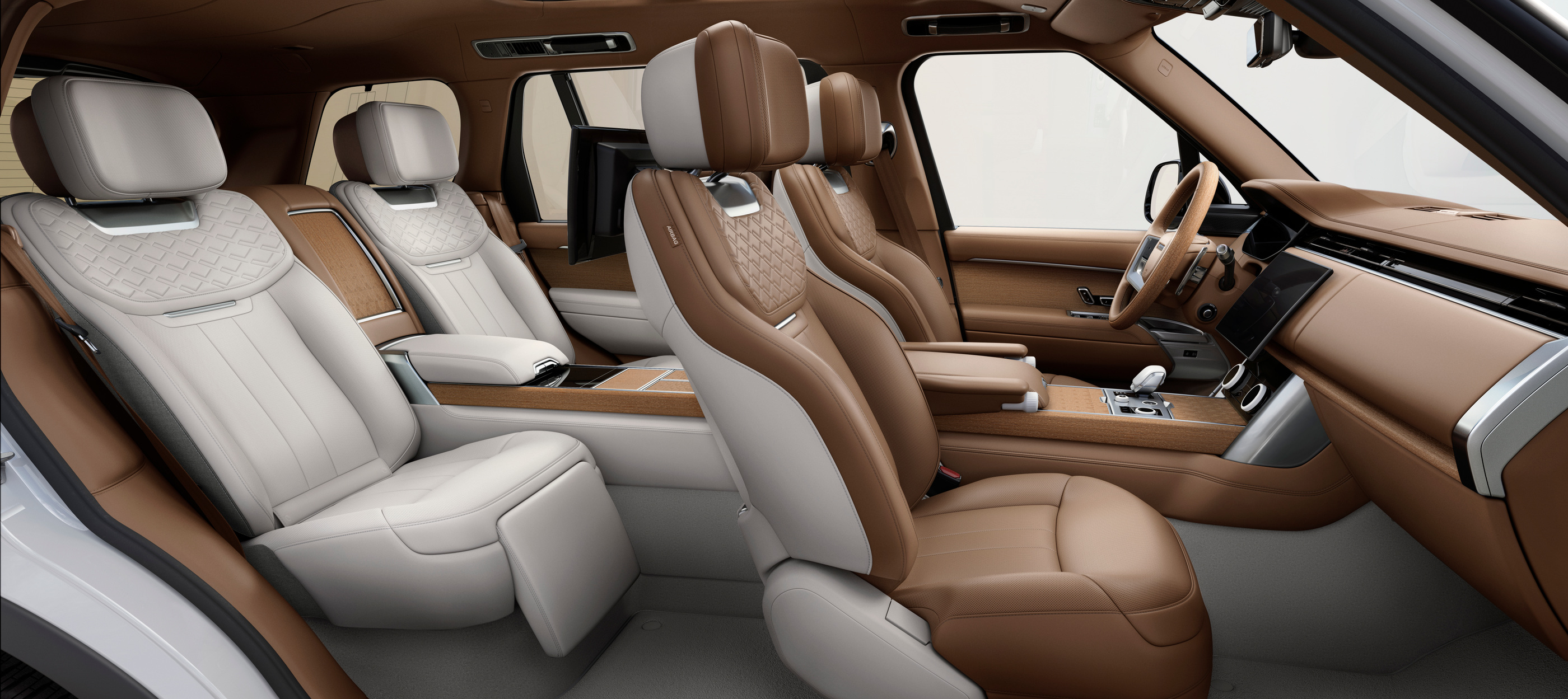
The official photographs issued with the December 2021 SV material presentation show a controlled palette. In the Serenity interior, warm brown, pale upholstery and lighter controls occupy clearly separated areas. Each material has room to be recognised. The interest is in the transition between them: the console is not an isolated decorative object but a route through the cabin.
This article examines that documented original programme and its named imagery. It does not turn a 2021 announcement into a new launch, or assume that every treatment remains orderable in every market today. A current configurator, model-year specification and written dealer quotation would be needed to establish a particular new car’s equipment. The enduring subject here is the design logic, which is visible independently of an order book.
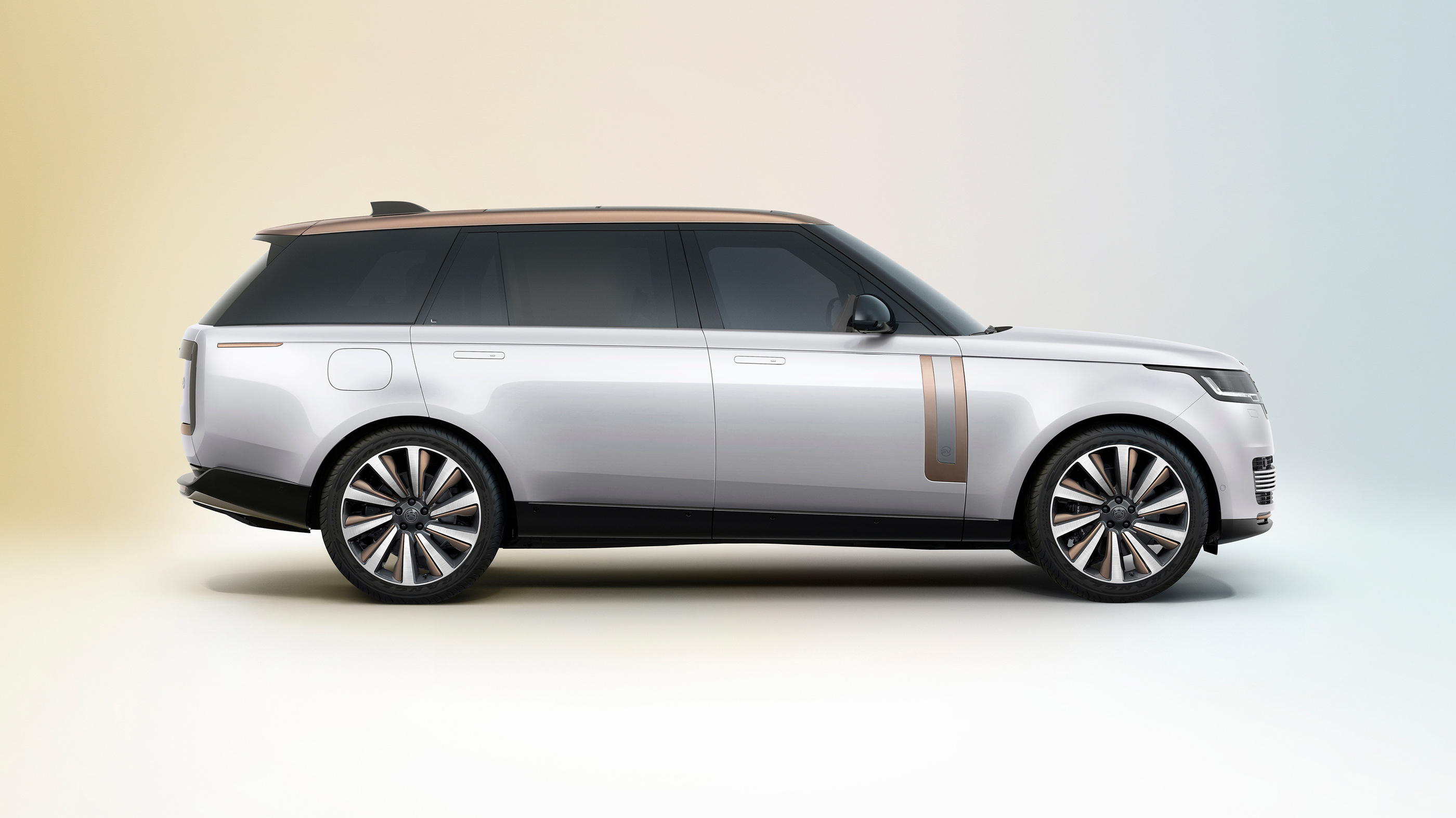
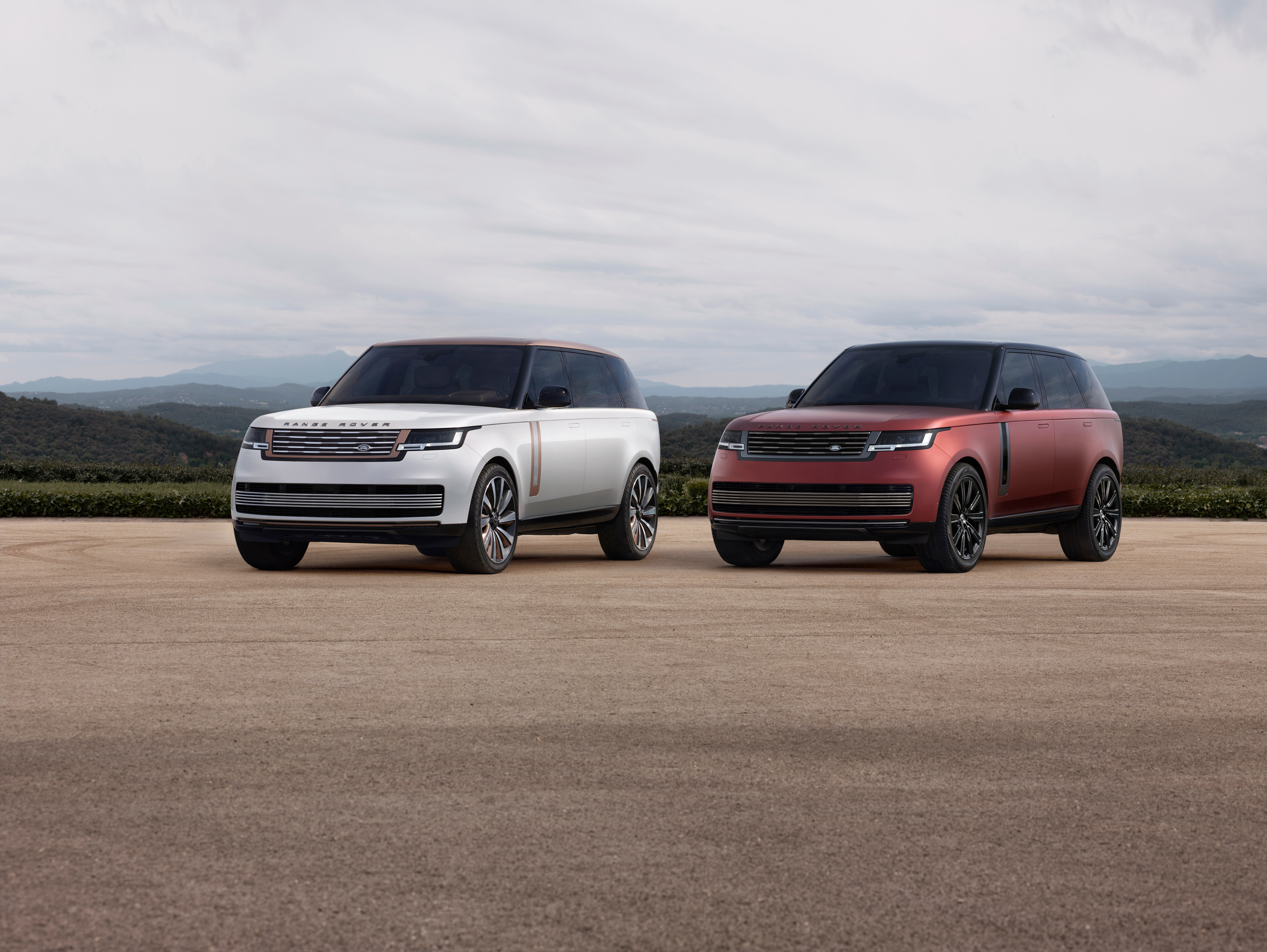
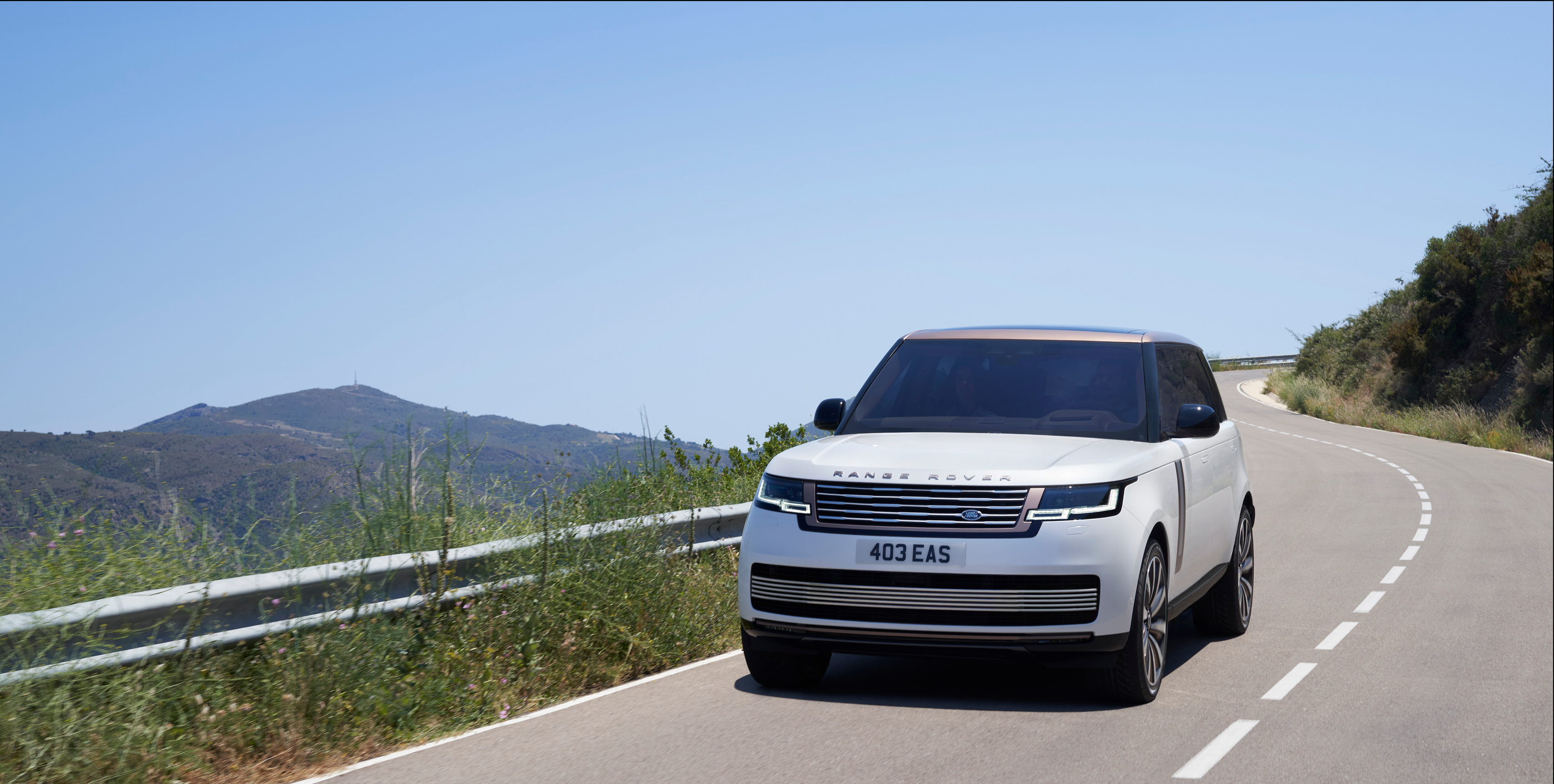
Seen from outside, the large, calm body provides an effective counterpart to the detailed cabin. The side-gill treatment and wheel finishes are relatively contained interventions. They allow a particular specification to become recognisable without covering the body in additional lines. The distinction is one of emphasis within an established form, rather than an entirely different visual identity.
Ceramic changes the reading of a control
Land Rover’s original account identifies ceramic in the gear selector and selected rotary controls. It describes a manufacturing process involving moulding, sintering and finishing. The exact production sequence belongs to the manufacturer; the photograph gives the reader something else to examine: the way a pale, rounded form sits among metal edges and darker interfaces.
The selector becomes a small sculptural object. Its light surface separates it from the adjoining wood while the metal surround makes its boundary clear. The result is more subtle than adding a new graphic to a familiar control. The visual change comes from the material’s apparent continuity and from the transition between curved and machined edges. A photograph cannot establish its temperature or resistance in use.
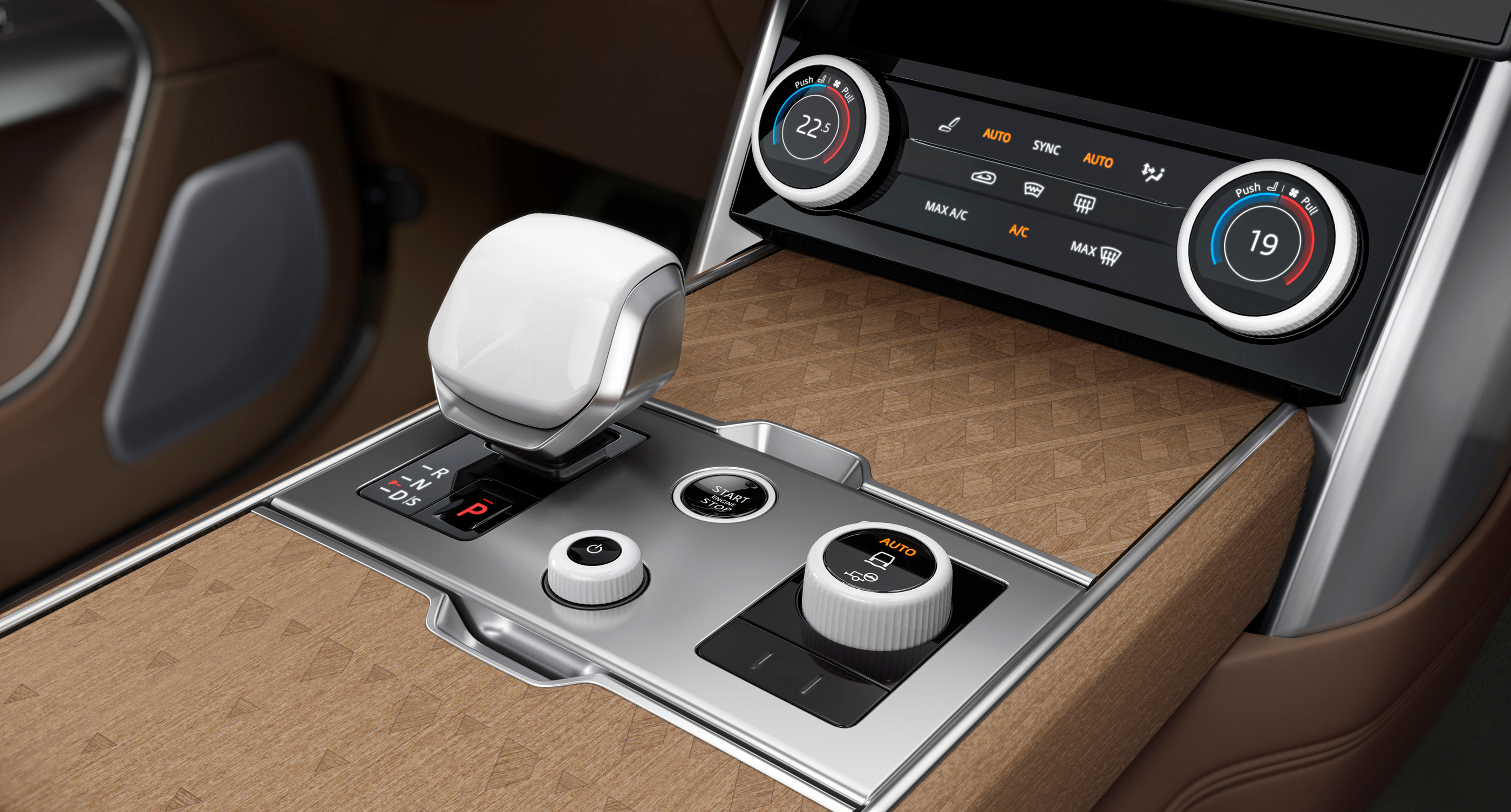
The same restraint appears in the rotary controls. Their repetition creates a readable group while variations in size and surrounding space establish a hierarchy. The controls are not treated as miniature display panels competing for attention. They contribute to the cabin’s material composition while retaining the visual identity of things intended to be operated.
Wood as a gradual change of scale
The optional marquetry described in the original SV programme uses many small pieces to build a larger field. In the close photograph, the pattern is quiet enough to coexist with the grain rather than overwhelm it. From further away it reads as a surface; closer in, individual geometric elements become evident. That change of reading gives the console depth without requiring a strong colour contrast.
Land Rover associated an extended treatment with the long-wheelbase four-seat SV Signature Suite, including the centre console and deployable table. That is a specific configuration, not a feature to assume from the presence of an SV badge. The distinction matters because an interior photograph can easily tempt a reader to combine desirable elements from several different specifications into one imaginary standard car.
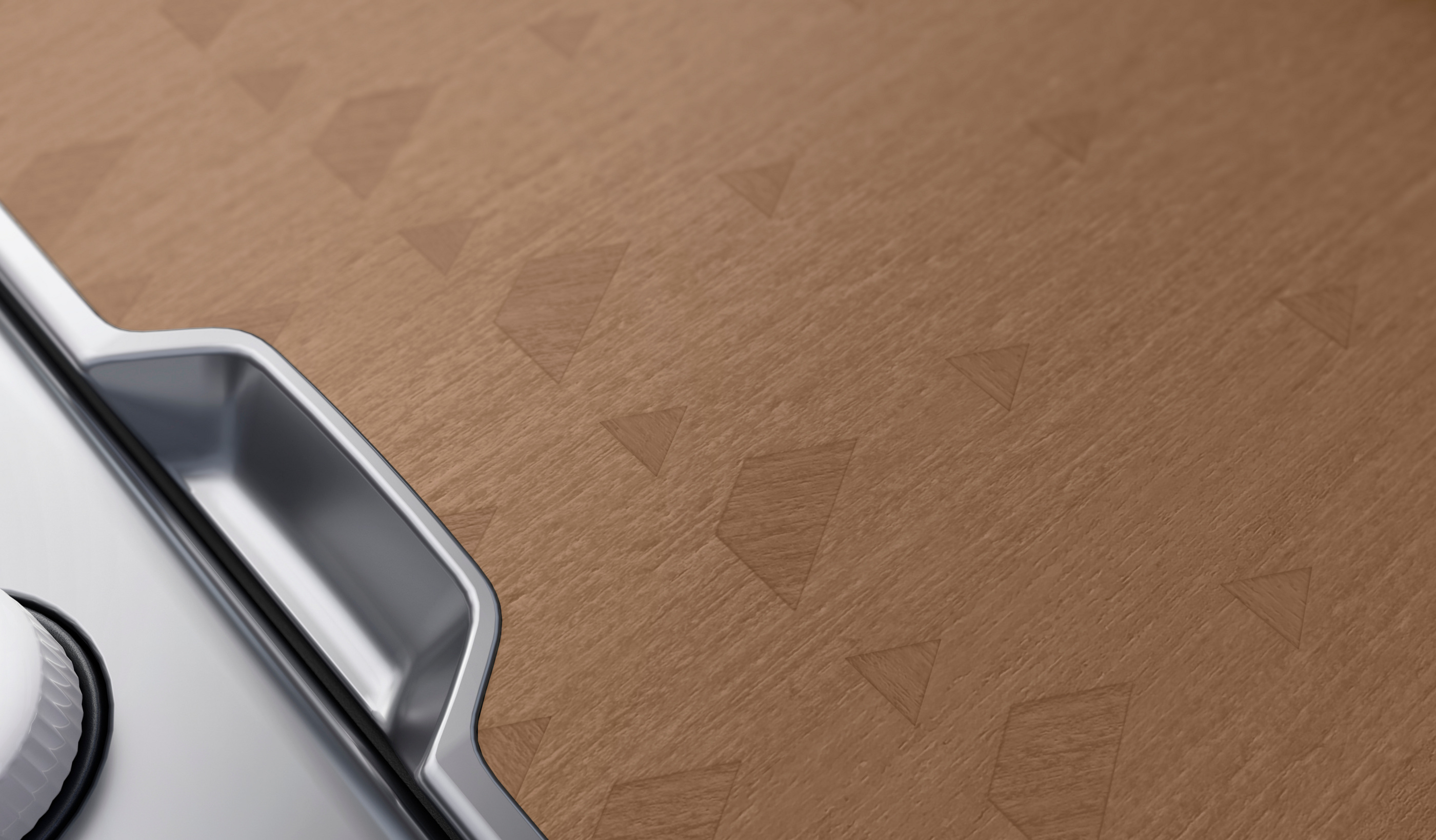
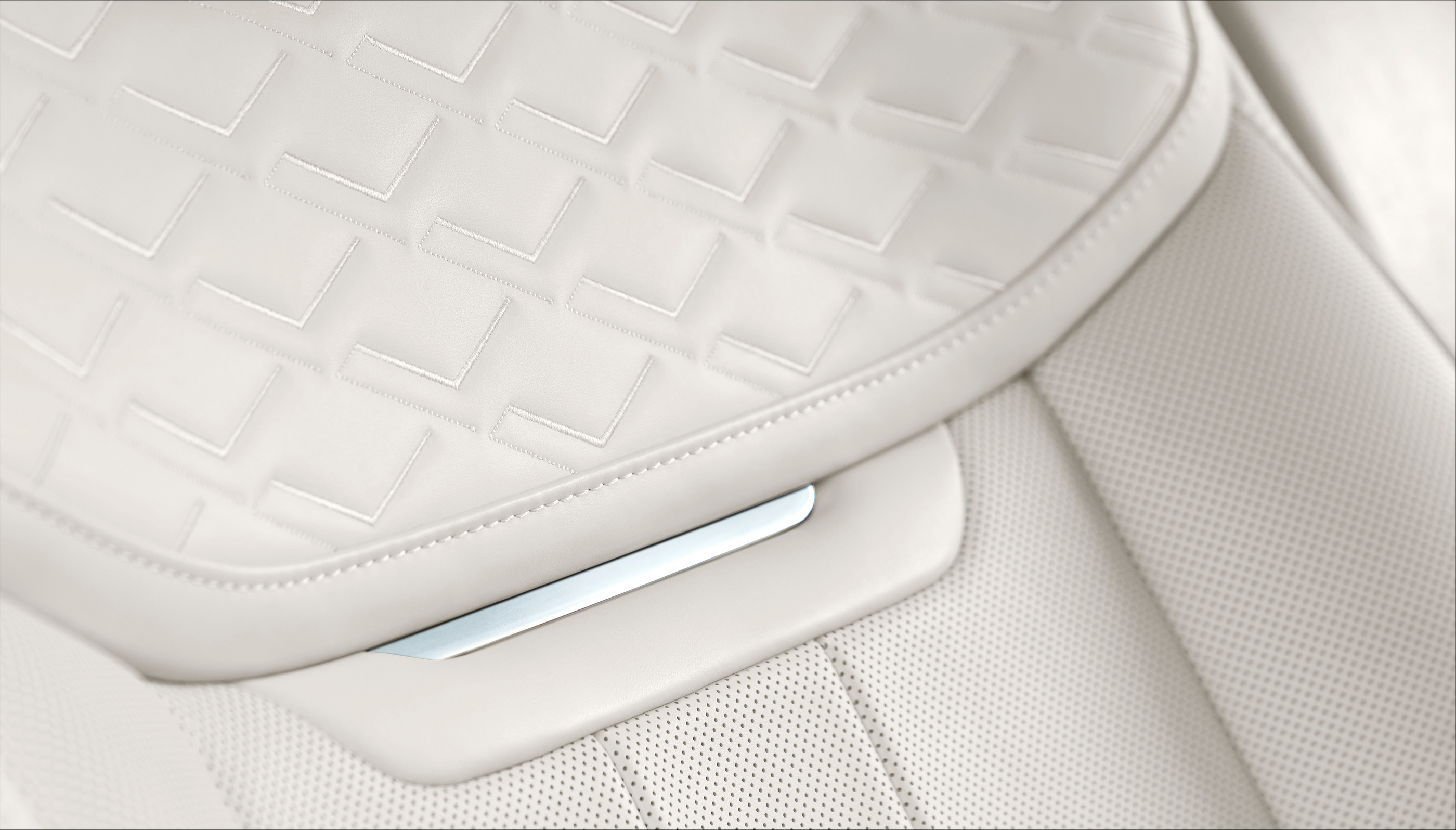
The design question is how a material can connect places. A patterned surface that extends through the cabin may create visual continuity between the front and rear occupants. A shorter treatment has a different emphasis. Neither can be judged properly through a tiny cropped detail alone: the wider cabin view is needed to explain where the pattern starts, where it stops and what interrupts it.
Serenity and Intrepid are separate readings
The original programme offered Serenity and Intrepid as named design themes. Their official photographs are useful precisely because they differ. The pale Serenity controls and warm adjoining finishes establish one balance; the darker Intrepid presentation gives the central objects another kind of contrast. These should remain identified as alternatives, rather than being blended into a supposedly universal SV interior.
That also changes the editorial image sequence. A wide Serenity cabin image first establishes the main palette. Ceramic and wood details then explain specific parts of it. A later Intrepid view introduces a comparison, with the change named explicitly in the caption. This is more informative than using whichever photograph happens to fit an empty slot, because the reader can follow the relationship between the frames.
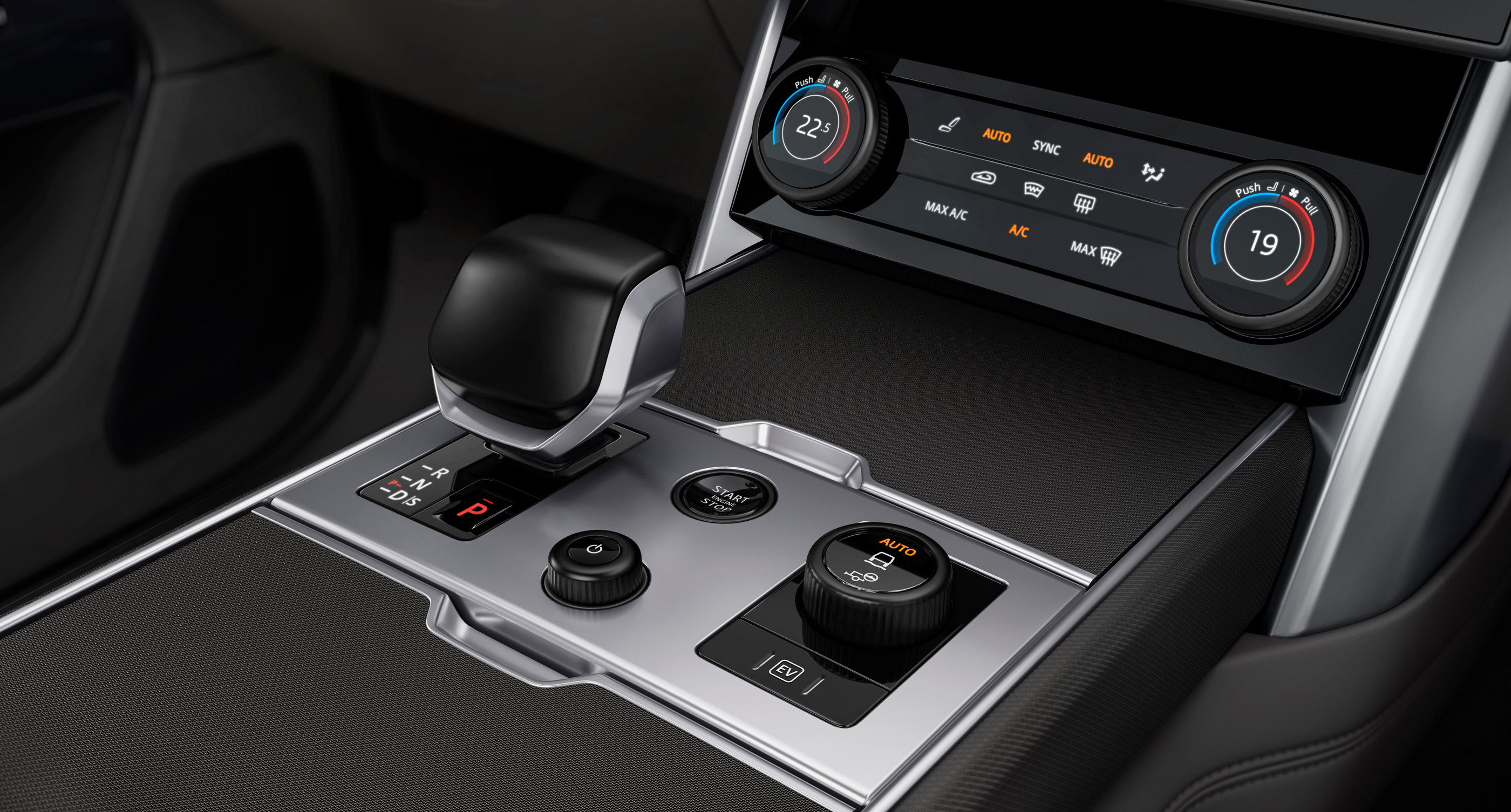
The two themes show why personalisation is a compositional task. Choosing one attractive material in isolation does not guarantee an attractive cabin. Its surroundings determine whether it becomes a focal point, a connecting field or an unwanted interruption. A coherent brief should describe those roles before adding more finishes to the list.
A useful specification conversation
| Question | What to identify | Why the distinction matters |
|---|---|---|
| Which vehicle? | Model year, market and wheelbase | Photographs from the original programme do not establish today’s local specification |
| Which theme? | Serenity, Intrepid or another documented combination | Alternative palettes should not be silently combined |
| Which controls? | Exact ceramic components and finish | A material name does not describe every cabin touchpoint |
| Which wood treatment? | Veneer, optional marquetry and its extent | A detail crop cannot establish the full installed configuration |
| Which seating arrangement? | Exact rear-seat and console layout | The four-seat Signature Suite is a specific arrangement |
This is the point at which a material-led article can become practically useful without posing as a buying consultation. It gives the reader a vocabulary for asking better questions. A photograph of a beautiful control can prompt an exact enquiry about its finish; a cabin image can prompt a discussion about front-to-rear continuity. The final specification still needs its own evidence.
The Luxe Digital view
The SV material programme is strongest when small changes reinforce the calm of the larger interior. Ceramic, wood and metal can each have a distinct role without turning the cabin into a sample collection. The lesson extends beyond this particular vehicle: restraint depends on making the relationships precise, rather than merely reducing the number of visible details.
The SV material programme is strongest when small changes reinforce the calm of the larger interior.
Sources & credits
Sources and methodology
Independent automotive design and material analysis of the named official records and imagery, checked on 16 October 2026. Original presentation and model dates are retained. Images show the named commission or identified model configuration. Independent automotive design analysis of official model or individual-commission records and imagery. No drive, visit or interview is claimed. Original dates, alternative specifications, source compositions and drawings remain identified. Current availability, price and measured performance are not inferred.