The most persuasive case for the new Audi A6 allroad is a journey that changes character: a motorway, a mountain road, a gravel approach, and luggage that was never going to fit into a weekend bag. Its fifth generation gives that familiar brief a more assertive shape, while a new plug-in hybrid adds another way to organise the miles.
An estate with its own proportions
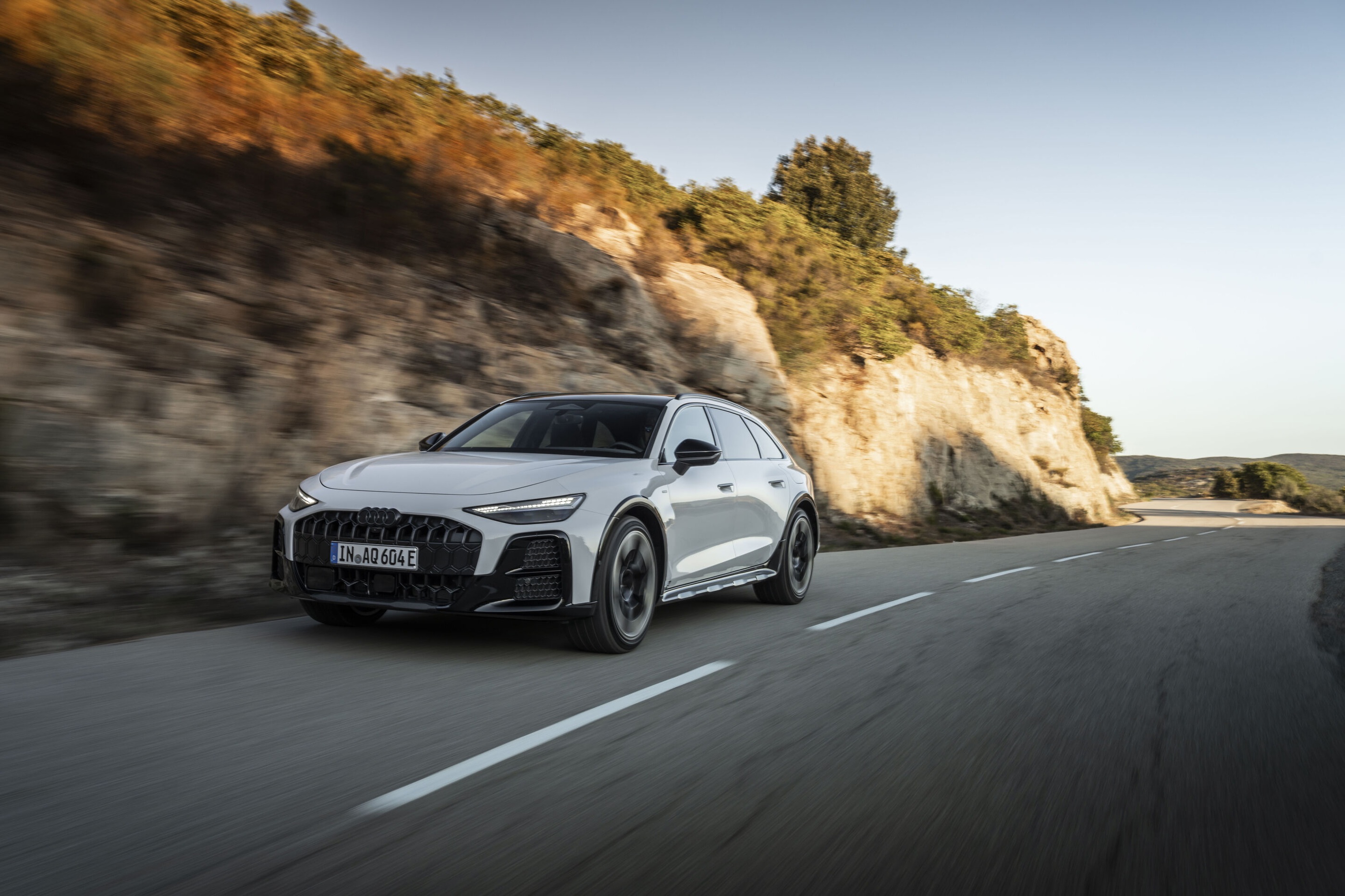
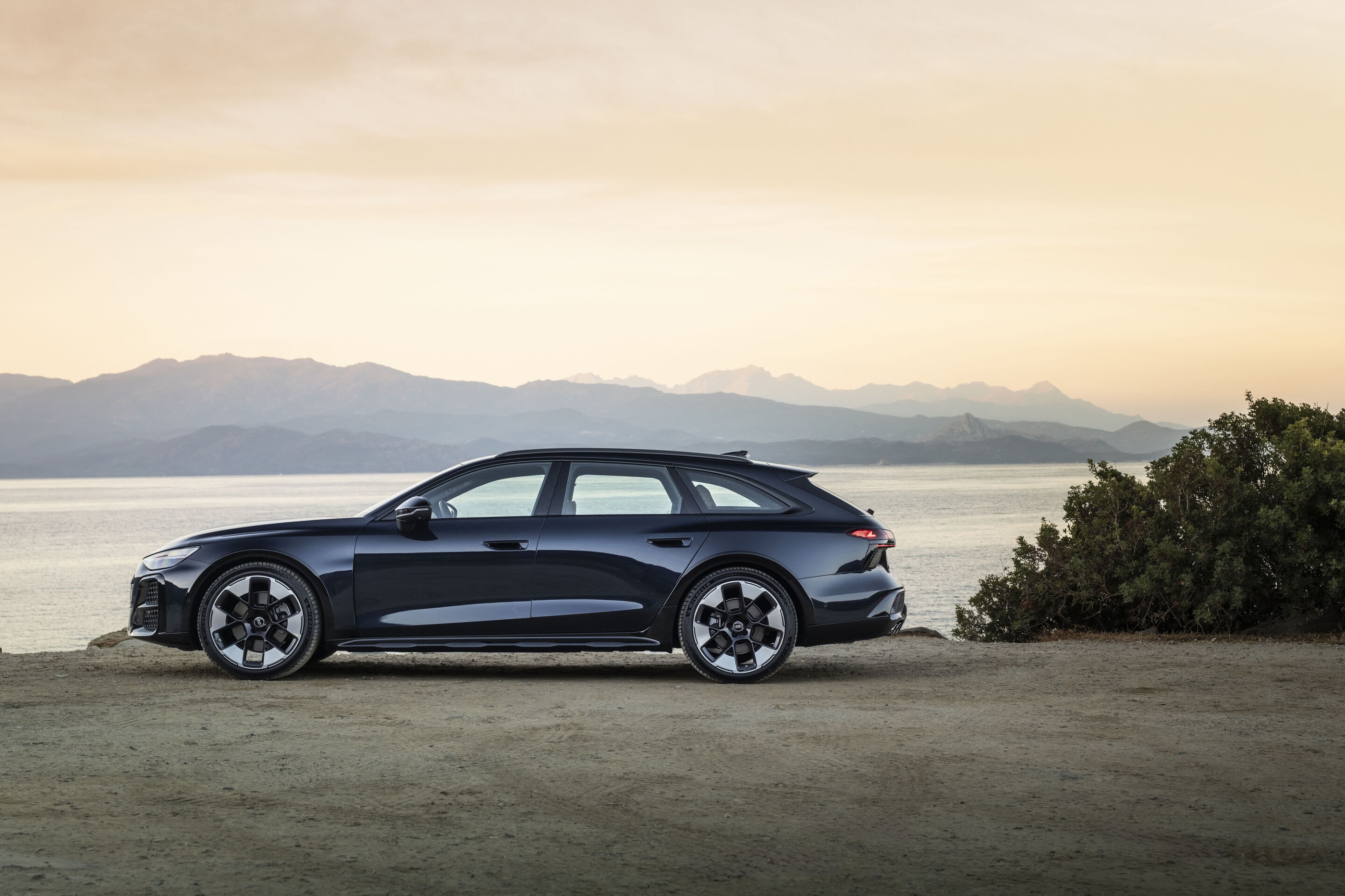
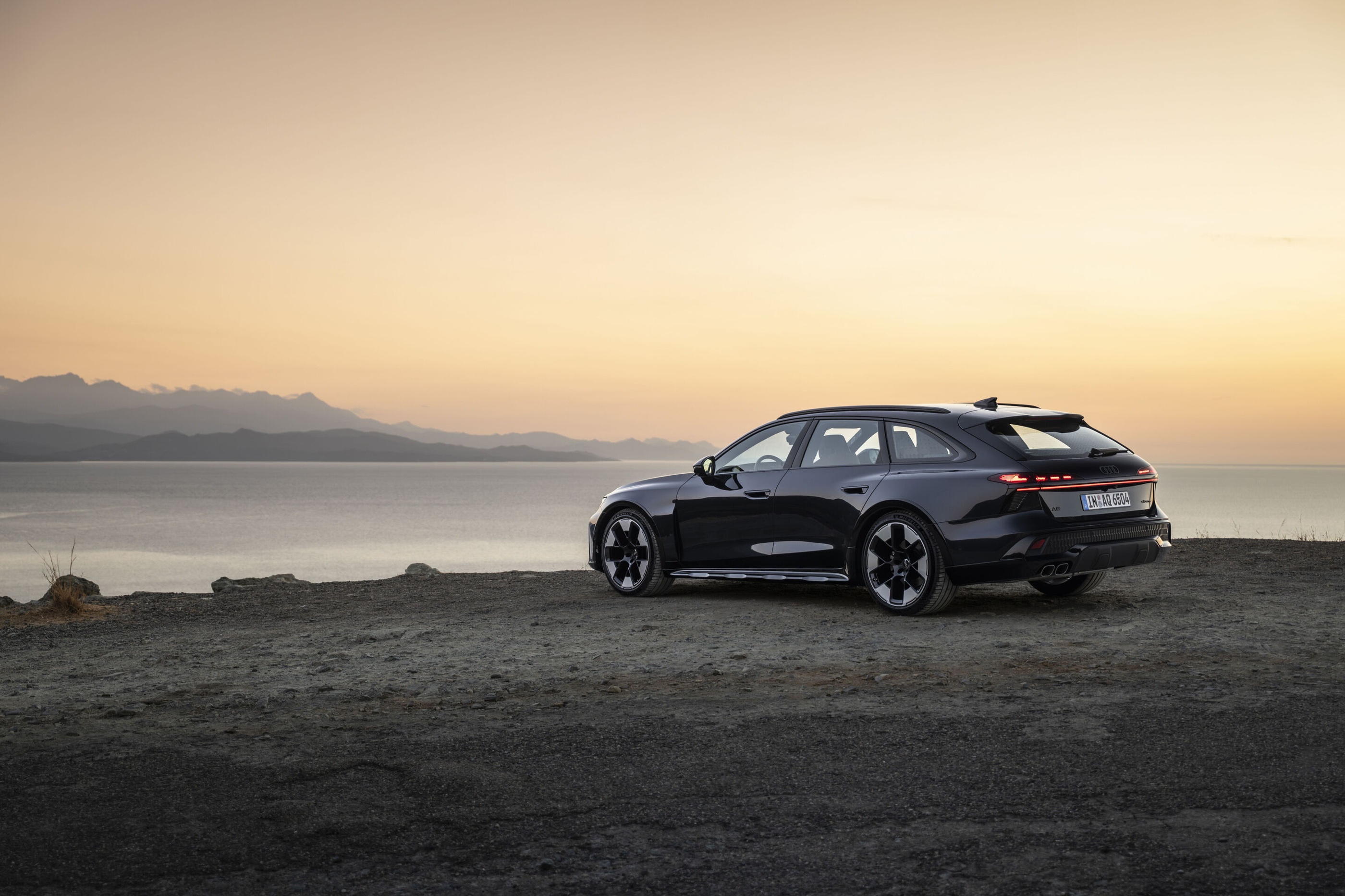
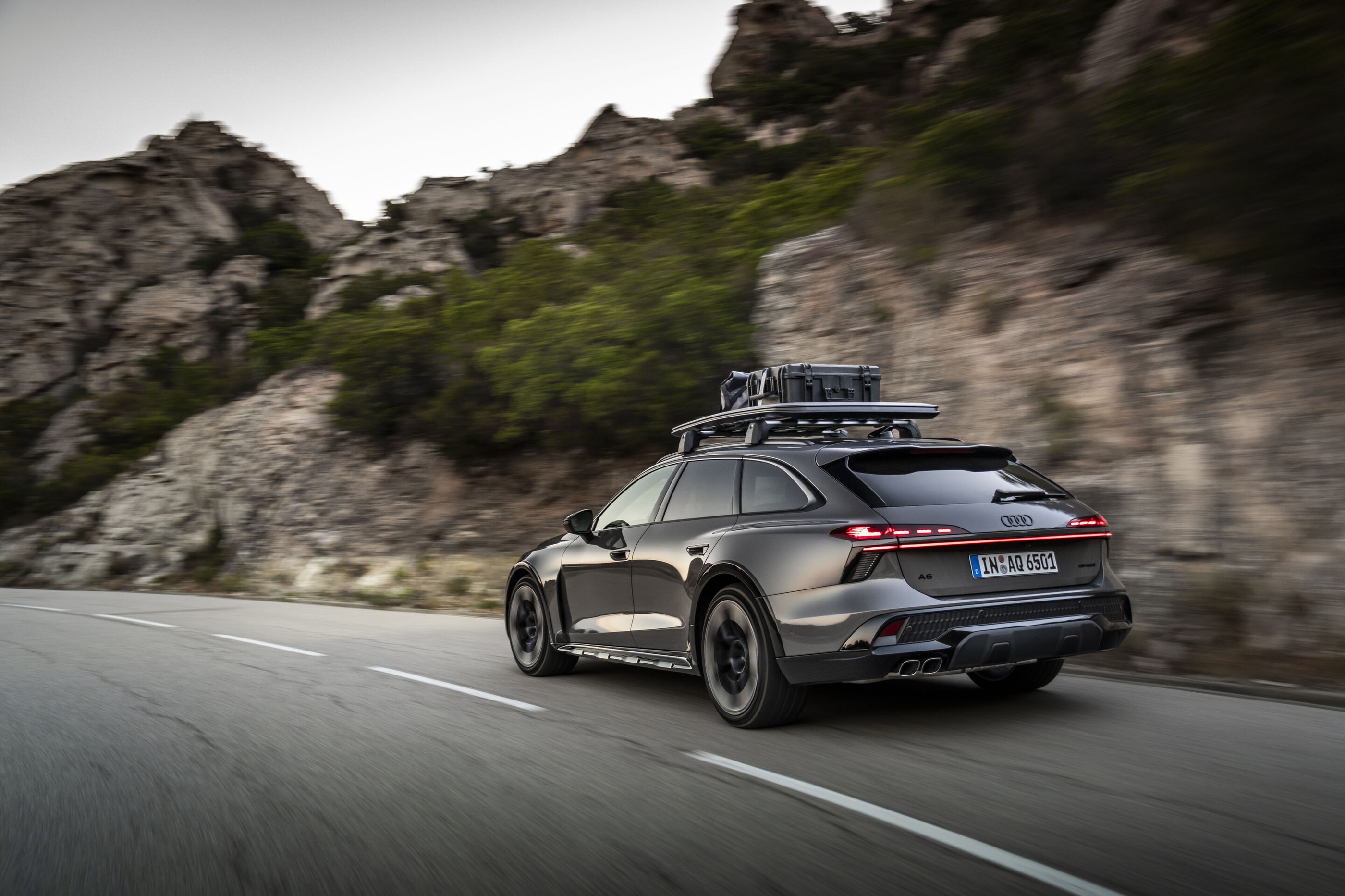
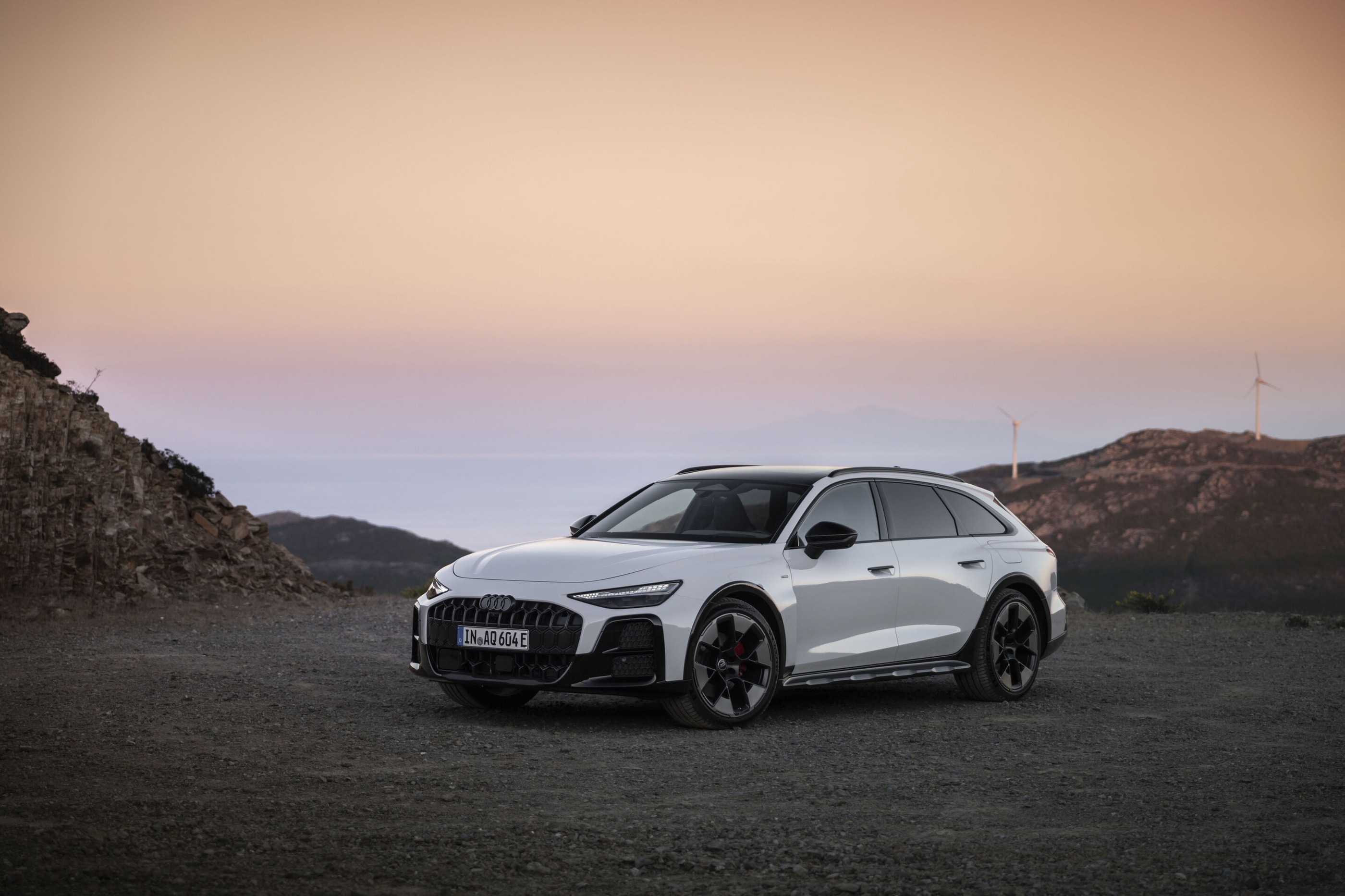
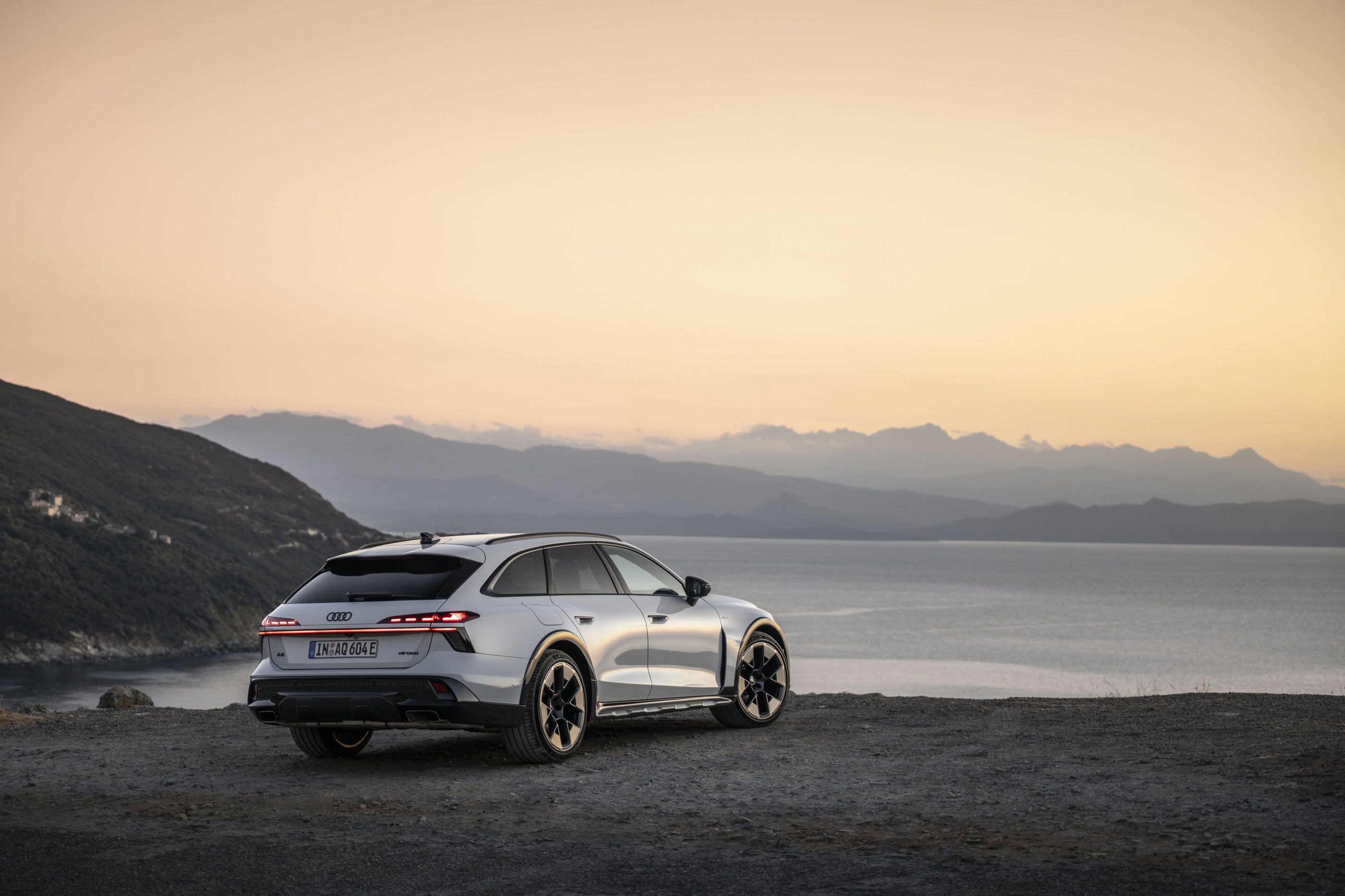
An allroad has always needed to look credible in two settings: outside a well-designed hotel and on the less accommodating road that leads to it. This generation makes the distinction from an ordinary A6 Avant unusually visible. The body is 111mm wider than the Avant, according to Audi’s launch dossier, with pronounced wheel arches and a separate vocabulary for the lower surfaces. It is a substantial change in stance, rather than a trim package that relies on a badge.
The upper body retains the long roof and relatively restrained glasshouse of an estate. Beneath it, the wheel-arch surrounds, side skirts and protective-looking front and rear treatments establish a tougher horizontal band. Hexagonal elements recur in the grille and lower details. The effect in the official photography is especially clear in profile: a continuous, useful-looking cabin above a much more emphatic chassis and wheel envelope.
Those proportions deserve attention before the colour chart. Audi quotes a body width of 1,986mm, rising to 2,099mm across the mirrors, and a length of 5,016mm. A discreet alternative to a large SUV is not necessarily a small car. Garage access, the width of an older village street and the parking space at a regular destination belong in the ownership brief just as much as the silhouette.
The last kilometres matter
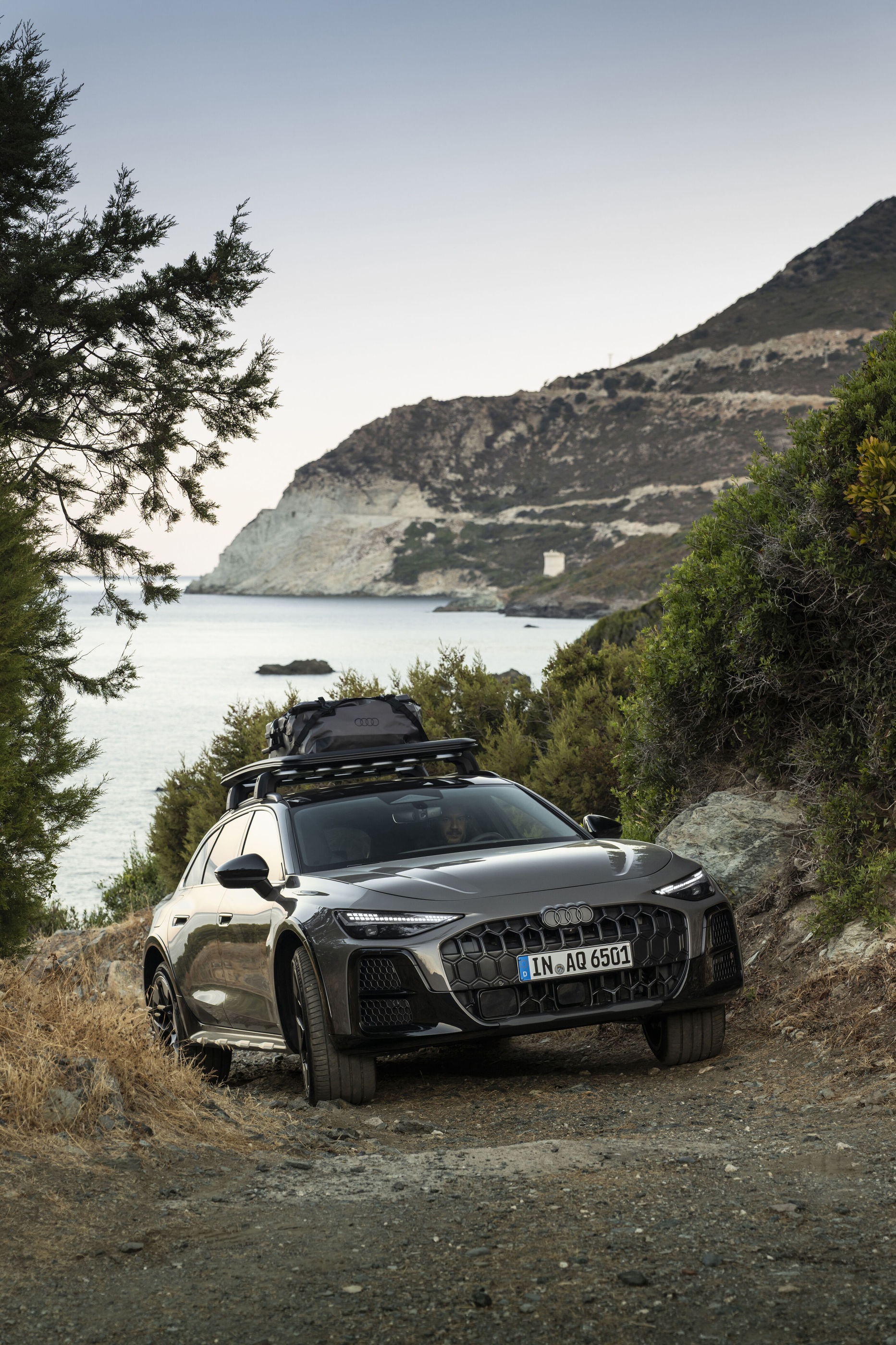
The allroad’s useful distinction is not a promise to conquer every landscape. It is the provision made for roads and approaches that ask more of a travelling car. Adaptive air suspension is standard. At its normal level, Audi places the body 34mm higher than an A6 Avant equipped with air suspension; the allroad system has a total adjustment range of 55mm.
The distinction between normal height and total adjustment matters. The latter is not an extra 55mm permanently available on top of the quoted ride height. Specific off-road modes raise the car, while a separate lift function is restricted to lower speeds. At faster road speeds the system can lower the body again. These are different settings for different circumstances, with operating limits described in the manufacturer’s technical dossier.
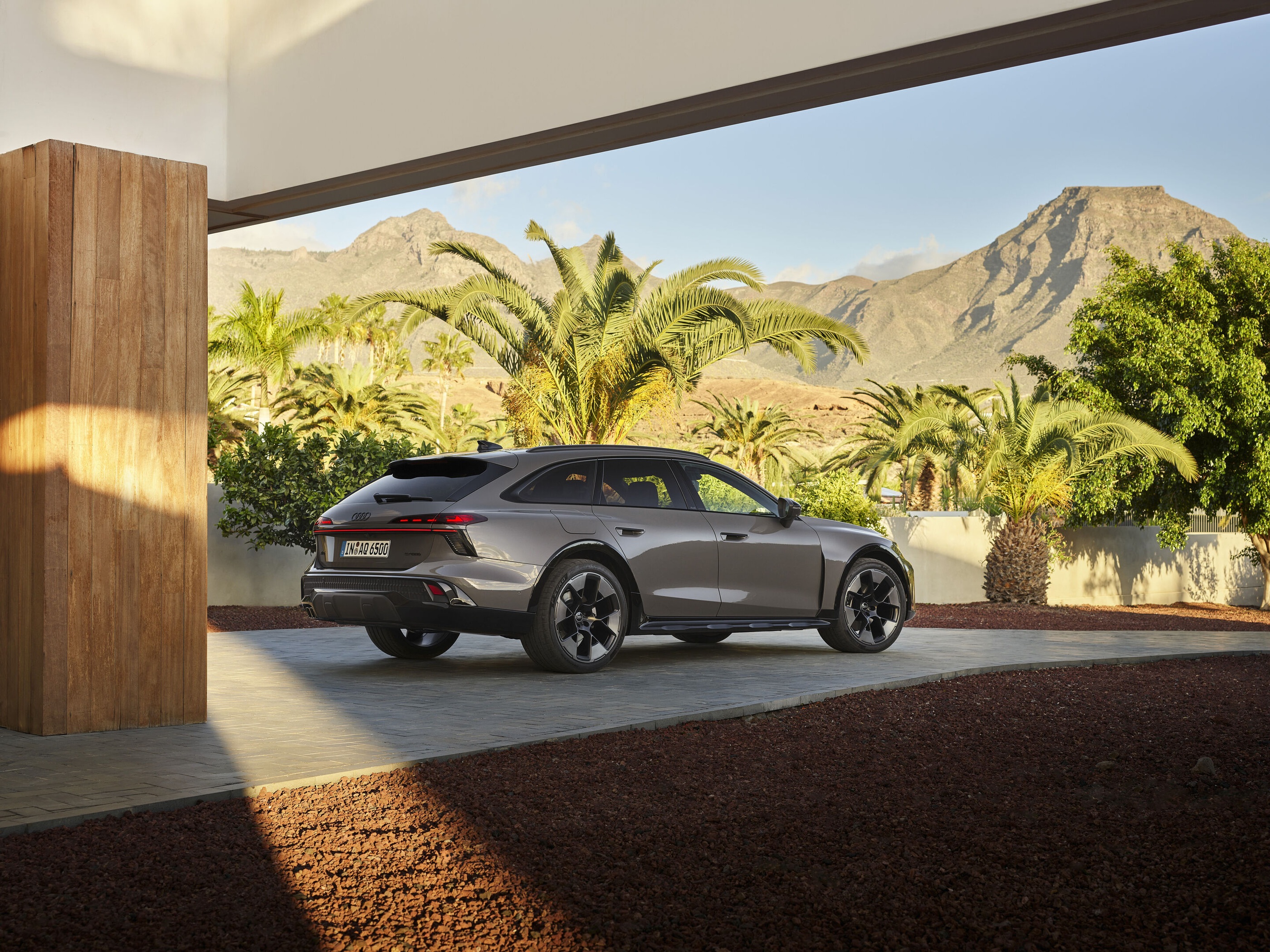
Wheel selection deserves the same practical reading. The standard diameter is 19 inches, with 20- and 21-inch alternatives. The largest option produces a particularly strong visual stance, but a frequent journey over damaged surfaces calls for a discussion about the complete wheel-and-tyre specification. The attractive configuration in a launch photograph is a starting point for that conversation, not an automatic answer.
A cabin for the hours between places
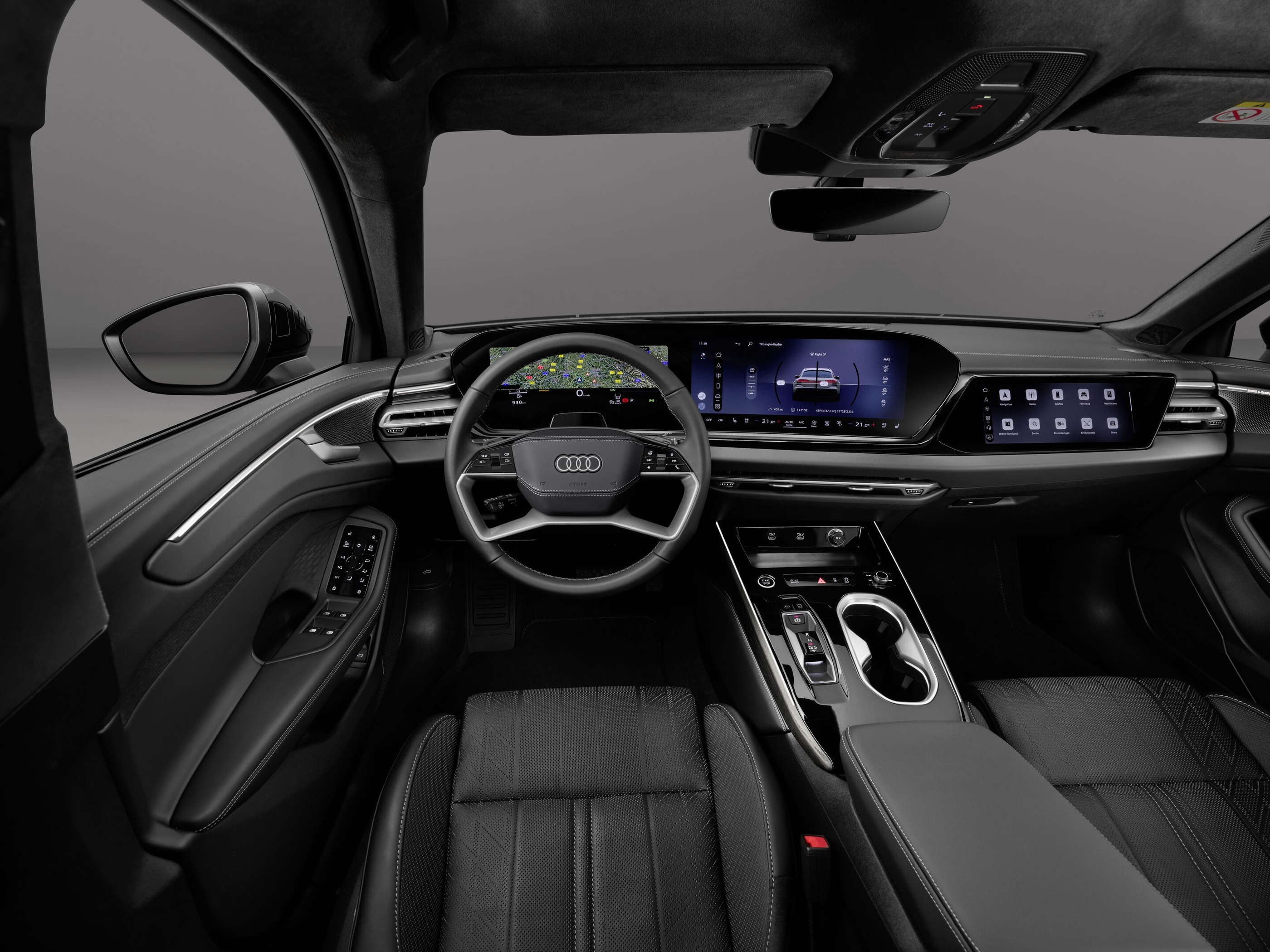
Inside, the broad sweep of the MMI panoramic display is the organising feature. Audi combines an 11.9-inch driver display with a 14.5-inch central touchscreen; a 10.9-inch passenger display is optional. The image sequence shows how those screens sit within the dashboard rather than simply describing a tally of digital inches. The steering wheel, console and surrounding trim remain important visual anchors.
The more consequential choices for a long journey may be less immediately photogenic. Audi lists individual contoured seats with ventilation and massage, four-zone climate control and a dimmable panoramic glass roof among the comfort provisions. The precise equipment fitted depends on the selected configuration and market. A thoughtful specification would begin with the people who regularly travel in the car, then consider light, seat support and luggage before accumulating decorative finishes.
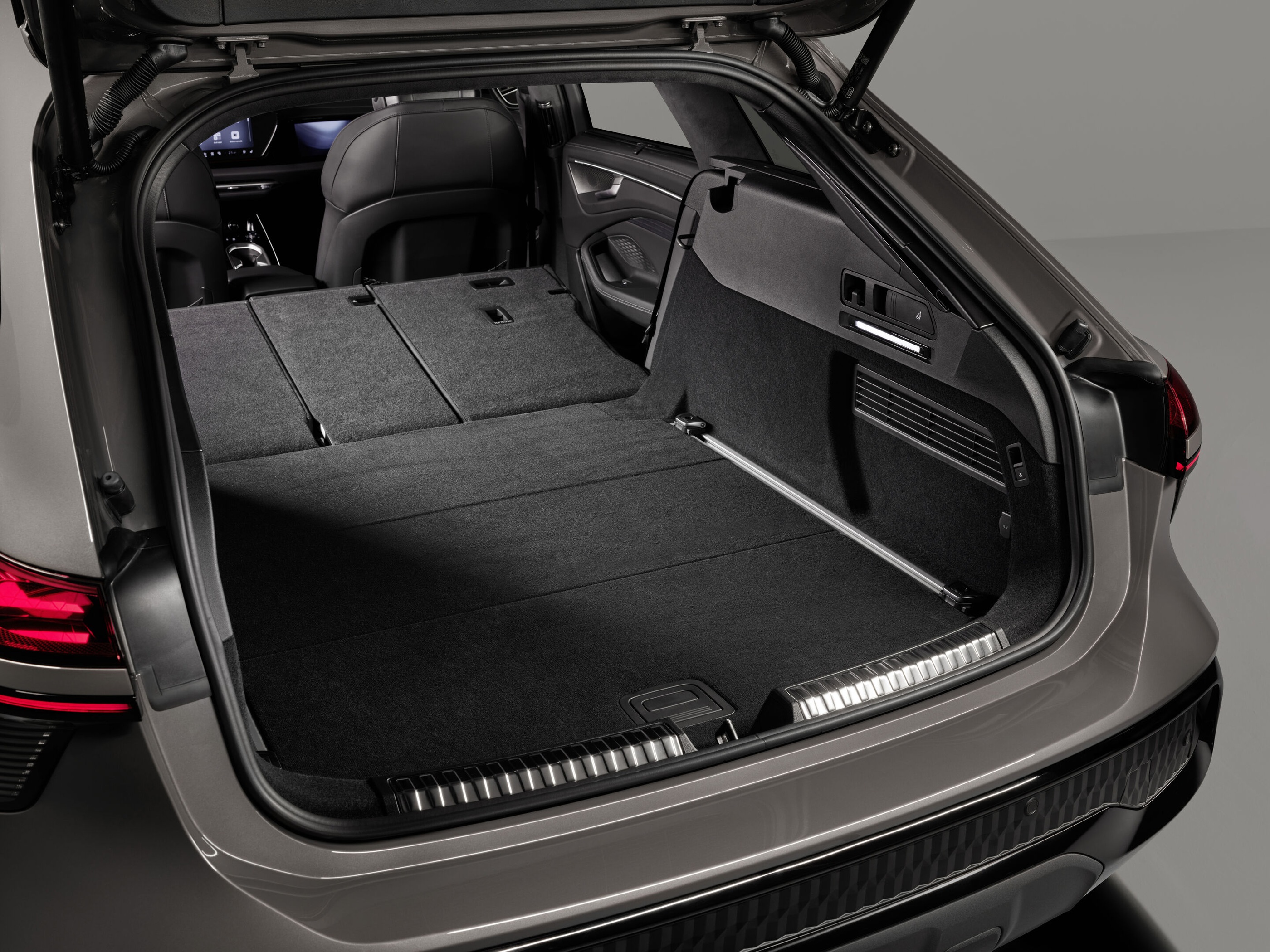
The same logic extends behind the rear seats. The 40:20:40 folding arrangement lets the cabin adapt to an awkward object without treating the entire second row as a single piece. In the official luggage-compartment photograph, the folded seats and long load floor explain the estate format more effectively than a lifestyle accessory could. It is the relationship between occupied space and usable space that gives this car its purpose.
Two ways to organise the journey
For the first time, the A6 allroad is offered as a plug-in hybrid. The European launch specification pairs a 2.0-litre petrol engine with an electric motor for a system output of 270kW, or 367PS, and 500Nm. Its battery holds 25.9kWh gross and 20.7kWh usable. Audi quotes up to 95km of combined WLTP electric range and AC charging at up to 11kW.
For an owner with charging at home or a regular destination, the appeal is the possibility of handling a useful portion of local travel electrically while retaining a combustion engine for longer stages. The quoted range is a laboratory-derived maximum, not a prediction for a particular winter commute. Temperature, route, speed, load and specification will affect the distance achieved. The question is how charging fits into the actual week, rather than whether the headline figure covers an imagined ideal day.
The alternative is a 3.0-litre V6 TDI rated at 220kW, or 299PS, and 580Nm, with MHEV plus technology. It also uses an electrically powered compressor. That is a different kind of electrification from the rechargeable e-hybrid: the diesel should not be read as offering the plug-in model’s battery capacity or electric-range figure. For a predominantly long-distance brief, the comparison begins with journey patterns and load requirements, not simply which power output is larger.
| European launch specification | A6 allroad e-hybrid | A6 allroad V6 TDI |
|---|---|---|
| Powertrain | 2.0-litre petrol plug-in hybrid | 3.0-litre V6 diesel, MHEV plus |
| Quoted output | 270kW / 367PS system | 220kW / 299PS |
| Quoted torque | 500Nm system | 580Nm |
| Luggage capacity, seats up / folded | 404 / 1,423 litres | 466 / 1,497 litres |
| Quoted towing capacity | Up to 2,000kg | Up to 2,500kg |
| All-wheel steering | Standard | Optional |
The luggage and towing differences are worth placing beside the engine figures. Audi’s dossier gives the diesel a larger luggage compartment and a higher towing capacity. Actual towing suitability still depends on the approved vehicle configuration, trailer and applicable limits. Neither version is universally the better travelling companion; each answers a different pattern of use.
What quattro ultra is doing
Both European powertrains use quattro with ultra technology. The name does not mean that the rear axle receives drive torque continuously. Audi describes two clutches that can decouple parts of the rear drivetrain when all-wheel drive offers no useful advantage. A control strategy evaluates the driving situation and can reconnect the rear drive predictively.
That engineering is central to the new allroad’s brief: retaining access to all-wheel-drive traction while reducing drivetrain losses when it is not required. It should not be confused with a claim that tyres, surface conditions or speed no longer matter. Nor can a technical explanation substitute for an independent assessment of how the car behaves. The useful point for a prospective owner is to understand the system being specified, rather than rely on a generic idea of permanent quattro.
A broader brief, carefully specified
The fifth-generation allroad earns a place in the conversation about high-end travel because it treats the journey as a combination of settings and tasks. Its wider body gives it a distinct presence; the estate architecture keeps people, equipment and the load floor connected. Air suspension and the two electrified powertrains add choices that become meaningful when attached to a real itinerary.
Audi confirmed European dealership availability in October 2026. The next step for an interested reader is an exact market specification and a drive in the chosen configuration: the seats, wheels, steering equipment, charging arrangement and load requirements all deserve to be settled together. The strongest allroad brief begins with the places it will go and the life it must carry between them.
Sources & credits
Methodology and sources
This is an independent design and ownership analysis of the fifth-generation European A6 allroad, based on Audi’s June 2026 launch dossier and October 2026 quattro update, checked on 4 November 2026. It is not a road test. Specifications and availability refer to those European releases; local equipment and delivery terms require confirmation. WLTP figures are quoted manufacturer values. Official photography depicts different documented configurations, identified in captions; an accessory shown is not necessarily standard equipment.