CELESTIQ makes its most interesting proposition before the car is built. Cadillac invites a client into a design process in which colour, metal, upholstery and light have to become one coherent object. The result is an electric fastback, but the revealing subject is the commission: how a personal preference becomes something more considered than a selection from a catalogue.
A car that begins with a conversation
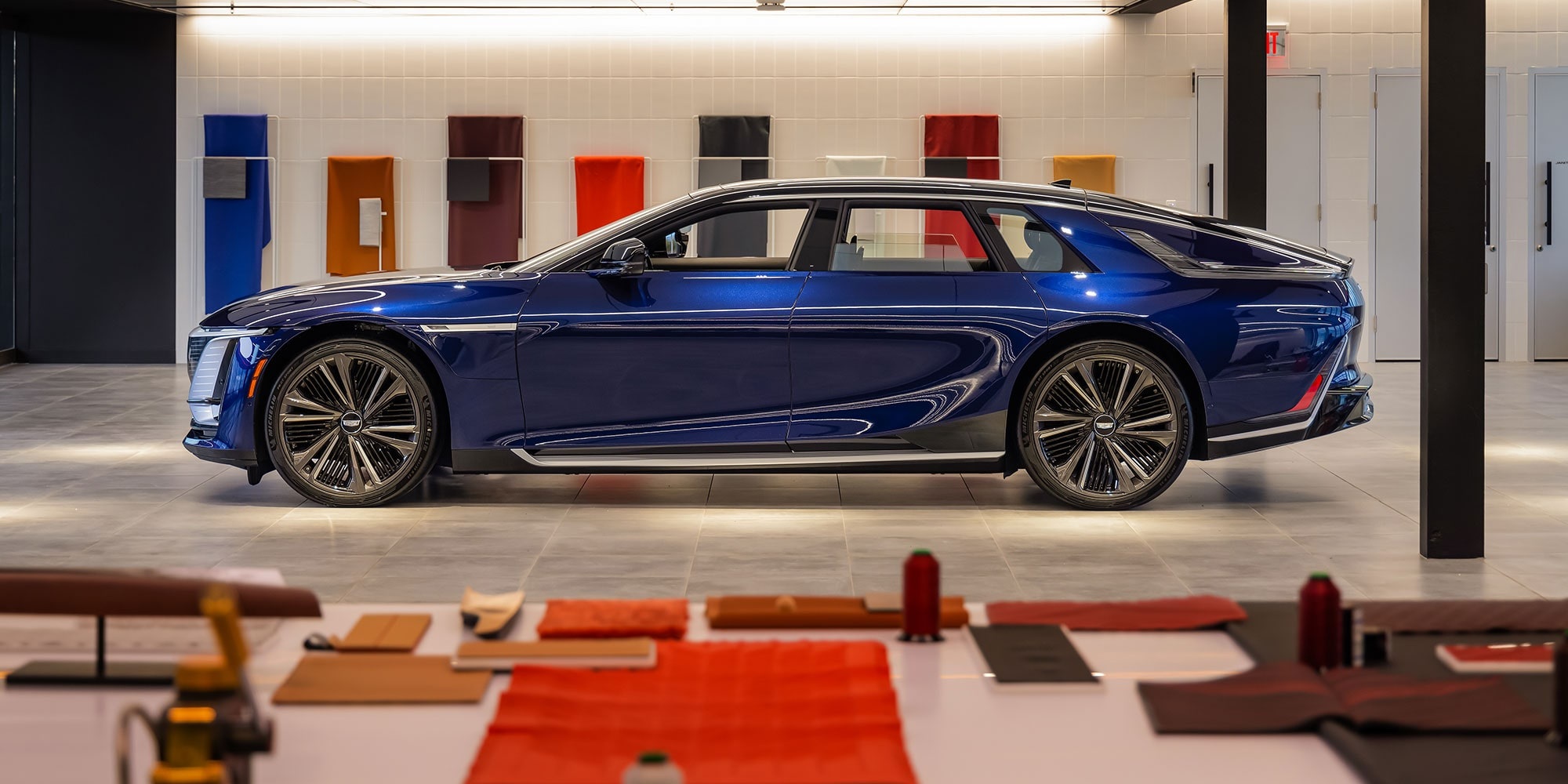
The official presentation places the finished car beside another kind of interior: the studio where the choices are made. There are tables, material samples, organised shelves and enough space to stand back. This is a useful distinction. A swatch examined in isolation tells us about a colour; a room in which several surfaces can be brought together begins to tell us about an atmosphere.
Cadillac describes a sequence of design development, discovery and finalisation supported by a personal design concierge. A mood board and physical colour and material samples belong to that process. These are not incidental luxuries around the purchase. They are the tools that allow an owner to articulate a brief that a design team can actually work with.
The question therefore changes. Instead of asking which finish is the most unusual, ask what the car should feel like at the end of a long evening, which materials should catch the light and where the eye should come to rest. A commission becomes stronger when those answers are related. Rarity alone cannot do that work.
The fastback sets the discipline
However personal the interior becomes, it sits inside a very assertive exterior. CELESTIQ has a long, low visual line, a pronounced bonnet and a roof that continues into a falling rear profile. It does not adopt the upright outline traditionally associated with a chauffeur-driven formal saloon. Its presence depends on length and the continuity of its surfaces.
That outline gives the commission a framework. A muted exterior can make the lighting and metalwork carry more of the expression. A saturated body colour can turn the same long flanks into the dominant surface. Neither approach is automatically more refined; the important relationship is between the scale of the body and the intensity of the chosen finish.
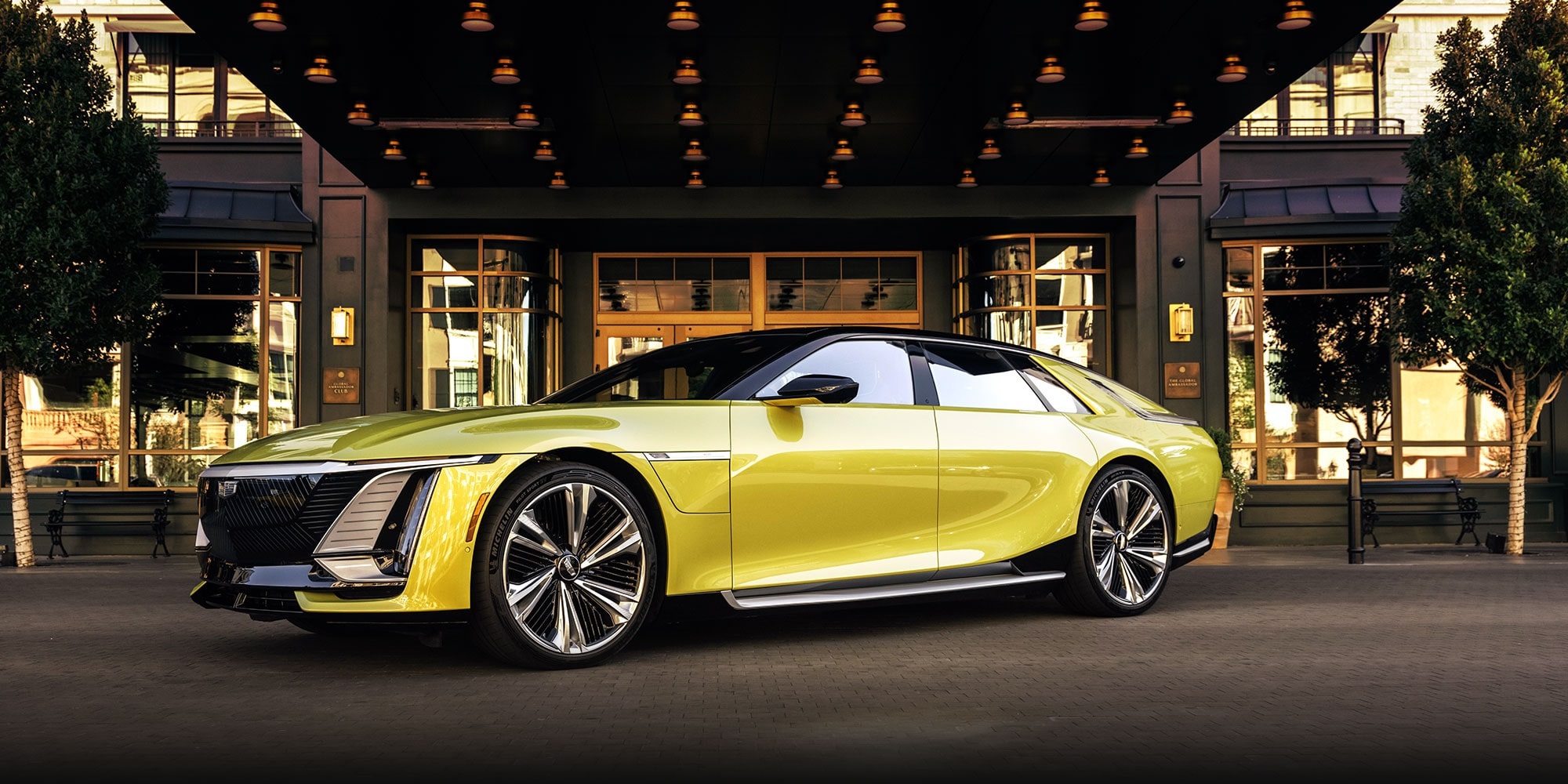
The official studio photograph of a blue car, seen beyond the worktable, makes that relationship especially clear. The automobile reads as a complete volume rather than a collection of separately configurable parts. It is an excellent way to judge a design proposal: stand back until the details become part of the whole, then move close enough to see whether they still deserve attention.
Material is more than colour
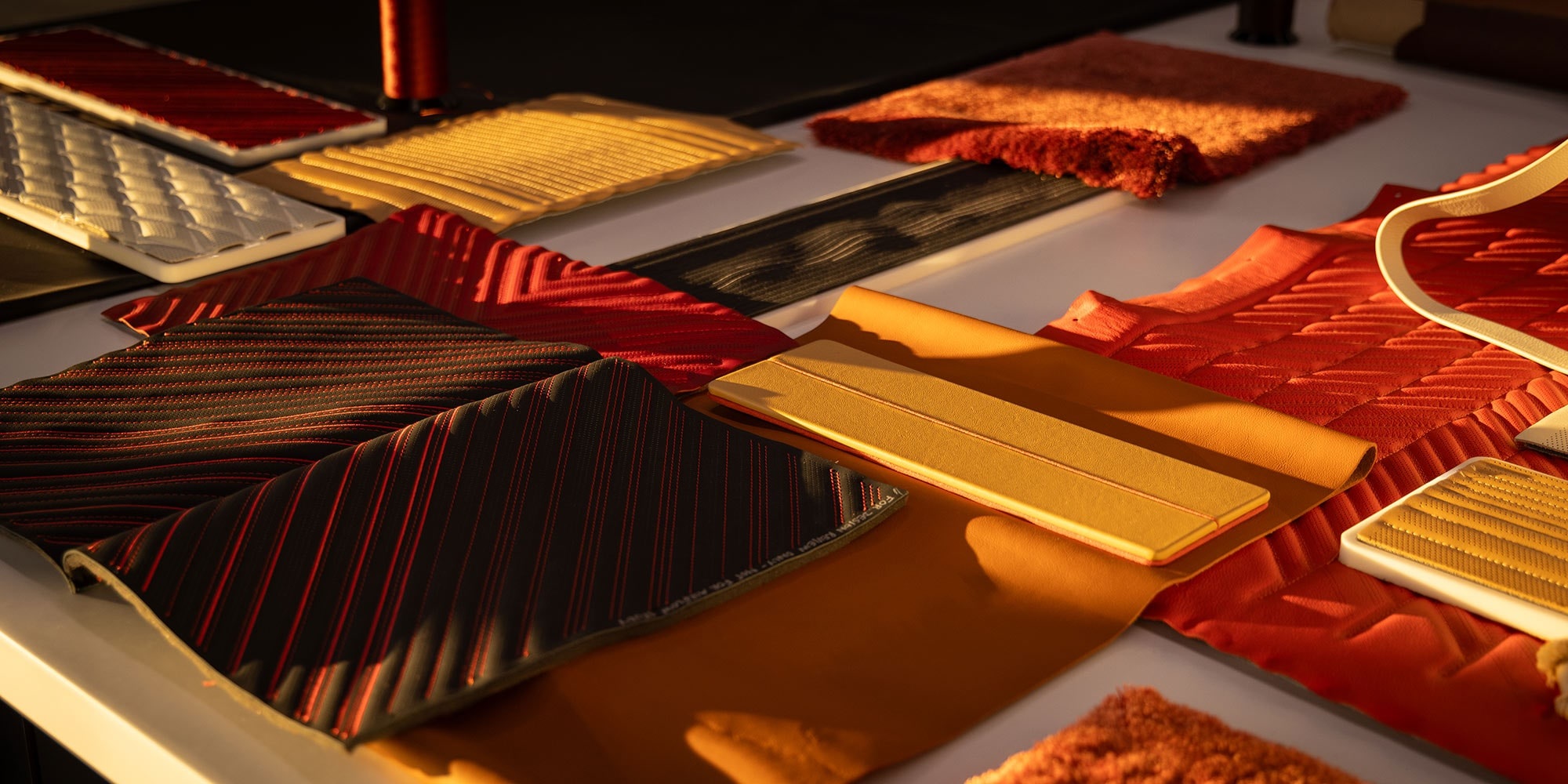
The material table provides a different kind of evidence. A small collection of reds, warm metallic tones and textured surfaces immediately suggests how difficult the task can become. Similar colours do not necessarily produce a quiet combination. Grain, reflectivity and the direction of a pattern may make two neighbouring materials compete even when their hues seem compatible.
Cadillac’s original CELESTIQ engineering presentation describes an unusually extensive use of additive manufacturing, including metal components that combine visible surfaces with structural functions. It also discusses precision castings and fabricated parts as ways of making a very low-volume vehicle. The useful design point is not a contest over how many pieces are printed. It is the connection between a small production programme and the freedom to make a particular shape.
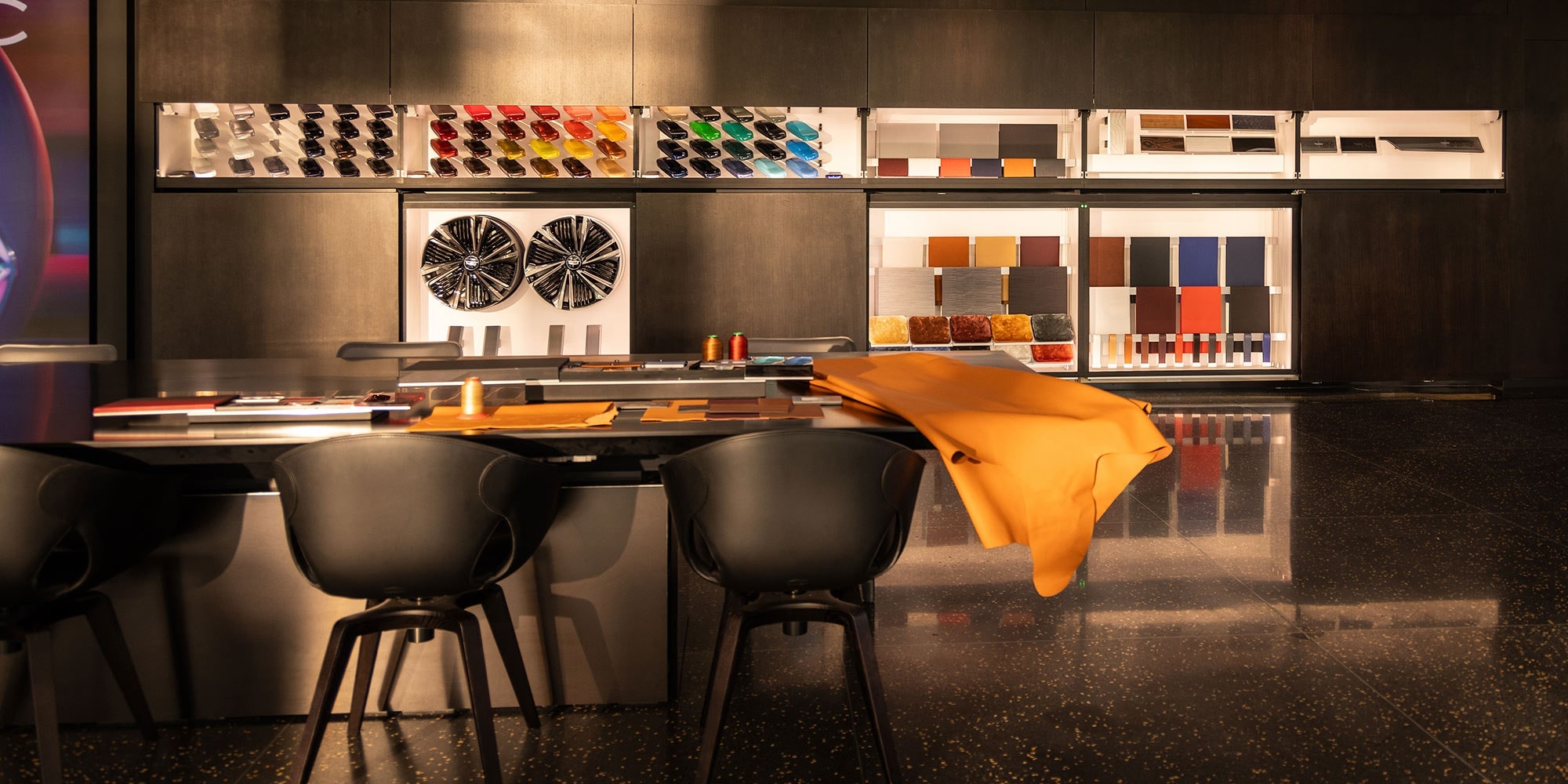
For a client, that freedom should prompt more exact questions. Is the part a surface treatment, a solid material or an assembly of both? Does a brushed finish follow the direction in which the hand approaches it? Can the same colour remain convincing on a large panel and a much smaller control? These are the decisions that distinguish a consistent interior from a display of expensive ingredients.

Light is part of the specification
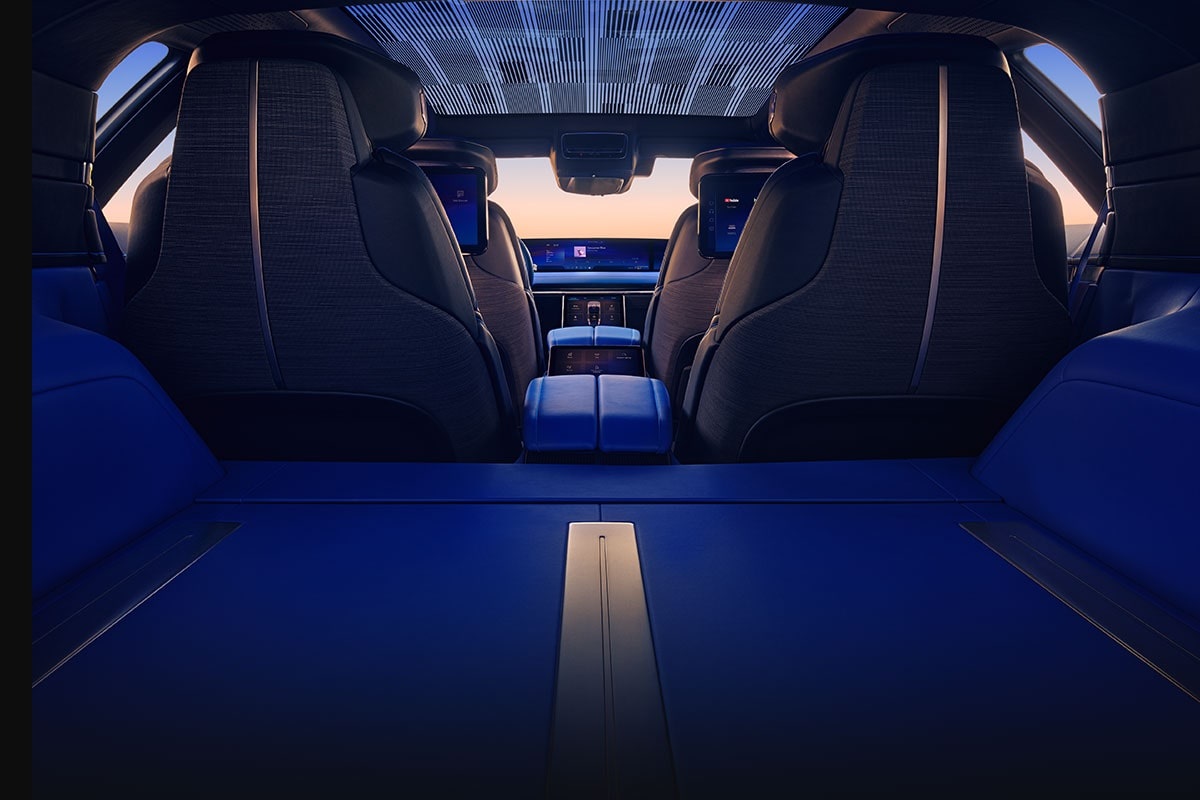
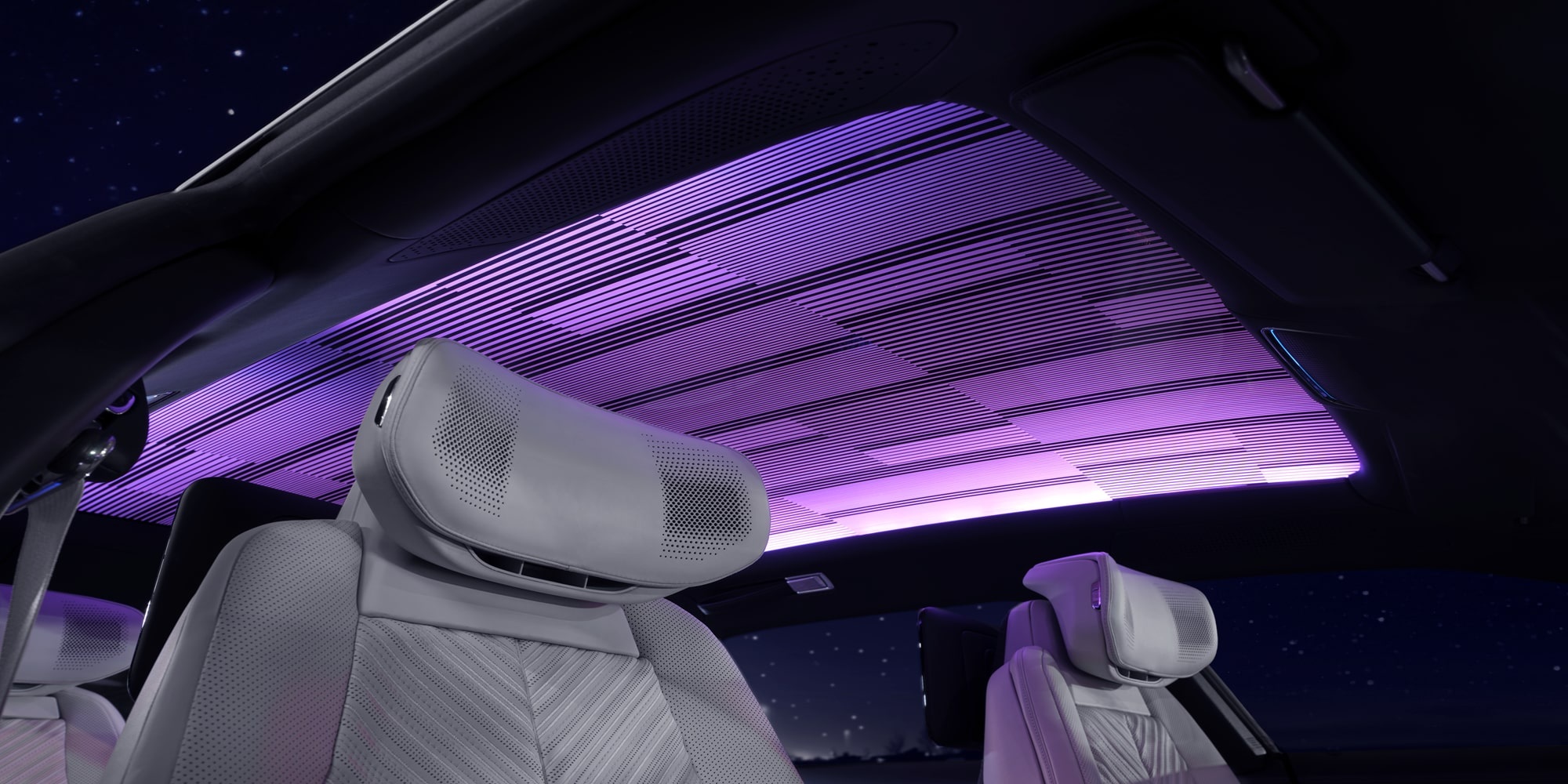
CELESTIQ’s cabin photography introduces another variable: illumination. Pale seats, dark screens and strongly coloured ambient light do not remain visually independent. The light changes how the surfaces relate, particularly after dark, when the windows cease to provide a bright background.
The current Cadillac presentation describes a fixed glass roof with four independently controlled dimming zones. That gives the roof a role beyond the appearance of a panoramic opening. It becomes part of the way individual occupants can manage their immediate environment. The value is easy to understand without pretending that a photograph can demonstrate thermal comfort or glare performance.
An interior scheme deserves to be considered in daylight and with its intended evening lighting. A subtle tone can lose its distinction under a coloured wash; a polished edge can become more conspicuous. The photographed blue-lit cabin shows why this is not a minor final adjustment. Light is effectively another finish, although it changes rather than remaining fixed.
Four places, one interior
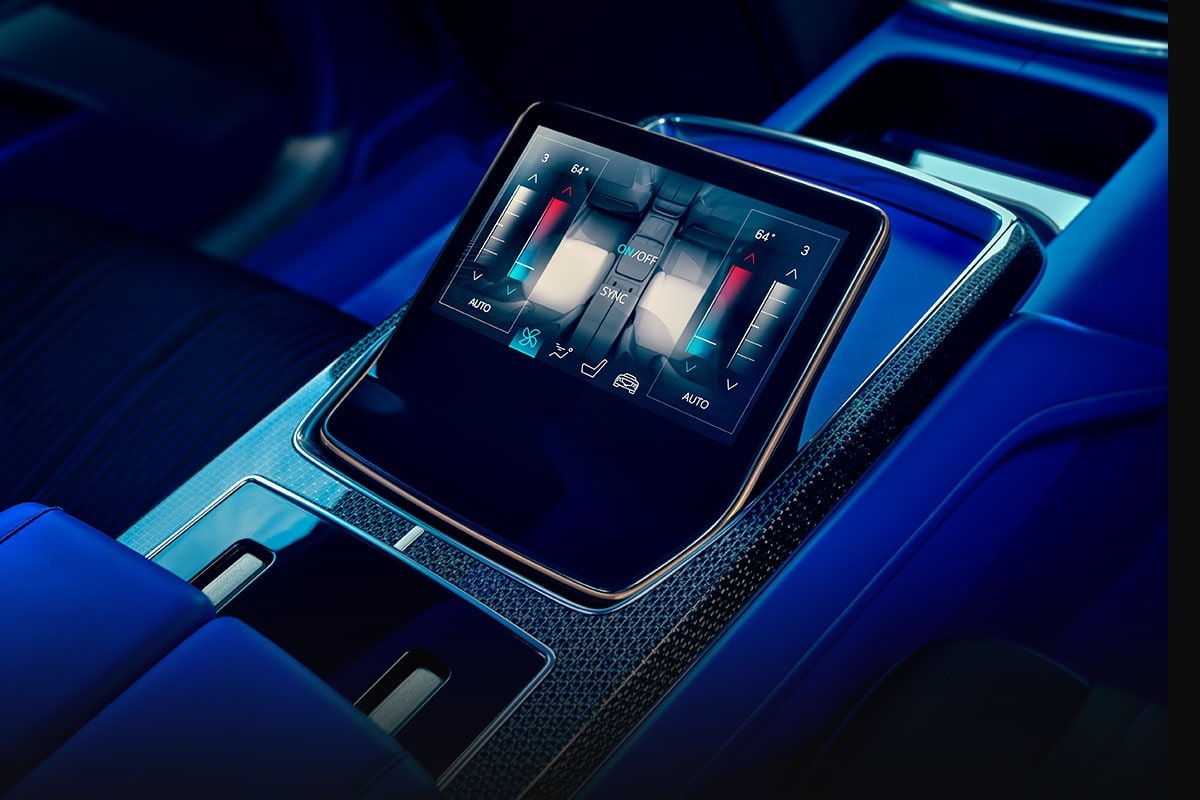
The wide view from behind the rear seats restores a sense of the whole cabin. There is a clear division between the individual seating positions, while the centre line carries a continuous visual theme towards the dashboard. Screens are visible, but so are the seats, the structure around them and the spaces between occupants.
A successful personalisation brief needs to consider all four places. The driver encounters steering, instruments and the forward view. A rear passenger sees the seat ahead, the centre console and a different portion of the roof. A treatment that feels restrained from one seat may become visually busy from another. The appropriate unit of design is therefore the occupied interior, not a single marketing viewpoint.
This is also where a physical appointment becomes more informative than an online image. Reach, posture, reflections and the visibility of controls deserve to be examined in person. Photographs can reveal the design’s organisation; they cannot establish how a particular owner will inhabit it.
A useful brief for the design appointment
| Decision | What to bring | What to examine together |
|---|---|---|
| Overall atmosphere | A few references with a clear reason for each | Whether the references describe the same mood |
| Exterior colour | Preferred tones and the conditions in which they were seen | A large sample in daylight and shade |
| Cabin palette | Materials that feel right in use, not just in a picture | Their relationship across all seating positions |
| Metal and trim | A preference for warmth, reflection and texture | Edges, touch points and adjacent surfaces |
| Evening setting | How the car is likely to be used after dark | Lighting alongside the actual upholstery samples |
| Final specification | A written hierarchy of the important choices | Which details support the whole and which distract |
This is an editorial framework for an appointment, not a promise that every proposed finish can be manufactured. Feasibility, equipment, delivery and market arrangements belong in the final written specification with Cadillac. The programme is presented by inquiry; a design feature should not turn that into a claim of immediate availability.
The commission should survive the reveal
The exterior image can be dramatic, but the lasting quality of a commissioned car is often quieter. It lies in the way the chosen surfaces continue to make sense when the initial novelty has passed: a line that remains legible, a colour that works in ordinary light, a detail that feels intentional each time it is used.
CELESTIQ offers a compelling setting for that discipline. Its architecture is already distinctive. The owner’s contribution need not compete with it. The most persuasive commission would make the finished car feel inevitable, as though all those separate decisions had always belonged together.
Sources & credits
Methodology and sources
This is a design and commissioning feature based on Cadillac’s official presentation and documentation, not a road test or a visit to a client appointment. The selected car and cabin images are identified by Cadillac as preproduction imagery; specifications may differ. The AI-labelled Night Test masthead is excluded. The 2022 engineering announcement supplies historical development context, not current price, availability or driver-assistance promises.