Possession asks the ring to be more than a static circle. Piaget’s current product account for G34P3K00 describes two independently turning bands, bringing a physical gesture into the centre of the design. The complete photograph cannot demonstrate that movement, but it can show why the object is organised around several neighbouring surfaces rather than one uninterrupted band.
A ring organised around a gesture
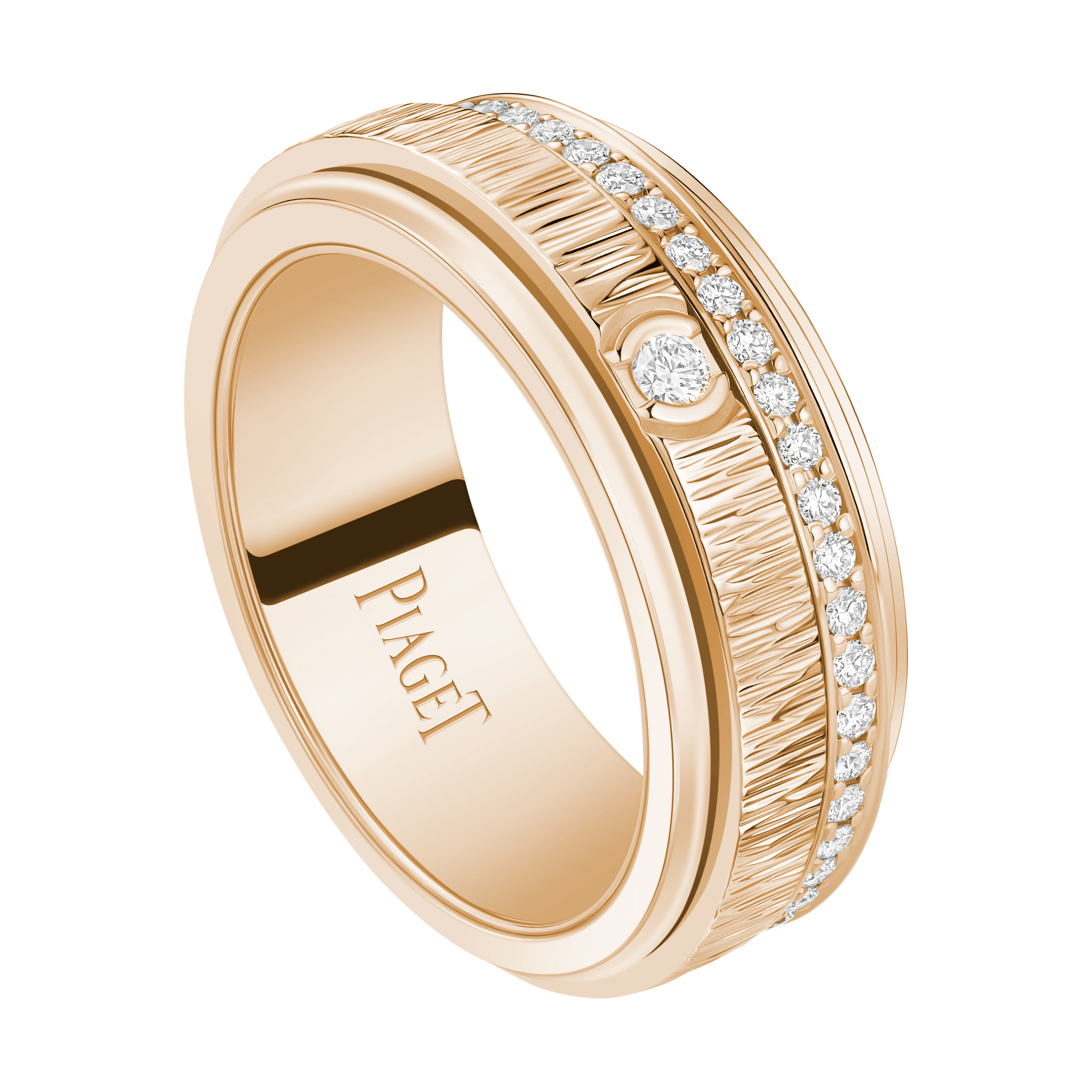
The featured Decor Palace reference is an 18K rose-gold ring with diamonds. Piaget’s wider Possession account dates the line’s launch to 1990, while the current catalogue provides the object considered here. This is a close reading of that reference and its surrounding design language, rather than a claim that an established collection has just been introduced in 2026.
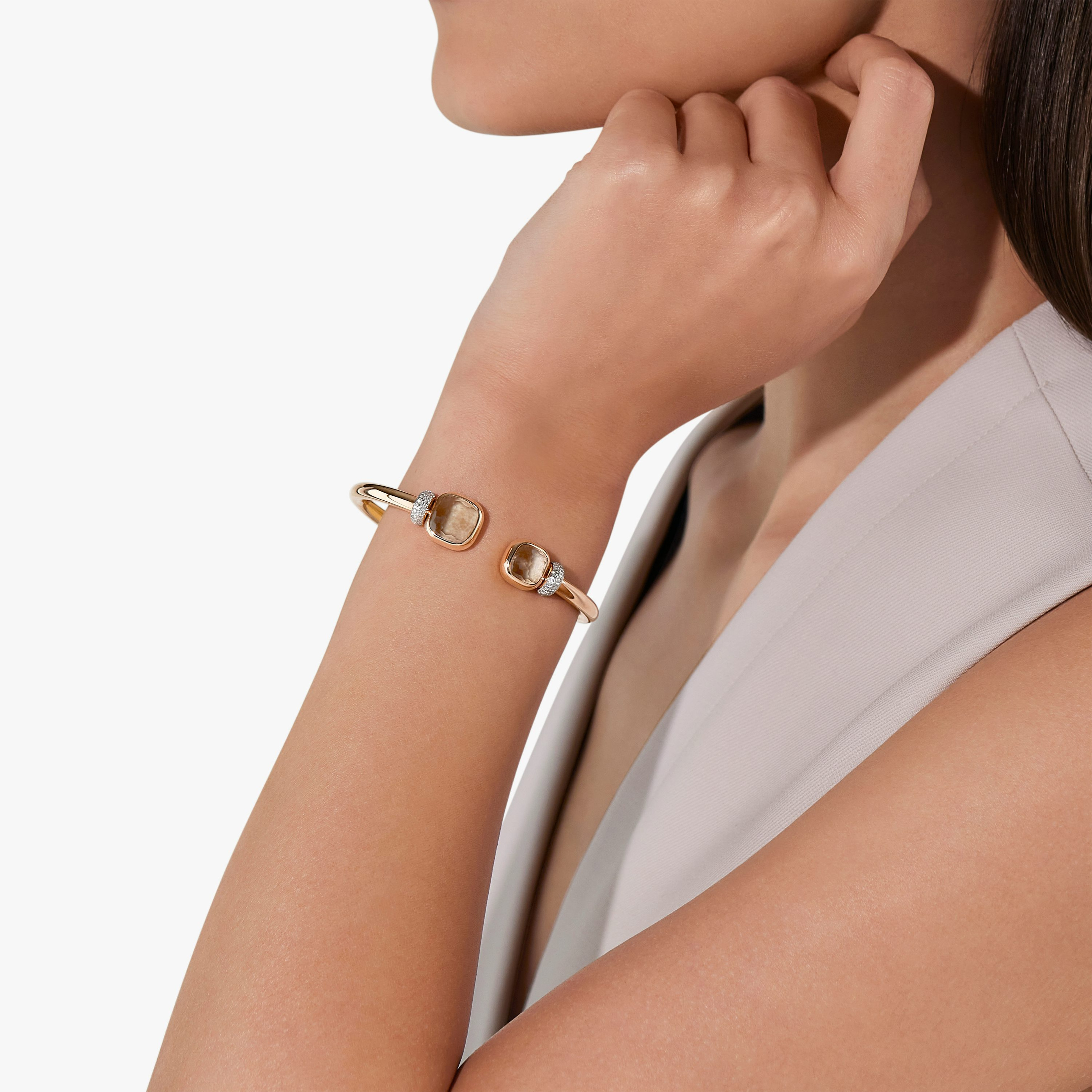
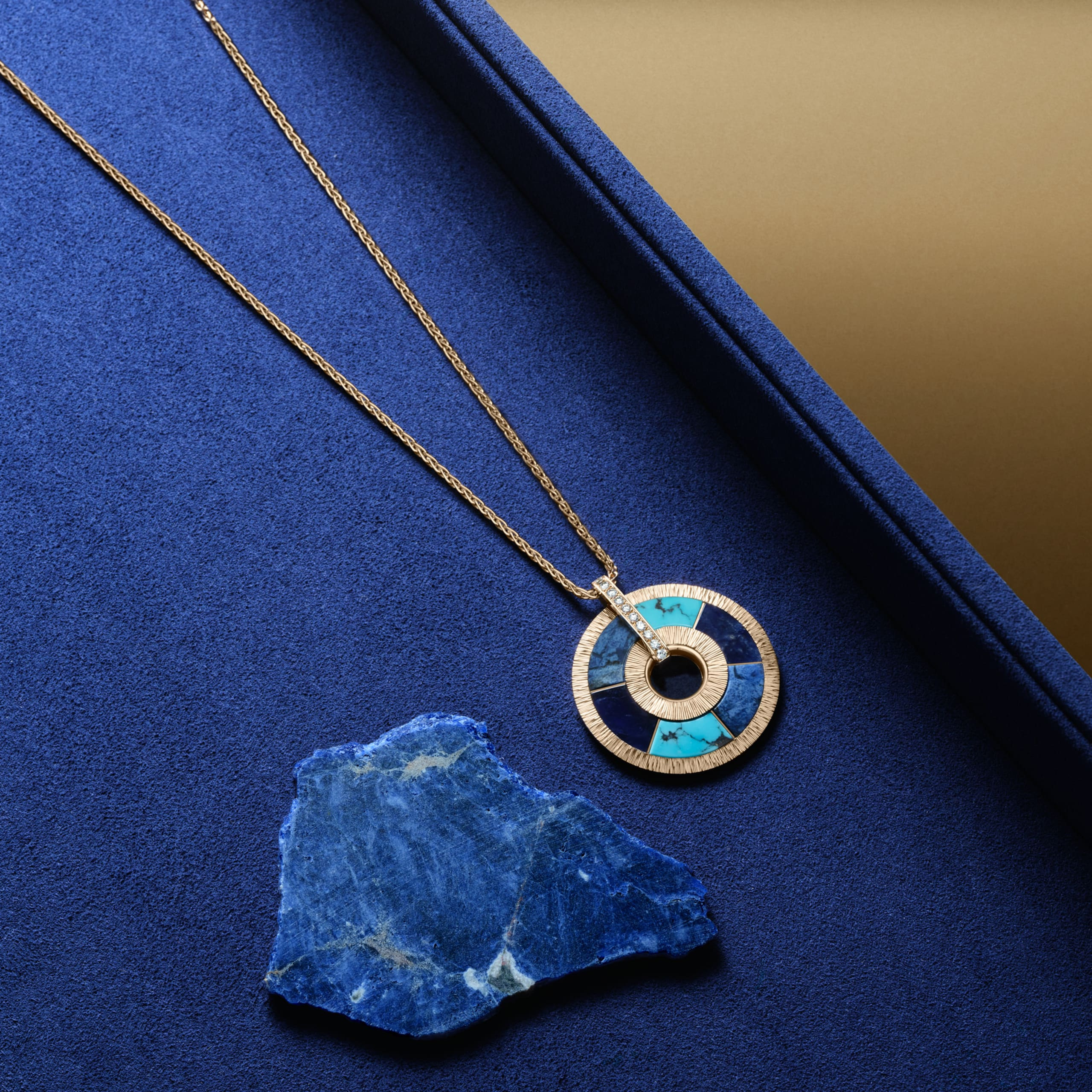
The official campaign portrait begins at body scale. The complete ring view then brings the eye closer to the different bands, and the collection photographs extend the discussion to bracelets, pendants and other Decor Palace rings. Those related objects remain context, not alternate views of G34P3K00. The featured ring’s specification is deliberately kept separate from the broader family.
Different surfaces make the bands readable
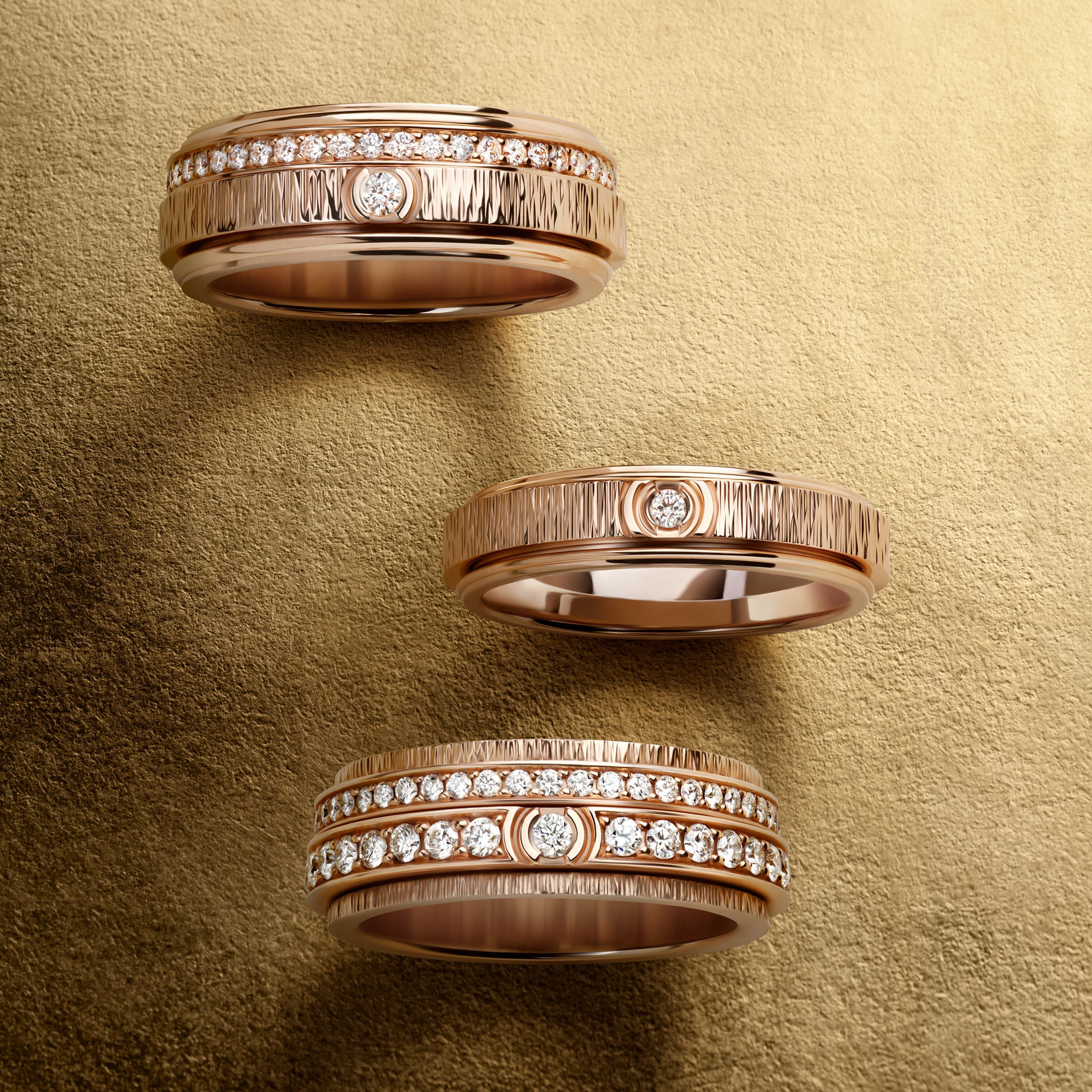
The complete ring has a layered visual identity. A textured gold-coloured field meets brighter diamond-set sections, with the neighbouring surfaces remaining distinguishable. That contrast is important for a design associated with turning bands. Before any movement is seen, the viewer can already recognise that the object contains more than one route around its circumference.
Decor Palace is the maker’s name for the gold treatment on this reference. In the official photograph, the textured field offers a different kind of brightness from the stones: less concentrated into separate points, more distributed across the metal surface. The two readings work together. The ring has an identifying surface even in its quieter areas, while the diamond line gives the eye a clearer sequence of bright accents.
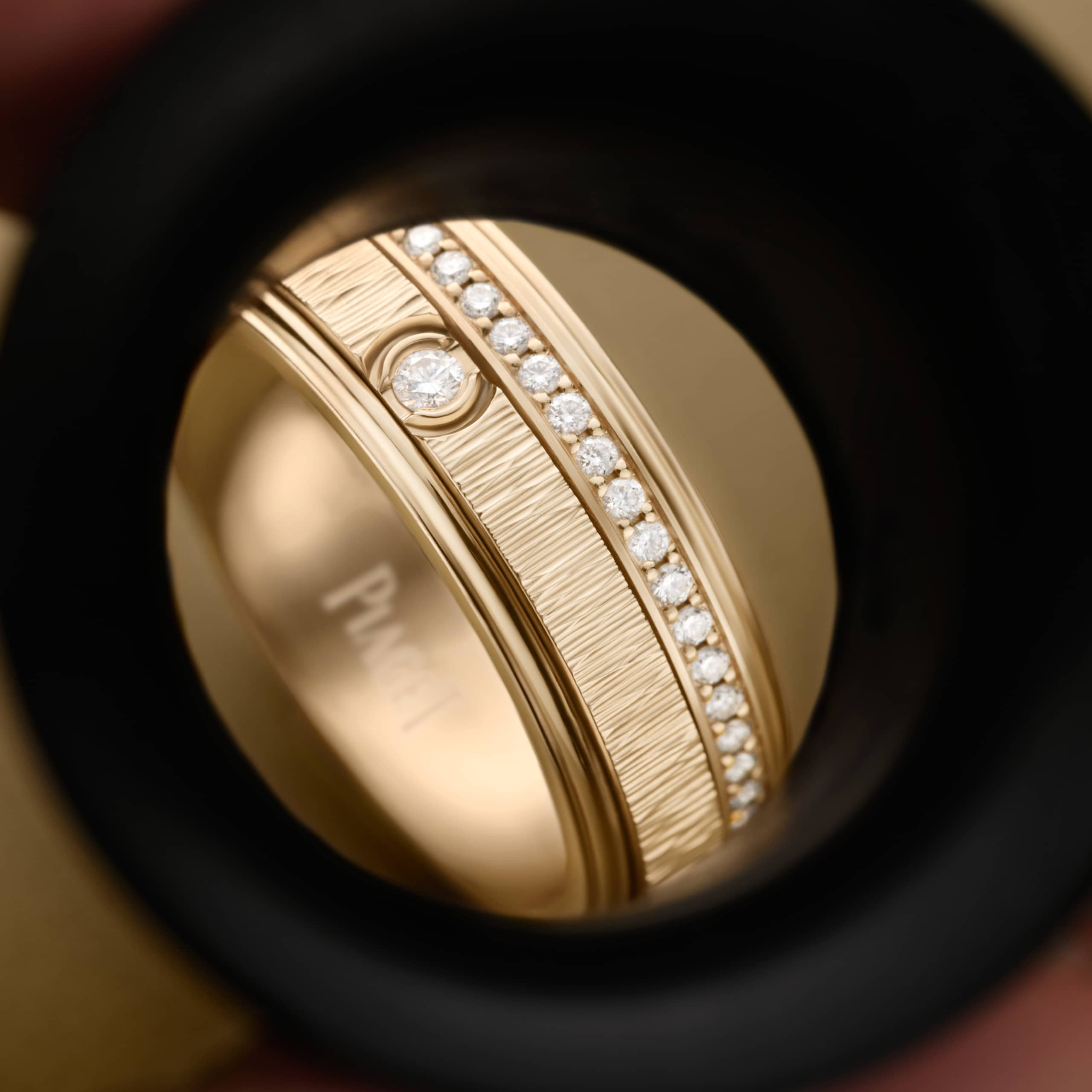
The close view of a related Possession ring adds scale to that comparison, but it should not be treated as a technical section through the featured reference. Its purpose is to make contrasting surface bands visible. A complete product photograph establishes the particular ring; the family close view explains a recurring visual interest. Keeping those roles clear makes the collection coherent without assigning every related object the same construction or materials.
The maker describes two independently turning bands
Piaget’s G34P3K00 account states that two bands turn independently. The mechanism is therefore a documented feature of the chosen reference, rather than a guess based on visible seams. It changes the way the ring can be understood: the neighbouring surfaces are presented not only as a graphic arrangement but also as parts associated with an intentional tactile action.
A still photograph leaves the action untested. It cannot establish the resistance of a band, its sound or how the gesture feels during ordinary use. A demonstration would be the appropriate way to encounter those qualities. The design reading can nevertheless be precise. The ring invites attention towards the place where adjacent surfaces meet, making an interval within the object part of its identity rather than hiding it as an incidental join.
That is a distinctive relationship between ornament and behaviour. A diamond-set line can attract attention visually, while a turning band invites the hand to return to the same area physically. The maker’s proposition places both within one object. The article does not need to invent a handling experience to explain that relationship; it can identify the documented action and then consider how the visible arrangement gives it a clear place in the composition.
The product record has a useful qualification
For G34P3K00, Piaget lists 48 brilliant-cut diamonds at approximately 0.35 carat and a Possession-set brilliant-cut diamond at approximately 0.03 carat. The page also states that carat weight, stone count and dimensions vary with the size ordered. That qualification is part of the specification, not small print to be discarded when turning the product into an editorial table.
The characteristic panel gives a band width of 7.5 millimetres, with its own size-context notice. The useful interpretation is therefore reference- and size-aware. The numbers describe the product page’s published basis, while the supplied ring’s exact record should confirm what applies to the selected size. They are not universal figures for every Possession ring or every Decor Palace object shown elsewhere in the collection photographs.
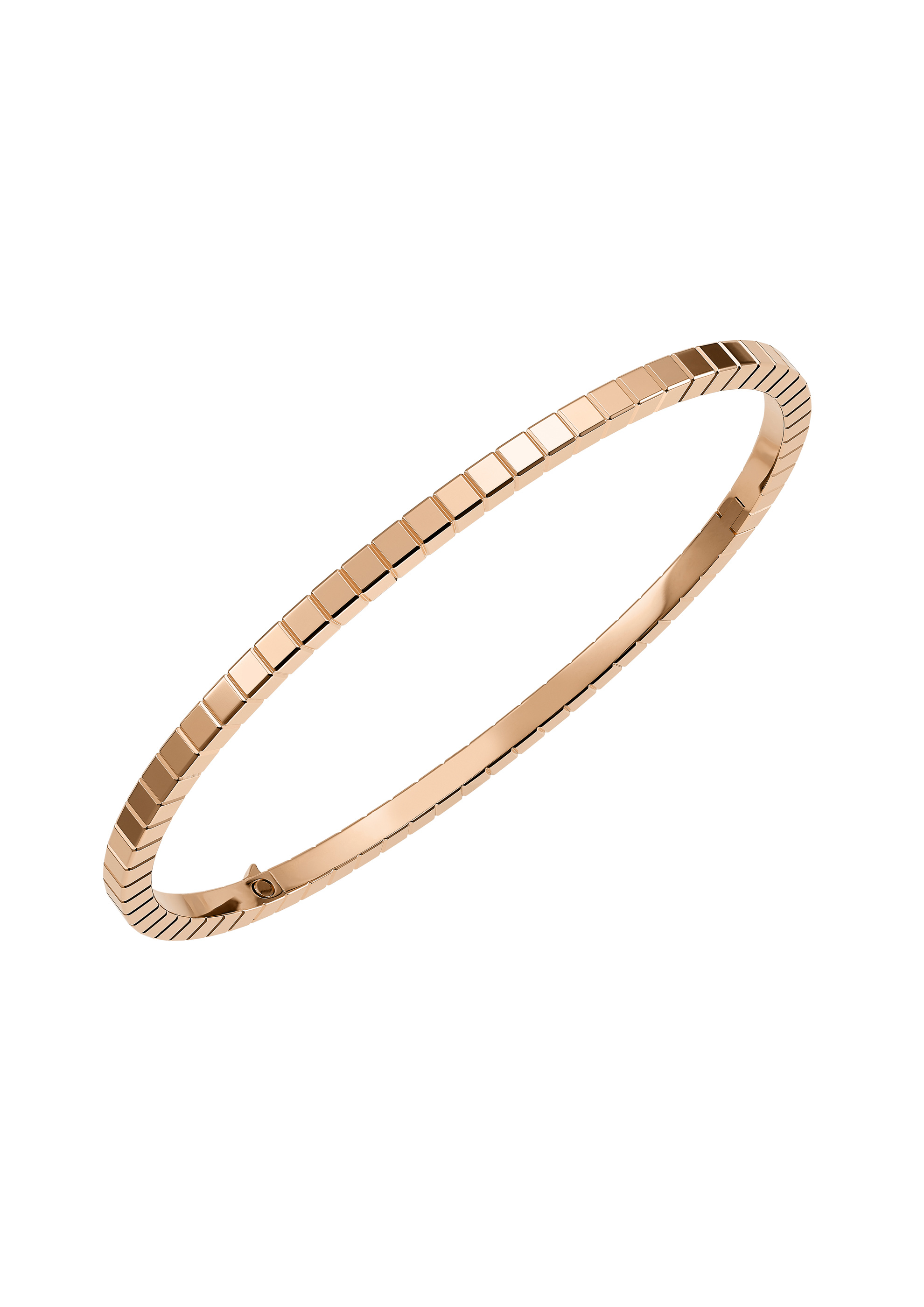
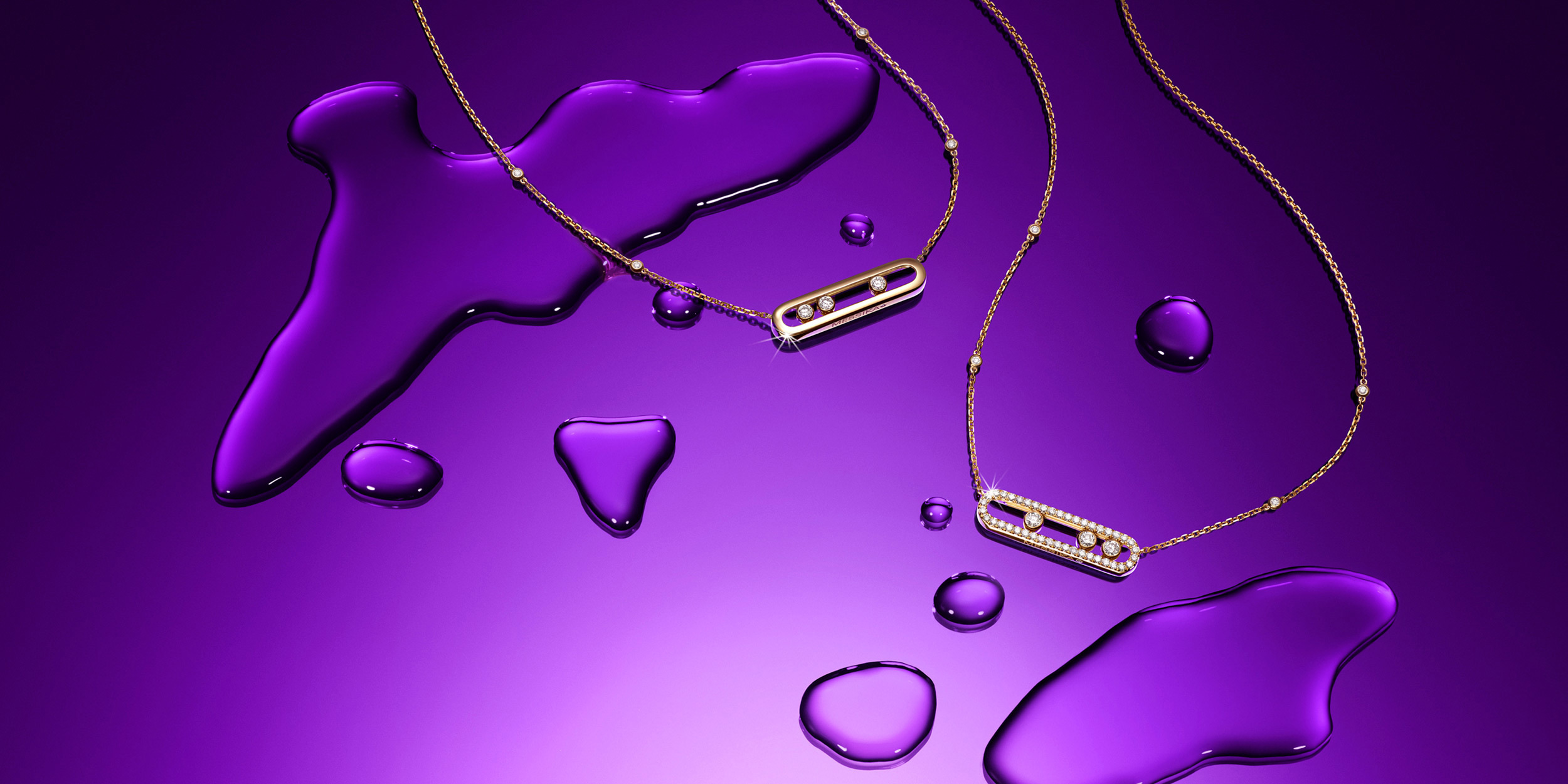
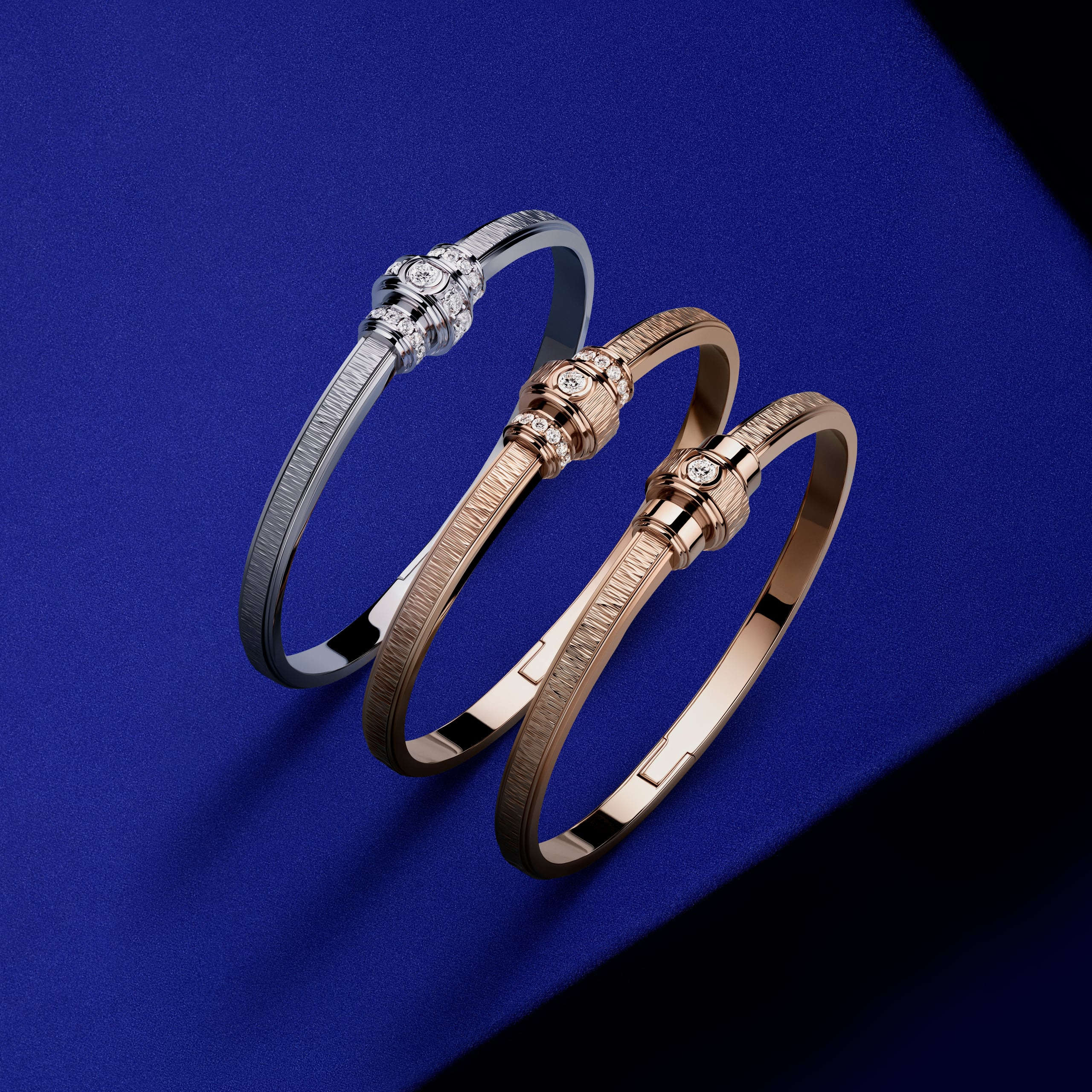
The contrast with the bracelet and pendant imagery is helpful. Those objects carry a related family language into other shapes, but their circumference, line and centre differ from the featured ring. A photograph of three bracelets against blue shows a repeated design vocabulary; it does not transfer the ring’s diamond count to them. The collection is better understood when continuity of style and identity of specification remain separate ideas.
Texture, brightness and proportion on the body
The campaign portrait returns the jewellery to a wider visual field. Skin, fabric and surrounding colour give the object a proportion that an enlarged product photograph removes. A ring’s layered surfaces become one concentrated accent within the hand’s larger outline. The closer details remain relevant, but they no longer have to explain the whole presence of the piece alone.
The group of Decor Palace rings shown against gold-coloured surroundings offers another kind of context. It lets the viewer compare how a textured field can become part of a collection’s visual identity across related objects. The featured G34P3K00 remains the specific subject, with its own complete image and product record. The family view supplies the broader language; the single reference supplies the concrete decision.
The published ring, with its size context retained
| Detail | Piaget’s G34P3K00 record | Qualification |
|---|---|---|
| Metal | 18K rose gold | Specific to the named reference |
| Surface | Decor Palace | Maker’s treatment name |
| Movement | Two independently turning bands | Manufacturer-described; not independently handled here |
| Diamonds | 48 at approx. 0.35 ct, plus one at approx. 0.03 ct | Page states count and weights vary by size |
| Band width | 7.5 mm in the characteristic panel | Published size context should be confirmed |
The record is checked as a design and product source, not as an appraisal. No promise of future value or universal fit is made. Current availability, supplied dimensions and fitting should be confirmed with Piaget for the exact size and market.
The Luxe Digital view
Possession becomes most legible when its turning bands, contrasting surfaces and size-specific record are considered together. Piaget gives a physical gesture a visible place within the ring. The result is a design to understand through both a complete outline and a documented action, while leaving the sensation of that action to an actual demonstration.
Possession becomes most legible when its turning bands, contrasting surfaces and size-specific record are considered together.
Sources & credits
Sources and methodology
Independent visual analysis of current official imagery and named product records, checked on 14 October 2026. Historical introductions, manufacturer specifications and visual observations are kept distinct. No visit, interview, independent handling or appraisal is implied.
- Piaget — source 1: Current official collection, named designs, dated context and selected image provenance.
- Piaget — source 2: Current official collection, named designs, dated context and selected image provenance.