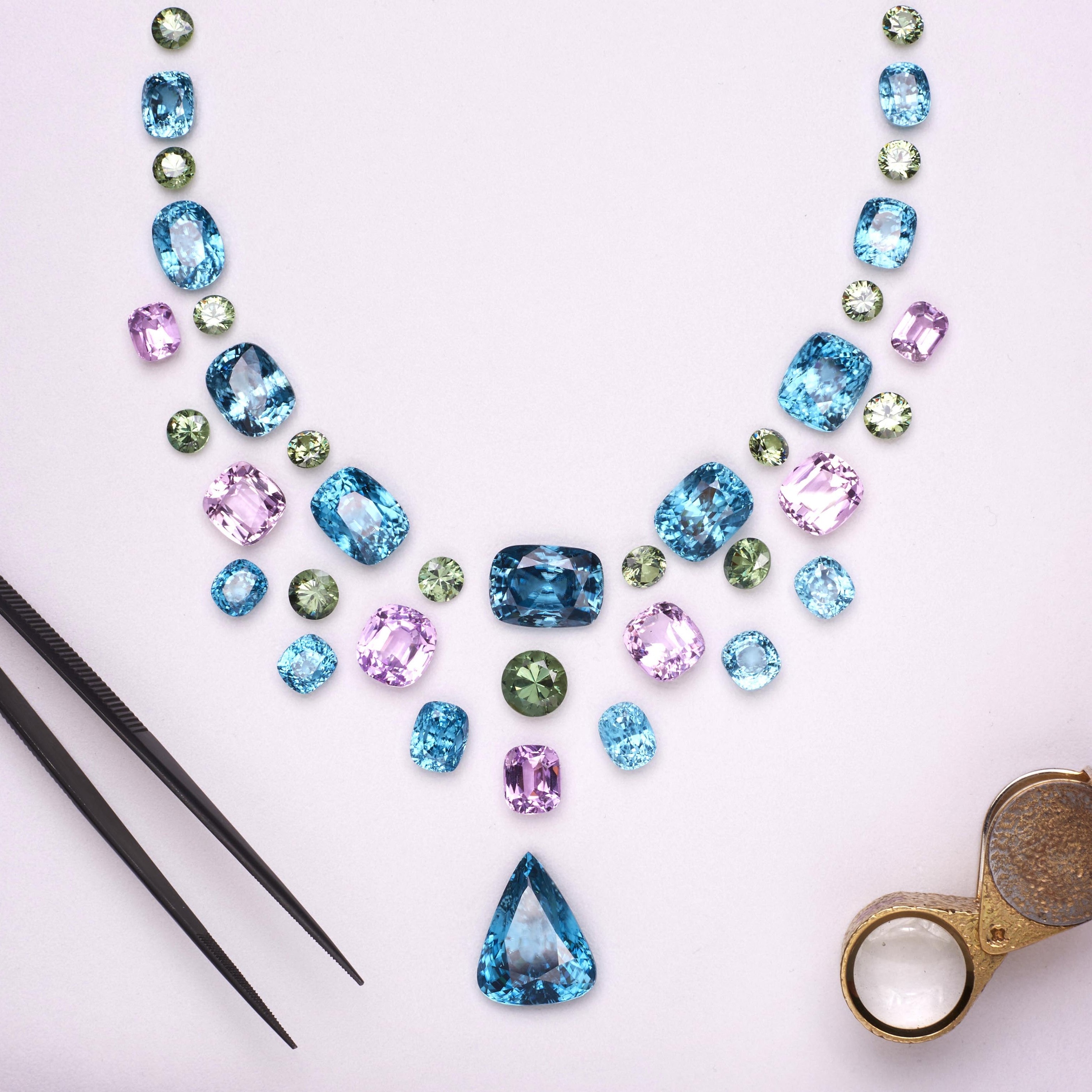
A row of blue, green and pink stones traces a necklace across a sheet of paper. Beside it lie scissors and a drawing: colour is already being organised, though the finished jewel is still a proposition. Boodles’ official design photography makes a useful introduction to bespoke jewellery. The first conversation concerns what a piece should do for its wearer, before the drawing turns that intention into a form.
Give the commission a purpose
A significant occasion is a beginning, but a designer needs to understand how the jewel will live afterwards. A necklace made to mark an anniversary might be worn at dinner every week, reserved for formal evenings or passed between generations. Each intention suggests a different conversation about scale, attachment, setting and the way the piece meets the body.
Boodles describes its bespoke service as a collaboration beginning with a consultation. Its published process includes discussion of design direction, materials and gemstones with the design team. This offers an owner a chance to explain preferences before a proposal becomes detailed enough to feel settled. Arriving with a clear purpose can make that early freedom more useful.
Bring a few examples of jewellery you enjoy wearing, alongside anything you admire only as an image. Explain the difference. You might like the colour of one necklace but prefer the length of another; a sculptural ring may appeal visually while feeling too prominent for your ordinary day. Those distinctions are productive information, rather than evidence of indecision.
Let the stones suggest the structure
The loose-stone arrangement in the official imagery gives colour a rhythm. Similar hues are separated, larger shapes create pauses and a pendant establishes a different emphasis from the line above it. The interesting act is the relationship between the parts. A spectacular centre stone still needs a design that lets the complete jewel make sense.
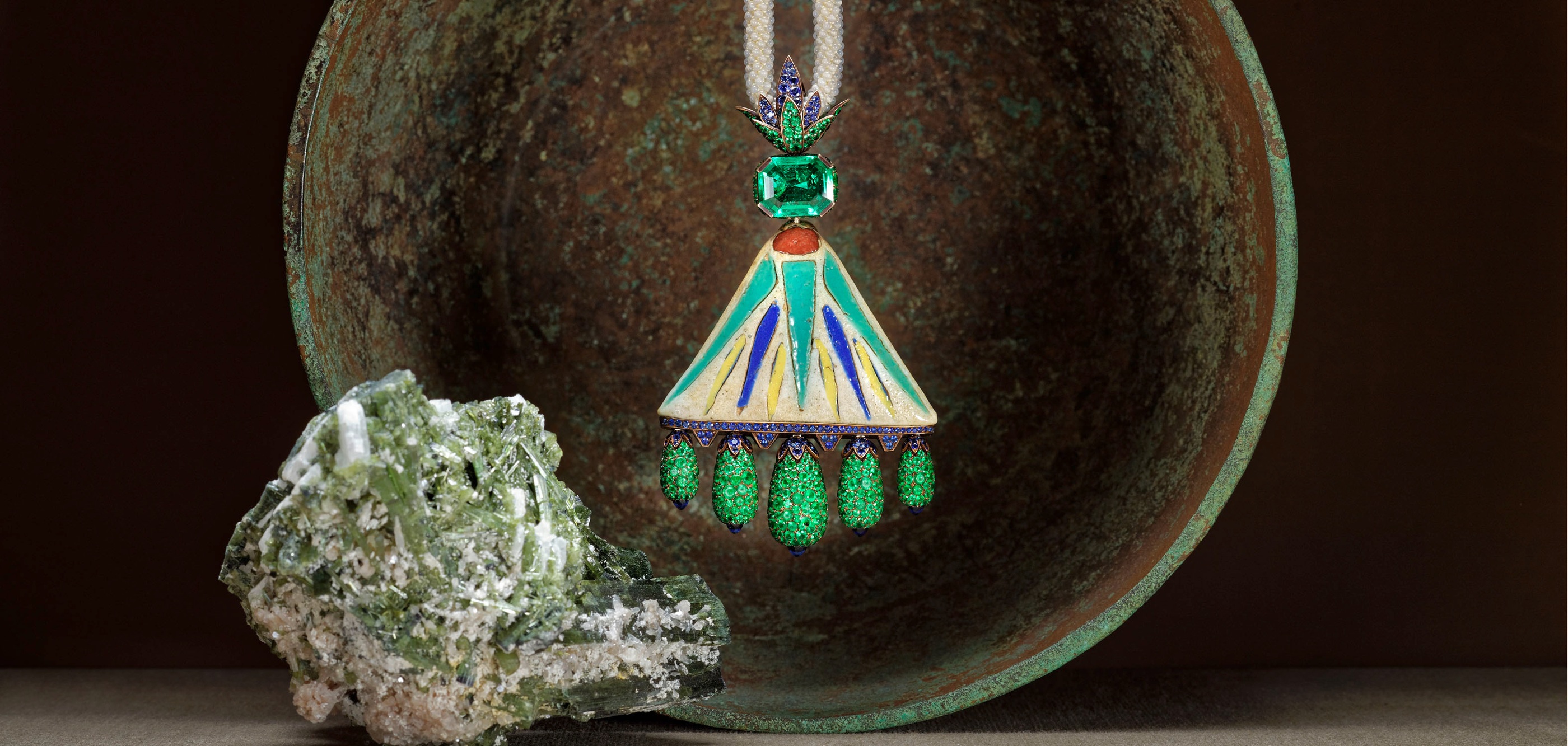
Boodles’ gemstone account describes sourcing as part of a larger design journey, including its documented Greenfire emerald suite. That example belongs to a particular house project; it is useful as an illustration of how a group of stones can lead an idea, rather than as a promise about material available for a new commission. A bespoke discussion should establish what is actually being proposed for your piece.
Ask to see the selected stones in a useful arrangement and to understand what remains provisional. Discuss whether you are responding to an individual colour, a combination or a specific shape. Keep photographs and descriptions linked to the proposal they illustrate. This gives later design revisions a clear reference, without expecting a phone image to reproduce every nuance of a gemstone.
A drawing should answer a wearing question
A drawing is most persuasive when it explains something beyond the front view. For a necklace, that may be the line around the neck, the relationship of pendant to collarbone or how the clasp belongs to the composition. For earrings, consider the direction of the form, the attachment and the view from the side. A ring’s profile can matter as much as the shape seen from above.
The point is to connect a proposed form to a real person. Describe the clothes, necklines and occasions you expect to pair with the jewel. If a piece needs to work with something you already own, bring that object to the conversation when practical. The designer can then discuss a relationship between actual things, rather than between two photographs taken at different scales.
Ask which dimensions and views the next proposal will contain. A drawing can be an expressive part of the process and still leave practical questions open. Learning what it does and does not establish helps an owner respond to the design intelligently, without mistaking the beauty of a presentation sheet for a complete specification.
Making gives the idea a physical scale
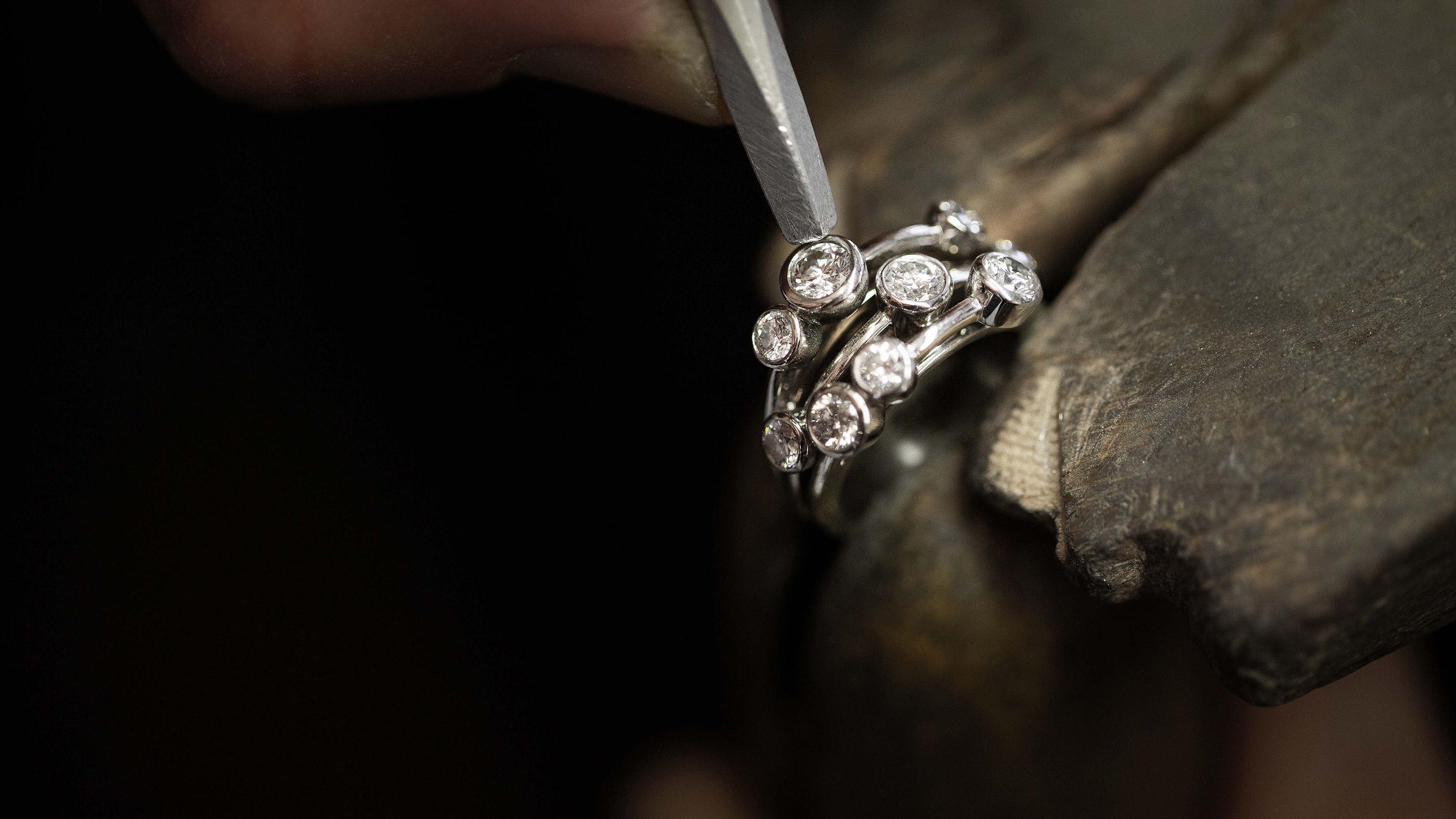
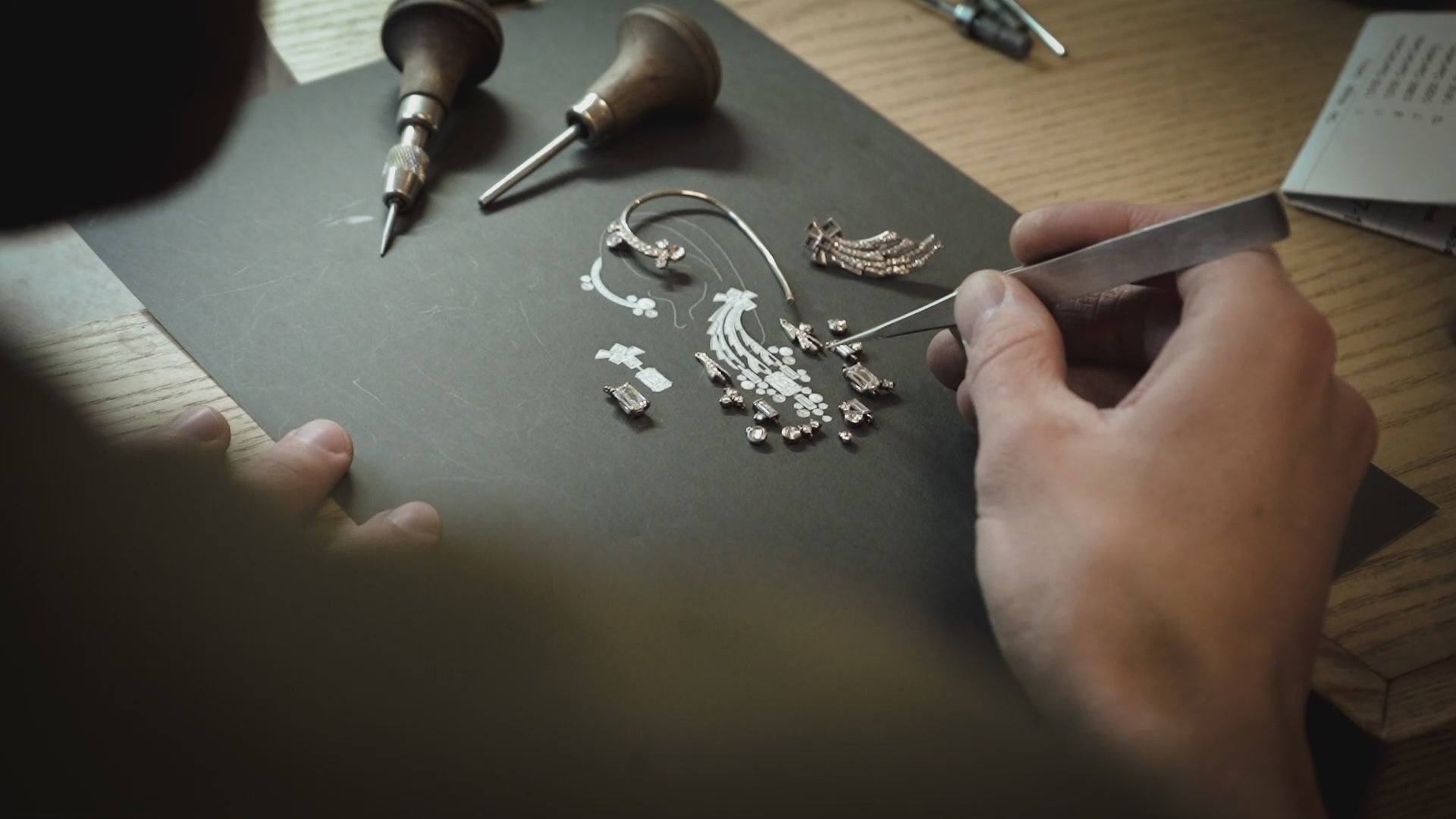
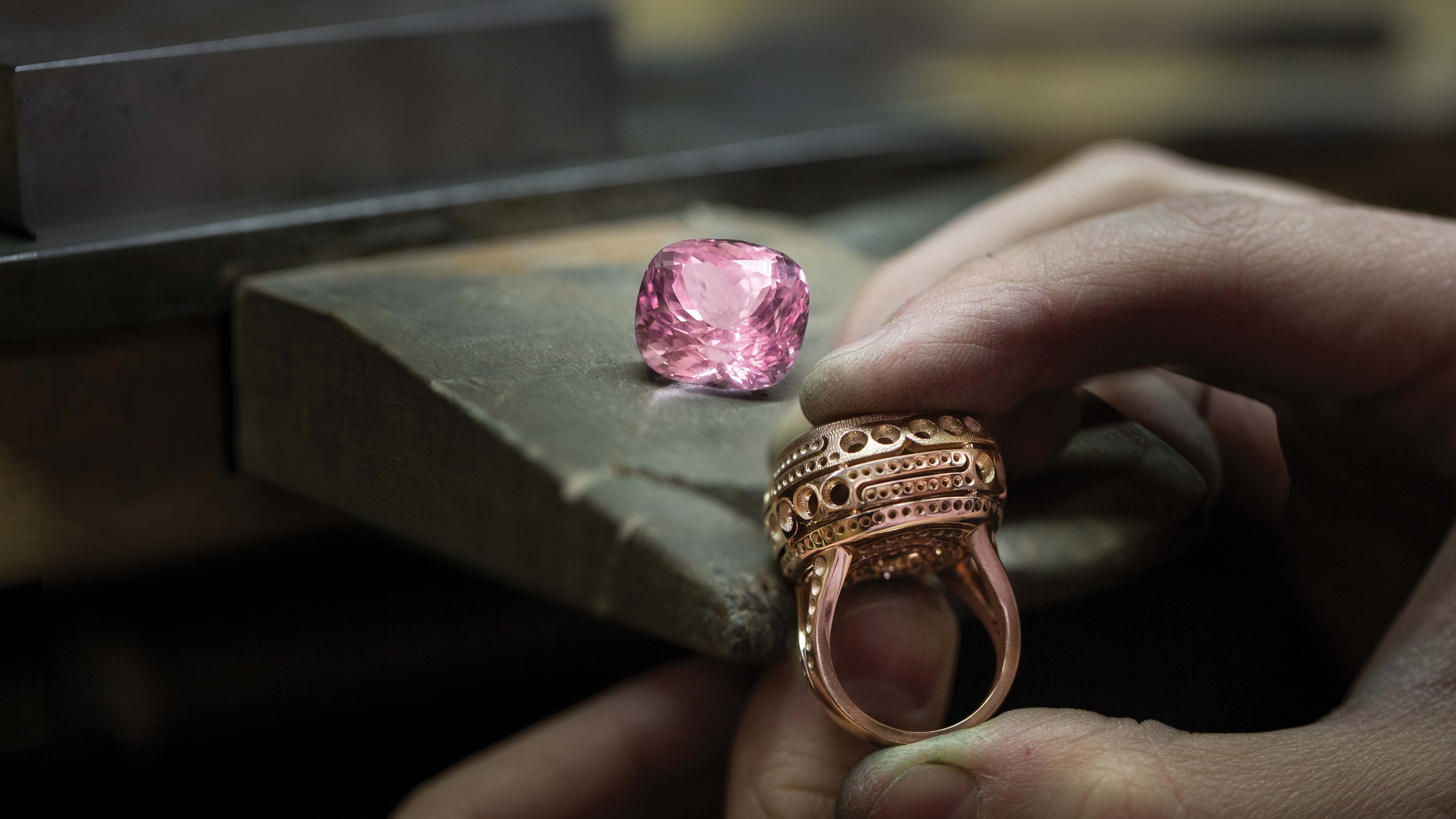
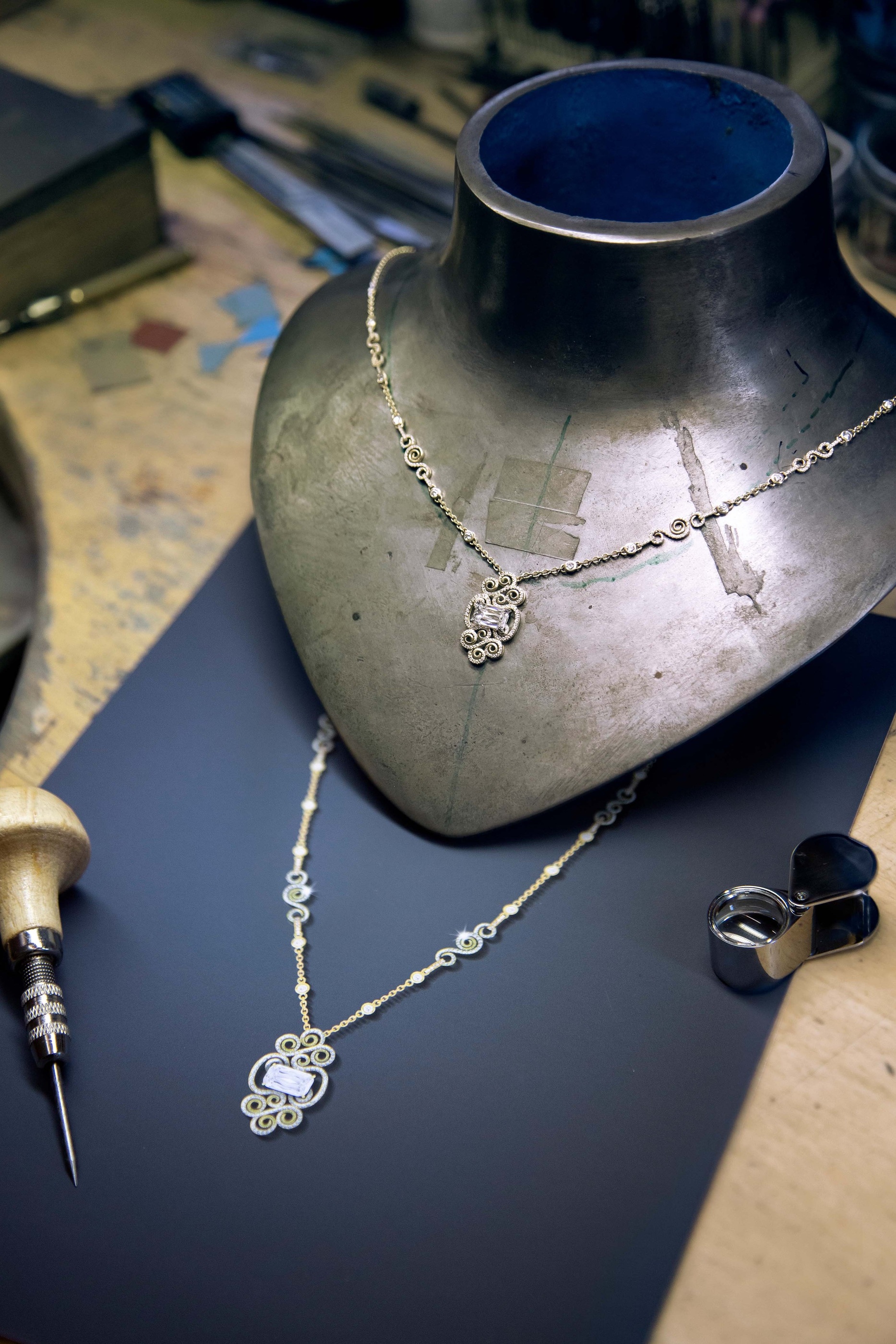
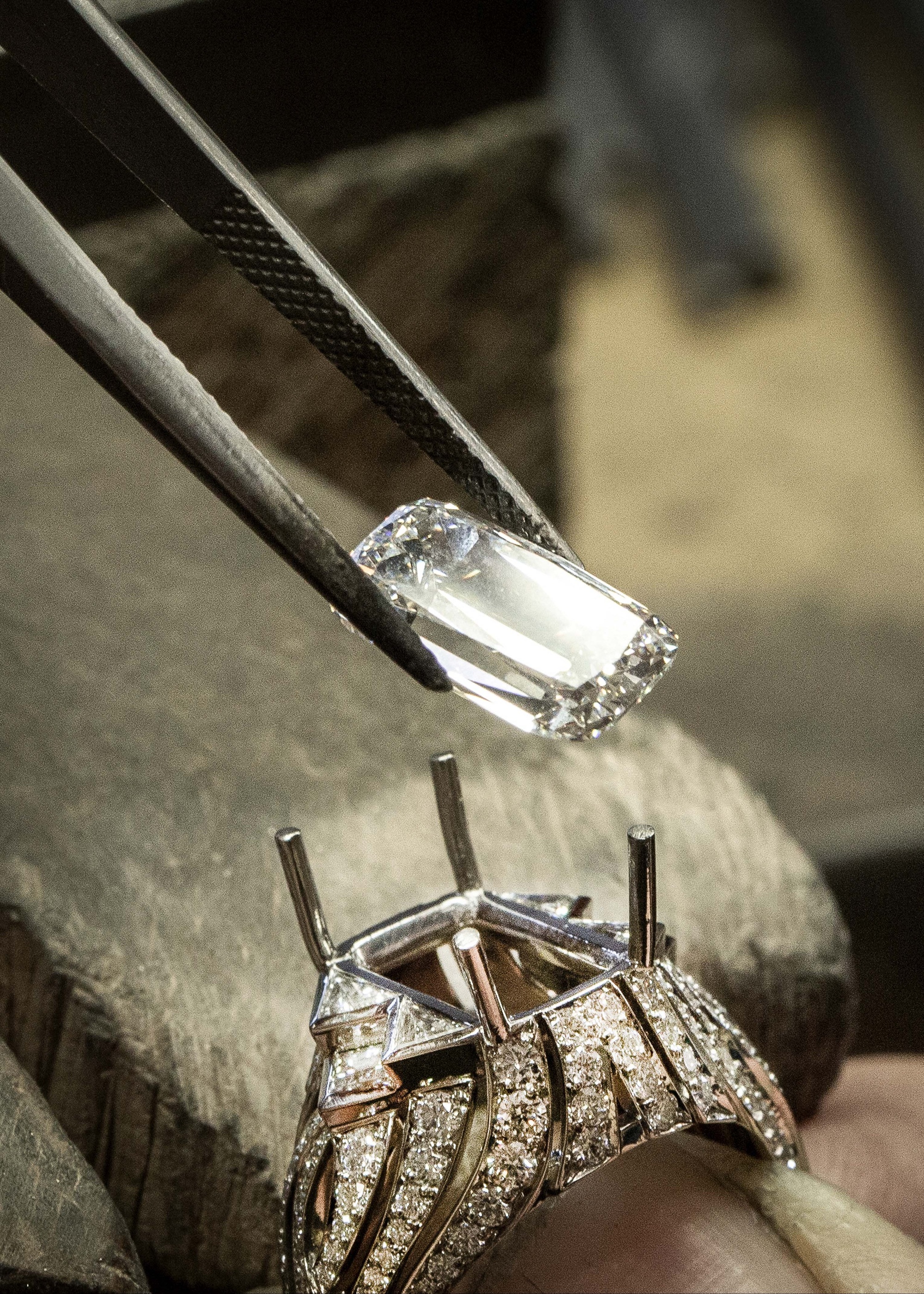
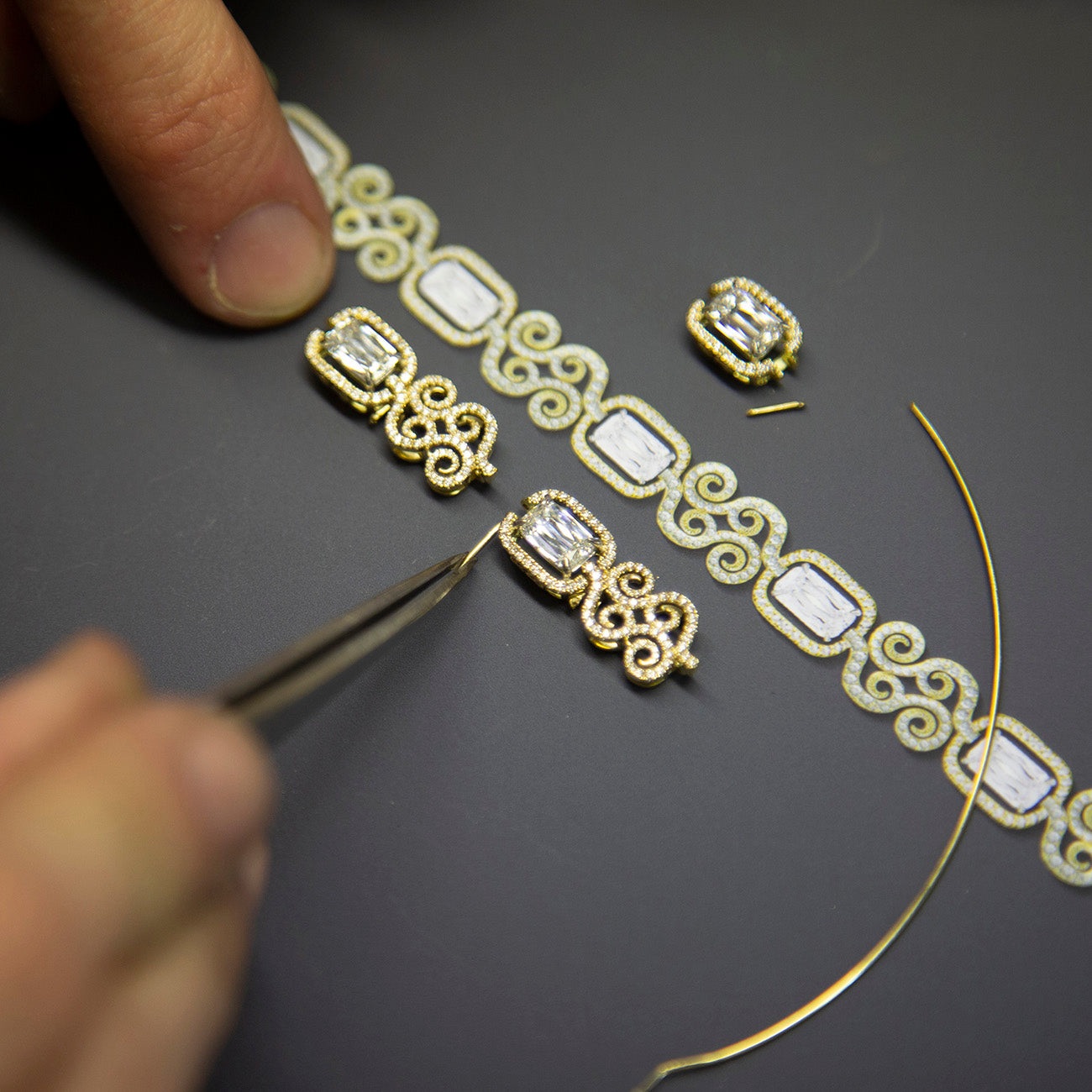
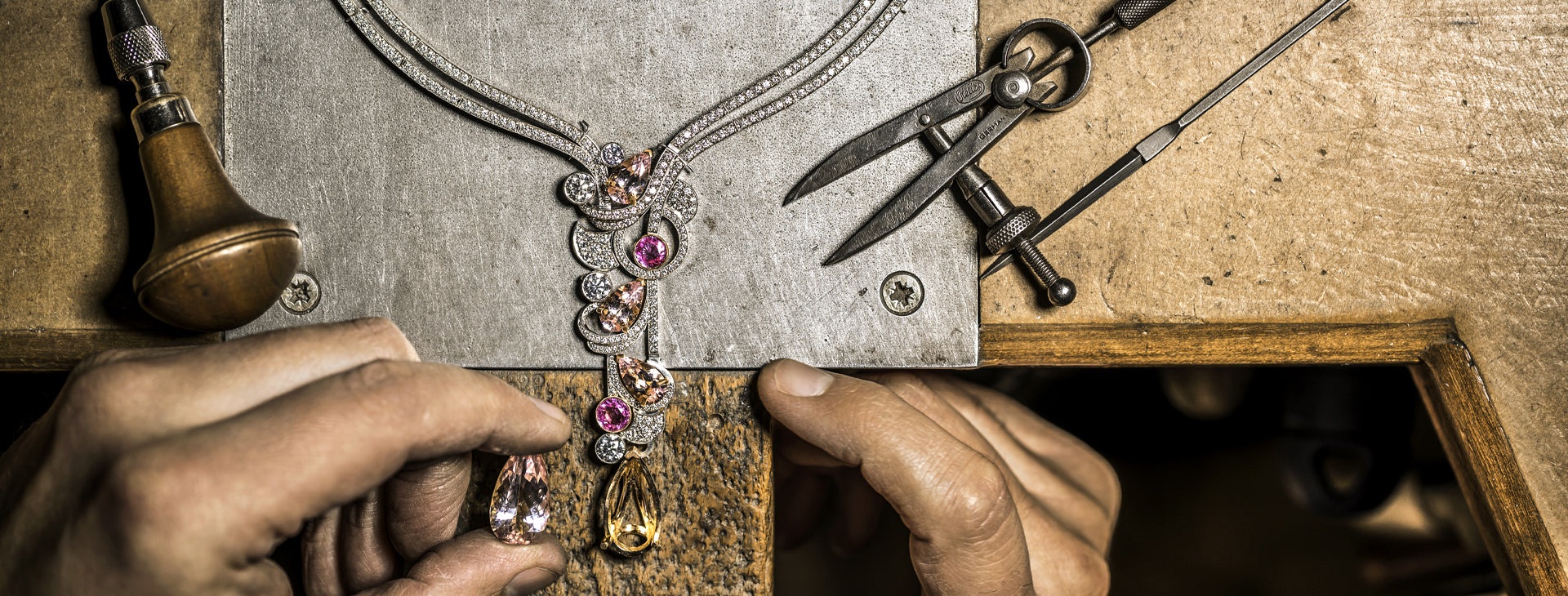
In Boodles’ workshop imagery, components lie on a bench, a pendant rests against a support and a stone is brought towards its setting. These are different projects and different stages, brought together here to examine the house’s making vocabulary. They should not be read as a documentary sequence of one client’s bespoke order.
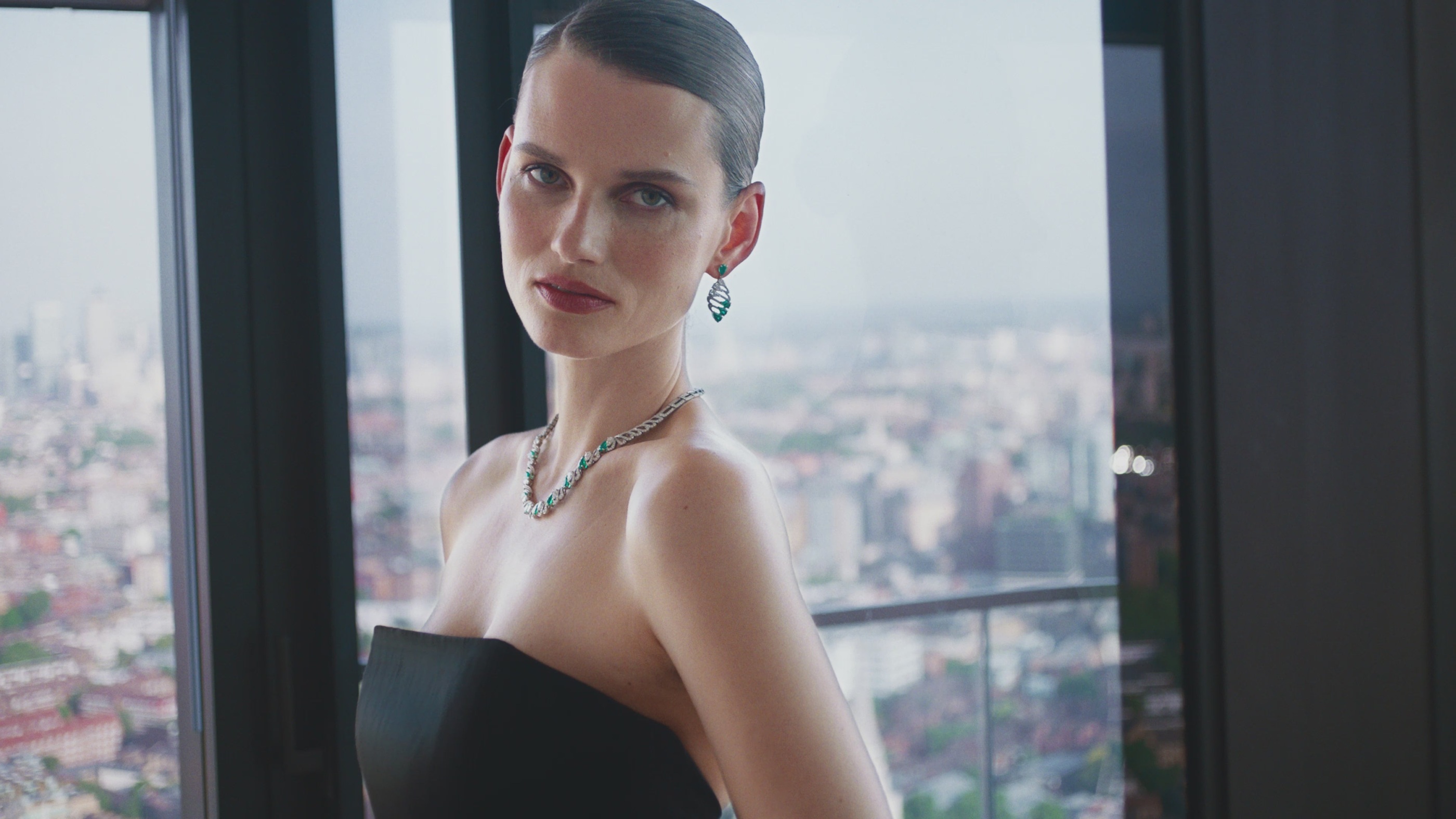
The contrast with the finished campaign image is useful. A jewel seen against clothing belongs to a moving silhouette; on the bench, its individual elements can be considered separately. An owner commissioning a piece benefits from understanding both scales. One explains the intended effect, while the other makes room for a discussion of construction and operation.
Use the design meetings to ask about the parts you will handle: the clasp, the fastening, an articulated section or any element intended to move. Ask how the proposal will be checked for your intended use, and which decisions need to be agreed before making begins. The answer belongs to the actual commission, not to an assumption drawn from another jewel in a campaign.
Keep the brief clear enough to evolve
A good brief gives a designer direction while leaving room for an answer you could not have drawn yourself. Separate the qualities that matter most from the references that simply communicate a mood. “A necklace I can wear with an open collar” is a useful need; a saved photograph may be one possible route towards it.
| Part of the brief | A useful starting point | What the proposal should clarify |
|---|---|---|
| Purpose | Occasion and likely pattern of wear | How the design fits that life afterwards |
| Colour | A stone, palette or combination you respond to | Which actual stones are proposed |
| Scale | Existing pieces and proportions you enjoy | Dimensions and views relevant to wearing |
| Movement | Elements you want to articulate or transform | Construction, handling and agreed functions |
| Relationship | Jewellery and clothes it should accompany | How the complete silhouette works together |
| Delivery | The occasion and records you need | Agreed scope, milestones and accompanying information |
Record the decisions after each substantive meeting. A short account of what was selected, changed or left open can preserve the creative conversation without turning it into an unwieldy file. Ask the team how revisions are presented and approved, and keep the final description with the finished jewel.
A jewel with a life beyond the occasion
The pleasure of bespoke is partly the possibility of recognition: a finished object can express a preference that was difficult to name at the beginning. A particular line of colour, an unexpected proportion or an attachment made to suit the wearer can become the reason the jewel is chosen repeatedly, long after the original celebration.
Boodles’ published process is an invitation to take part in that thinking. The owner’s strongest contribution is an attentive account of taste and use, followed by the willingness to consider how a designer has interpreted it. The conversation begins with possibilities; a successful brief gives those possibilities a direction worth making tangible.
Sources & credits
Methodology and sources
An independent editorial framework for approaching Boodles’ bespoke service, illustrated with the house’s official design, workshop and campaign imagery. The photographs include different creations and are not presented as one commission. No appointment, workshop visit or commission was undertaken; timing, material selection, price and feasibility require an individual proposal.