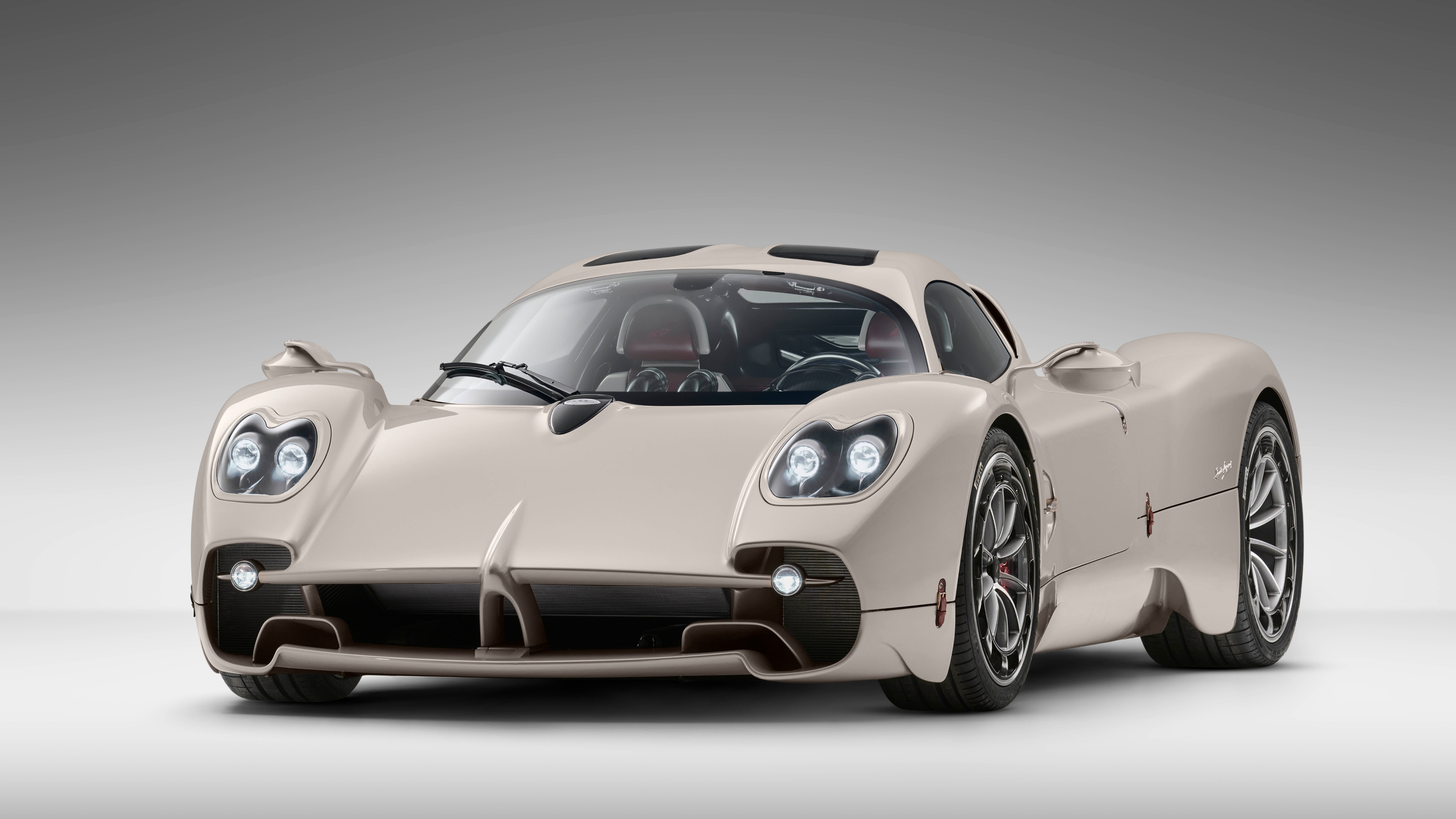
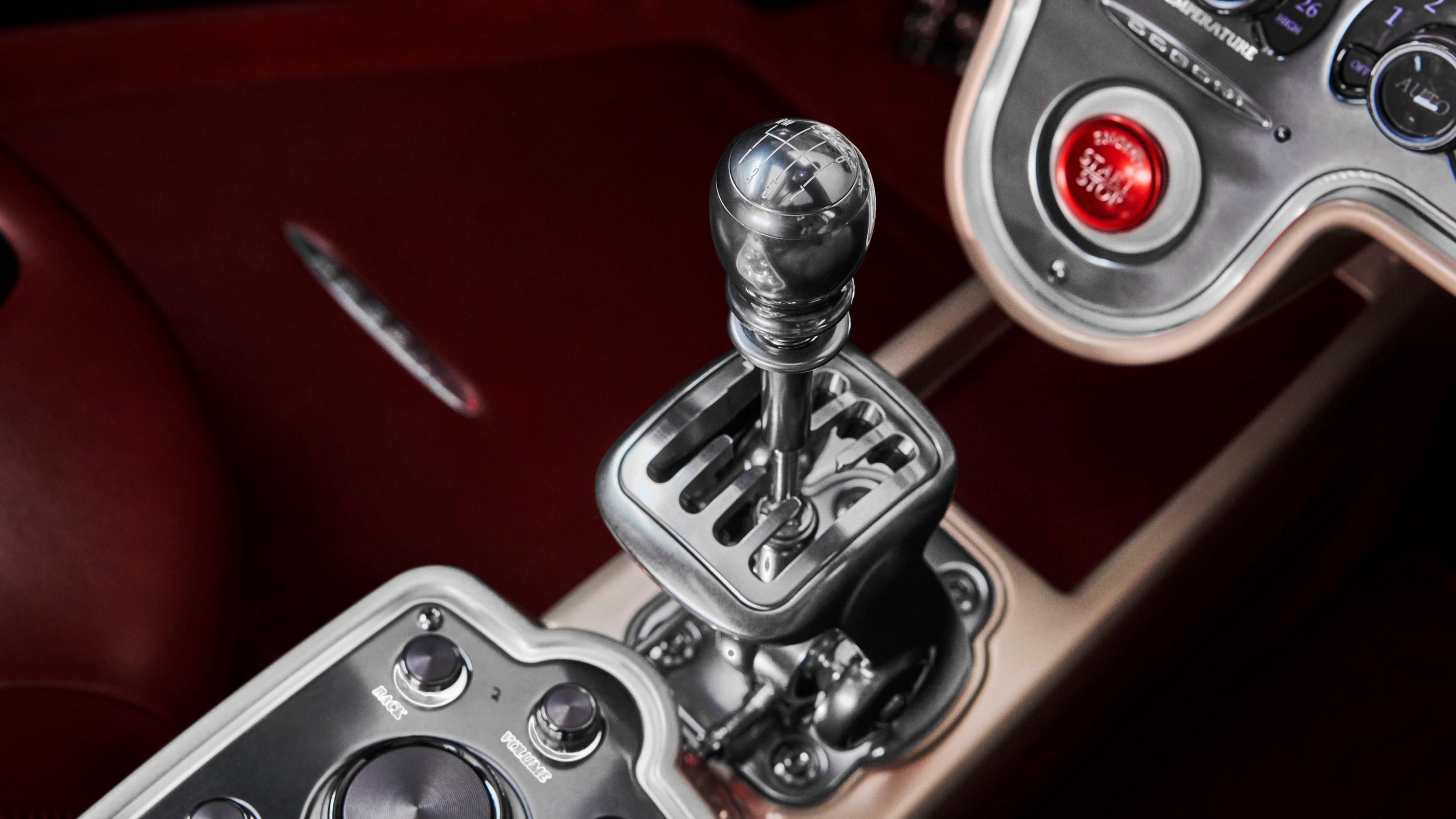
An open gearchange mechanism sits between the seats of the Pagani Utopia. Around it, the cabin is full of curved metal, leather and instruments with visible depth. The appeal of this car begins with that invitation to look closely: its mechanical identity is expressed in the objects the driver touches, as well as in the engine behind the cabin.
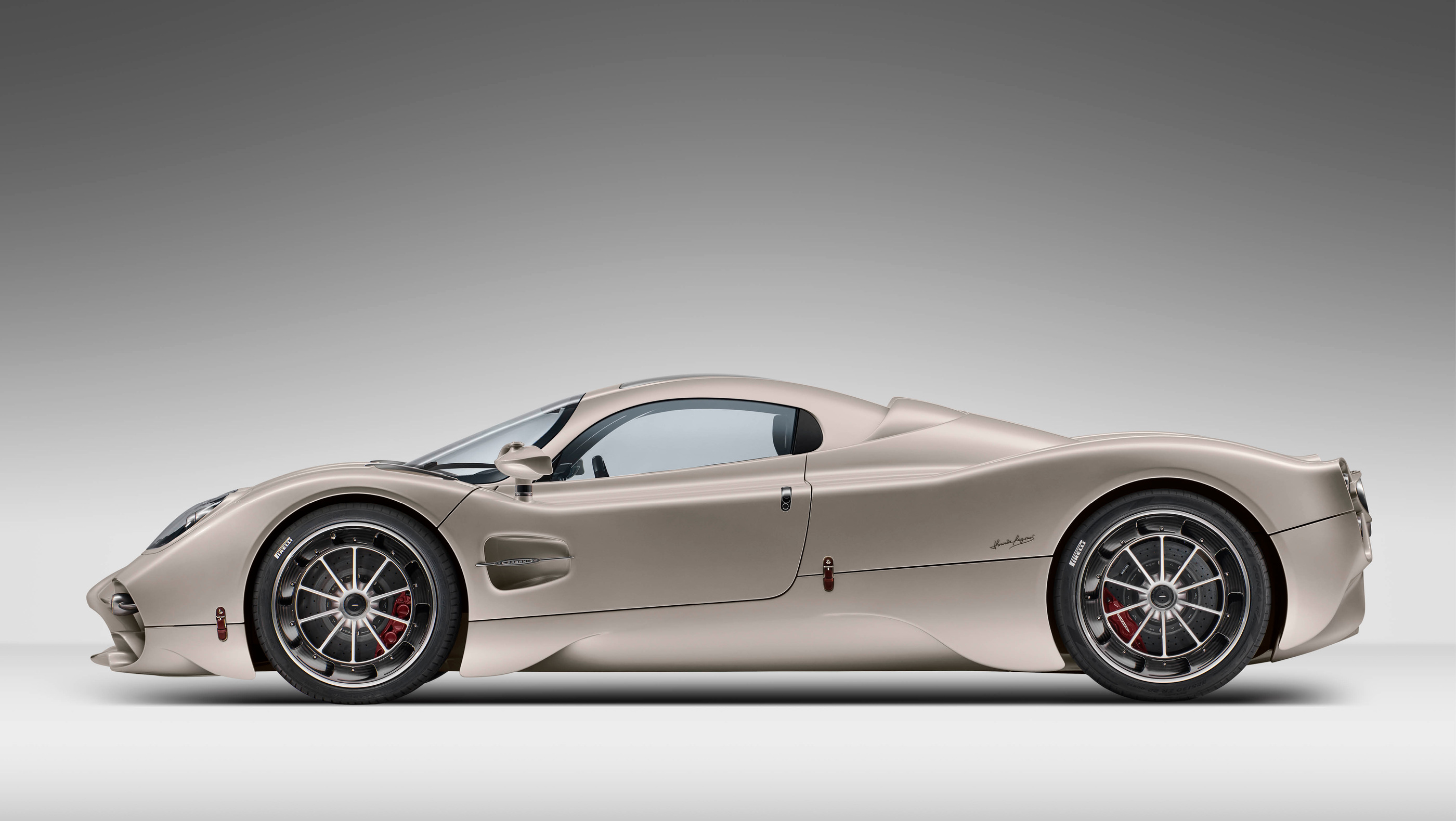
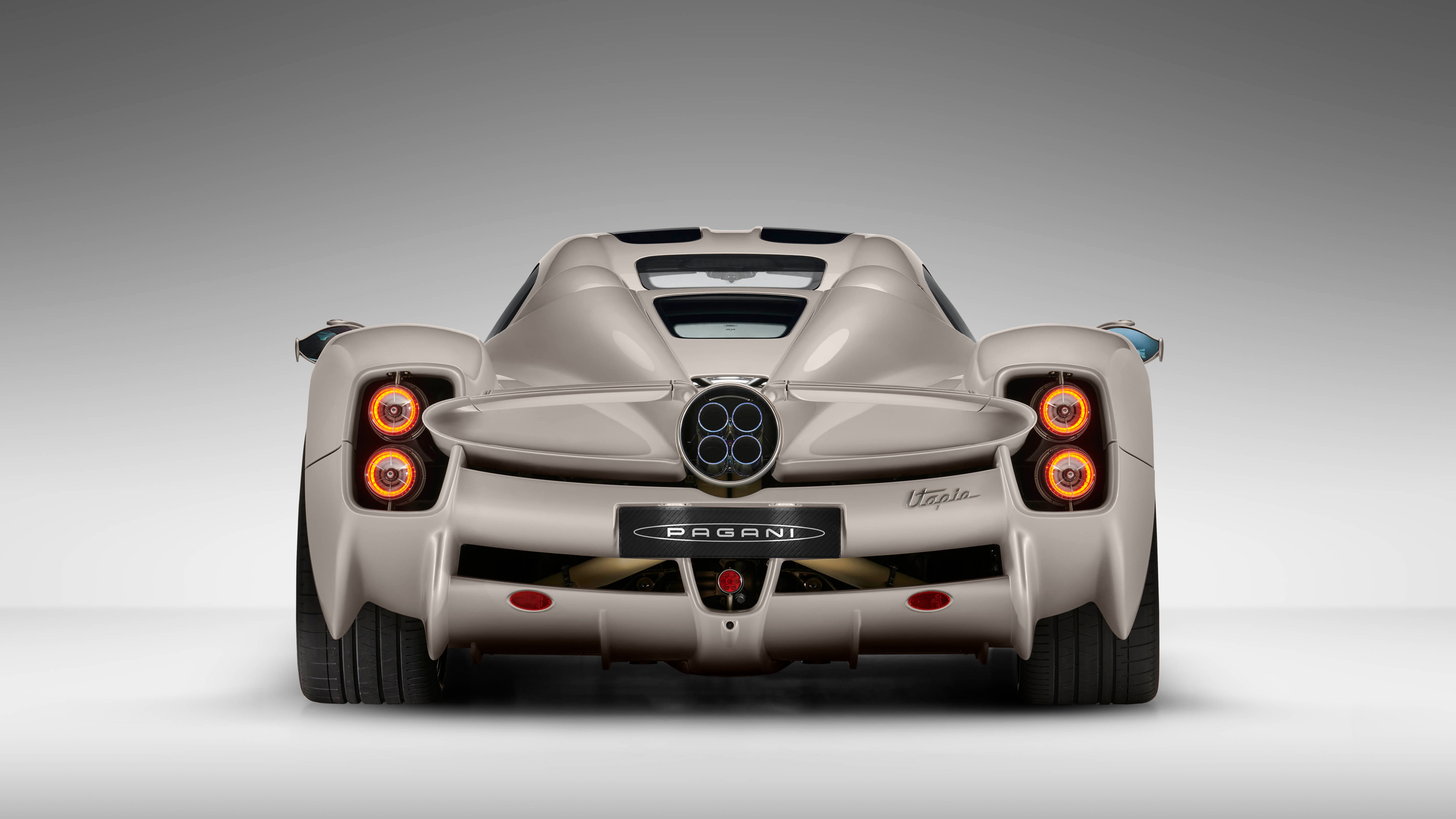
A silhouette with a continuous line
The Utopia’s side profile gives a useful starting point. The cabin sits within a body whose surfaces continue into rounded wings and a tapering rear. In the official studio views, the quieter expanses of bodywork allow the openings, lights and exposed components to register as individual shapes. The overall line remains readable before the details demand attention.
Pagani presents the car as the C10 project, following the Zonda and Huayra. The imagery selected here comes from the original coupé’s official presentation. It gives several complementary views of the same design: profile, front, rear and the body opened to reveal what sits beneath it. These are studio visuals, rather than evidence of a road test or a particular customer’s car.
What makes the profile worth studying is the relationship between enclosure and interruption. The body provides a continuous outline; the wheels, air passages and mirrors interrupt it at deliberate points. Viewed at that scale, decoration and functional packaging become part of one composition. Looking closer should add information without dissolving the identity of the whole car.
The gearchange deserves its own chapter
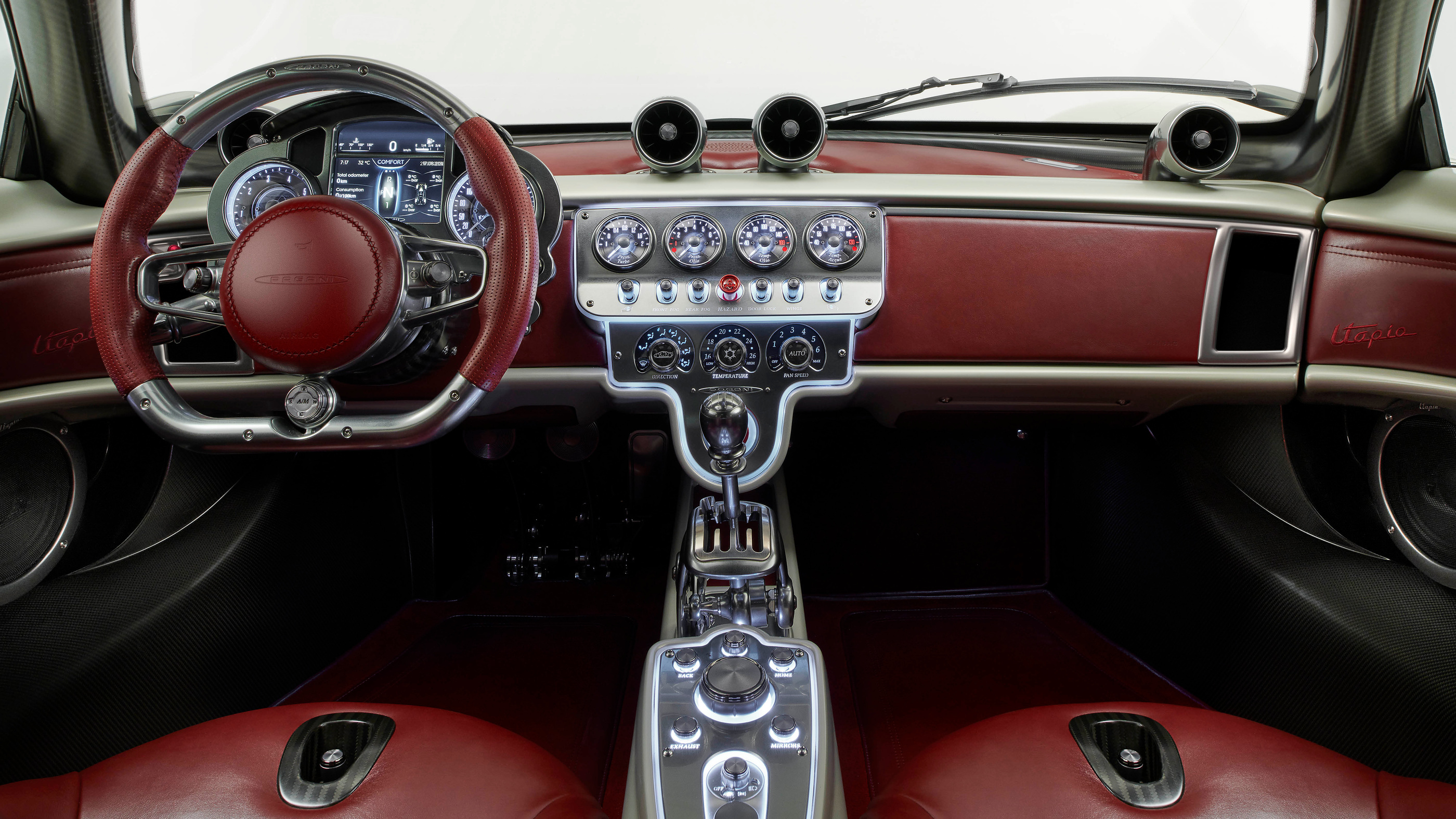
The exposed mechanism is one of the cabin’s most revealing objects. A broad view establishes its position between the seats. A close view separates the lever, joints and supporting structure. Showing both avoids reducing it to a decorative metal flourish: it is a control whose construction has become part of the interior’s visual language.
Pagani documents a seven-speed transmission developed with Xtrac, offered in manual and automated forms. The visible manual control shown in these studio images belongs to that particular arrangement. It should not be used to imply that every Utopia has the same driver-operated mechanism or that the two transmission choices provide an identical experience.
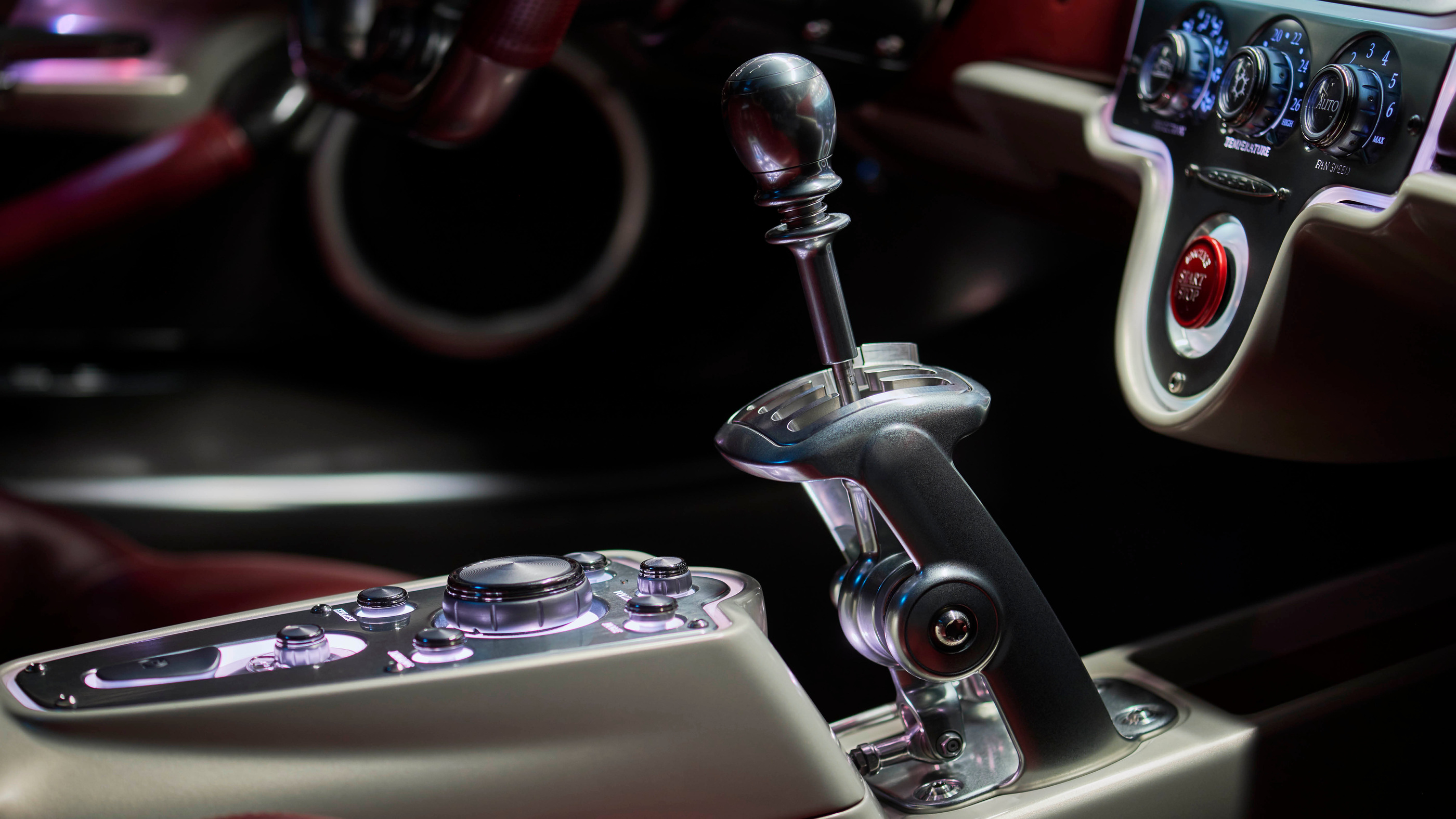
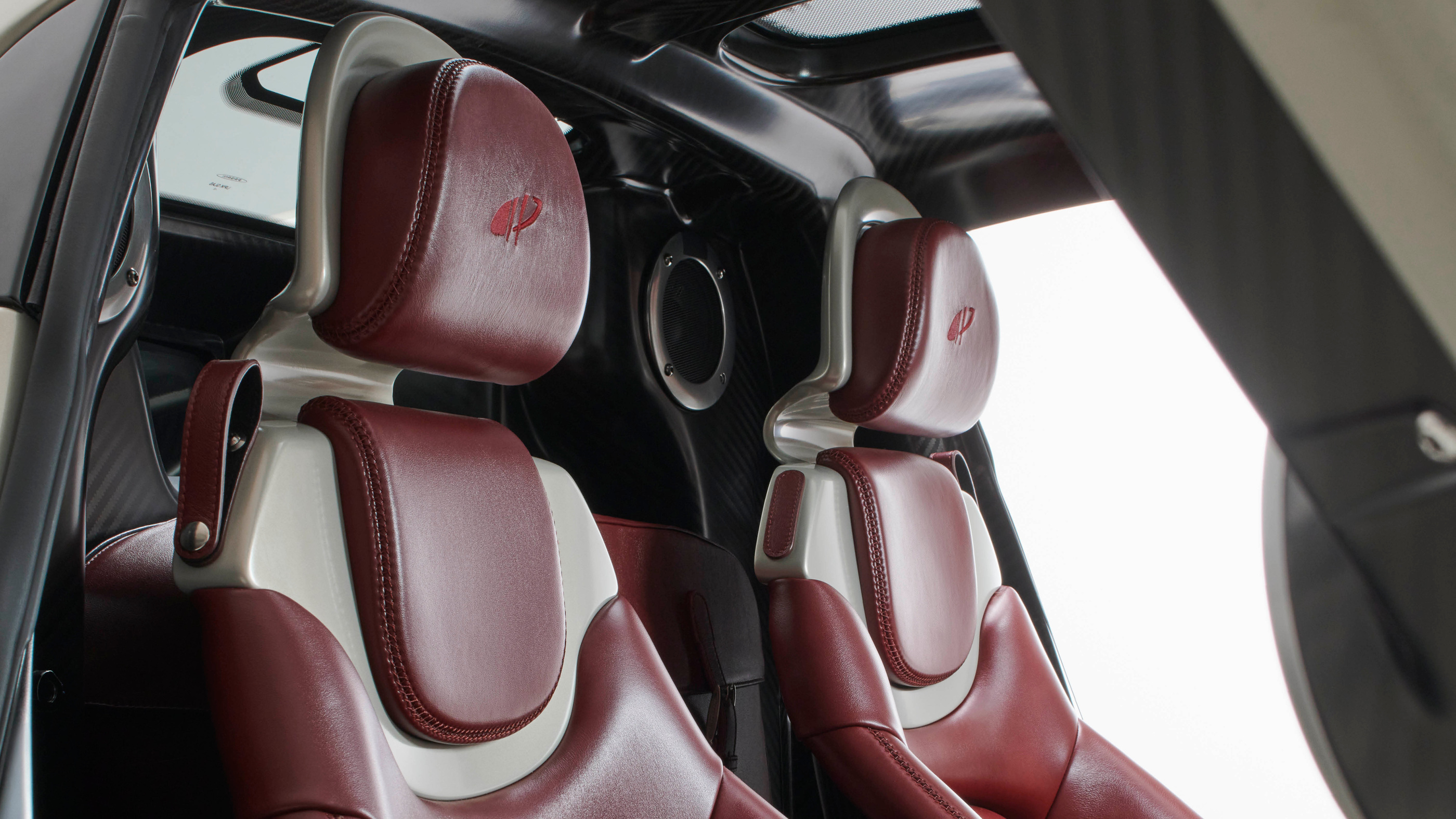
The editorial interest is in the commitment to making a control physically legible. A driver’s hand would approach an object with shape and distance, rather than a graphic representation of a function. Judging the force, precision or ease of that action requires direct use. The photographs can establish the design and its place in the cabin, while leaving those experiential questions open.
Instruments with depth, surfaces with purpose
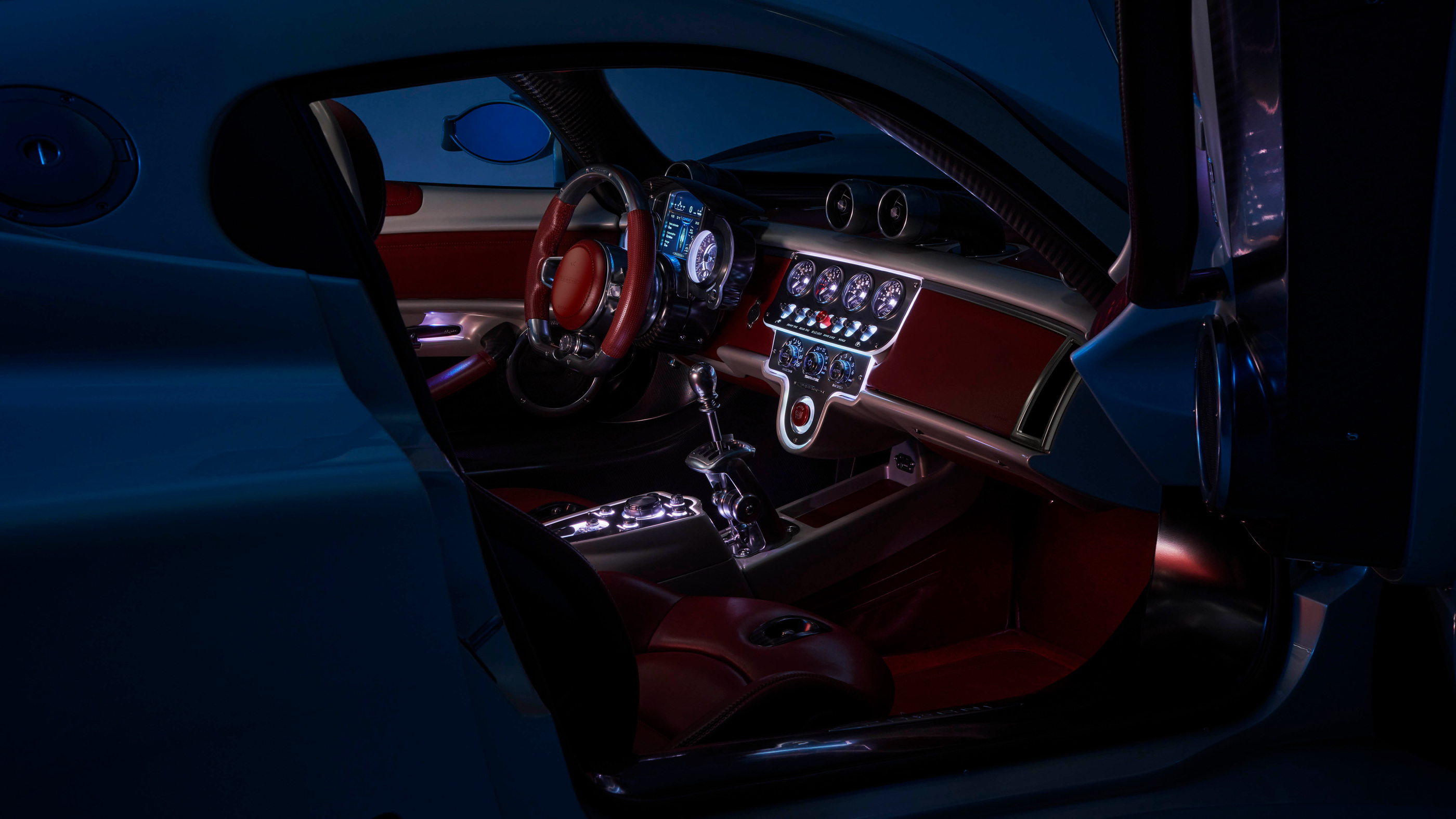
The dashboard photographs show a series of instruments and controls arranged across a sculpted interior. The dials have a sense of depth; the metal surfaces catch light differently from the upholstered areas around them. These differences give the eye a way to distinguish what is meant to be read, touched or simply form the surrounding space.
Pagani describes the steering wheel as machined from a solid aluminium block. That manufacturing statement becomes more interesting beside the cabin image: a component normally understood as a familiar outline is presented as a deliberately shaped object. The same editorial approach applies to the pedals and the visible control mechanism. Material and construction explain the design rather than merely decorate the specification.
The warmer leather provides a counterweight to the density of metalwork. Its role in the composition is to give the seats and the surrounding cabin a different visual pace. A close photograph of a control should therefore be followed by a wider view of the occupied space. Otherwise, the car begins to read as a collection of jewellery-like components instead of a place for two people.
Opening the body changes the reading
The studio view with the body opened is a valuable change of scale. It interrupts the polished exterior sequence and reveals the car as a structure around a powertrain, two seats and four wheels. The comparison is especially useful because it uses the same visual setting: the reader can connect the closed silhouette with the arrangement beneath it.
The manufacturer identifies a six-litre twin-turbo V12 built by Mercedes-AMG for Pagani, with published torque of 1,100 Nm. Those facts explain why powertrain packaging deserves a substantial part of the story. They do not, by themselves, tell a reader how the car responds on a road or how approachable it will feel in unfamiliar conditions.
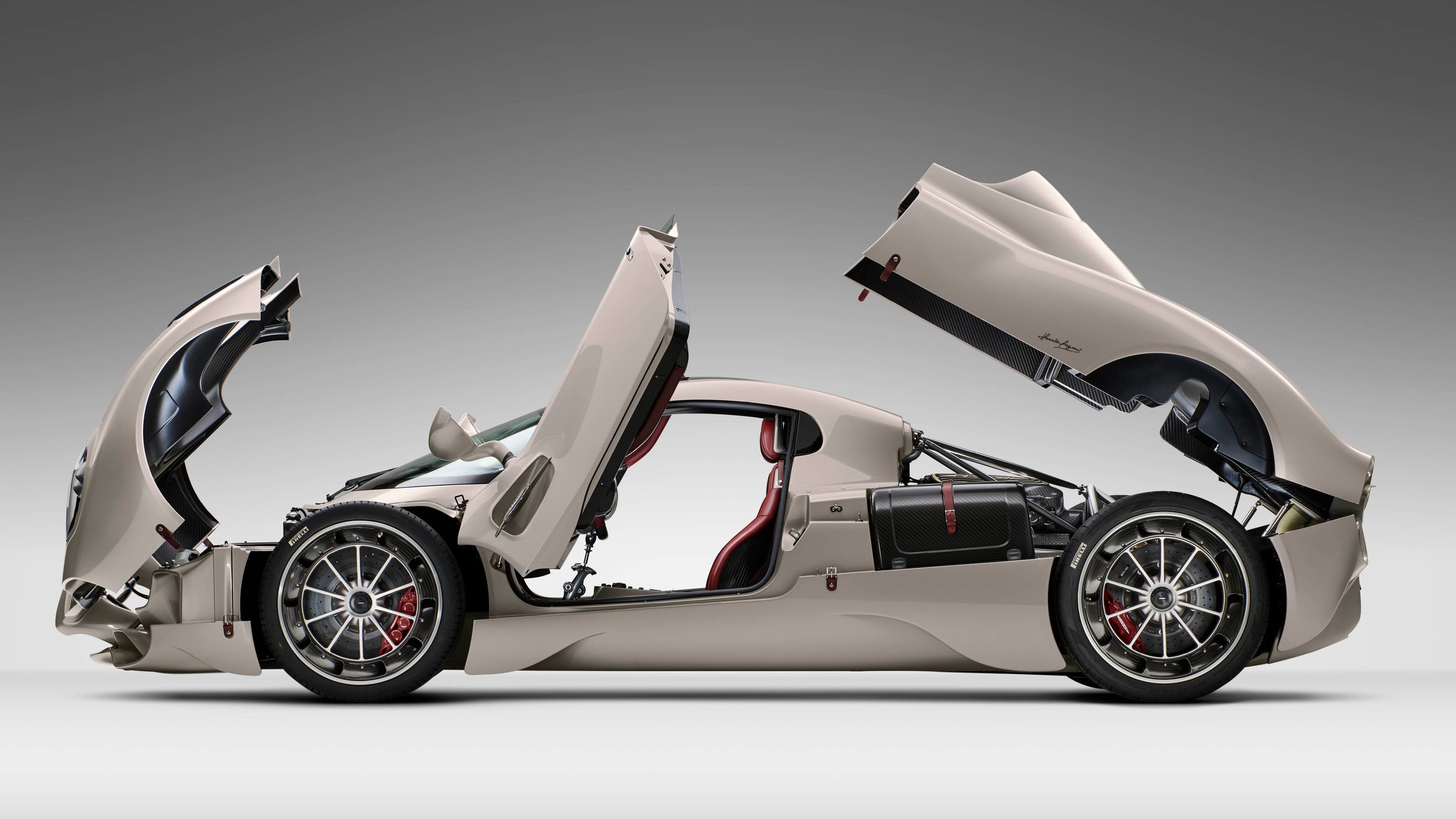
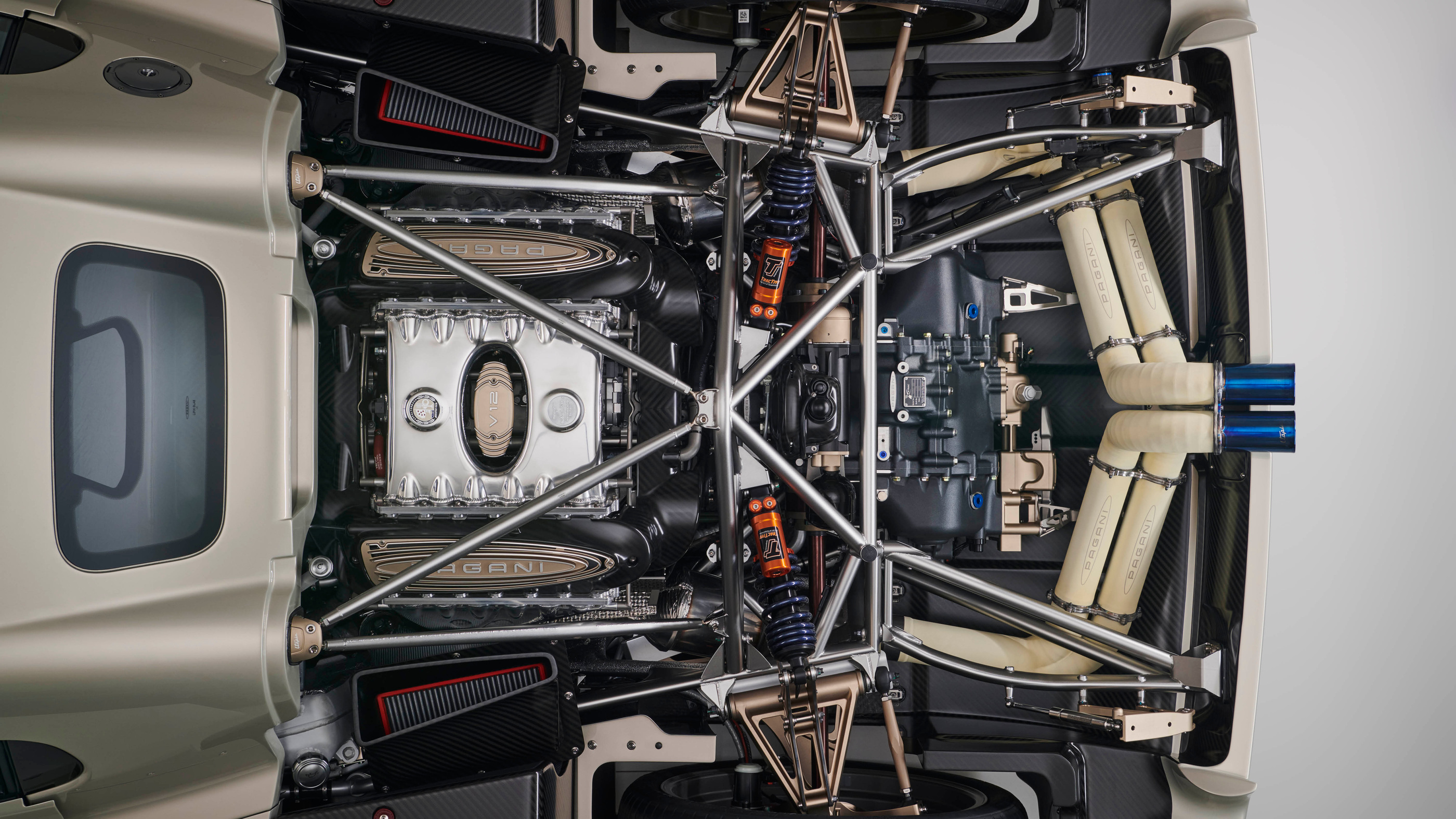
For an owner, the useful questions extend beyond the engine’s headline numbers. They concern the transmission selected, the service arrangements and the practical conditions under which the car will be used. A beautiful engine image can open that conversation, but it cannot replace the documentation for an individual vehicle or a direct assessment of its operation.
A concise design and mechanical reference
The table separates published construction from the aspects that need direct examination. It is a reference for the original Utopia coupé shown here, rather than a comparison with subsequent variants or an assertion that all bespoke selections are identical.
| Element | Official description | Editorial significance |
|---|---|---|
| Engine | Six-litre twin-turbo Mercedes-AMG V12 | The powertrain shapes the car’s packaging |
| Torque | 1,100 Nm, manufacturer-stated | Transmission design needs its own explanation |
| Transmission | Seven-speed Xtrac, manual or automated | The chosen configuration changes the control interface |
| Steering wheel | Machined from solid aluminium | A familiar control treated as a constructed object |
| Structure | Carbo-Titanium and Carbo-Triax programme | Construction sits beneath the smooth exterior |
| Images | Official original-coupé studio visuals | Design evidence rather than driving impressions |
The most useful specification is one that connects a fact with something the reader can see or ask about. That keeps the technical reference in the same conversation as the bodywork and the cabin, instead of treating design as a prelude to a detached list of numbers.
The value of looking twice
Utopia rewards two kinds of attention. From a distance, it has a coherent silhouette. At close range, its controls and components reveal their own formal decisions. The relationship between those scales is the strongest part of this visual study: the car can be understood as a whole and then examined piece by piece.
The gear mechanism makes that relationship unusually clear. It is small compared with the car, yet it expresses the larger commitment to physical controls and visible construction. A successful presentation gives it room without losing the surrounding cabin. That is how an object can carry the identity of an entire design.
Utopia rewards two kinds of attention.
Sources & credits
Methodology and sources
This feature uses Pagani’s official Utopia coupé presentation and English launch document. It is not a road test; no handling, sound or control feel is claimed from direct experience. The images are labelled as official studio visuals. Interpretation of their composition and design hierarchy is LuxeDigital’s own.