An owner who makes a yacht available for charter is coordinating two calendars: the life they want aboard and the service offered to guests. The interesting part of a charter management brief is the space between them. It defines how availability, preparation, presentation and decisions are organised before the first enquiry becomes a booking.



Begin with the owner’s use
Burgess presents charter management separately from its yacht management offer. That distinction is useful: presenting and organising charter availability is not the same question as the full operation of a vessel. The exact division of responsibilities must come from the proposal for the yacht concerned, not from the general title of a service.
Write down the intended private use first. Which periods matter to the owner, which remain uncertain, and who can approve a change? A clear instruction gives the charter team a reliable basis for discussing availability. It also makes the trade-off visible when an attractive enquiry falls near a period the owner hoped to retain.
Treat a provisional date as provisional. Ask how the manager records the different states of the calendar and communicates changes to the people who need them. The owner should know what has been requested, held or committed under the applicable arrangements. Those distinctions belong in the actual process and documents used by the appointed team.
A compelling presentation needs accurate boundaries
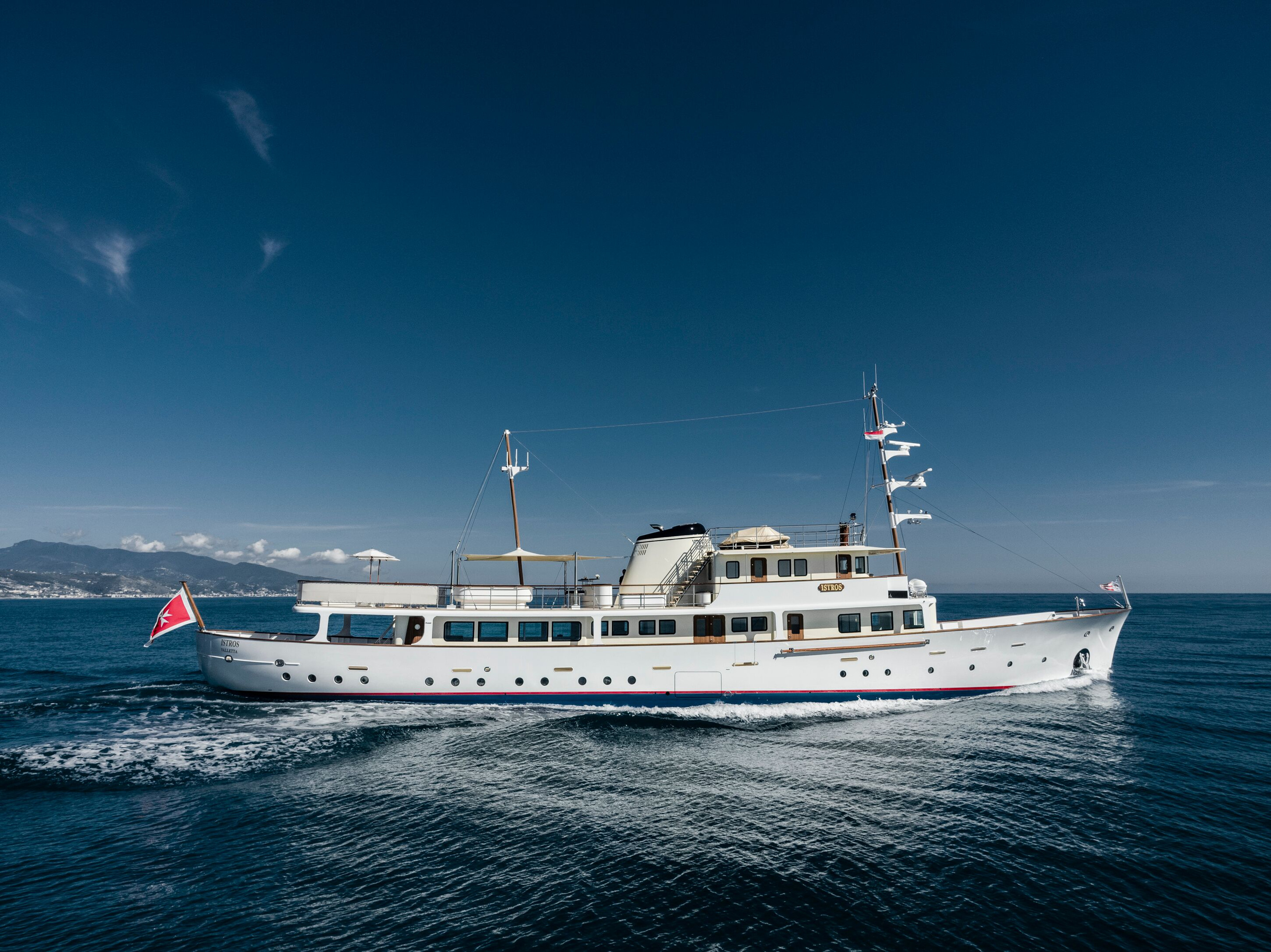
The official Burgess imagery shows why photography matters: decks, hospitality, the yacht in its setting and the scale of life aboard. A charter presentation should help a prospective guest understand the actual yacht offered. Ask who checks that the current images, descriptions and available equipment match the configuration under discussion.
Consider changes that are easy to overlook in a beautiful brochure. A space may have been refitted, a particular item may be unavailable, or a service may depend on another arrangement. Ask how those changes reach the marketing material and the people handling enquiries. The point is accuracy, not a promise that every pictured activity is included.

In this article, each official photograph is identified as a published yacht or hospitality image. The illustrations are not an offer, an availability statement or evidence of a charter experience we purchased. Their editorial role is to connect the commercial brief with the spaces and operations that guests will encounter.
Define preparation as a sequence
Ask how the proposed charter schedule fits with private use, maintenance and the work of the captain and crew. The manager should explain the responsibilities and planning assumptions appropriate to the yacht. An owner should not need to infer the preparation requirements from the number of open days on a calendar.
Use a realistic hypothetical sequence when discussing the service: private use ends, the yacht is prepared, guests arrive, the charter finishes and the next instruction begins. Which decisions must be settled at each transition? Who confirms readiness? The example is a tool for evaluating the proposal, not a universal operational procedure.
Keep the legal, tax, insurance and vessel-specific operational questions with the relevant professionals. The editorial brief should identify that those questions exist and who is responsible for resolving them. A marketing plan does not by itself establish whether a particular arrangement is suitable or permitted for the owner’s yacht and circumstances.
What a useful brief makes visible
| Part of the brief | Owner’s question | A useful response |
|---|---|---|
| Private use | Which dates and decisions remain reserved? | An agreed calendar authority |
| Presentation | Who checks the current description and images? | Named responsibility and revision process |
| Preparation | How do the proposed periods fit the operating plan? | A coordinated planning explanation |
| Enquiries | Which decisions return to the owner? | An explicit approval route |
| Reporting | What shows the activity and its outcome? | A sample with defined measures |
Compare proposals against the same instruction. One may include a different level of presentation work, enquiry handling or reporting from another. Ask for the differences to be explained before comparing the headline fee. The useful commercial question is which service the owner actually needs, not which document uses the most expansive language.
Avoid building the brief around a generic revenue promise. The outcome depends on circumstances that a magazine cannot establish from a public service page. Ask the appointed team to explain the assumptions behind any forecast, the costs and exclusions considered, and how actual performance will be reported. Keep a forecast distinct from a commitment.
Review the service through decisions
A periodic conversation can be organised around the choices made during the season. Were requests routed correctly? Was the owner clear about availability? Did the presentation remain accurate? Which questions repeatedly delayed an answer? This turns the review into a refinement of the working relationship rather than a discussion of a single headline number.
Keep the approved changes with the current brief. If the owner wants a different balance of private use and charter availability, update the instruction and its implications with the responsible team. A charter programme should remain a deliberate part of ownership, with the owner’s intentions legible to everyone who acts on them.

Keep the current instruction together
Nominate the person who maintains the owner’s current brief and distributes approved changes. A calendar adjustment, a revised image or a new instruction about a particular period should reach the relevant team through an agreed route. This avoids making the most recent informal conversation the only place where an important decision exists.
At review, distinguish activity from outcome. A report can show enquiries, responses and confirmed work, but the owner also needs to understand what each measure means and which decisions influenced it. Agree those definitions with the manager. Useful reporting explains the programme in its own circumstances rather than inviting comparison with an unrelated yacht’s headline performance.
The Luxe Digital view
A convincing charter programme begins with an honest account of how the owner wants to use the yacht. The manager’s proposal can then explain how availability, preparation and presentation serve that account. The result worth pursuing is a coherent service, with its opportunities, obligations and uncertainties visible before commitments are made.
A convincing charter programme begins with an honest account of how the owner wants to use the yacht.
Sources & credits
Sources and methodology
Independent editorial analysis of the identified primary records and official imagery, checked on 15 October 2026. Project and product descriptions are attributed to their publishers; commissioning frameworks, hypothetical scenarios and editorial judgements are LuxeDigital’s own analysis. We did not visit, purchase, test or audit the illustrated installations, services, software or passport flows. The scope is general editorial information. It does not establish private ownership, authenticity, condition, insurance cover, personal suitability or a provider’s future performance. Images retain their identified subject and context; illustrative product photographs are not private collection evidence.