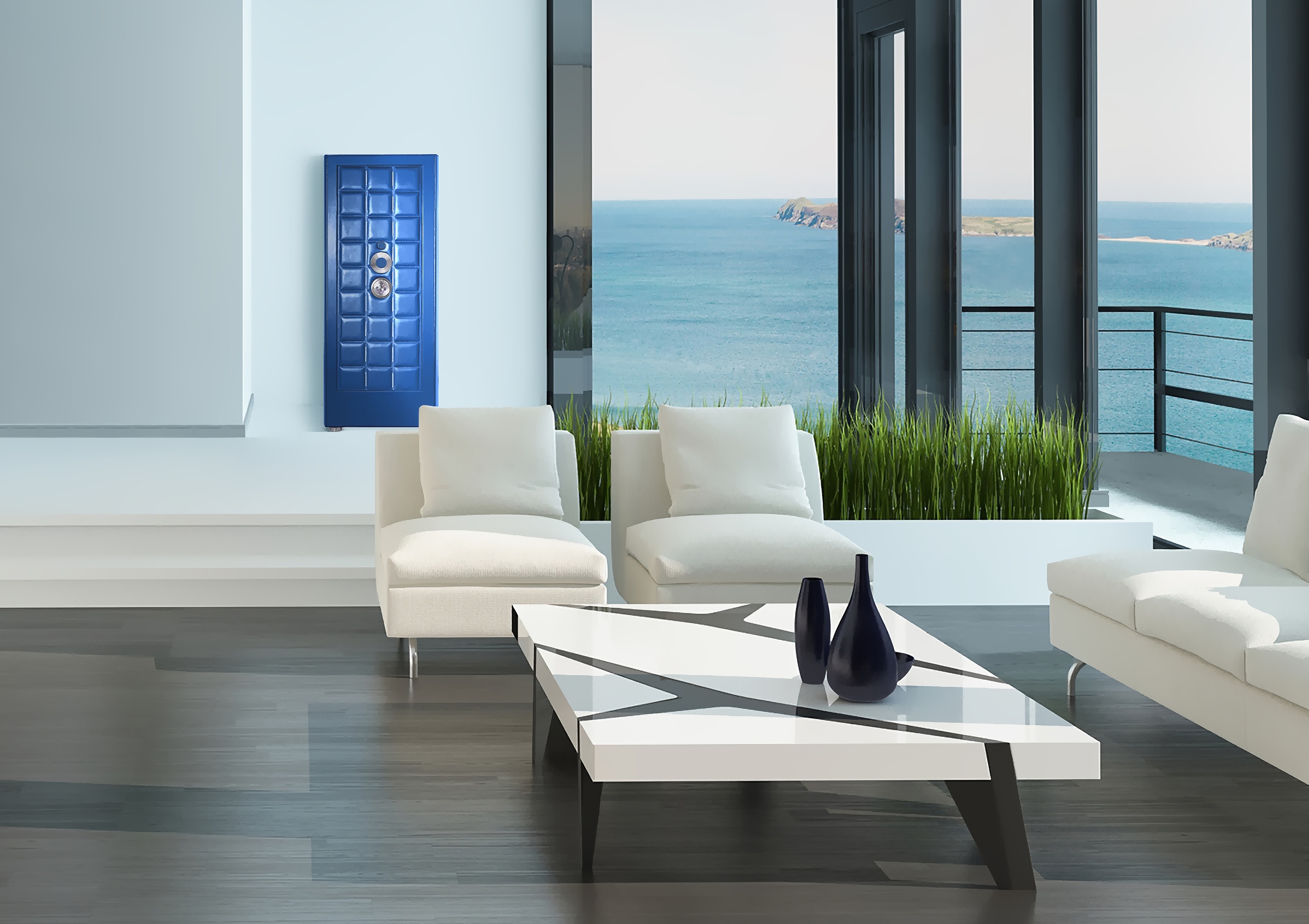
A collection safe is an unusually intimate piece of furniture. Its exterior belongs to a room; its interior belongs to the habits of one owner. BUBEN&ZORWEG’s ORION makes that relationship visible through quilted leather, a polished frame and an organised interior. The useful starting point is the collection that will move through it: which pieces are worn, which are kept together, and what a comfortable daily exchange should feel like.

The collection writes the interior
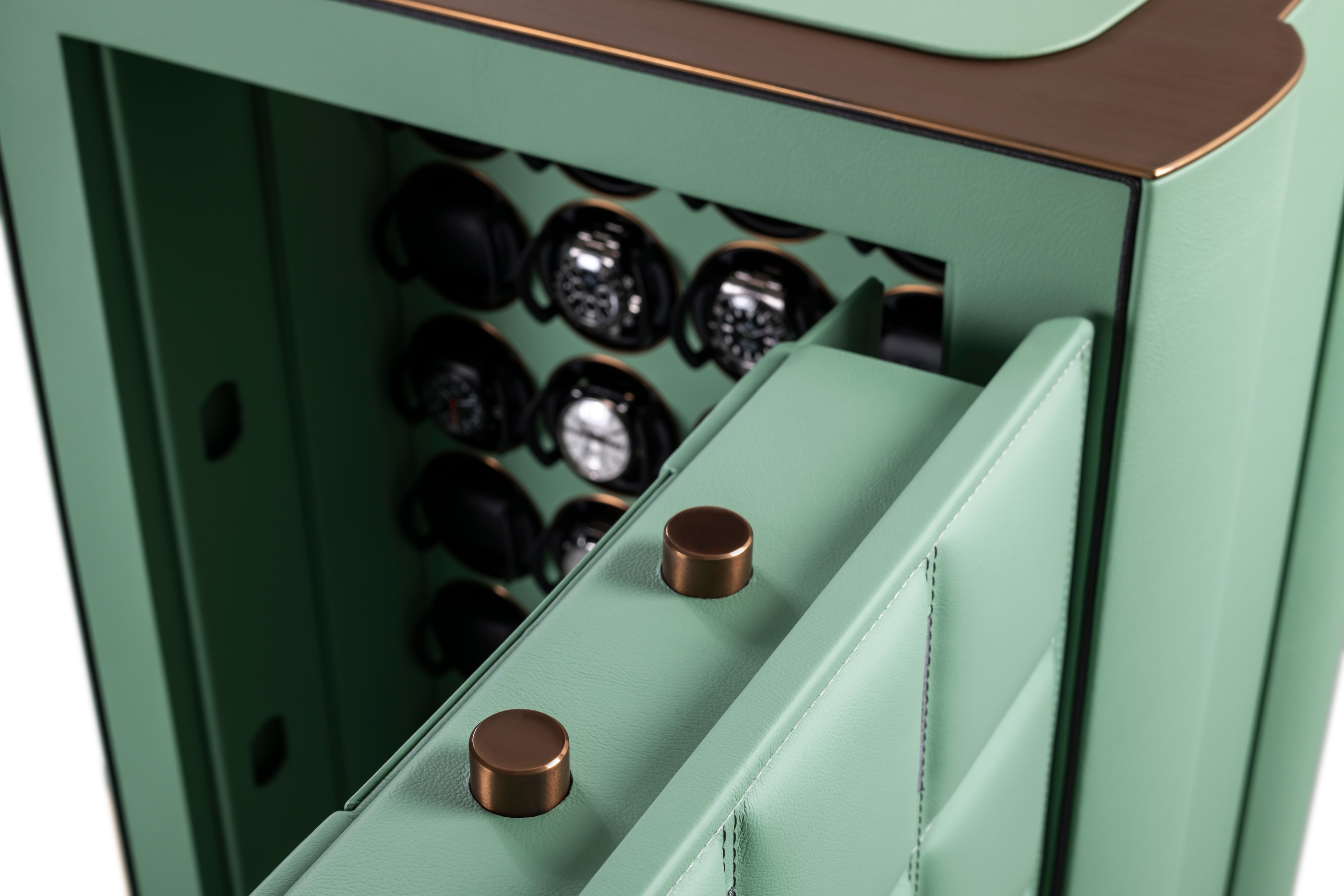
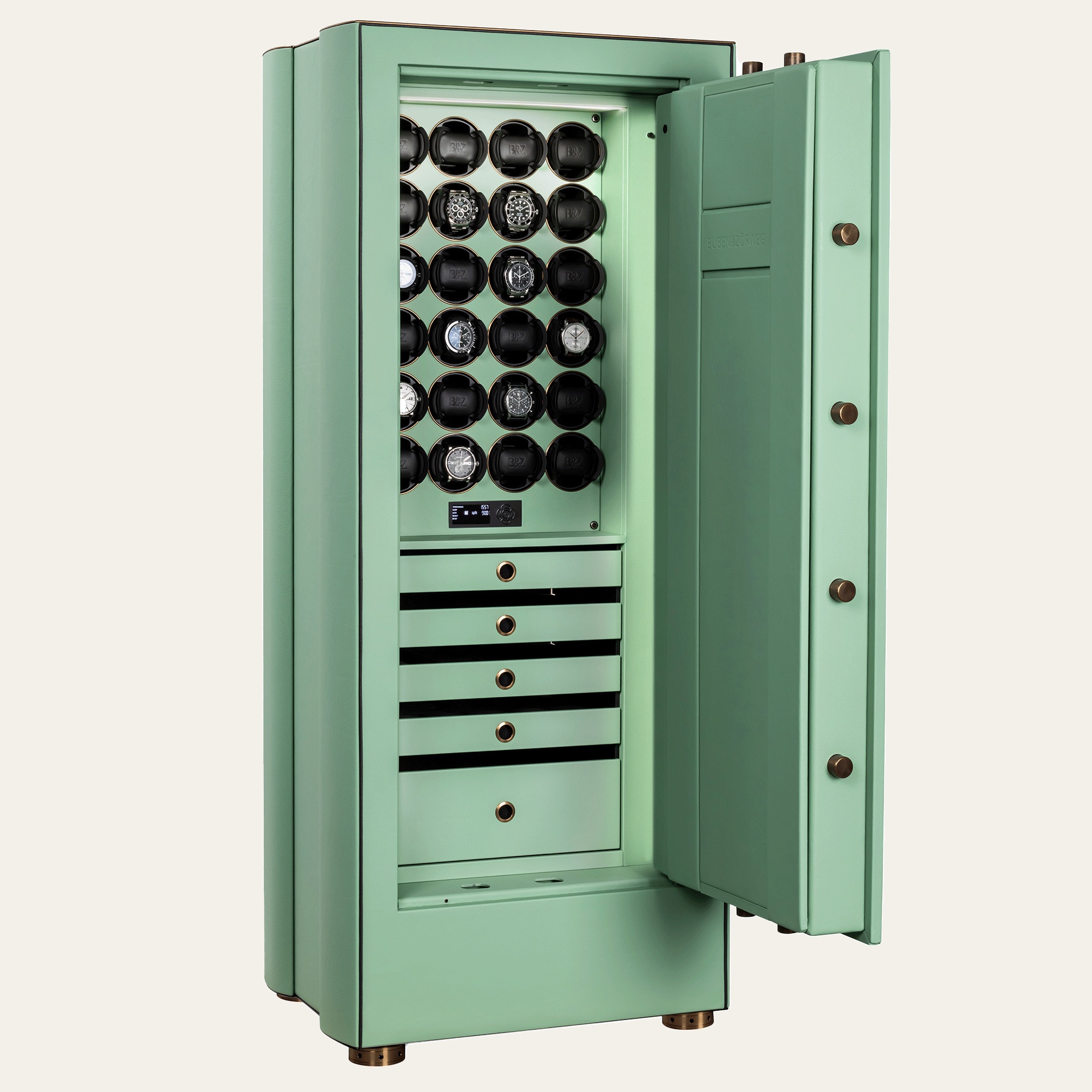
An attractive open safe photograph invites the eye to count positions. A more revealing exercise is to follow a single object. Imagine taking out an evening watch while returning the one worn during the day. Where does the first bracelet rest while the second is lifted? Where do spare links, a small pouch and the accompanying record belong? These ordinary transitions give a specification more substance than a headline capacity.
Start with an inventory divided by use rather than value. Frequently worn pieces need a different relationship to the hand from objects that are rarely disturbed. Jewellery introduces its own shapes and pairings. A long necklace, an articulated bracelet and a pair of earrings each ask something different of a tray. A good conversation with the maker can begin with these groups before finishes are selected.
The result should also be understandable when the collection changes. Allowing for an acquisition, a service absence or a temporary travel selection does not necessarily mean ordering a larger cabinet. It may mean agreeing an interior arrangement that can be revisited. Ask which inserts and divisions belong to the quoted configuration, and what a later alteration would involve.
Leather gives order a visible rhythm
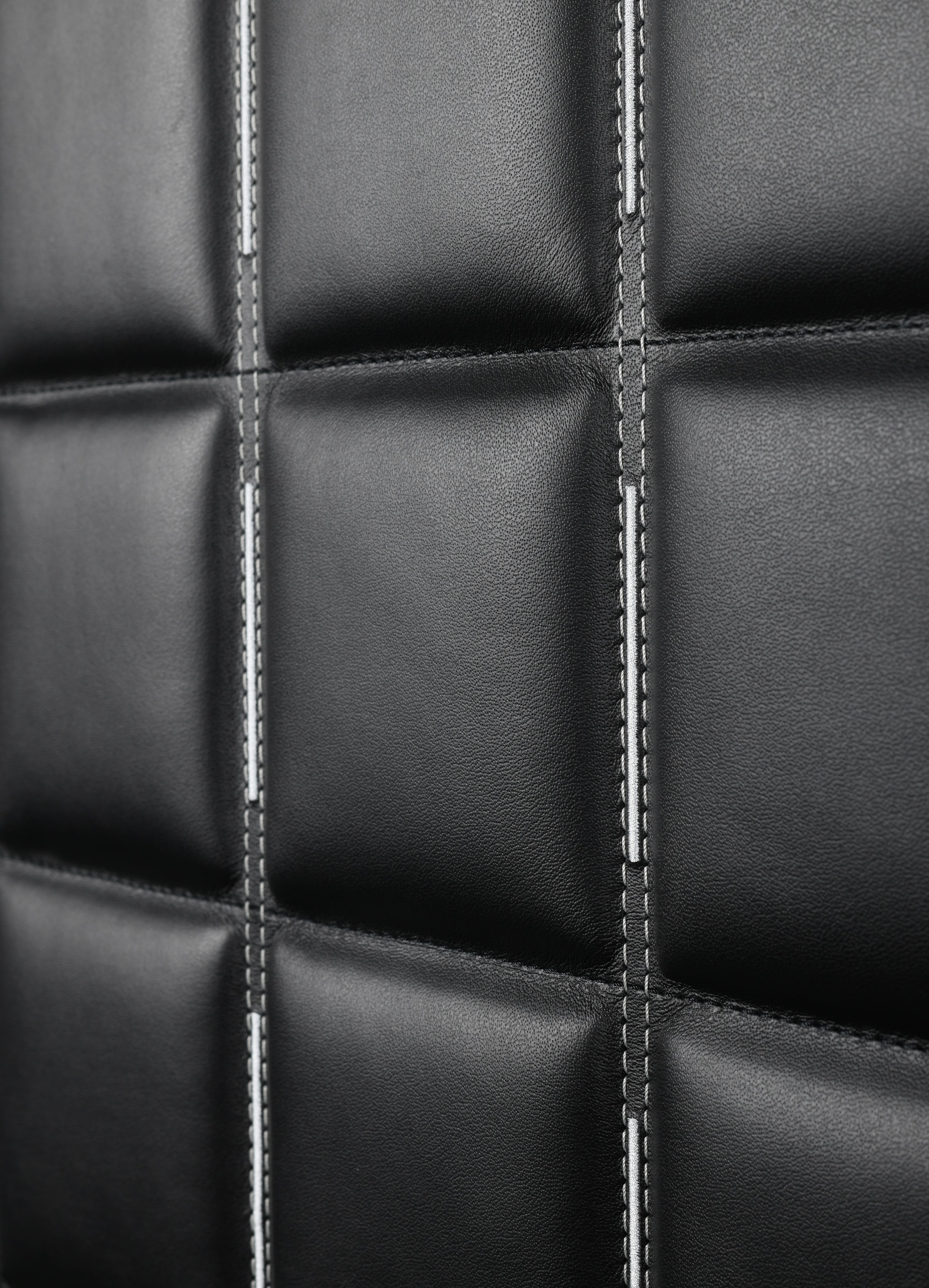
The manufacturer dates the ORION collection to 2013 and identifies its padded square pattern as a defining feature. In the official photographs, the repeated squares turn the door into a measured surface. Light catches the raised edges; stitching establishes another, finer rhythm. The effect is closer to upholstery than to the anonymous face of a metal cabinet.
That visual softness matters to the room around it. A safe placed near dressing furniture will be seen alongside textiles, timber and the things a person handles every morning. A finish sample should therefore be read beside the actual joinery and under the room’s lighting. A colour selected on a bright screen can establish a direction; the physical meeting of two surfaces determines the final relationship.
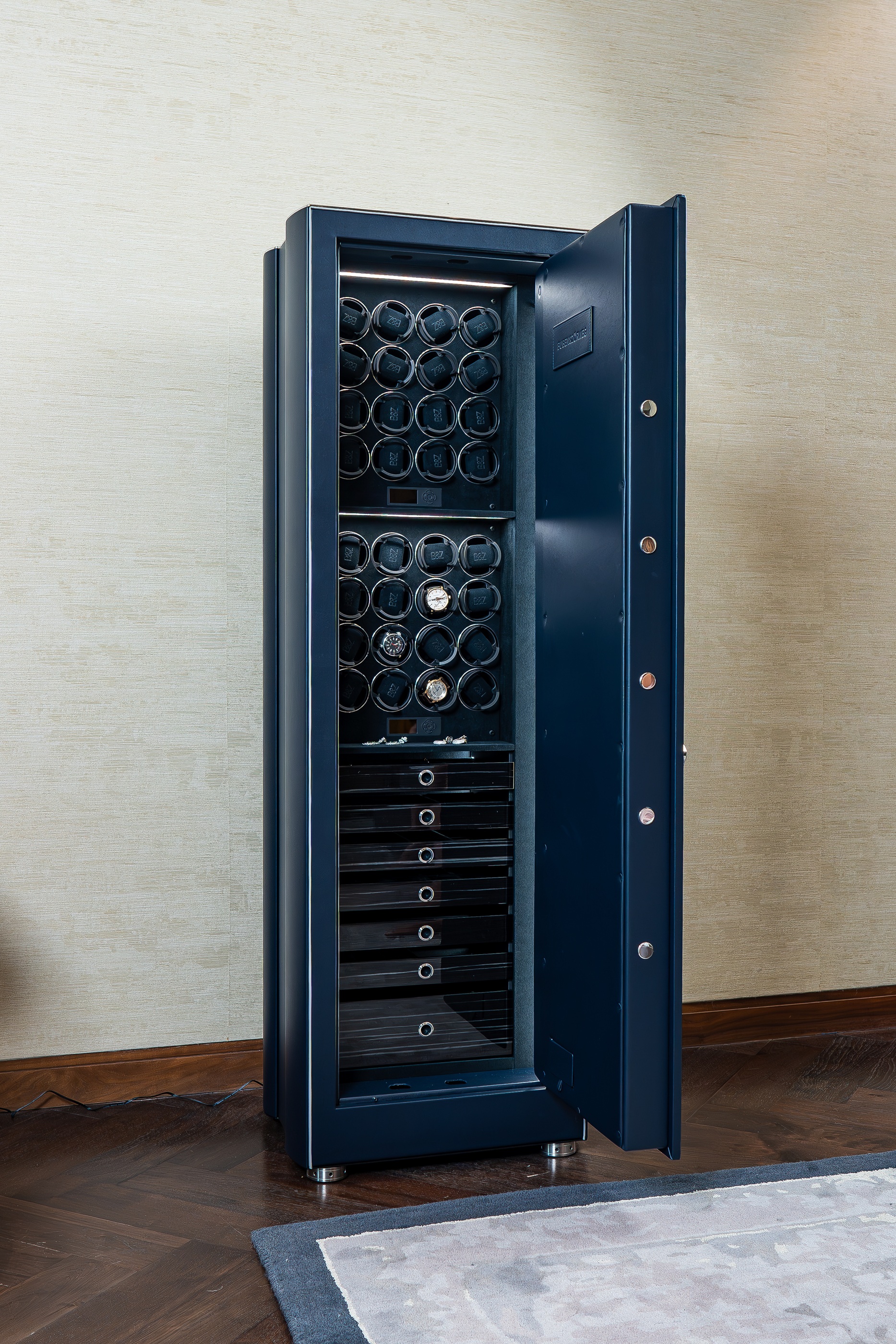
ORION is offered in several sizes and leather and steel colour combinations. The photographed mint and blue examples are individual expressions within the collection, not a promise that every visible detail is standard on every order. Keep the selected finish, interior and model identity together in the final schedule. That is how a beautiful reference becomes a precise commission.
A small architecture of touch
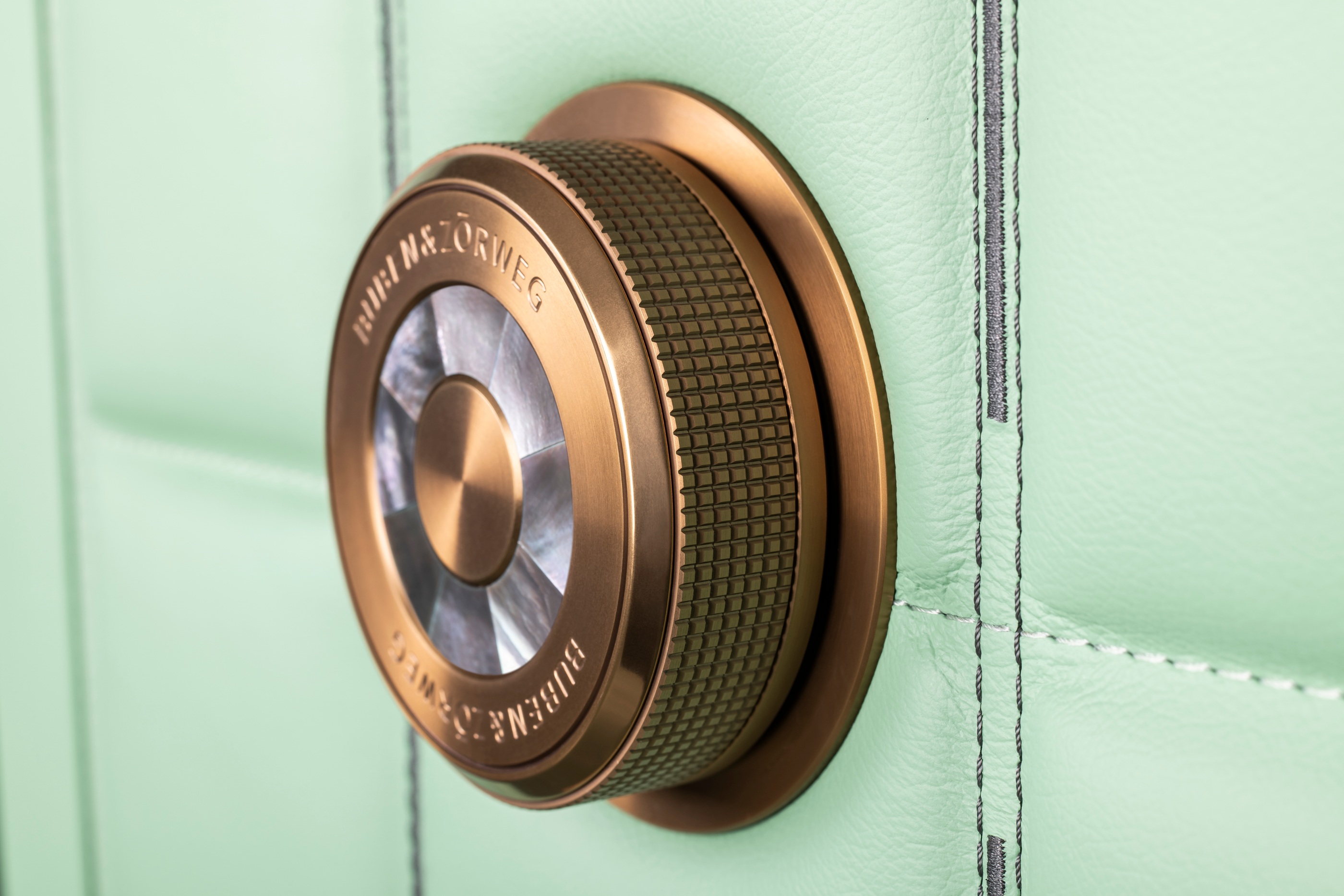
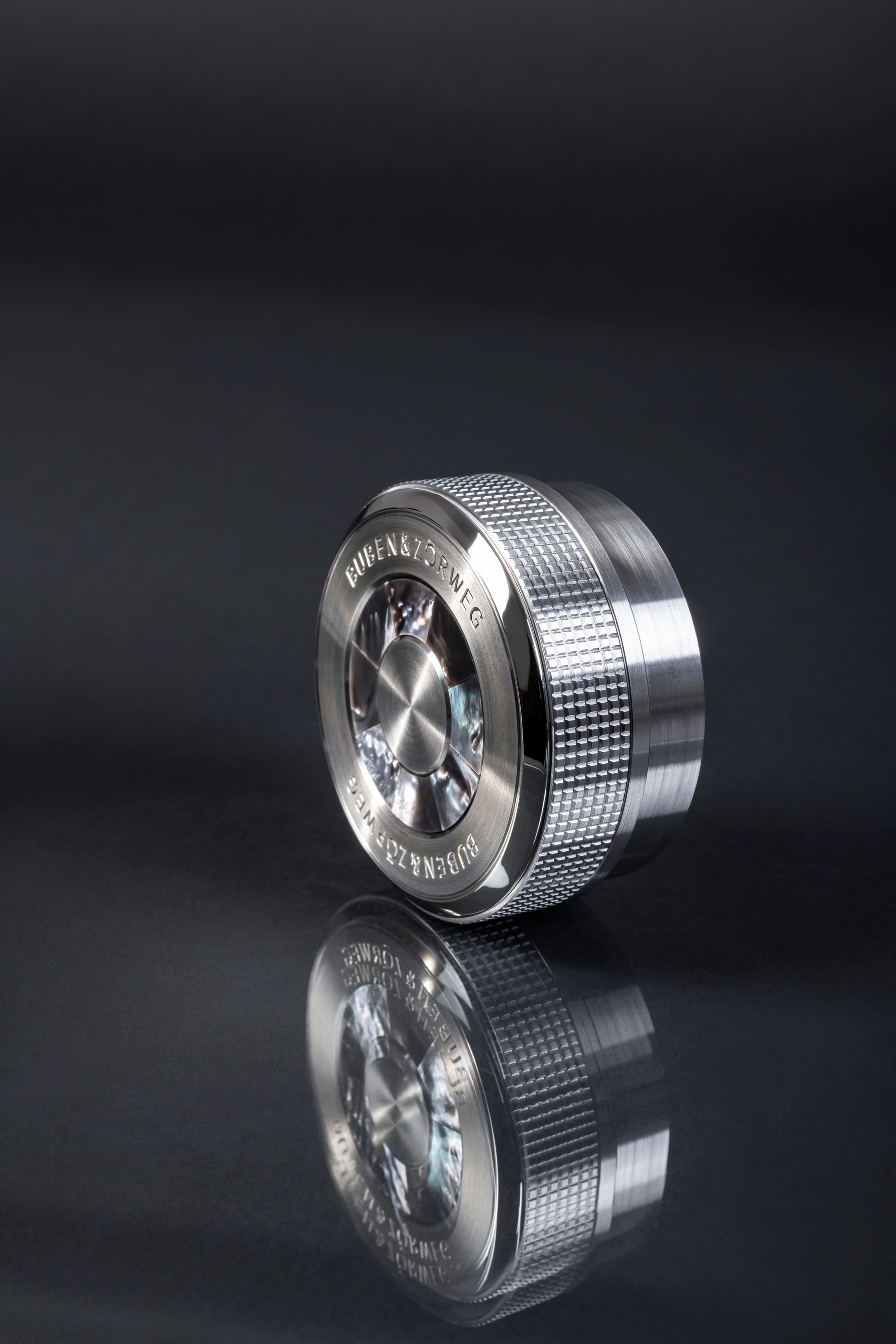
One of ORION’s most distinctive details is its handle: BUBEN&ZORWEG specifies eight mother-of-pearl inlays within an engraved steel ring. The separate official detail view gives this small component the attention usually reserved for a watch crown or a jewellery clasp. It is an object encountered by the hand, at the boundary between the room and the collection.
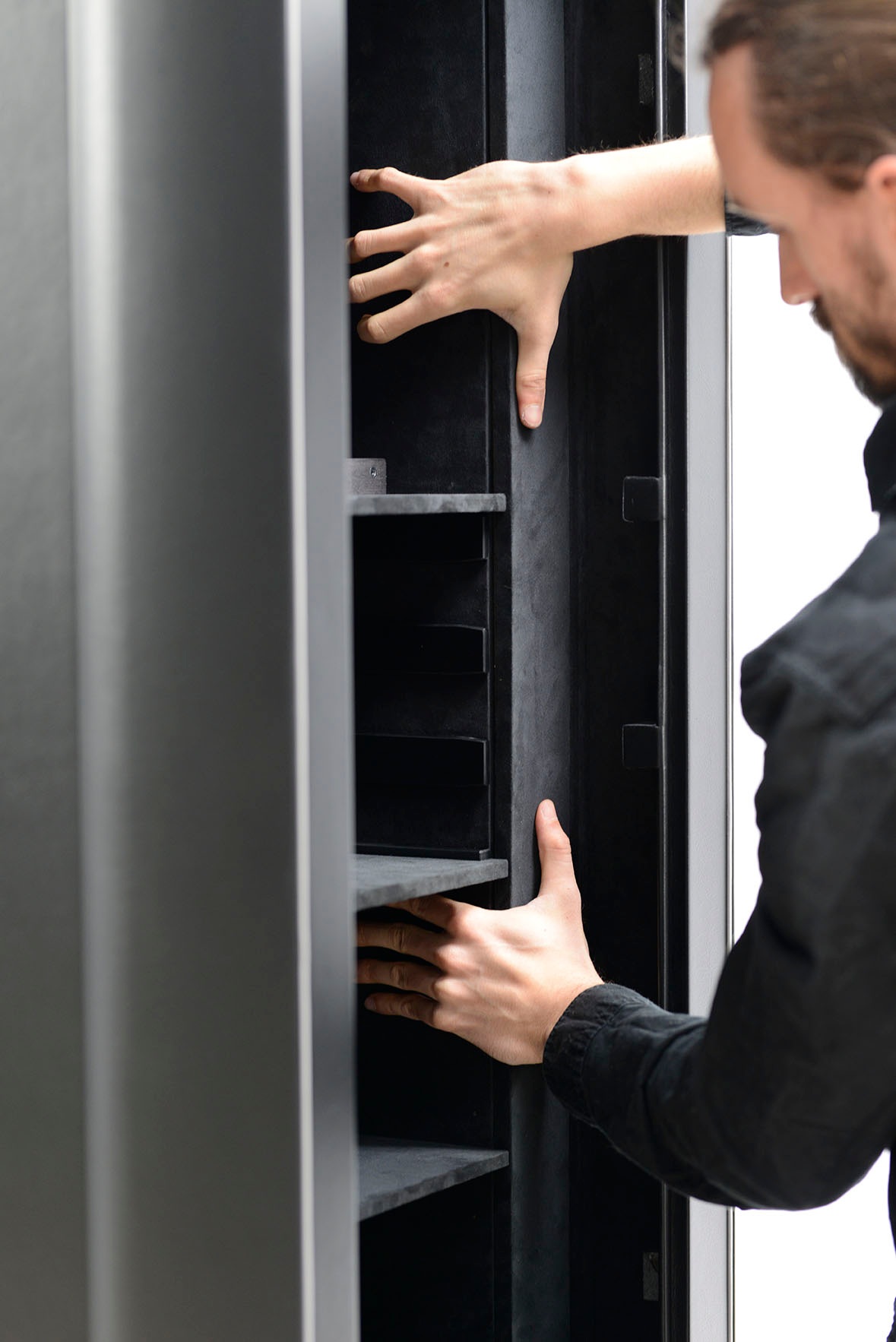
The photographs of making offer a second perspective. Leather is handled and checked; the interior is assembled. These views connect the finished geometry to physical work. They also suggest useful questions for an appointment: how does the chosen finish feel, how clearly can the controls be read, and how does a drawer behave when approached from the position the cabinet will occupy?
Ask to see the combination that is actually being considered. An impressive demonstration cabinet can establish the language of the collection while still differing from the ordered size or interior. A short, agreed record of the configuration makes that distinction easy to retain after the appointment, without turning a design conversation into a catalogue of every possible option.
The room around the open door
The closed footprint is only one part of the space occupied by a collection safe. The open door, the person standing before it and the route past it all belong in the room plan. A wardrobe or dressing room should still work while an object is being selected. This is a reason to involve the interior designer and installation team early, while positions remain flexible.
Delivery deserves the same attention. Agree a route and an installation scope with the qualified supplier, using the exact ordered model. The interior designer can then coordinate surrounding finishes and access rather than work around an unresolved object at the end of the project. Structural suitability, fixing and any electrical requirements belong to the relevant specialists; a room photograph cannot settle them.
Equally, a product designation should remain distinct from an insurance agreement. Ask the supplier for the documentation attached to the exact configuration, then have the relevant professional confirm any requirements for the particular location and collection. The purpose is a coherent commission, with the physical object and its supporting record describing the same thing.
A brief worth taking to the appointment
| Decision | Bring to the conversation | Record in the final brief |
|---|---|---|
| Daily selection | The groups of pieces used together | Tray layout and comfortable access |
| Room relationship | Joinery samples and a measured room plan | Exact exterior finish and opening space |
| Future changes | Likely additions and service absences | What can be reconfigured and by whom |
| Installation | The proposed location and delivery route | Supplier responsibilities and exact model documentation |
The most useful brief is short enough to read during an appointment. Photographs of the relevant object groups, a room plan and a clear account of daily use can be more informative than a long list of desired features. Keep sensitive collection details within the appropriate private conversation rather than distributing them in general project correspondence.
An interior that stays intelligible
BUBEN&ZORWEG’s separate THE TREASURY commission demonstrates how far an interior can be developed around a particular collection. It is a bespoke ensemble, not an ORION specification. The distinction is useful: a named reference can show an ambition without becoming a substitute for the schedule of the object being ordered.
ORION’s strongest proposition is the continuity between the room, the hand and the things kept inside. The padded surface establishes its presence; the interior has to earn that presence each time the door opens. For an owner, the lasting quality of the commission will be found in that small, repeated act of choosing and returning an object.
Sources & credits
Methodology and sources
This is an independent reading of the manufacturer’s current product record and official imagery, with original commissioning questions. It does not report a security test, a private installation visit or an assessment of an individual insurance arrangement.