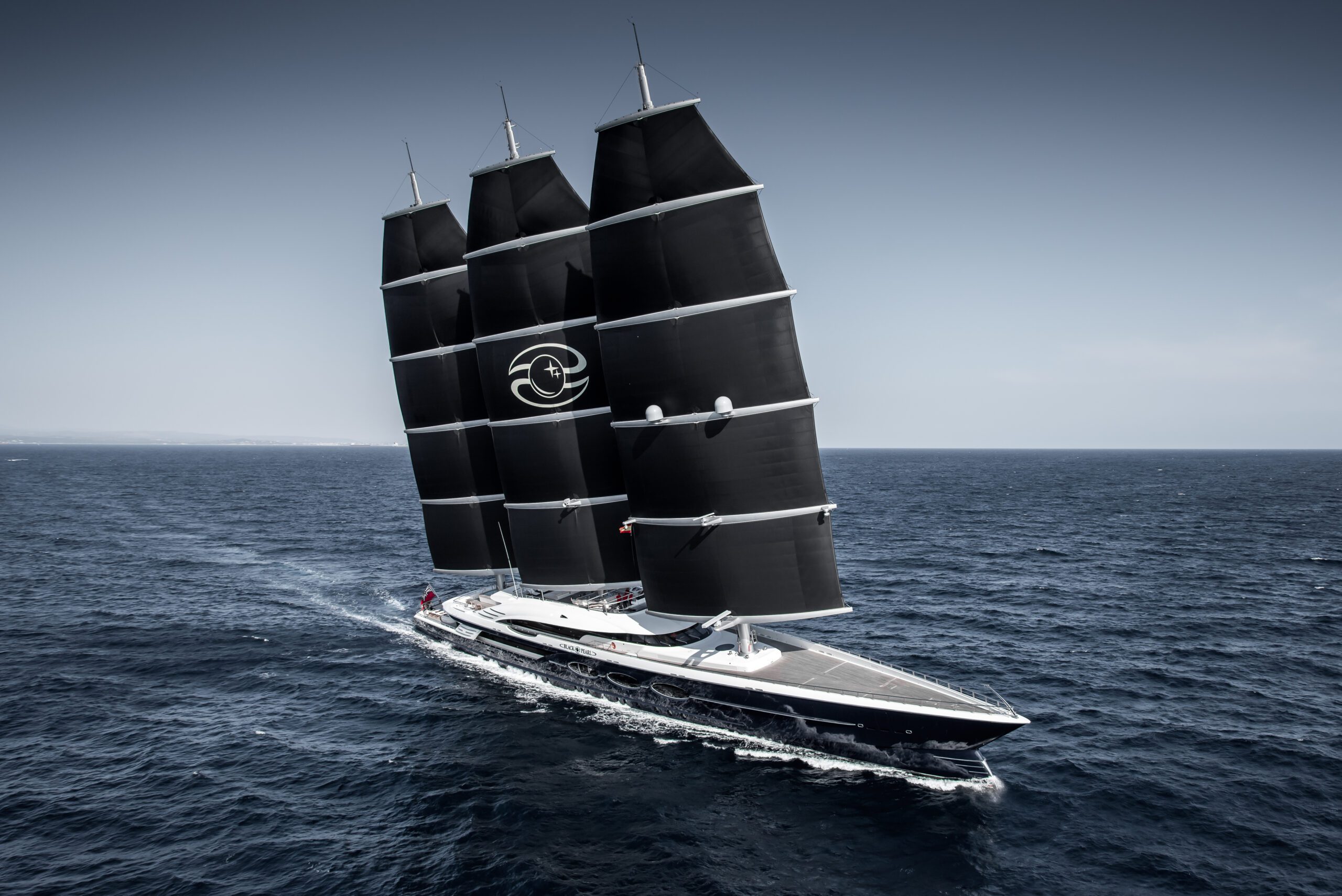
Oceanco's 106.7-metre BLACK PEARL is best understood as an integrated sailing-and-energy project rather than as a conventional motor yacht with sails added. Oceanco's published material identifies a hybrid energy installation and an energy-harvesting system developed with Lateral Naval Architects, while the yacht's three-mast sailing arrangement turns wind into a meaningful part of the propulsion strategy. The evidence supports a close technical reading of the architecture. It does not support a universal fuel-saving percentage, a zero-emission label or a lifecycle verdict without operational data.
The answer in brief
BLACK PEARL matters because several systems are designed to work together: a very large automated sailing plan, propulsion machinery that can harvest energy when the yacht is moving under sail, onboard heat recovery and the electrical management needed to serve both propulsion and hotel loads. The yacht therefore provides a delivered example of systems integration at superyacht scale. Its significance is not that one device solves the energy question, but that wind propulsion, generation, recovery and load management were treated as connected engineering decisions.
Verified facts at a glance
- Builder: Oceanco.
- Length stated by the builder: 106.7 metres / 350 feet.
- Beam and delivery: 15 metres / 49 feet; delivered in 2018, according to Oceanco's current fleet record.
- Sailing plan: three DynaRig masts; Oceanco's current fleet record states 2,877 square metres of sail can be set in seven minutes.
- Energy architecture: described by Oceanco as a pioneering hybrid installation with energy harvesting.
- Naval architecture and engineering: Oceanco credits Dykstra Naval Architects for naval architecture and identifies Lateral Naval Architects as a systems and engineering collaborator.
- Additional efficiency measure: Oceanco says heat-recovery systems were first used on BLACK PEARL.
- Evidence boundary: the cited public documents do not provide a complete independently audited annual energy balance.
The DynaRig proposition
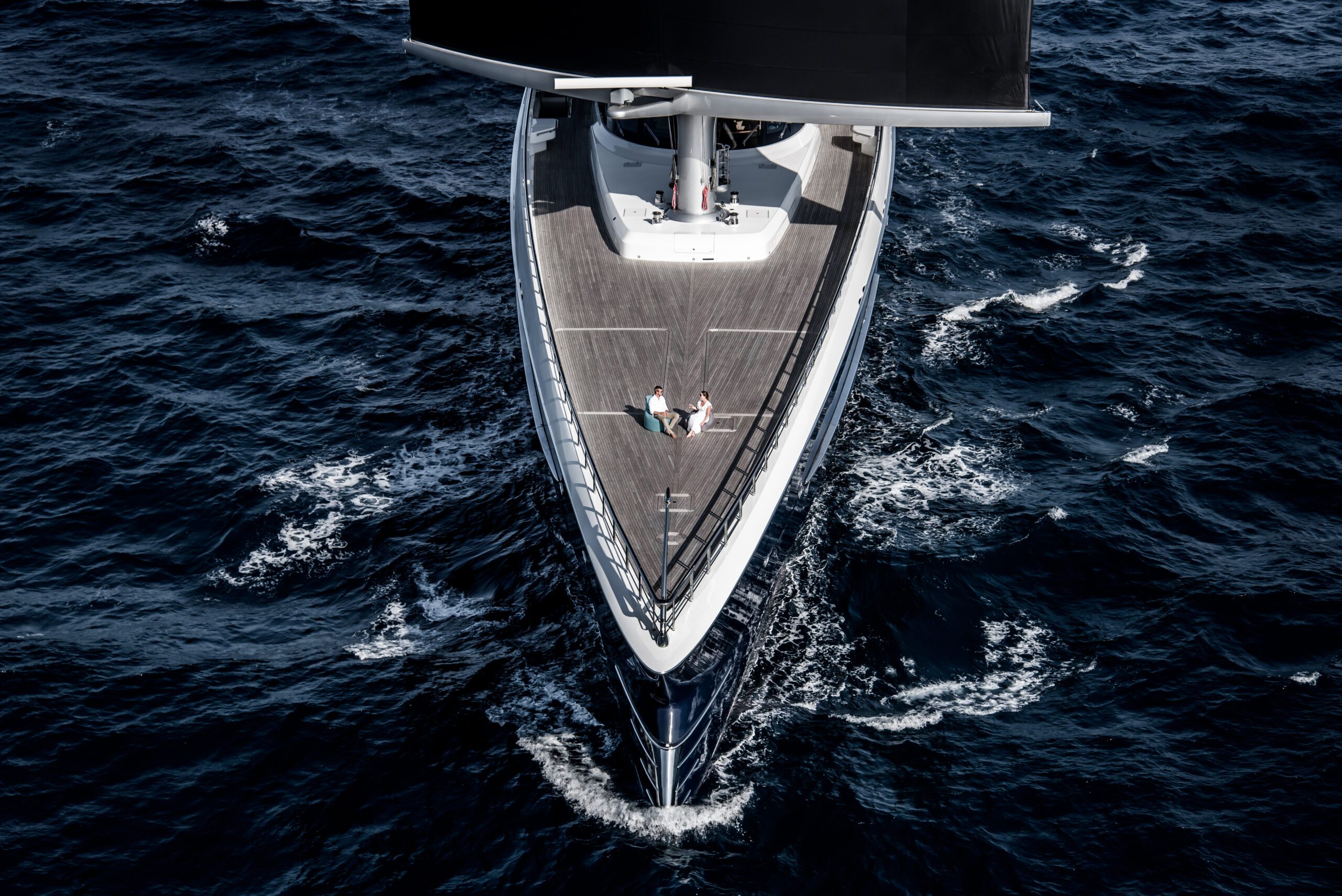
A conventional sailing rig distributes control across standing rigging, sheets, winches and deck operations. A DynaRig instead uses freestanding rotating masts with yards that carry multiple sails as a coordinated plan. Rotating the mast changes the angle of the sail plan to the wind, while automated handling reduces the amount of exposed manual work required aloft. On a yacht of BLACK PEARL's scale, automation is not merely a convenience. It is central to making a vast sail area controllable from the vessel.
The visible simplicity of the rig conceals a demanding structural problem. Loads travel from sails and yards through the masts into the deck and hull. Rotation, reefing and deployment depend on machinery, controls, sensors and power. Naval architecture, mast engineering, sail design and the yacht's stability model must therefore be developed as one system. A sail plan can reduce engine demand only when the yacht can use it safely and efficiently within the actual wind, sea and routing conditions.
This distinction is important for readers comparing large sailing yachts. The existence of sails does not by itself reveal how frequently they are deployed, how much propulsion they replace or how the yacht behaves across a complete operating season. Those answers require passage data, weather context and a transparent measurement boundary.
Rig, structure and the classification boundary
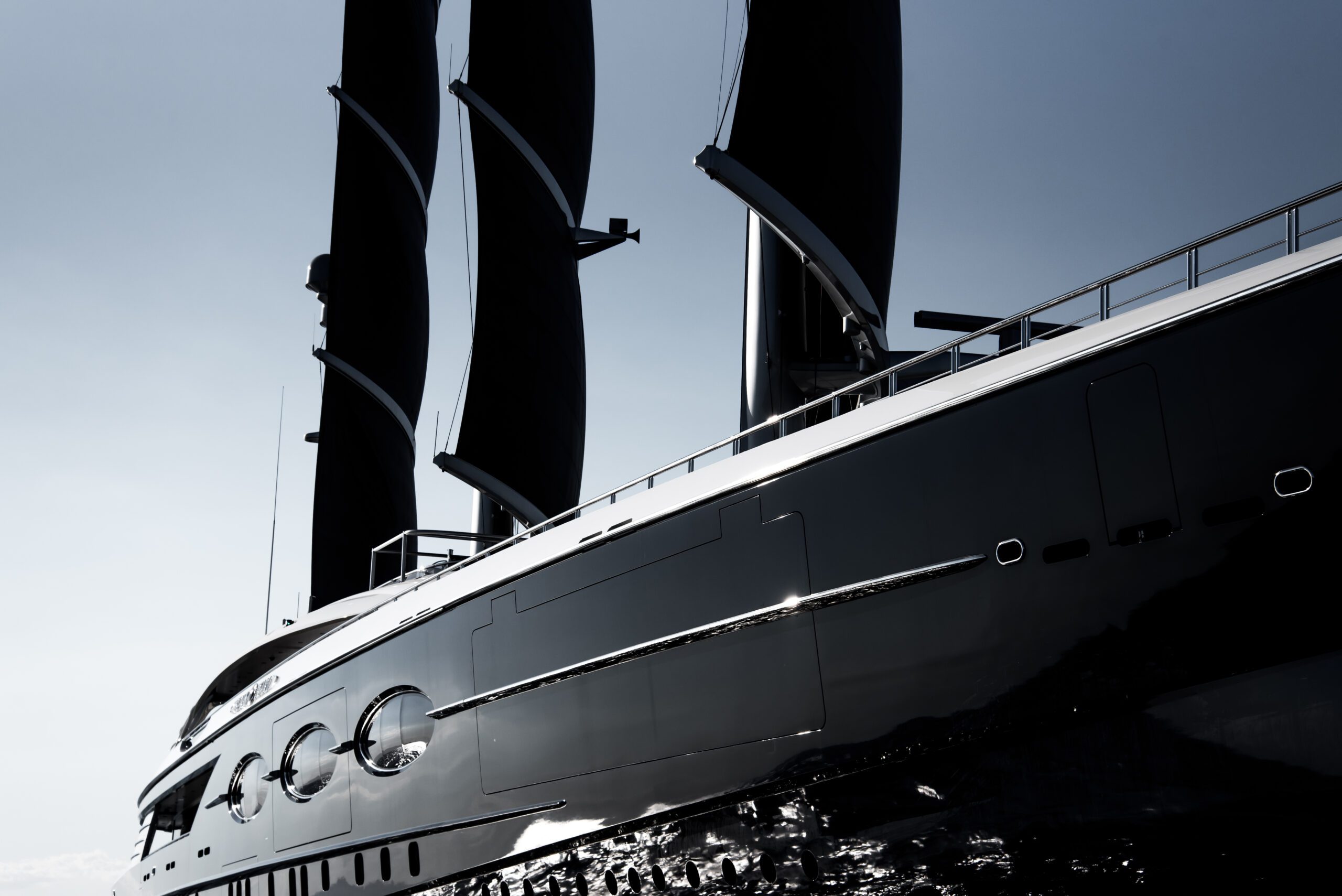
Lloyd's Register's current guidance draws a useful line around sailing-yacht evidence. It says yacht classification is concerned with the hull and machinery, including the hull arrangements and attachment points that support mast and rigging loads. The masts, spars and standing rigging themselves sit beyond that classification scope and are addressed through a separate technical construction and certification procedure.
That distinction prevents a class reference from being overstated. It can support the structural and machinery context within its declared scope; it does not by itself certify every element of BLACK PEARL's DynaRig or establish operational performance. A complete technical review would need the yacht-specific design basis, load cases, inspection records and certification documents rather than a generic notation alone.
What energy harvesting means
When BLACK PEARL moves under sail, water flowing past the propellers can turn the propulsion train so that it contributes electrical energy rather than consuming energy to create thrust. The physical principle is straightforward: some of the vessel's motion through the water is converted into electricity. The system-level consequences are more complex.
Energy extraction creates drag. The amount of useful electricity depends on boat speed, propeller and drivetrain characteristics, sea state, wind, battery condition and the yacht's instantaneous electrical demand. A figure observed during a favourable passage cannot automatically describe a calm-water day, a different route or a full year. A rigorous account would record the yacht's speed and sail state, the power harvested, the additional resistance, the loads being served and the duration of the measurement.
Oceanco's 2022 material calls the installation pioneering and connects it to Lateral Naval Architects. That is meaningful evidence of design intent and delivered architecture. It remains builder evidence. Luxe Digital therefore treats the existence and principle of the system as verified-official, while treating any annual saving, emissions reduction or payback claim as unverified until independent operational records are available.
Heat recovery and the hotel load
Propulsion is only one side of a superyacht's energy balance. Climate control, lighting, navigation, pumps, water treatment, galleys, entertainment systems and guest services can create a substantial hotel load even when the main engines are not providing thrust. Sail handling and control systems also require energy.
Oceanco's 2022 showcase says heat-recovery systems were first used on BLACK PEARL and describes the general principle of redirecting otherwise wasted heat from one onboard system to another use. In later projects the builder cites examples such as using genset heat for pool water. The useful lesson is architectural: a yacht should be assessed as an energy network, not as a list of isolated technologies.
Heat recovery cannot be counted twice. If a generator is operating, captured waste heat may improve the efficiency of the overall system, but the fuel consumed by that generator still belongs in the balance. Likewise, energy harvested under sail is useful only after conversion losses and the operating consequences of the added drag are considered. A credible analysis names the boundary before presenting a result.
Design consequences of the system
The rig affects the yacht's centre of effort, stability, deck planning and visual identity. Machinery for mast rotation and sail control competes for technical volume. The propulsion configuration must balance efficient motoring with acceptable harvesting under sail. Electrical distribution has to handle variable generation while preserving reliable power for safety-critical and hotel systems.
Oceanco credits Ken Freivokh Design and Nuvolari Lenard for the exterior, with Nuvolari Lenard and Villate Design credited for the interior on its current fleet page. Dykstra Naval Architects is credited with the naval architecture. These credits matter because the yacht's appearance, sail plan, structure and technical systems are connected but not interchangeable authorship claims.
Those choices also influence maintenance. A system that joins sails, rotating structures, propulsion machinery, power electronics and automation requires inspection regimes across several disciplines. Classification provides a framework for notations and compliance, but it does not replace operational documentation, service planning or a buyer's technical survey. A future ownership analysis would need to examine maintenance access, spares, specialist support, software stewardship and refit provisions alongside energy performance.
How to assess the claims responsibly
Readers should separate four different questions. First, does the yacht possess the stated architecture? The builder's documents support that conclusion. Second, can the system harvest energy under sail? Oceanco describes that capability. Third, how much energy is harvested in a defined condition? That requires a measured test record. Fourth, what is the annual or lifecycle effect? That requires a much wider dataset covering routes, weather, hotel loads, fuel, maintenance, shore power and refits.
This hierarchy prevents a demonstrator from being oversold. It also avoids the opposite error of dismissing a delivered engineering system because public lifecycle data are incomplete. BLACK PEARL can be significant as an operational platform while still requiring independent evidence for broad environmental claims.
What a future independent test should disclose
An authoritative test programme would publish the measurement period, route, wind and sea state, sail configuration, vessel speed, harvested electrical power and propulsion drag. It would record generator use, battery state, hotel demand and any shore-power contribution. For seasonal conclusions, it would distinguish time under sail from motoring, manoeuvring, anchoring and port stays.
The report should also identify whether figures are instantaneous peaks, passage averages or annual totals. It should state whether hotel loads are included, which conversion losses are counted and whether maintenance or embodied impacts fall outside scope. Without those definitions, two apparently precise numbers may describe different systems and cannot be compared responsibly.
Why BLACK PEARL belongs in the Luxe Digital reference system
The yacht links three areas that a serious Yachts reference system must cover deeply: model intelligence, builder capability and marine technology. The durable record should preserve verified dimensions, delivery status, credited designers, propulsion architecture, sail plan, classification context, source provenance and the date on which each material claim was last checked. The related Oceanco builder record remains a separate layer, allowing BLACK PEARL to connect to other delivered projects without turning a company profile into a model analysis.
Key takeaways
- BLACK PEARL combines a large automated sailing plan with an Oceanco-documented hybrid energy and harvesting architecture.
- Energy harvesting is condition-dependent; an instantaneous or passage figure cannot represent annual performance without a declared methodology.
- Heat recovery and hotel loads belong inside the same system boundary as propulsion and generation.
- Public builder evidence supports a systems analysis, not an independently measured lifecycle or emissions verdict.
- Any future comparison must normalize operating conditions, measurement boundaries and source dates.
Sources & credits
Methodology and sources
This is a desk-researched analysis, not a sea trial, owner interview or independent energy audit. It uses Oceanco's current BLACK PEARL fleet record, the builder's delivery and award releases, its 2021 and 2022 showcase documents and Lloyd's Register classification guidance. Builder claims remain attributed to Oceanco. The technical source set returned current responses and was rechecked on 28 August 2026; named editorial approval remains mandatory before publication.