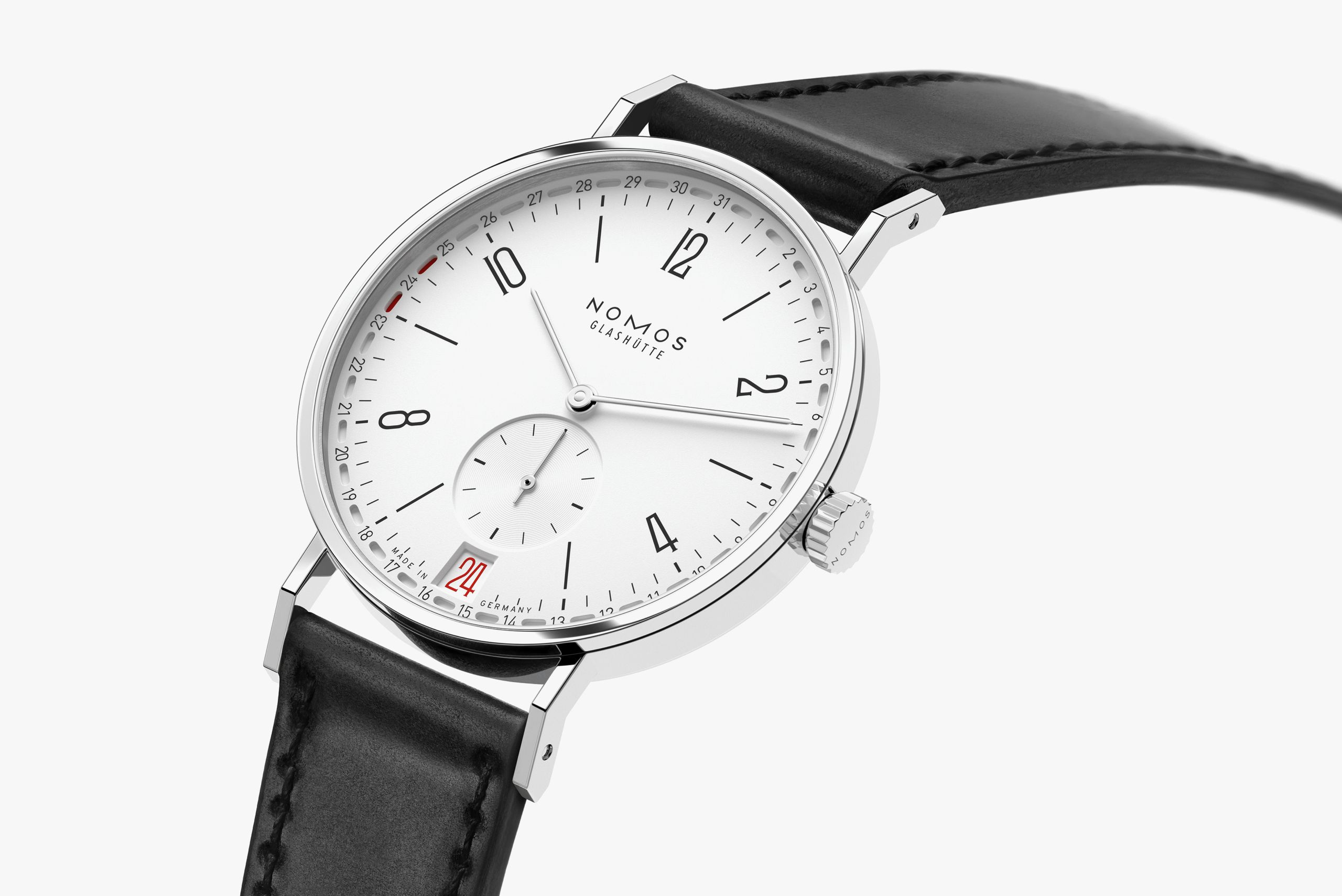
Tangente 2date gives the same date two positions on the dial. A window at six o’clock identifies the day directly, while red markers at the perimeter place it within the month. The interest is in how NOMOS adds that second reading to an already spare graphic system, keeping the watch recognisable while asking its outer edge to do more work.
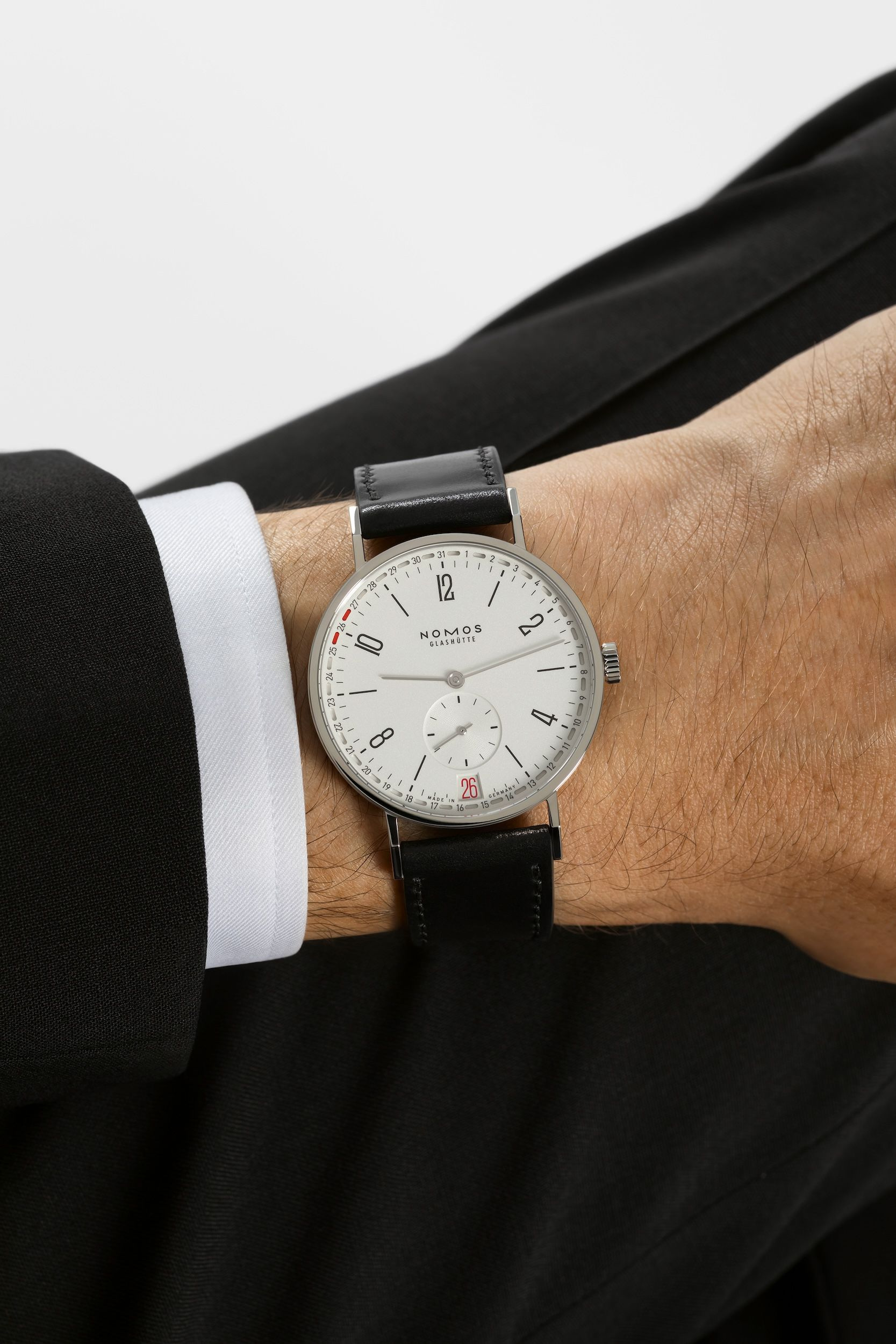
Two readings of one piece of information
Reference 135 has a white silver-plated dial, rhodium-plated hands and the familiar Tangente arrangement of slender numerals and small seconds. The date window sits below the seconds display, creating a concentrated vertical relationship through the lower part of the face.
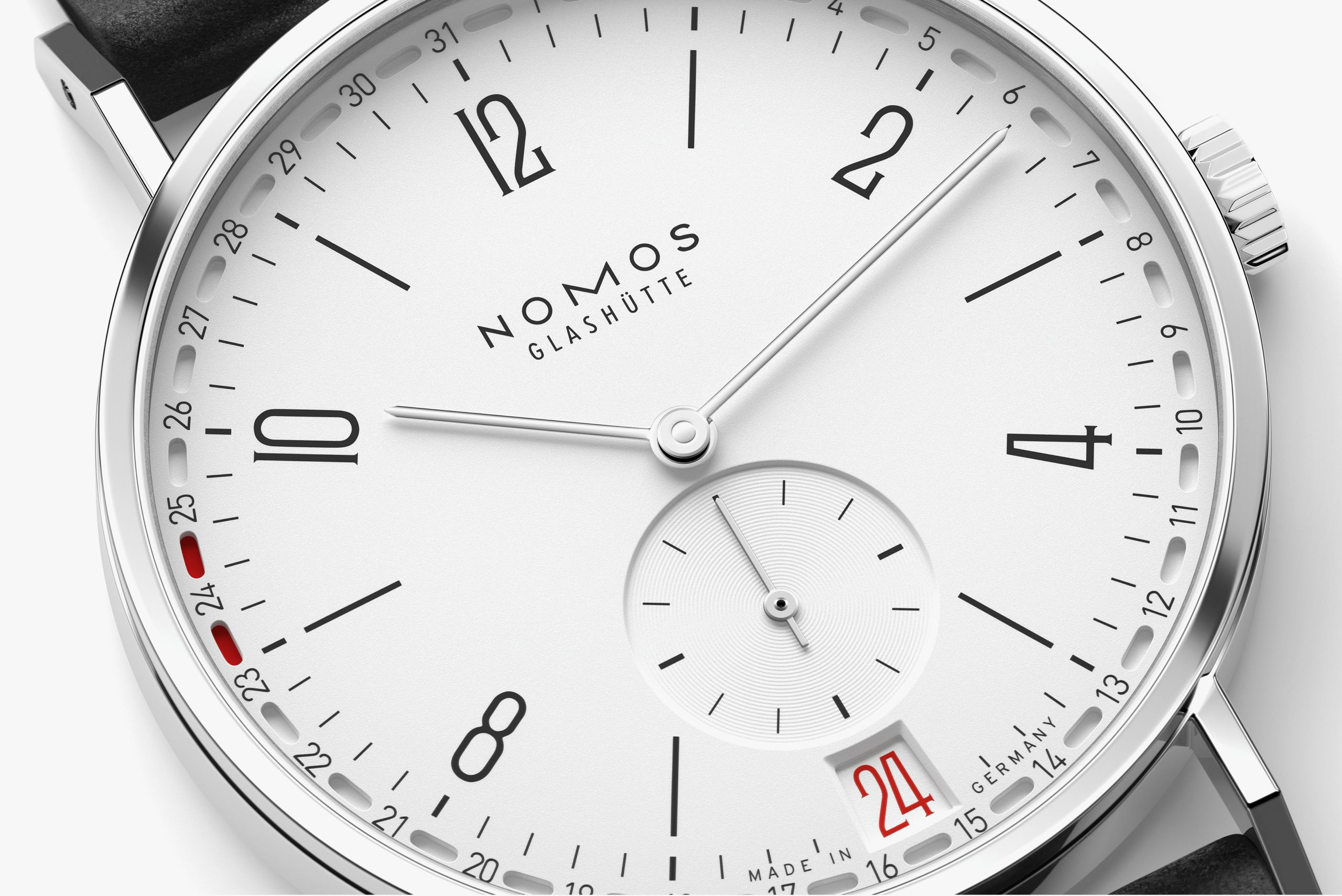
At the perimeter, the date ring supplies a wider context. Instead of reading only the current number through an aperture, the eye can locate the day within a sequence. The two displays are related views of the same calendar information, rather than independent indications to be kept in agreement by the wearer.
That distinction gives the design a clear purpose. Repetition can make an interface busier, but here the second display offers another scale of understanding. One position answers a direct question; the other provides orientation within a larger interval. The watch’s graphic challenge is to let both remain available without making the dial feel divided into competing systems.
The outer edge becomes an active part of the face
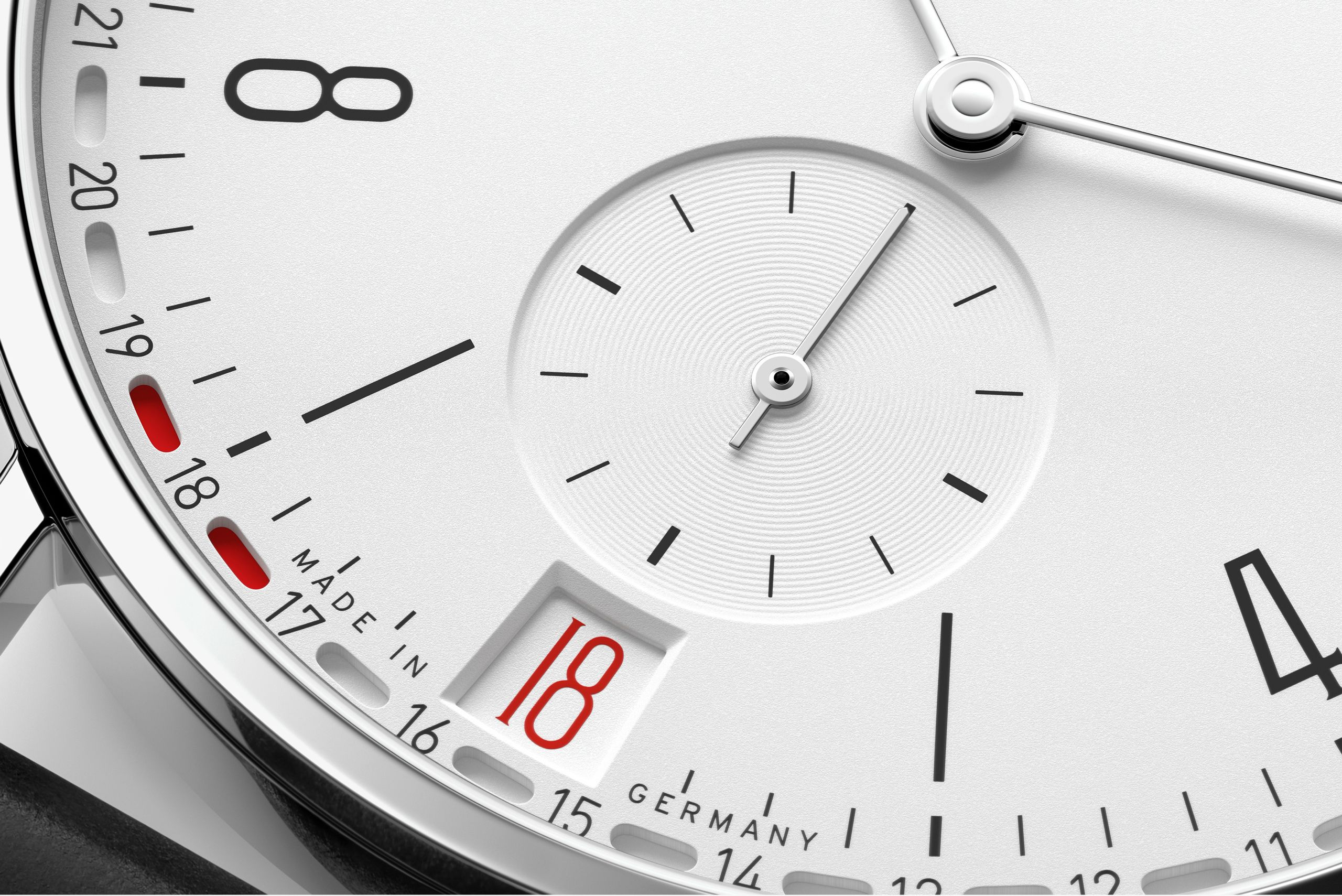
The close dial view shows how carefully the date ring approaches the rest of the information. Its small numbers sit beyond the main hour markers, while the red elements supply a colour accent in an otherwise restrained composition.
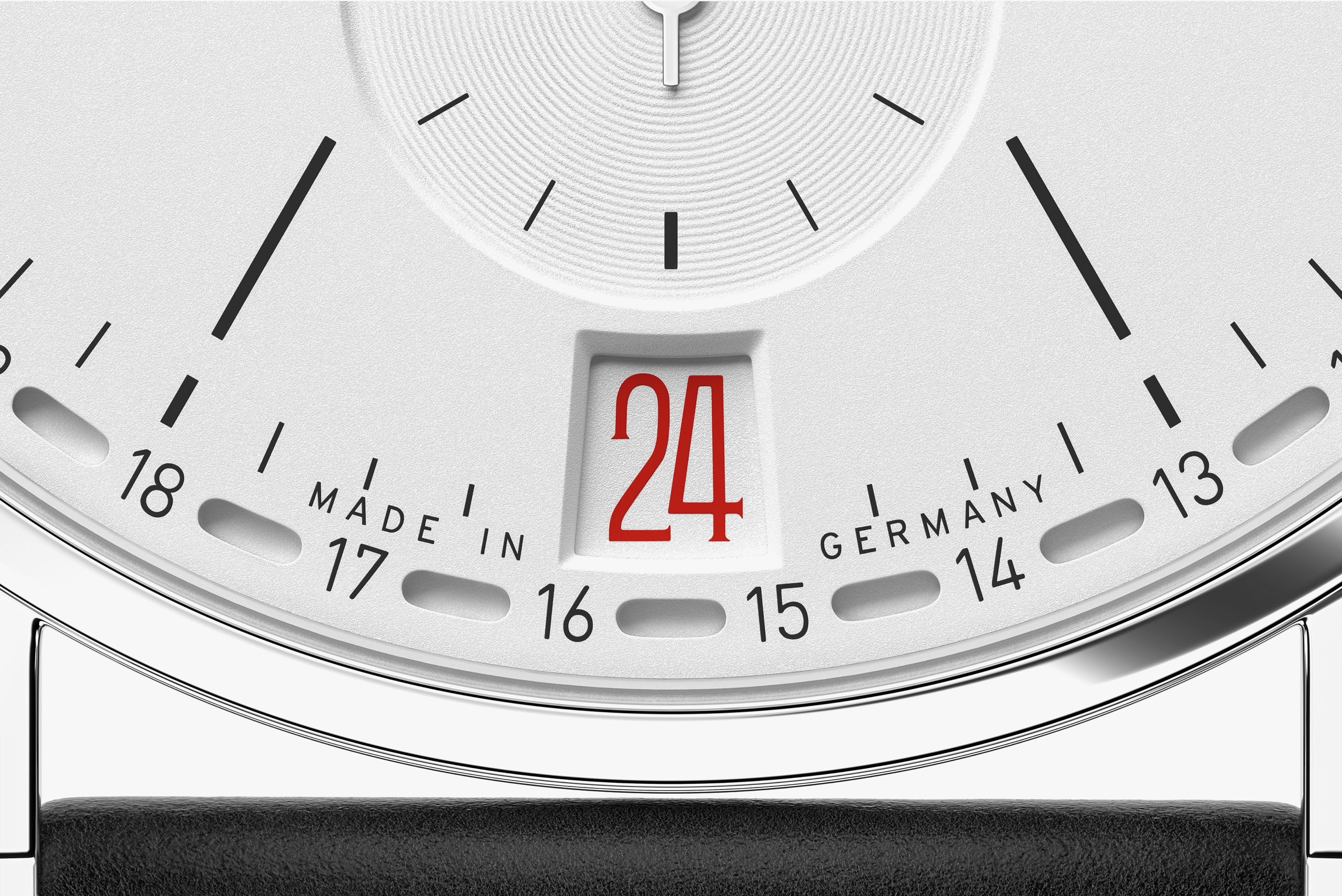
The lower portion is especially revealing. Small seconds, date aperture and the perimeter indication all occupy a relatively short distance. NOMOS’ account describes the reproportioned date window and repositioned lettering in this area. Those are small changes with a substantial effect on the clarity of the whole arrangement.
The small-seconds surface adds another, quieter distinction. NOMOS identifies its fine circular grooves as azurage. That texture separates the subsidiary display without requiring another strong colour, giving the lower part of the dial a different response to light. The close view therefore reveals work that remains subordinate to the calendar’s much more immediate red accents.
The achievement is therefore not simply fitting more information into a case. It is distributing emphasis. The large date numeral remains immediately identifiable, while the smaller ring can wait for a more deliberate glance. Different scales allow the same dial to support a quick reading and a slower one.
A movement that follows the graphic idea
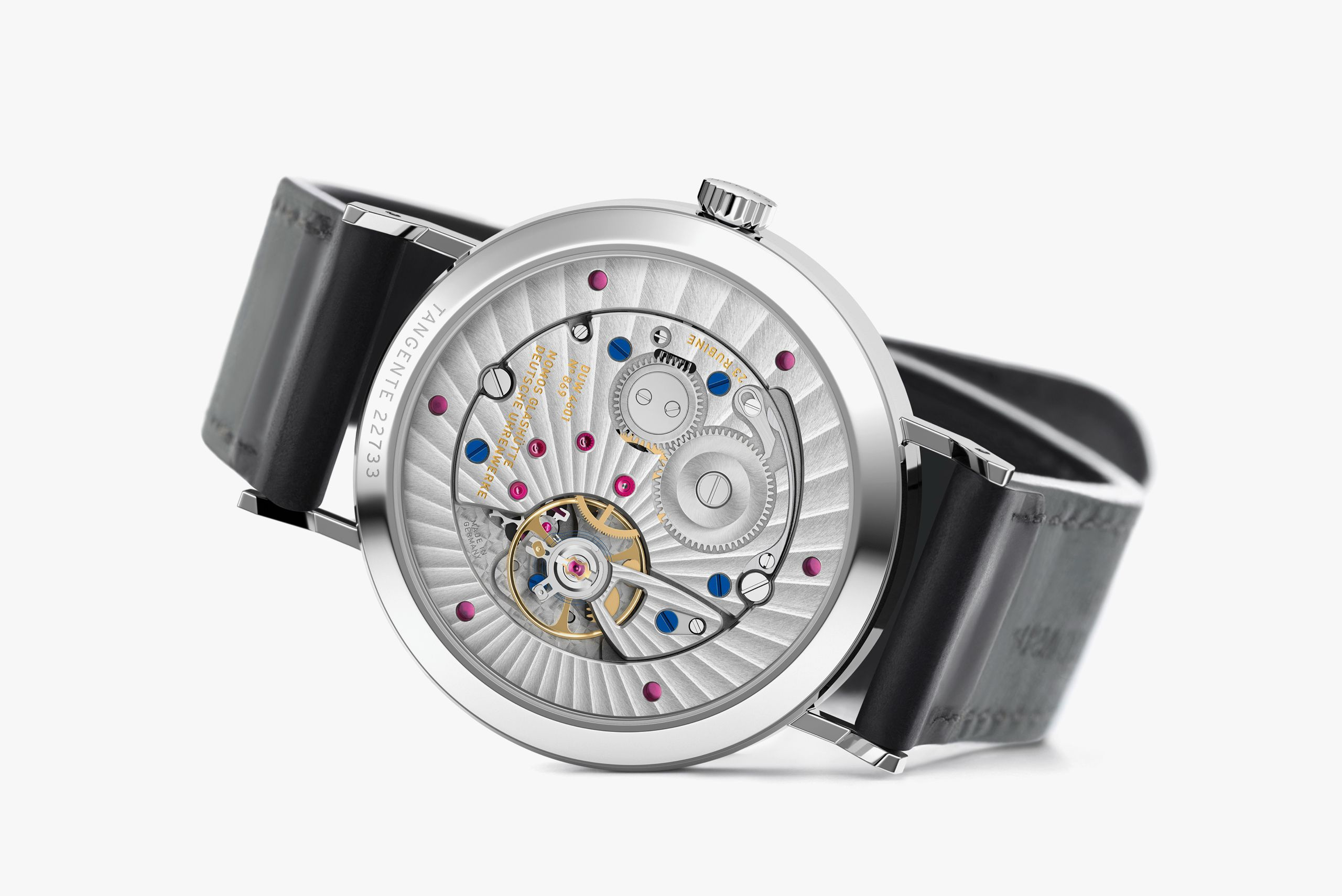
The hand-wound calibre is DUW 4601. NOMOS describes the date ring around the movement as the basis for the dual display, connecting the visible calendar arrangement with a specific mechanical architecture.
The official movement view makes the circular organisation particularly clear. The calendar is not an unrelated device placed somewhere behind the dial. Its perimeter position helps explain how the watch can give the month a presence around the outside of the face while retaining a separate aperture below the seconds.
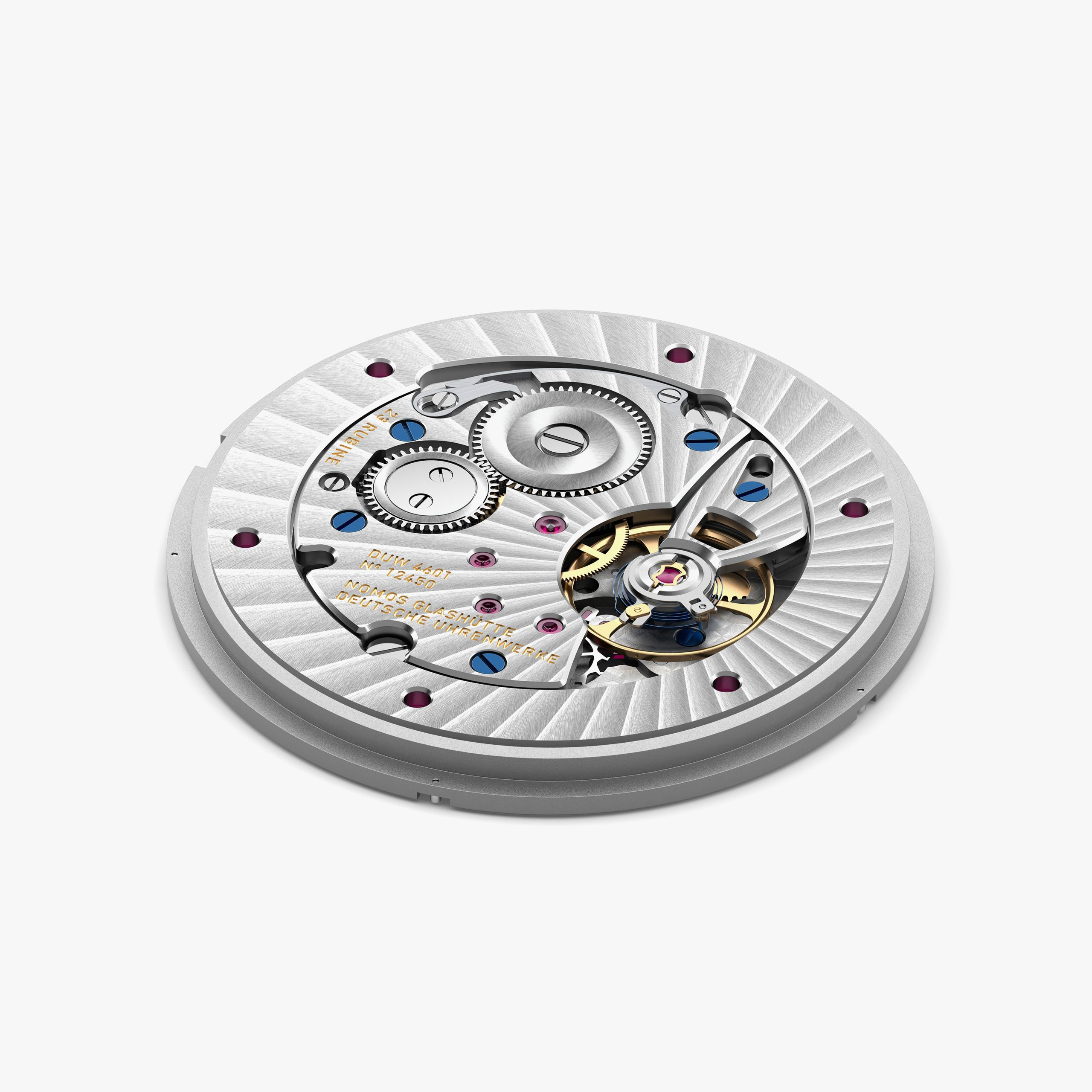
The sapphire-back image then restores the movement to the complete watch. It is useful to see the machinery both alone and inside the case, because the two views establish different relationships. The isolated calibre explains organisation; the assembled back shows how that organisation occupies the object worn on the wrist.
A diameter with a longer footprint
The current reference 135 record gives a diameter of 37.5 mm, a height of 6.8 mm and a lug-to-lug measurement of 47.7 mm. Together, those figures describe the case more usefully than diameter alone.
The angled lugs extend beyond the circular dial, while the thin case gives the side profile another kind of restraint. A wrist photograph is therefore an important counterpart to the frontal product view: it shows the relationship between the circular face, extended ends and strap at the scale of a person.
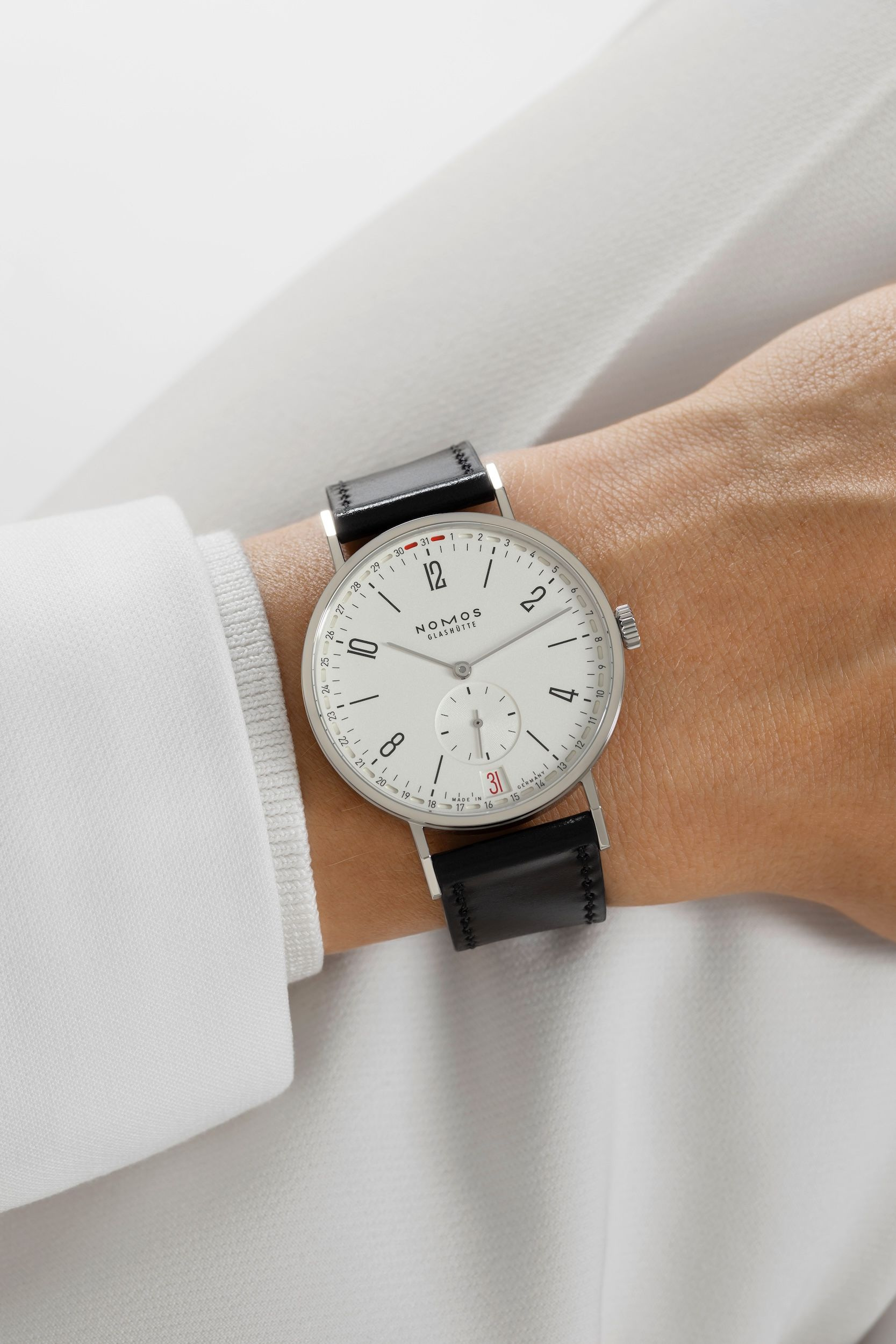
NOMOS also identifies wrist circumferences in its wearing imagery. Those details help establish context, but they do not replace a personal fitting. A watch can have a compact diameter and still occupy a substantial length along the wrist. Reference 135 is a particularly clear example of why both measurements deserve attention.
The useful specification
The following details belong to the current white-dial reference 135 record. They distinguish this article’s subject from the blue-dial variant and from other watches in the Tangente family, whose similar names can conceal a different movement or case arrangement.
| Element | Reference 135 record | What it explains |
|---|---|---|
| Diameter | 37.5 mm | The circular case width |
| Height | 6.8 mm | A separate part of the watch’s profile |
| Lug-to-lug | 47.7 mm | The length occupied beyond the dial |
| Movement | Hand-wound DUW 4601 | The mechanical basis of the dual date |
| Reserve | Up to 52 hours | The maker’s stated running reserve |
| Calendar | Window and perimeter ring | Two scales of the same date information |
For a prospective owner, the most useful viewing would connect the table with actual handling: read the dial at ordinary distance, examine the strap and lugs, and understand the winding and date-setting instructions for the reference. The design becomes more personal when its graphic idea is considered alongside the routine it asks of the wearer.
The Luxe Digital view
Tangente 2date is persuasive because its additional information has a different role from the information already present. The perimeter does not merely enlarge the aperture. It gives the date a wider context, allowing one calendar to be read at two scales.
The restraint comes from the small decisions around that idea: the place of the window, the proximity of the seconds display and the limited use of red. A simple-looking dial is revealed as a closely negotiated arrangement, with little spare room for an element that has not earned its position.
The movement and case complete the account. DUW 4601 gives the display a mechanical explanation, while the long lugs and thin profile remind the reader that the face belongs to a physical object. The result is a watch whose interest survives the move from a graphic diagram to a wrist.
Tangente 2date is persuasive because its additional information has a different role from the information already present.
Sources & credits
Sources and methodology
Independent design and reference analysis of the named official records and imagery, checked on 15 October 2026. Launch specifications and later product records retain their own dates and references. Images show the identified configurations. No independent handling or timing test is implied.