The McLaren W1 changes shape for a reason. Its carbon passenger structure, side openings and extending rear body belong to one aerodynamic idea: make the complete car manage the air, then give the driver a place within that system. The most revealing view is therefore a sequence, moving from the whole silhouette to the surfaces and structure that make it possible.

A silhouette with a second state
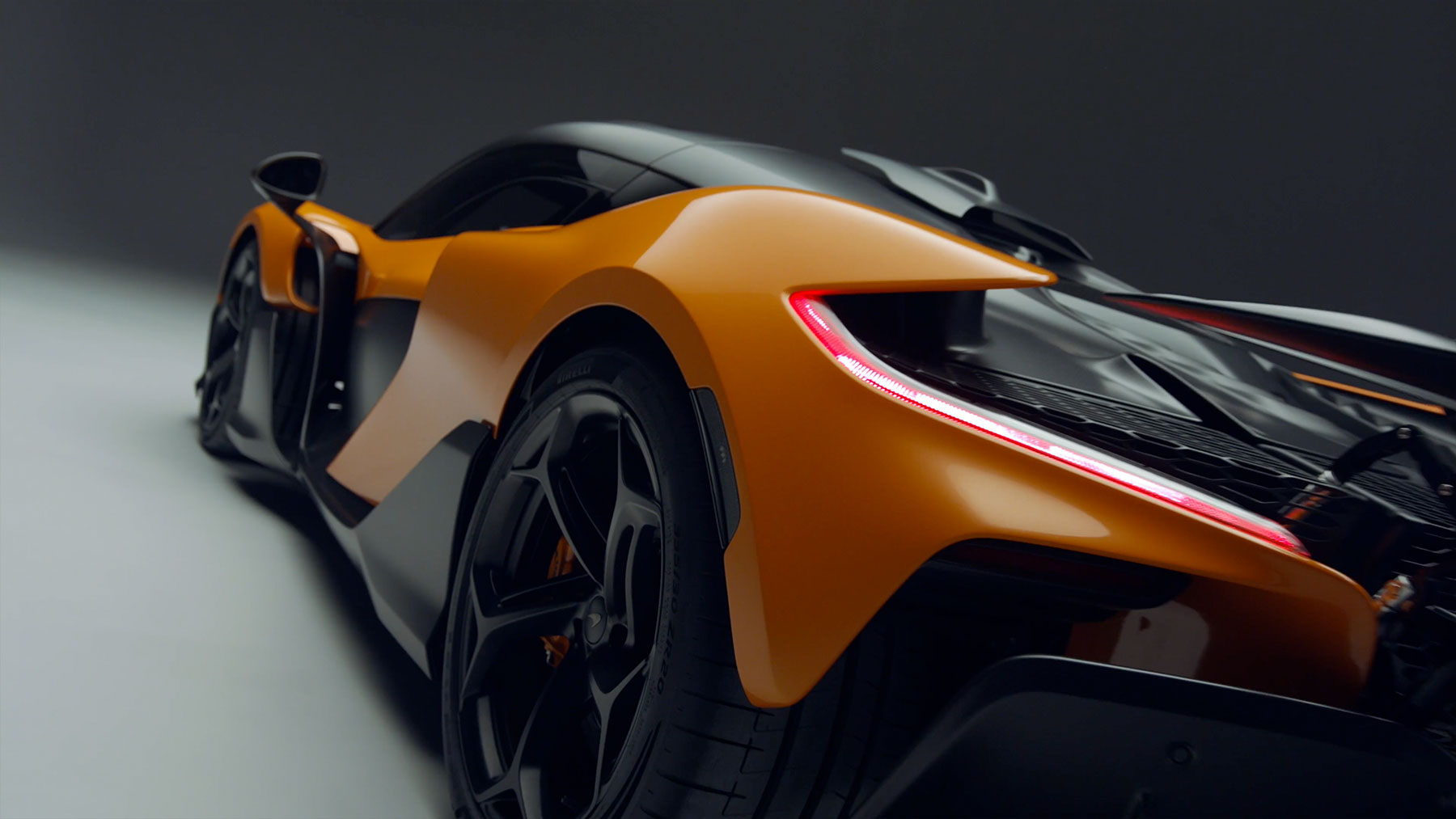
In the official side-on studio visual, the W1 is remarkably compact around its occupants. The roof describes a small central volume, while the body stretches outwards and downwards around it. Orange paint makes the upper surfaces legible; darker material separates the lower channels and the spaces behind the front wheels. Even before an explanatory graphic appears, the car suggests that air has routes through its shape.
Those routes become the subject when the rear assembly moves. McLaren calls the extending element the Active Long Tail, a useful description because the action changes the rear body’s relationship with the flow beneath it. Looking only at the height of a wing would miss the more interesting transformation: a road-car silhouette becoming another aerodynamic configuration.
The distinction gives the photographs a job. A complete side view establishes the proportions; a rear-quarter view reveals the depth of the tail. An airflow illustration then explains a relationship that a still photograph can suggest but cannot measure.
The passenger cell becomes part of the airflow
McLaren names the W1’s carbon structure Aerocell. The word matters less than its position within the design. A passenger compartment is usually understood from inside, through seating, controls and visibility. Here it also needs to be understood from outside, as a central body around which the surrounding surfaces organise moving air.
The official aerodynamic account describes ground effect as fundamental to the W1. In practical reading terms, that shifts attention towards the underside and the channels feeding it. The visible side openings cease to be decorative punctuation. They become clues to a much larger arrangement that continues beneath the car and towards the rear.
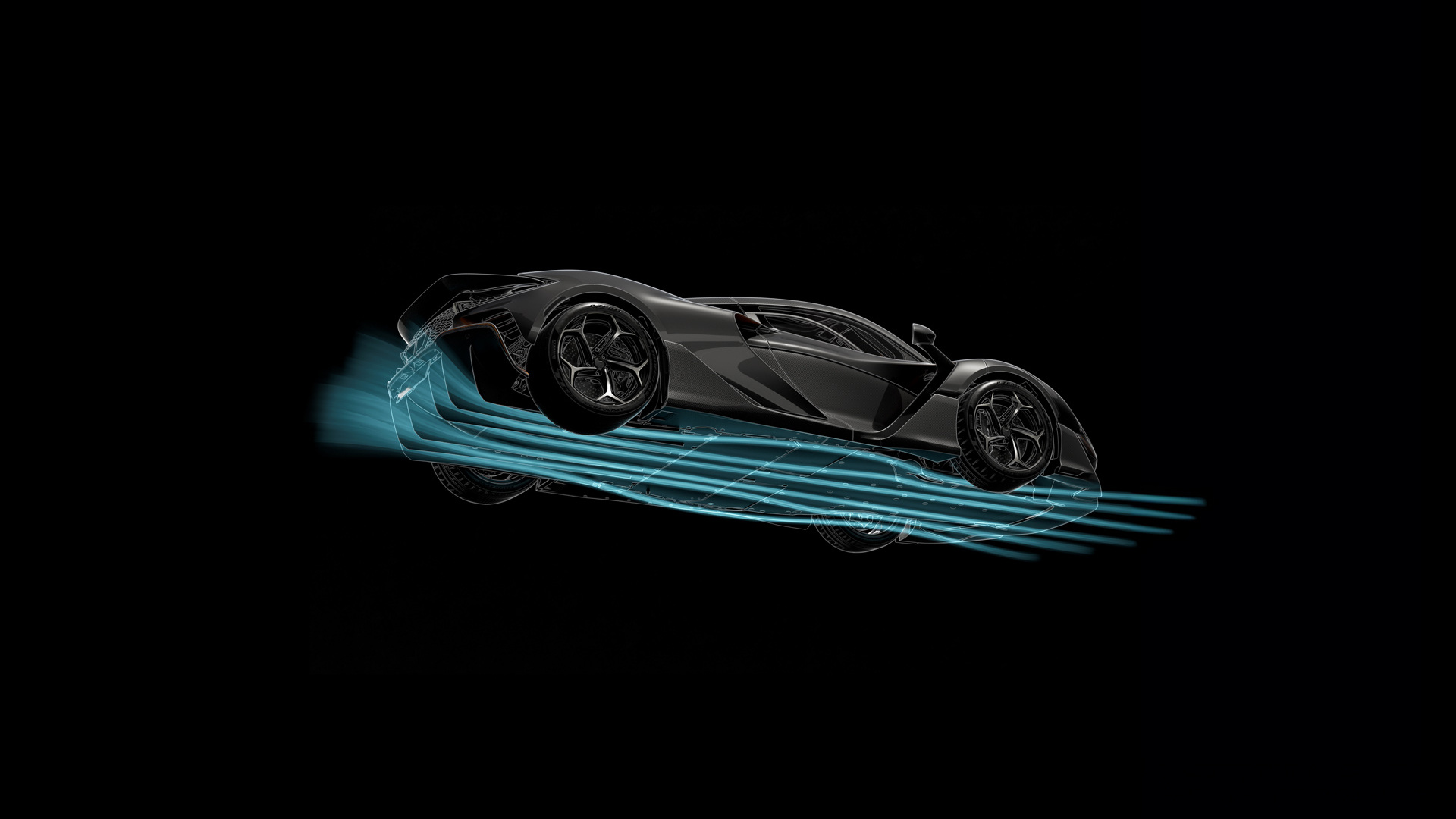
That arrangement is best presented as a system, with the carbon cell and exterior surfaces shown together. A transparent technical visual is particularly useful here: it lets the reader locate the occupants inside the machine without confusing a studio image with a sectioned physical car. The diagram explains organisation; it does not independently establish downforce or lap time.
Power belongs in the same account
The current official W1 specification states 1,275 PS and 1,340 Nm. Those are manufacturer figures for the hybrid powertrain, rather than measurements taken for this article. Their editorial value lies in connecting the energy available to the rest of the car’s architecture.
The powertrain visual introduces another scale. Engine, electrical hardware and transmission occupy a tightly organised assembly, quite different from the broad surfaces seen outside. The photograph of a complete car and the technical representation of its machinery answer separate questions: what occupies the road, and what must be packaged within that object?
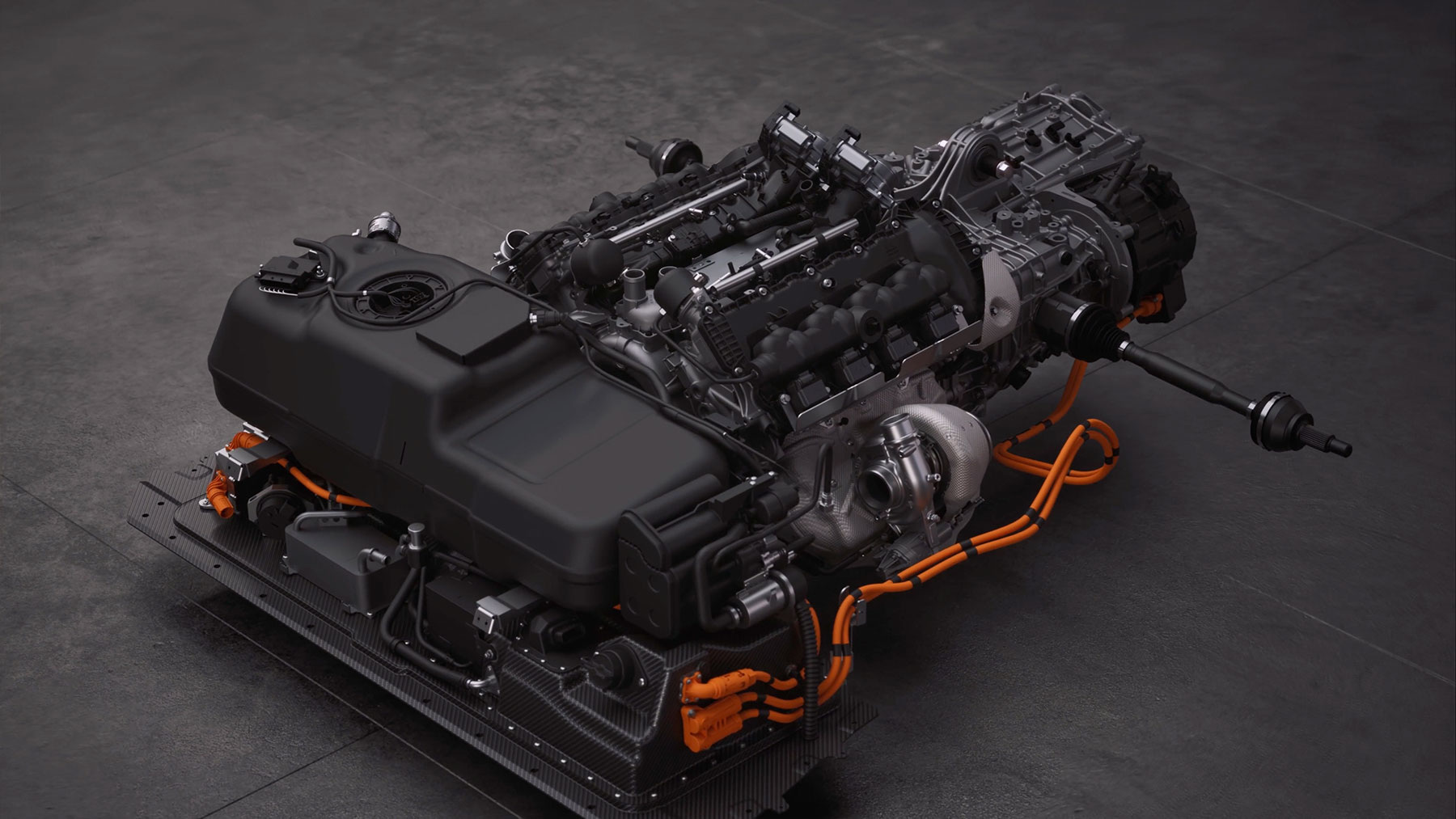
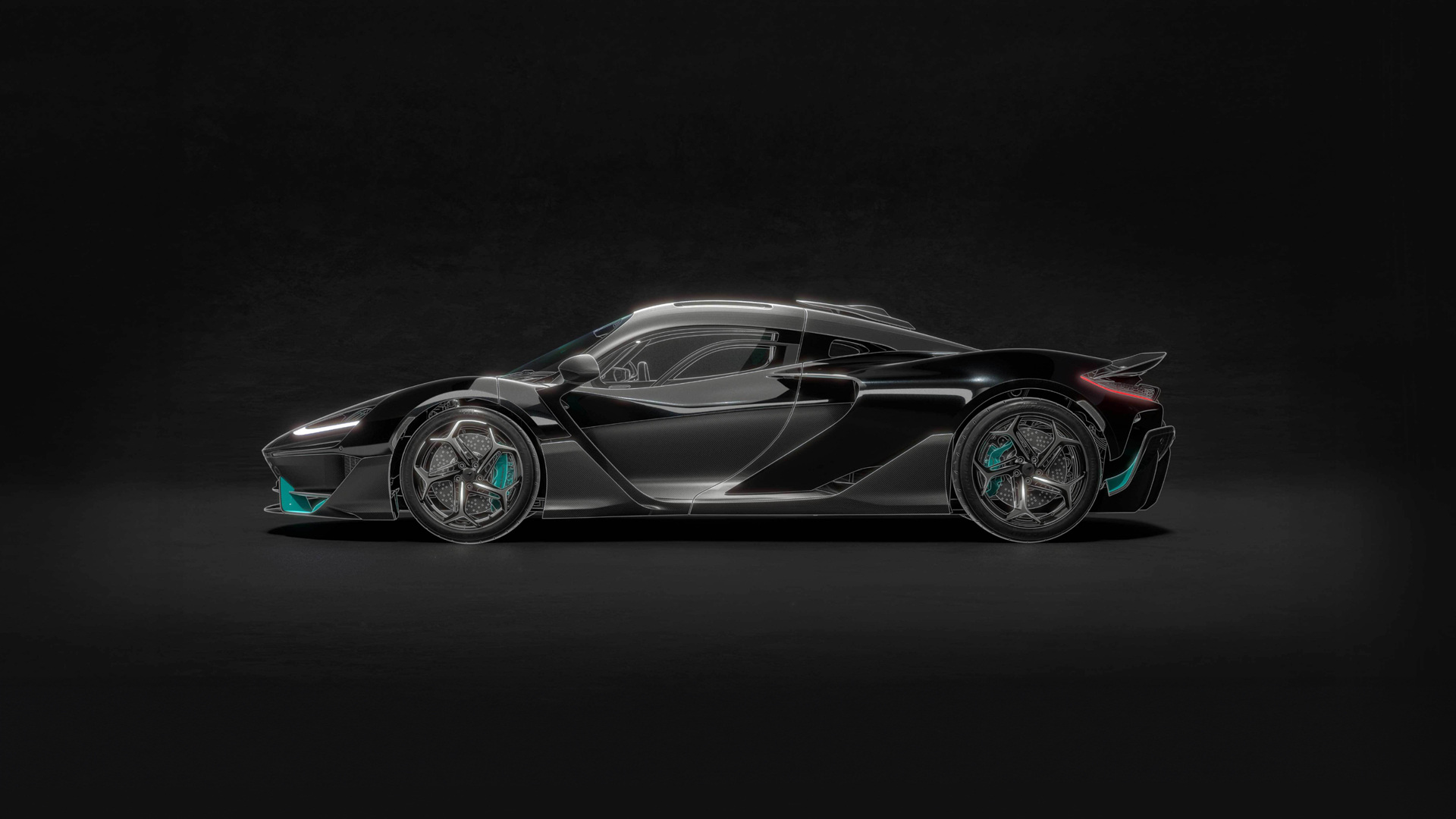
A substantial output figure also makes the aerodynamic work easier to understand as a design priority. The body has to do more than establish a recognisable face. Its surfaces, cooling routes and moving elements form part of the means by which the powertrain’s capability can be used. How convincingly that relationship works on a particular road remains a question for instrumented testing and direct driving access.
A cockpit within an unusually active body
The official interior view is a useful pause after the airflow graphics. Seats, steering wheel and instrument display bring the car back to the scale of a person. The surrounding machinery may change state, but the driver’s basic task still involves looking ahead, finding a control and understanding the information being presented.
Inside the W1, the small central cabin also reads differently after the exterior has been understood. Its shape is no longer simply an enclosed room placed on top of a chassis. It is a space whose boundaries participate in the architecture outside. That is a more interesting connection between design and engineering than a list of matching carbon finishes.
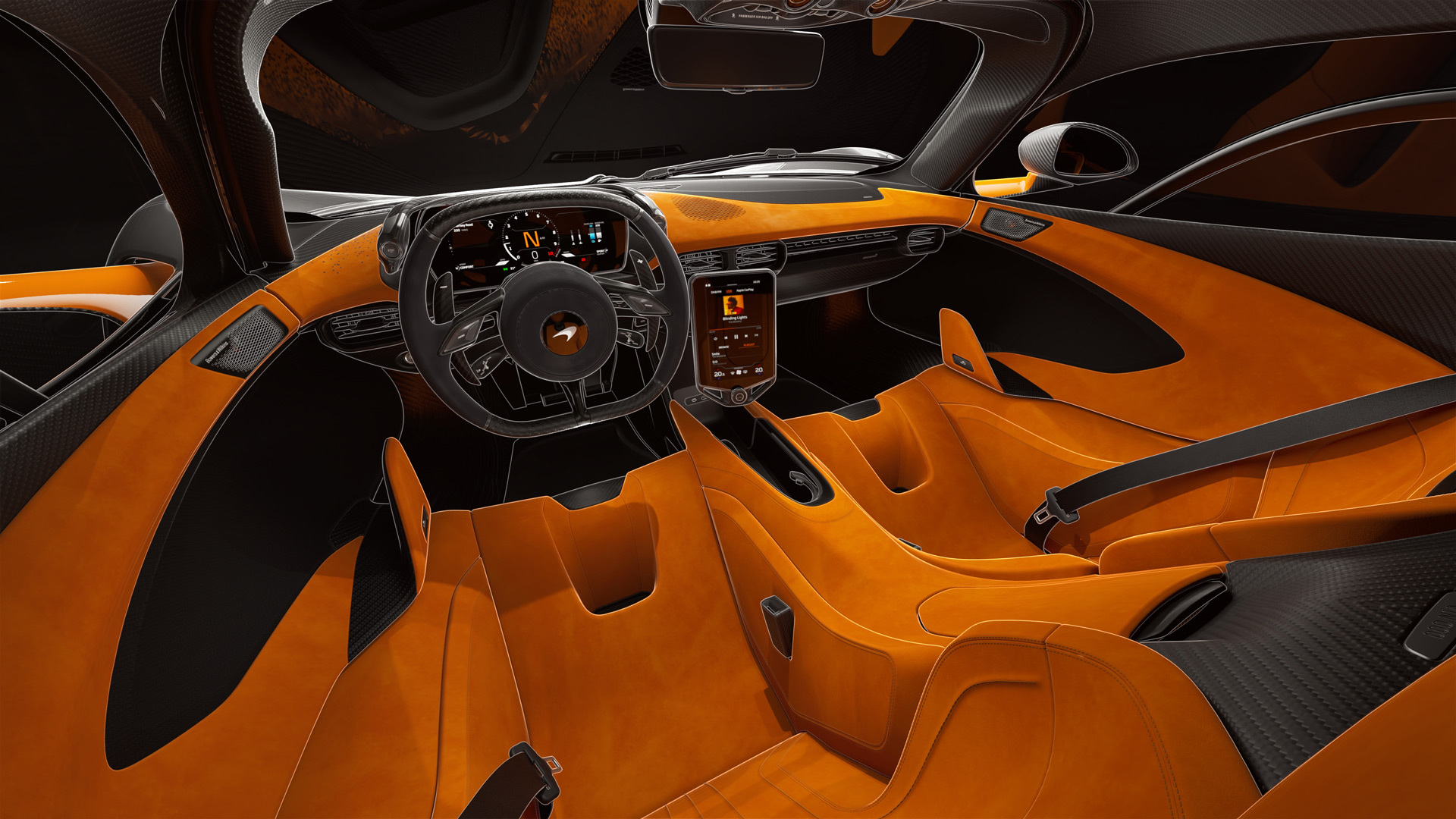
McLaren states that 399 W1s will be built. A limited production number makes individual specification relevant, but it should not obscure the common structure beneath personalisation. Paint and trim change the visual emphasis; the relationship between cell, airflow and moving tail remains the central story.
Four views that explain different things
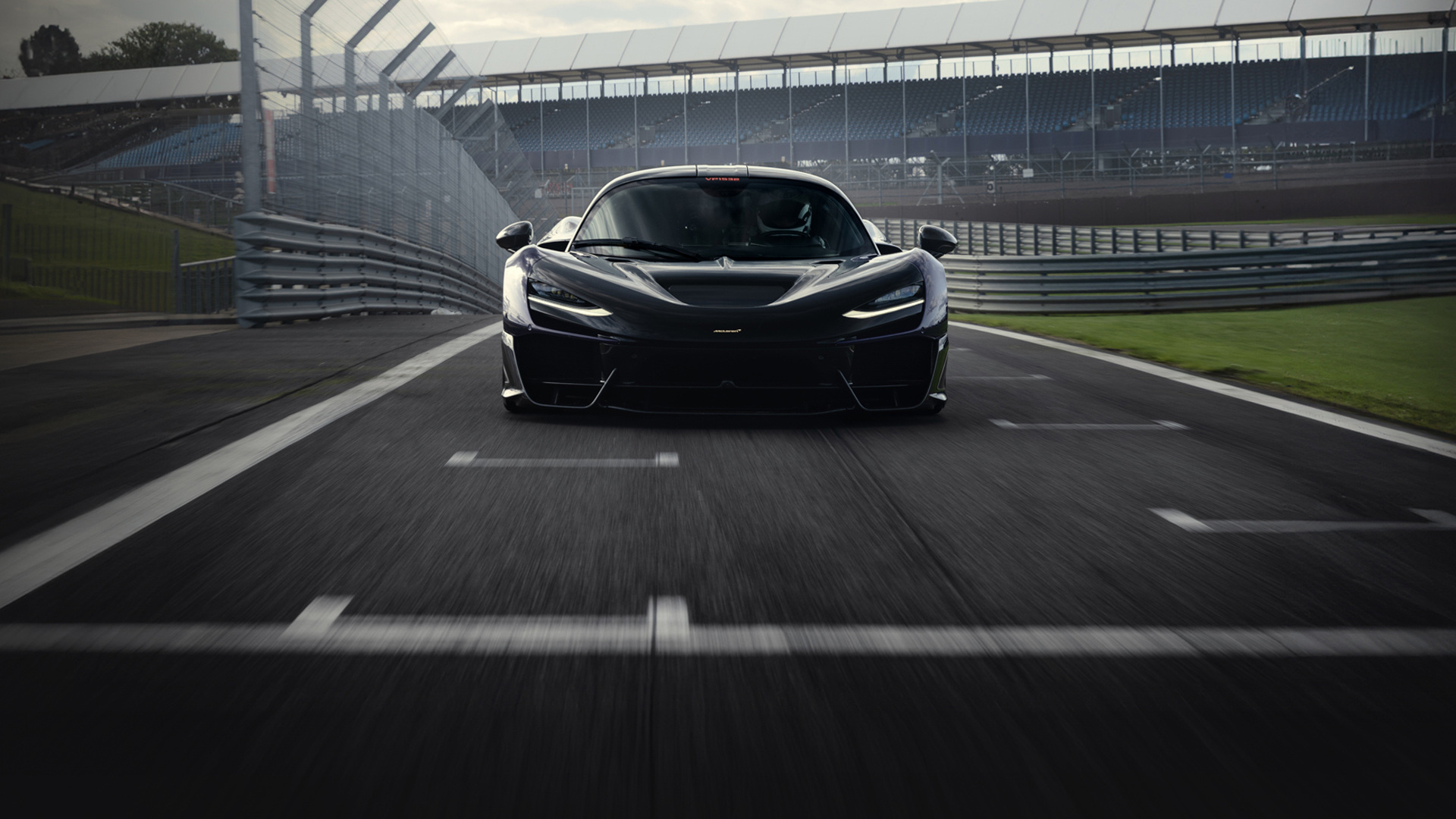
The W1 rewards a deliberate order of inspection. Start with the complete car, then study the elements that alter its configuration. Only after those relationships are clear does the powertrain close-up become fully useful. Reading every image as a portrait would flatten the distinctions between body, mechanism and explanatory visual.
| View | What it makes legible | What it leaves to establish |
|---|---|---|
| Complete side profile | Cabin position and the length of the body | How the underside controls airflow |
| Rear-quarter view | Tail volume and the relationship of openings | The aerodynamic load in a defined condition |
| Airflow visualisation | The maker’s explanation of routes and surfaces | Independent measurement of those effects |
| Cockpit image | Controls and the driver’s immediate space | Visibility, reach and comfort in use |
This is also a useful distinction for an owner considering a specification. A dramatic colour can sharpen the reading of an exterior surface, while a quieter cabin may make the operating environment more coherent. The two decisions belong to the same car without needing to compete for attention.
The Luxe Digital view
The W1 is most compelling when the body is read as a changing arrangement rather than a fixed sculpture. The extending tail supplies the obvious moment of theatre, but the more durable idea is the coordination around it: passenger cell, lower surfaces, powertrain and controls all working within a tightly defined package.
Its imagery becomes stronger when those connections remain visible. The complete orange silhouette gives the reader an object to remember. The structural and airflow visuals then make that memory more informed, revealing why the body has the proportions and interruptions it does. A final interior view returns the account to the person expected to use it.
That sequence also establishes the right boundary for a design study. There is plenty to understand before making claims about a drive that has not taken place. The W1’s architecture is already a substantial subject: a car whose external performance idea helps determine the shape of the space within.
The W1 is most compelling when the body is read as a changing arrangement rather than a fixed sculpture.
Sources & credits
Sources and methodology
Independent design and reference analysis of the named official records and imagery, checked on 15 October 2026. Launch specifications and later product records retain their own dates and references. Images show the identified configurations. No independent road test or driving access is implied.