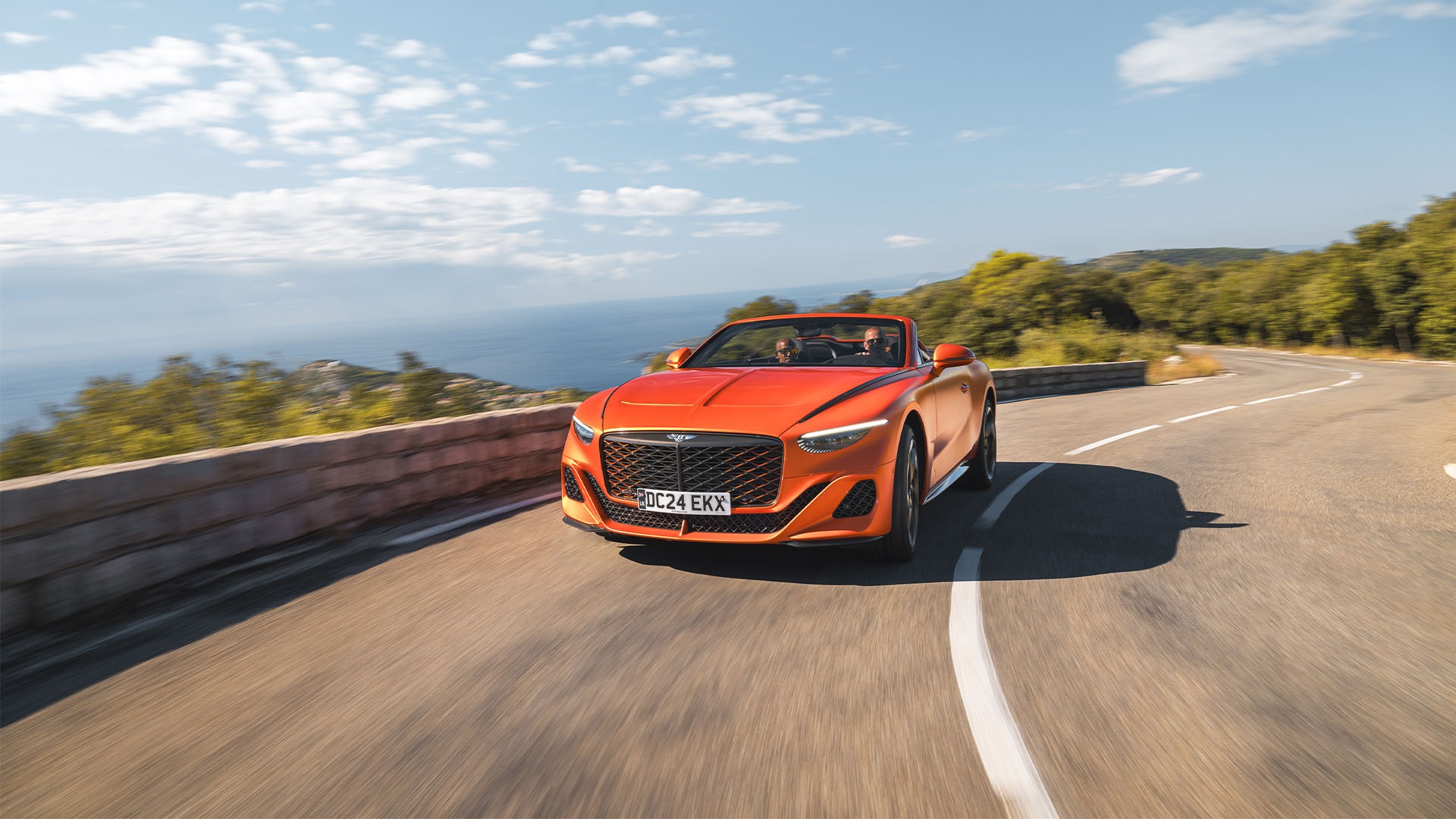
A painted line around a wheel, the colour within a grille, the edge of a seat: the Batur Convertible rewards a closer distance than its dramatic outline initially suggests. Mulliner’s two-seat Bentley makes a useful case for personalisation as a design discipline. The challenge is to let a multitude of individual choices read as one car.
Begin with the complete silhouette
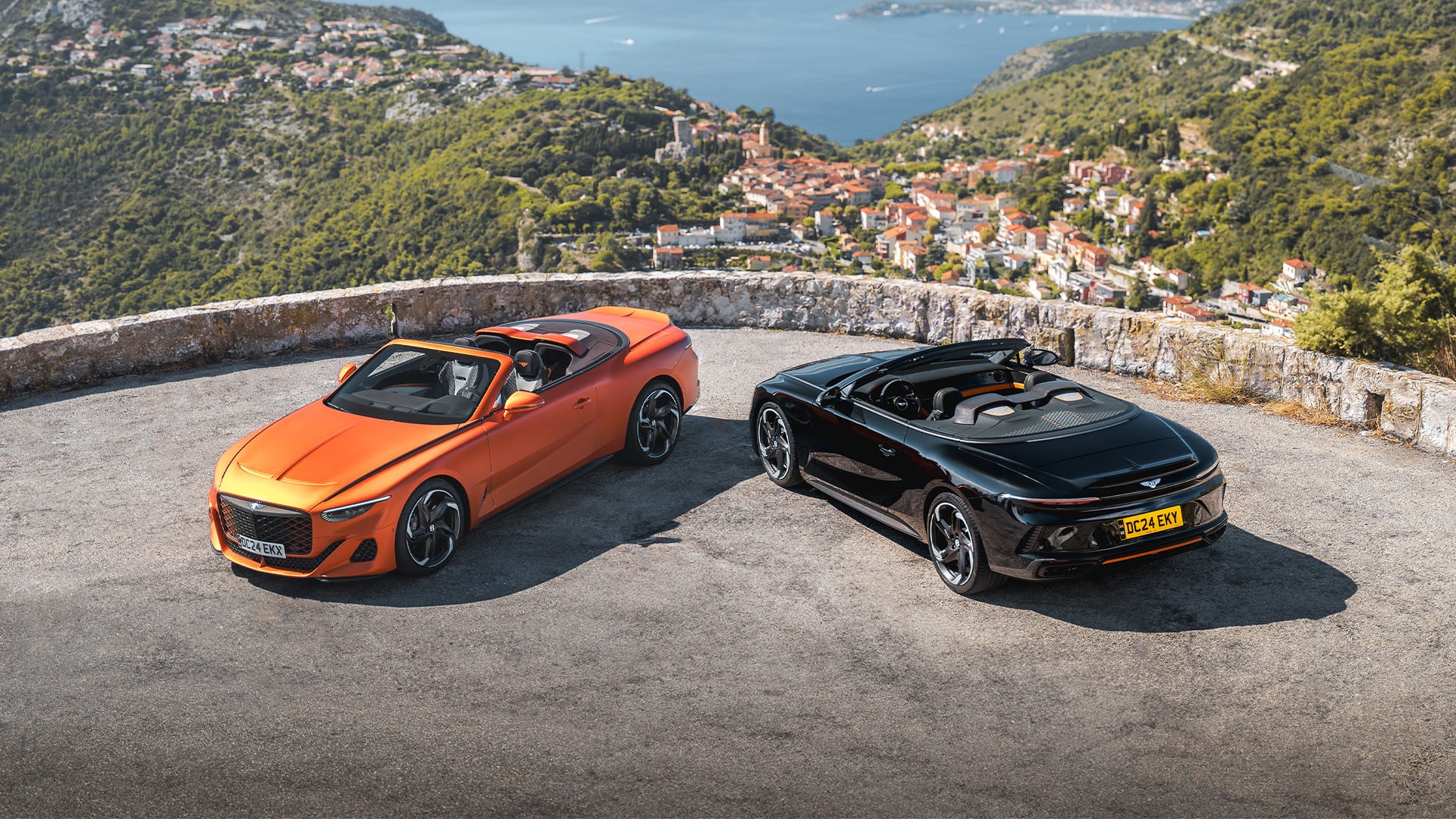
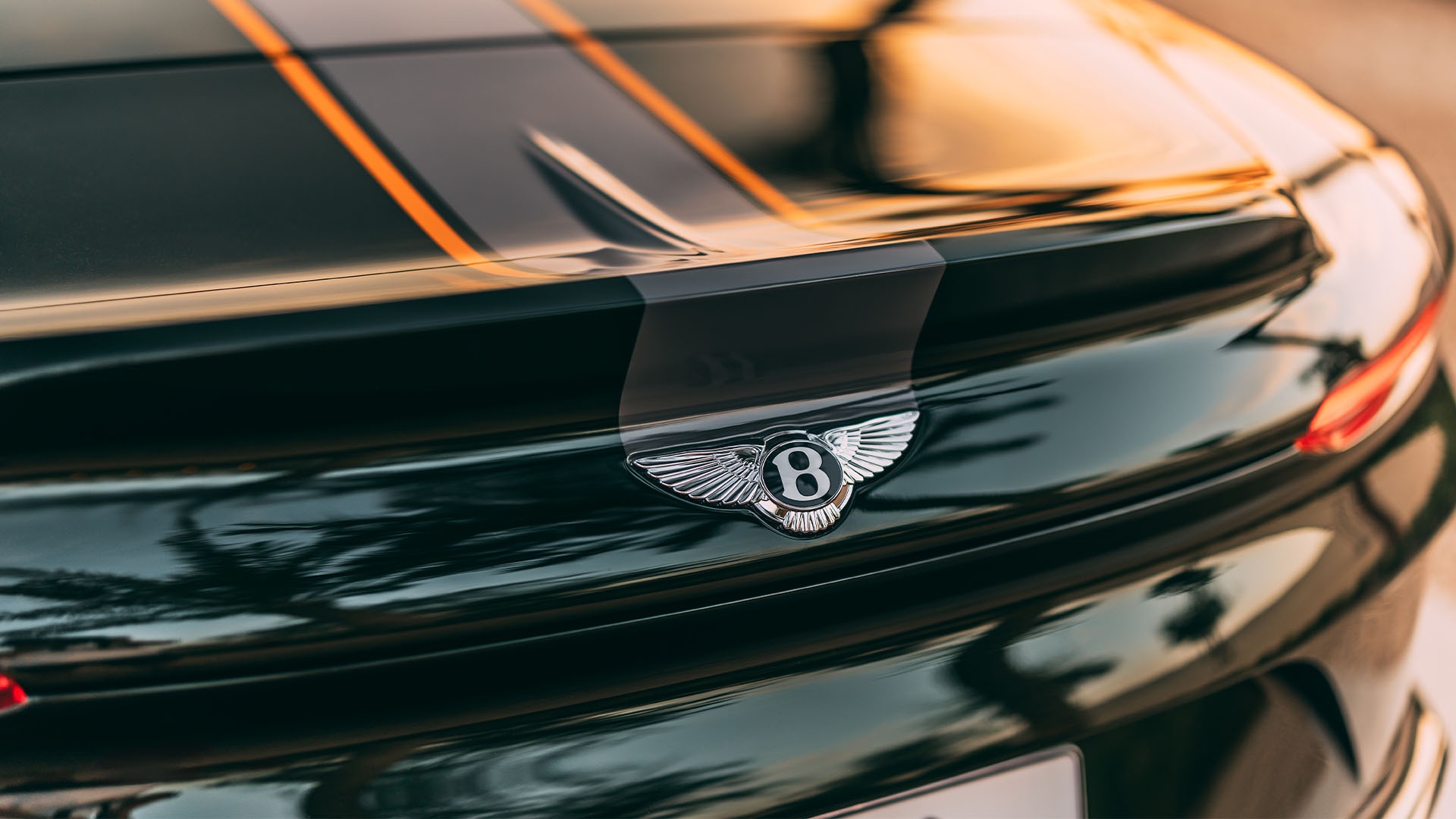
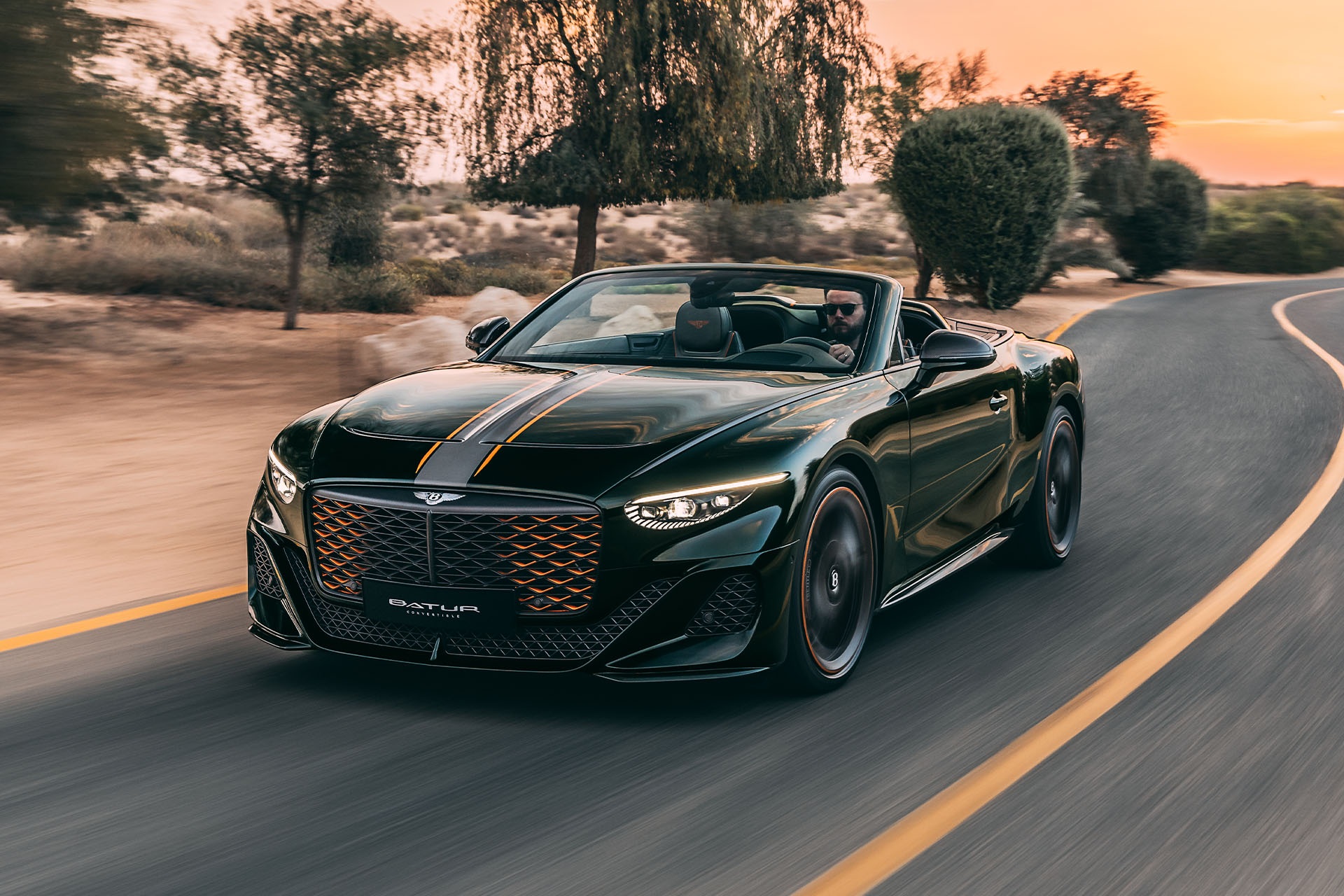
Bentley’s official sequence pairs an orange Batur Convertible with a darker example. Seen together, they offer a particularly instructive comparison. The body architecture is shared, but the emphasis changes with colour. The brighter car makes the sweep of the bonnet and the transition into the front wings immediately visible; the dark car asks reflected light to describe more of the surface.
Neither needs an additional narrative about exclusivity to establish its presence. The bonnet, the low windscreen and the two-seat cabin already give the car a powerful hierarchy. A commission works within that hierarchy. A fine painted accent can sharpen an edge, but it should not make every edge equally important.
Bentley’s launch presentation set the Batur Convertible programme at sixteen cars. That is the announced programme, not a statement about how many remain available. The editorial significance is the scale at which a client and an in-house design team can work through a particular combination of surfaces, colours and finishes.
Open air becomes part of the architecture
The convertible is not simply a Batur coupé with its roof removed. Behind the two seats, an elevated transverse form, which Bentley calls the Airbridge, and the tapered rear cowls give the open cockpit a definite boundary. From above, these shapes connect the seats to the broad rear body rather than leaving an unresolved space behind them.
The official launch description also identifies a semi-enclosed luggage area behind the front seats. That is a useful piece of information because it connects the sculptural form with the practical arrangement of a two-person grand tourer. The view through the cabin shows how closely the exterior and interior have to be considered together when the roof is open.
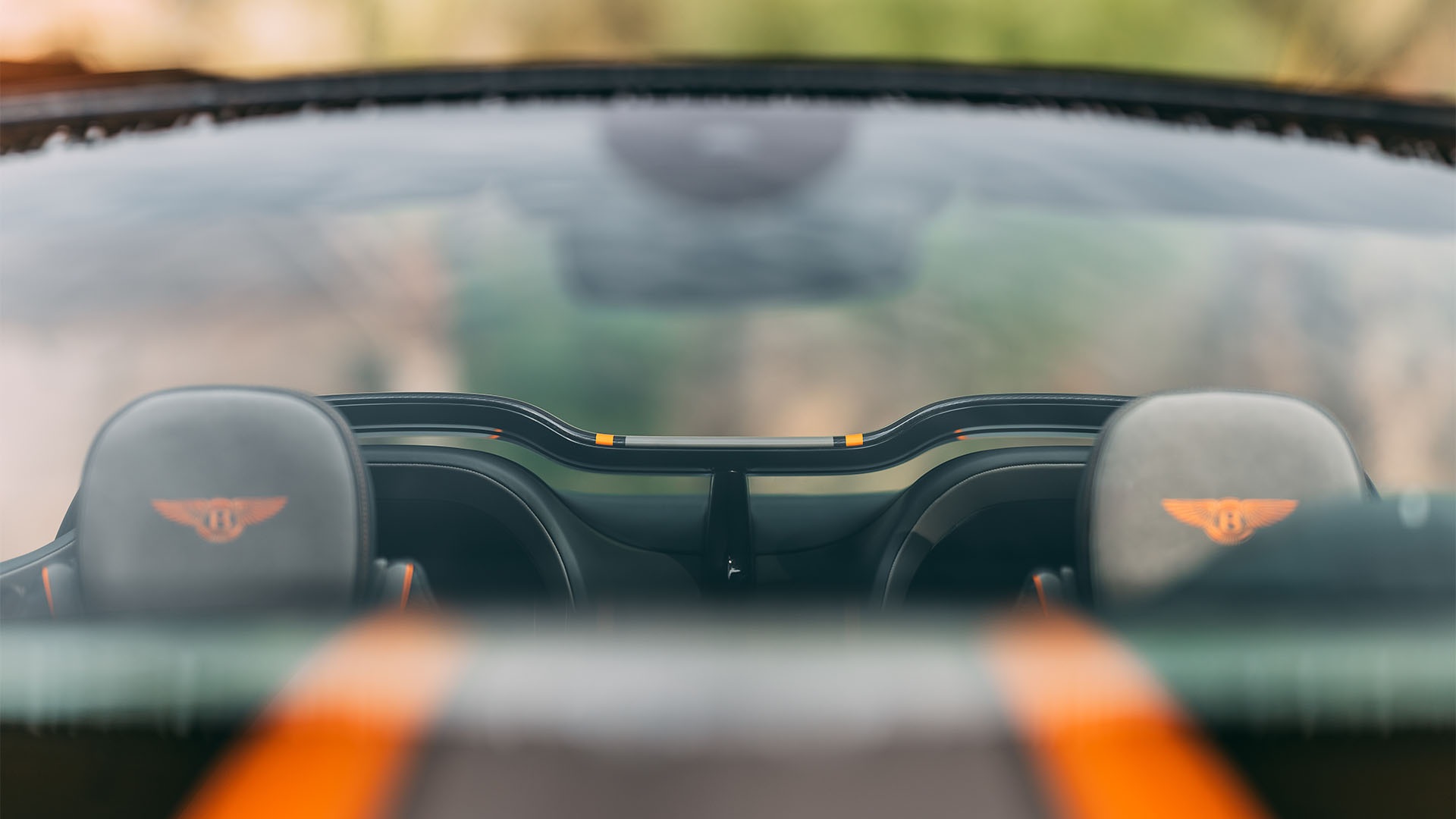
Bentley documents a roof operation of nineteen seconds at speeds up to 30 mph. The figure explains a mechanism, not the weather conditions in which an owner will choose to use it. More interesting visually is the transition itself: fabric, rear deck, seat backs and exterior paint become parts of the same composition. A colour scheme that works only with the roof closed is an incomplete scheme.
Colour has to travel across surfaces
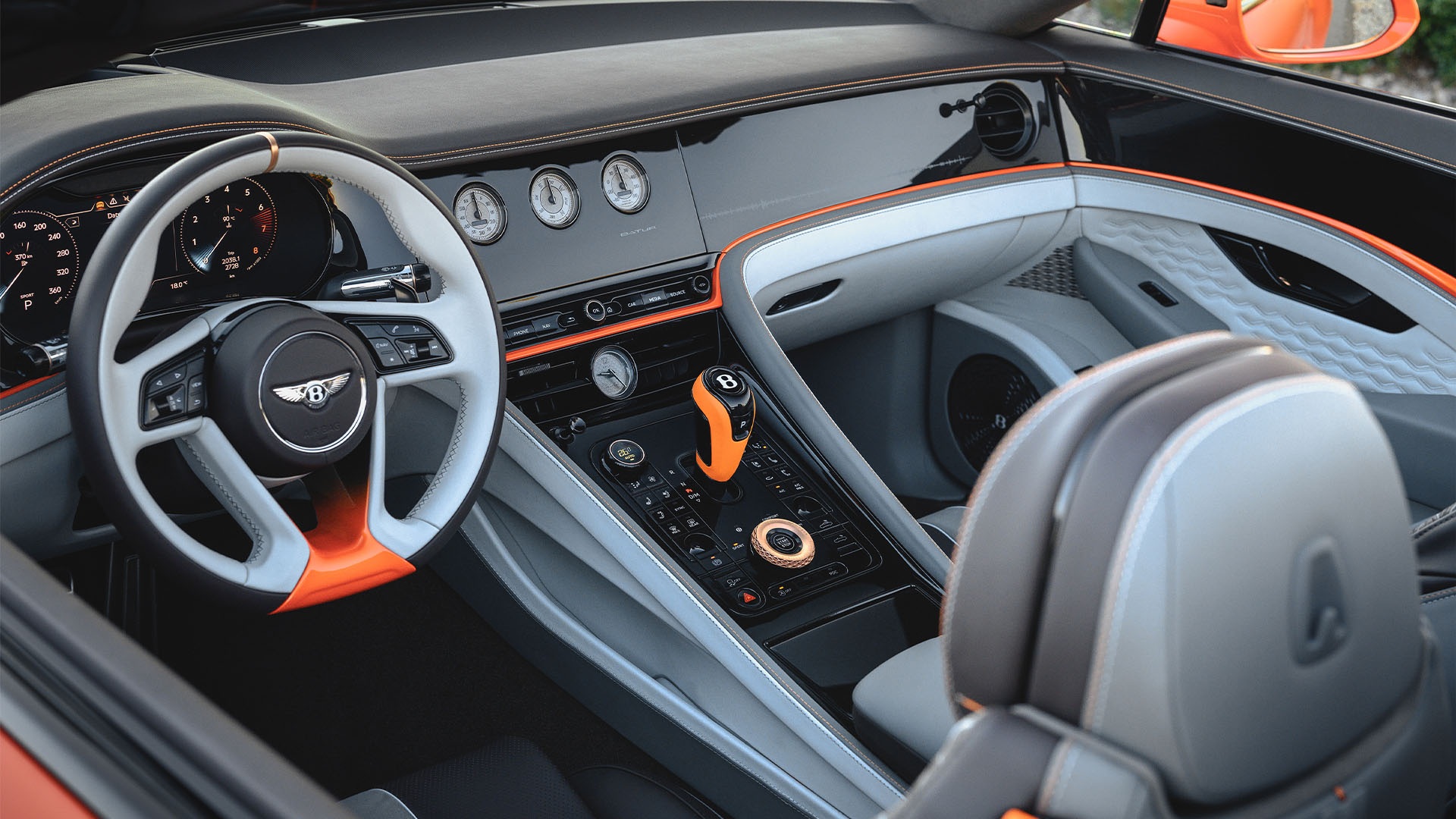
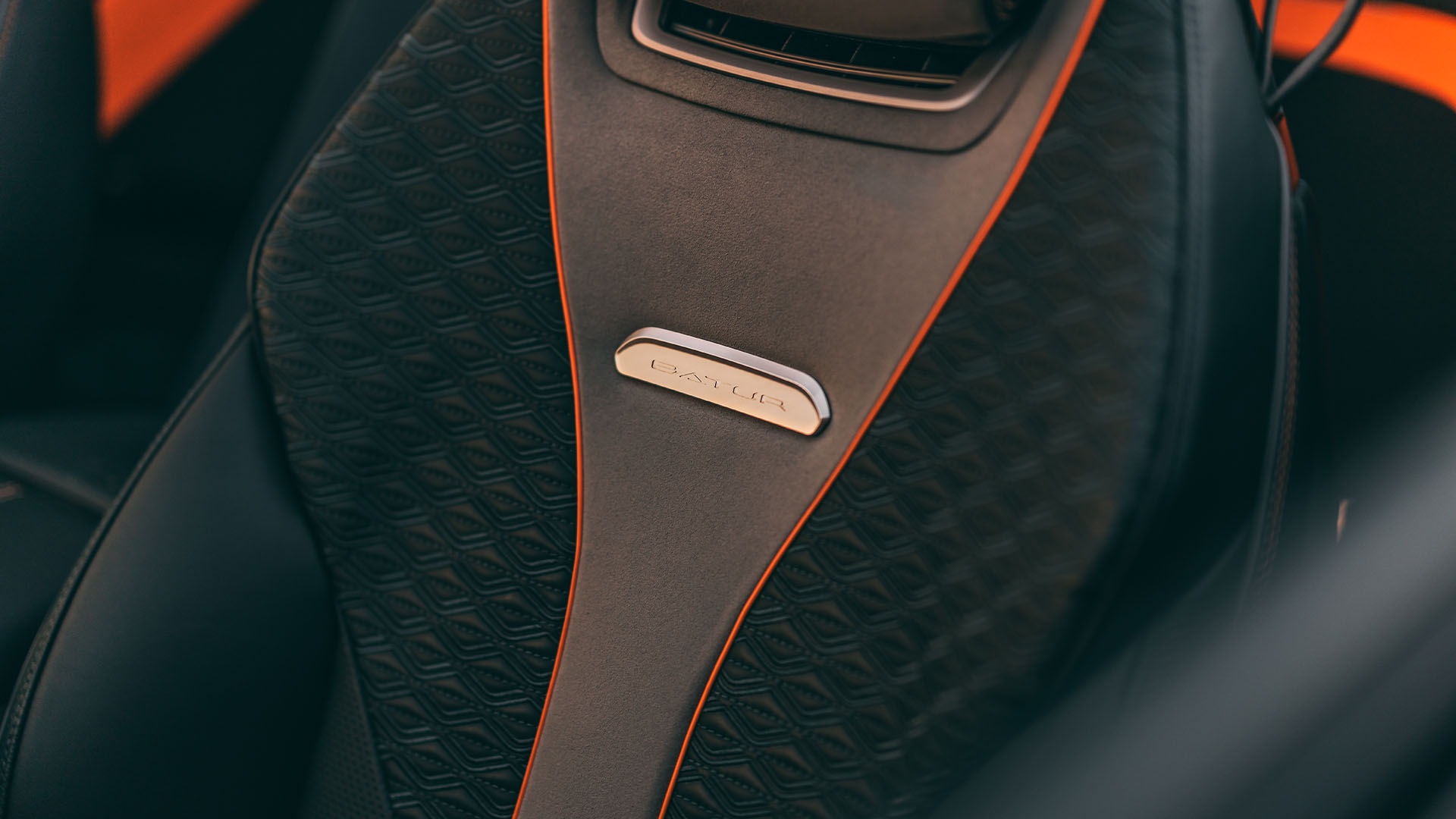
In the orange car, the exterior colour reappears as a much smaller signal within the cockpit. The difference in scale makes it effective. A large painted surface outside becomes a line, a seam or an accent inside. It creates recognition without requiring the entire cabin to repeat the body colour.
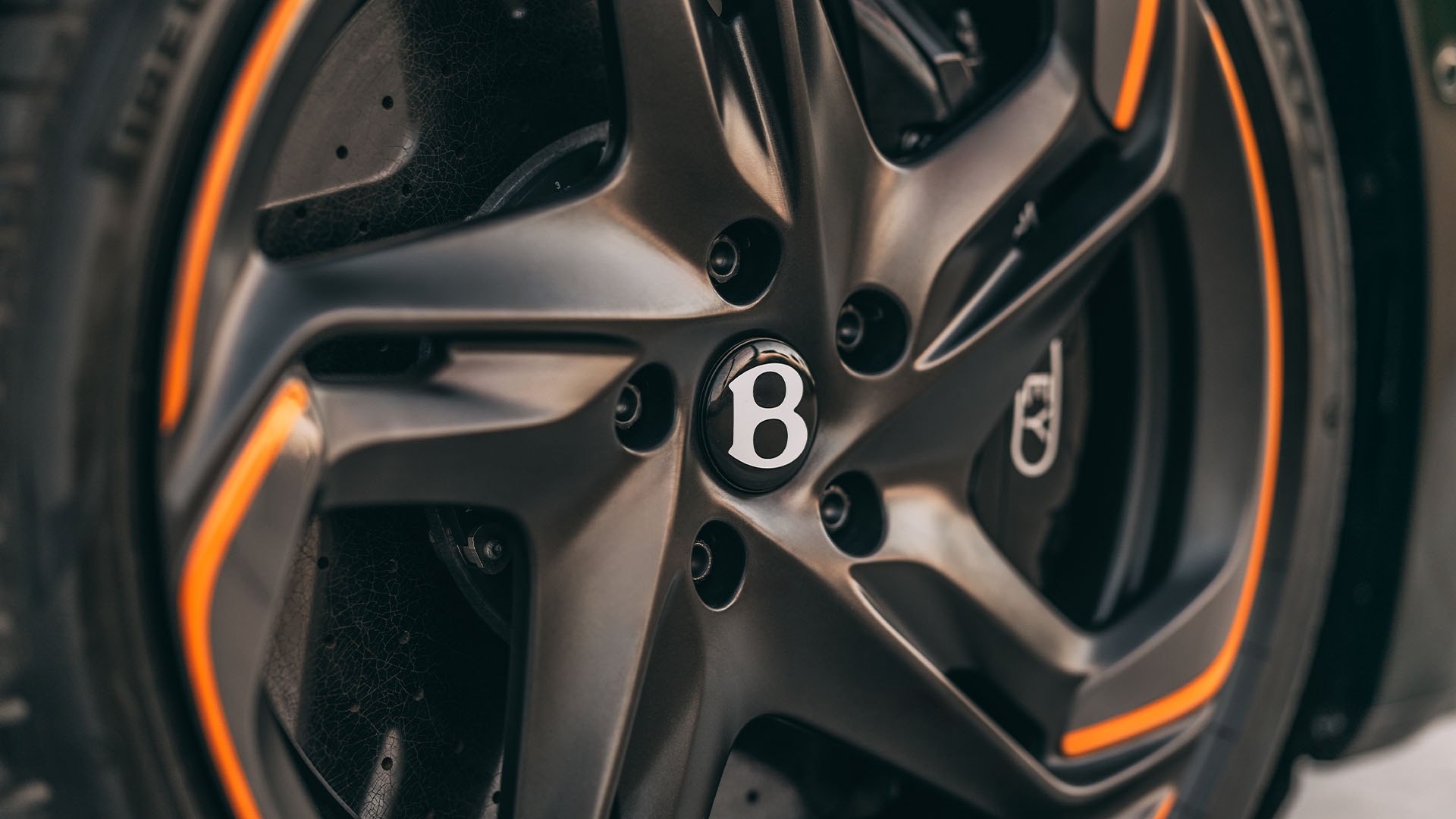
The wheel detail demonstrates the same principle. A narrow coloured ring can identify the circumference while the darker spokes retain their own visual depth. Move closer and the finish becomes a small drawing within the larger form of the wheel. Move away and it returns to being a single element in the car’s stance.
Mulliner’s launch account describes the use of a dedicated visualiser and physical material samples in the commissioning process. Those tools serve different purposes. A visualiser allows a combination to be considered across the whole car; a real sample reveals what its surface does when light moves. The most useful decisions emerge when the two are kept in conversation.
Metal at the points the hand remembers
The Batur programme includes unusually specific choices for metal detailing. Bentley describes optional rose-gold components at driver touch points and a collaboration with goldsmiths in Birmingham’s Jewellery Quarter. Its current model presentation also discusses laser-etched veneers and titanium details. These are named processes and options, not a guarantee that every photographed car contains all of them.
The distinction matters. In a well-edited commission, an exceptional material should have an appropriate location. A drive-mode selector is encountered repeatedly; a small marker at the top of the steering wheel has a precise visual role. The material’s value does not remove the need to consider its size, reflection, temperature in use and relationship to the adjacent finish.
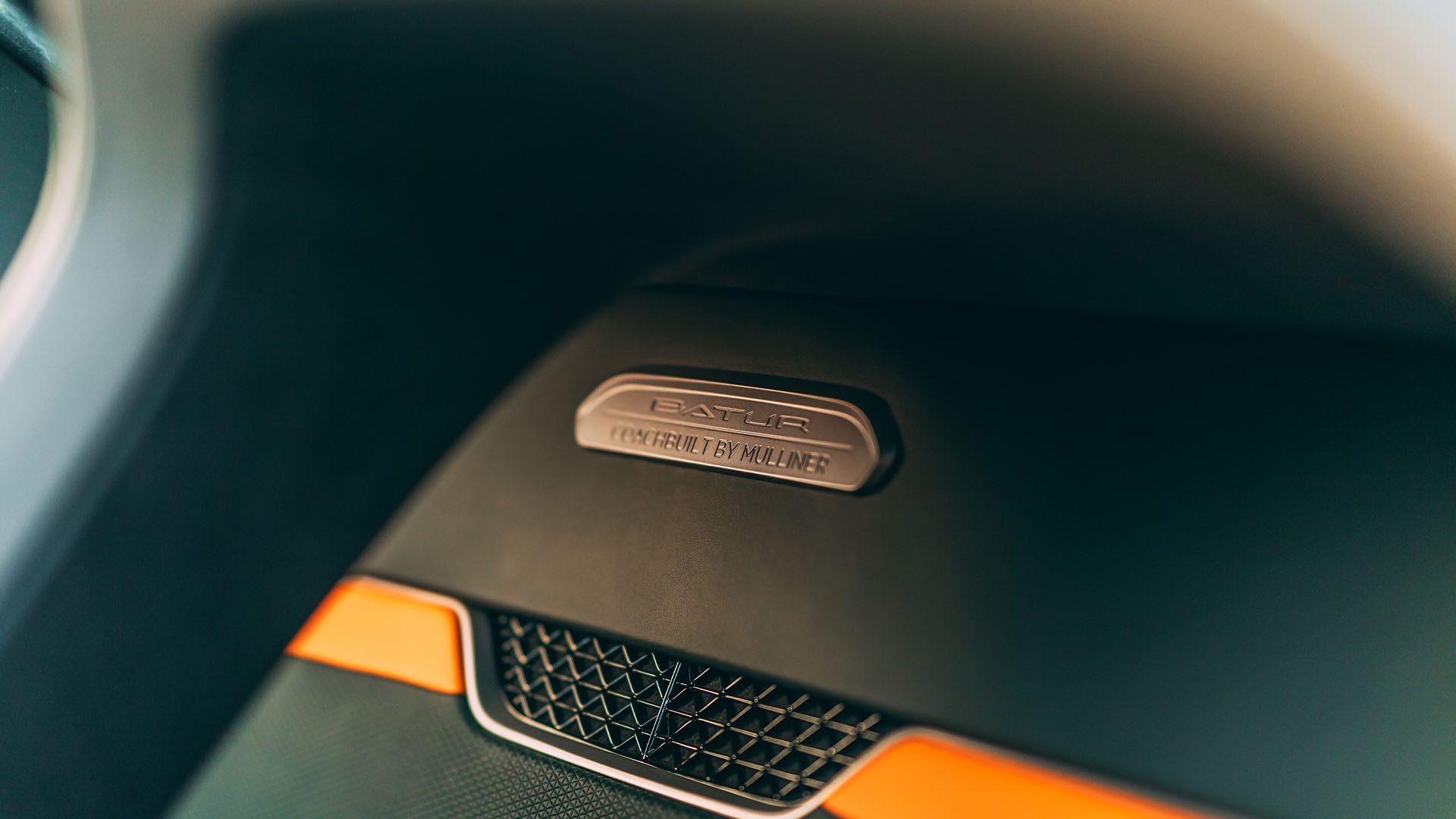
The official cabin photograph is best read at that scale. There are circular controls, a broad dash surface and clearly defined seat forms. Some details catch the light strongly, while others recede. It is their hierarchy that makes the interior legible. Counting precious materials would tell us much less about the quality of the composition.
The grille is a small colour study
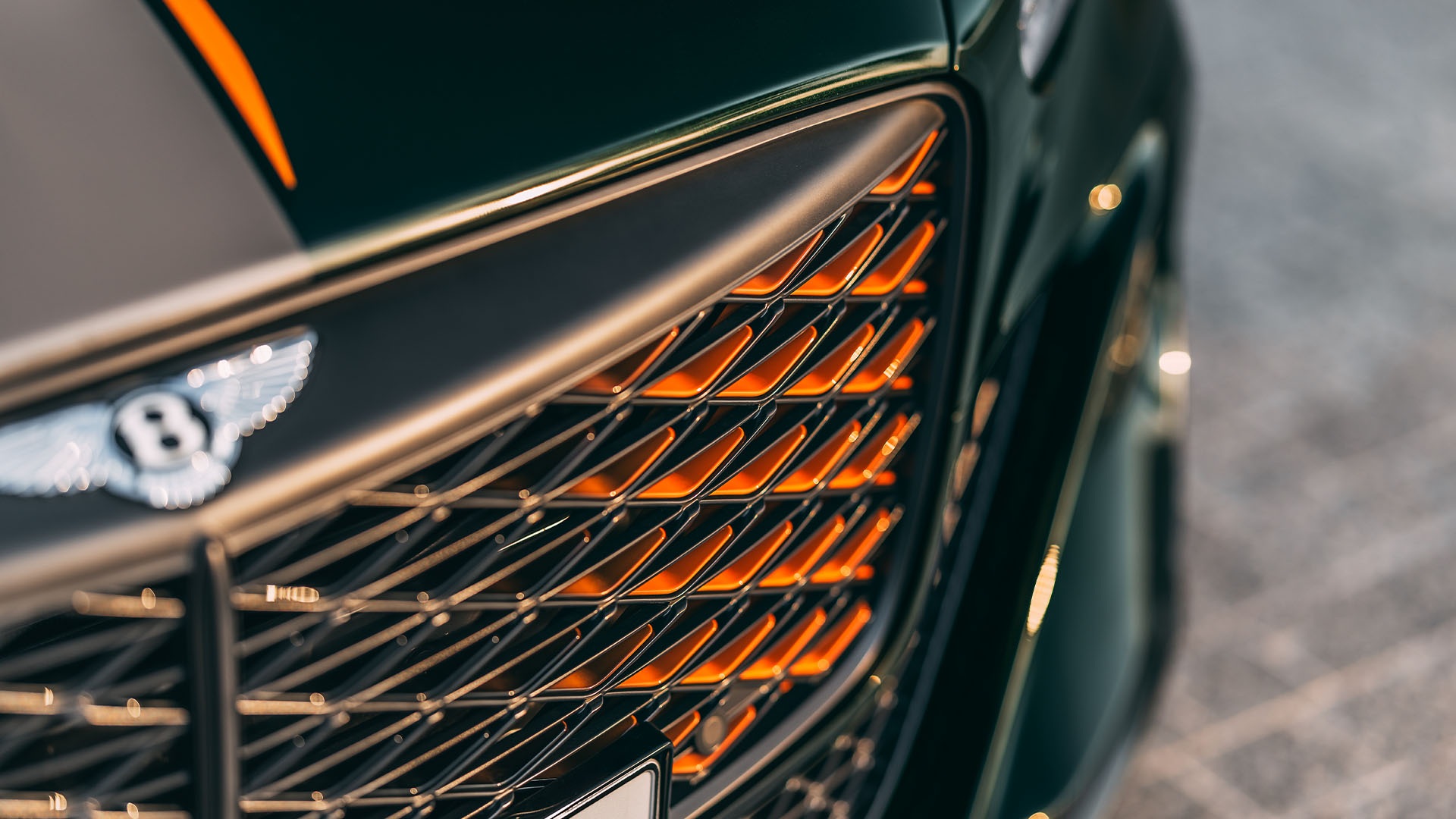
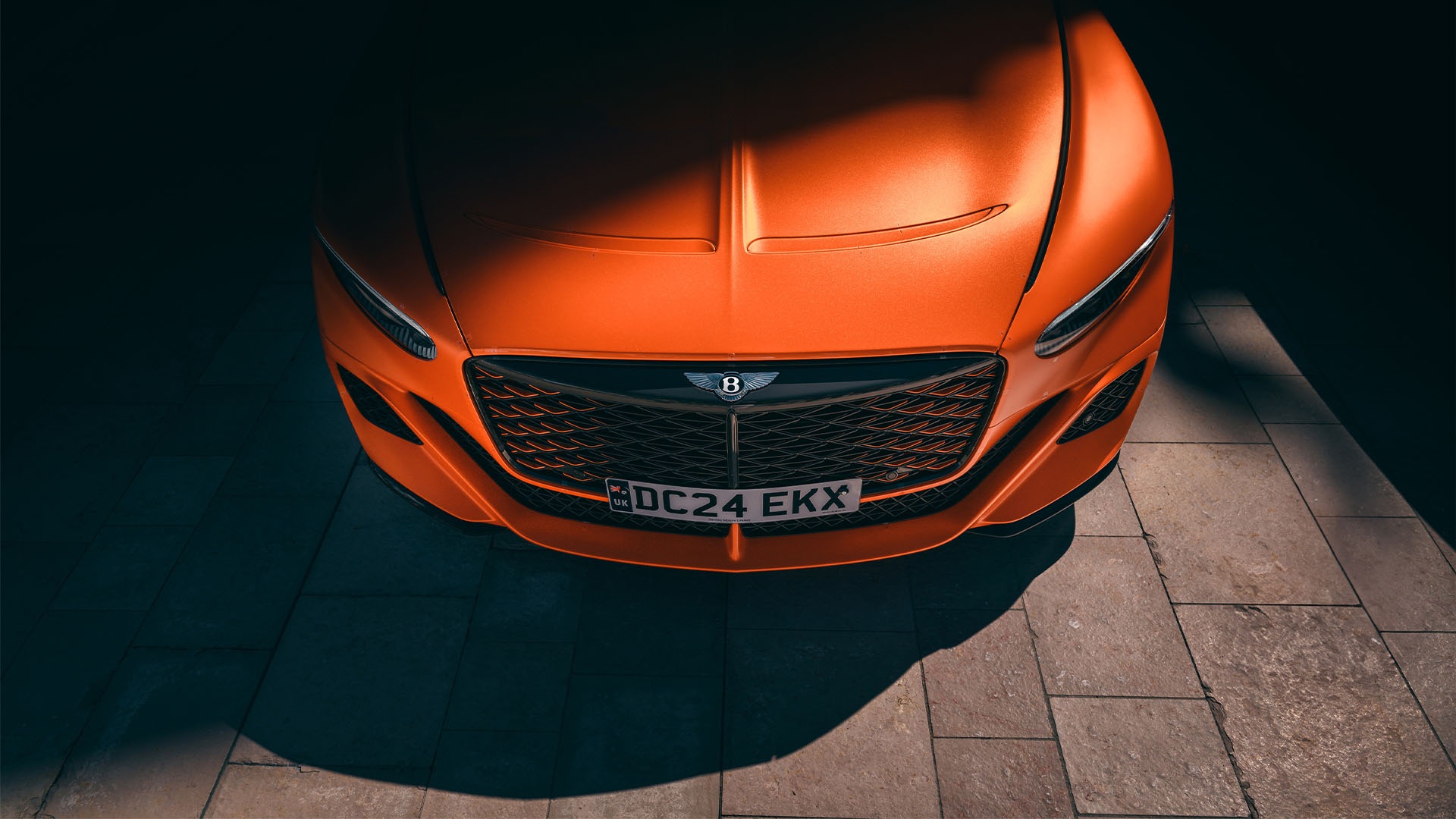
Viewed from the front, the grille is one of the dominant features of the Batur. In close-up, it becomes a pattern of intersecting lines, shadows and coloured edges. Bentley’s commissioning description includes the possibility of a graduated contrast treatment here, allowing the grille to participate in the exterior palette rather than remaining a neutral opening.
That is a more demanding decision than choosing a single bright or dark finish. The transition needs to work across many small elements, and it has to remain convincing when viewed obliquely. The close photograph makes the individual parts visible; the wider view establishes whether they resolve into a coherent face.
The same method can be applied to almost any bespoke object. Look at the whole, examine the detail, then return to the whole. A detail that is impressive only in isolation may not be the right one. The Batur’s scale makes this especially important: its front end has enough visual authority without every small component demanding equal attention.
A commission, examined at three distances
| Distance | What becomes legible | The useful design question |
|---|---|---|
| Across the courtyard | Silhouette, stance and the main colour relationship | Does the whole car have one clear character? |
| Beside the door | Cockpit boundary, paint transitions and upholstery | Do exterior and interior belong together with the roof open? |
| At the wheel | Touch points, trim edges and reflected light | Are the most expressive materials in the right places? |
| Close to the grille | Pattern, finish and graduated colour | Does the detail resolve when you step back? |
| Beside a second example | The effect of a different palette on the same architecture | Which choices are personal, and which support the underlying form? |
This is a way to judge a proposal, not an instruction to add more options. A strong brief can be highly restrained. It can also be richly coloured. What matters is that the chosen treatment survives the movement between those distances.
The W12 belongs to a particular chapter
The Batur Convertible also has a mechanical identity that should not disappear behind the surface discussion. Bentley’s documentation specifies a hand-assembled 6.0-litre twin-turbo W12 producing 750 PS and 1,000 Nm, paired with an eight-speed dual-clutch transmission. The current model account places the car within the closing chapter of that engine’s production history.
Those are manufacturer specifications. They are not evidence of a drive undertaken for this feature, nor do they explain the tactile experience of the particular cabin pictured here. Their role is to establish the kind of automobile being commissioned: an unusually powerful two-seat Bentley whose material choices sit around a very specific powertrain.
The most enduring quality of the Batur is the relationship between those scales. The engine and body establish the broad character; the Airbridge gives the open cabin its form; the grille, wheel and upholstery make that character personal. The best details do not interrupt the car. They help it become more completely itself.
Sources & credits
Methodology and sources
This is a design and commissioning feature based on Bentley’s official model presentation, launch account and their named Batur Convertible imagery. The orange and dark cars are distinct photographed examples; finishes and options are not attributed indiscriminately between them. The sixteen-car figure refers to the announced programme. No road test, client interview, allocation availability or current transaction price is implied.