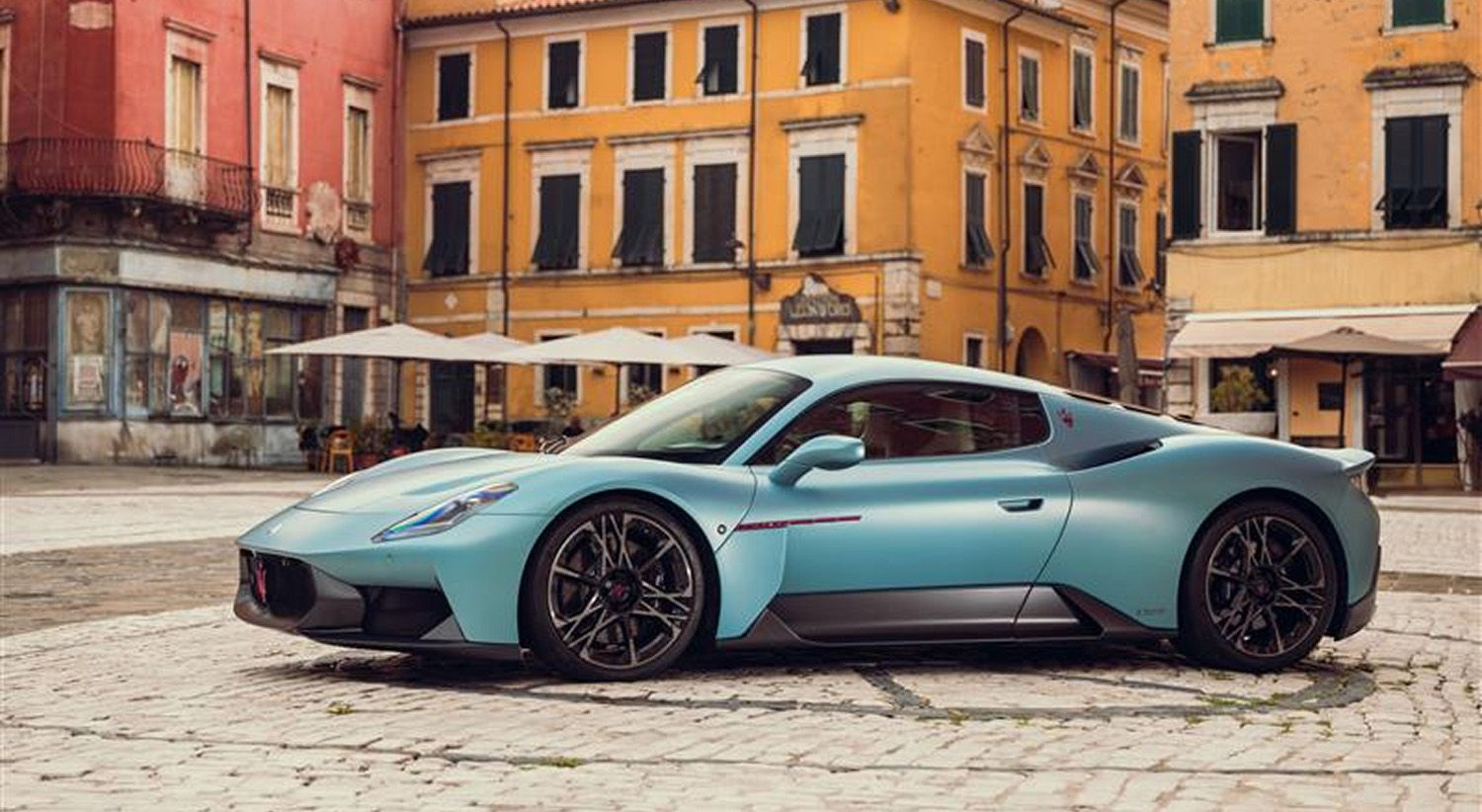
AI Aqua Rainbow is the first thing the Maserati MCPURA asks the eye to follow. Its changing colour travels across a compact body, over the rear shoulder and towards the openings behind the cabin. Beneath that surface, the carbon structure and Nettuno V6 provide the more durable subject: the relationship between a vivid exterior and the architecture it encloses.
One programme, two roof arrangements
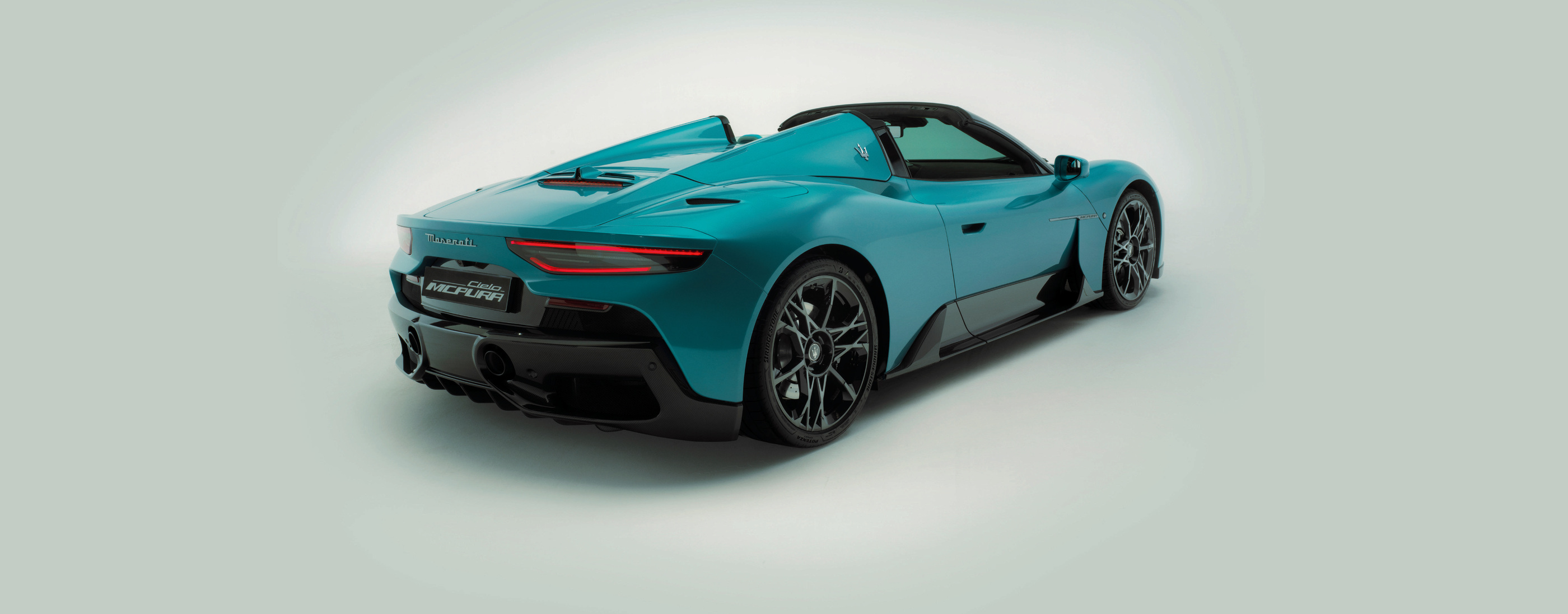
Maserati introduced MCPURA at the 2025 Goodwood Festival of Speed as an evolution of the MC20. The launch programme includes a coupe and the open-roof MCPURA Cielo. Reading the two together makes the common proportions easier to understand, while keeping the difference in roof configuration visible.
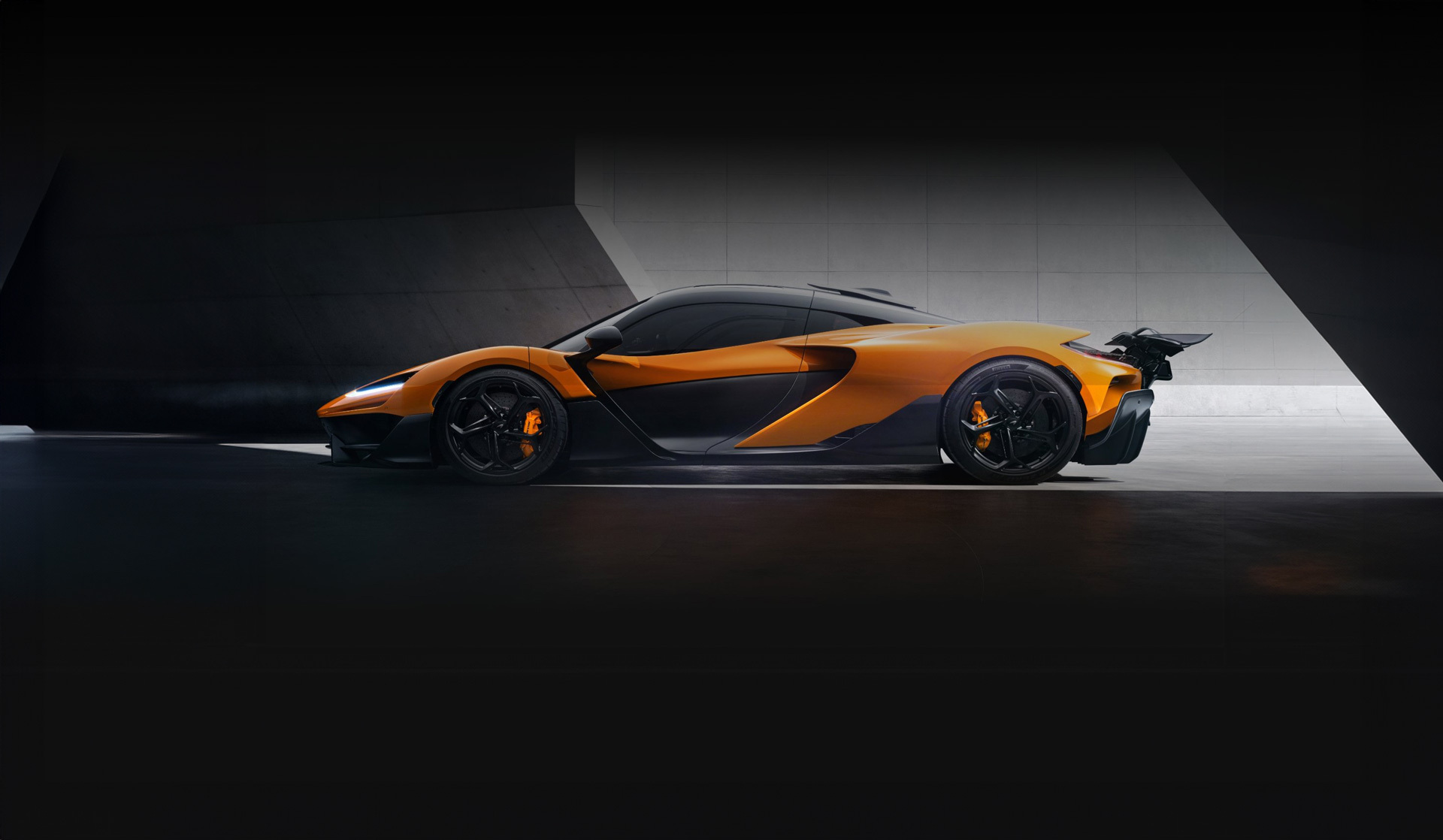
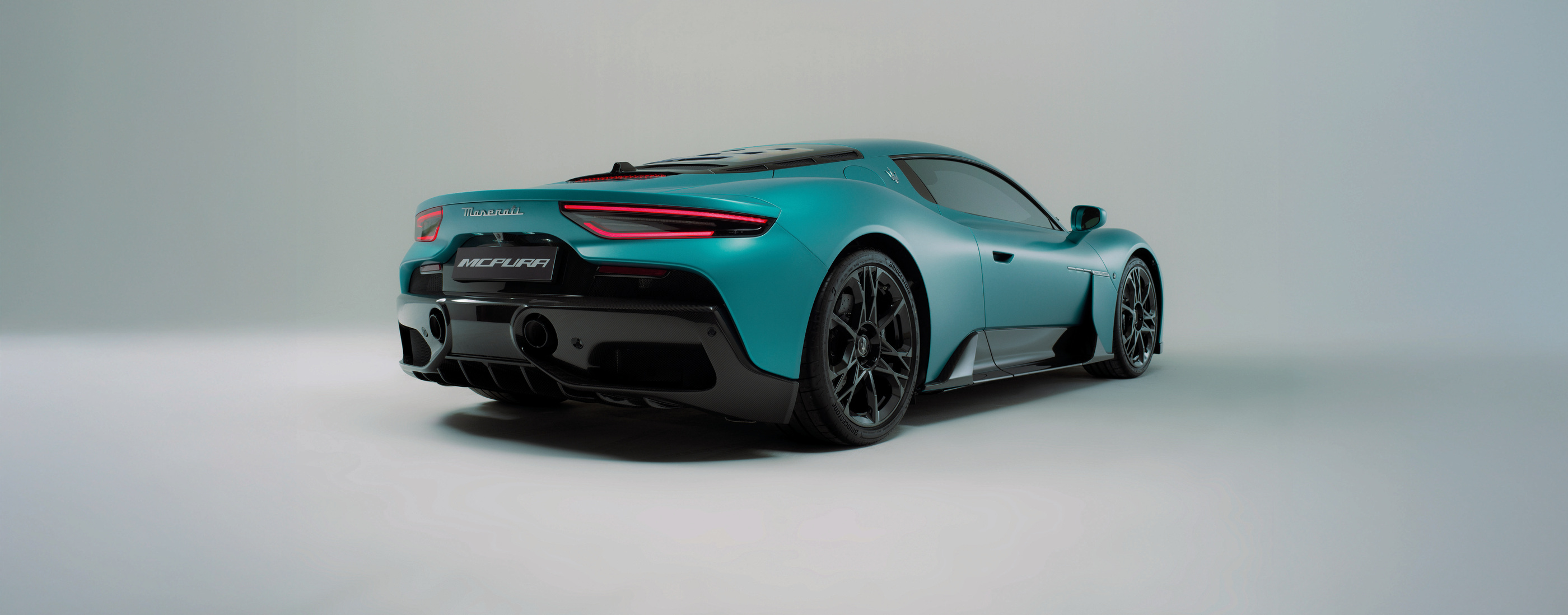
The official studio views are especially useful for that comparison. With the backgrounds controlled, the eye can follow the cabin outline, rear shoulder and relationship between seats and engine compartment. The Cielo’s opening changes the upper part of the composition while leaving the broader mid-engine arrangement recognisable.
Maserati’s launch colour has a further distinction: the coupe is presented in a matte interpretation of AI Aqua Rainbow, while Cielo receives a gloss finish. Those are separate treatments within one colour programme. They should be identified in captions rather than allowed to imply that every image depicts the same surface or configuration.
The carbon structure explains the compact room
The official September 2025 catalogue introduces the carbon-fibre monocoque through an explanatory visual. Removing the surrounding body in a technical representation makes the location of the passenger space much clearer. The small central room is a defined part of the car’s structure, not simply a cabin drawn inside an attractive shell.
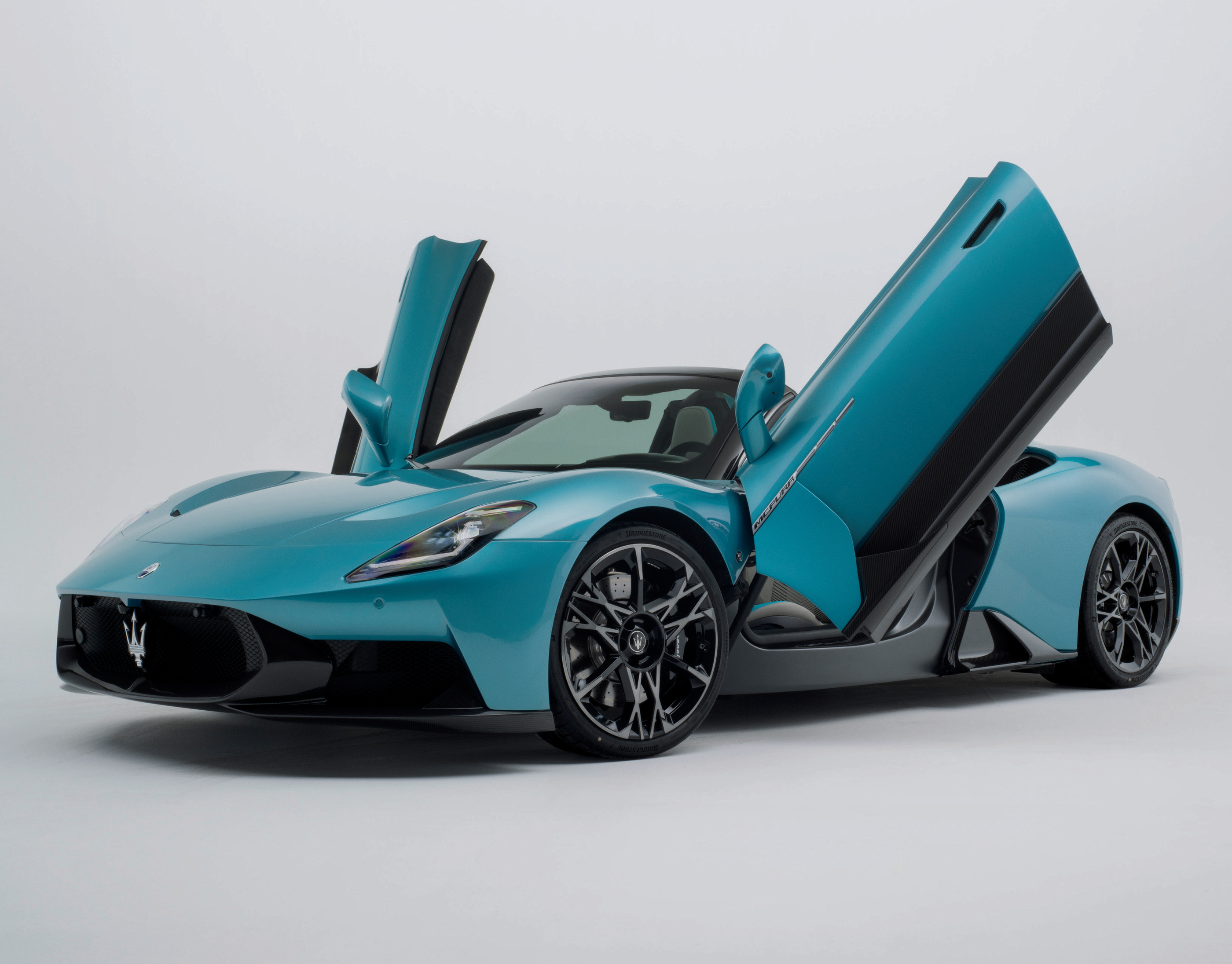
That view also gives the raised butterfly doors more meaning. Their movement changes the outline dramatically, but it is tied to an opening through which a person must enter. Seen beside the structural account, the gesture becomes part of an access problem as well as a moment of visual theatre.
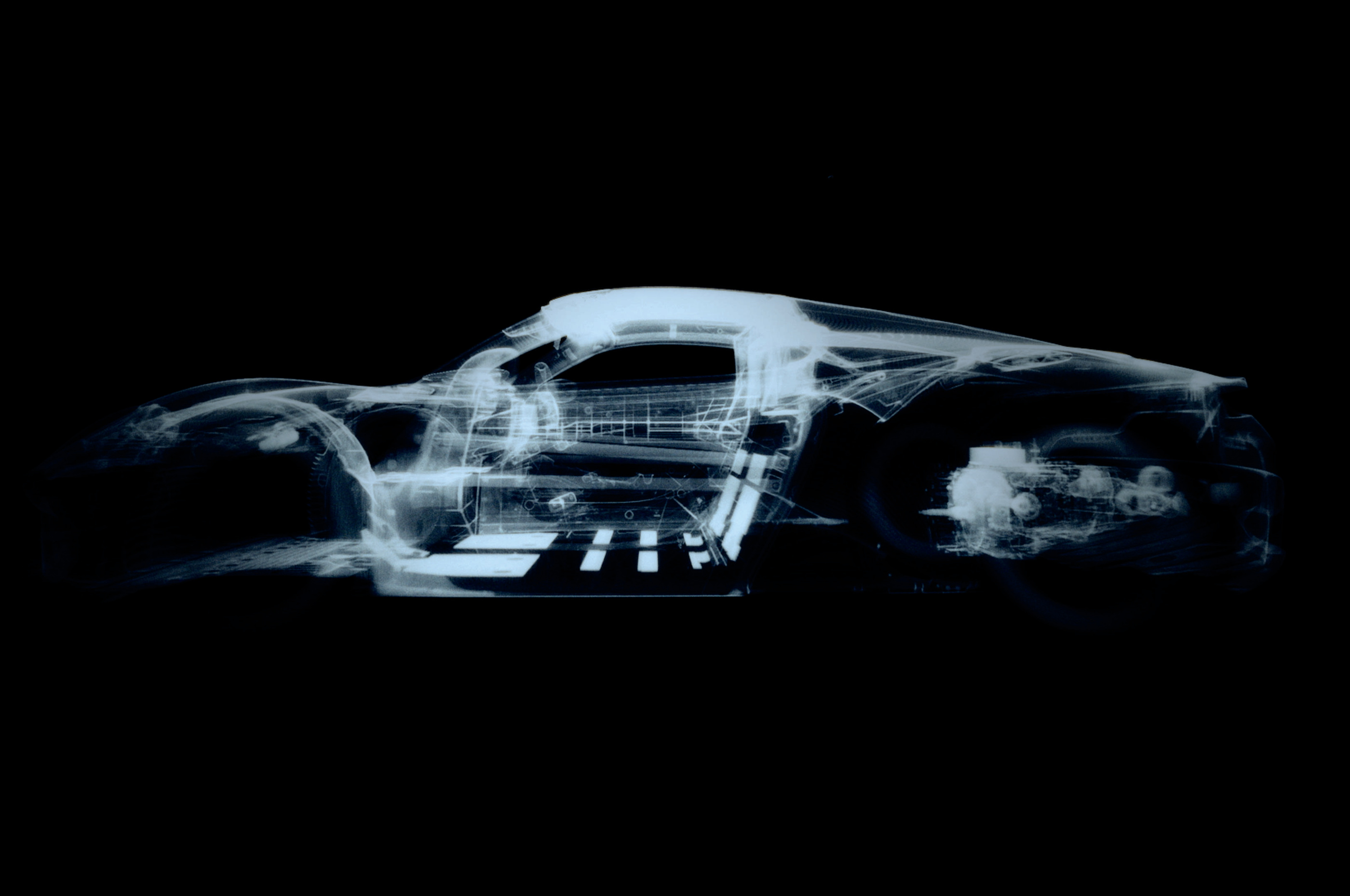
The technical image has its own evidential role. It explains the manufacturer’s description of the structure; it is not a photograph of a car with its skin physically removed. Keeping that distinction visible lets the reader move confidently between the complete product and the diagram used to understand it.
Nettuno gives the body a mechanical centre
The July 2025 press kit specifies a 3.0-litre Nettuno V6 with 630 CV and 720 Nm. These are declared figures for the launch programme, and CV is retained as the manufacturer’s unit. The important connection is between that engine and the package around it.
With the powertrain behind the occupants, the visible rear volume has a different role from the long bonnet of a front-engined grand tourer. The cabin can sit further forward within the overall shape, while the side and rear body have to accommodate the engine’s position and the associated airflow.
This makes a rear-quarter view particularly informative. It shows the shoulder, cabin boundary and tail in the same frame, giving the reader a physical object to connect with the technical account. A sequence that moved directly from a front portrait to the output figure would lose much of that explanation.
The interior changes the photographic scale
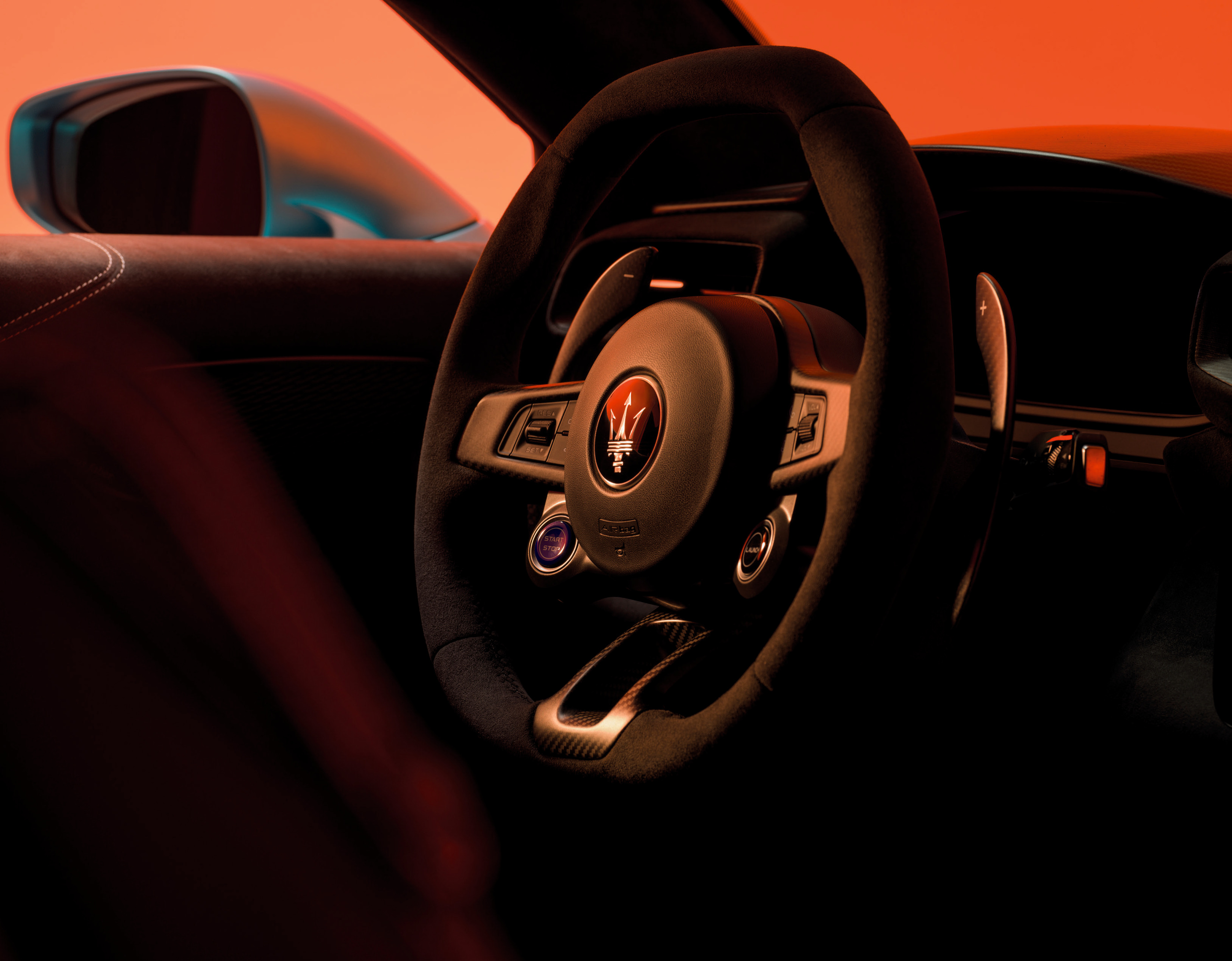
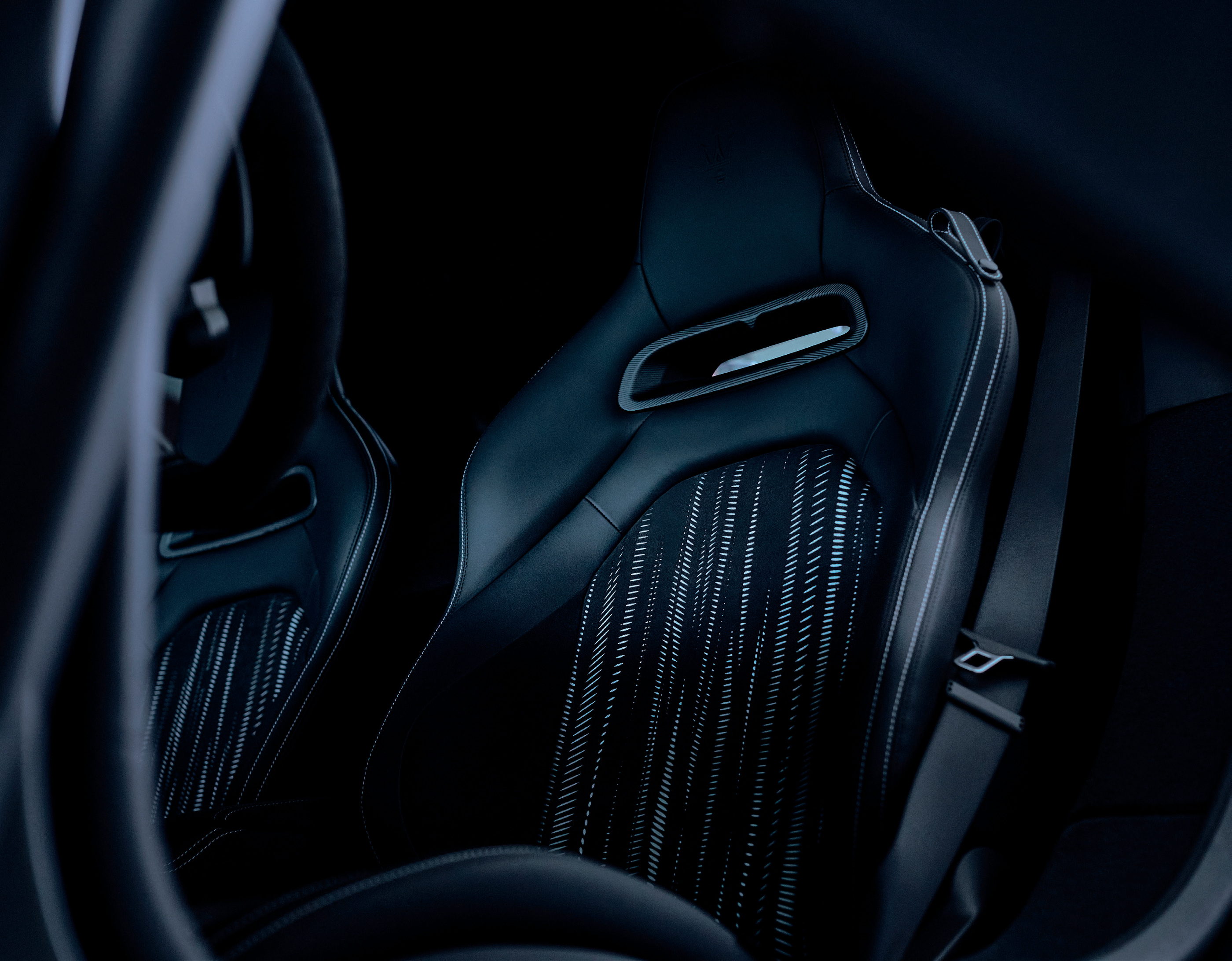
The catalogue’s cockpit and seat images bring the story down to surfaces close to the driver. The steering wheel, surrounding controls and concentrated display environment occupy a room with a very different visual rhythm from the broad exterior panels.
The seat photograph is valuable because it shows another boundary: a shaped object within the already defined passenger cell. Upholstery and cut-outs have to work at the scale of a body. Photography can make their organisation legible, while fit, support and access remain questions for direct inspection.
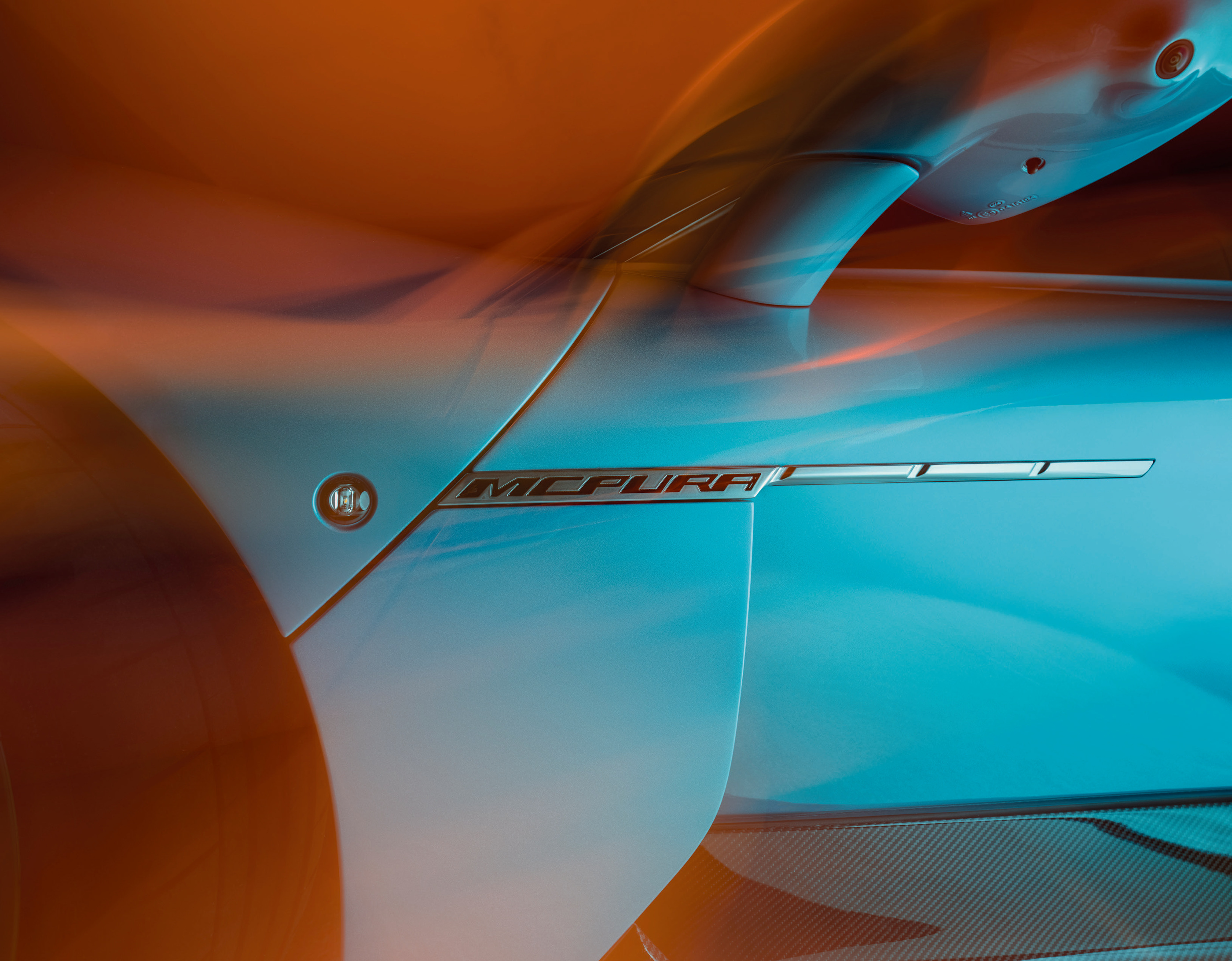
The colour-detail image then connects the interior study back to the outside. At close range, the launch finish becomes a field of changing reflections around lettering and a small panel edge. It is a different kind of information from the complete car, and one that deserves its own position rather than being used as a substitute for a full exterior view.
A compact specification with clear boundaries
The programme is easiest to follow when common architecture and configuration differences remain separate. The following table uses the July press kit and September 2025 catalogue. It does not apply one launch photograph to every later specification or suggest that the coupe and Cielo have identical upper bodies.
| Element | Documented launch detail | Reading consequence |
|---|---|---|
| Structure | Carbon-fibre monocoque | Defines the central passenger cell |
| Engine | 3.0-litre Nettuno V6 | Establishes the mid-engine package |
| Output | 630 CV and 720 Nm | Identifies the declared launch specification |
| Access | Butterfly doors | Makes entry part of the car’s changing silhouette |
| Roof | Coupe or retractable-glass-roof Cielo | Requires configuration-specific images and captions |
| Launch finish | Matte coupe, gloss Cielo | Gives the same colour a different surface behaviour |
For an owner, these distinctions lead naturally towards a more useful viewing: begin with the intended roof configuration, examine entry and seating, then consider how the finish behaves in ordinary light. A colour chosen on a screen deserves to be understood on the complete physical car.
The Luxe Digital view
MCPURA is most interesting where its visual energy remains connected to its structure. The launch finish attracts attention, but the carbon cell, raised doors and placement of the cabin explain why the body has this particular shape. The colour is carried by an architecture with a clear purpose.
The official catalogue makes a stronger presentation possible because it supplies the scales missing from a short exterior gallery. Complete car, structural visual, cockpit and upholstery can be read in sequence. Each adds a different kind of understanding without asking a single photograph to explain everything.
That is the right basis for a design feature on this programme. Coupe and Cielo can share a coherent account while retaining their visible differences. The result is a car presented as a connected object, from the changing light on the body to the compact room and machinery within.
MCPURA is most interesting where its visual energy remains connected to its structure.
Sources & credits
Sources and methodology
Independent design and reference analysis of the named official records and imagery, checked on 15 October 2026. Launch specifications and later product records retain their own dates and references. Images show the identified configurations. No independent road test or driving access is implied.