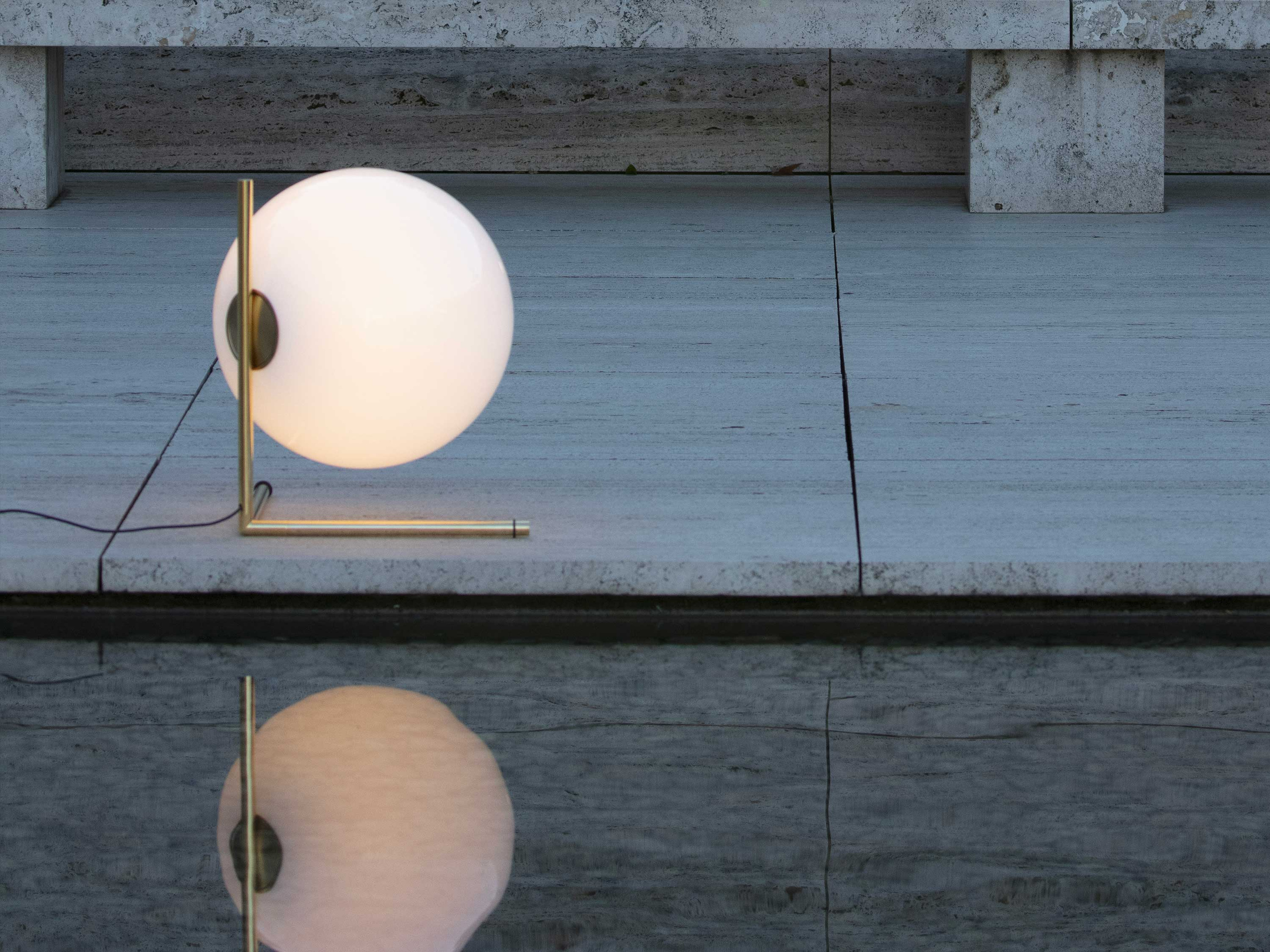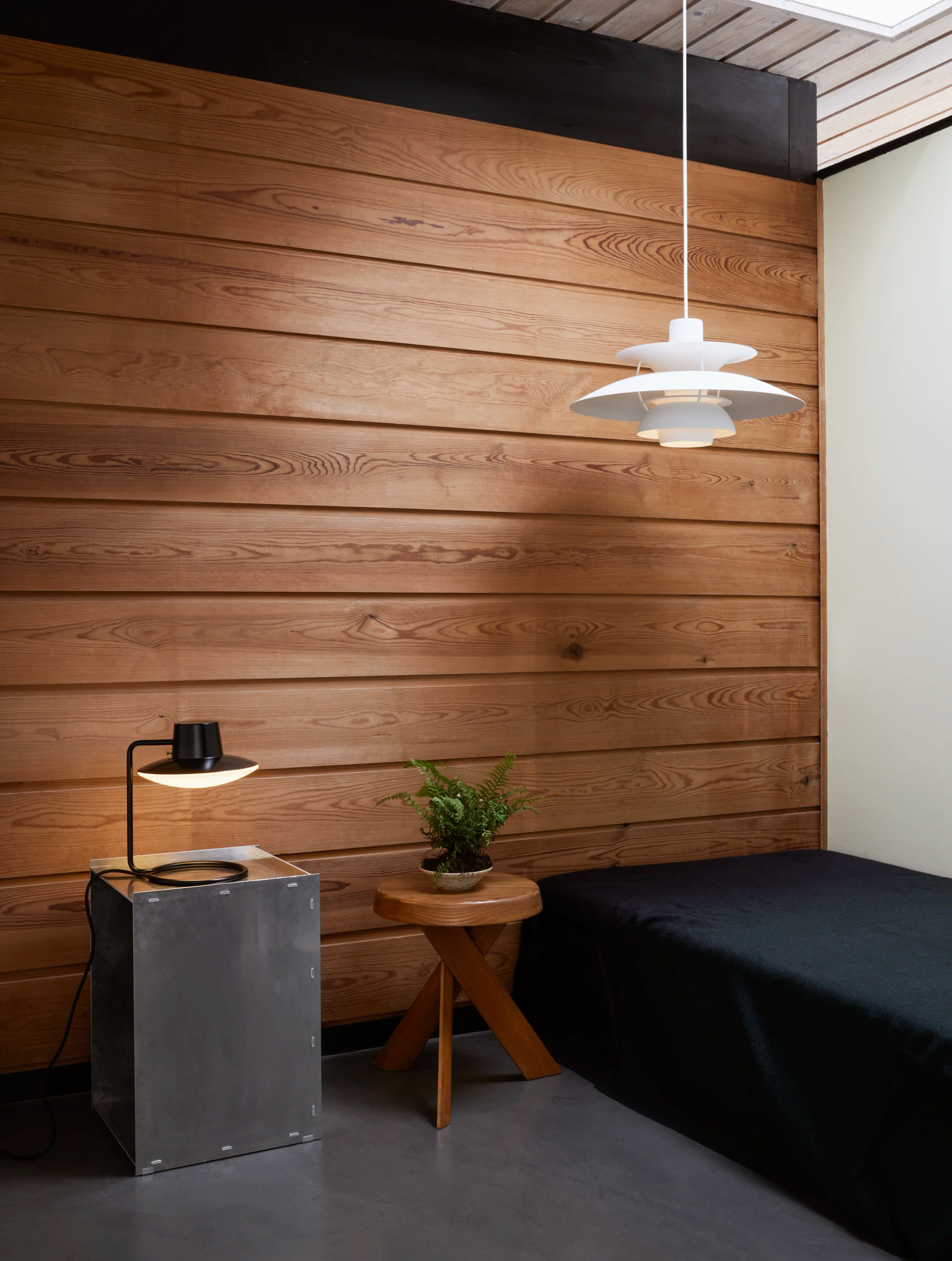
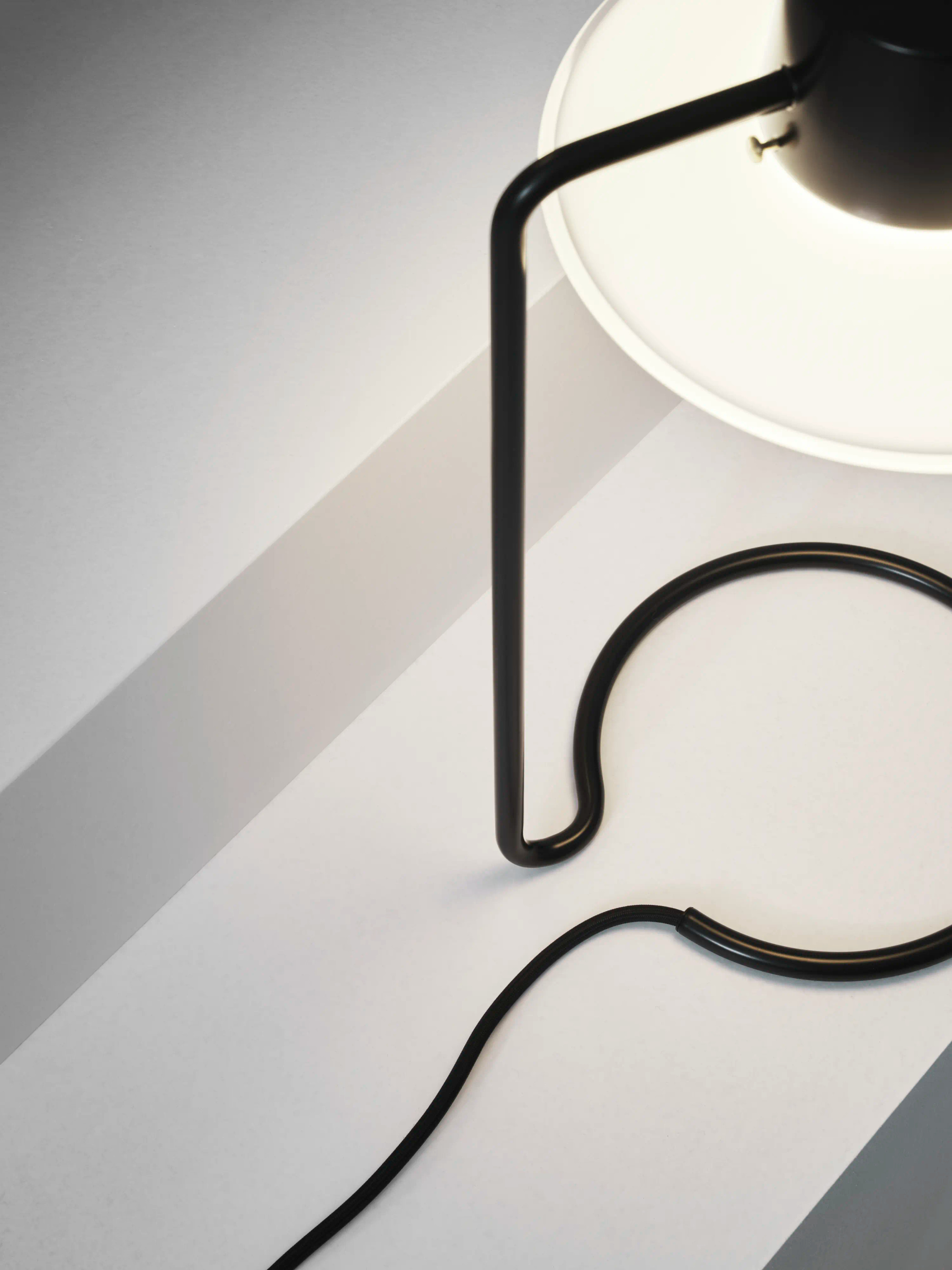
The AJ Oxford lamp is a small architectural composition above a table. A circular shade sits on a slender stem, the base answers its outline, and the cable introduces a looser line beside them. The complete object is easy to recognise. Its more interesting qualities emerge when the light, the material of the shade and the surface beneath it are read together.
The table is part of the design
Louis Poulsen credits Arne Jacobsen with the AJ Oxford design and connects its origin to St Catherine’s College in Oxford, inaugurated in 1963. The maker describes the original lamps as part of the college dining hall. That setting gives the object a particular context: illumination distributed across tables, within an architectural scheme rather than as an isolated decorative gesture.
The current studio images can still be read through that relationship. A lamp occupies a place above a surface, with a stem that keeps the shade distinct from what lies below it. The circle at the top and the circle at the base establish an ordered pair. Between them, the thin vertical line gives the object a clear silhouette without filling the whole view.
It is a useful way to consider a table lamp in a contemporary room. The question extends beyond whether the object is attractive on its own. Its position has to work with the edge of the table, the space where someone sits and the activities that take place under its shade. Those relationships determine the role the lamp can take in the room.
A silhouette can hold several proportions
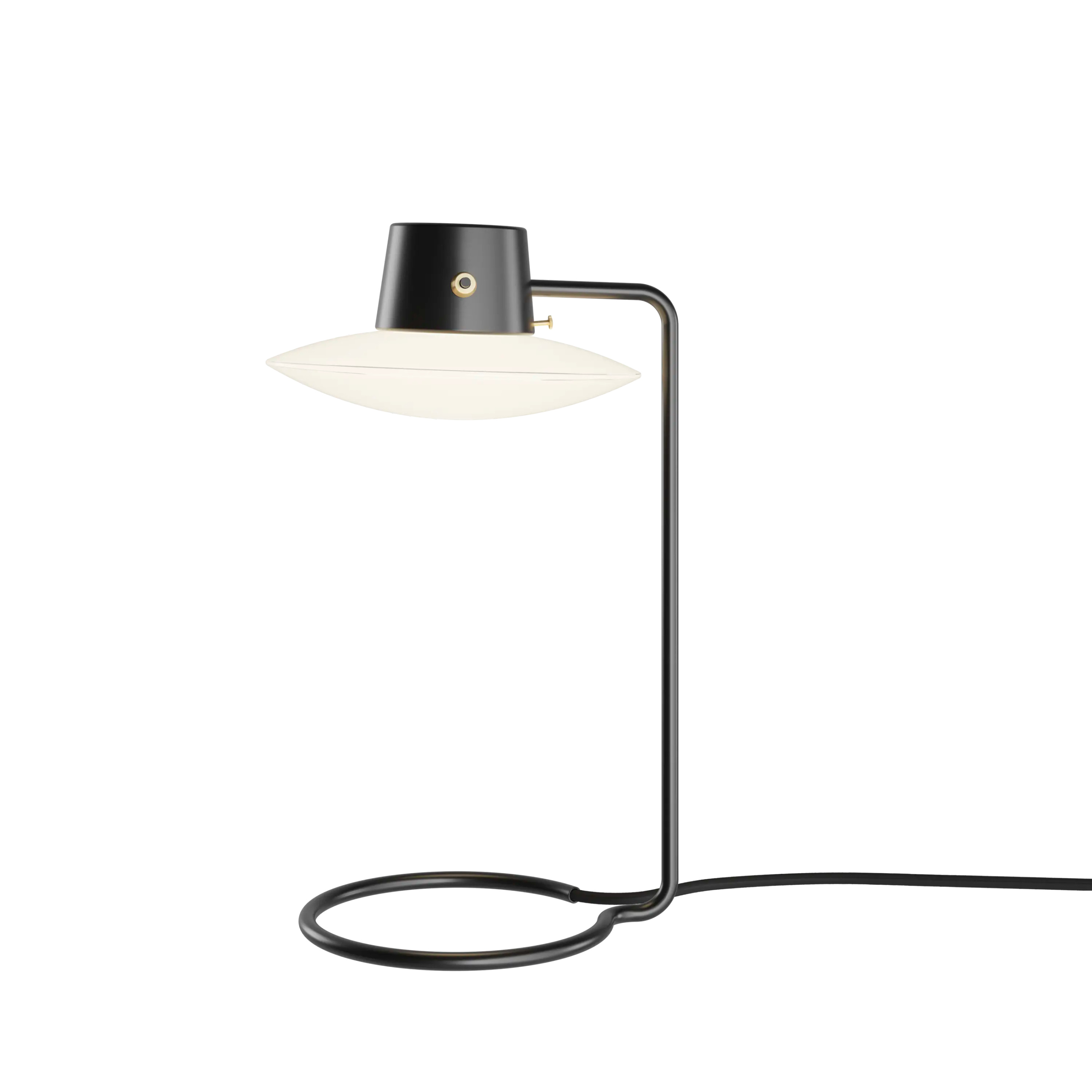
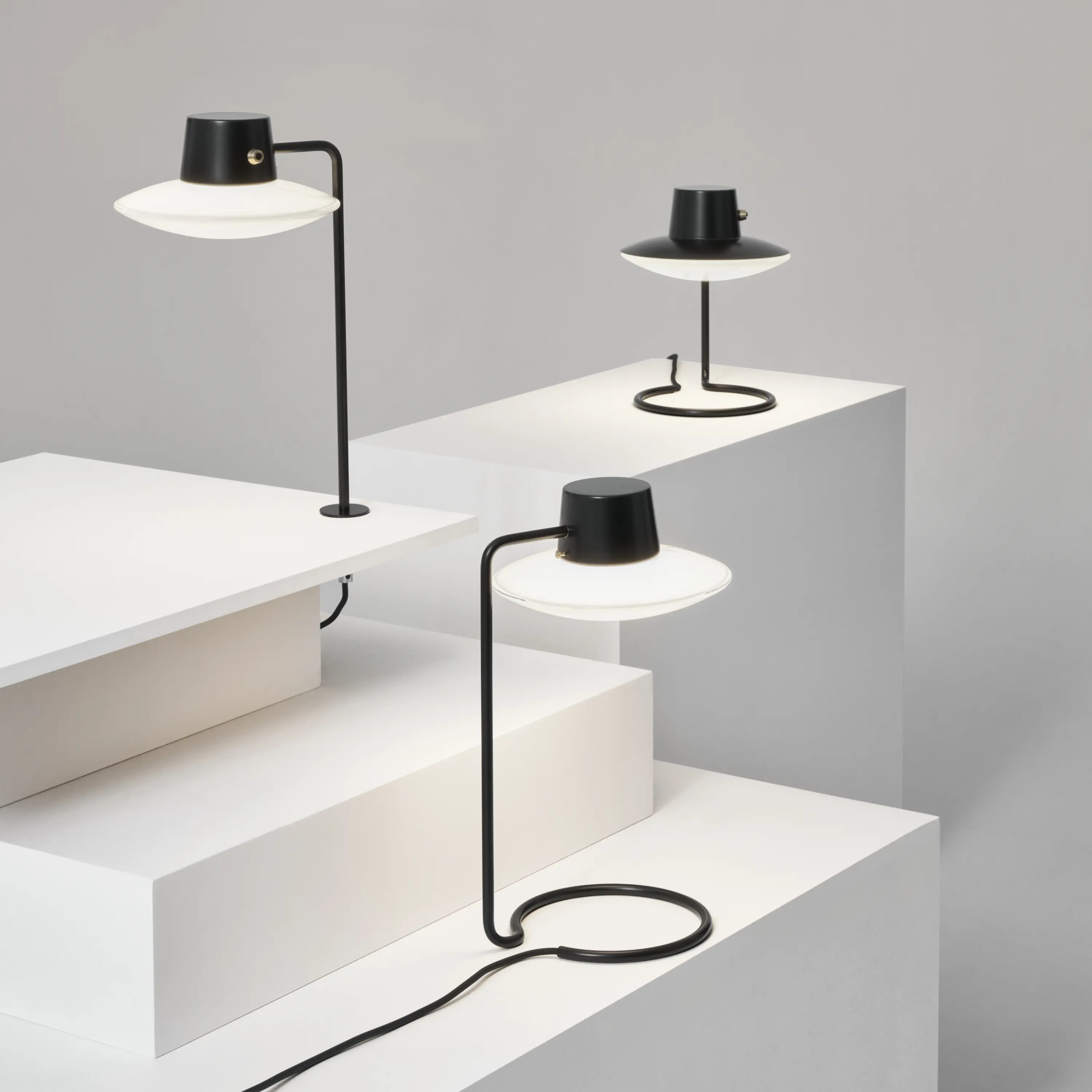
The present range includes two nominal heights, 280 and 410 mm, and versions with and without a top metal shade. The official group photographs make the variations easier to understand than a list of options alone. Several related objects share the same basic vocabulary while occupying different amounts of space above a surface.
Height affects how the shade sits within a room’s sightlines. A lower lamp can form a more compact composition with a small surface; a taller version places its upper circle in another relationship to nearby objects and seating. These are design considerations to examine at the intended location, rather than universal prescriptions for where each model belongs.
The complete-object photograph is therefore an important first image. It should retain the shade, stem and base in one frame. A close-up can explain a finish or fitting, but it cannot replace the proportions of the whole lamp. The range becomes easier to read when both scales of attention are available.
Opal glass does more than finish the object
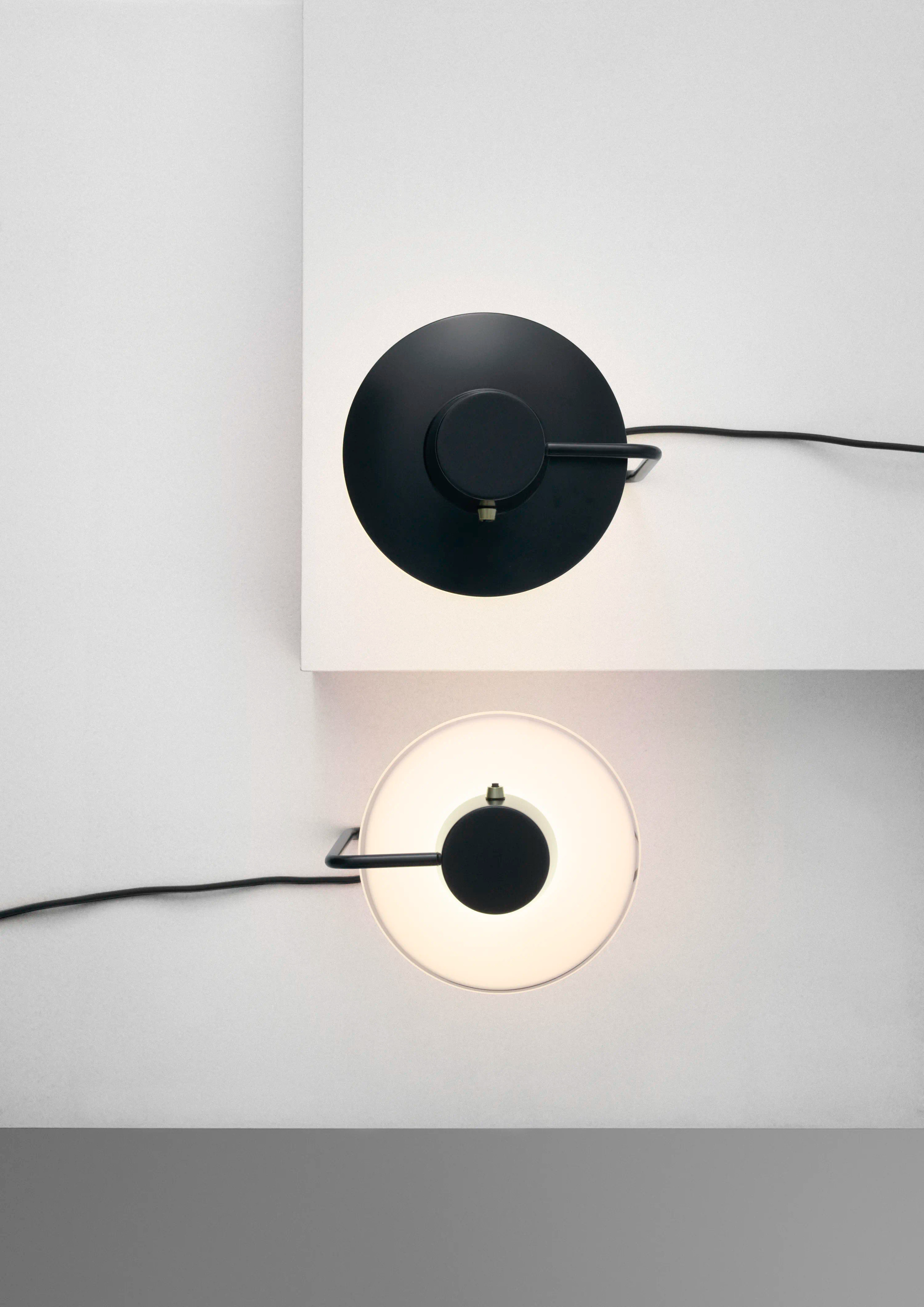
The maker specifies three-layered, mouth-blown white opal glass for the shade. Its published light description distinguishes downward illumination from the additional glow of the version without the upper metal shade. The material account and the choice of configuration belong together: they help explain the different visual conditions the range is intended to produce.
In the official room image, the lamp sits within a darker architectural setting, with timber around it and a surface below. That context shows the value of reading a light in relation to the room it addresses. The illuminated object, its immediate surroundings and the rest of the interior each occupy a different level of attention.
The photograph is a design reference, not a measured account of illuminance at a user’s table. The selected light source and its characteristics form another part of the specification. A prospective owner should consider them with the fixture and the intended use, rather than assuming that one promotional image describes every available lamp-and-bulb combination.
The small details remain visible
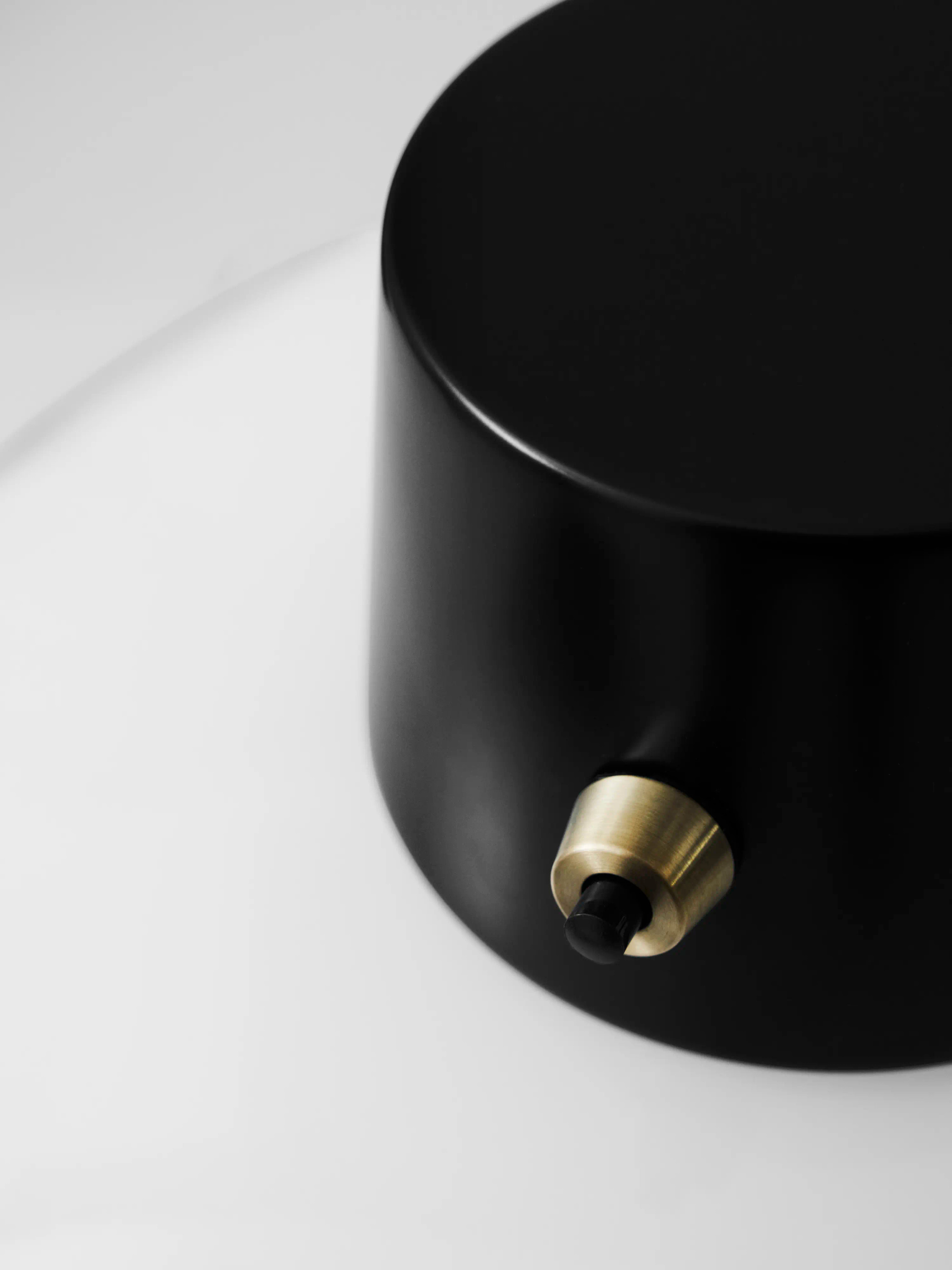
The close views bring attention to the join between stem and shade and to the transition into the base. A limited number of lines gives each connection greater visual importance. On an object this restrained, the position of a small fitting can become part of the composition.
Louis Poulsen lists steel for the stem and top shade, and describes untreated brass in the union nut and finger screw. It also notes that the brass will patinate. That is a useful material distinction for an owner expecting a finish to remain uniform: the published account explicitly allows part of the object to change its appearance over time.
The cable is another practical detail worth keeping in the complete photograph. Its route affects the way a lamp occupies a table or shelf, even when the main silhouette is compact. The intended position, the available power connection and the way the surface is used should be considered together before a configuration is selected.
Read the configuration before the room
The current UK product page lists an E14 light source for the selected configuration, with the source supplied separately. Other market or product records should be checked on their own terms. A familiar model name does not remove the need to identify the actual configuration intended for purchase.
The same applies to mounting. The maker describes a pin-mounting option within the range as well as lamps with a base. These are different installation arrangements, and the choice should be established with the relevant current product documentation and professional advice where applicable. The photographs here present the design family; they do not turn its variants into one interchangeable specification.
Even the height descriptions need their labels. The catalogue uses a nominal 410 mm variant name, while the selected page lists an overall height of 413 mm in its dimensions. Retaining both descriptions prevents a nominal range label from being mistaken for the exact measurement needed to assess a particular space.
A reference for choosing the object
| Published detail | What it distinguishes | Point to establish |
|---|---|---|
| Arne Jacobsen, St Catherine’s College context | The design’s documented architectural origin | Treat it as provenance, not a new 2026 launch |
| Nominal 280 and 410 mm variants | Two proportions within the family | Which height fits the intended surface and sightline? |
| With or without top metal shade | Different shade configurations | Which published light concept is appropriate? |
| Three-layered opal glass | The maker’s shade material | Read it with the chosen configuration and light source |
| Untreated brass fittings | A material described as developing patina | Whether that changing finish suits the brief |
| Selected UK E14 configuration | A market-specific light-source reference | Confirm the exact product and compatible source |
| 413 mm listed overall height for the selected tall version | A dimension distinct from the nominal label | Check the current dimensional drawing |
The Luxe Digital view
The AJ Oxford is strongest when the light and the object are considered as one design. Its silhouette supplies a clear identity, while the shade material, configuration and position above a surface determine how that identity can operate within a room. The architectural origin remains relevant because the table is still part of the subject.
A good presentation should preserve that relationship. It begins with the complete lamp, compares the proportions, examines the glass and fittings, and then returns to an interior in which the light has a place. The result is a more exact brief for the prospective owner, with the material and configuration understood before the object is asked to complete a room.
The AJ Oxford is strongest when the light and the object are considered as one design.
Sources & credits
Sources and methodology
Independent editorial analysis of the documented product and official source imagery, checked on 14 October 2026. Visual interpretation is distinguished from manufacturer specifications. No visit, drive, handling session or independent performance test is implied; exact references and historical dates are retained.
- Louis Poulsen — source 1: CurrentUKproduct,family variants,materials,origin and selectedE14configuration.
- Louis Poulsen — source 2: Official productPDF,dimension/variant corroboration.