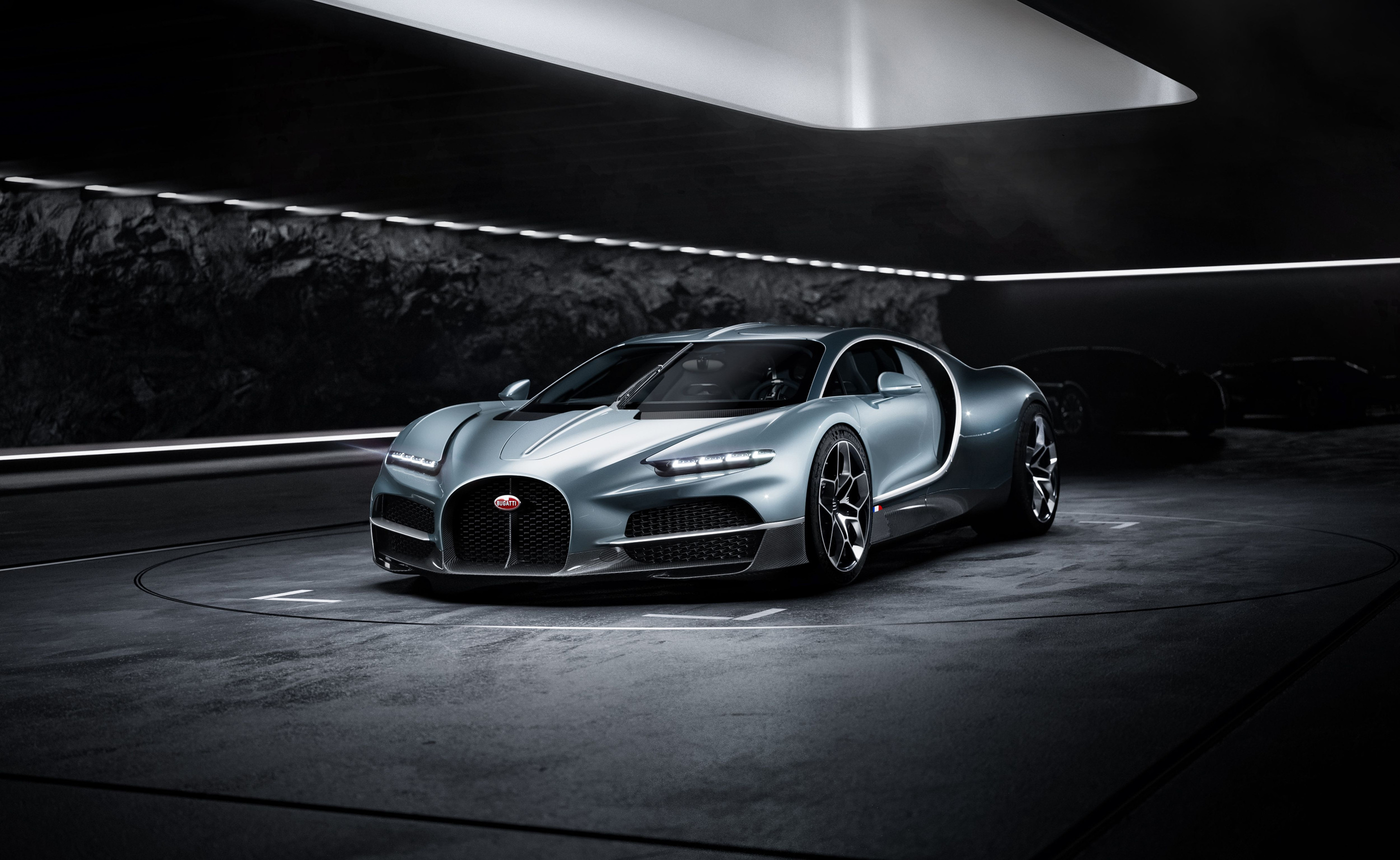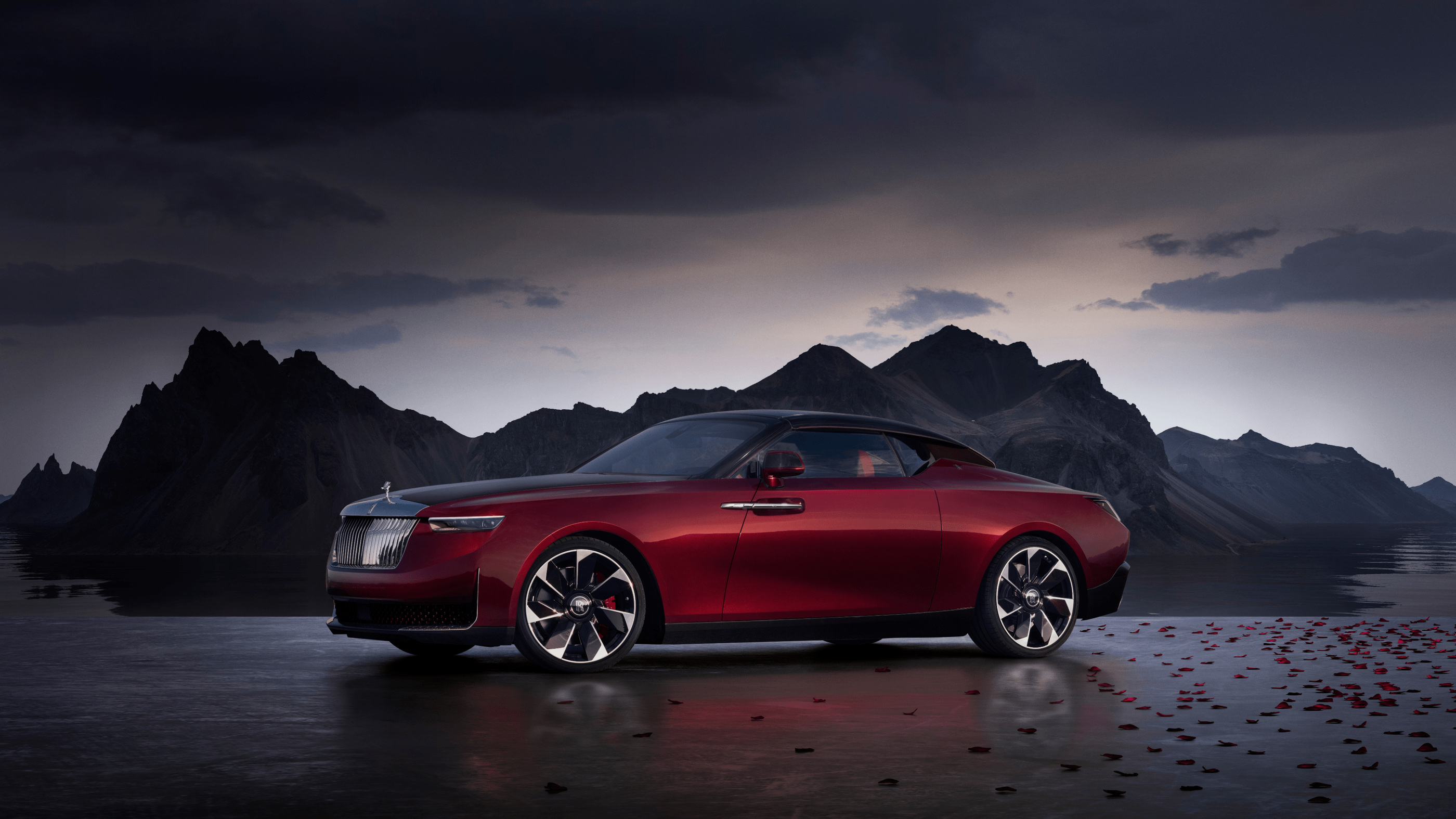
La Rose Noire Droptail asks to be read at two distances. From across the terrace it is a long, dark red roadster, its cabin held between a substantial nose and a tapering rear deck. Close up, its identity is carried by a field of tiny wooden elements. The commission’s interest lies in how that intimate work becomes part of the car’s overall architecture.
A personal commission with a visible structure
Rolls-Royce presented La Rose Noire in August 2023 as the first of four individual Droptail commissions. Its reference to the Black Baccara rose is documented by the marque. This is an examination of that established design, not a claim that a new model or an available allocation has appeared in October 2026. The owners’ private experience is outside the evidence available here.
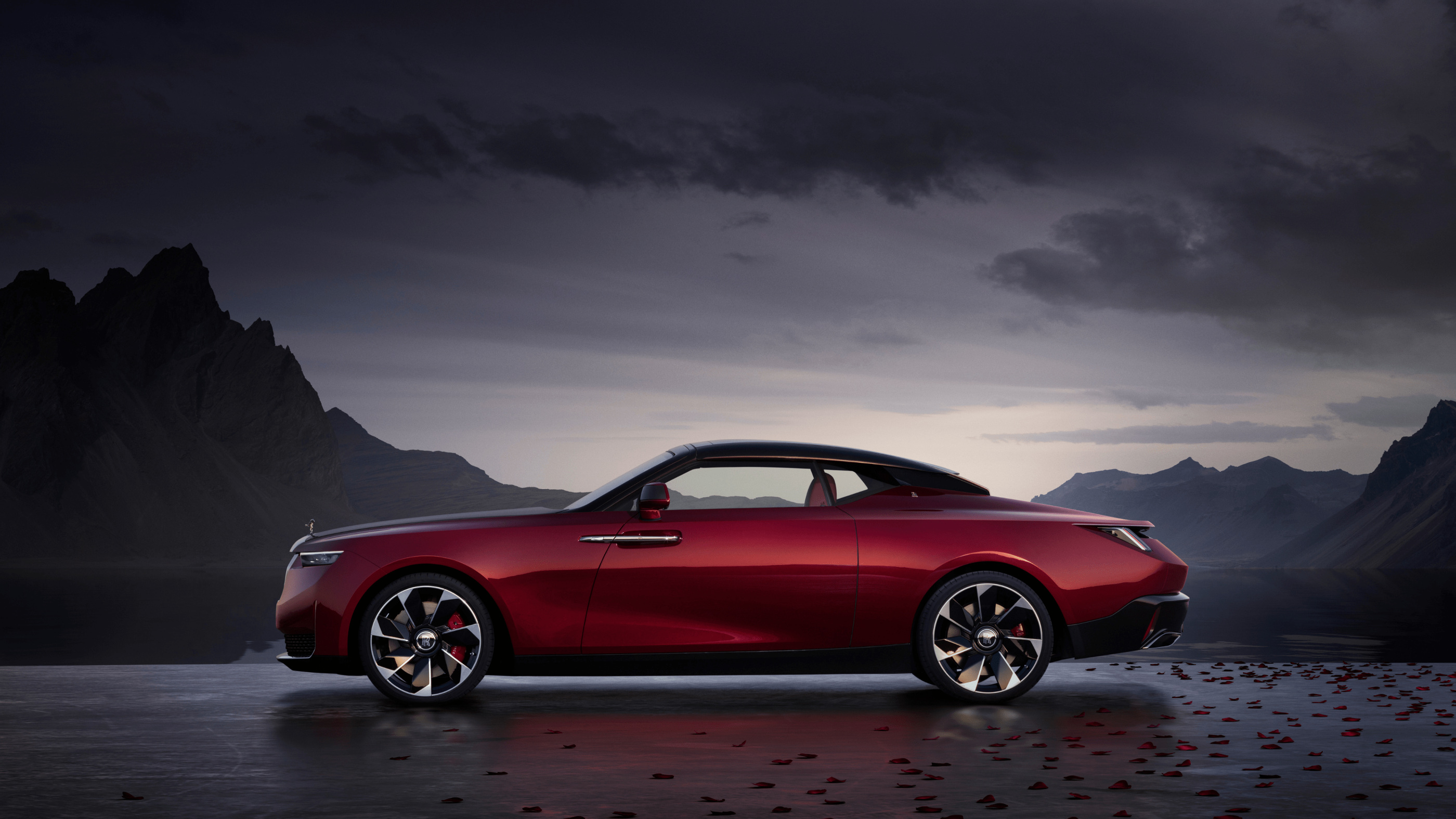
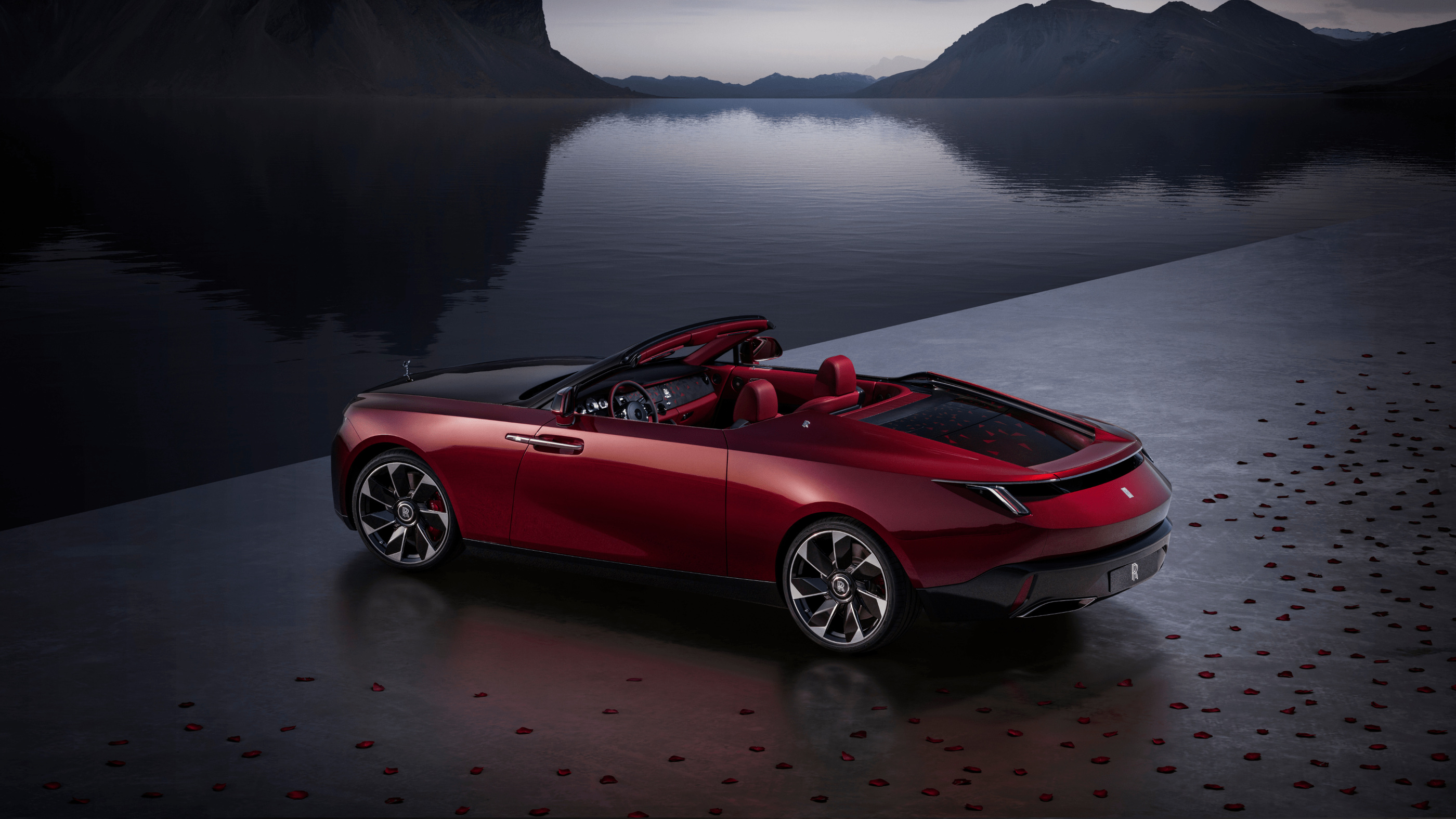
The official side view shows a notably long rearward movement. The low cabin is followed by a broad deck and a descending tail, so the space behind the seats becomes a major part of the silhouette. This matters to the craft story: the decorated surface is not a small insert hidden inside a conventional interior. It occupies a territory already made important by the body.
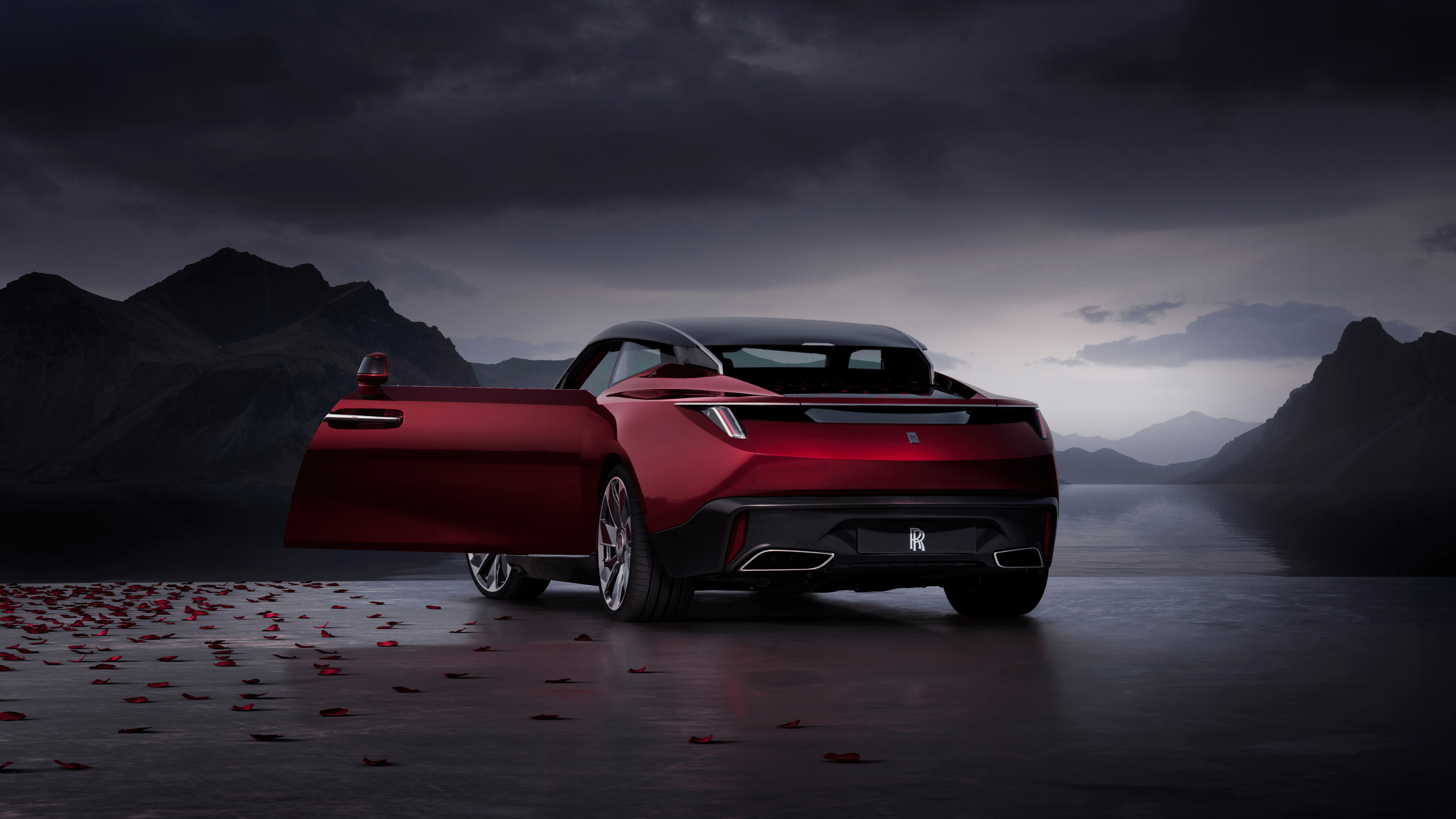
With the roof fitted, a dark upper shape gathers the cabin into something more enclosed. With it removed, the line behind the occupants becomes more exposed. The two presentations do not simply offer different weather arrangements. They change how strongly the interior reads as a sheltered space within a long open form. That is visible in the photographs without making a claim about driving refinement.
The difference between pattern and picture
The marque identifies 1,603 pieces of Black Sycamore veneer in the parquetry. Its explanation distinguishes a symmetrical background from asymmetrically arranged red elements. The principle is more interesting than the count alone: the underlying order allows the red forms to appear scattered. A suggestion of falling petals can therefore emerge without becoming a literal illustration pasted onto the dashboard.
In the official close views, the geometry remains evident. Small angular shapes hold the surface together even where the red interrupts it. The eye can alternate between reading individual pieces and reading a larger movement across the panel. That double reading is a familiar pleasure in marquetry, but here the panel must also negotiate the curved and enclosing form of an automotive interior.
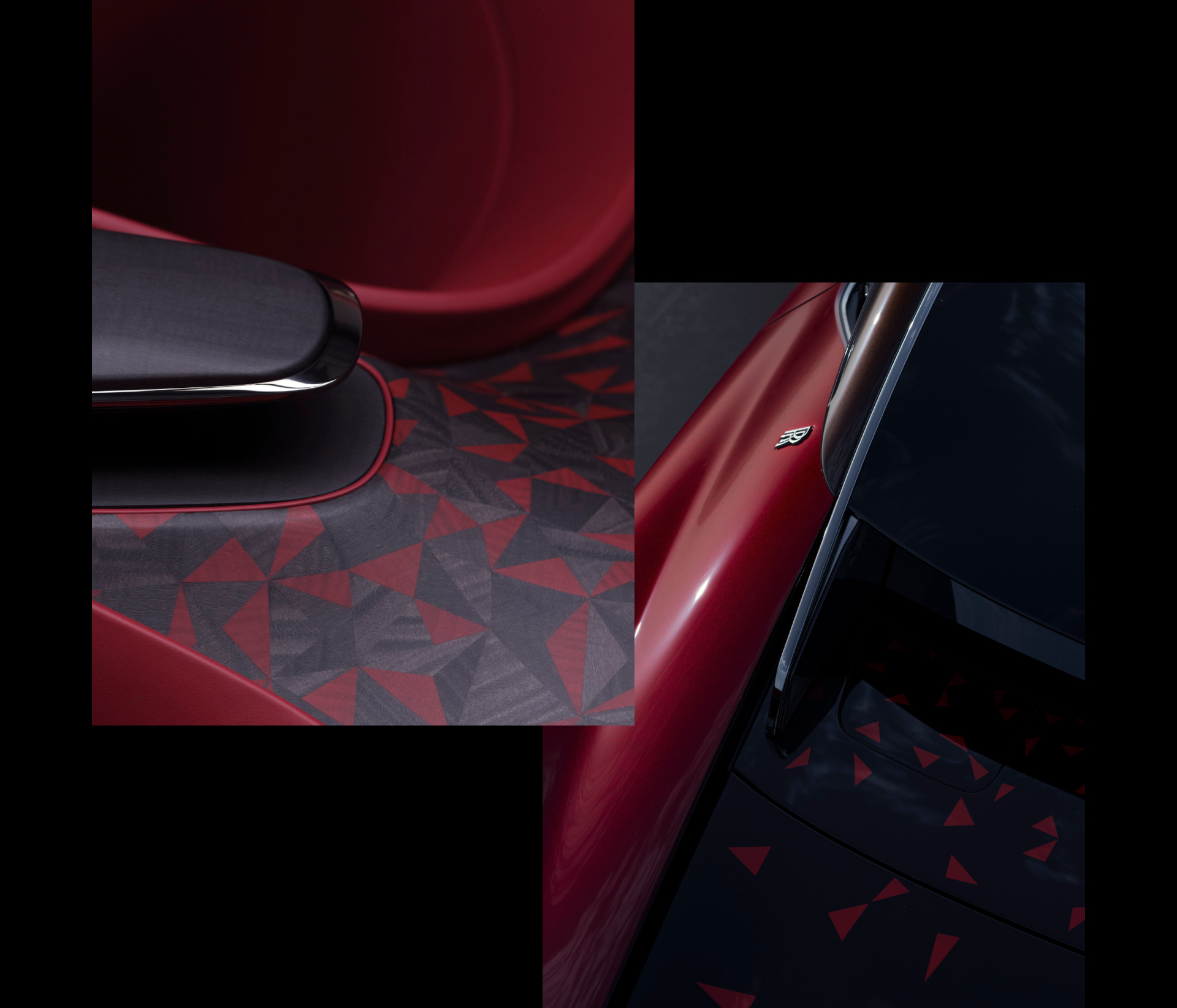
The wood is strongest when considered as a surface with edges, joins and a direction of travel. Calling it artwork alone risks detaching it from the car. The more useful observation is how the pattern moves across a place that surrounds two occupants. Its setting changes the experience from looking at a framed object to sitting within a composition.
Colour that needs more than one photograph
Dark red is difficult to communicate through a single hero image. In the published sequence, some surfaces appear almost black while others catch a brighter reflection. Rolls-Royce describes a specially developed exterior colour and a dark finish for selected brightwork. The photographs demonstrate the tonal range of the presentation, but a screen cannot certify the colour of the physical commission under every light.
That limitation is a reason to use complementary views. The side image explains the long body; the rear detail reveals a tighter change in surface and highlight; the open-cabin view allows the red upholstery to sit against the exterior. Together they show a family of relationships rather than reducing the colour to a sample swatch with an evocative name.
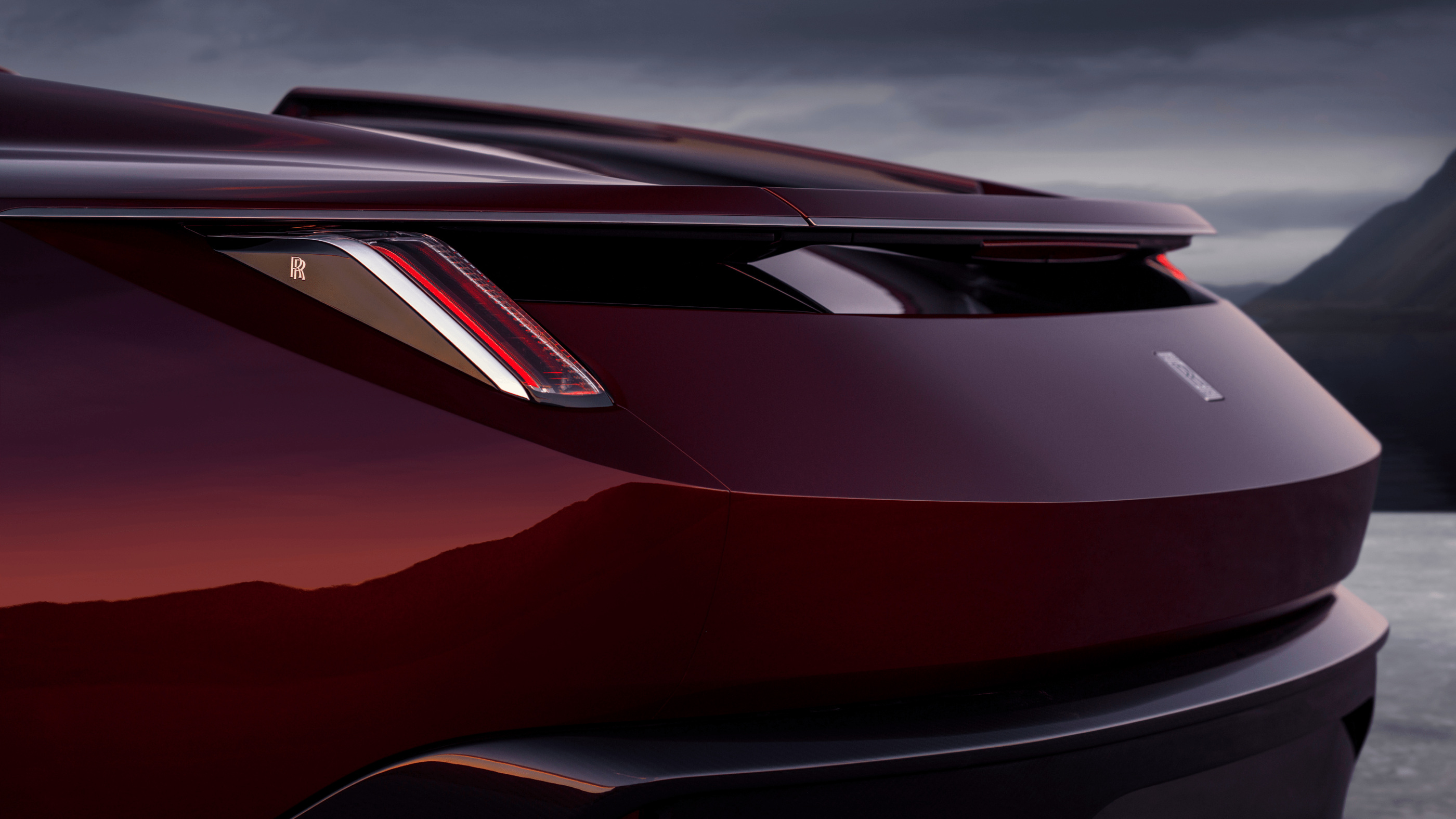
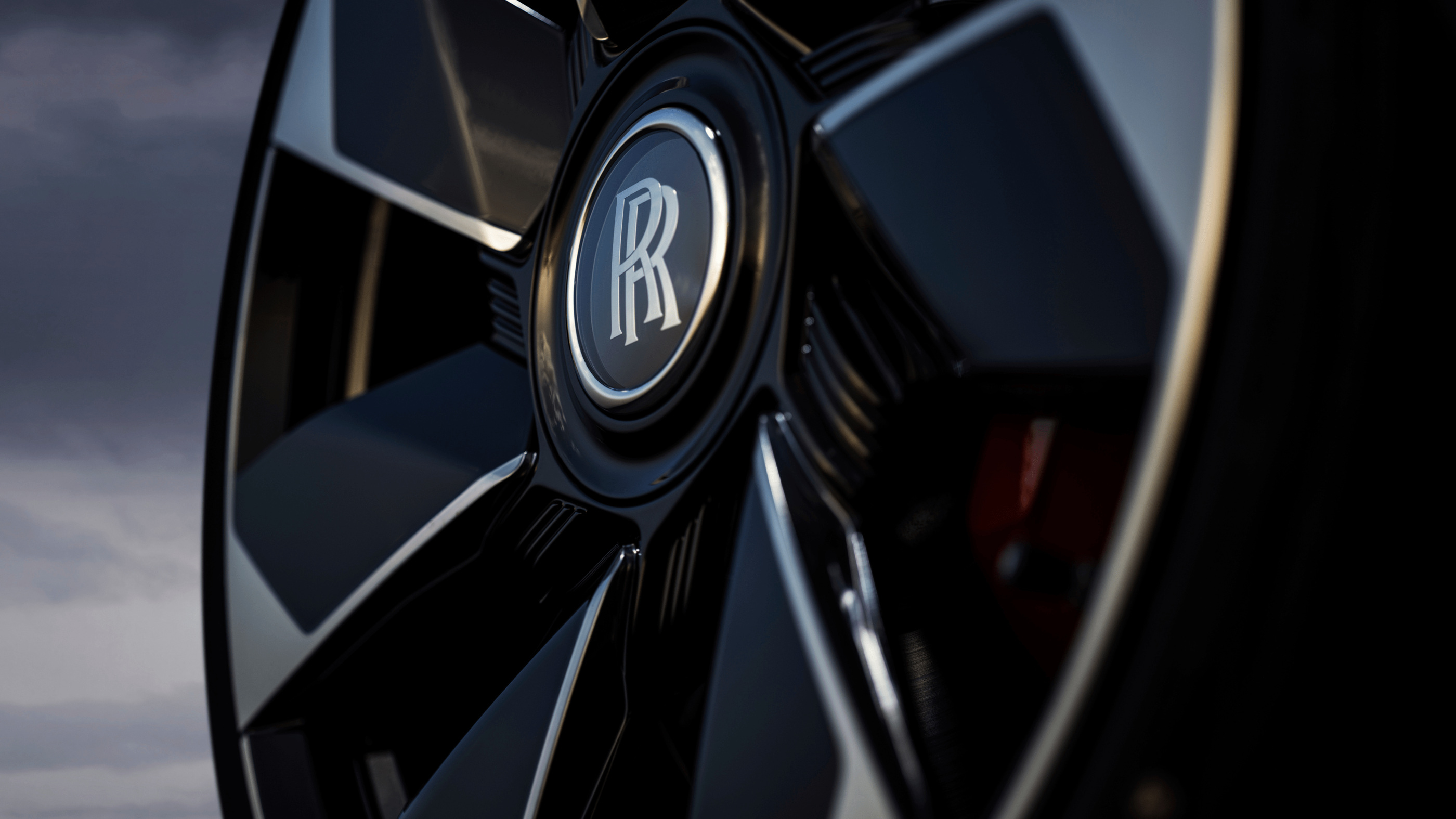
The wheel detail adds a useful interruption. It changes both scale and subject, leaving the long body for a smaller set of circular and radial forms. Against the broader dark surfaces, the highlighted edges become unusually prominent. The image belongs in the story because it demonstrates how the treatment of a familiar component can reinforce the commission’s wider restraint.
The deck as part of the interior
The overhead rear view makes the boundary between cabin and deck harder to treat as a simple divide. The forms behind the seats frame the centre of the car and pull attention towards the occupied space. The decorative language continues beyond the immediate dashboard area. This is a useful place to consider why a coachbuilt brief can extend beyond selecting colours from an existing catalogue.
The distinction should remain specific. It does not mean every bespoke treatment amounts to a new body design, nor that a unique commission is automatically more coherent than a series-produced car. Here the case rests on the relationship of a particular body, its two-seat arrangement and a particular material composition. The photographs provide enough evidence to discuss those relationships without inventing a universal hierarchy of luxury.
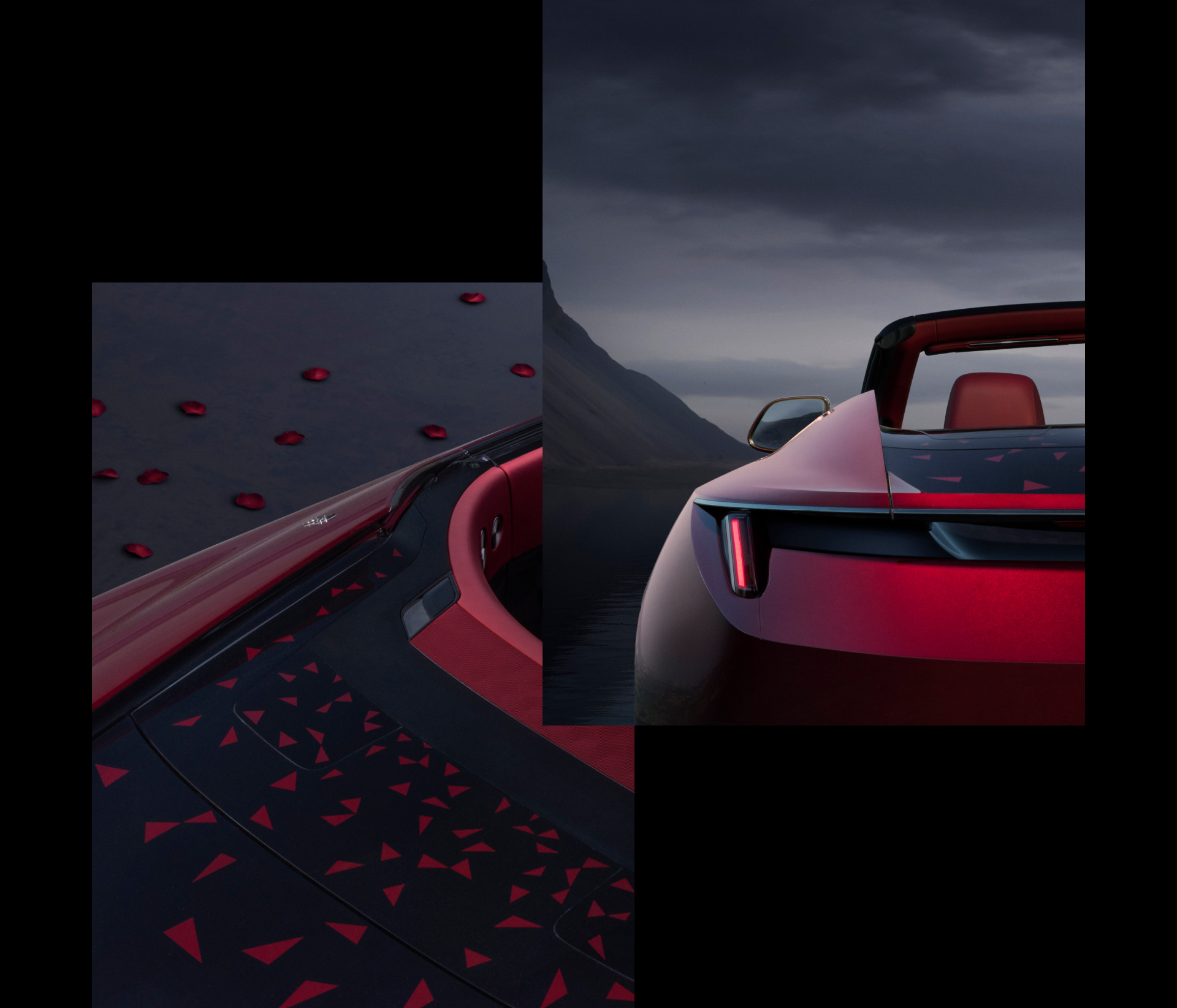
For a commissioning client, the important question becomes continuity. Does the initial idea survive the move from a colour reference to a surface, from that surface to the cabin, and from the cabin to the exterior? La Rose Noire is valuable as a study because those transitions are visible. The rose is not confined to a nameplate; its palette and abstract motif operate at different scales.
A commission, read precisely
| Element | Documented identity | Editorial distinction |
|---|---|---|
| Commission | La Rose Noire, presented in August 2023 | An individual car, not a new 2026 announcement |
| Body | Two-seat Droptail with a removable hard roof | Open and closed photographs show different presentations of the same commission |
| Material motif | Black Sycamore parquetry with red elements | An abstract composition rather than a printed floral image |
| Exterior | A developed red finish and dark brightwork | Screen colour is evidence of the presentation, not a physical colour approval |
| Availability and value | Not established by this design study | No allocation, transaction price or investment return is inferred |
These distinctions protect the object from becoming a collection of rumours about price and exclusivity. They also give readers a more demanding way to judge craft. The question is not simply how many hours or pieces a commission contains, but whether the work contributes to a convincing whole. Counting can document complexity; it cannot replace looking.
The Luxe Digital view
La Rose Noire is convincing where its smallest pieces belong to the same idea as its longest lines. The parquetry has meaning because it occupies a carefully shaped place, and the body has greater interest because its surfaces carry that particular material language. The commission rewards a movement between distances: the complete car, the occupied space and the individual element.
La Rose Noire is convincing where its smallest pieces belong to the same idea as its longest lines.
Sources & credits
Sources and methodology
Independent automotive design and material analysis of the named official records and imagery, checked on 16 October 2026. Original presentation and model dates are retained. Images show the named commission or identified model configuration. Independent automotive design analysis of official model or individual-commission records and imagery. No drive, visit or interview is claimed. Original dates, alternative specifications, source compositions and drawings remain identified. Current availability, price and measured performance are not inferred.