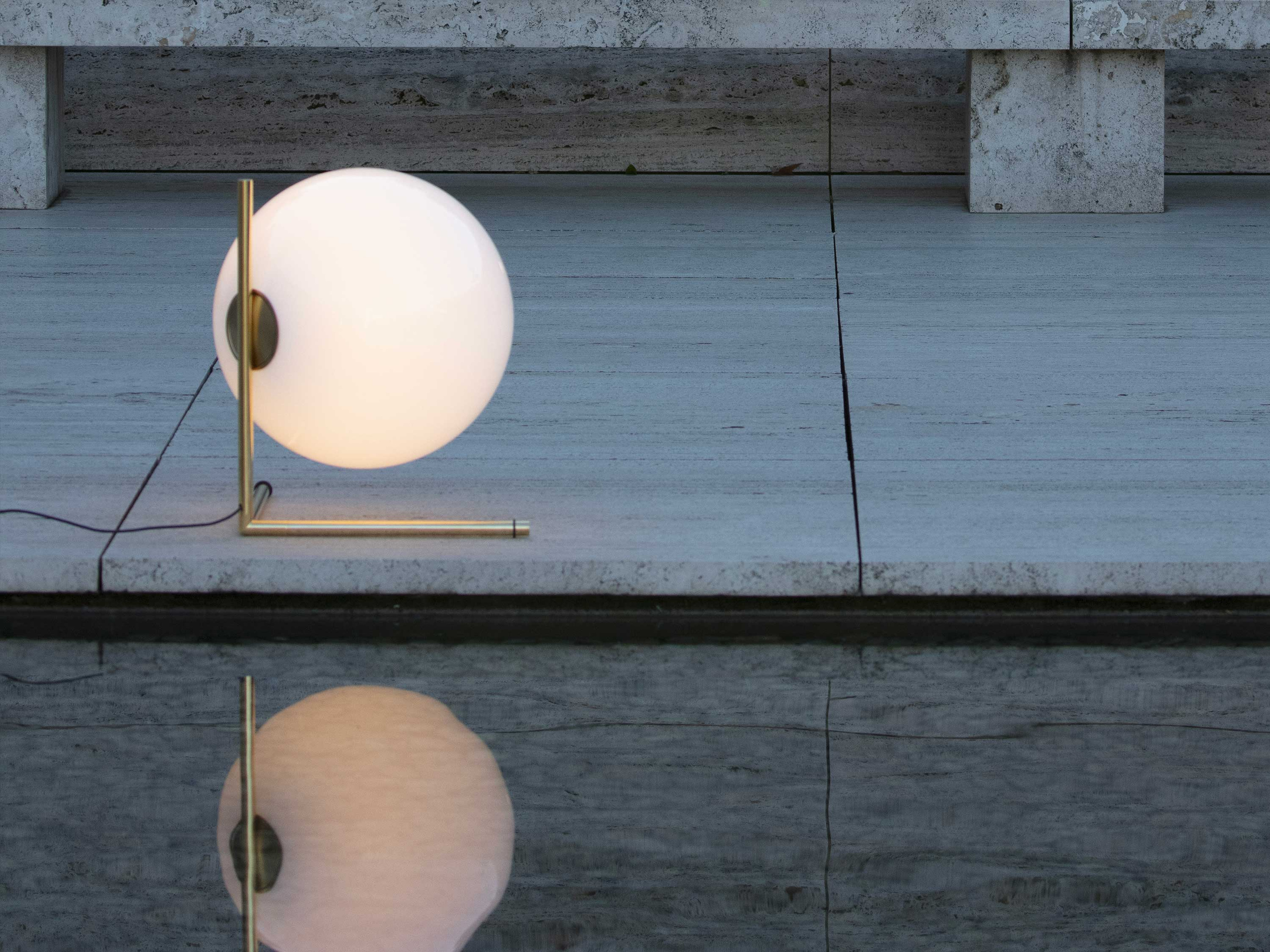
A luminous sphere appears to balance beside a slender metal line. Michael Anastassiades’ IC Lights for Flos turn that simple relationship into a family of objects whose character changes with height, orientation and setting. The 10 Anniversary photographs make the idea especially clear: the same vocabulary can occupy a shelf, stand within a room or hang above it.
Balance is the image, support is the construction
The IC Lights design dates to 2014. In the objects shown here, the sphere and metal support create a deliberate visual tension: the light appears close to a point of balance even though it remains a supported fixture. The effect depends on the restraint of the outline and the contrast between the globe and the line beside it.
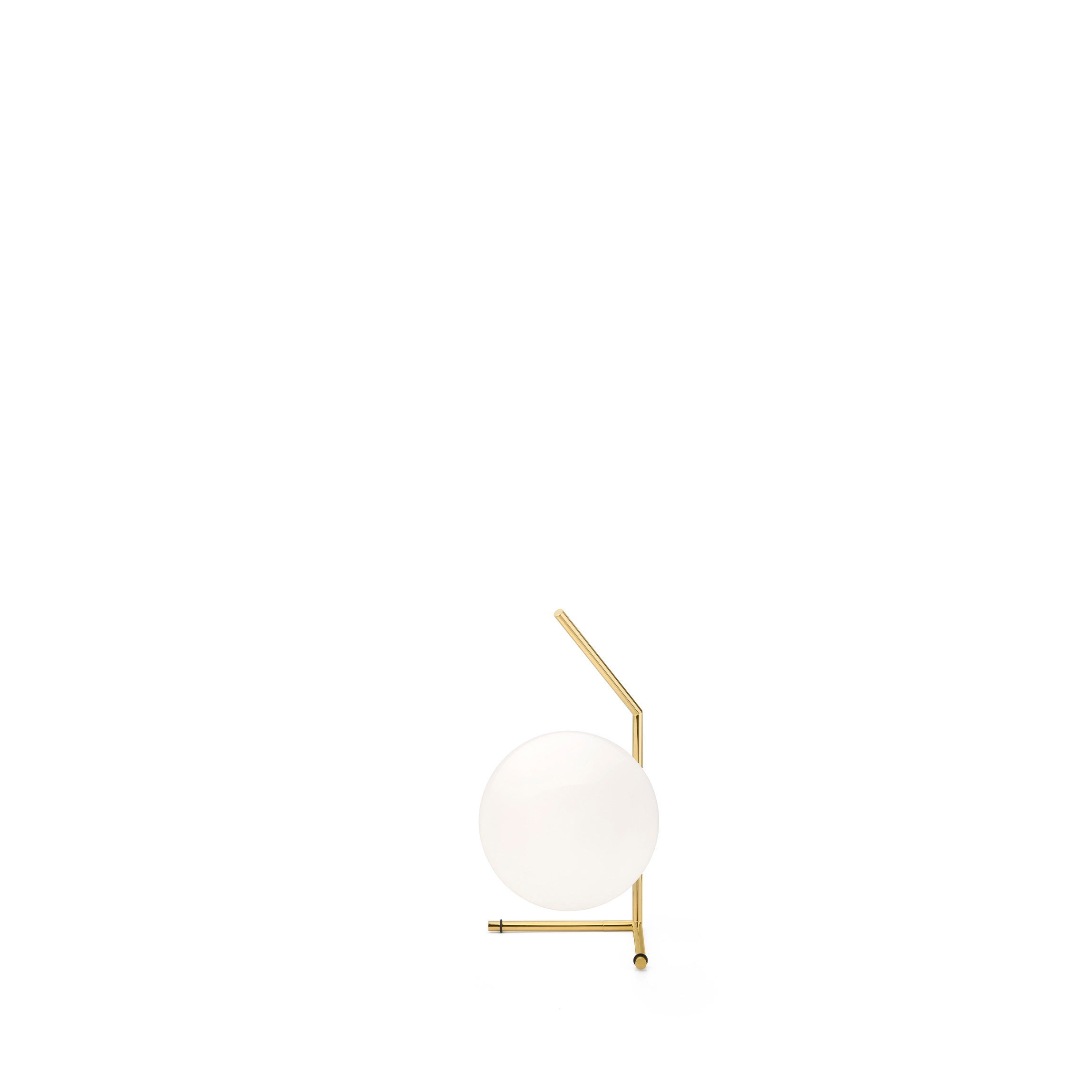
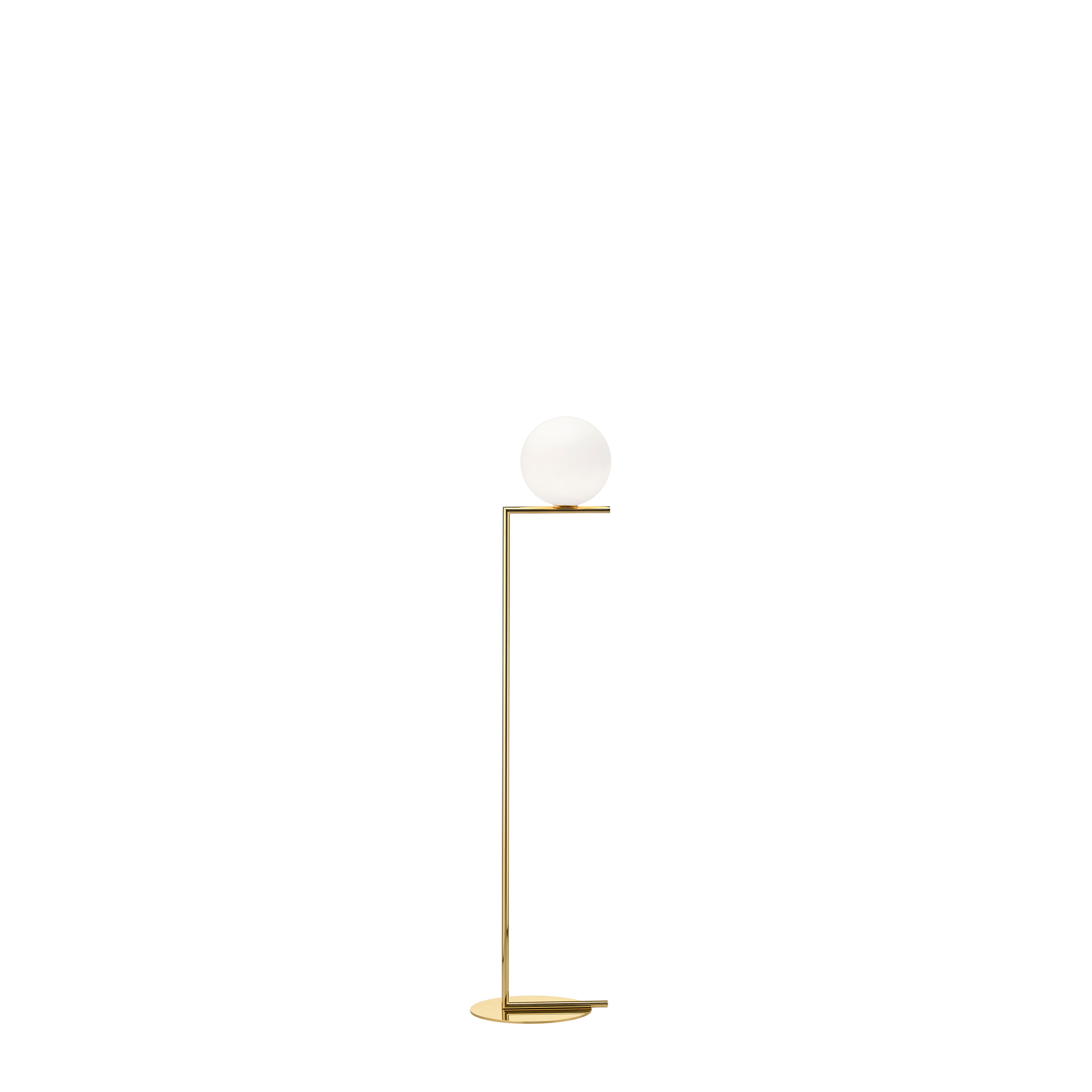
The isolated product views are useful because they remove the room and leave that relationship exposed. A table lamp and a floor lamp share a vocabulary, but their proportions distribute attention differently. One establishes a small composition on a surface; the other draws a longer vertical line through the space around it.
Looking at those objects together should not imply that every member of the family has identical dimensions or installation requirements. The shared idea is formal. Each model still needs its own product record, light-source information and placement decision. A familiar silhouette is the beginning of specification, rather than a substitute for it.
The anniversary finish changes the setting
Flos presents the 10 Anniversary edition with a 24-karat gold finish. This is a finish designation, not a claim that the support is made from solid gold. It also should not be collapsed into the description of every ordinary finish available within the wider IC Lights family.
In the anniversary photography, the warmer metal stands against green-toned stone, pale surfaces and dark reflections. Those settings give the sphere and support distinct visual roles. The globe reads as a concentrated volume; the metal line registers through its outline and reflected light. The room becomes part of the composition without overwhelming the object.
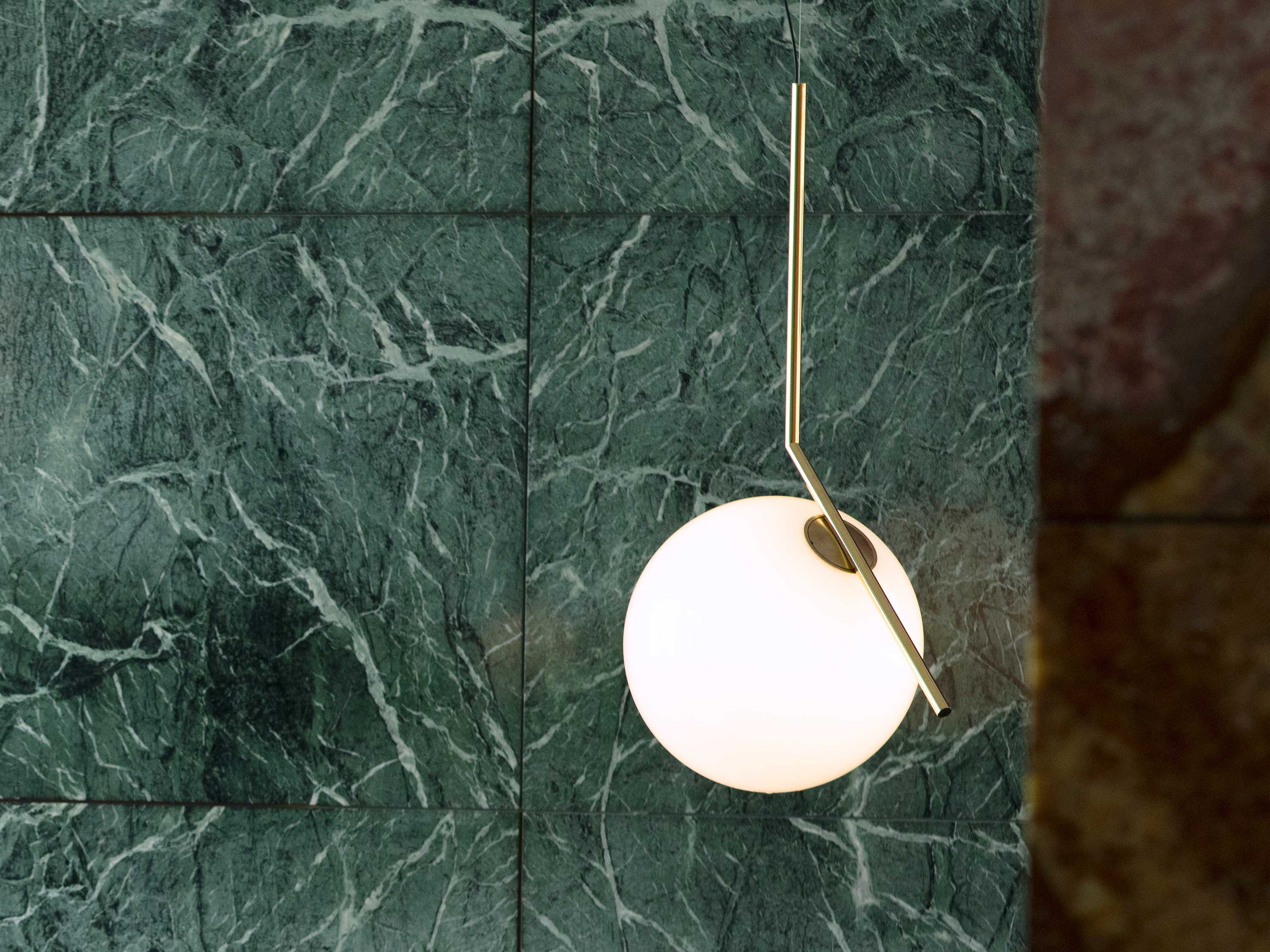
A finish choice should therefore be considered in relation to the intended setting. A product photographed against dark stone may read differently against a pale wall or beside a reflective surface. The image supplies an example of that relationship. It does not establish the appearance of the finish under every light condition in another interior.
One family, several kinds of occupation
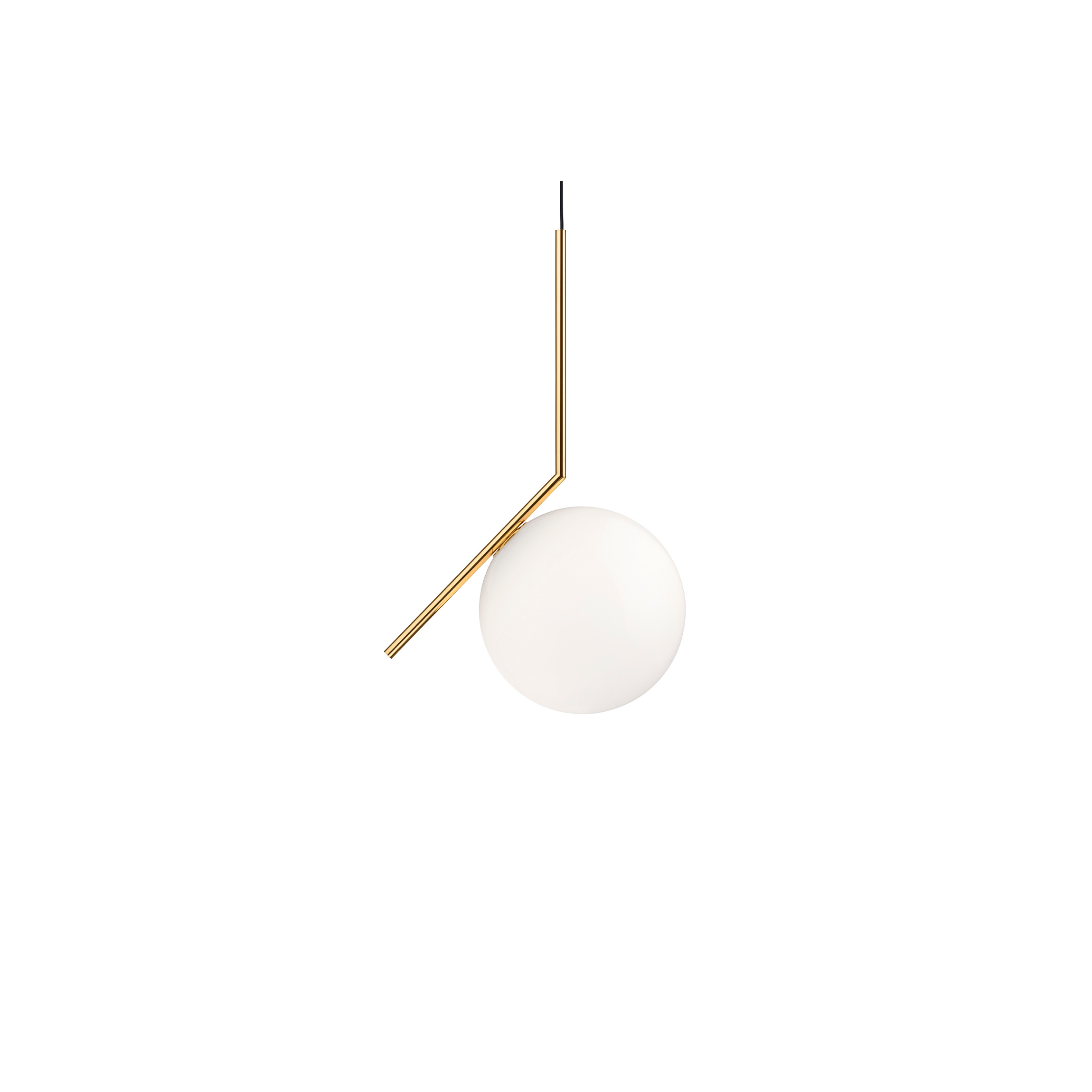
The table, floor and suspension studies demonstrate why a coherent lighting family can still need several different presentations. A table lamp occupies the same visual level as nearby objects and the edge of a shelf. A floor lamp introduces a longer line that can connect furniture with the wall behind it.
The suspension lamp changes the relationship again. Its support descends into a space, making the globe part of the room’s overhead composition. A close product view can explain its construction, but a room photograph is needed to establish its relationship to surrounding surfaces and the space beneath it.
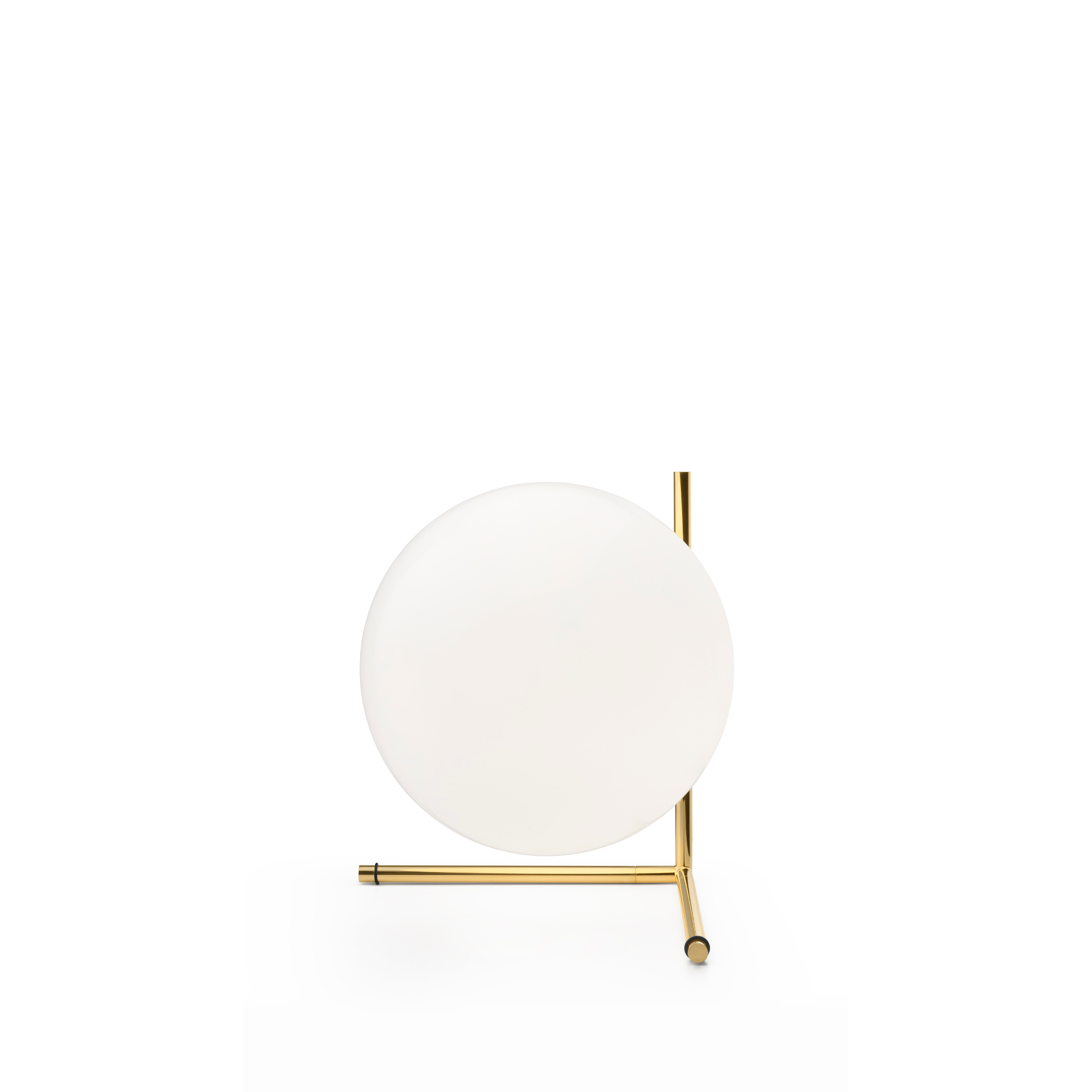
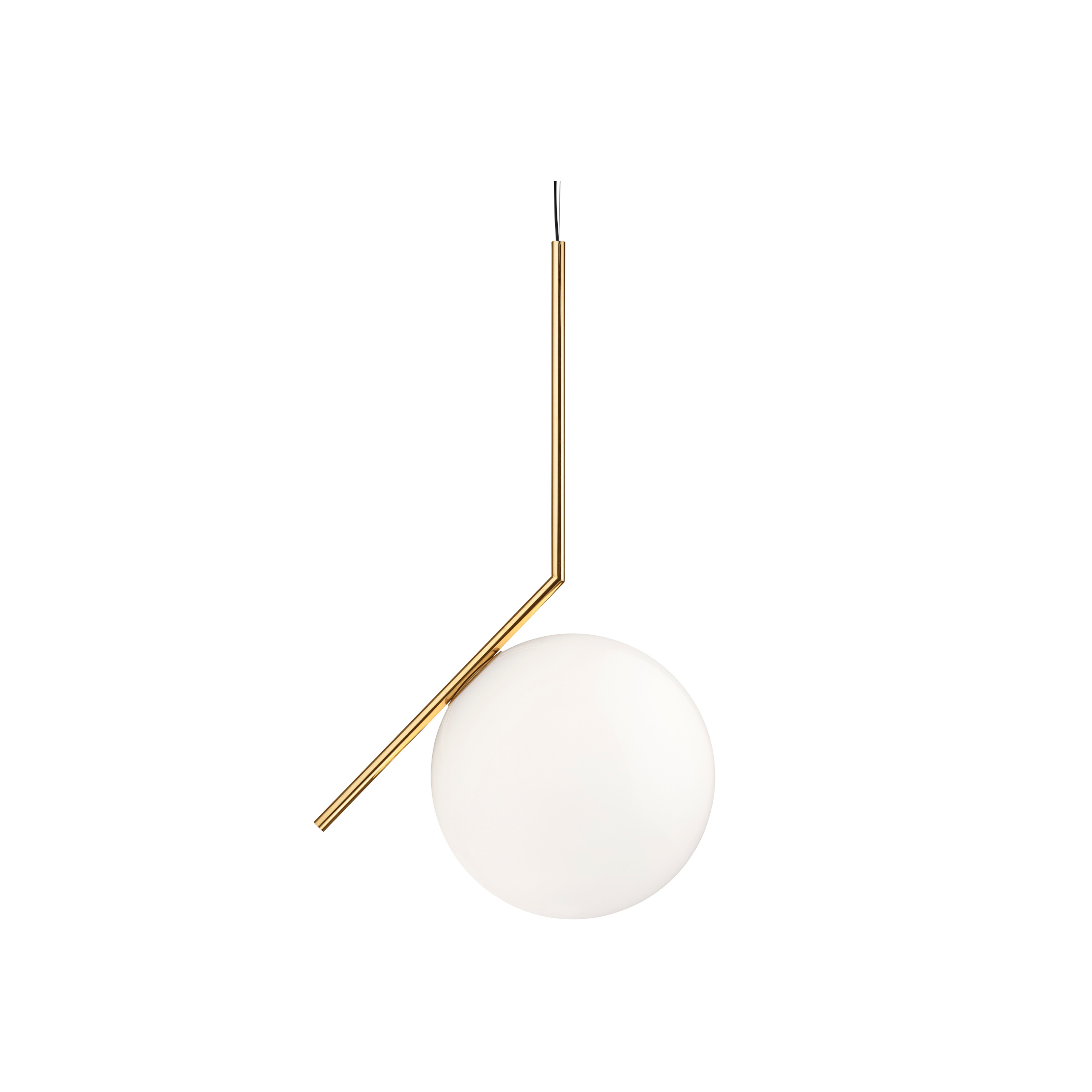
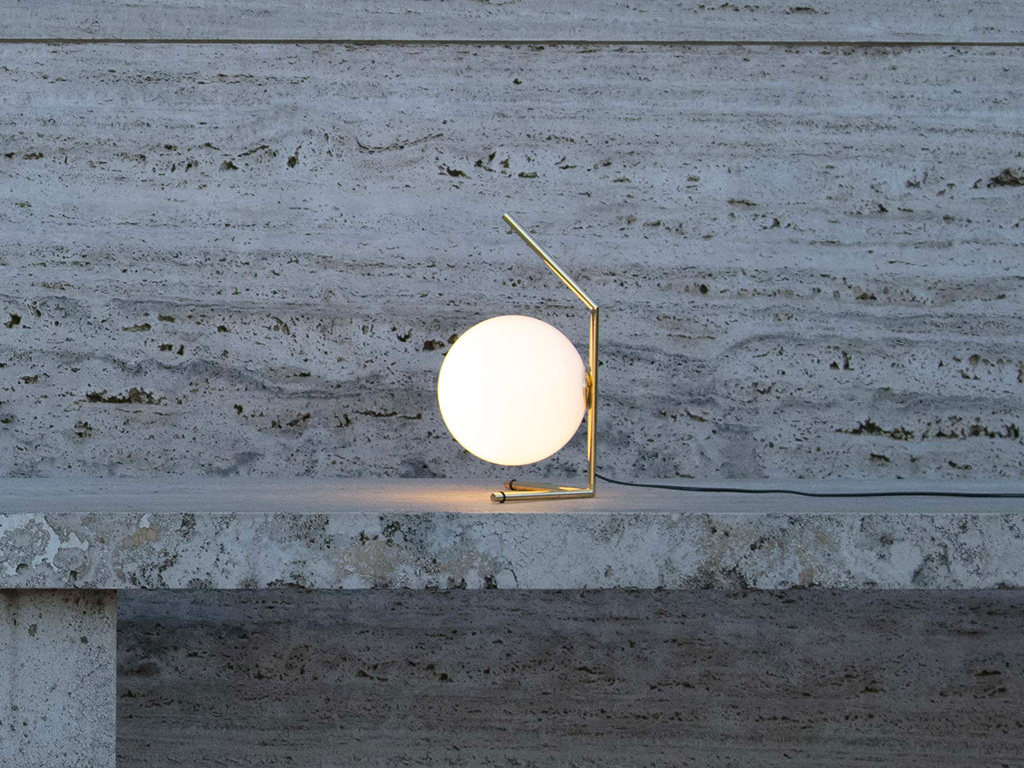
The family should be selected according to those roles, rather than by treating one variant as a simple enlargement of another. Furniture height, the available surface and the position from which the lamp is seen all change its contribution. The most useful design question is what the light should do in the room, followed by which model’s proportions support that intention.
A sphere needs space around it
The photographs beside reflective water and stone show the globe as more than an outline. Reflections extend its presence, while a darker background gives the luminous surface a stronger boundary. These are effects of the particular photographic arrangement, but they reveal why the surrounding space matters to the object’s appearance.
A visually restrained lamp can be lost in a crowded setting or become overly emphatic against a high-contrast background. Allowing room around the sphere gives its relationship to the support a chance to remain legible. The negative space is part of the composition, especially where the support looks slender beside the volume it carries.
Practical illumination should be assessed separately. Exposure in an official photograph cannot establish illuminance on a desk, glare at a particular seat or the colour of light in a finished room. Those questions need the exact model’s technical information and, for a demanding scheme, a lighting assessment appropriate to the installation.
What to specify, beyond the silhouette
The following reference connects the photographed family with the decisions that a room requires. It avoids transferring a finish, size or electrical configuration from one model to another simply because their forms are related.
| Decision | What the imagery explains | What the project needs |
|---|---|---|
| Table model | Globe and support at furniture level | Exact size and surface clearances |
| Floor model | A vertical line within the room | Position, cable route and surrounding furniture |
| Suspension model | A descending element above occupied space | Mounting and installation height |
| Anniversary finish | The documented gold-finished edition | Exact model and finish availability |
| Light distribution | The photographed luminous globe | Technical data for the intended lighting task |
| Room composition | The effect of contrast and reflection | Assessment in the actual material palette |
It is especially helpful to examine the lamp from the positions where it will usually be seen. A composition that works in a frontal photograph can change when viewed from a sofa, a doorway or the opposite end of a table. That is not a flaw in the object; it is part of placing an object within a real room.
The appeal of a repeatable idea
IC Lights is a useful example of how a small number of elements can support a broad family without making every member feel interchangeable. Sphere, line and point of support remain recognisable, while their proportions and positions allow different roles within an interior.
The anniversary imagery makes that continuity particularly persuasive by pairing isolated products with composed settings. The first explains the object; the second shows how it might enter a room. A considered presentation needs both. Together they let the reader judge the formal idea and then ask the practical questions that give it a place to belong.
The lasting interest is in that relationship between visual tension and everyday setting. The lamp does not need a complicated outline to command attention. It needs the proportion of its few elements, and the space around them, to remain clear enough that the apparent balance can be seen.
IC Lights is a useful example of how a small number of elements can support a broad family without making every member feel interchangeable.
Sources & credits
Methodology and sources
This feature uses Flos’ official IC 10 Anniversary story and IC Lights suspension-family record. The photographs identify the particular anniversary models shown. It is a design study, rather than a measured lighting test or installation specification. Light output, electrical options and availability should be checked against the exact product selected.