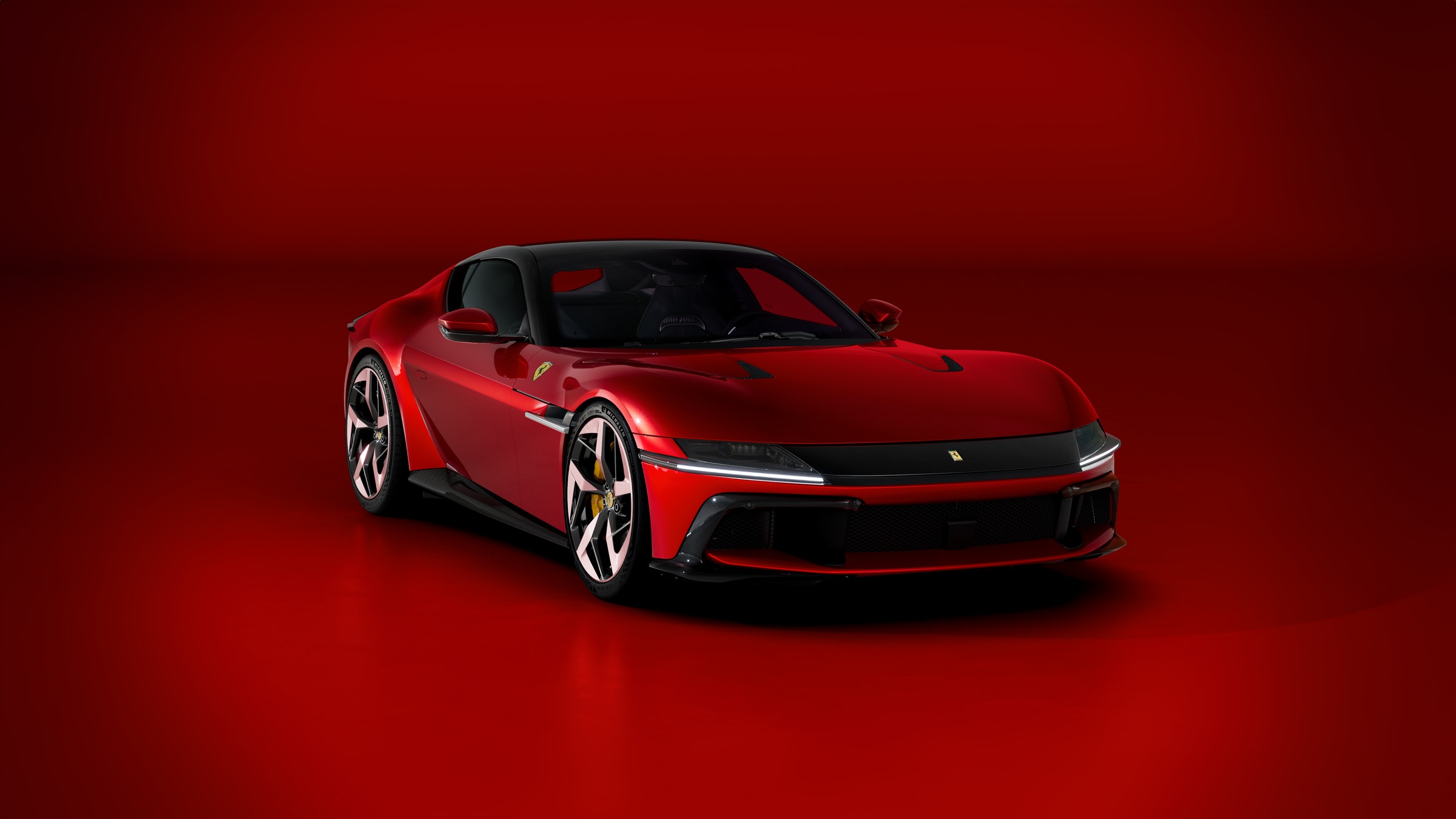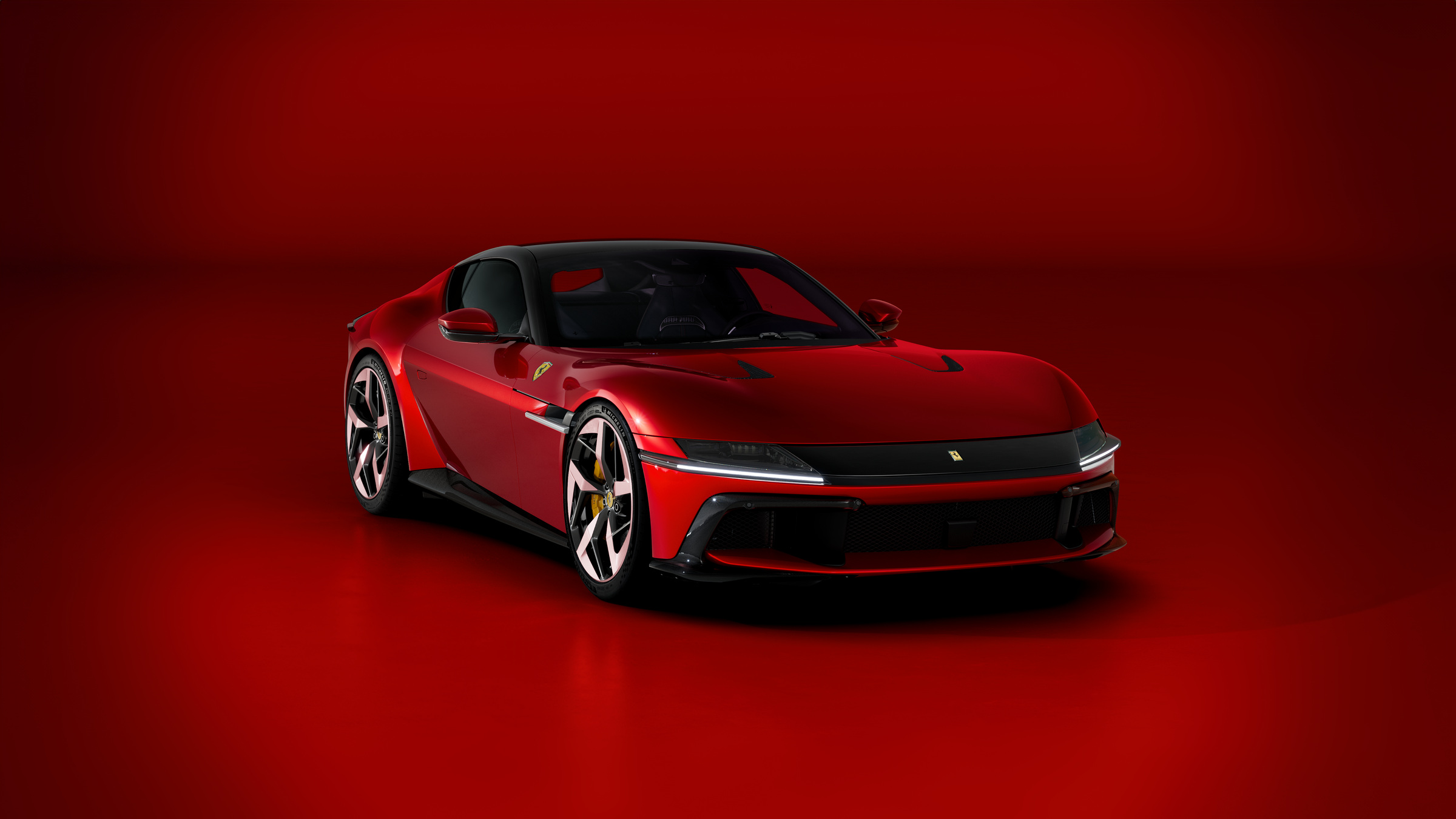
The bonnet is long enough to make the engine’s position legible before the specification sheet is opened. Behind it, a compact cabin and a sharply cut tail give the Ferrari 12Cilindri a clear visual hierarchy: engine, people, road. This is a front-engined grand tourer whose architecture remains the starting point of its identity.
That does not make it an exercise in nostalgia. The unusual treatment of its nose, the dark graphic around the cabin and the controlled surfaces of the rear suggest something more deliberate. Ferrari has retained a naturally aspirated twelve-cylinder engine while changing the visual language around it. The interesting question is how those two decisions support each other, rather than whether one more performance figure settles the matter.
A silhouette organised around twelve cylinders
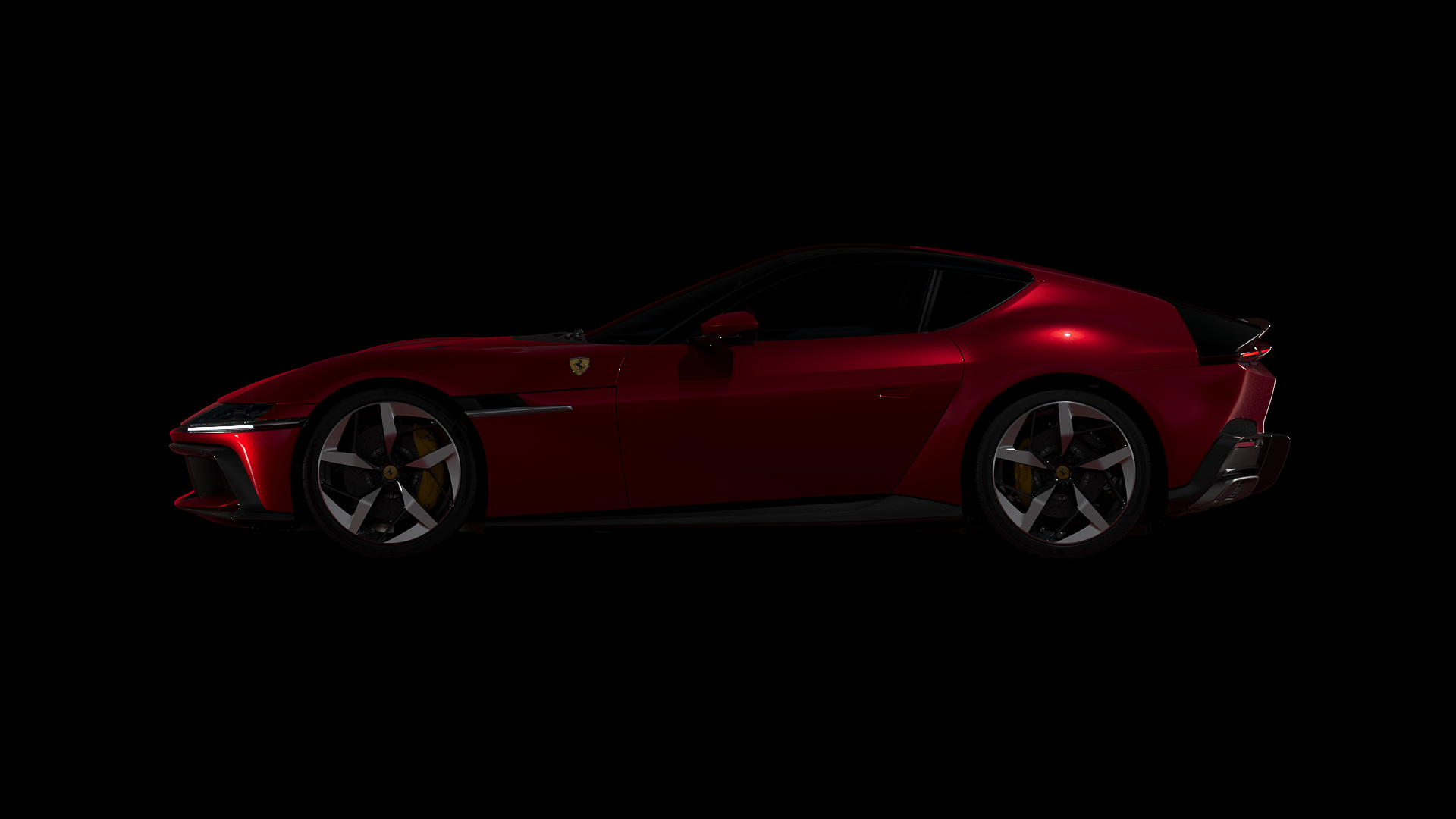
Read the car from the side. The cabin sits behind a substantial expanse of bodywork, with the front wheel and door defining the transition between mechanical space and occupied space. The proportions tell a story that a mid-engined layout could not tell in the same way. The driver sits behind the engine, with the bonnet establishing both the car’s direction and its visual balance. This gives the front and rear different jobs: the nose introduces the machine; the rear gathers its width into a compact ending.
Ferrari’s official studio photographs are particularly useful here. With scenery removed, the relationship between bonnet, windscreen and rear haunch is easy to follow. The broad horizontal treatment at the nose provides a counterweight to the length seen from the side. At the back, the visual composition is tighter and more abrupt. These are observations about the published design, not a judgement of how the car behaves on a road.
The dark areas also do work. Across the front, a graphic interruption changes how the headlights and upper body are read; around the passenger compartment, contrasting surfaces make the cabin appear as a distinct volume. The result is a car understood through a few strong relationships. The dark front graphic gathers the lighting into a continuous band; the bonnet remains an uninterrupted principal surface. Along the side, the cabin is a small, occupied volume within a much longer mechanical composition.
The engine is the organising idea
The defining fact is straightforward: the 12Cilindri uses a naturally aspirated V12. Ferrari lists 830 cv and a maximum engine speed of 9,500 rpm. Neither figure explains the whole car, but together they clarify the project’s emphasis. This is an engine programme built around sustained high-speed breathing, within a road-car package, rather than an electric motor filling in a conventional performance narrative.
There is a temptation to turn that choice into a forecast about the future of every Ferrari. The evidence does not support doing so. It is enough to examine this particular product: a new grand tourer whose engine type is important enough to become its name. The body, cabin and controls have to make that mechanical proposition coherent as an object that an owner will approach, enter and use.
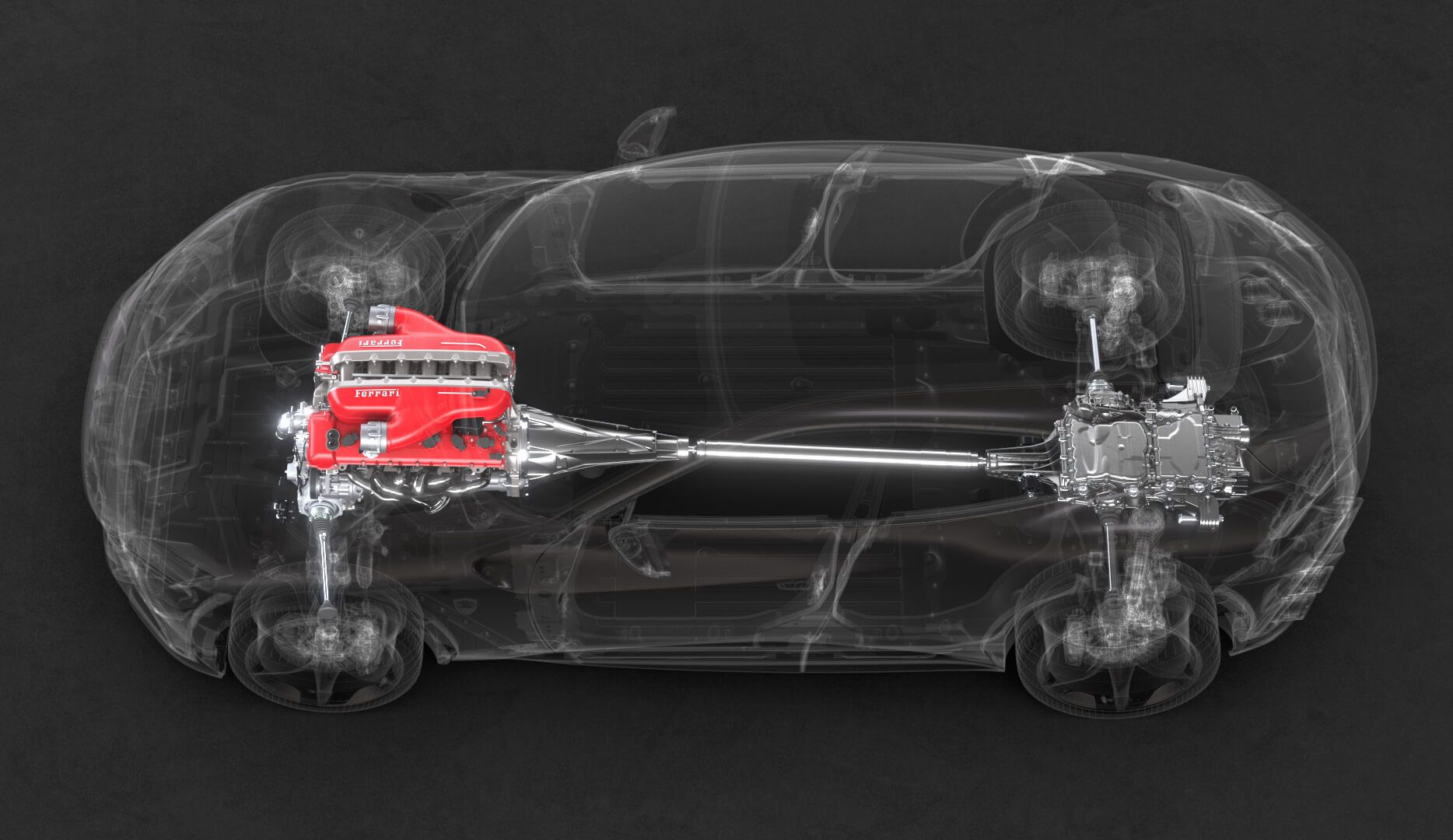
The manufacturer’s transparent mechanical illustrations help locate the engine and drivetrain in the car. They are explanatory visualisations, not photographs of a dismantled customer vehicle. Seen beside the exterior, they make the packaging argument visible: the long front section has a mechanical purpose, and the passenger space follows from that decision. The useful lesson is architectural, before it is numerical.
Two seats, with a different visual centre for each
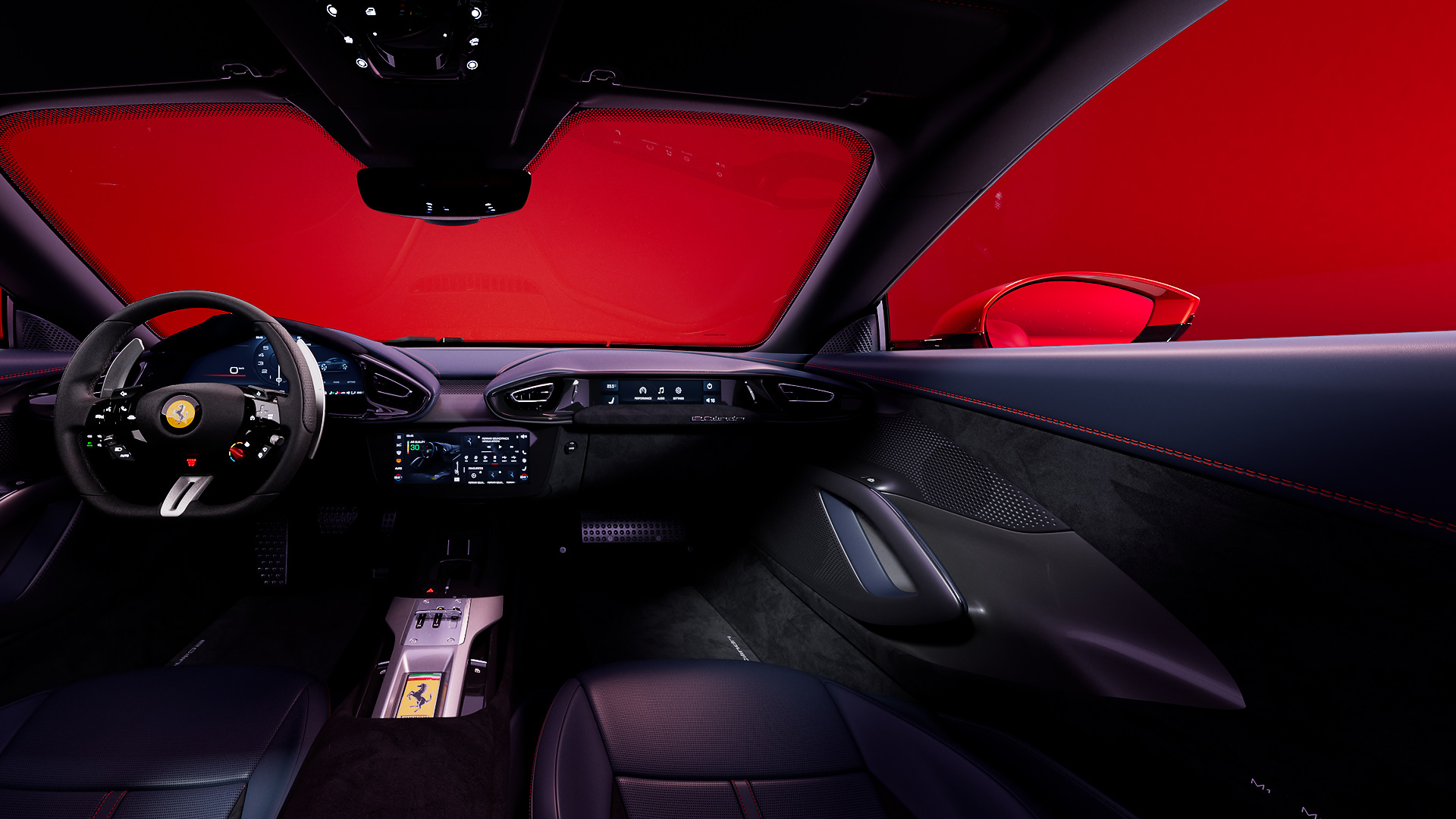
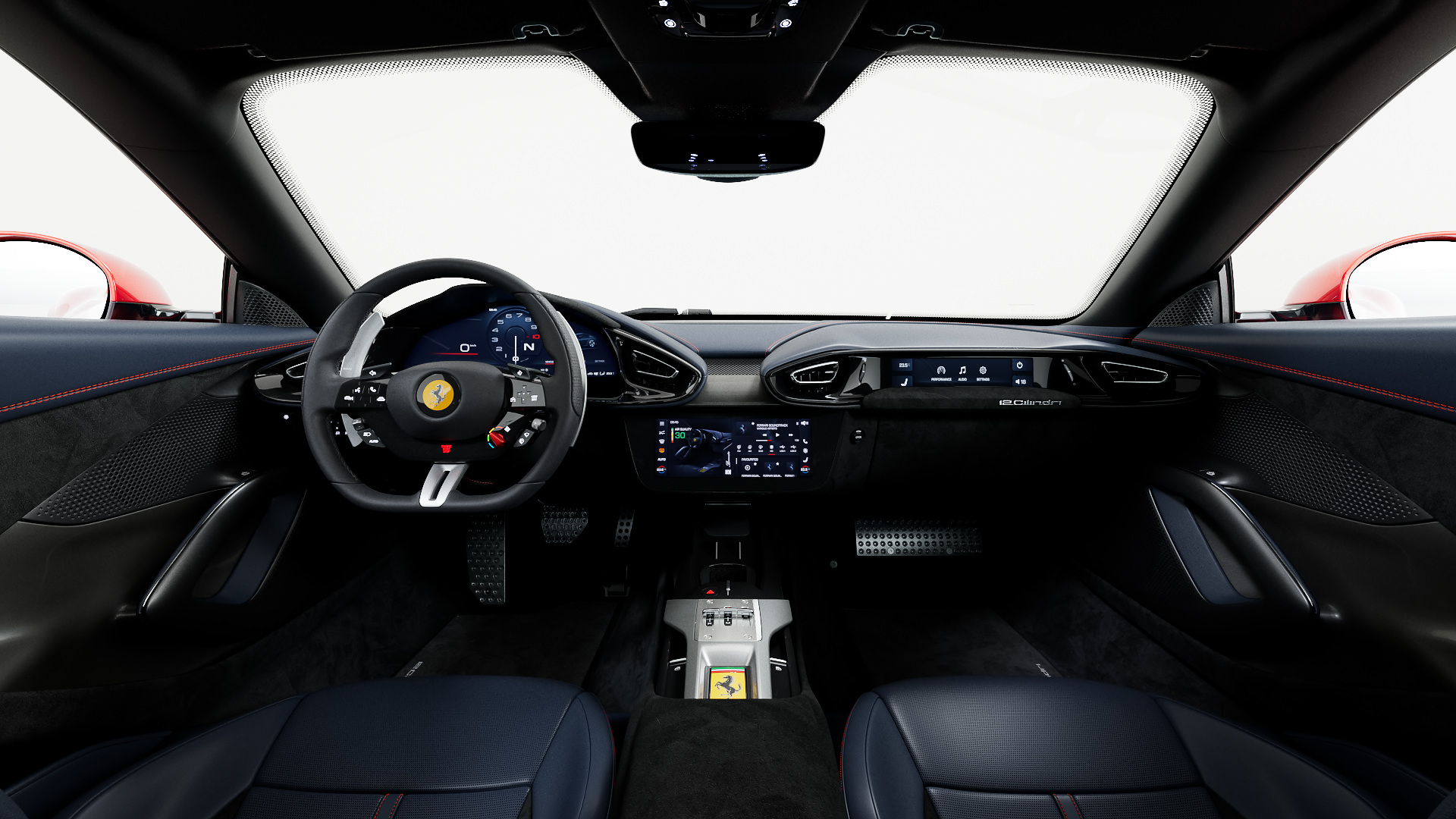
The cabin establishes a second set of relationships. Ferrari’s photographs show a driver-oriented instrument area, a central interface and a separate display ahead of the passenger. The dashboard is therefore not simply a single screen stretched across the car. It gives each occupant a distinct place within an otherwise tightly composed interior.
That arrangement matters in a grand tourer. A passenger spends time in the car without controlling it, and the shape of the dashboard can either acknowledge that position or treat it as leftover space. Here, the passenger display provides an explicit visual address. It does not prove that every menu or function will be intuitive; assessing that would require direct use. It does show that the passenger has been considered in the cabin’s composition.
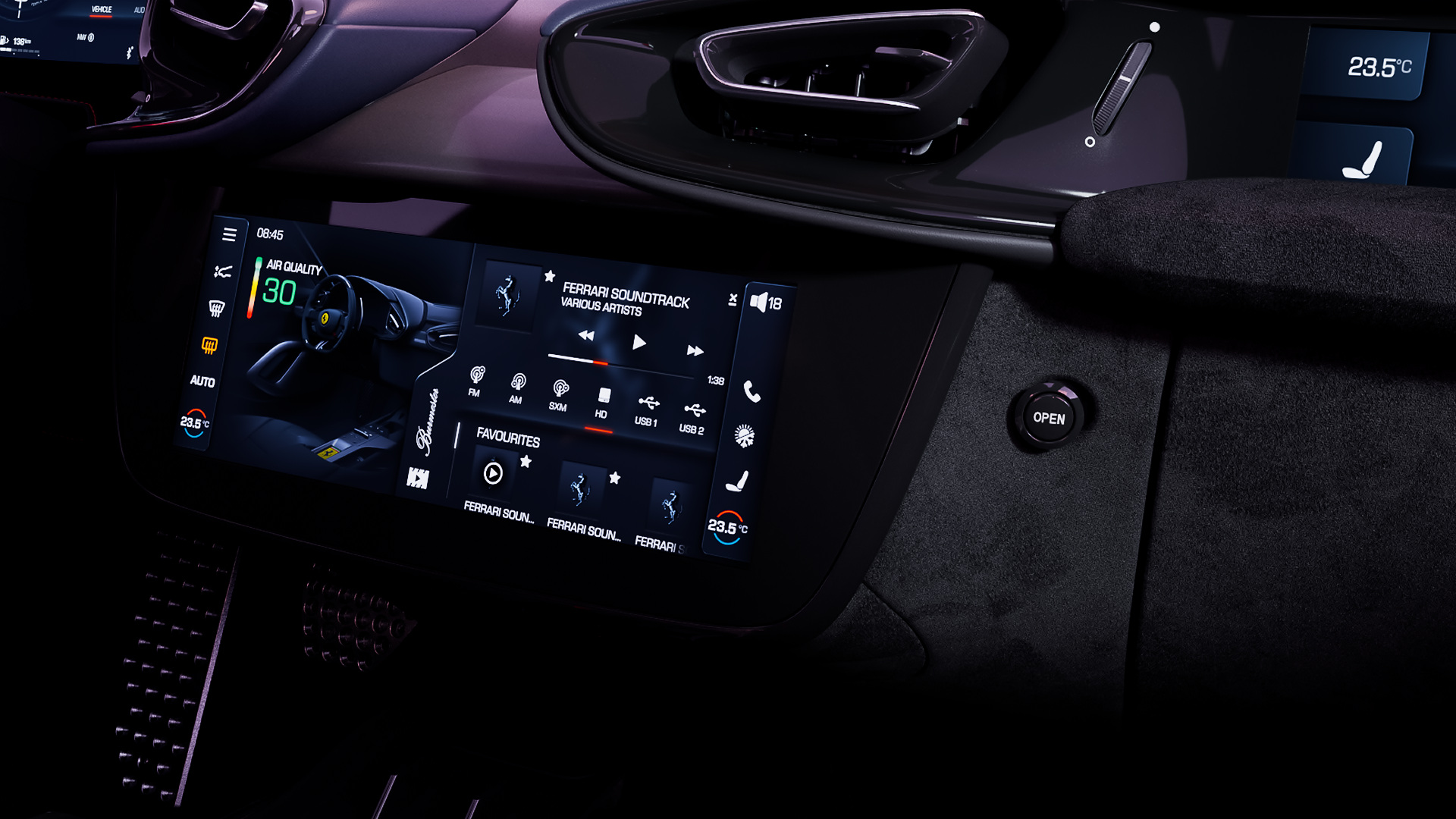
The steering-wheel photograph offers a useful change of scale. From the exterior’s broad planes, the reader moves to the concentrated cluster of surfaces and controls used by the driver. The central cabin view then puts those details back into context. The contrast in scale is striking: outside, the bonnet and tail are broad, simplified surfaces; inside, information and controls are concentrated within reach of the occupants. The cabin becomes the precise, inhabited centre of a much larger mechanical object.
Moving surfaces belong to the shape
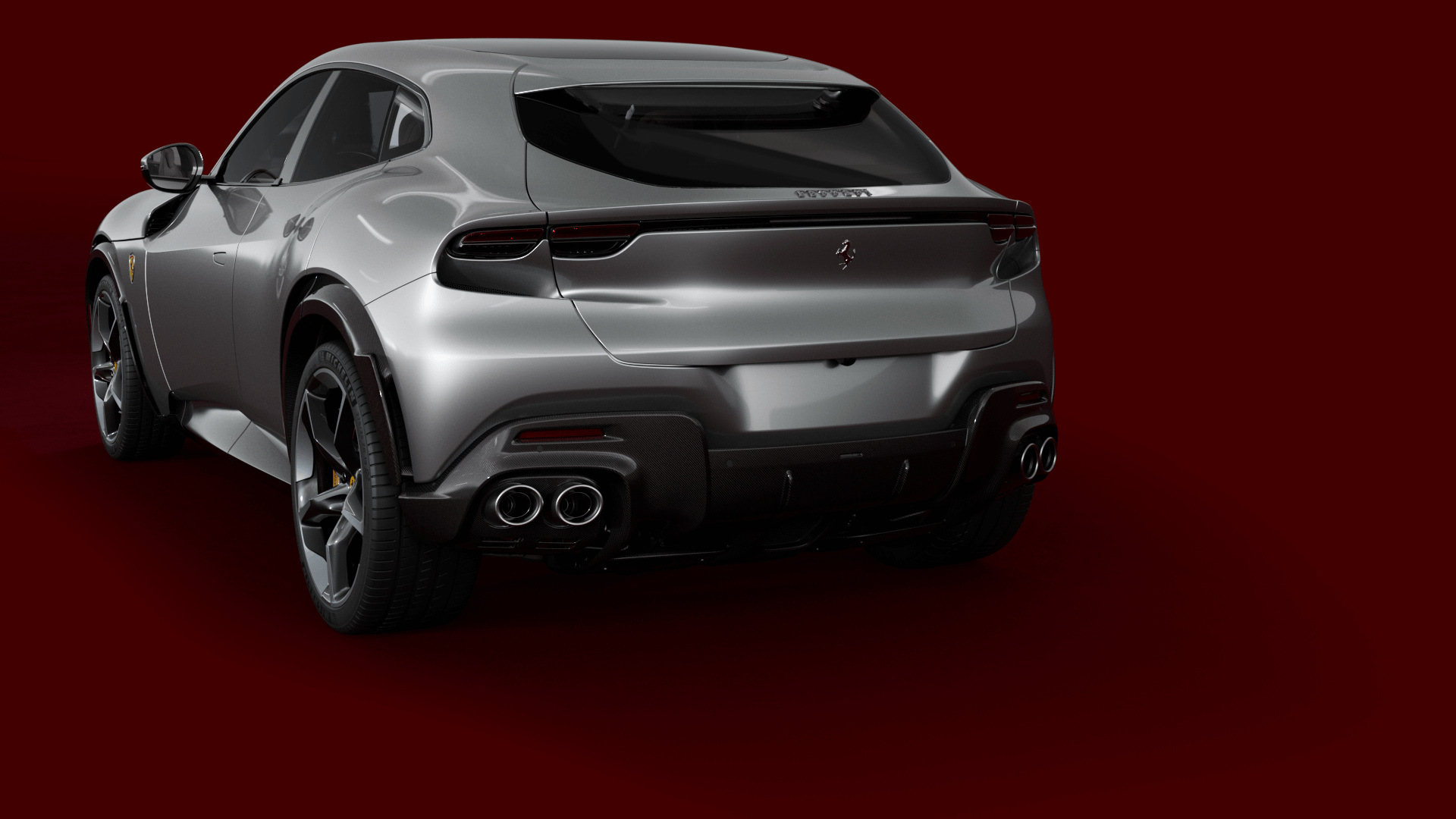
The rear photographs show the body in different aerodynamic states. In one, the surfaces read as a clean continuation of the tail; in another, raised elements interrupt that continuity. This is an important distinction to preserve in a visual article. The comparison reveals how the design makes room for a change of state. At rest, the tail reads as a continuous surface. With the elements raised, the car discloses another part of its functional architecture.
Ferrari describes active aerodynamic management as part of the 12Cilindri’s technical programme. Our interest here is in how that function has been integrated into the design. The mechanisms change the silhouette when called upon, while the underlying body retains a strong graphic identity. The external form has to accommodate both the quiet state of a parked object and the functional state of a moving machine.
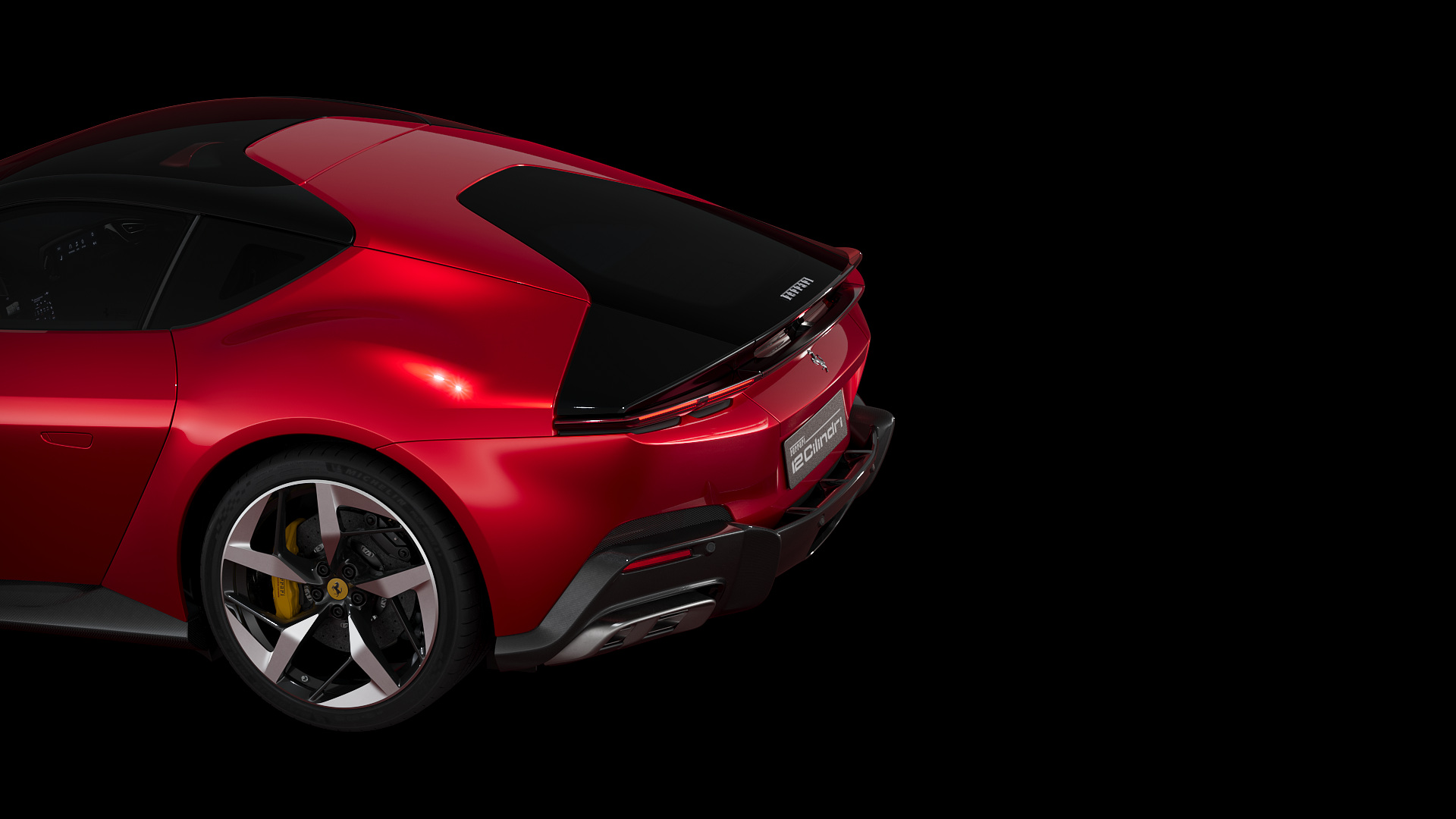
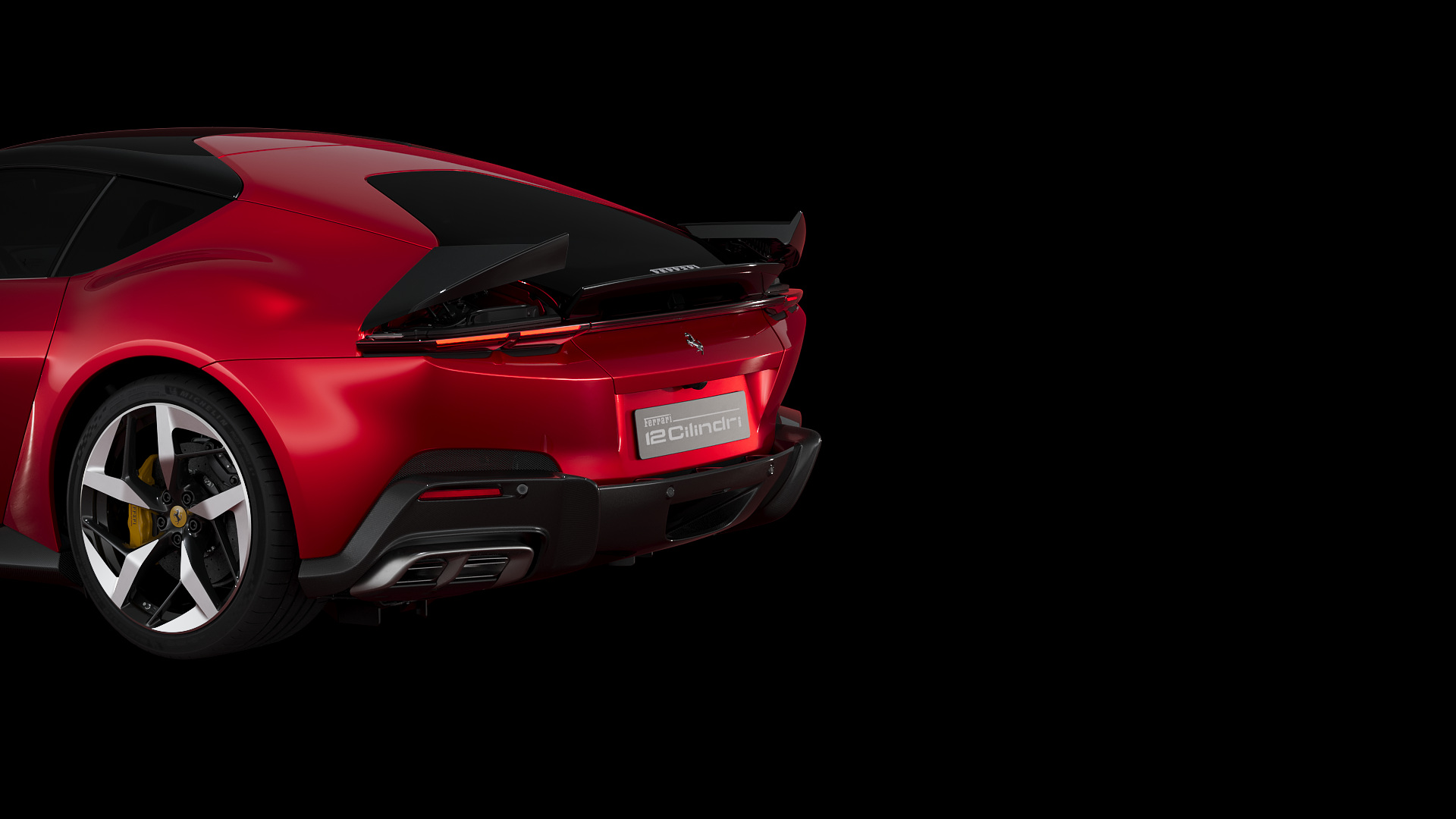
The two rear views are best read together. They let the reader compare a specific change rather than accept a vague statement about advanced aerodynamics. Published imagery can explain a design decision with precision, provided the caption identifies what is being shown and avoids converting the image into an unmeasured claim about downforce or stability.
A concise reference, not a substitute for a drive
Numbers become useful when they are attached to a question. The following reference separates the manufacturer’s specification from the practical implication we can reasonably draw from it. It deliberately avoids acceleration rankings, price comparisons and assertions about comfort that would require a different kind of evidence.
| Element | Ferrari’s published position | Why it matters here |
|---|---|---|
| Engine | Naturally aspirated V12 | The engine architecture defines the car’s identity and proportions. |
| Maximum power | 830 cv | A manufacturer specification, rather than an independently measured result. |
| Maximum engine speed | 9,500 rpm | High engine speed is central to the mechanical proposition. |
| Cabin | Two-seat arrangement | The interior gives driver and passenger distinct visual interfaces. |
| Aerodynamics | Active elements within the body design | Different rear-surface positions should be shown and labelled separately. |
For a prospective owner, the next questions are more specific than whether the car is impressive in isolation. How does the seating position work for that person? How much luggage does their actual journey require? Which controls remain comfortable to use over a long day? Published dimensions and photographs help prepare those questions, but they cannot answer every one of them.
What gives the 12Cilindri its coherence
The car’s strongest design argument is the alignment of its parts. The engine establishes the proportions; the surfaces give those proportions a contemporary graphic language; the cabin provides two occupants with different points of engagement. The detail photographs are valuable because they lead back to that larger structure, rather than distract from it.
The engine is not merely a specification inside the body; it is the idea around which the body is organised. That is our reading of the 12Cilindri’s published design, not a claim derived from a test drive. It explains why this grand tourer deserves to be considered as a complete object: mechanical choice, exterior composition and interior experience are presented as parts of the same proposition.
The engine is not merely a specification inside the body; it is the idea around which the body is organised.
Sources & credits
Methodology and sources
This independent design feature uses Ferrari’s current model information and official launch material. No road test, factory visit, ownership experience or commercial endorsement is implied. Performance figures remain manufacturer-stated. Official technical visualisations are identified separately from studio photography; the selected rear views show different aerodynamic positions.