Answer brief
Feadship Milky Way is the completed identity of Project 828, an 89.6-metre full-custom motor yacht launched in 2026. Feadship’s official record attributes naval architecture and exterior design to Studio De Voogt and the interior to RWD. The unusually long bow is not simply a styling gesture: it reallocates exterior deck area, shifts the visual and physical mass aft and establishes the horizontal profile that defines the yacht. Published dimensions, capacities and machinery describe a long-range platform; they do not establish finish quality, noise, consumption or operational performance without direct access.
Fact unit
- Yacht: Feadship Milky Way, hull 828.
- Year: 2026.
- Length overall: 89.60 metres.
- Beam: 13.49 metres.
- Draught: 3.70 metres.
- Naval architecture: Feadship De Voogt Naval Architects.
- Exterior design: Studio De Voogt.
- Interior design: RWD.
- Main engines: two MTU 12V4000M65 units rated by Feadship at 1,680 kW each at 1,800 rpm.
- Published range: 5,500 nautical miles at 12 knots.
- Evidence boundary: official Feadship records and launch photography; no Luxe Digital onboard inspection or sea trial.
The long bow is the organising decision
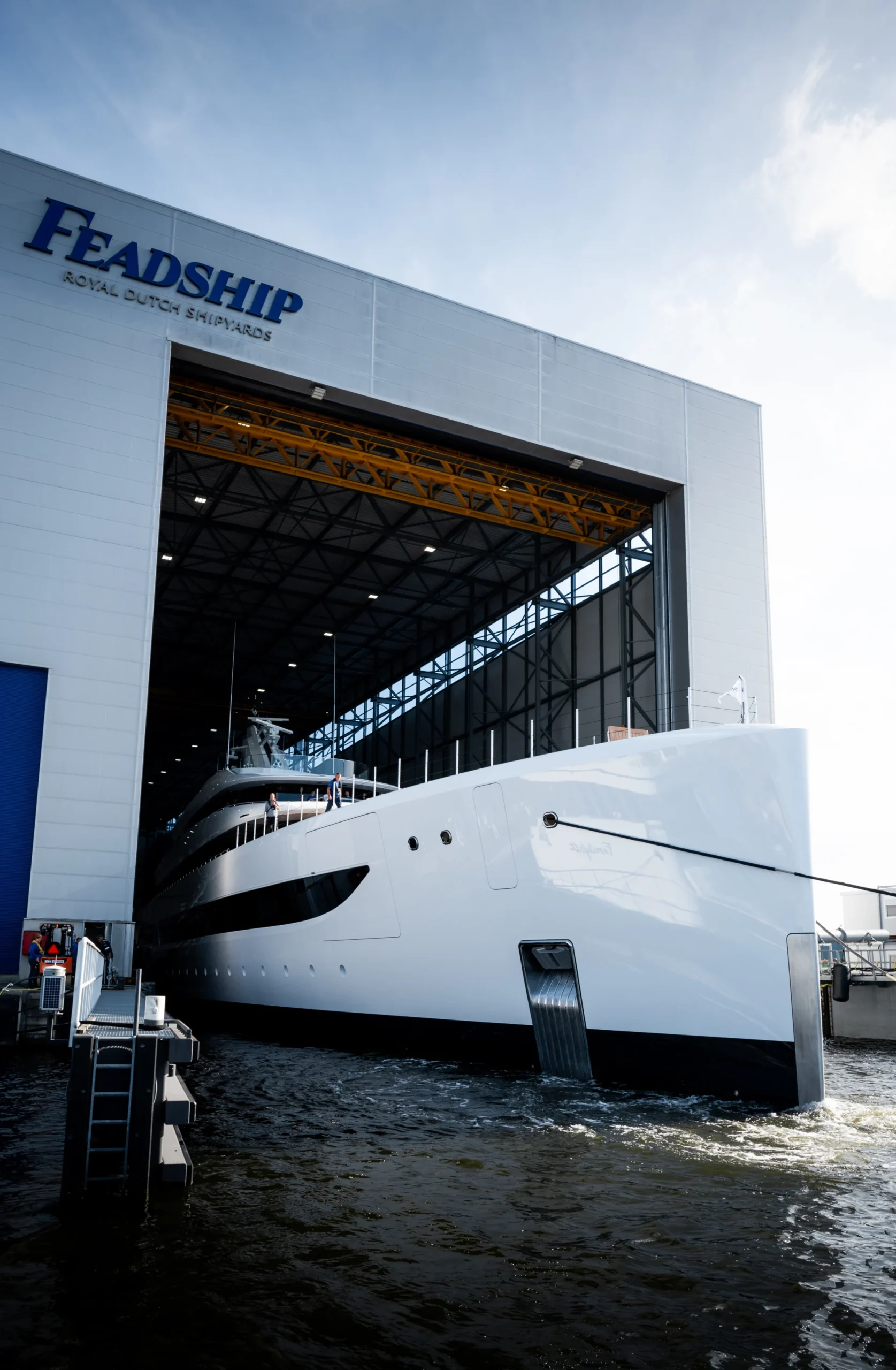
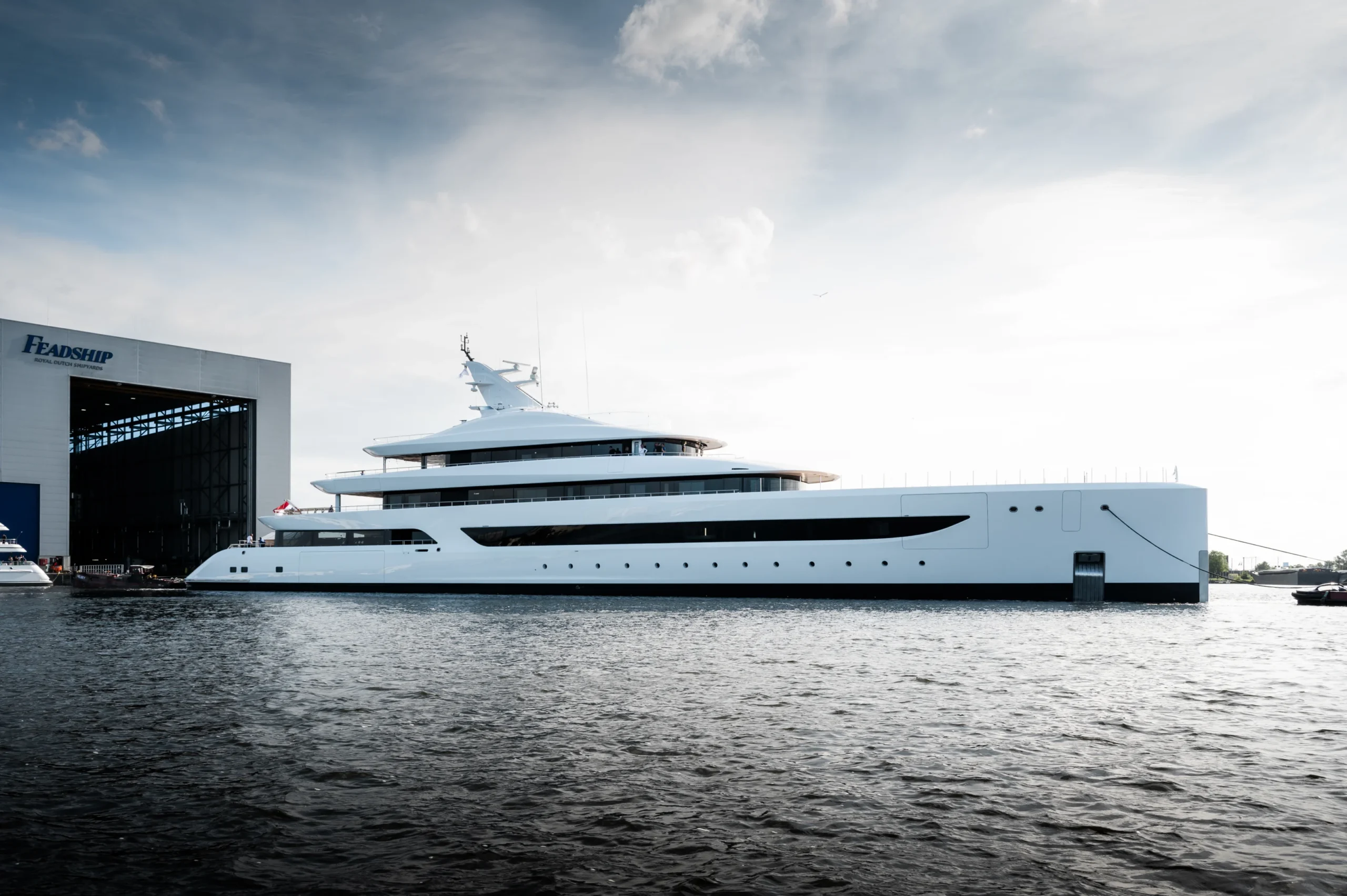
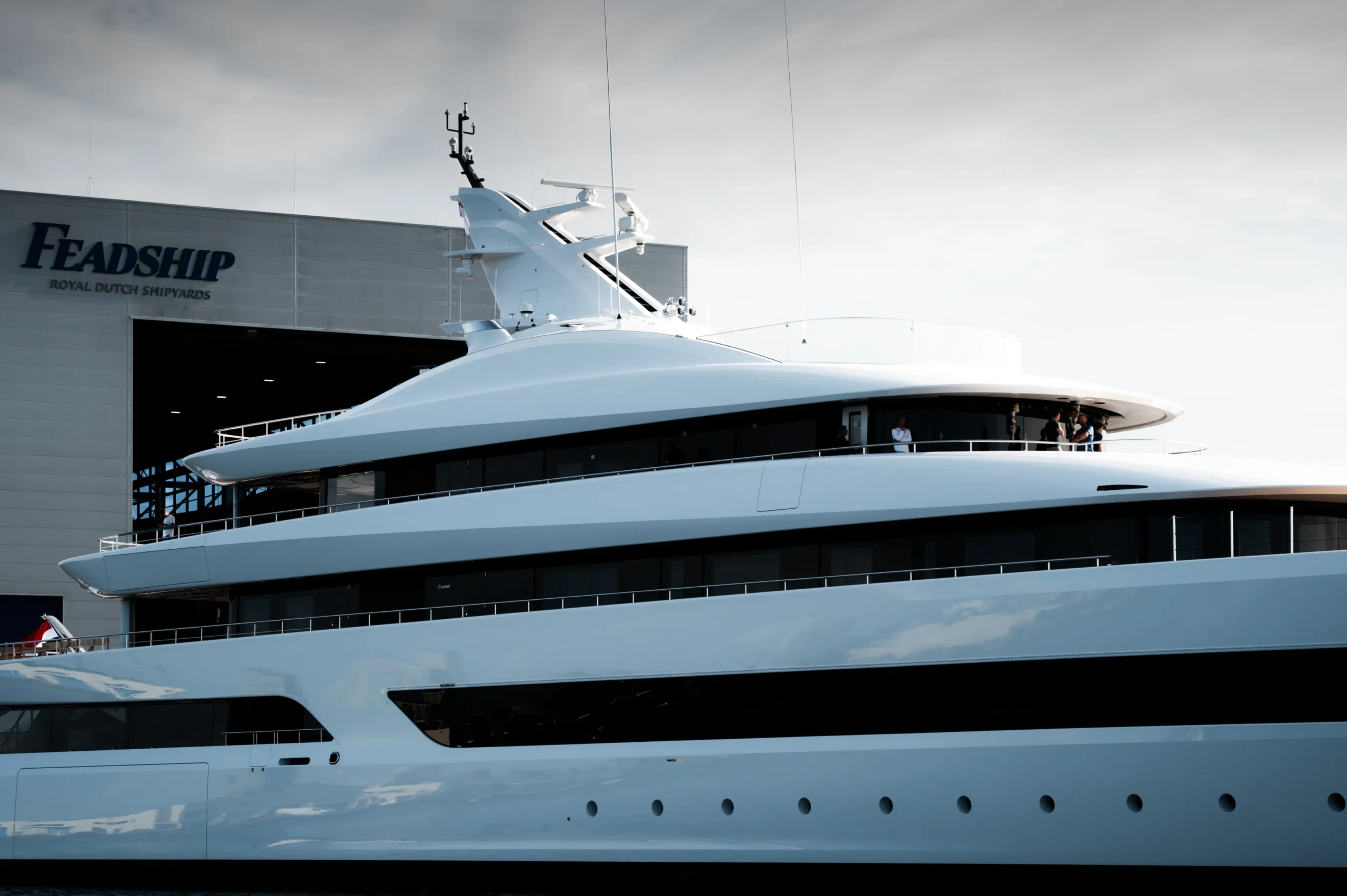
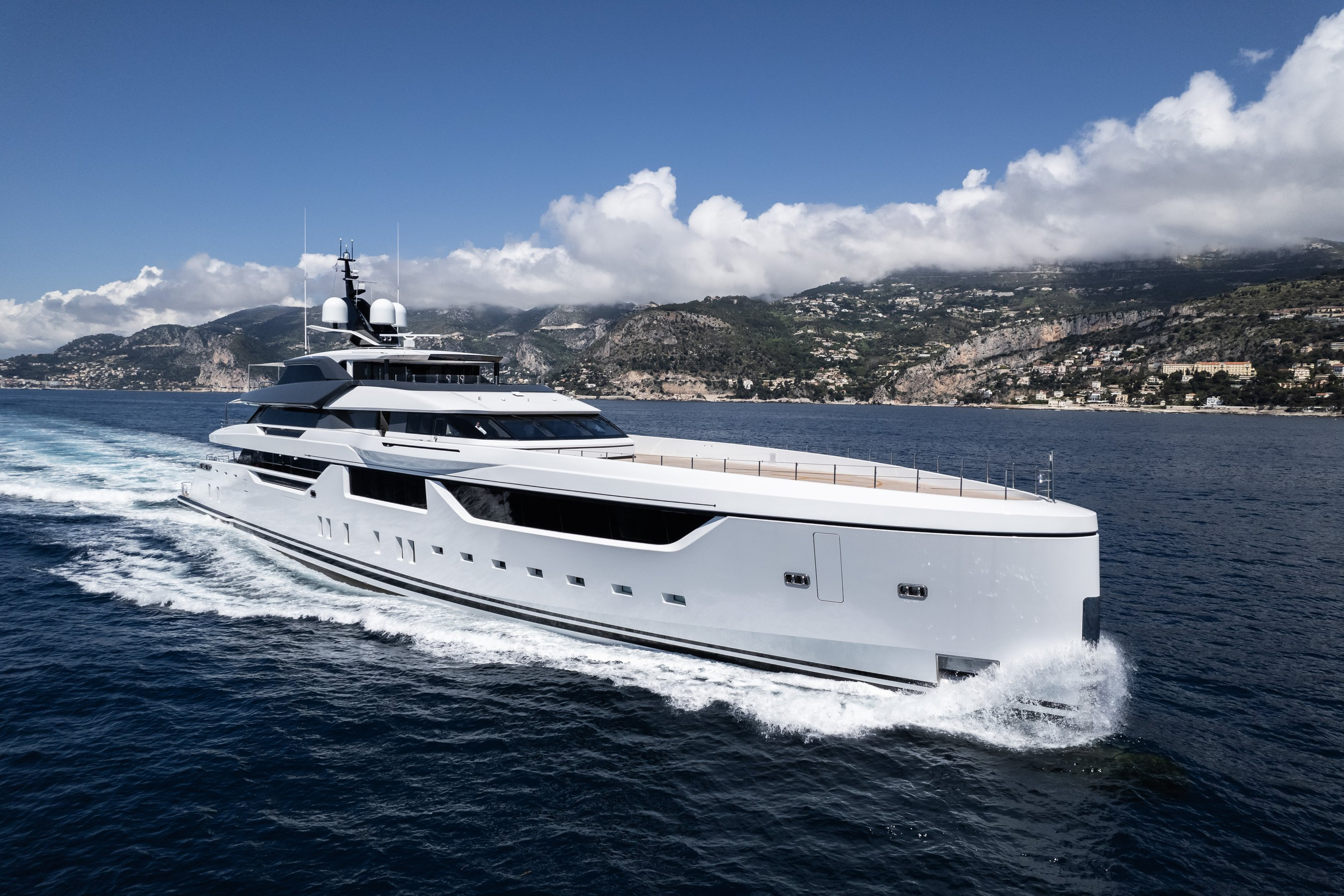
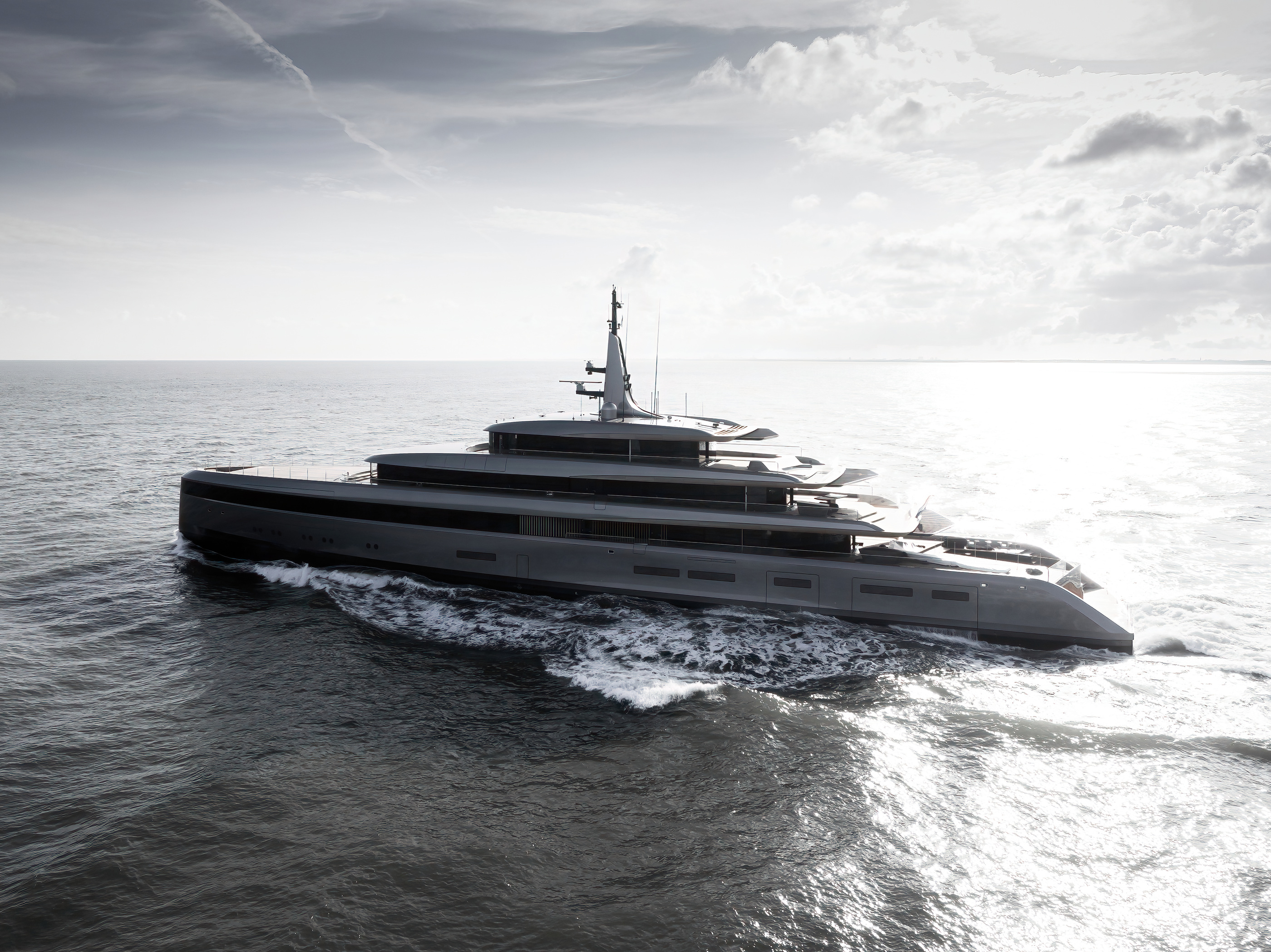
Milky Way’s profile begins with an unusually long, near-vertical bow and a superstructure held deliberately aft. Feadship says the arrangement emerged from a brief for flexible exterior spaces supporting active living and relaxation. The result is a yacht whose forward deck allocation and horizontal lines are linked: proportion, circulation and use were developed as one decision rather than applied as separate visual themes.
That matters because a full-custom yacht at this scale cannot be understood from silhouette alone. Moving volume aft changes the relationship between guest decks, technical spaces, circulation routes and the centre of visual mass. The official photographs show a restrained superstructure, long deck lines and a mast with enough presence to balance the aft volume. They establish design intent and proportion; they do not show how wind exposure, privacy or movement feel while the yacht is operating.
The owner’s useful question is therefore not whether the bow looks dramatic. It is what the geometry enables, what it displaces and how the resulting spaces perform across passage, anchorage and marina conditions.
A full-custom collaboration, not a catalogue model
Feadship describes Milky Way as the product of close collaboration between the private client, Studio De Voogt, RWD and the unified project team. That distinction is important. Hull 828 is a specific yacht rather than a standard model with a fixed accommodation package. The public record can establish principal authorship, dimensions and machinery, but it should not be treated as a universal specification for another Feadship project.
Studio De Voogt is credited with naval architecture and exterior design. RWD developed the interior around soft, flowing lines intended to connect guest and owner spaces. The two disciplines meet at thresholds, glazing, stairways and exterior circulation. A coherent project requires structural depth, door pockets, service routes and technical access to be resolved without weakening the visual continuity presented in the design language.
Official launch images are valuable evidence of the delivered exterior. They are not an interior survey, finish inspection or post-delivery reliability record. Those conclusions require declared access and a separate review methodology.
The technical record in context
Feadship records two MTU 12V4000M65 main engines, three Scania DI 13 generator sets, 208,000 litres of fuel and 40,000 litres of fresh water. The published range is 5,500 nautical miles at 12 knots. These figures position Milky Way as a large displacement yacht intended to support extended operation, but each number needs context.
Range is a declared operating point, not a promise for every itinerary. Weather, sea state, displacement, hull condition, hotel load, speed profile and reserve policy all affect real consumption. Fuel capacity is a physical quantity; usable fuel, contingency margins and bunkering strategy remain operational decisions. Generator count describes installed redundancy but not acoustic behaviour or hotel-load efficiency.
An owner-side technical review should request the speed-consumption curve, range assumptions, stabiliser configuration, machinery redundancy, class notation and maintenance access plan. None of those questions diminishes the significance of the launch. They turn a compelling specification into a usable ownership brief.
Reading the exterior evidence
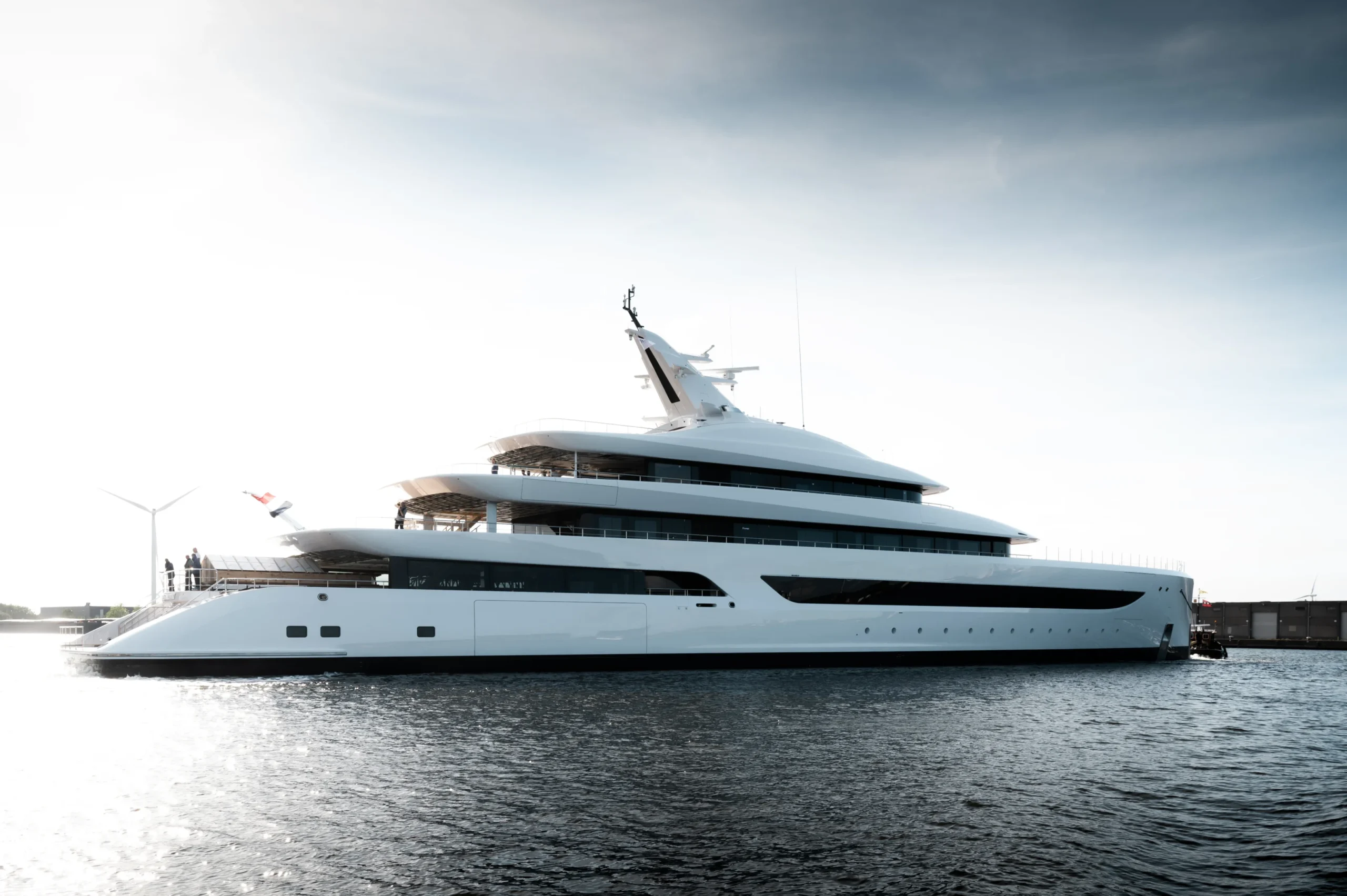
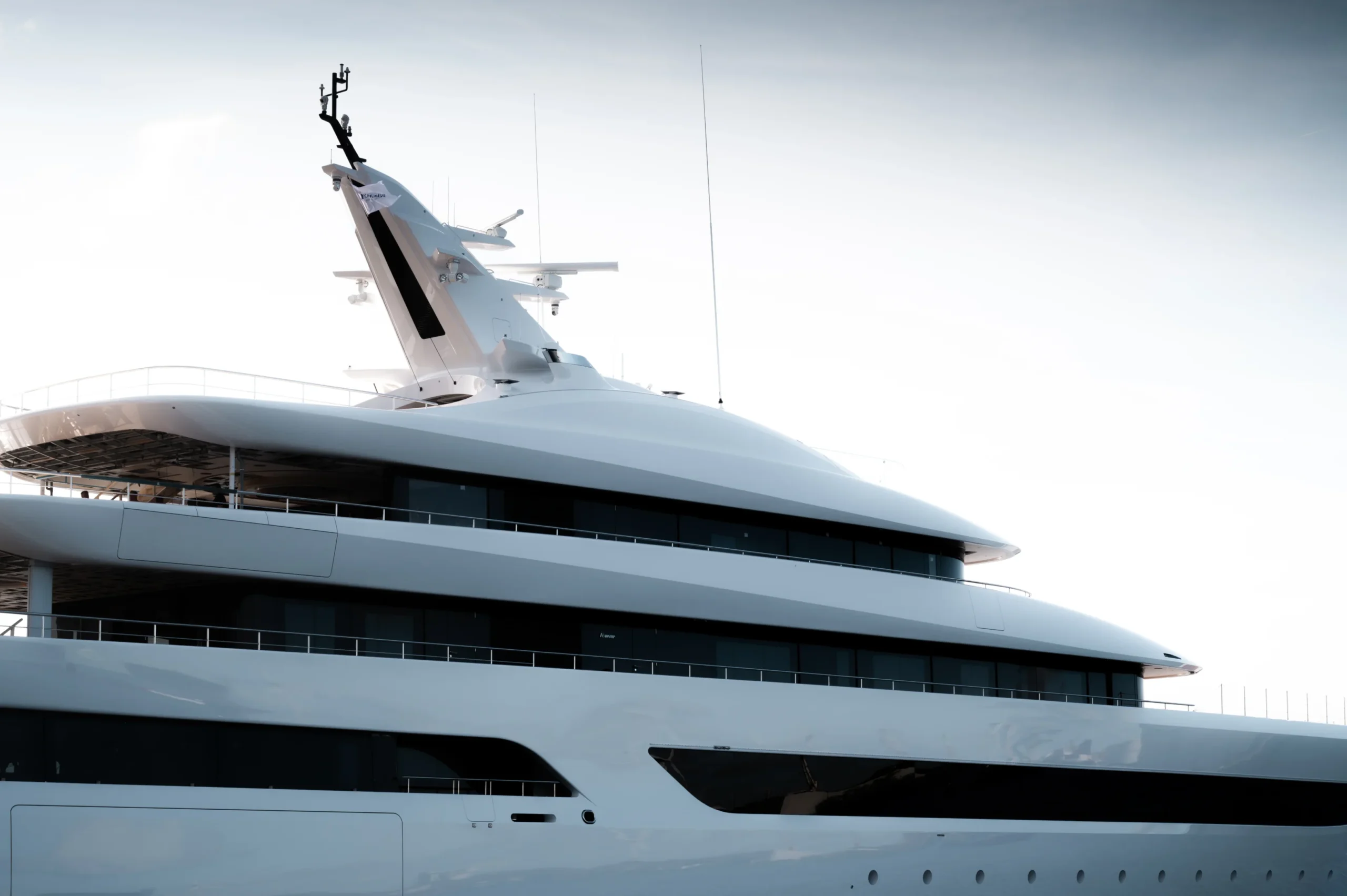
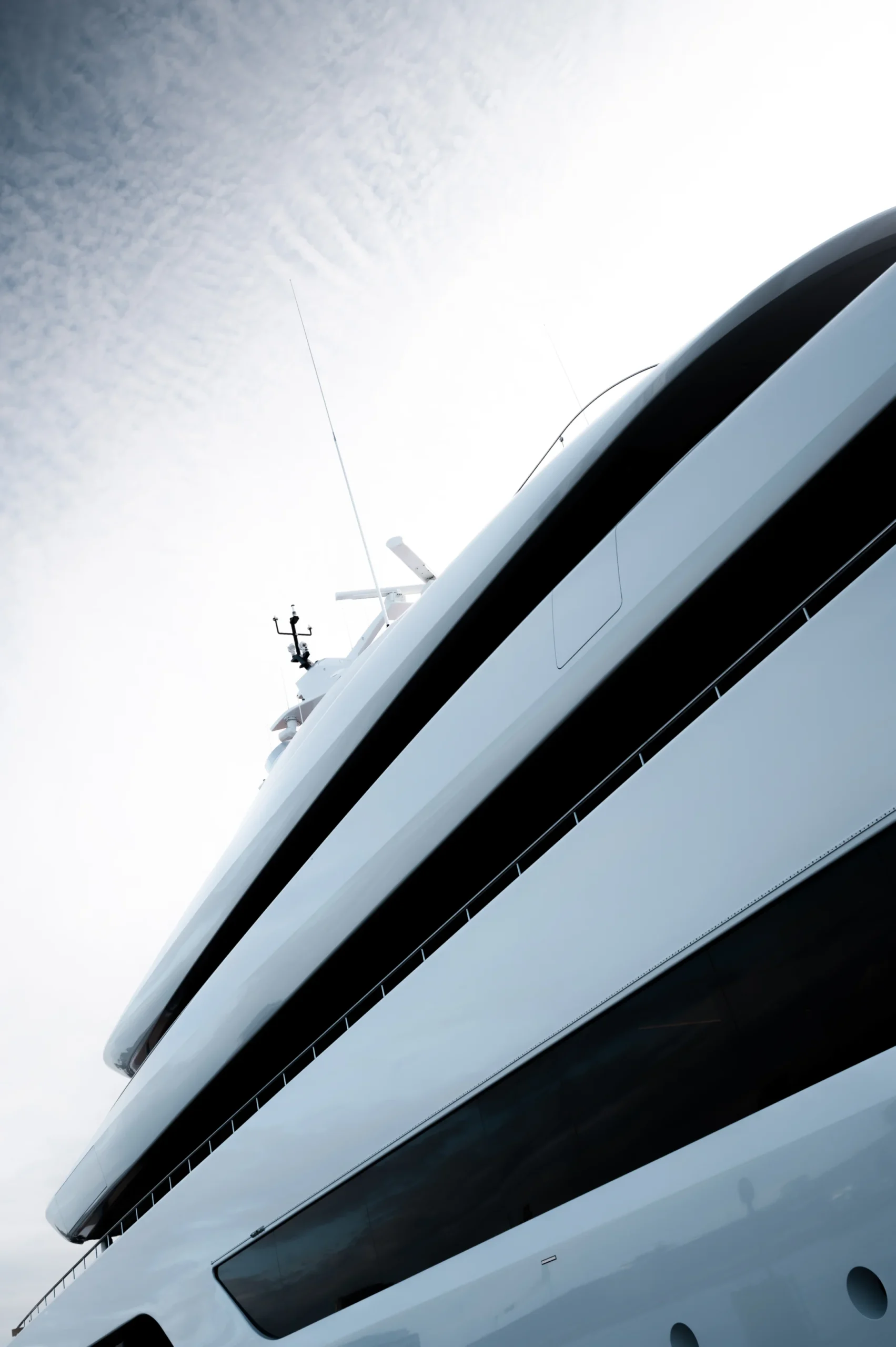
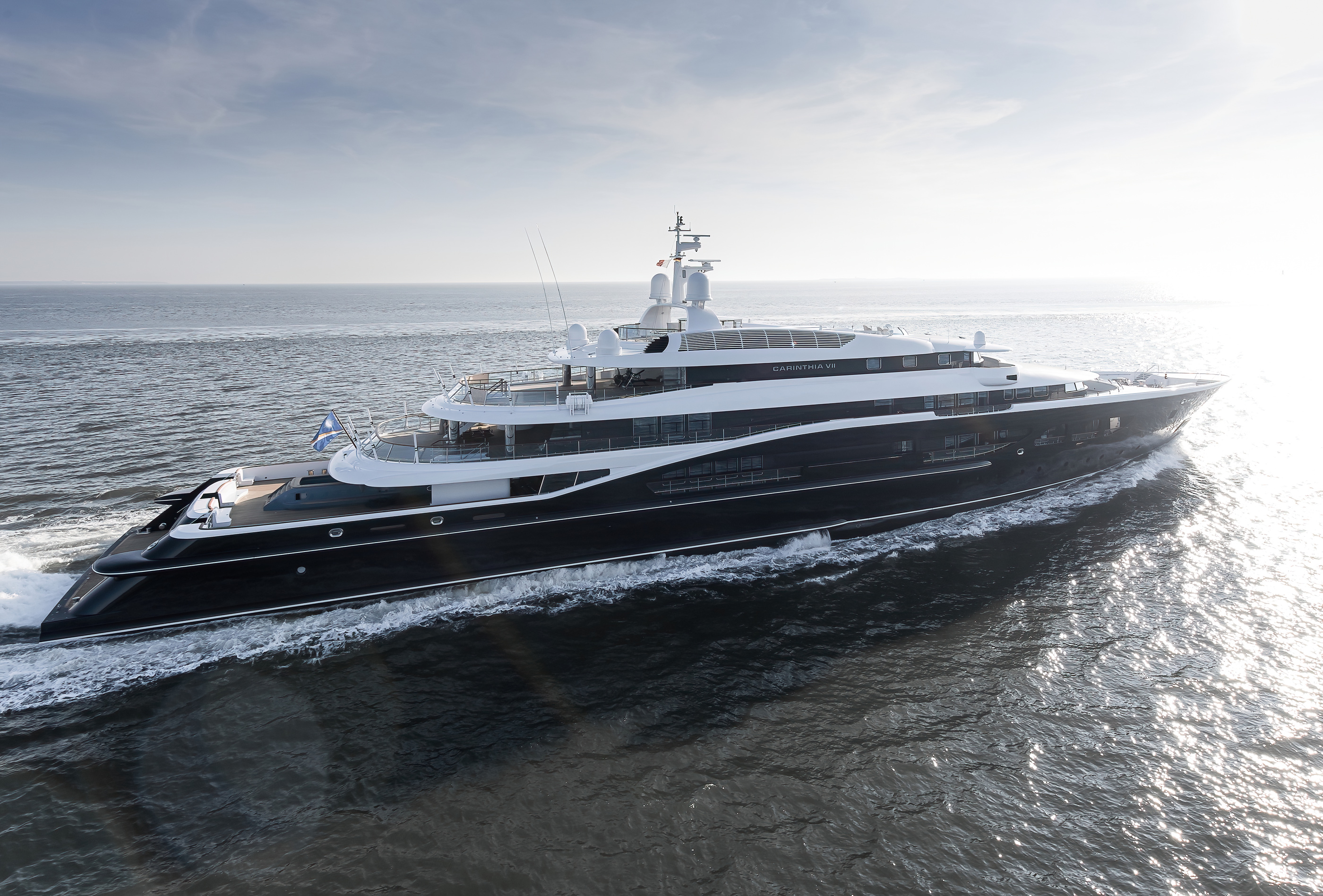
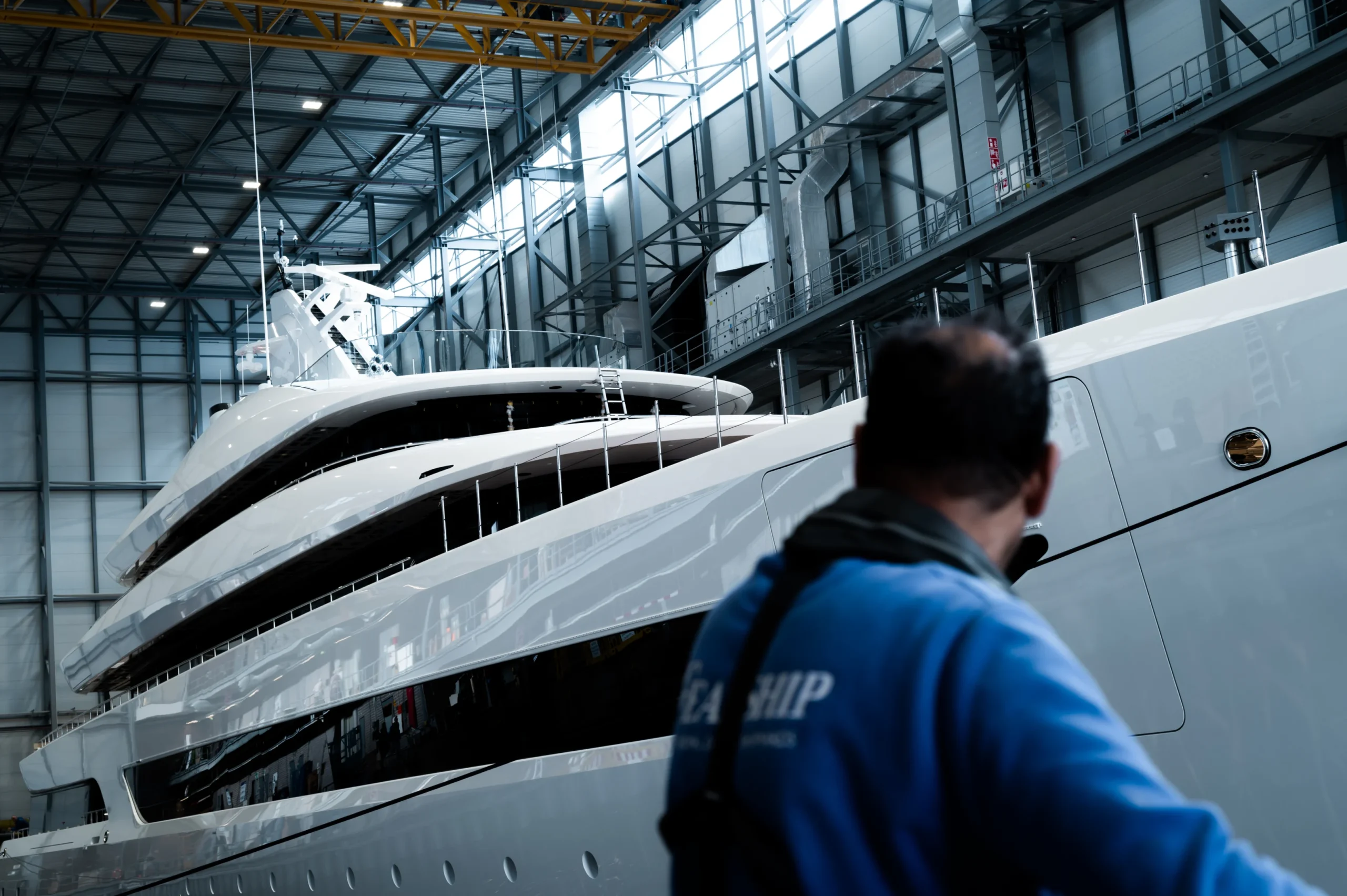
The seven official launch photographs show Milky Way from profile, three-quarter and elevated viewpoints. Together they document the relationship between bow length, stepped decks, mast and aft volume more reliably than a single hero image. Repeated horizontal bands visually lengthen the yacht while dark glazing reduces the apparent height of the superstructure.
Photography also has limits. Lens choice, elevation, light and background can change the perceived scale of the bow and superstructure. A complete design assessment would compare the images with general arrangement drawings and observe the yacht from tender, quay and water level. It would also examine guest circulation when exterior furniture and operational equipment are in place.
The correct editorial use of these images is evidentiary: they support statements about visible form and proportion. They do not prove comfort, craftsmanship, seaworthiness or value.
What direct access should test
A Luxe Digital onboard review should start with the transition between the long forward exterior areas and the aft-set guest volume. It should map walking distances, shade, wind protection, privacy and the separation of guest and crew routes. Exterior spaces should be observed both prepared for photography and during an ordinary operating sequence.
Inside, the review should test whether RWD’s flowing forms improve circulation or merely soften the visual language. Joinery alignment, material transitions, door movement, lighting, acoustic separation and service access deserve the same attention as the principal rooms. Machinery spaces should be inspected for access, heat management, noise control and maintainability.
A sea trial would add measured speed, sound and vibration at defined positions and operating states. Until that evidence exists, Milky Way should be described as a documented launch and design analysis, not a scored review.
Owner and captain verification checklist
- Which assumptions support the published 5,500-nautical-mile range at 12 knots?
- What are the consumption and noise profiles at displacement and economical speeds?
- How are guest, crew and technical routes separated through the aft-set volume?
- Which exterior areas remain useful under wind, spray and strong sun?
- What stabilisation equipment is installed and what operating envelope applies?
- How are machinery access, lifting routes and major-component replacement resolved?
- What redundancy exists for propulsion, generation, cooling and hotel services?
- How do the long forward deck spaces change anchoring, tender and mooring workflows?
- Which interior elements are fixed to this owner’s brief rather than the underlying platform?
- What delivery, warranty and post-delivery support evidence is available?
Editorial verdict
Milky Way is significant because one clear architectural decision carries through the entire public record. The long bow, aft-set volume and horizontal exterior language form a coherent proposition rather than a collection of isolated features. Feadship’s verified dimensions, authorship and machinery give that proposition a credible technical frame.
The evidence does not yet support claims about operational refinement, build quality, real range or ownership value. Those belong to an access-led review. On the available record, Milky Way is best understood as a disciplined full-custom launch whose most visible gesture also appears to be its organising spatial idea.
Key takeaways
- Milky Way is Feadship hull 828, launched in 2026 at 89.60 metres.
- The long bow reallocates exterior deck area and shifts the yacht’s volume aft.
- Studio De Voogt is credited with naval architecture and exterior design; RWD with interiors.
- Feadship publishes a 5,500-nautical-mile range at 12 knots, subject to operating assumptions.
- Official sources support a launch analysis, not a scored review or quality verdict.
Sources & credits
Methodology and sources
The official Feadship launch release and fleet record were rechecked on 31 August 2026. All specifications and design attributions remain identified as manufacturer records. Luxe Digital did not receive onboard access, conduct a sea trial, interview the owner or independently measure performance for this commission.
Media: seven official Project 828 launch photographs supplied in Feadship’s press media kit. Credit: © Feadship. Publication approved by Silvia Parisi under the standing C6 role authorization.