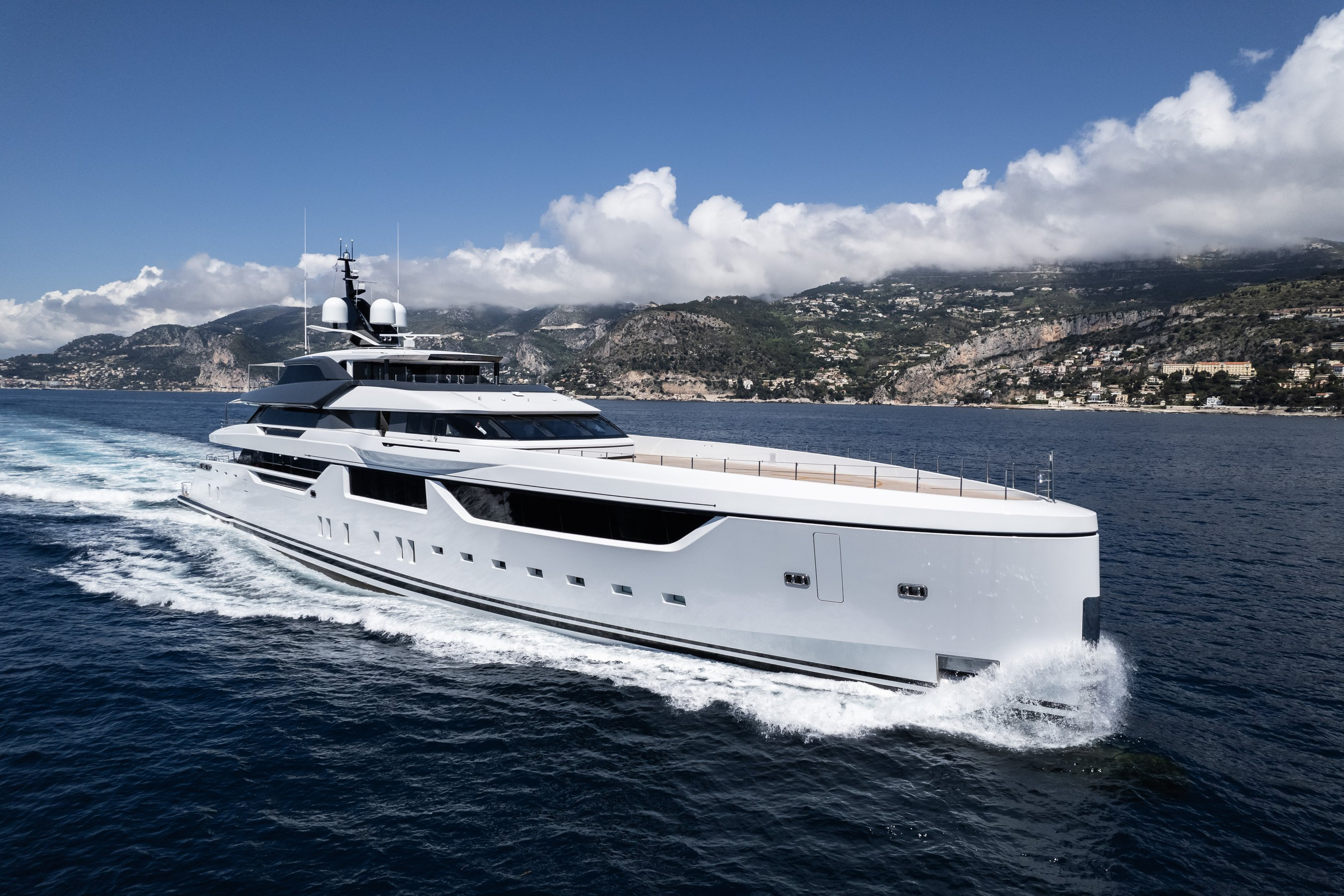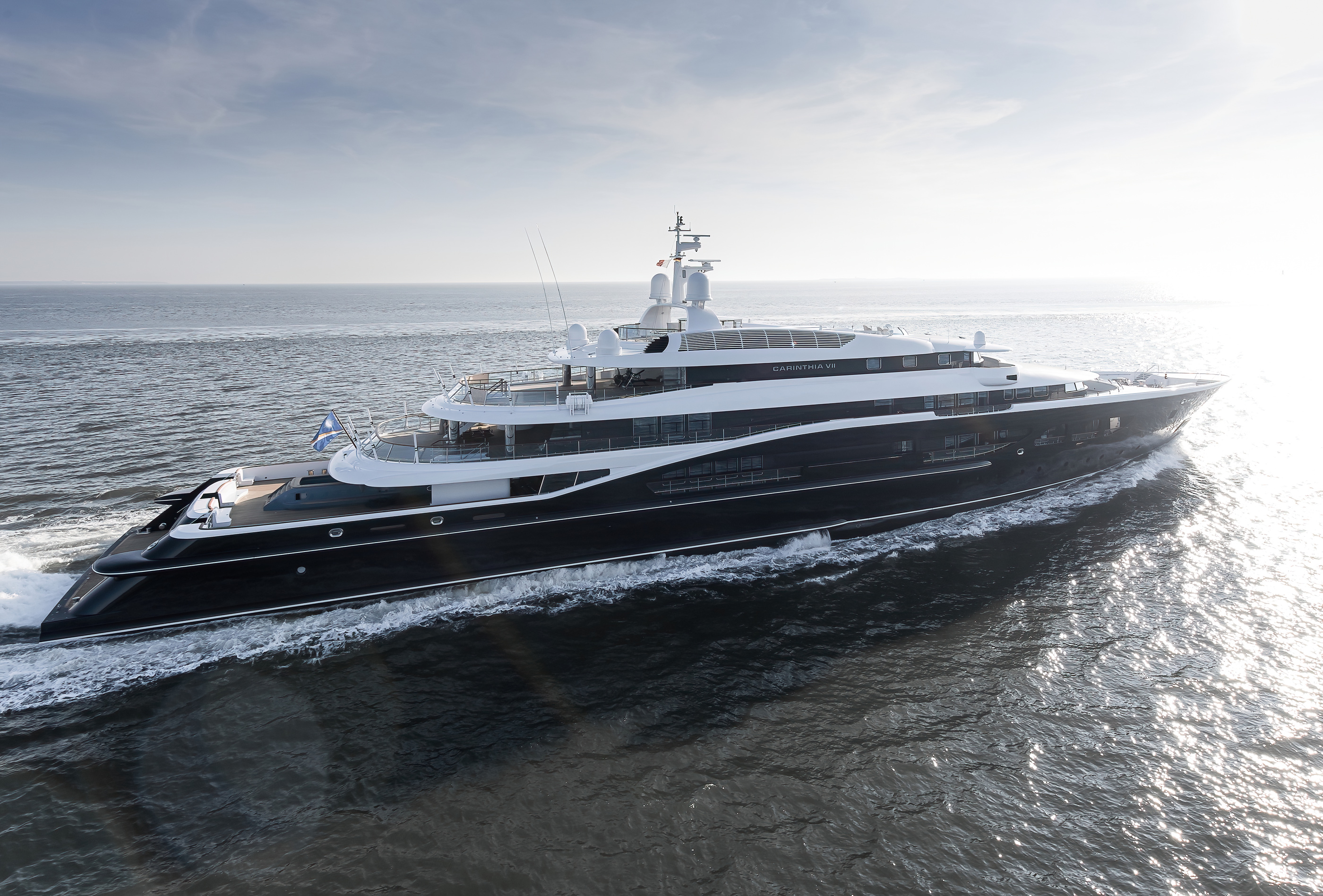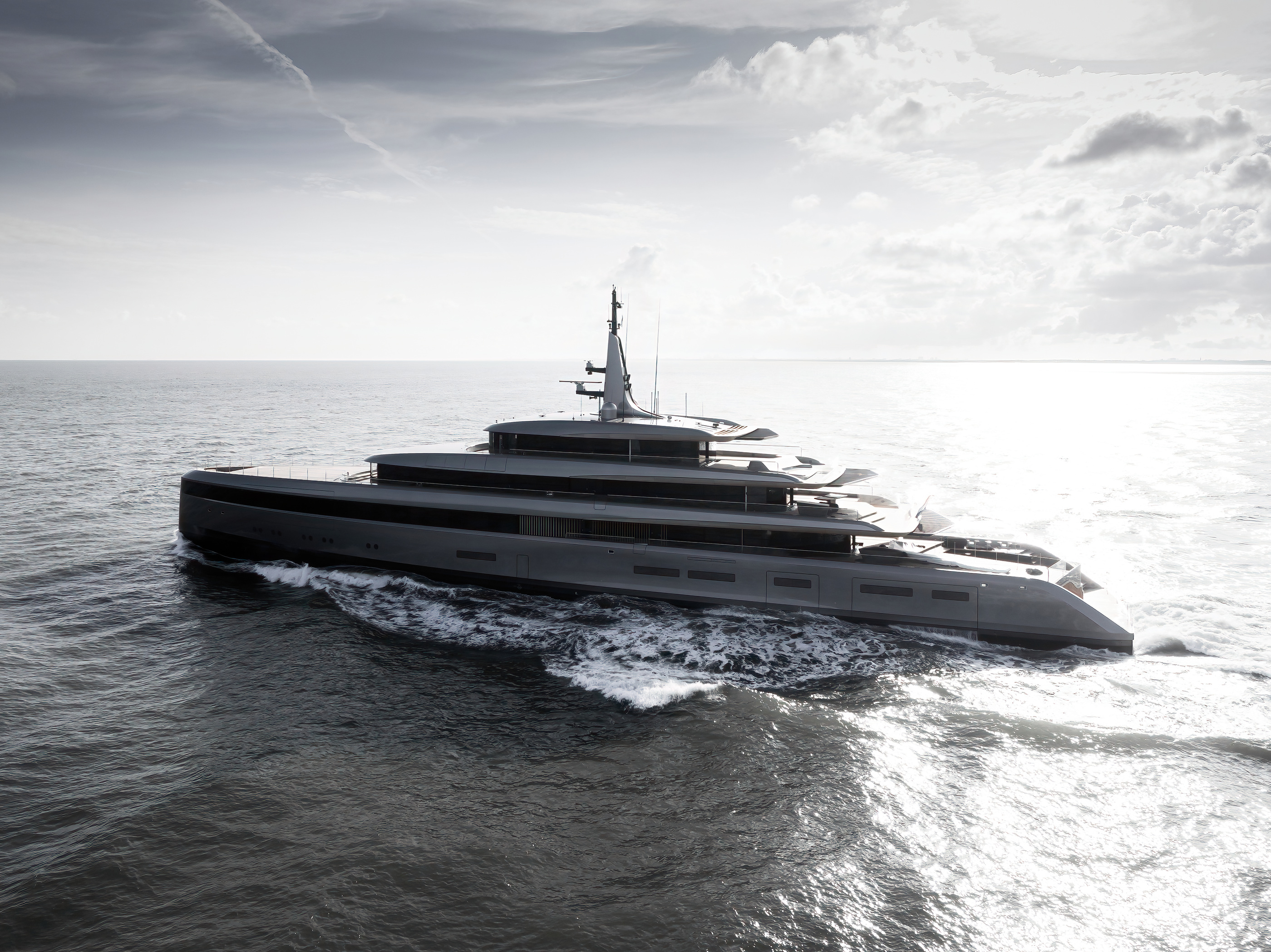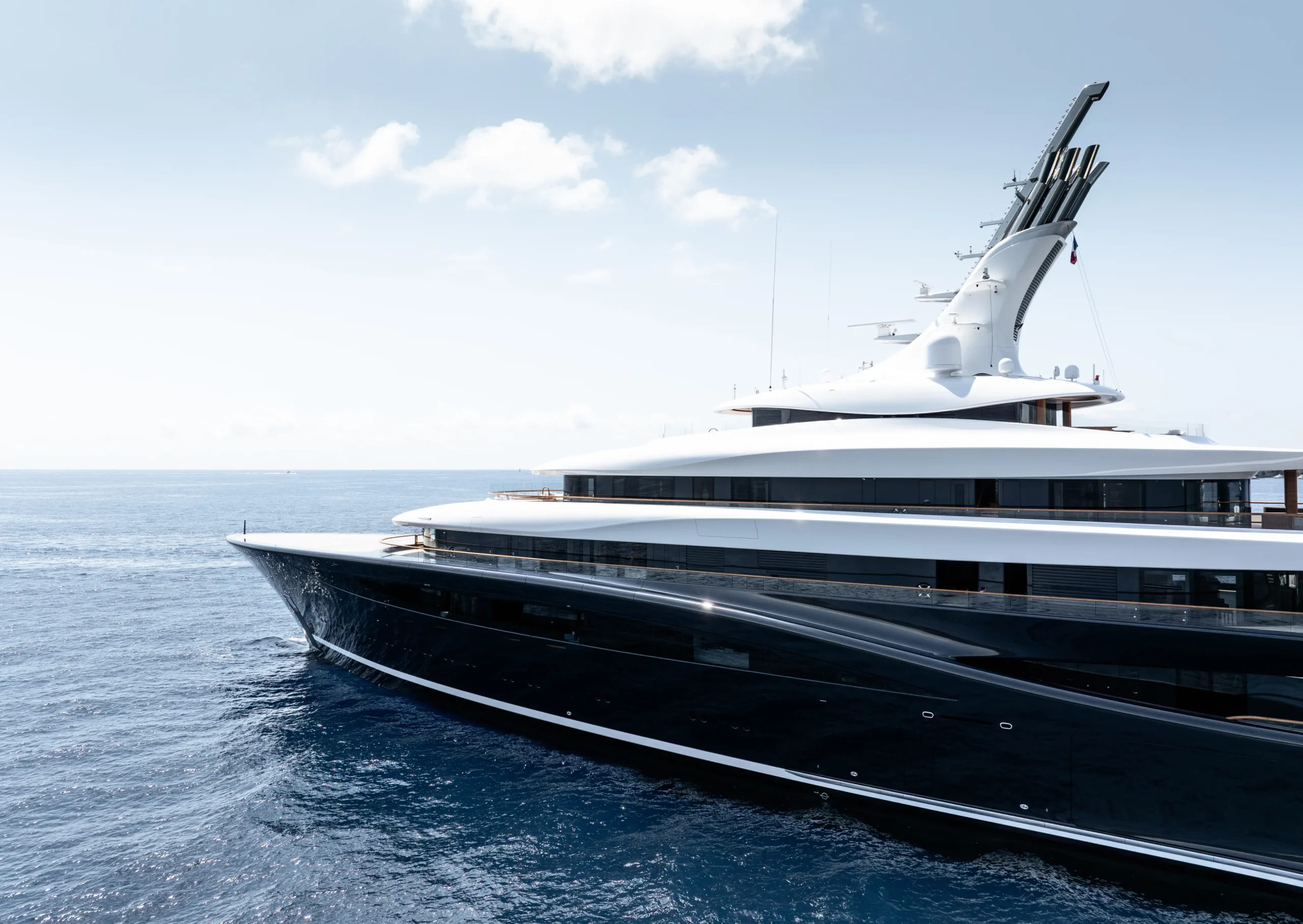
Feadship's 118.8-metre BREAKTHROUGH deserves attention for a specific engineering reason: the delivered yacht integrates cryogenic liquid-hydrogen storage, sixteen fuel-cell systems and a direct-current electrical architecture at a scale that demanded new technical and regulatory work. That achievement is substantial. It should not be inflated into a claim that the yacht is powered exclusively by hydrogen, that every voyage is emission-free, or that the fuel's complete lifecycle is carbon-free.
The useful question is narrower and more revealing. What can the fuel-cell system actually do, how does it sit inside the yacht's wider energy architecture, and which claims remain dependent on operational data that is not public?
BREAKTHROUGH at a glance
Feadship's current fleet record identifies hull 821 as a 2025 delivery measuring 118.8 metres in length, 19 metres in beam and 5.05 metres in draught. De Voogt Naval Architects is credited with naval architecture, while RWD is credited with exterior and interior design. The same official record lists two 3,200 kW ABB azimuthing thrusters, conventional generator capacity and a published range of 6,500 nautical miles at 14 knots.
Those details matter because they show that BREAKTHROUGH is a multi-source electrical vessel, not a simple fuel-cell demonstrator. The yacht can draw power from hydrogen fuel cells, batteries and generator sets according to operating demand and fuel availability. An accurate description must preserve that system context.
Hotel load is not a minor load
On a large yacht, hotel load means the electricity required by accommodation and onboard services rather than propulsion alone. Climate control, lighting, galleys, pumps, water systems, entertainment, communications and many auxiliary functions continue to consume energy when the yacht is stationary. Reducing generator operation at anchor can therefore affect local exhaust, noise and vibration during a significant part of the ownership experience.
Feadship's launch material initially framed the hydrogen installation principally around hotel-load operation and short low-emission movement. Its updated fleet page says the sixteen PowerCell systems produce three megawatts and can support a week of silent operation at anchor or propel the yacht at 10 knots in defined situations. These are manufacturer statements, not independently measured Luxe Digital results. They should be attributed and rechecked immediately before publication.
The distinction is essential. Supplying hotel load for a period is different from carrying the energy needed for an ocean crossing. Feadship's own technical account says the yacht cannot store enough liquid hydrogen to power a crossing. Longer passages and operation without available hydrogen remain supported by generator capacity and other fuels.
How the hydrogen chain works onboard
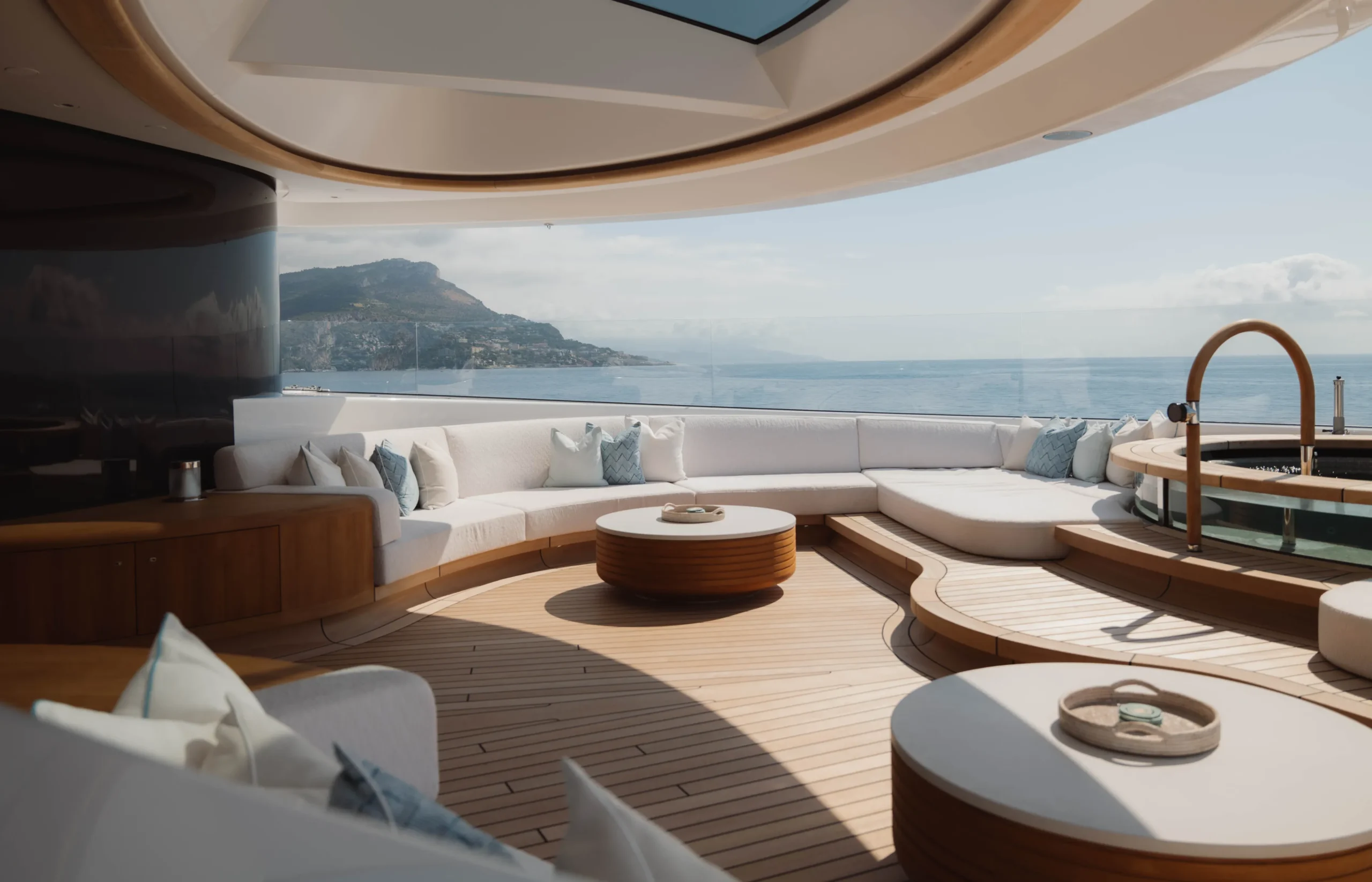
Hydrogen is stored as a cryogenic liquid at approximately minus 253 degrees Celsius. Keeping it in that state requires highly insulated tanks, controlled spaces, ventilation, monitoring and carefully engineered transfer systems. Feadship says the installation includes a 92-cubic-metre tank holding roughly four tonnes of hydrogen, the sixteen fuel-cell modules, their connection to the DC grid and dedicated vent arrangements.
Inside a fuel cell, hydrogen participates in an electrochemical reaction that produces electricity without combustion at the point of use. Water and heat are the principal local by-products. The resulting electricity still needs conditioning and distribution before it can serve hotel systems or propulsion equipment. Batteries can buffer demand and support transient loads, while power-management software decides which sources contribute at a particular moment.
This is why the DC grid is more than an electrical detail. It is the integration layer joining sources, storage, conversion and consumers. The value of the project lies not in one headline component but in the coordination of the full chain.
The storage trade-off
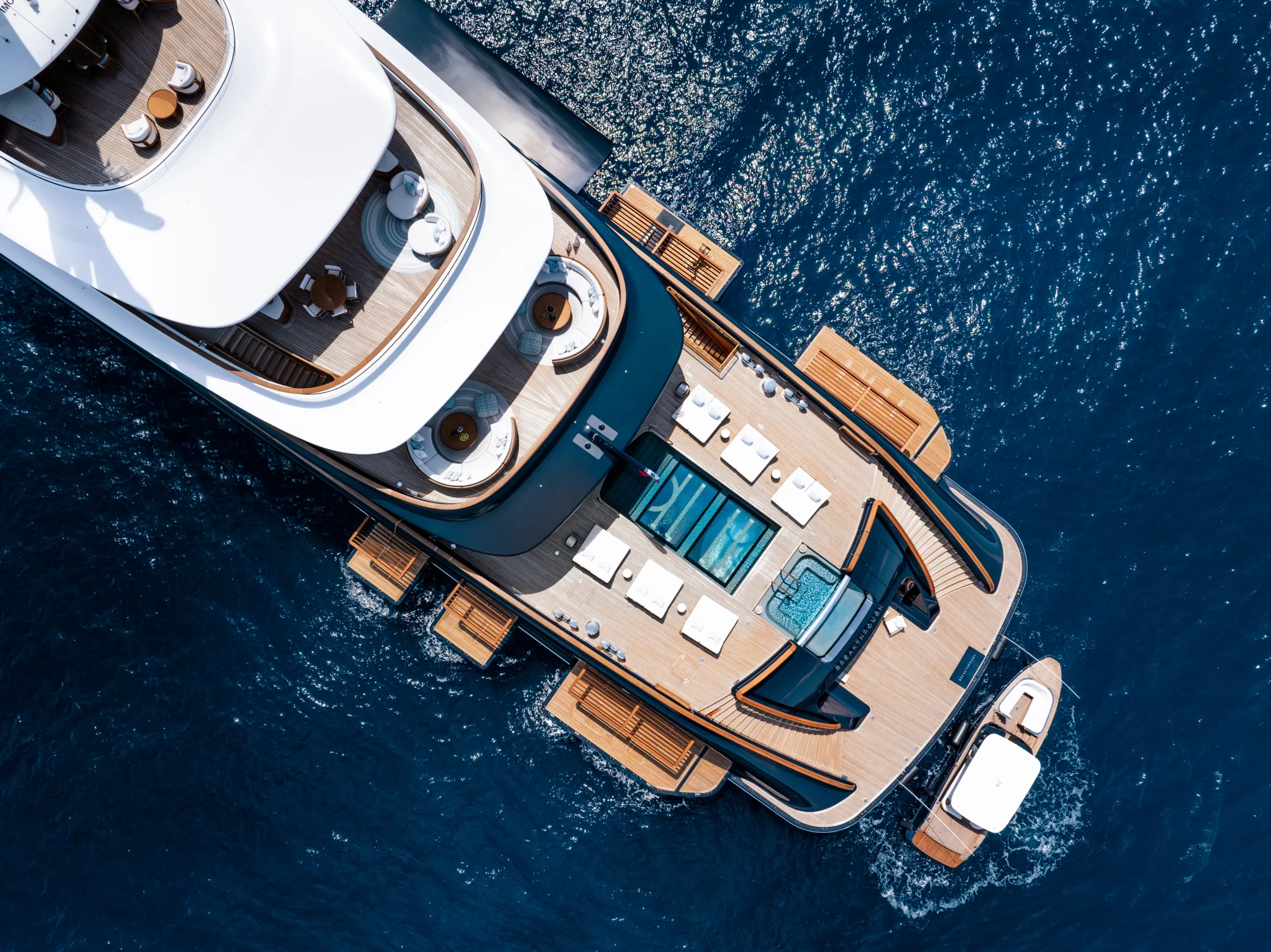
Hydrogen's gravimetric energy characteristics can sound attractive, but yacht design is constrained heavily by volume. Feadship's launch account says the complete liquid-hydrogen storage solution requires far more space than an energy-equivalent diesel installation. The tank, safety separation and associated equipment reportedly added four metres to the project's original length.
That trade-off is unusually important aboard a yacht, where technical volume competes with accommodation, range, tenders, water toys, service routes and structural requirements. BREAKTHROUGH's scale gives the design team more volume in which to solve the equation than a 40- or 60-metre yacht would have. A successful installation at 118.8 metres does not automatically prove commercial scalability across smaller classes.
Owners and advisers evaluating similar technology should ask for a complete volume and mass budget, not only a fuel-cell output figure. They should also ask how containment, ventilation, fire strategy, maintenance access and emergency isolation affect the general arrangement.
Classification and regulation
Feadship says that it worked with partners including Lloyd's Register while requirements for hydrogen storage and fuel-cell systems were being developed. Lloyd's Register publishes guidance intended to help designers, builders, owners and operators interpret yacht notations and descriptive notes as vessel systems become more complex.
Classification provides an organised compliance framework. It is not an editorial endorsement of environmental performance, reliability or ownership value. A notation can help explain what was designed and surveyed against defined rules; it does not replace fuel provenance, operating logs or a lifecycle assessment.
The receiving editor should verify the vessel's final class and flag documentation from the applicable records before making any exact compliance claim. The draft deliberately avoids inferring a final notation from a general guidance document.
What “emission-free” can and cannot mean
At the point where hydrogen is converted in a fuel cell, there is no combustion exhaust comparable with a diesel generator. That supports a bounded statement about local operation. It does not settle the upstream climate impact.
The lifecycle result depends on how hydrogen is produced, liquefied, transported and bunkered, as well as losses across that chain. “Green hydrogen” is meaningful only when its production route and electricity source are documented. The yacht's public pages do not provide a complete independent fuel-chain audit or comparable annual operating dataset.
For that reason, Luxe Digital should distinguish three layers whenever it reports this system:
- local onboard operation, where the fuel cell can reduce combustion, exhaust and noise;
- vessel-level energy use, which depends on load profile, generator operation and fuel availability;
- lifecycle impact, which depends on production and logistics beyond the yacht.
Collapsing those layers into one environmental label would overstate the evidence.
The owner-side diligence questions
A technically serious ownership assessment would request the usable hydrogen capacity, expected endurance across seasonal hotel-load profiles, permitted operating envelope, redundancy philosophy and fallback sequence. It would also examine maintenance intervals, component replacement planning, crew competence, bunkering procedures and the geographic availability of compliant fuel.
The operational questions are equally important. Which hotel systems remain available on fuel-cell power alone? What happens during peak galley, spa or HVAC demand? How does the yacht manage a fuel-cell module outage? What shore-side permissions and suppliers are required? How much conventional fuel is consumed across a representative season?
None of those questions diminishes the engineering achievement. They are the questions that turn a technology demonstration into an ownership system.
Luxe Digital assessment
BREAKTHROUGH is best understood as a delivered full-system integration case. Feadship has shown that cryogenic hydrogen storage, megawatt-scale fuel cells and a DC power architecture can be incorporated into a very large custom yacht. The project also exposes the limits that matter: storage volume, fuel infrastructure, regulatory complexity and the difference between local operation and lifecycle performance.
That makes the yacht important without requiring superlatives. The evidence supports a technology analysis and a set of owner-side diligence questions. It does not yet support a universal decarbonisation verdict, a reliability rating or a claim that the architecture is ready for every yacht segment.
Key takeaways
- BREAKTHROUGH is recorded by Feadship as a 118.8-metre yacht delivered in 2025.
- The fuel-cell installation is part of a wider electrical architecture that also retains generator capacity.
- Manufacturer material supports defined hotel-load and low-speed operating claims, not a hydrogen-only ocean-crossing claim.
- Cryogenic storage, volume, safety separation and bunkering are central design constraints.
- Local water and heat by-products do not establish a carbon-free lifecycle.
- Publication requires a fresh source check and named yacht-technology specialist review.
Sources & credits
Methodology and sources
This draft uses Feadship's current fleet record and launch account for vessel-specific facts, with Lloyd's Register guidance providing classification context. Manufacturer performance statements remain attributed. No first-hand test, fuel-chain audit or independent operating log was available.