In Chaumet’s Jewels by Nature, a stem can become the line of a necklace and a flower can establish the rhythm of a setting. The 2025 high-jewellery collection is most compelling where botanical observation is translated into the construction of an object: gold, stones and articulation give a fleeting natural form a different kind of permanence.
A garden organised by time
Chaumet divides Jewels by Nature into three chapters: Everlasting, Ephemeral and Reviving. The distinction gives the collection a useful structure beyond a succession of flowers and animals. Each chapter proposes a different relationship to time, allowing forms that endure, bloom briefly or suggest renewal to share a coherent setting.
This feature treats the collection as a documented 2025 design study. The selected images come from its named chapter pages, and the launch context is recorded in the house’s parent-company release. Later collection teasers are excluded. That boundary matters because a high-jewellery website can contain several seasons of imagery within the same broader navigation.
The chapter structure also suggests a way to look at the jewels. Begin with an overall necklace, move towards the setting and then consider the act of making. The final object, its smaller components and the workbench view should illuminate one another. A botanical name alone cannot explain what distinguishes the construction.
Oat and Field Star draw with two metals
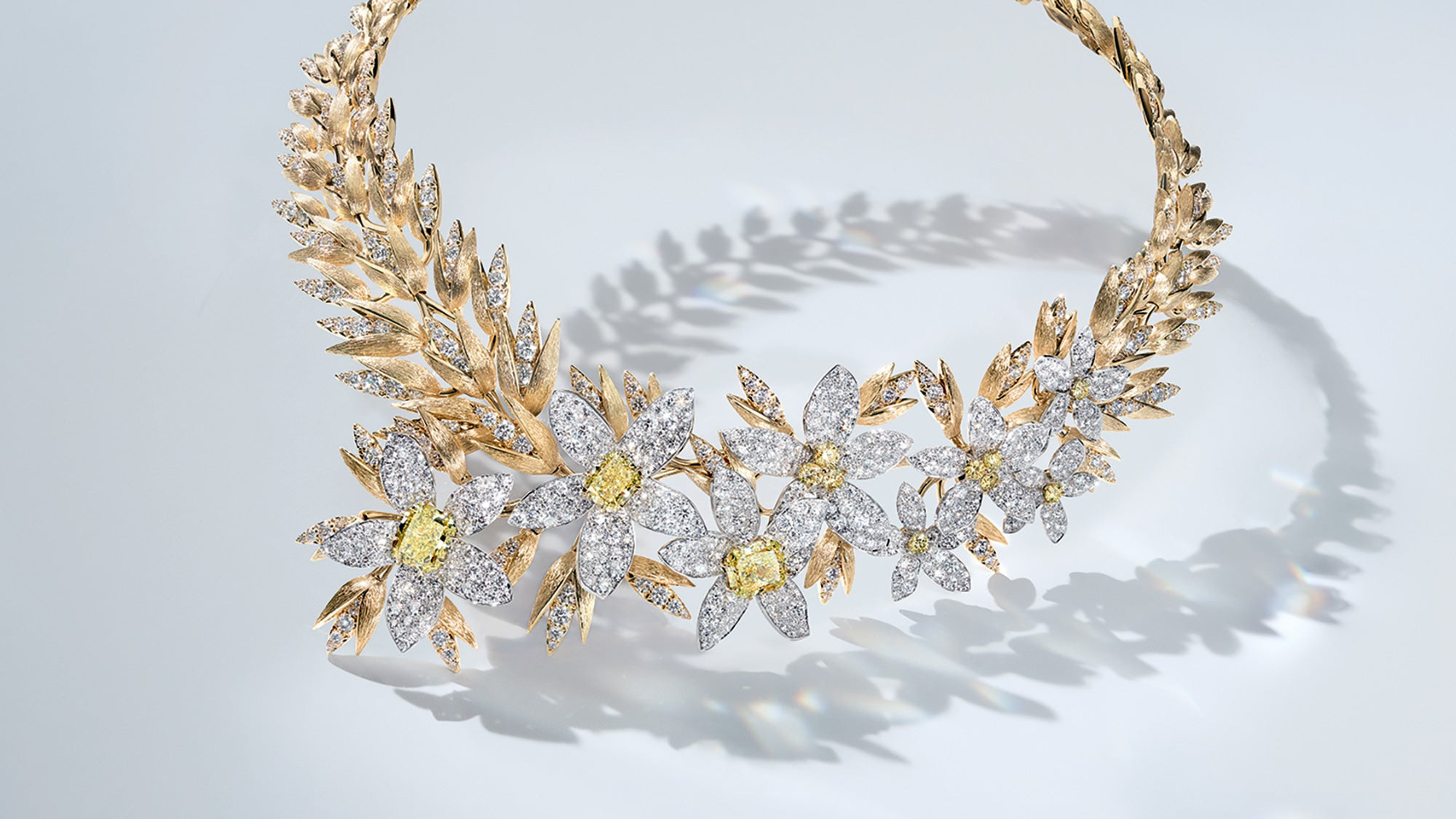
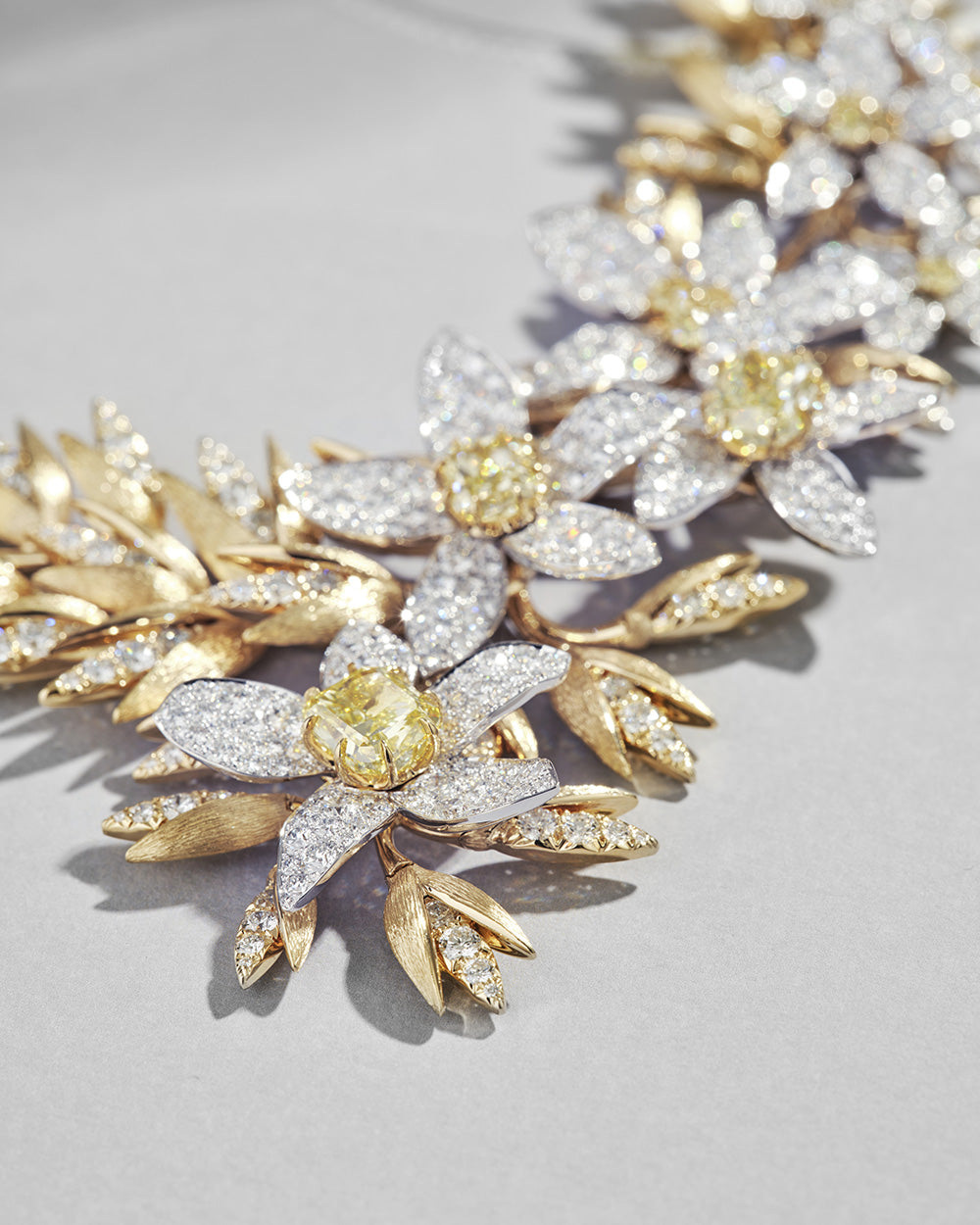
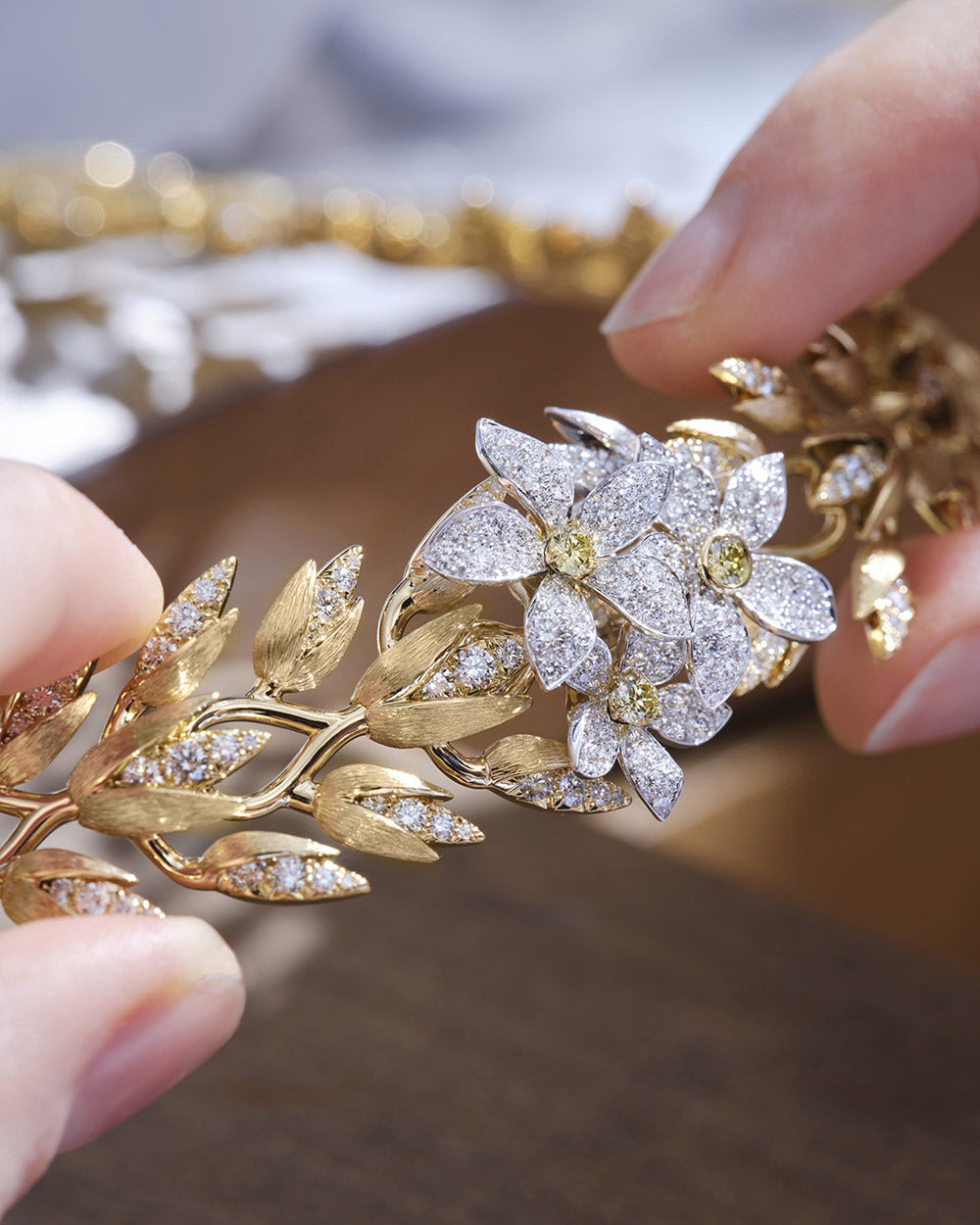
The Oat and Field Star necklace brings golden stems together with paler, flower-like elements. In the isolated photograph, the difference between those colours gives the necklace a readable movement around its opening. The closer view shows how the individual shapes contribute to that larger sweep.
Chaumet describes articulated yellow-gold oats and white-gold flowers within the design. Those materials are not merely separate entries in a specification: their contrast helps the eye distinguish stem from bloom. The articulation is also central to understanding a necklace as an object intended for a body rather than a fixed botanical illustration.
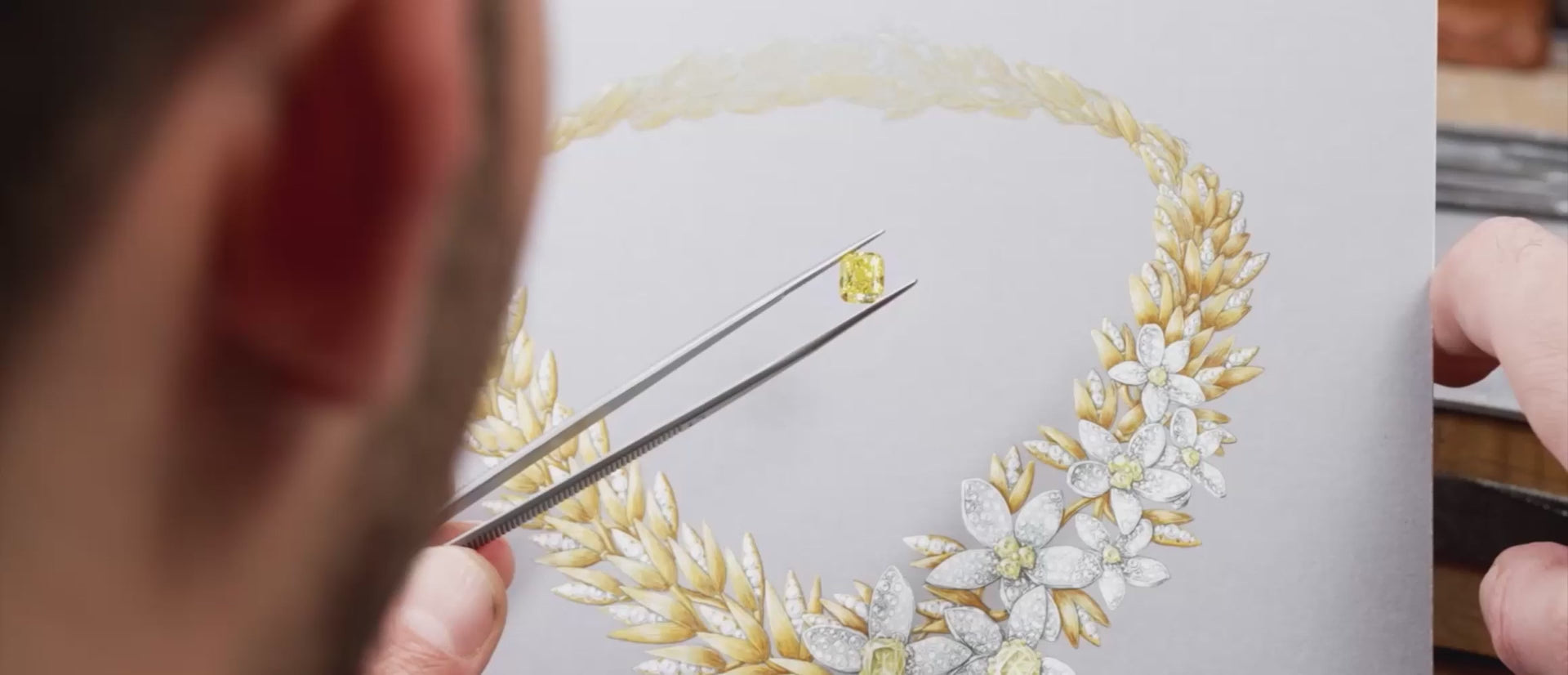
The workbench photograph adds another scale, showing a hand working beside the developing composition. It is evidence of the house’s documented making process, not an invitation to invent the identity of an unnamed artisan or the time required for an individual action. Its editorial value lies in connecting the finished line with the smaller decisions that construct it.
A blue carnation is an act of interpretation
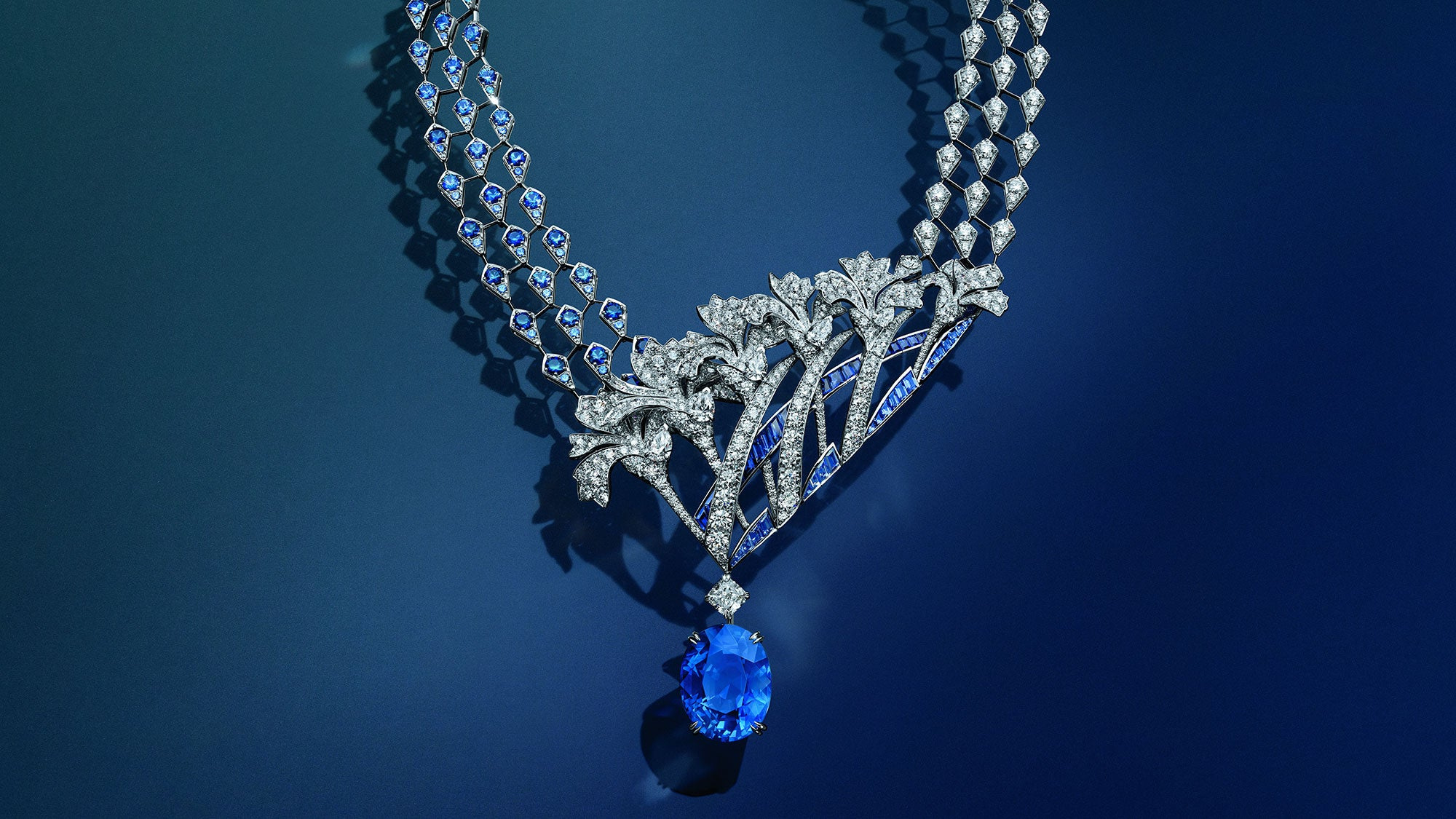
The Carnation necklace moves into a different palette. Its blue stones and pale framework produce a more concentrated field of colour than the gold-and-white rhythm of the first study. The overall photograph establishes the necklace’s line, while a closer stone view shifts attention towards the setting and the hanging element.
The house presents the blue carnation as a deliberate imaginative interpretation, rather than a literal reproduction of a naturally blue flower. That is an important distinction. The design can be judged for how successfully it transforms a botanical idea into colour and structure, without pretending that fidelity to a specimen is its only measure.
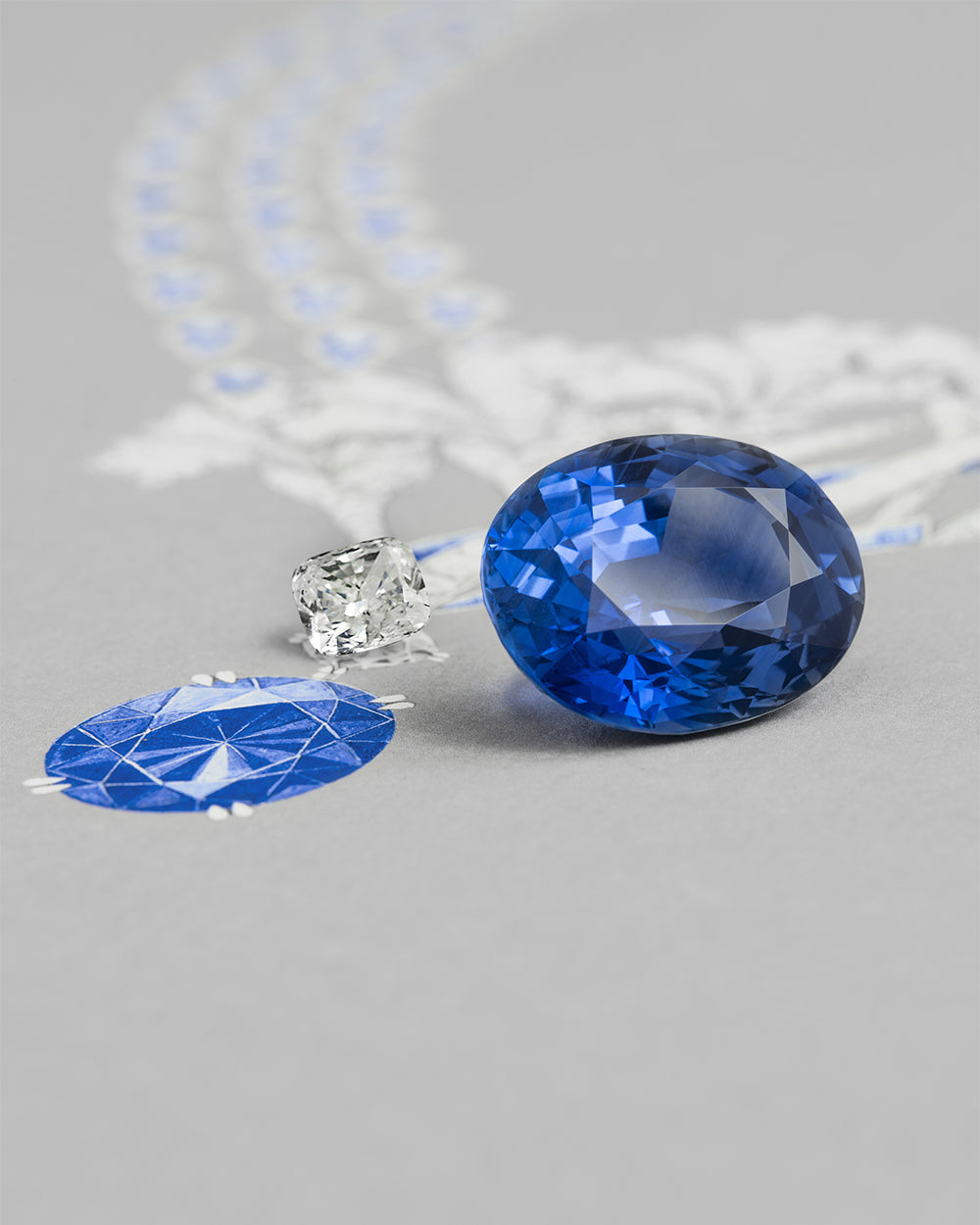
Chaumet also describes a detachable pendant within the composition. That documented possibility introduces a practical question about transformation: how does an object retain its identity when one element is removed? A prospective owner should inspect the permitted arrangements and fastening system directly. Photographs can establish the idea, while the actual operation deserves its own demonstration.
Colour changes the architecture of a necklace
The Sword Lily study gives another way to examine the relationship between a pale structure and strongly coloured stones. Its red accents create intervals within the necklace, drawing attention to selected points rather than distributing colour evenly across every surface. The contrast has a compositional role before any gemstone quantity is considered.
Looking at the whole object and a closer view together helps explain that role. The necklace needs a continuous line around the body, but its individual flower-like elements carry different densities. A successful arrangement allows the eye to follow the larger shape while still discovering the detail in each setting.
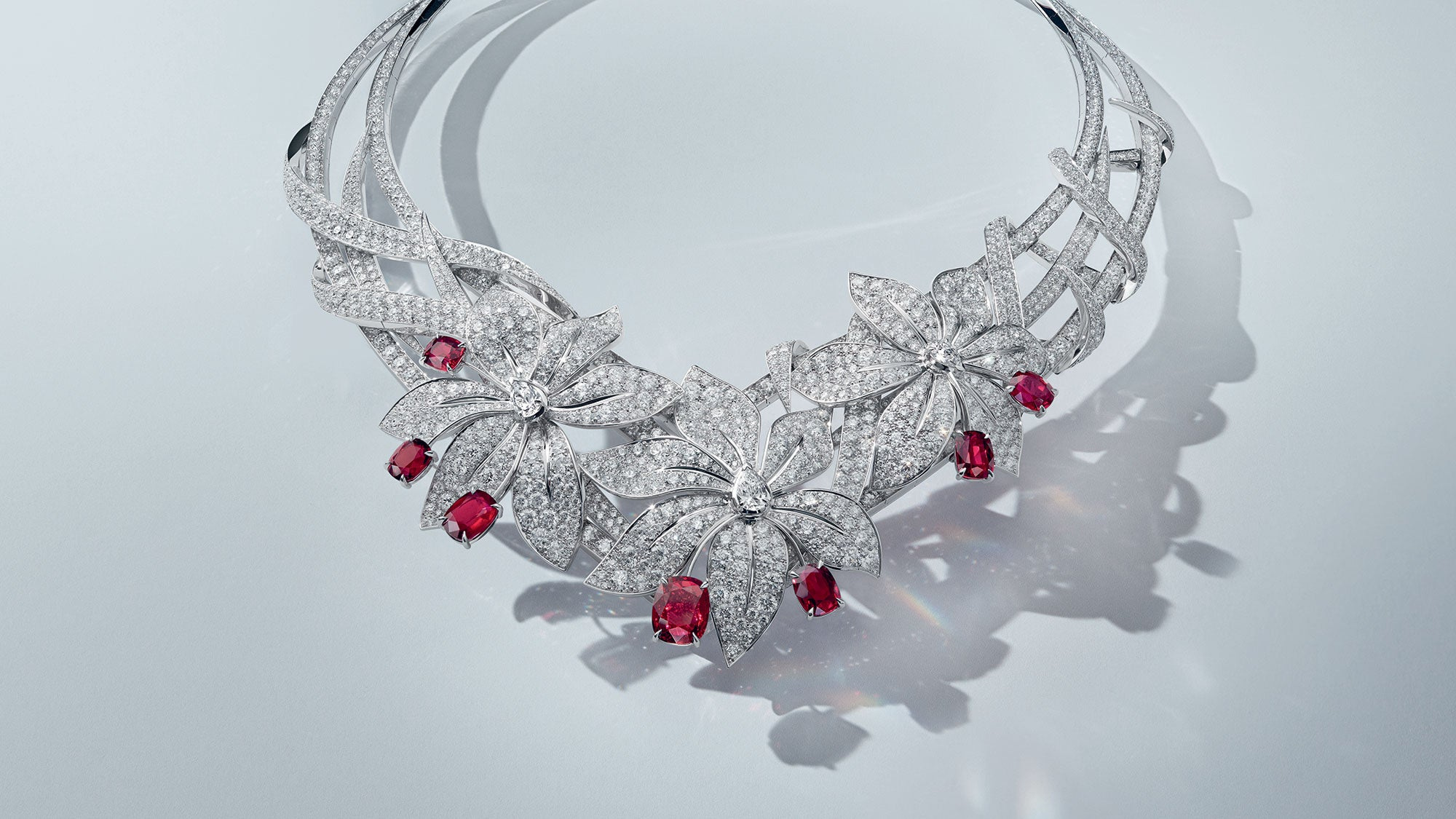
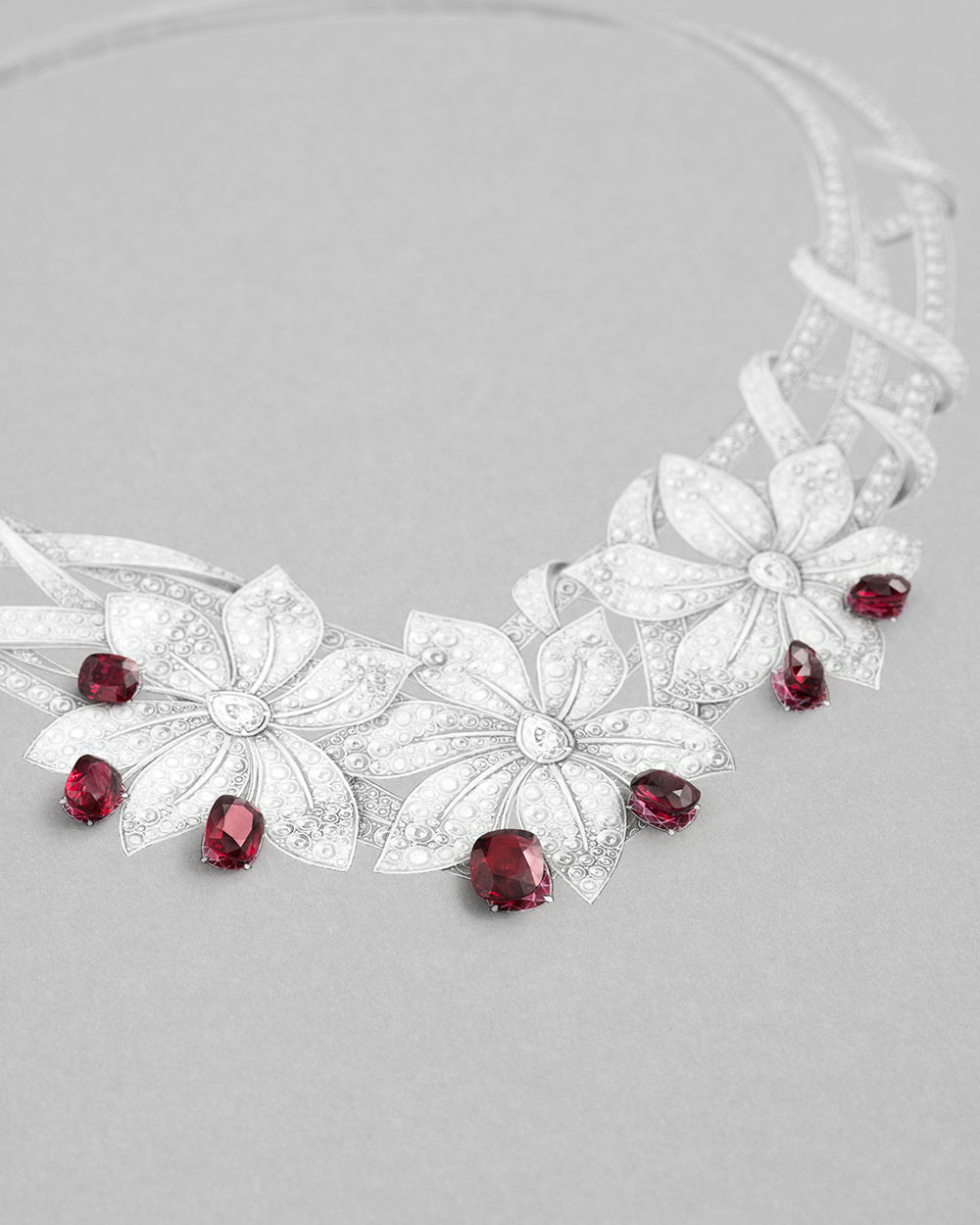
Gemstone origin, treatment and grading belong to the documentation of the individual piece. This visual feature does not turn the maker’s collection descriptions into an independent certificate or investment claim. That leaves room for a serious design discussion without suggesting that a photograph can establish every material property relevant to a purchase.
Renewal gives the line a direction
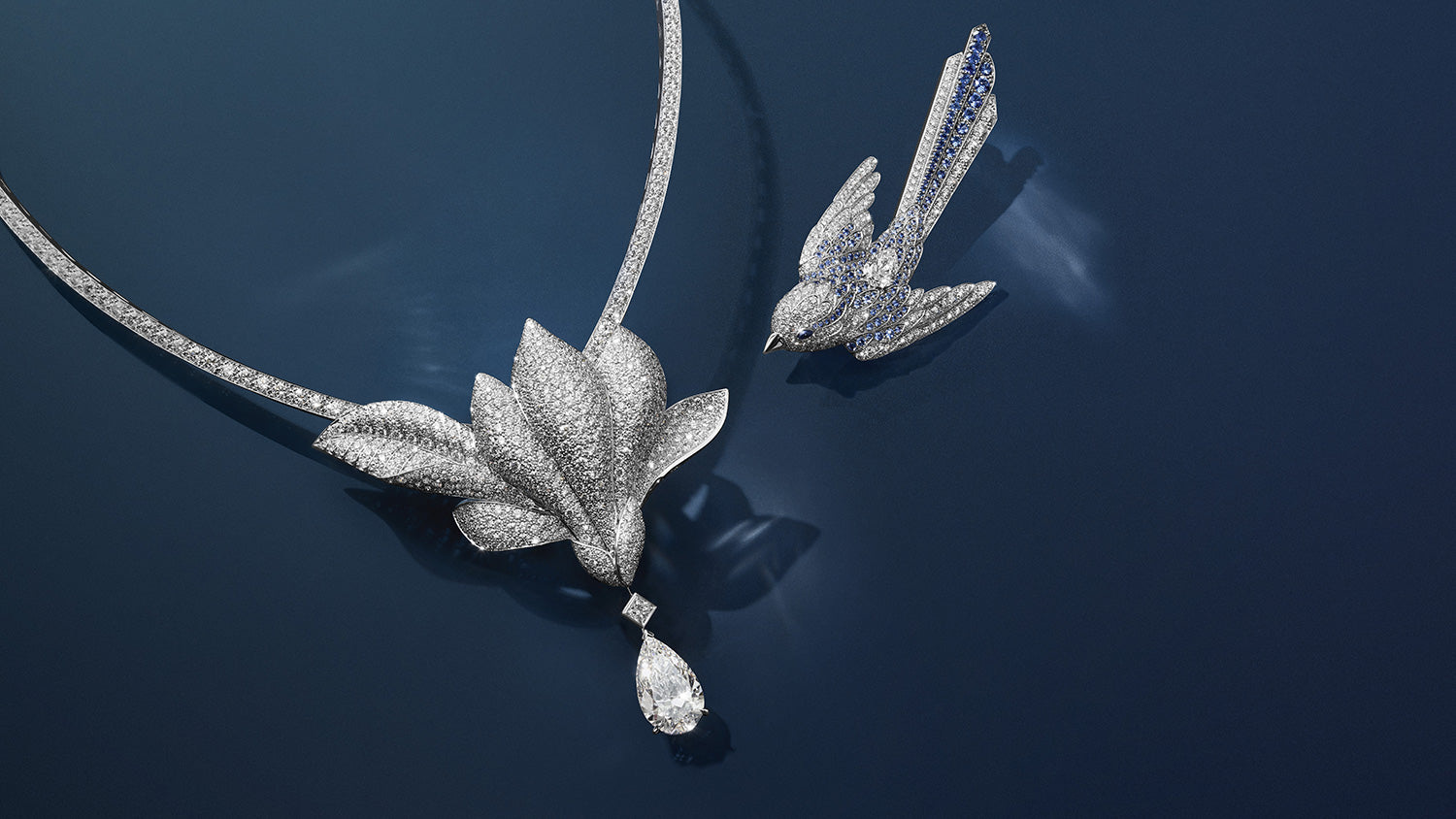
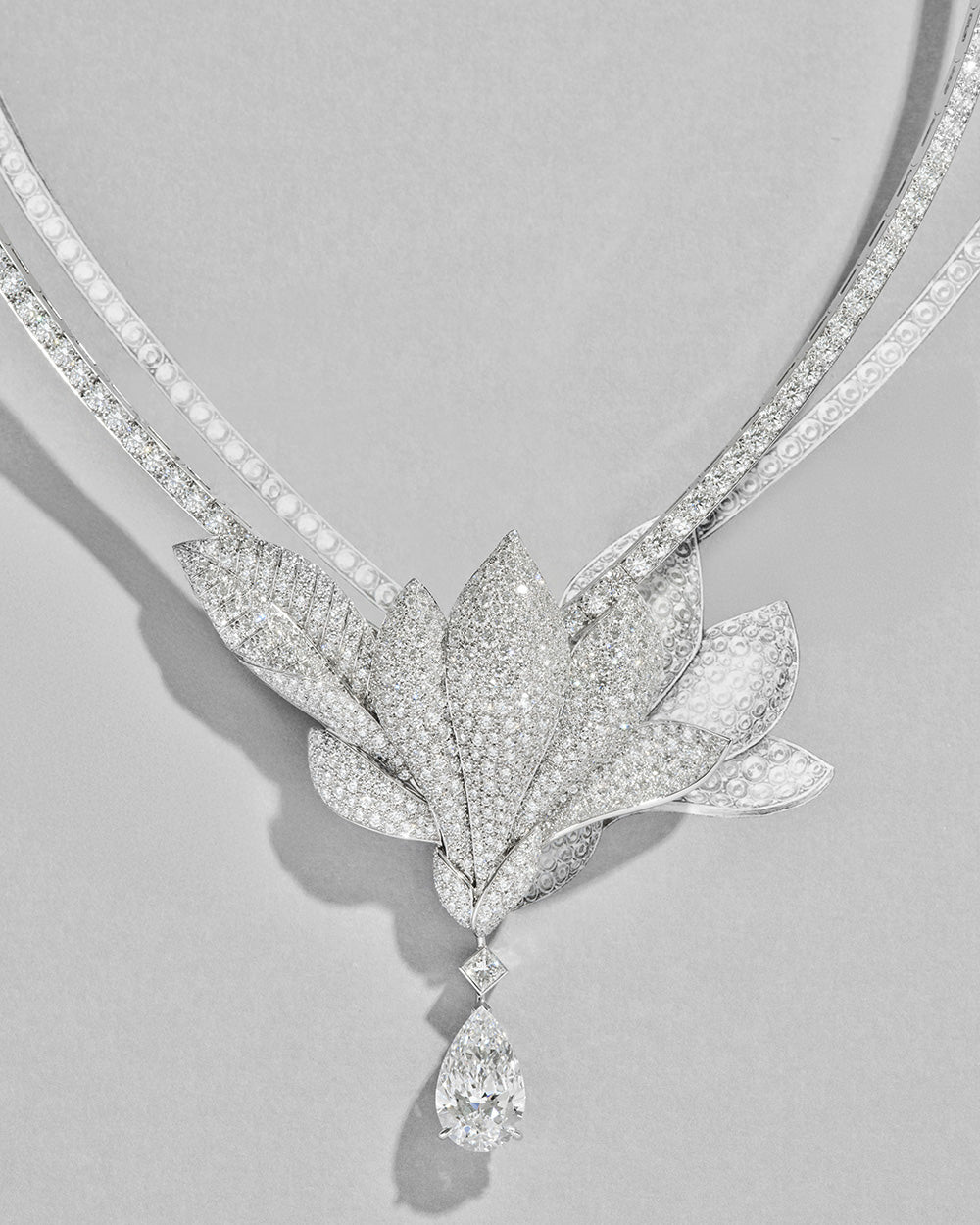
In the Reviving chapter, the Magnolia Grandiflora composition brings a magnolia and a bird into a shared necklace. The isolated image makes their placement especially clear. The larger floral element anchors one part of the object, while the bird introduces a different direction and a lighter-looking interruption in the surrounding line.
The effect depends on asymmetry. A necklace does not have to mirror its two sides to remain balanced; it can distribute attention through different shapes and distances. The closer view helps the reader see how the pale metal and stones give the motifs a common surface language even where their outlines differ.
This is where the chapter’s theme becomes tangible. Renewal is not only a word attached to the collection. The composition gives the eye a route from a grounded floral form towards a shape associated with movement. That reading is an editorial interpretation of the object shown, rather than a claim about an undocumented symbolism intended by every wearer.
Four studies worth examining separately
The reference below keeps the names and design questions attached to the actual photographed pieces. It avoids treating all the collection’s materials and transformation options as properties of every jewel.
| Study | Visible design idea | Question for a private presentation |
|---|---|---|
| Oat and Field Star | Contrasting stem and flower colours | How the articulated parts settle on the body |
| Carnation | Blue colour concentrated within a pale line | The demonstrated detachable configuration |
| Sword Lily | Red accents punctuating the composition | How the necklace sits and moves when worn |
| Magnolia Grandiflora | Asymmetry shared by flower and bird | The scale of the motifs on the intended wearer |
Those questions keep appreciation connected to the object. A photograph can show the design at an unusually clear scale, but fit, movement and fastening should be examined during a direct presentation of the relevant piece.
The enduring part is the construction
Jewels by Nature is strongest where the natural reference produces a specific decision: a contrasting metal, an articulated stem, a concentration of colour or an asymmetric line. The result is more interesting than a flower rendered expensive through its materials alone.
The collection therefore benefits from a presentation that moves between complete jewel, detail and making. Each scale gives the reader something different to inspect. Together they show how a brief observation of nature can become an object whose line and construction invite much longer attention.
Jewels by Nature is strongest where the natural reference produces a specific decision: a contrasting metal, an articulated stem, a concentration of colour or an asymmetric line.
Sources & credits
Methodology and sources
This archival feature concerns Chaumet’s 2025 Jewels by Nature collection. It uses the official chapter imagery and launch record; it is not a valuation, gemstone certification or hands-on assessment. Piece names and maker-stated construction are tied to their chapter sources. Design interpretation is LuxeDigital’s own.