The Bugatti Tourbillon places an intricate instrument assembly at the centre of a remarkably controlled cabin. It is a deliberate counterpoint to the broad, low exterior: outside, surfaces gather air and conceal volume; inside, small mechanisms invite close inspection. Reading those two scales together reveals a more interesting car than a power figure alone can describe.
A familiar line with a different emphasis
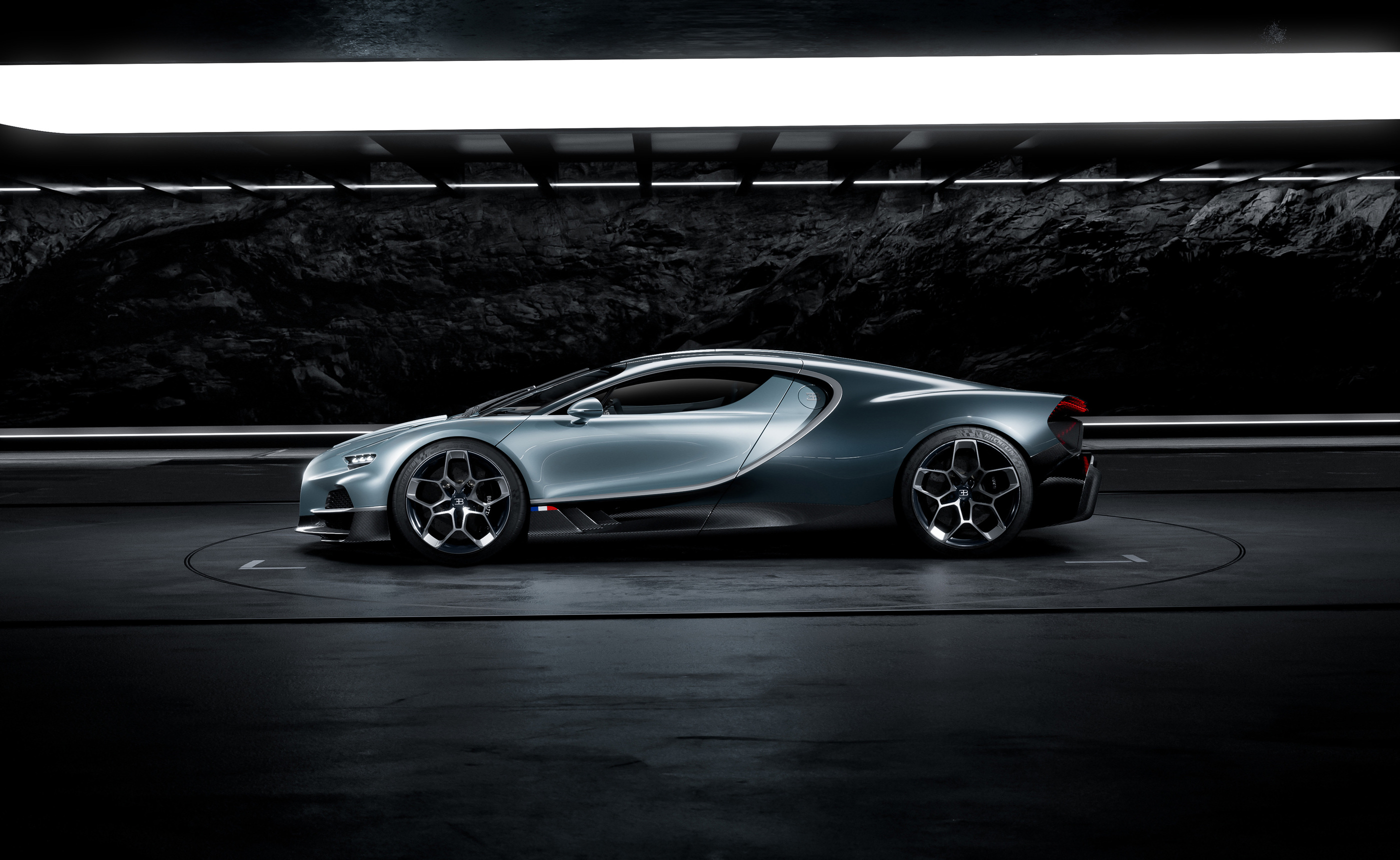
The side view is the best place to begin. Bugatti’s enclosing curve remains an immediately recognisable device, but it frames a cabin that appears tightly gathered between substantial front and rear volumes. In the official launch photographs, the two-tone finish separates those masses without covering them in contrasting graphics. The pale outer surface and darker cabin create a clear figure inside the whole.
That colour boundary is architectural. It helps the eye distinguish the place occupied by people from the surrounding machinery and the paths needed for air. A viewer can understand the main relationships before identifying individual vents. The front horseshoe supplies another stable point of reference, giving the low nose an identifiable centre while the wider forms spread away from it.
None of this makes the Tourbillon a simple object. Rather, it makes a complicated object easier to read. The lesson is one of hierarchy: a few strong lines organise a large amount of information. The shape becomes less convincing if it is reduced to a list of heritage references, because those references are doing practical work in the present composition.
The instrument as an independent object
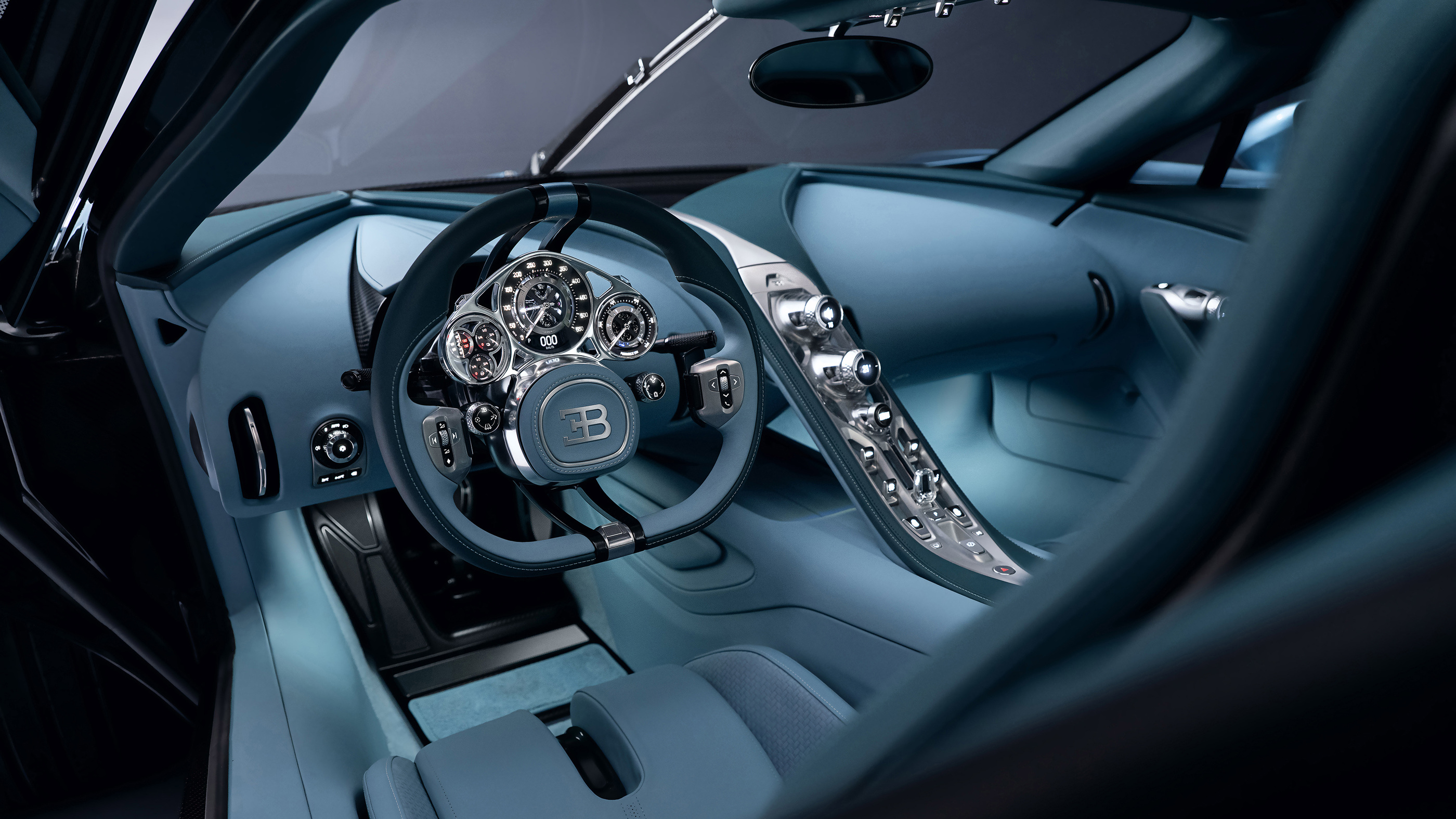
The cabin photographs published in December 2025 shift attention from silhouette to assembly. The instrument cluster sits within the steering wheel’s outline, but the arrangement allows the rim to rotate around a fixed centre. Bugatti describes the spokes as passing behind the cluster. Visually, the effect is to give the instruments their own territory rather than treating them as a display attached to a dashboard.
This is an important distinction in an interior dominated by carefully finished physical objects. The cluster has depth, edges and visible components. It occupies space in front of the driver. Light can move across its structure in a way that a flat interface would interpret through pixels. That does not prove superior legibility in every driving condition; it does establish a different relationship between information and the object carrying it.
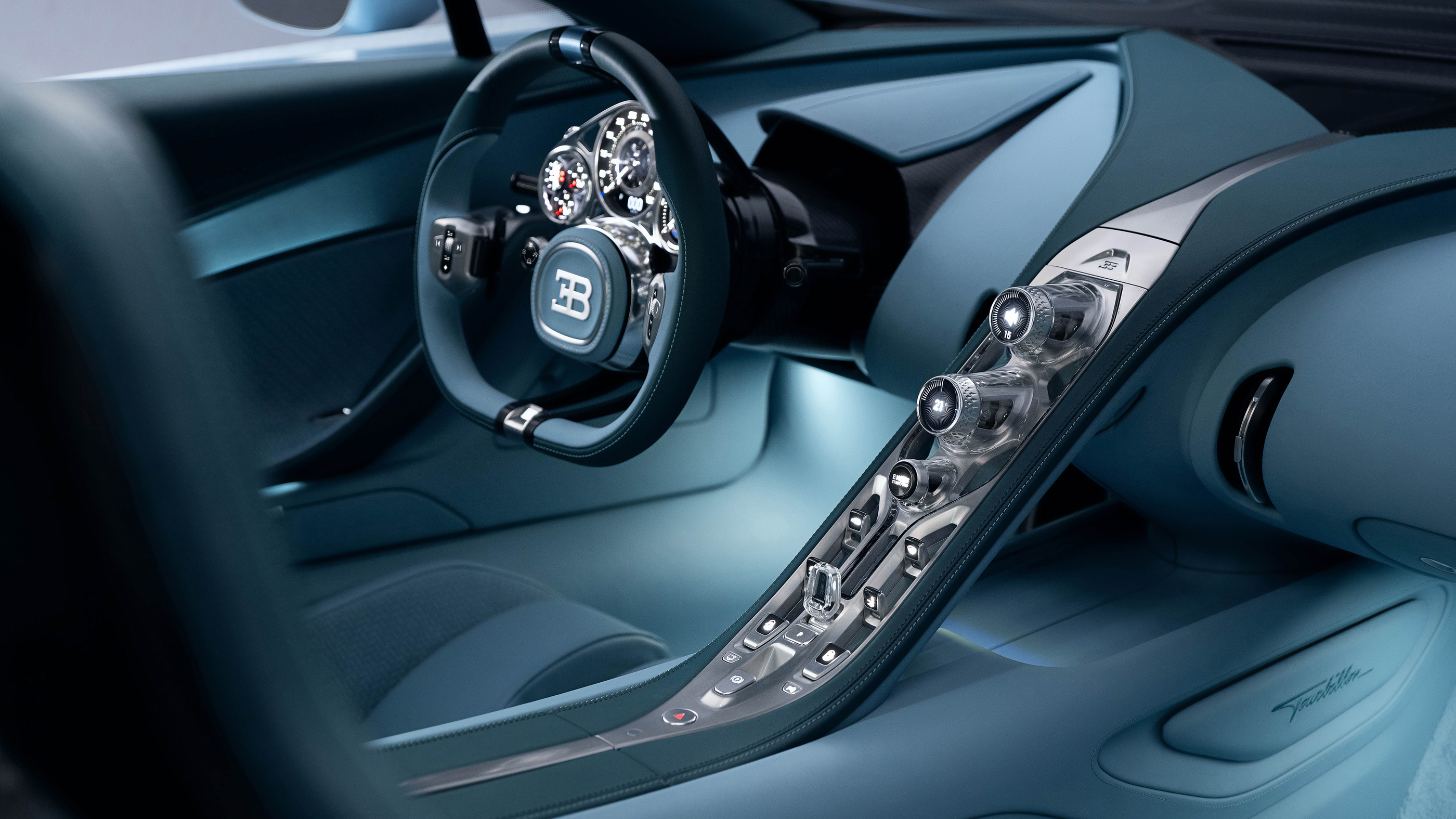
The centre spine extends that approach. Glass and metal expose a sequence of switches and their underlying mechanisms, according to the manufacturer’s launch account. The visual pleasure comes partly from being able to follow the construction. A control does not simply appear at the surface: the surrounding transparency gives it a setting and suggests how it belongs to the whole.
A cabin composed around restraint
The surprising quality of the interior is the space left around these intricate parts. The seats and large surfaces do not compete with the instruments at the same scale. They provide broader areas of colour and texture, giving the small mechanical assembly a chance to remain the focal point. Without those quieter fields, exposed detail could become visual noise.
Look at the transition from the central spine to the seat edges. In the official interior sequence, the forms are sculpted but the hierarchy remains clear. There is a route for the eye from the wheel to the spine and then out towards the doors. This is more revealing than describing the entire cabin as jewellery, because the composition depends on differences of scale rather than a uniform level of embellishment.
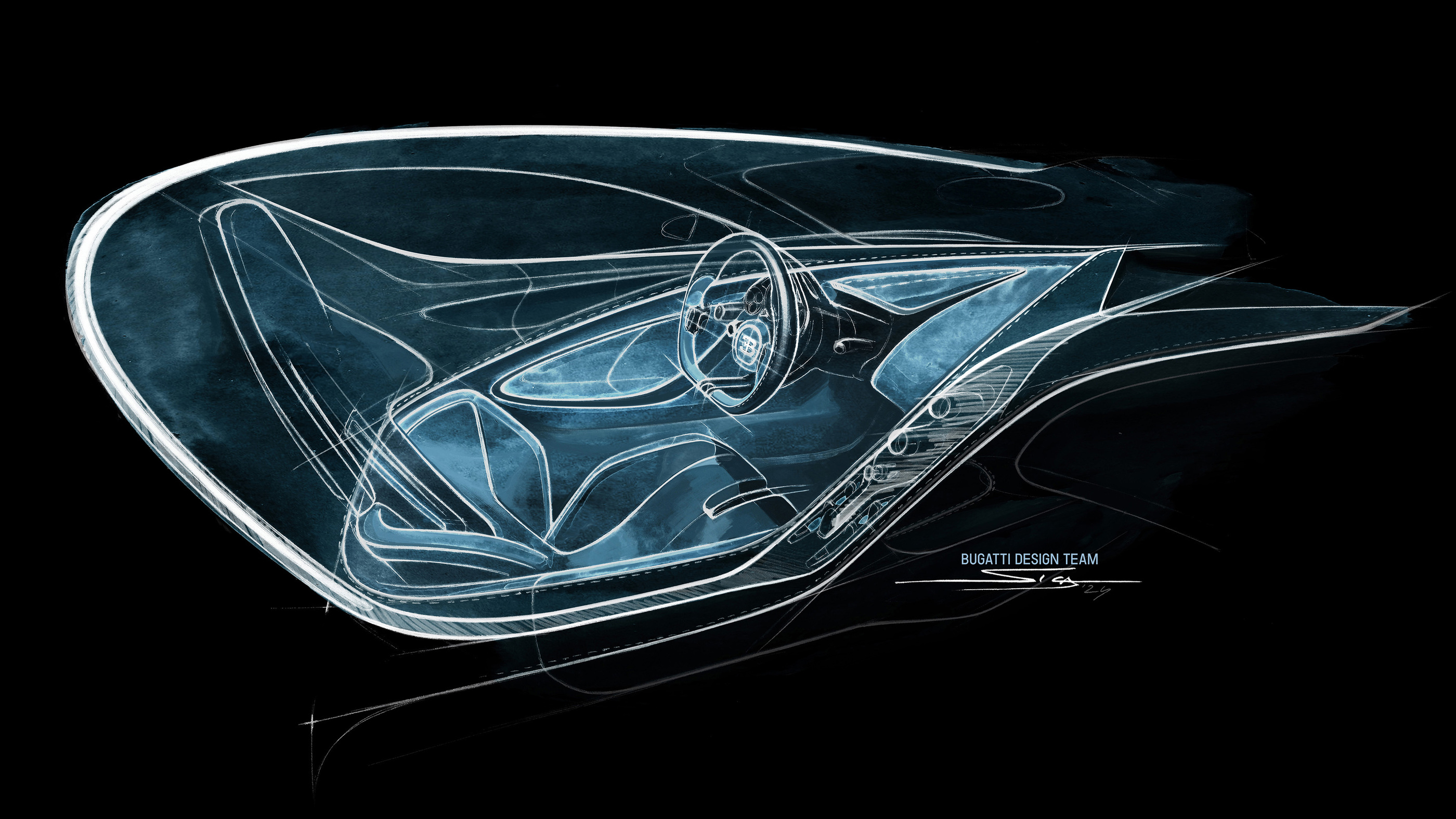
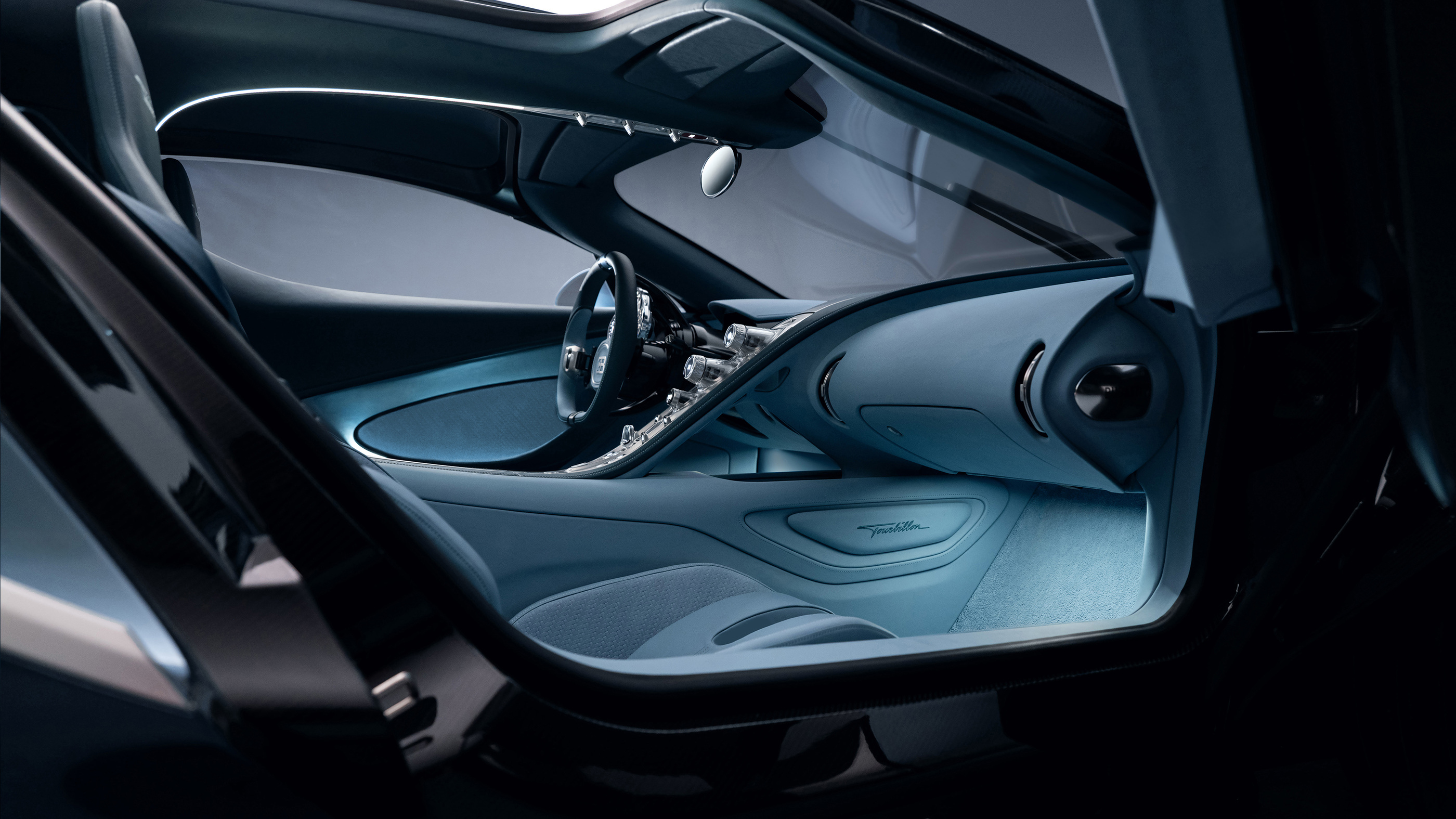
The photographed colourway is one presentation of the model. It should not be treated as the cabin of every customer car. The useful question is which relationships remain when colour and trim change: the instruments’ independent presence, the central sequence of controls and the contrast between precise small parts and broad surrounding surfaces. Those are the underlying design decisions.
The machinery behind the composition
The June 2024 launch described an 8.3-litre naturally aspirated V16 developed with Cosworth, combined with three electric motors. The October 2024 platform account explains how the new architecture packages that system, including a centrally located T-shaped battery and fuel tanks moved to the sides. These are manufacturer descriptions of the model, not measurements made for this article.
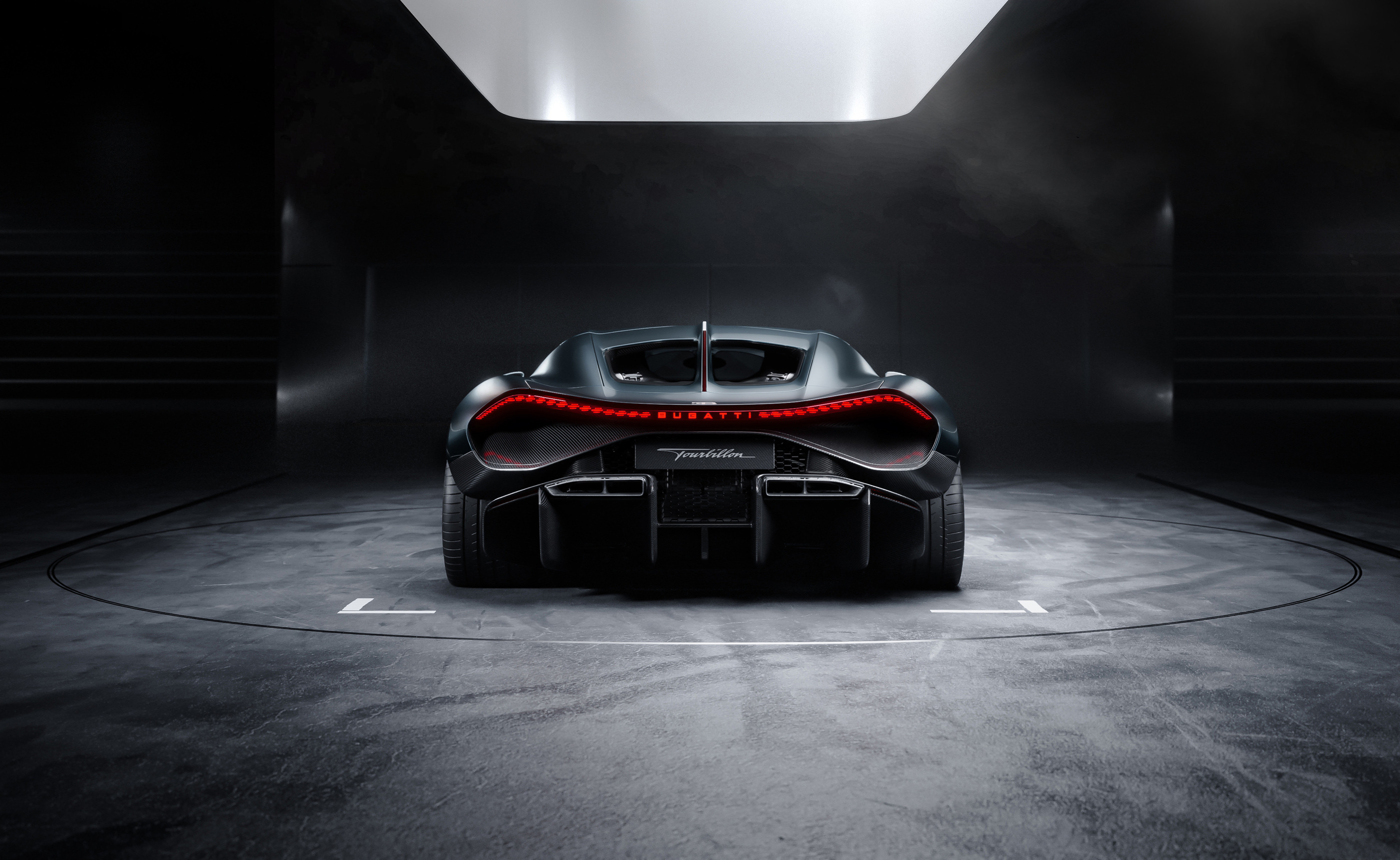
That packaging story gives the exterior a more concrete context. The long mechanical assembly, cabin position and rear diffuser are not independent styling gestures. They must coexist within one volume. The rear photograph shows a deep opening beneath the illuminated upper edge, making the lower body appear structurally active rather than a blank panel used to display a badge.
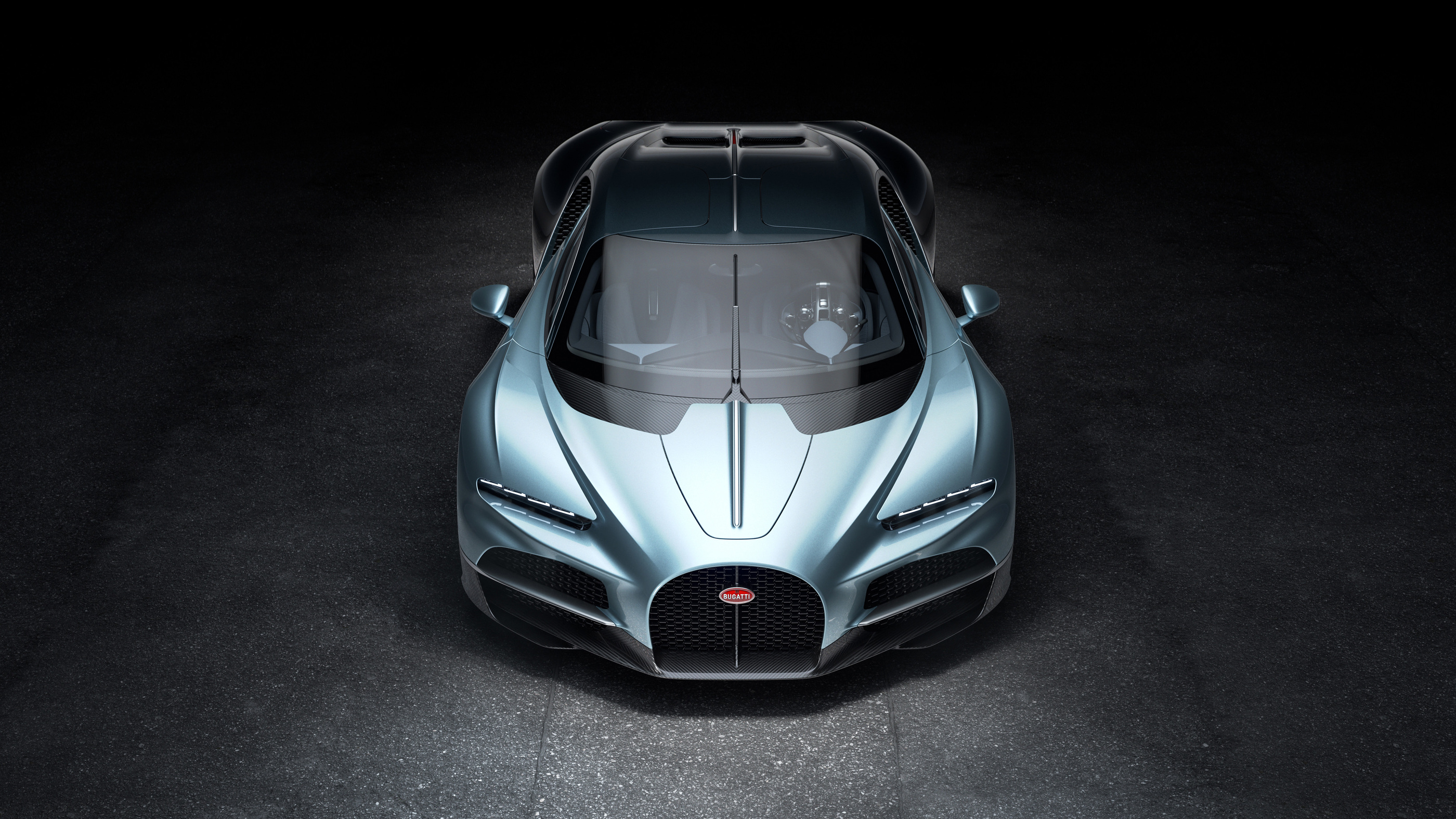
The published concept is sufficiently interesting without treating a proposed performance envelope as a road test. Acceleration, top speed, electric range and production timing require their own dated evidence. This study instead asks how the documented architecture and the photographed form explain one another. It is a narrower claim, but it gives the reader something they can inspect.
A reading guide to the two scales
| View | Look for | What the photograph cannot establish |
|---|---|---|
| Side profile | The colour boundary around the cabin | Aerodynamic balance at speed |
| Front three-quarter | Horseshoe, shoulder and cabin hierarchy | Cooling performance under sustained load |
| Instrument detail | Depth, fixed centre and visible construction | Legibility in every driving condition |
| Centre spine | The relationship of glass, metal and controls | Switch resistance or durability |
| Rear view | The diffuser’s presence beneath the upper body | Measured downforce or braking stability |
A gallery becomes useful when each frame answers a different question. Three almost identical front views would enlarge the article without extending its argument. Here the broad exterior sequence establishes proportion; the cabin and control details then introduce another scale. Returning to the rear closes the loop between physical interface and underlying machinery.
The Luxe Digital view
The Tourbillon is most persuasive when its large forms remain calm enough for its small mechanisms to matter. The exterior gives the car an identifiable structure, while the cabin gives particular objects unusual presence. That balance is the lasting design question: whether an exceptionally complicated machine can still make its priorities clear to the person sitting inside it.
The Tourbillon is most persuasive when its large forms remain calm enough for its small mechanisms to matter.
Sources & credits
Sources and methodology
Independent automotive design and material analysis of the named official records and imagery, checked on 16 October 2026. Original presentation and model dates are retained. Images show the named commission or identified model configuration. Independent automotive design analysis of official model or individual-commission records and imagery. No drive, visit or interview is claimed. Original dates, alternative specifications, source compositions and drawings remain identified. Current availability, price and measured performance are not inferred.