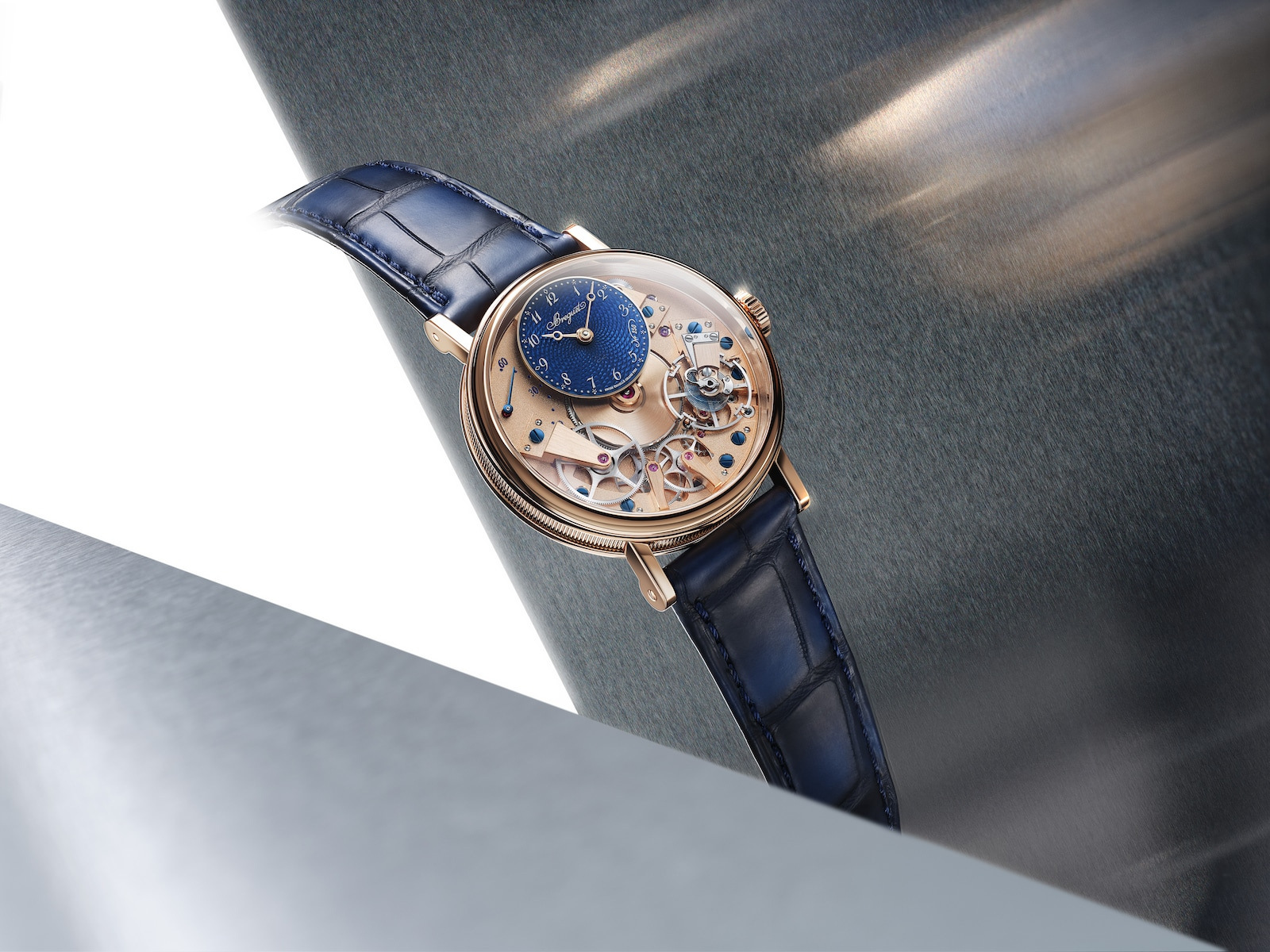
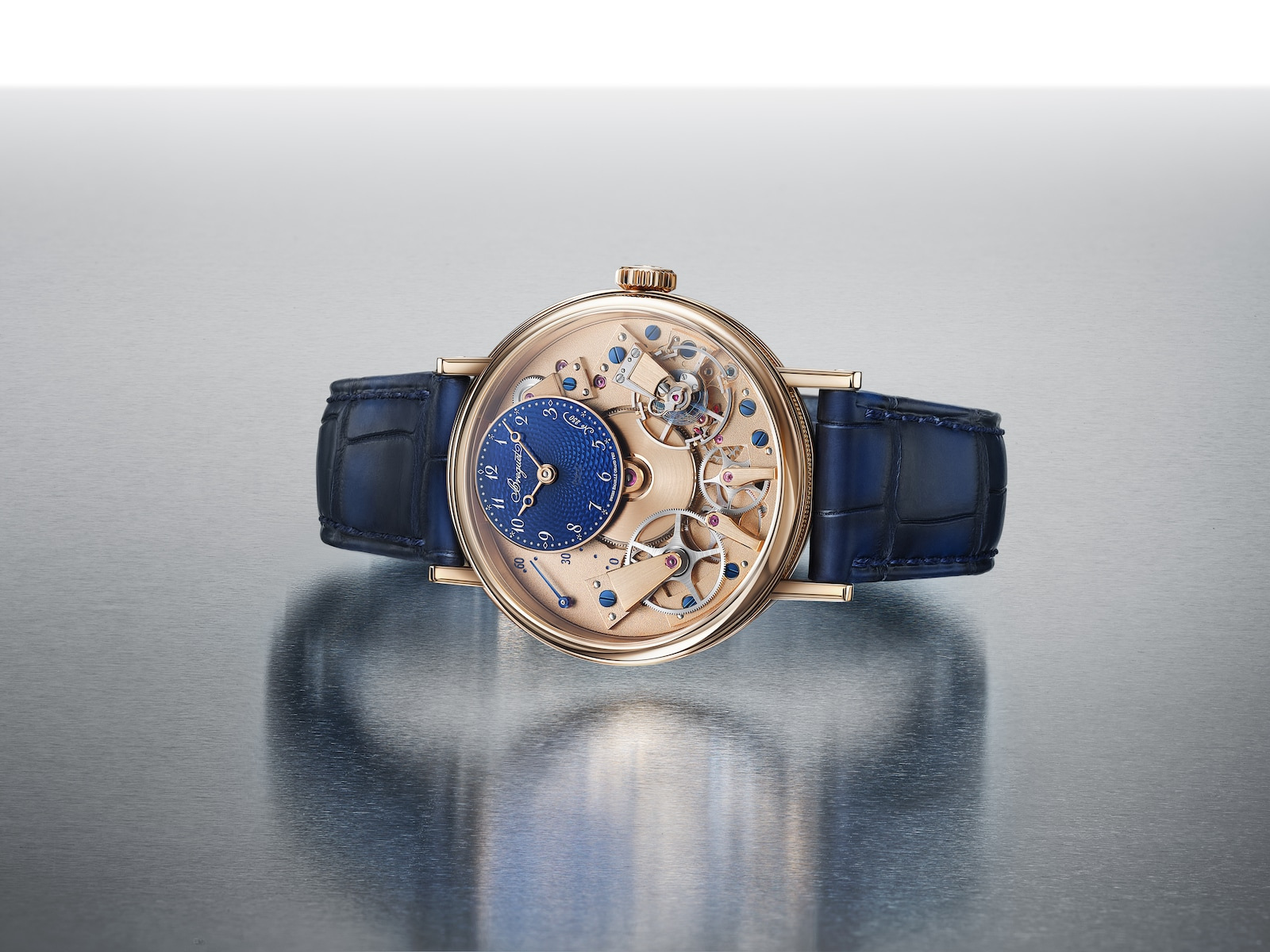
The Tradition 7035 does not hide its architecture behind a complete dial. A smaller blue display occupies the upper part of the watch, leaving much of the mechanism visible around it. The 2025 anniversary reference 7035BH/H2/9V6 turns this arrangement into a study of different scales: the whole machine, the patterned enamel field and the individual parts placed by hand. Its strongest visual argument is the relationship between those scales.
A dial within a landscape
Breguet’s announcement, dated 16 May 2025, identifies a case in the maison’s Breguet gold alloy and a translucent blue grand feu enamel dial over guilloché. Hours and minutes are read on that smaller dial; retrograde seconds occupy a separate indication between ten and eleven. These are the features of the identified anniversary reference, rather than a description of every watch carrying the number 7035.
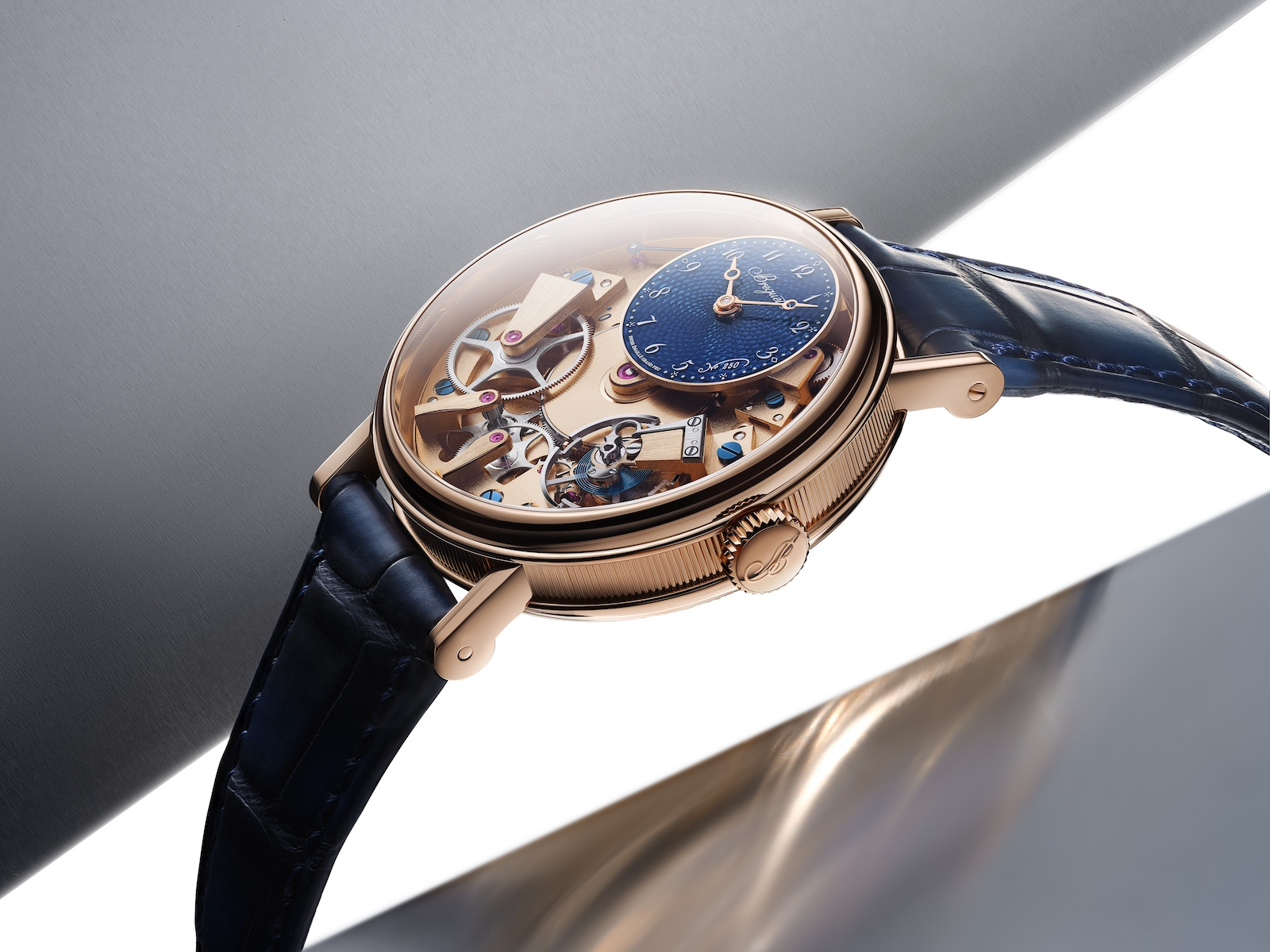
The official front views show how the blue field anchors a larger arrangement of warm metal, bridges and wheels. It behaves like a small complete dial placed within a broader mechanical landscape. The exposed elements are not merely a background texture. Their positions and varying heights are part of the object the wearer sees, so the watch can be interesting even when no one is checking the hour.
This differs from removing material simply to create transparency. The composition retains substantial surfaces and recognisable divisions. The eye has places to stop: a bridge, a circular component, the small blue display. The result can be read as an arrangement of objects rather than one uninterrupted decorative pattern. That is visual analysis of the published imagery, not a claim about independently measured mechanical performance.
Pattern beneath colour
The manufacture calls the guilloché motif Quai de l’Horloge and relates its lines to the Seine around the Île de la Cité and Île Saint-Louis, as represented on the Turgot map. This is the brand’s documented account of the pattern’s inspiration. It should remain an attribution, rather than becoming an invented historical claim about the exact appearance of an eighteenth-century watch.
Translucent enamel gives that patterned surface another visual job. A flat blue field could separate the time display from the visible mechanism; here the decoration beneath the colour also introduces movement within the field itself. The larger mechanical parts and the much finer pattern do not ask the eye to work at the same distance.
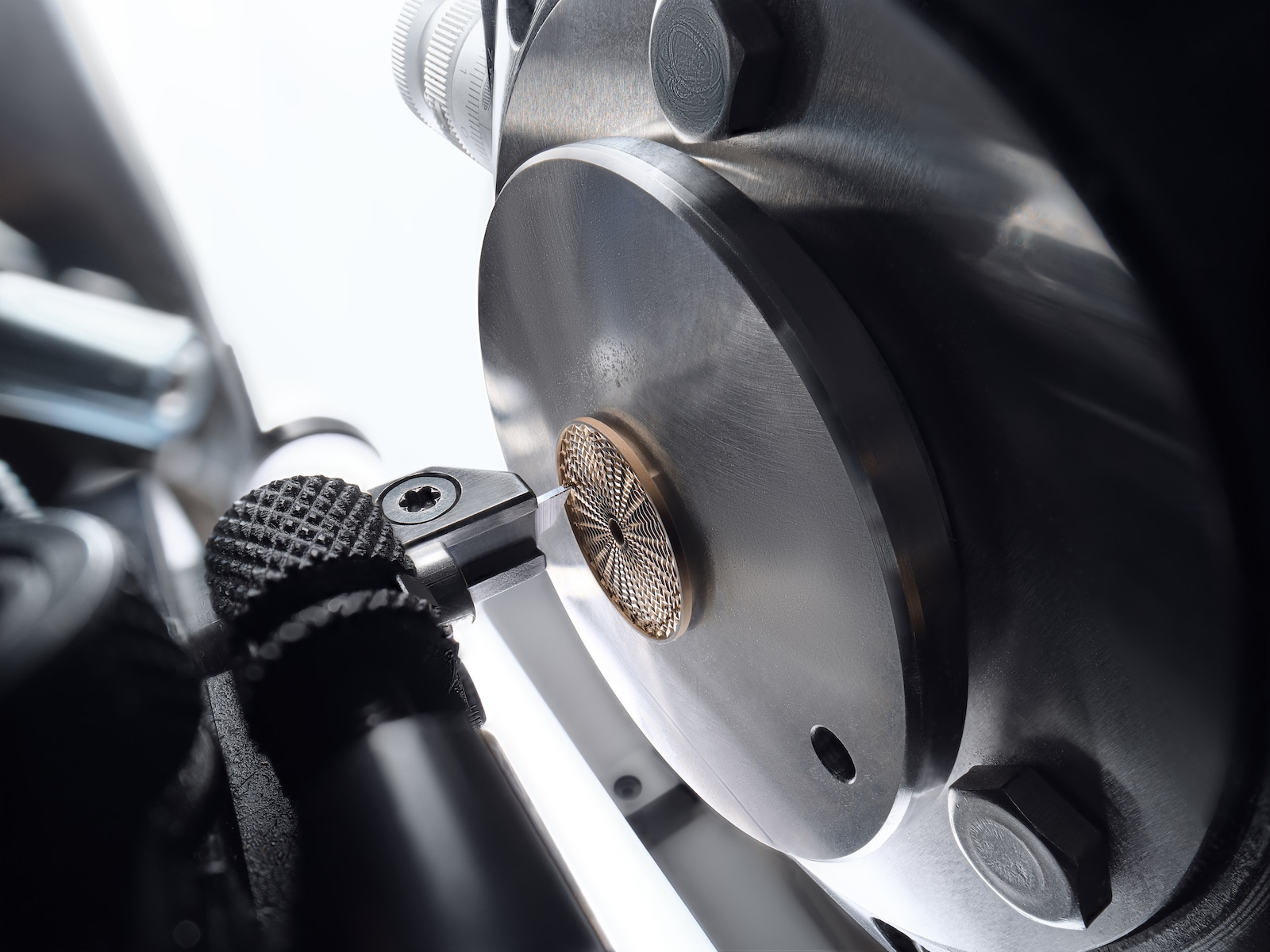
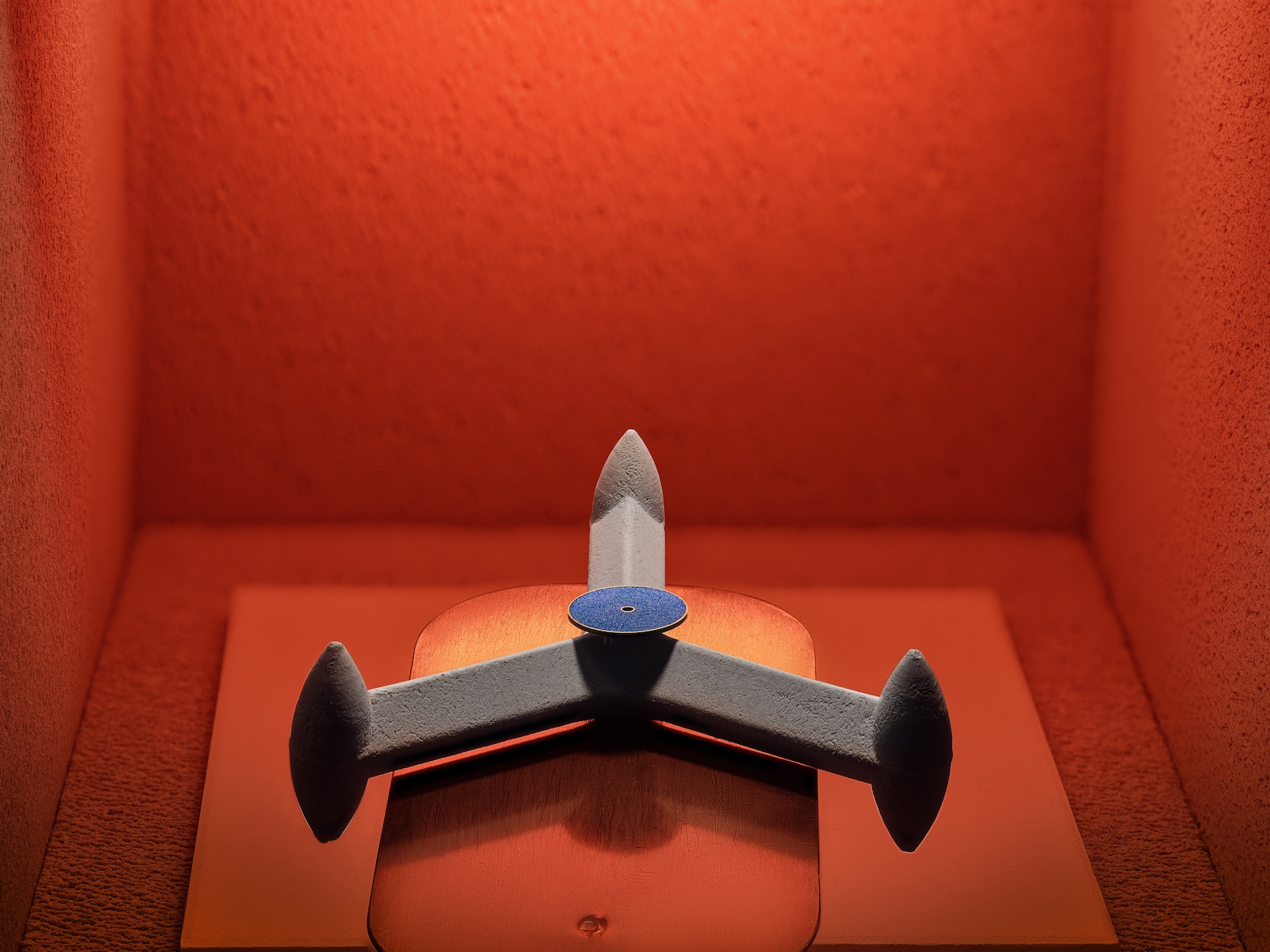
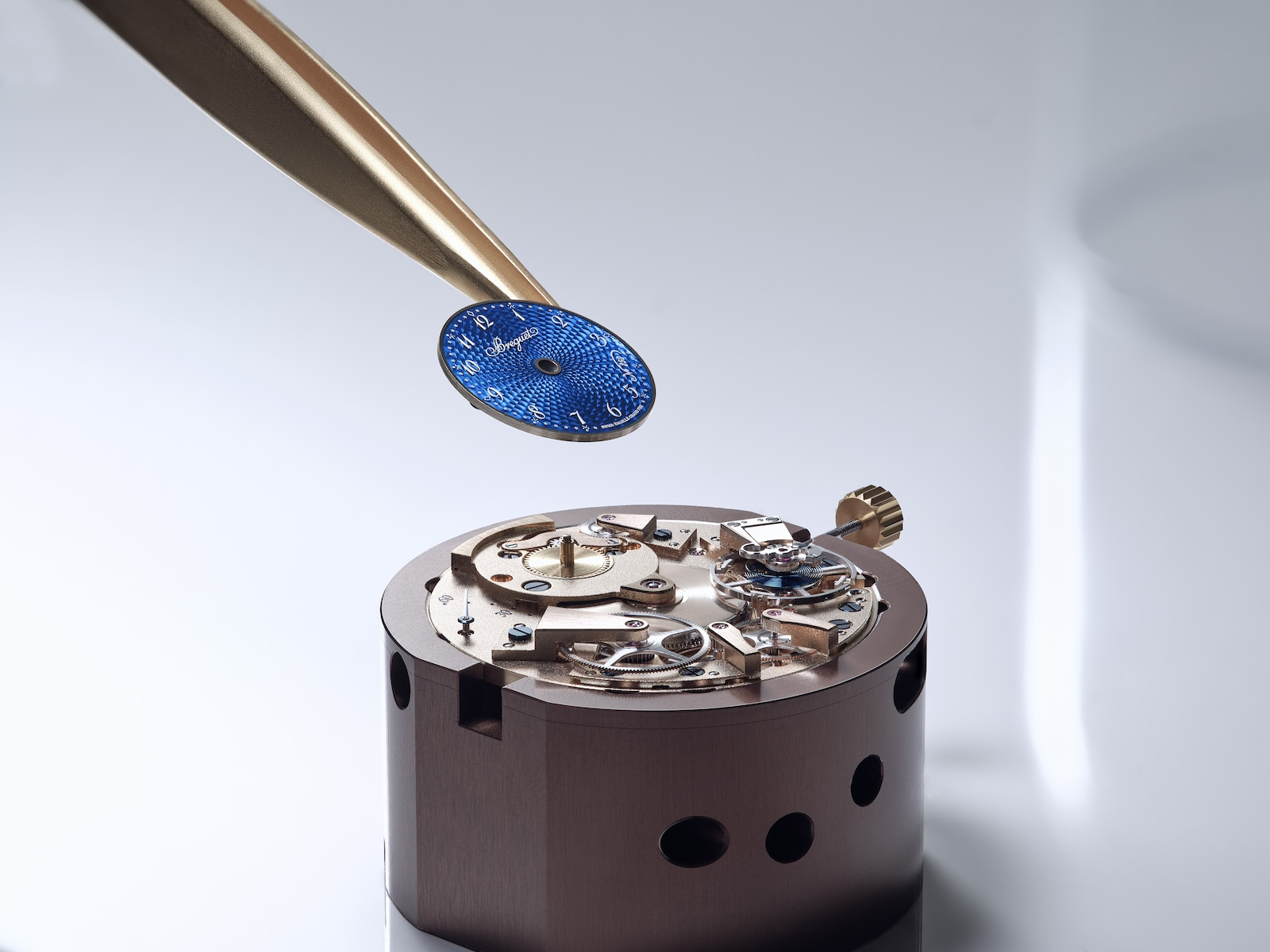
The making sequence published by Breguet is useful precisely because it separates these operations. One image shows work at a guilloché lathe; another shows a blue dial in the enamelling process. They document the manufacturer’s presentation of craft stages. They do not allow an observer to infer the exact number of firings, a rejection rate or the hours spent on an individual dial unless those details are separately established.
The small face is still a face
The blue dial is not only evidence of decorative work. It must remain a place to read the hours and minutes within a more visually active watch. Its scale therefore belongs in a fitting conversation. A compelling macro photograph can make a relatively small indication feel large, and the visual pleasure of seeing the mechanism does not automatically establish easy reading for every person.
Look first at ordinary wrist distance, then at the detail. Consider whether the time display is immediately found and whether the retrograde indication is distinguishable from the surrounding parts. A buyer should be able to enjoy the architecture without needing to perform a close inspection whenever they want the hour. These are questions for the actual watch and the actual reader, not a universal judgement from photographs.
The official image of the dial being placed above the movement brings the two roles together. The small blue object is simultaneously a crafted component and the centre of the watch’s reading hierarchy. Its position determines how much mechanical space remains visible below and beside it. Decorative identity and practical organisation meet in a very specific placement.
A second architecture at the back
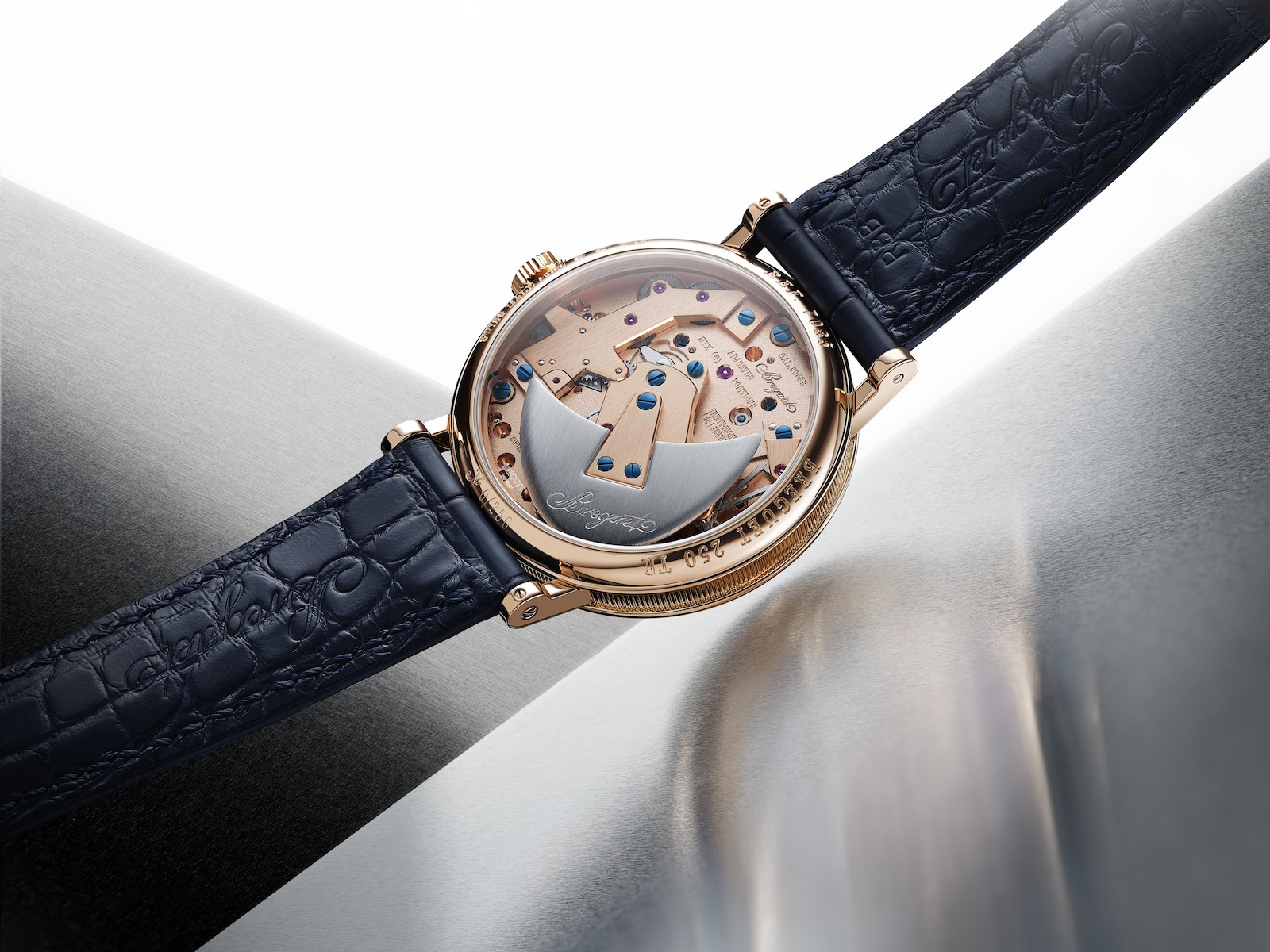
Breguet’s announcement describes a crescent-shaped platinum oscillating weight at the rear, marked Pt950. The official reverse view and making image identify another arrangement of surfaces, distinct from the exposed display side. They prevent the story from stopping at the watch’s most immediately recognisable face.
The weight is a functional part of the automatic winding system, rather than a decorative crescent added to an otherwise unrelated scene. Its shape can be appreciated visually while its role remains clearly named. The photograph of its placement gives a further sense of scale, connecting the complete reverse to a component handled with a tool.
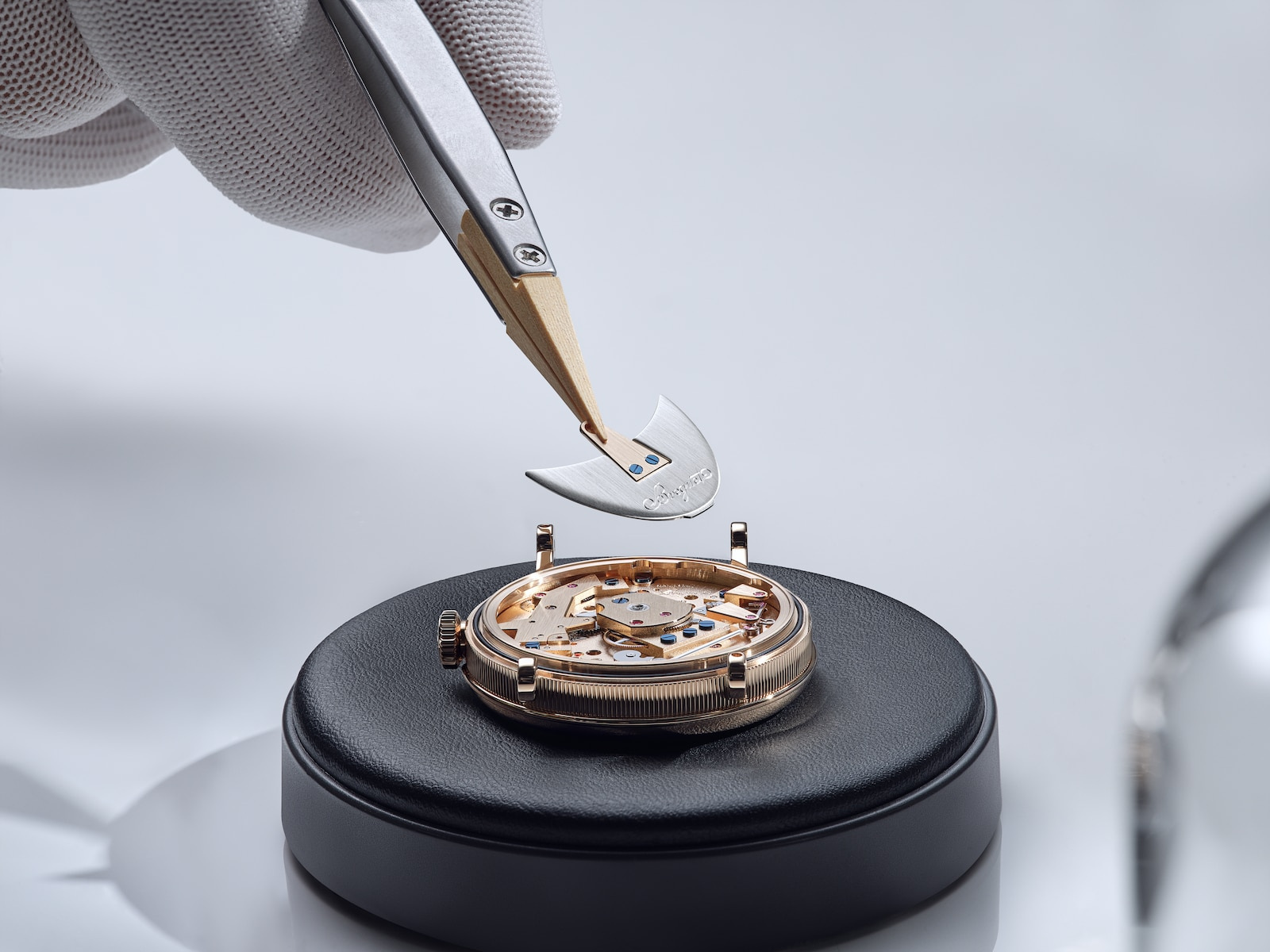
Historical references should be kept equally precise. The manufacture relates the weight’s form and material to its account of Abraham-Louis Breguet’s early self-winding watches. That connection supplies context, but it does not make the contemporary mechanism a reconstruction of an original pocket watch. The useful reading is continuity of an idea through a different object, with present-day reference identity preserved.
The looking notebook
These distinctions offer a practical way to examine the watch without confusing craft imagery, manufacturer specifications and a condition assessment. The source records were checked on 15 October 2026; the anniversary announcement remains dated 2025.
| Scale | What the official material shows or describes | What to look for in the actual watch |
|---|---|---|
| Whole object | Tradition 7035BH/H2/9V6 in Breguet gold | Case presence and the complete arrangement on the wrist |
| Time display | Blue grand feu enamel over guilloché | Reading distance, contrast and the size of the indications |
| Pattern | Quai de l’Horloge motif with a documented map reference | The relationship between colour, pattern and light |
| Seconds | A separate retrograde indication | How clearly it is distinguished from surrounding mechanics |
| Reverse | Crescent-shaped platinum oscillating weight | The actual rear architecture and current documentation |
| Making | Official lathe, enamel and assembly photographs | What each image establishes, without inventing a production metric |
Ask for the operating instructions and current service arrangements for the exact reference. The attractive exposure of a mechanism does not invite an owner to intervene in it. Documentation and an authorised service route belong beside the appreciation of craft, particularly when a watch presents so much of its construction to view.
The Luxe Digital view
The Tradition 7035 is most persuasive when the eye can move between architecture and detail without losing the small dial that organises the time. Its blue enamel field gives the exposed mechanism a visual anchor, while the making photographs explain why that small field deserves a second look.
Choose it for that relationship, then verify how it works for the person who will wear it. The open arrangement, the patterned colour and the platinum crescent provide enough substance for an enduring design story. They do not need invented workshop access, unsupported production numbers or a claim that a photograph can substitute for experiencing the watch itself.
The Tradition 7035 is most persuasive when the eye can move between architecture and detail without losing the small dial that organises the time.
Sources & credits
Sources and methodology
Independent watch design and reference analysis of the named official records and imagery, checked on 15 October 2026. Original introduction dates and reference-specific specifications are retained. Images show the identified configurations. Independent visual and reference analysis of official material. No hands-on wearing, accuracy or water-use test, workshop visit, interview or specimen inspection claimed. Launch, current regional records, studio visuals, campaign compositions and assembly photographs are identified separately. Availability, individual condition, fitting and care require exact-reference confirmation.