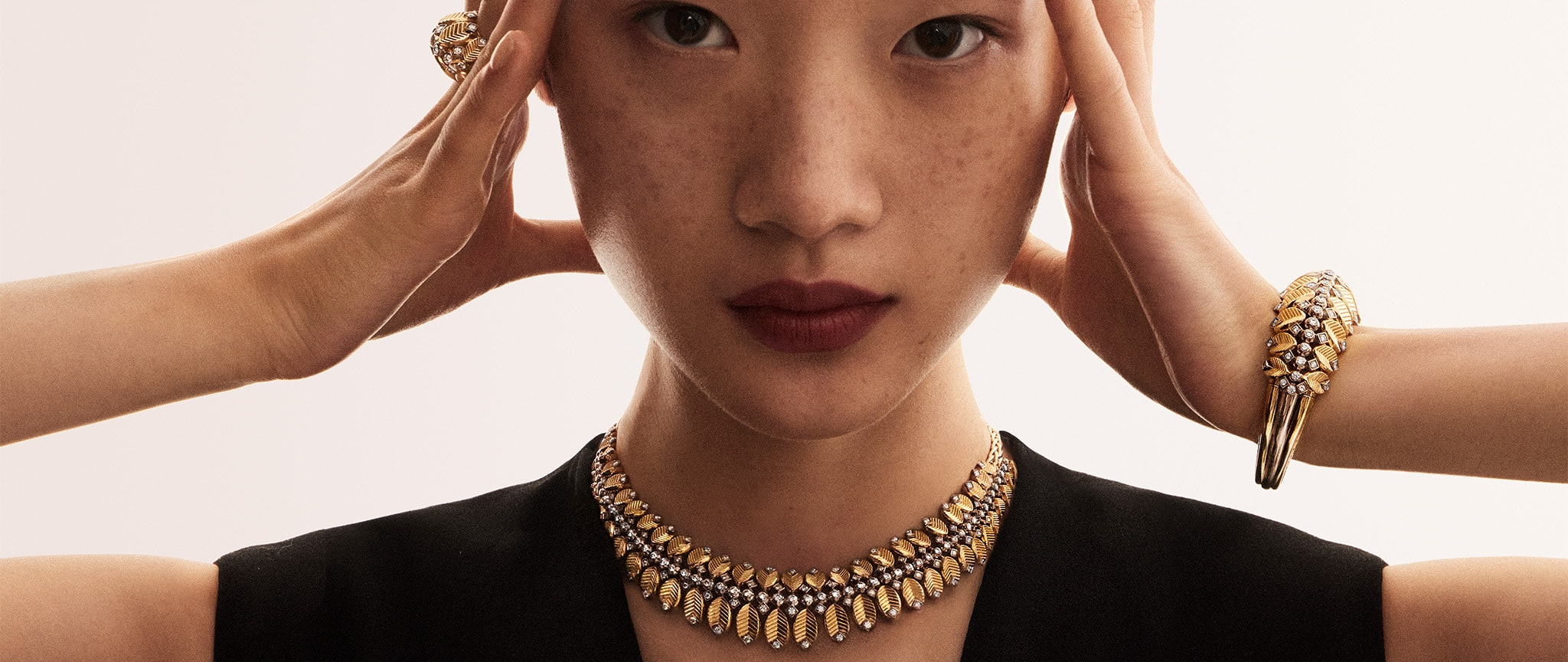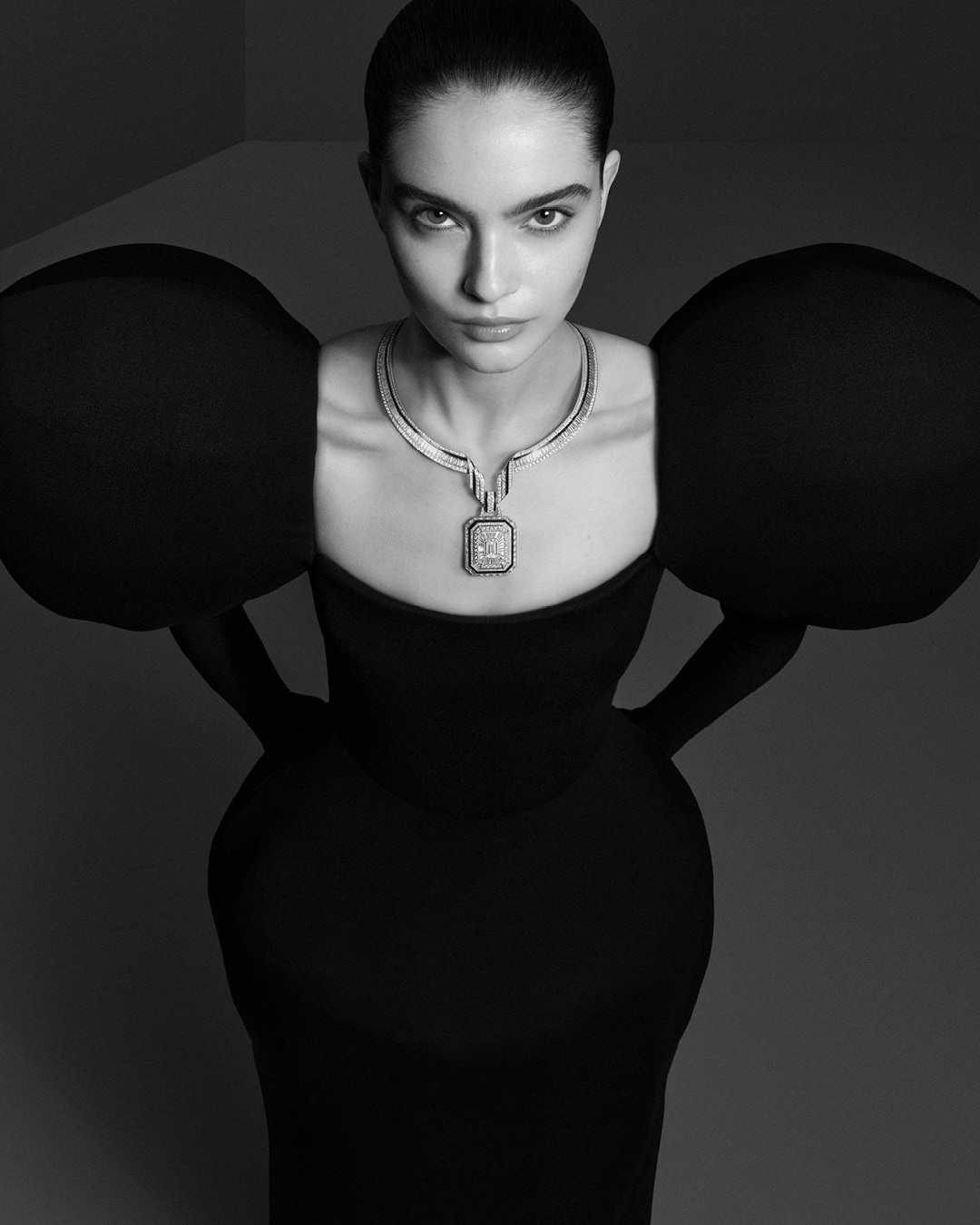
A portrait does not have to reproduce a face. In Boucheron’s 2026 Histoire de Style collection, it takes the form of four jewels: a formal necklace, an asymmetric cascade, a composition that extends across the shoulders, and a botanical structure that seems to have found its own route over the body. Seen together, they offer a more revealing introduction to the maison than a row of isolated stones.
A founder, drawn through four silhouettes
The collection’s title, Nom : Boucheron, Prénom : Frédéric, makes the founder its subject. The Address, The Spark, The Silhouette and The Untamed are the four contemporary chapters. Their differences matter. One contains the jewel inside an emphatic frame; another lets it travel. One treats the shoulder as a site of construction; another uses branching forms to soften the distinction between necklace and ornament. This is a study of those silhouettes, through the maison’s current portraits and the archival images it has placed beside them.
The photographs establish an order of attention. First comes the relationship to clothing and skin; only afterwards the smaller details become legible. That sequence is useful for high jewellery, where the complete composition can disappear behind the fascination of an individual gem. Here, the body is the drawing board. The collection asks us to consider where a jewel begins, how far it reaches and whether its centre should remain exactly where convention expects to find it.
The Address holds the frame
The Address has an immediately formal presence in the official portrait. A broad, light-catching line sits above a more concentrated hanging element. Against dark clothing, the separation between the two is clear: one establishes the neckline, the other gives the eye a destination. The surrounding costume is voluminous, but the jewel does not depend on matching that volume. Its force comes from the precision of its boundary and the contrast between horizontal span and downward emphasis.
Boucheron pairs this chapter with an archival inspiration dated 1939. The historical image belongs to that earlier object; it is not a photograph of the 2026 creation. Placed alongside the current portrait, it makes comparison possible without requiring the reader to imagine an unchanged reproduction. The useful question is what has travelled between the two: a proportion, a way of framing the neck, or the tension between an enclosing line and a pendant-like centre. The contemporary photograph supplies an answer in outline, rather than proving every technical detail of the construction.
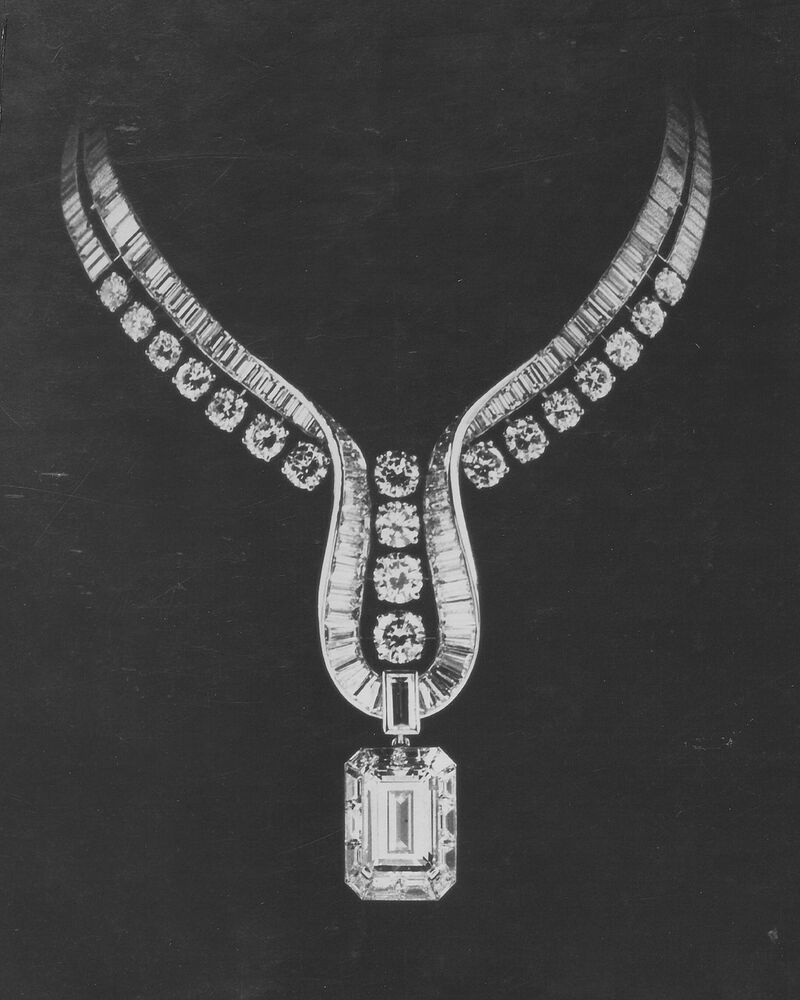
This distinction changes how one reads a heritage collection. An archive can become a decorative credential, its date doing more work than the object. Here, it can instead function as a reference drawing. The viewer is invited to look for a specific visual decision and see how it has been made relevant to a different silhouette. The jewel remains contemporary because its scale and placement address the person wearing it in the present image.
The Spark and The Silhouette change the route
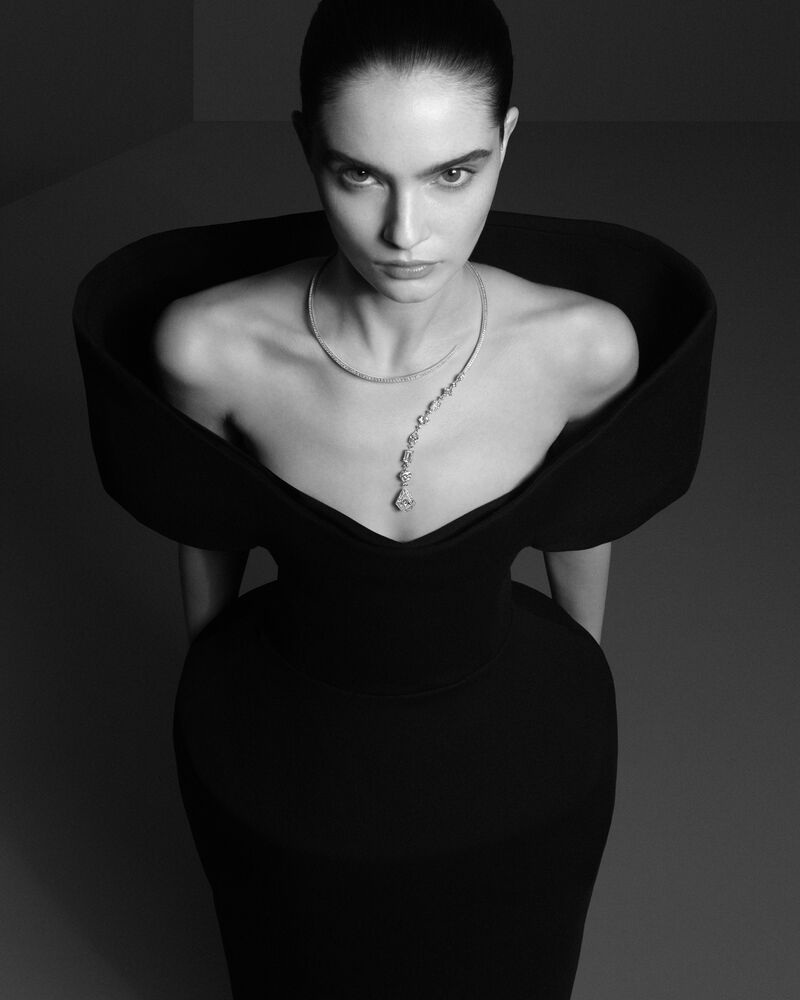
The Spark redirects attention away from a symmetrical centre. Its official portrait gives the necklace a visibly uneven fall, with diamond-like brightness continuing down one side of the body. The result feels closer to a drawn gesture than a closed collar. Follow the outline rather than counting individual elements: the important transition is from the curve around the neck to the longer descending line. Boucheron identifies an 1884 archival inspiration for this chapter, providing a dated point of departure for that asymmetric reading.
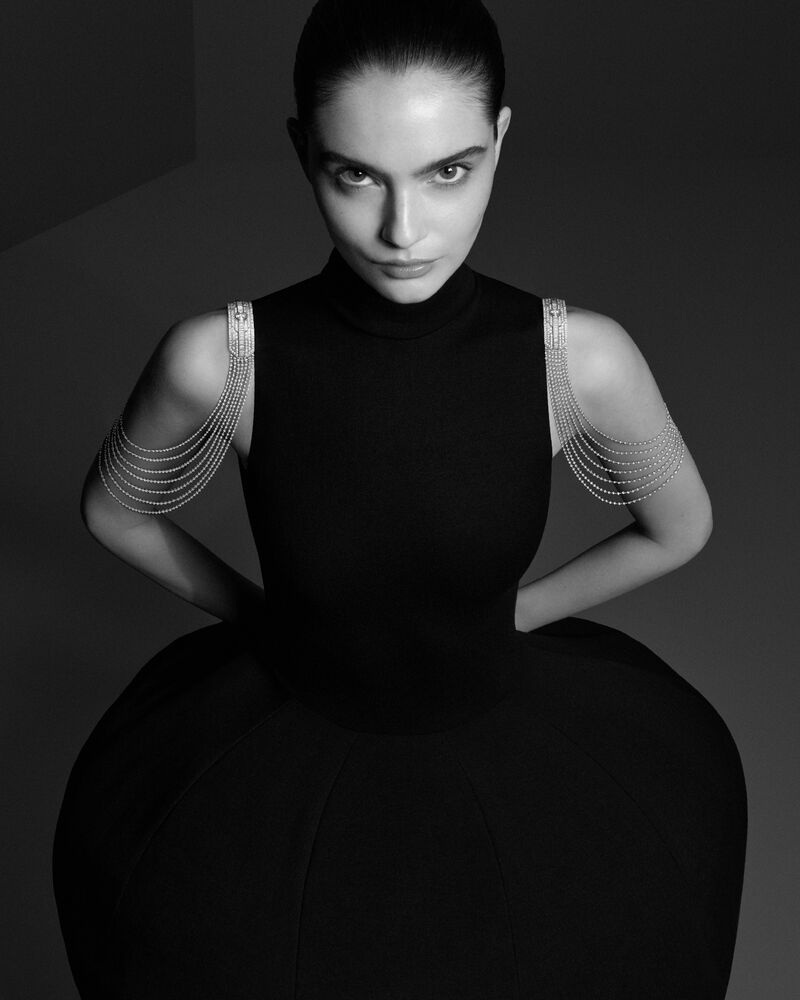
The Silhouette makes a different intervention. Its structure reaches over the shoulders and across the torso, so the conventional distinction between a necklace and an element of dress becomes less useful. The photograph needs more surrounding space to explain it. A tight crop at the throat would remove the very relationships that make the piece interesting: the distance between its upper and lower lines, the width of the shoulders and the way a jewel can articulate an entire upper body. The corresponding archival drawing is dated circa 1880 by the maison.
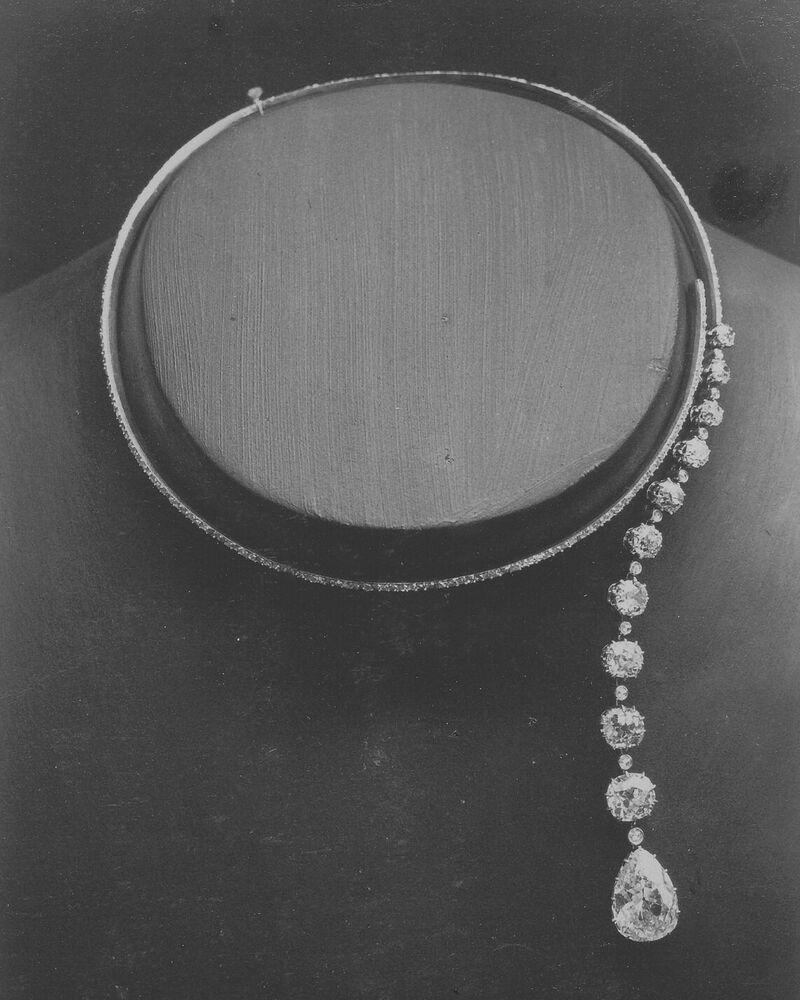
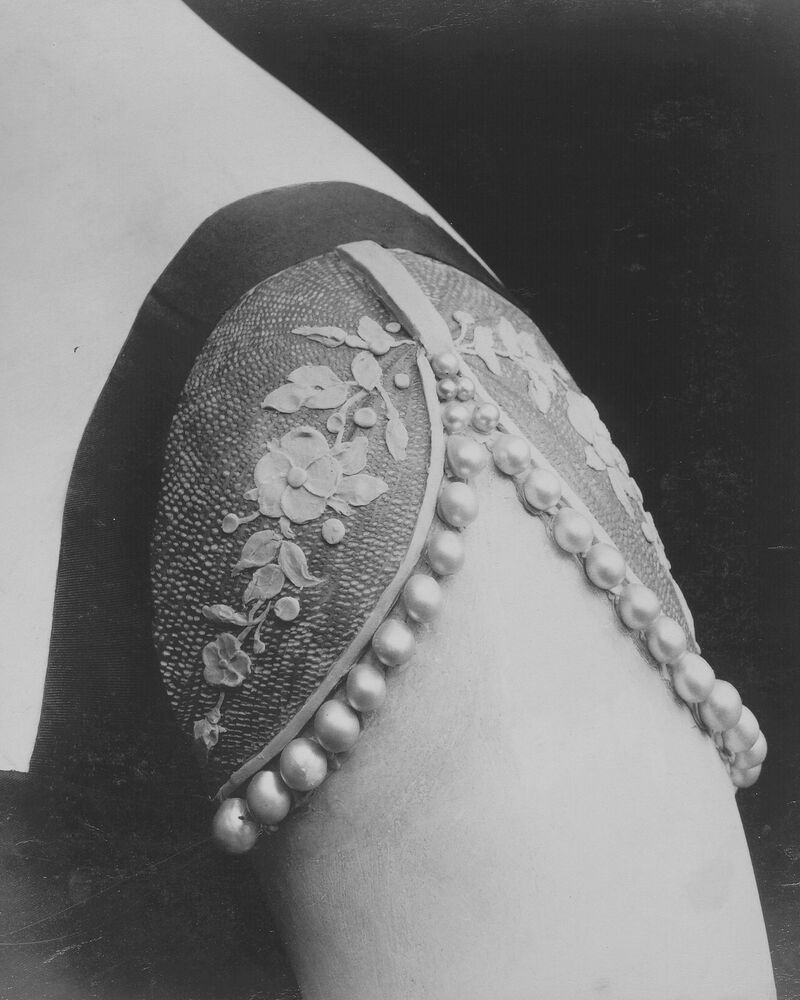
Read as a pair, these chapters suggest two ways to enlarge a jewel’s presence. The Spark lengthens the path of the eye; The Silhouette broadens the territory occupied by the composition. Neither needs to be described simply as bigger. Their scale is directional. This is also why the worn portraits are indispensable: an isolated studio object could explain components, but it would struggle to convey the hierarchy between shoulder, neckline, torso and the light-catching lines that connect them.
The Untamed lets the outline branch
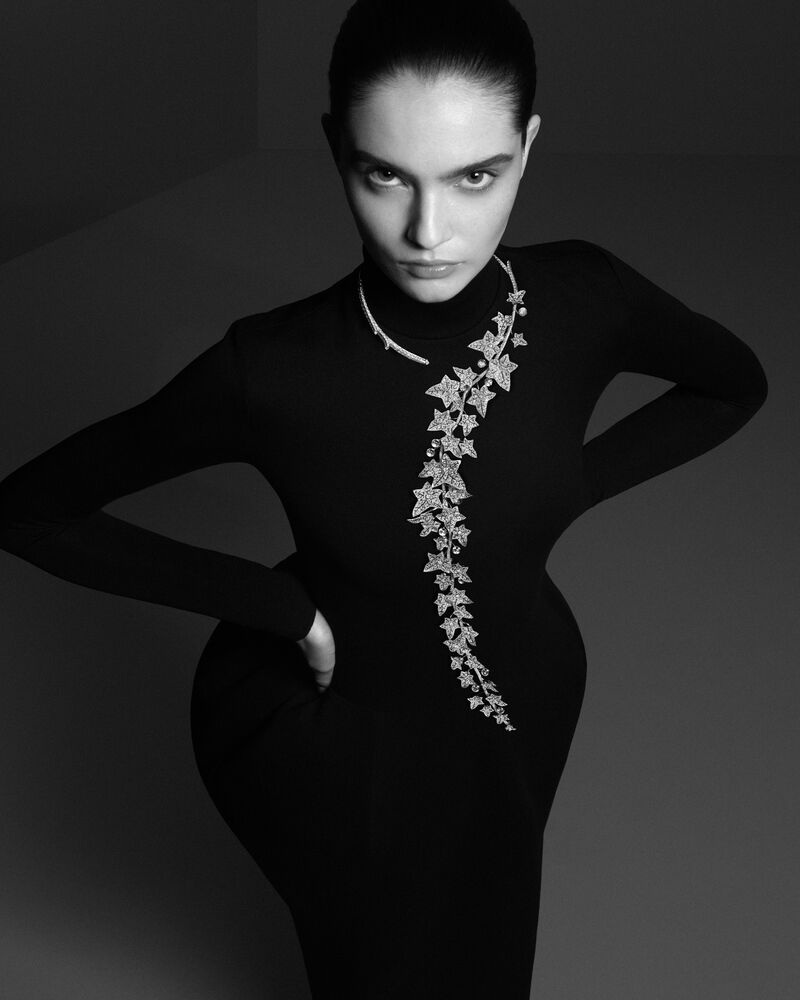
The Untamed exchanges an architectural route for a botanical one. In the current photograph, leaves and branching elements produce a less continuous edge than the other chapters. The gaps are part of the design. They allow skin and clothing to enter the composition, turning the body into a background that is visible through the jewel rather than hidden behind it. The outline becomes something to follow in several directions, with smaller accents interrupting any simple reading as a conventional chain.
The maison’s account identifies rock-crystal fruits, individually worked leaves and trembling elements within this creation. Those are manufacturer descriptions of materials and construction; the still photograph cannot independently demonstrate the movement of a trembling component. What it does show is a deliberate change of rhythm. Rounded forms sit beside pointed leaves, and the density varies as the composition travels. Boucheron dates the accompanying archival inspiration to 1879. The comparison supports a conversation about naturalistic form, rather than a claim that old and new are identical.
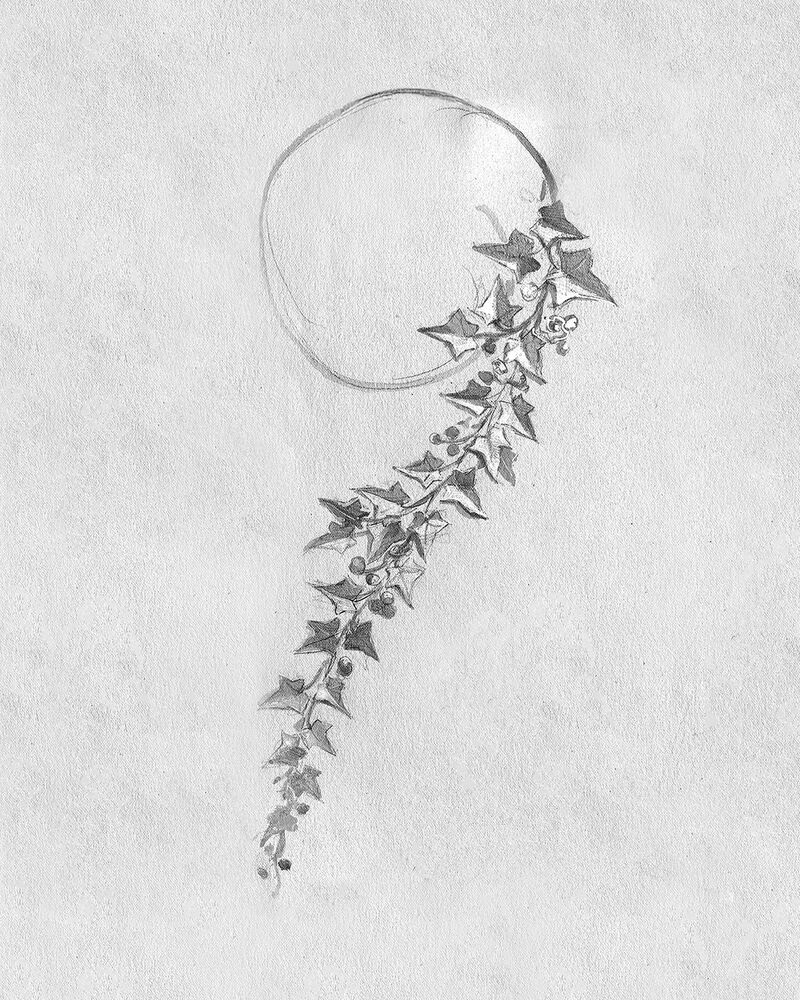
This chapter is most rewarding when seen after the others. The Address has already established a frame; The Spark has broken symmetry; The Silhouette has expanded the field. The Untamed then makes the edge less predictable. Together, the four create a compact vocabulary for looking at high jewellery: containment, descent, extension and branching. That vocabulary is more durable than a single superlative and more helpful when a reader returns to another collection from the same house.
Four chapters, four points of departure
| Contemporary chapter | Archival date published by Boucheron | What to compare |
|---|---|---|
| The Address | 1939 | The neckline’s frame and its downward focal point |
| The Spark | 1884 | Asymmetry and the long route of the eye |
| The Silhouette | Circa 1880 | The shoulder and torso as part of the composition |
| The Untamed | 1879 | Branching outlines and botanical intervals |
The dates identify the published inspirations, not production dates for the contemporary jewels. Materials, mechanisms and any possible wearing configurations should be confirmed against the exact creation, rather than inferred from an archival resemblance. The portraits shown here remain official styled photographs, not evidence of an independent fitting or handling session.
The Luxe Digital view
Boucheron’s portrait becomes most persuasive when the archive explains a design decision rather than supplying a decorative date. The collection gives the viewer four distinct routes through the body and enough historical context to compare them. Its strength is the coherence of that sequence: a house introduced through the way it draws, frames and releases a silhouette.
Boucheron’s portrait becomes most persuasive when the archive explains a design decision rather than supplying a decorative date.
Sources & credits
Sources and methodology
Independent visual analysis of current official imagery and named product records, checked on 14 October 2026. Historical introductions, manufacturer specifications and visual observations are kept distinct. No visit, interview, independent handling or appraisal is implied.
- Boucheron — source 1: Current official collection, named designs, dated context and selected image provenance.
- Boucheron — source 2: Current official collection, named designs, dated context and selected image provenance.