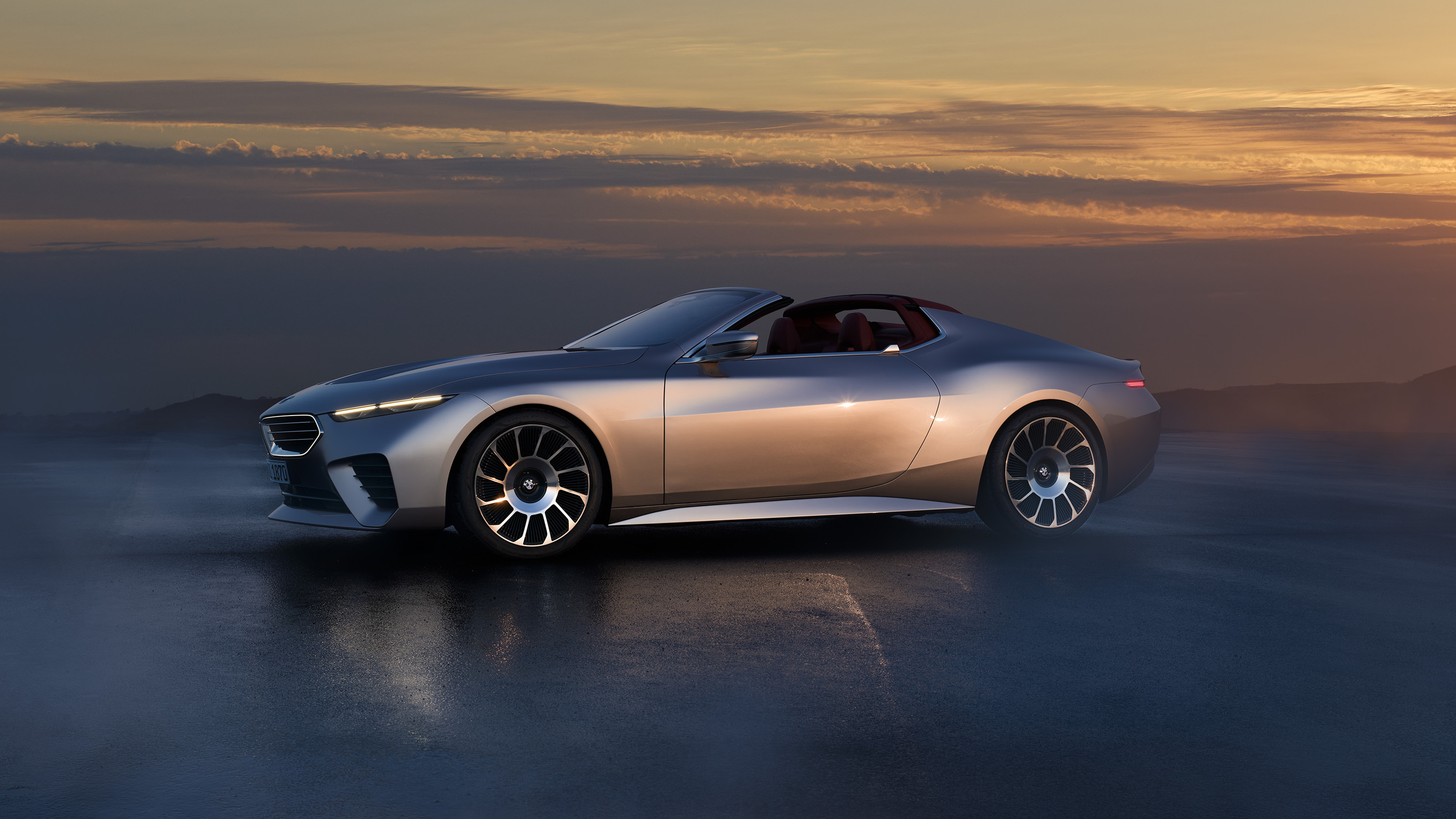
The BMW Skytop’s roof is part of its composition even when it has been removed. A central line continues across the rear deck, while the small passenger compartment sits between a long bonnet and a tightly drawn tail. The official production-announcement images show a roadster whose open and closed states have both been treated as design problems.
An open car with a continuous line
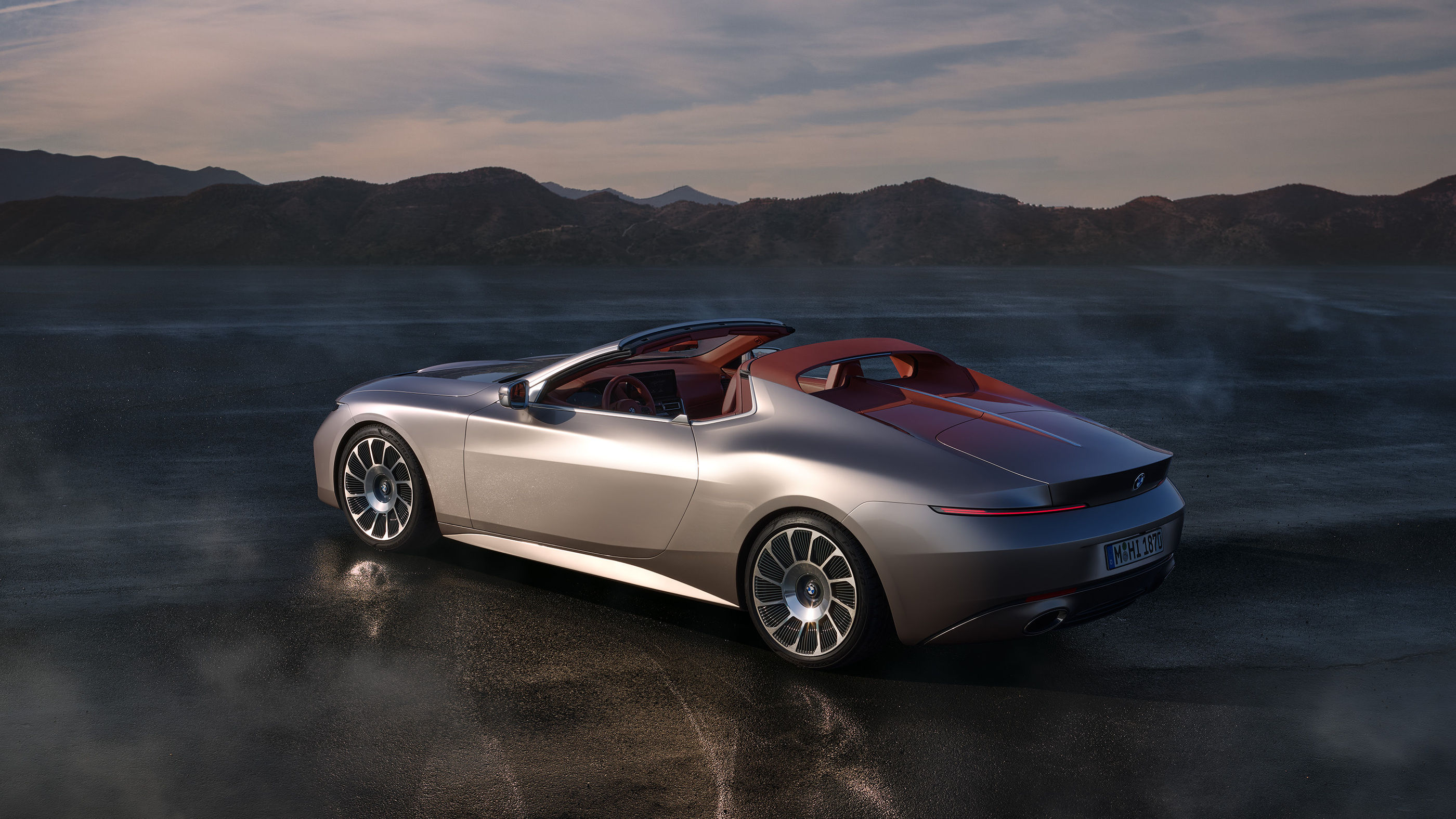
The October 2024 photographs place the Skytop against a low horizon, making its upper surfaces easy to follow. From the front, the bonnet establishes a pronounced direction. From behind, the central line carries that direction across the deck towards the tail. The cabin interrupts the body without breaking the sense of one continuous object.
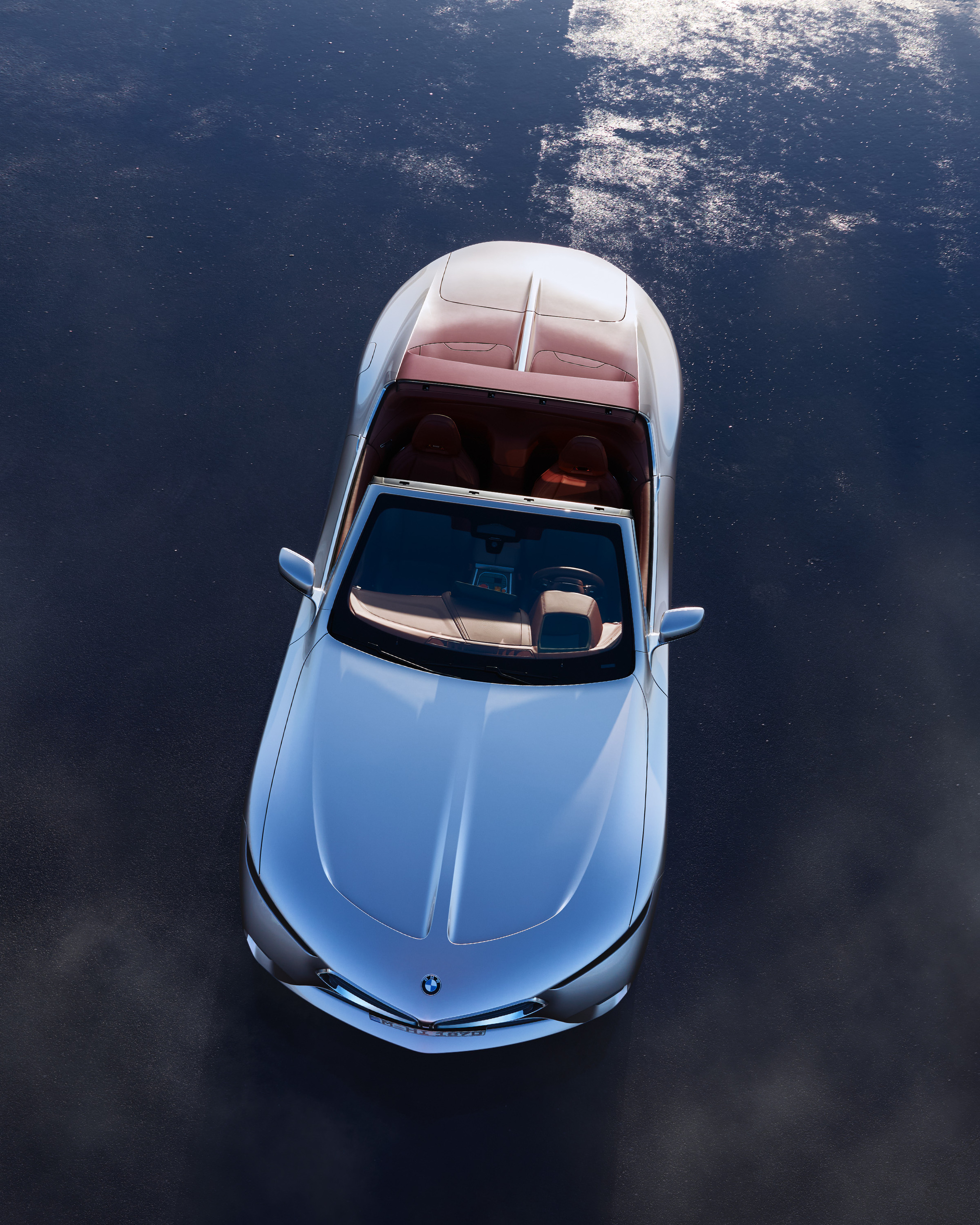
That continuity becomes more interesting in the overhead view. The two seats occupy a compact opening within a much longer shape. Surrounding surfaces have enough presence to frame the occupants, while the rear deck remains a substantial part of the design rather than an area left over after the cabin has been resolved.
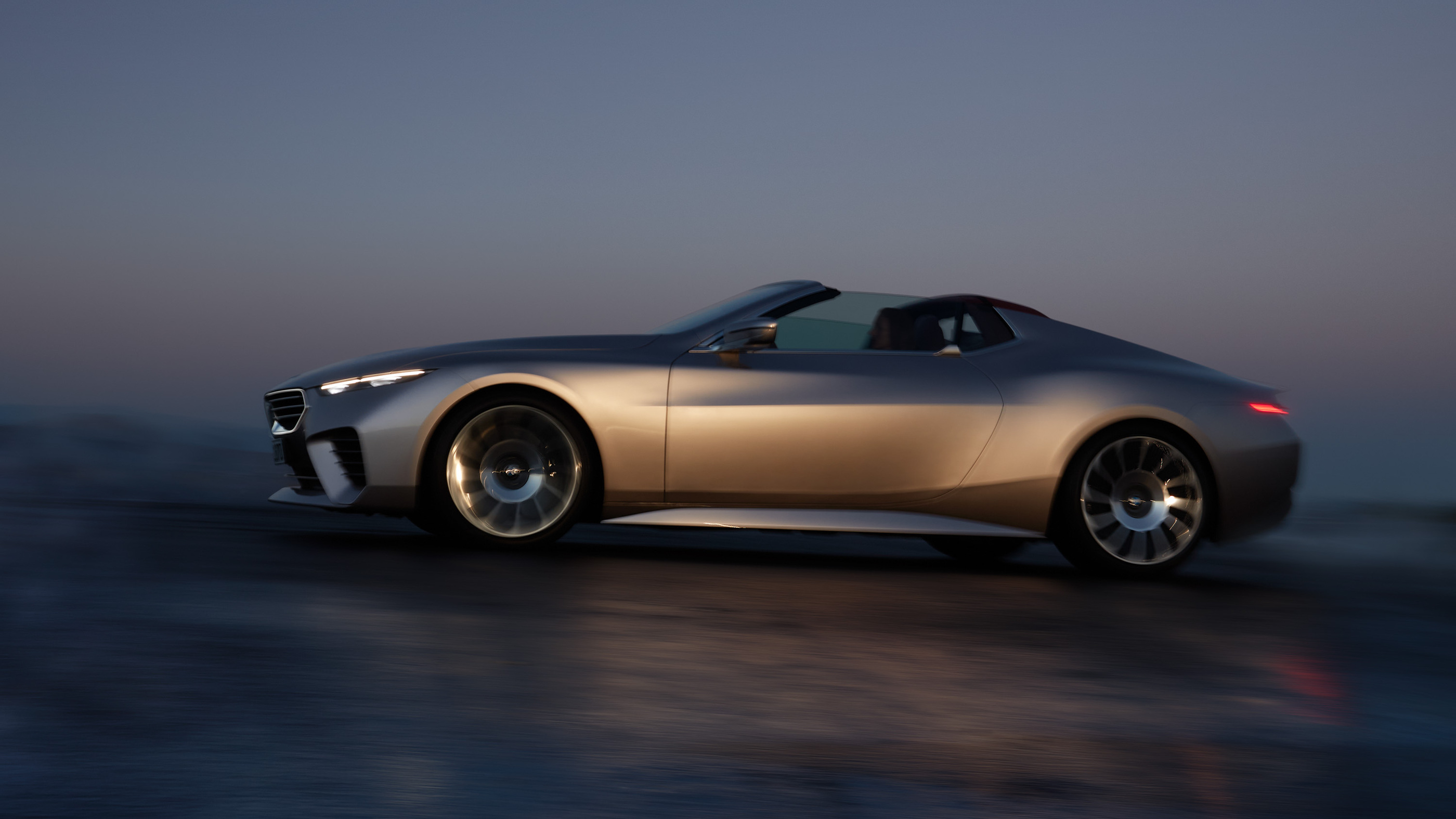
A side-on view with the roof in place supplies the necessary comparison. The car’s identity should remain clear when its use changes. Here, the closed configuration completes an already established upper line, giving the roof a relationship with the bonnet and rear deck rather than treating it as an accessory added afterwards.
The roof is an object to handle
BMW’s production announcement describes two removable, leather-covered roof sections and a storage compartment for them. This is an unusually tangible detail in a car story: the roof is something an owner must physically remove, place somewhere and reinstall.
That changes the nature of the design question. A beautiful open silhouette is only one state of the object. The panels also need to make sense as individual pieces, with edges, surfaces and a place to go. The relevant ownership conversation therefore includes handling and storage, alongside the visual effect when they are fitted.
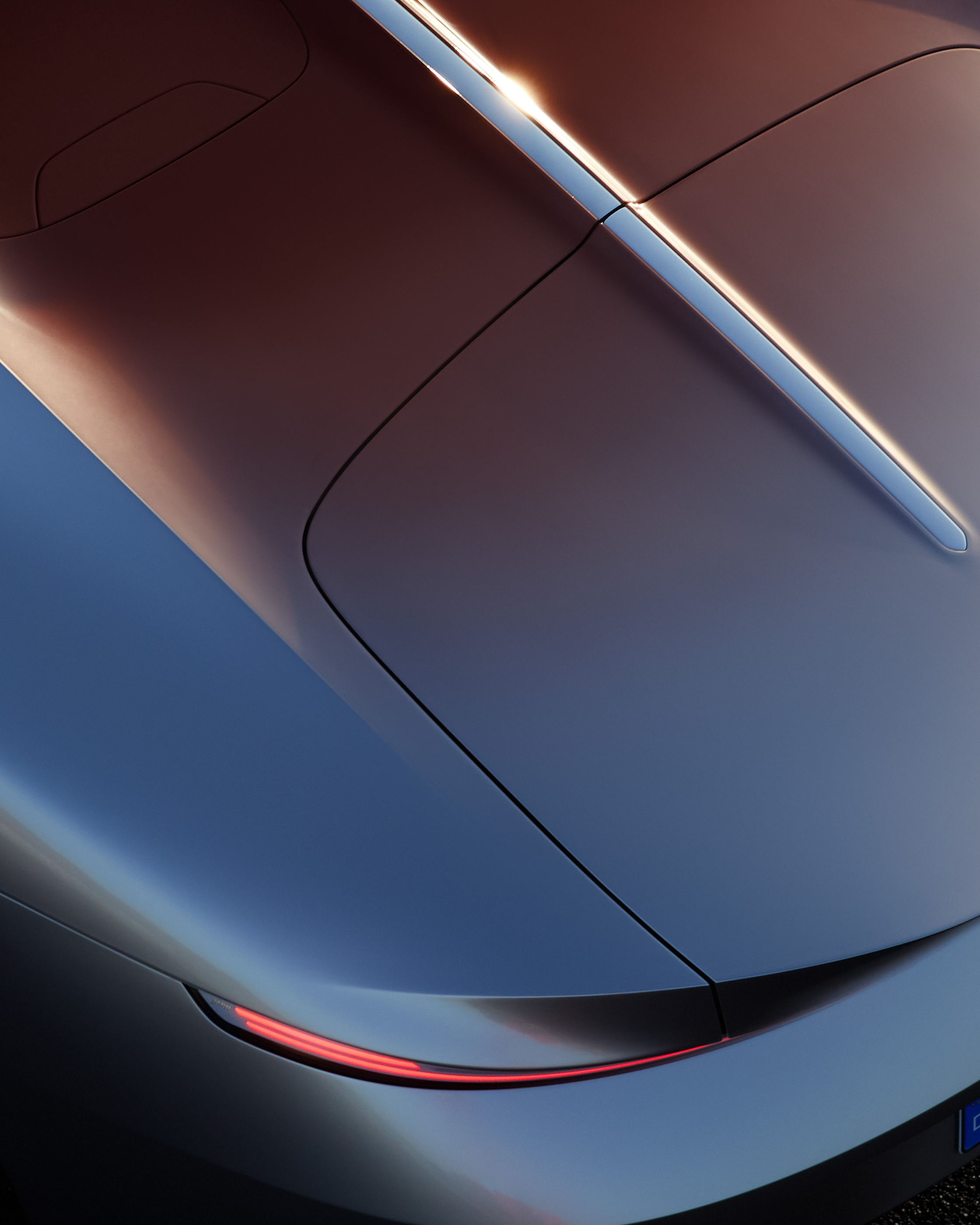
The official images do not demonstrate that routine in use, so they should not be used to claim a particular level of ease. They do, however, show why the roof belongs near the centre of the account. Its division and the line through the rear deck help explain how the car has been conceived, rather than simply how it has been styled for a photograph.
A limited programme with a defined architecture
BMW announced a production run of 50 examples in October 2024, following the design study shown earlier that year. The photographs selected here come from the production-announcement compilation, keeping the image set tied to that programme.
The same account specifies a 4.4-litre V8 and an eight-speed Steptronic Sport transmission. It gives output as 460 kW, accompanied by BMW’s stated 625 hp figure. Those details establish the declared mechanical basis of the Skytop without requiring the article to make an independent claim about acceleration or road behaviour.
The limited number is context, rather than a prediction of value. It explains the scale of the programme and the attention likely to be paid to individual specification. It does not determine how a particular car will be used, maintained or regarded over time. The design has to supply its own reasons for being interesting.
The small details repeat the larger gesture
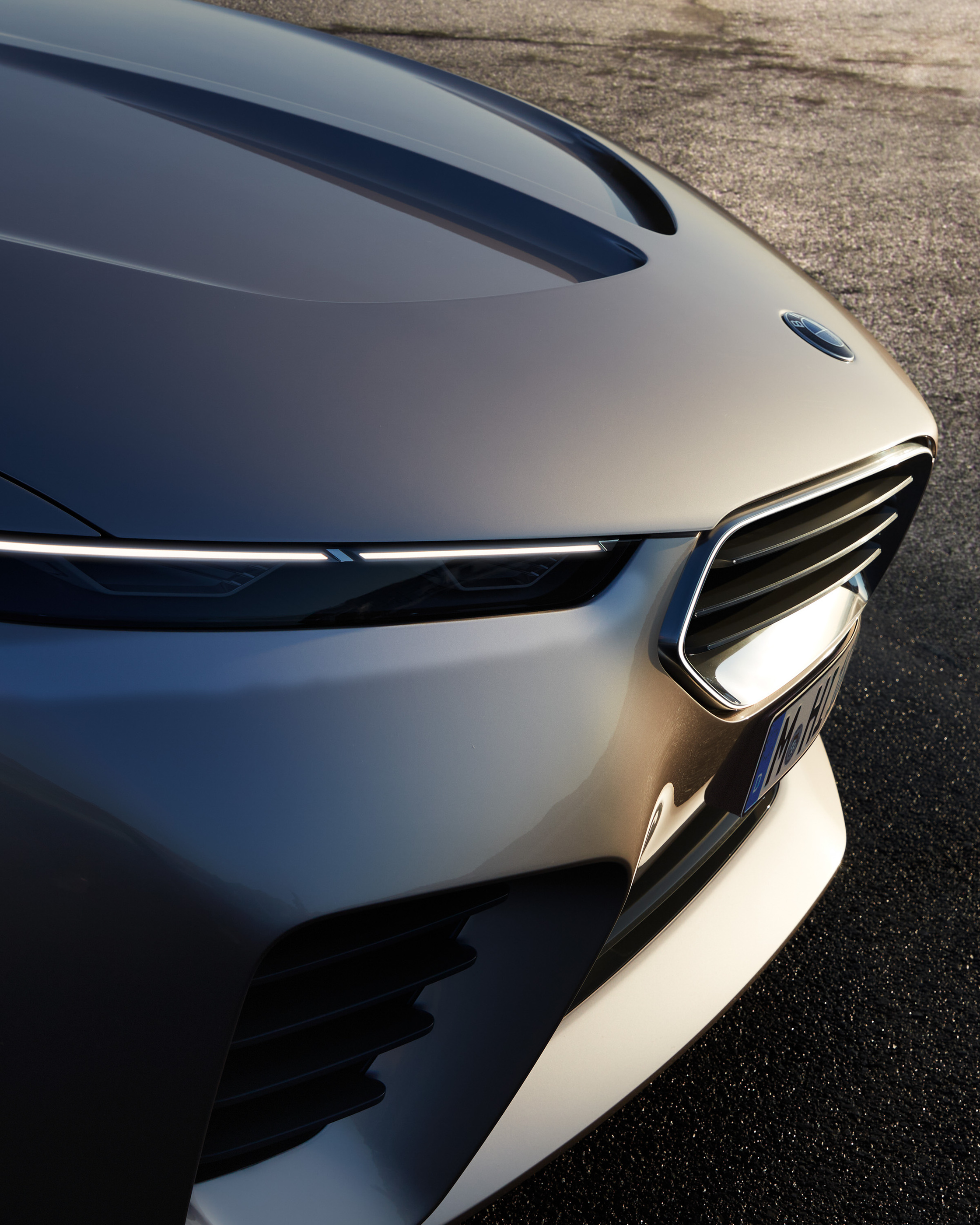
The headlamp detail compresses the front of the car into a narrow graphic. It gives a useful counterpoint to the broad bonnet: one is an expansive surface, the other a concentrated edge. Their relationship helps the front remain legible without requiring several competing focal points.
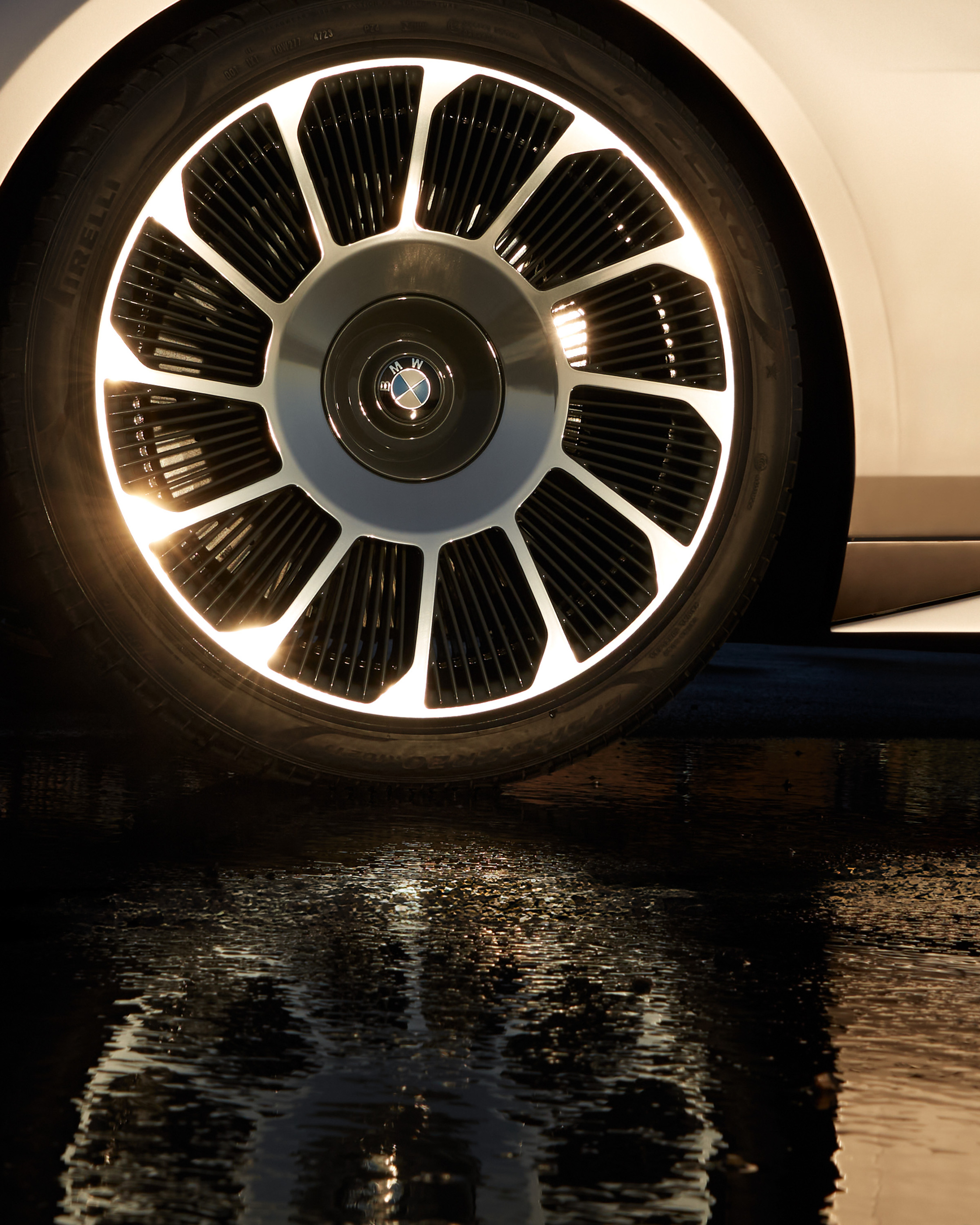
The wheel provides another kind of rhythm. Its repeated elements occupy a circle within an otherwise largely horizontal composition. A close view makes that organisation visible; returning to the complete side profile shows whether the detail supports the car’s wider proportions.
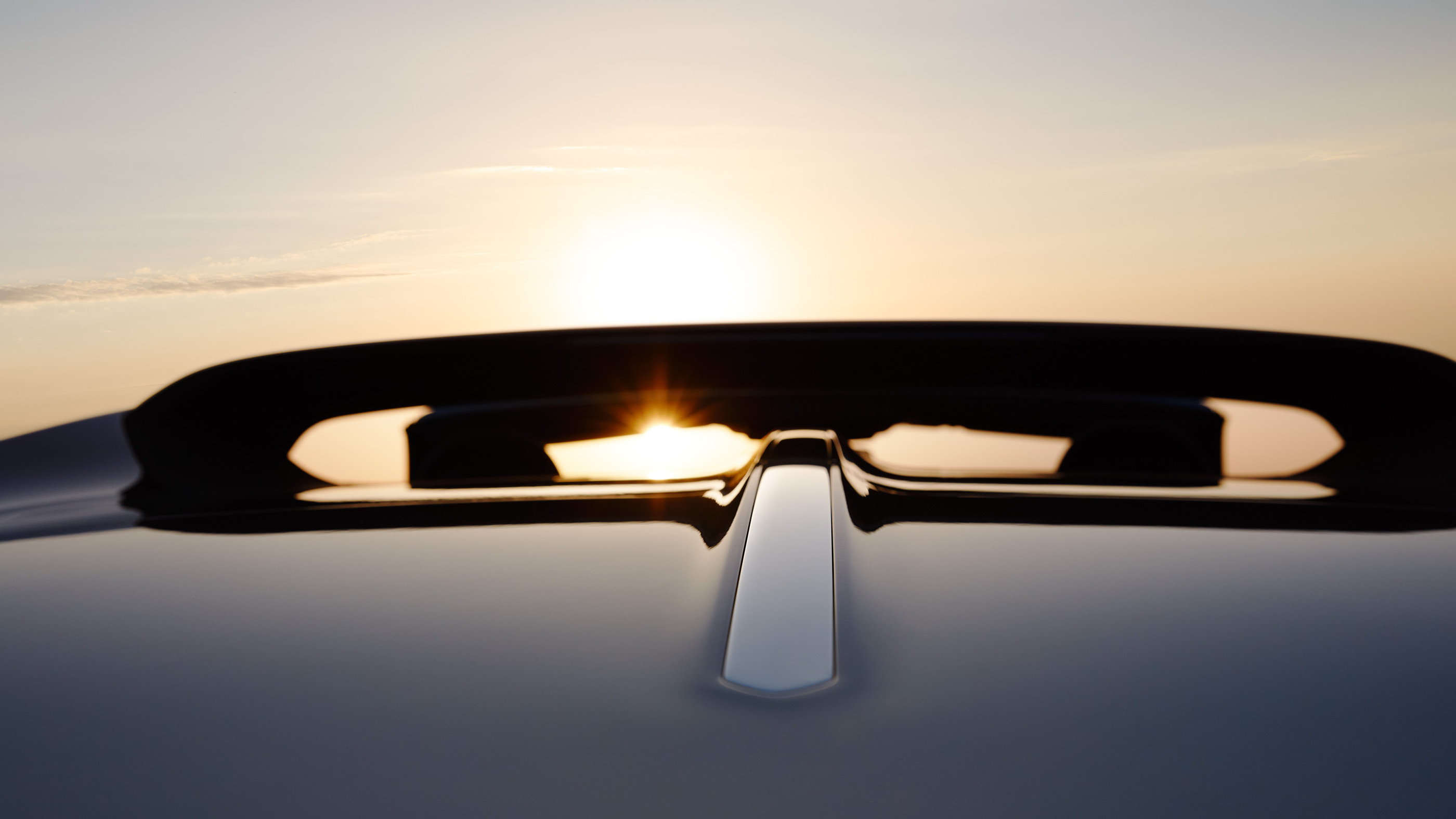
At the rear, the spine and panel divisions deserve a similar sequence. A detail image makes their surface treatment apparent, while a wider photograph explains where the line travels. Showing only the close-up would turn a structural part of the composition into decoration. Showing only the whole car would hide the decisions that make the continuous line convincing.
Two states and one ownership routine
The most useful way to read the Skytop is through the actions its design asks of the owner. The open car, the closed car and the stored panels are all parts of the same object. Each raises questions that can be addressed before discussing colour or a production number.
| Design element | Documented feature | Question to carry into a viewing |
|---|---|---|
| Roof | Two removable leather-covered sections | How are the pieces handled and secured? |
| Storage | A dedicated compartment is described | What remains available for the intended journey? |
| Upper body | A central line continues towards the tail | How does the closed roof complete the shape? |
| Programme | Fifty examples announced in October 2024 | Which exact specification and production record is being discussed? |
These questions make the car more concrete. They connect a striking image to the routine of using an uncommon object, while leaving direct inspection to establish the details that photography cannot settle. A roadster is especially revealing in this respect because its owner actively changes the form being admired.
The Luxe Digital view
Skytop is most persuasive as a study in continuity. Bonnet, cabin, removable panels and rear deck are separate components, but the design encourages the eye to read them as one upper composition. Its strongest photographs show that relationship before isolating the details.
The roof gives the project an additional dimension. It introduces an action, making the owner responsible for moving between two intended states. That is a more specific expression of an unusual car than a claim about exclusivity alone: the object asks to be understood through both appearance and handling.
The production-announcement sequence leaves a clear impression of a roadster drawn from above as carefully as from the side. Its central line supplies direction, while the passenger opening and roof panels give that line a practical complication. The interest lies in how calmly the whole arrangement absorbs that complication.
Skytop is most persuasive as a study in continuity.
Sources & credits
Sources and methodology
Independent design and reference analysis of the named official records and imagery, checked on 15 October 2026. Launch specifications and later product records retain their own dates and references. Images show the identified configurations. No independent road test or driving access is implied.