A television and its sound system rarely age at the same pace. A new screen may change the size of the installation, while a room, a cabinet and an owner’s listening preferences remain much the same. Beosound Theatre makes that difference a useful starting point: the soundbar is presented as a substantial object with its own identity, rather than a temporary accessory below a particular display.
The soundbar is part of the room
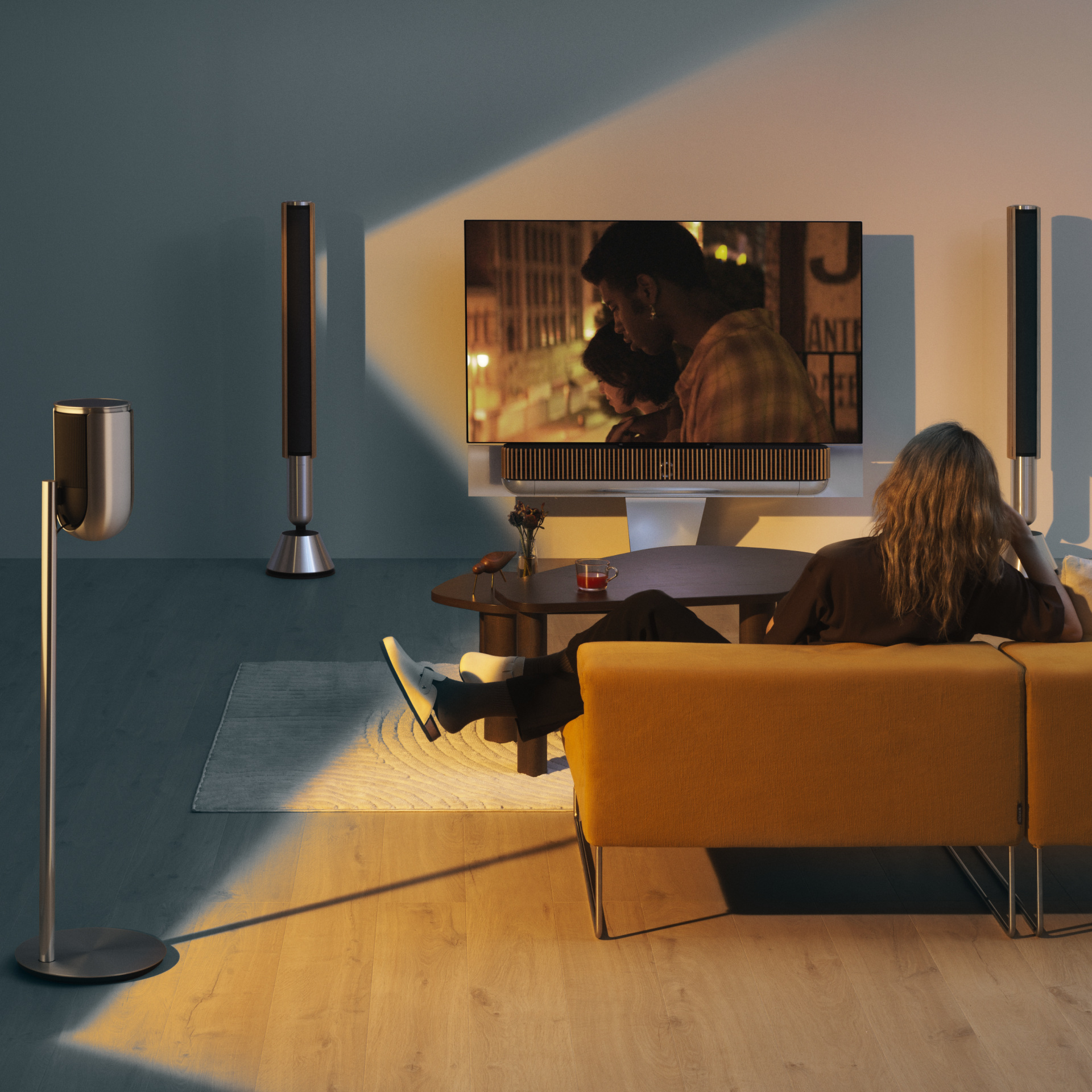
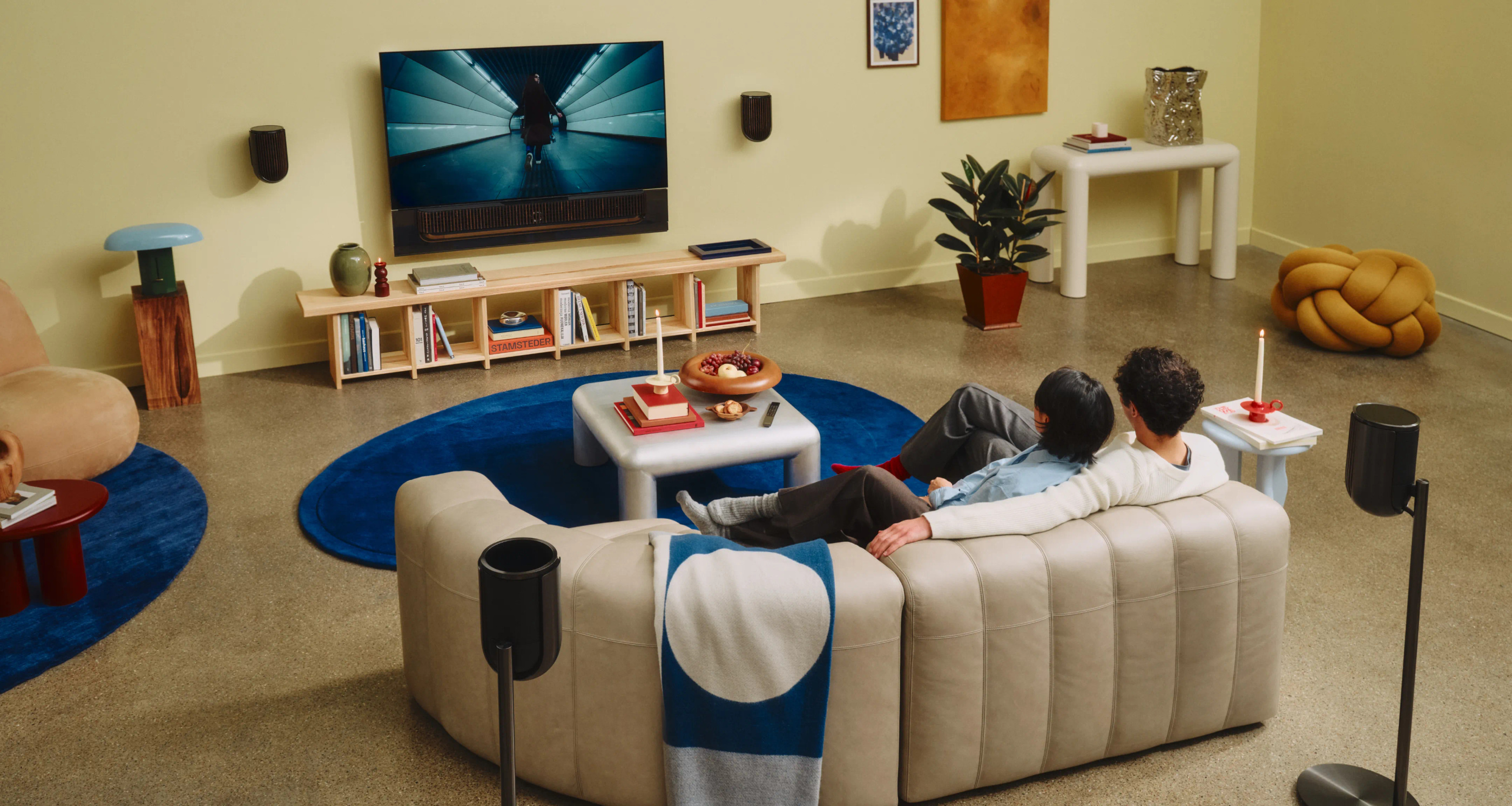
Bang & Olufsen’s current product page describes Beosound Theatre as a Dolby Atmos soundbar with twelve drivers, interchangeable covers and wall or table positioning options. These are the maker’s specifications. The room photographs show its visual relationship with a screen and other loudspeakers; they do not demonstrate the sound heard from a particular seat.
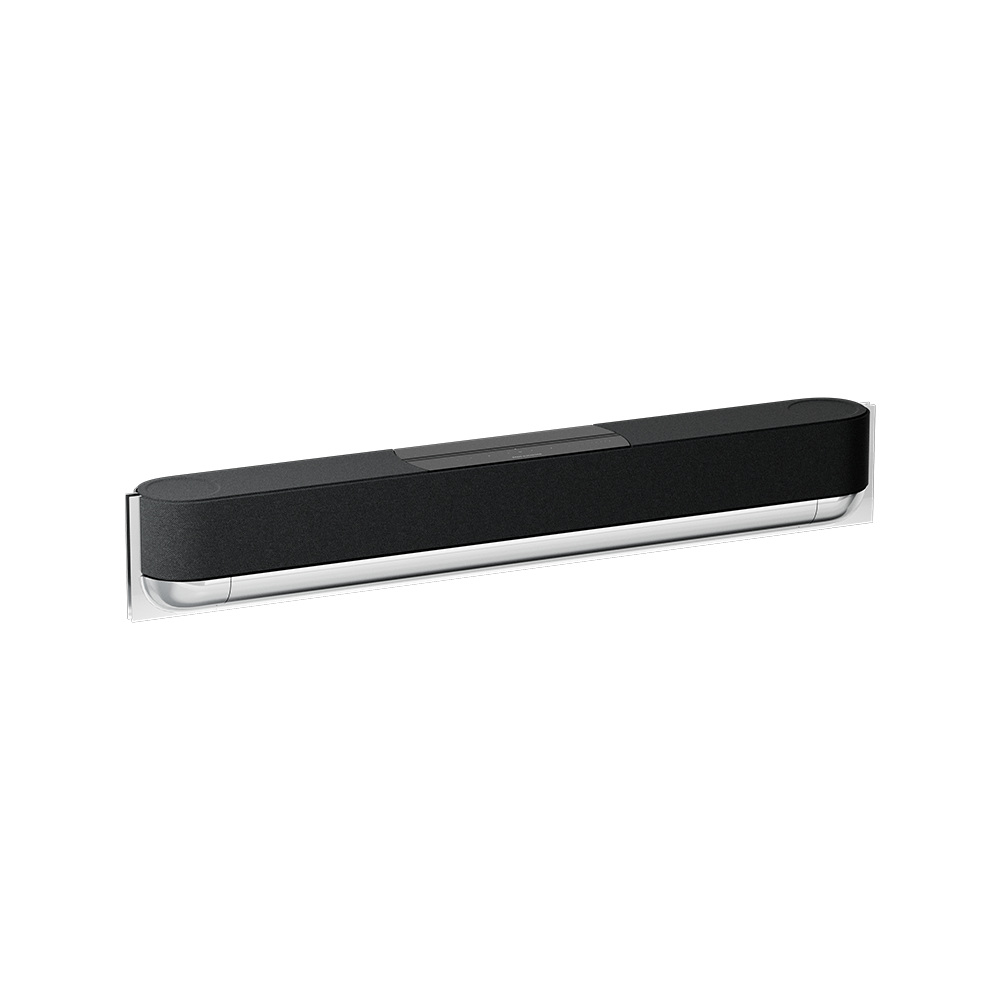
The width and low outline give the object an architectural role. Placed beneath a television, it helps establish the horizontal line that ties the display to the furniture below. A wall-mounted installation and a cabinet arrangement therefore ask different questions, even when the soundbar itself belongs to the same family.
Begin with the room rather than the shopping list. A screen set too high, a cabinet filled without a cable plan or a soundbar pushed into an unsuitable enclosure can make the installation awkward before playback begins. The useful luxury is a system that fits the space deliberately and remains intelligible to the people who use it.
Covers change the reading
The interchangeable front is an important part of the design proposition. It allows the visible surface to have a relationship with the room’s other materials, instead of requiring every television installation to have one identical dark strip below the image. The choice should be made at room scale, where timber, textiles and reflective surfaces already create a visual rhythm.
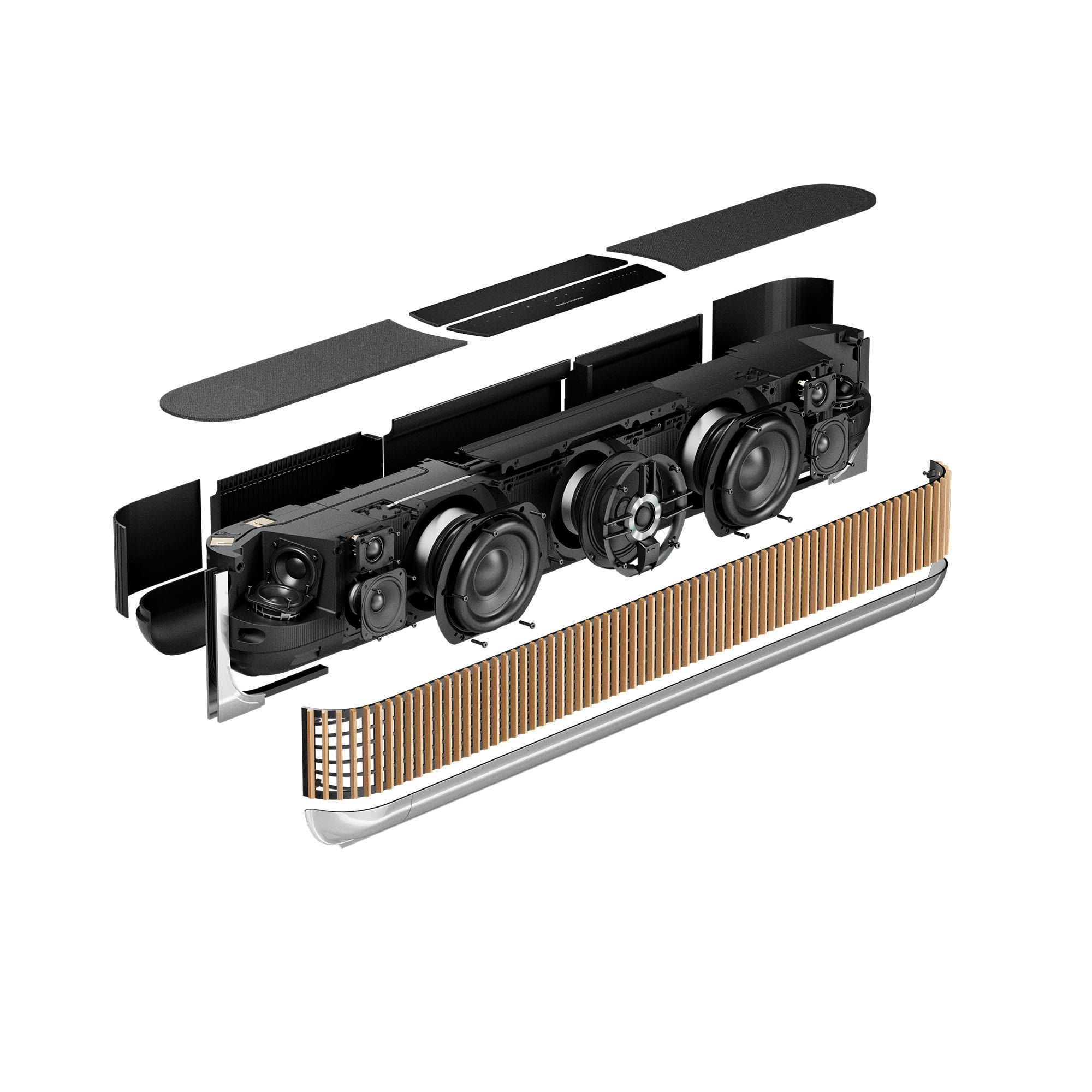
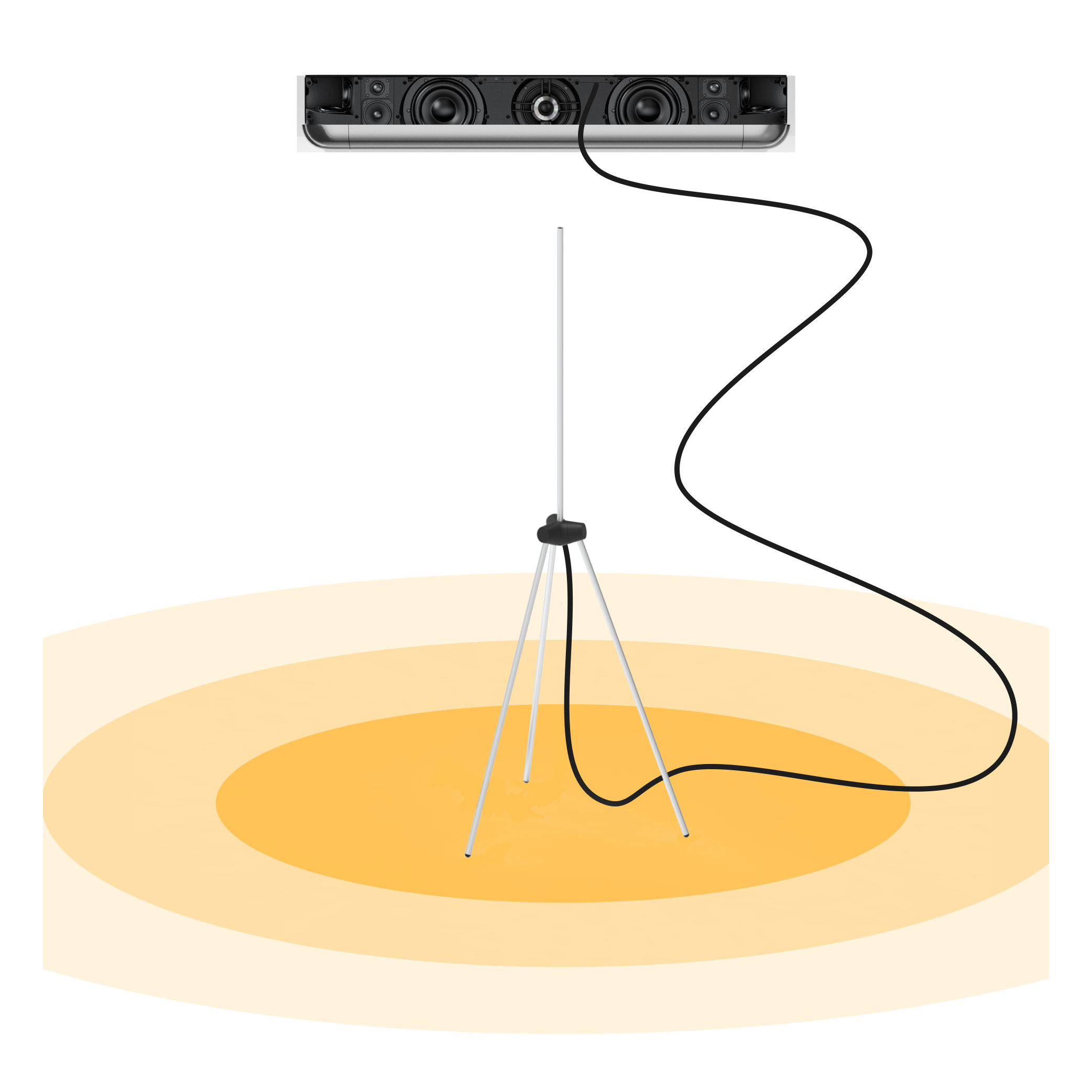
An exploded manufacturer visual separates the exterior from the driver arrangement. It is a technical illustration, not a photograph of an owner dismantling a soundbar. Its editorial value lies in showing that the decorative surface and the acoustic assembly are different layers, with different jobs to perform.
Those layers should not be confused in an order. A pictured cover, mounting arrangement or companion speaker may be an option or part of a styled system. Obtain a written specification for the intended installation so that appearance, supplied items and additional equipment are clearly distinguished.
The next screen is a design question
Bang & Olufsen’s historical reporting describes the product’s modular design ambition as a way of separating the soundbar’s life from that of a television. That is a manufacturer’s design proposition, not a guarantee that every future screen, connector or service will remain compatible indefinitely. A durable installation needs a practical route for change, not an unqualified promise of permanence.
Ask what can be altered without rebuilding the room. A future display may have a different width, mounting pattern or connection requirement. The installation should make those points accessible, with space for cables and a clear understanding of which adjustments affect the bracket, the television or the soundbar itself.
Keep the record of the original configuration. Model names, mounting parts and connection paths make a later change much easier to discuss. A photograph of the completed room is useful aesthetically; a simple diagram of the system is useful operationally. Both belong in the handover for an installation intended to last beyond one purchase cycle.
Surround sound begins with a plan
The campaign rooms show Beosound Theatre with companion loudspeakers. Their presence explains a possible system layout, but it is not evidence of the result in another room. Reflections, seating positions, the chosen configuration and the programme all influence what a listener experiences.
The practical discussion should therefore begin with the seats that matter. Is the installation organised around one central position, a family sofa or several places used differently? Which sources must it accept, and how should someone choose between television, music and other playback? A visually refined system still needs a clear daily routine.
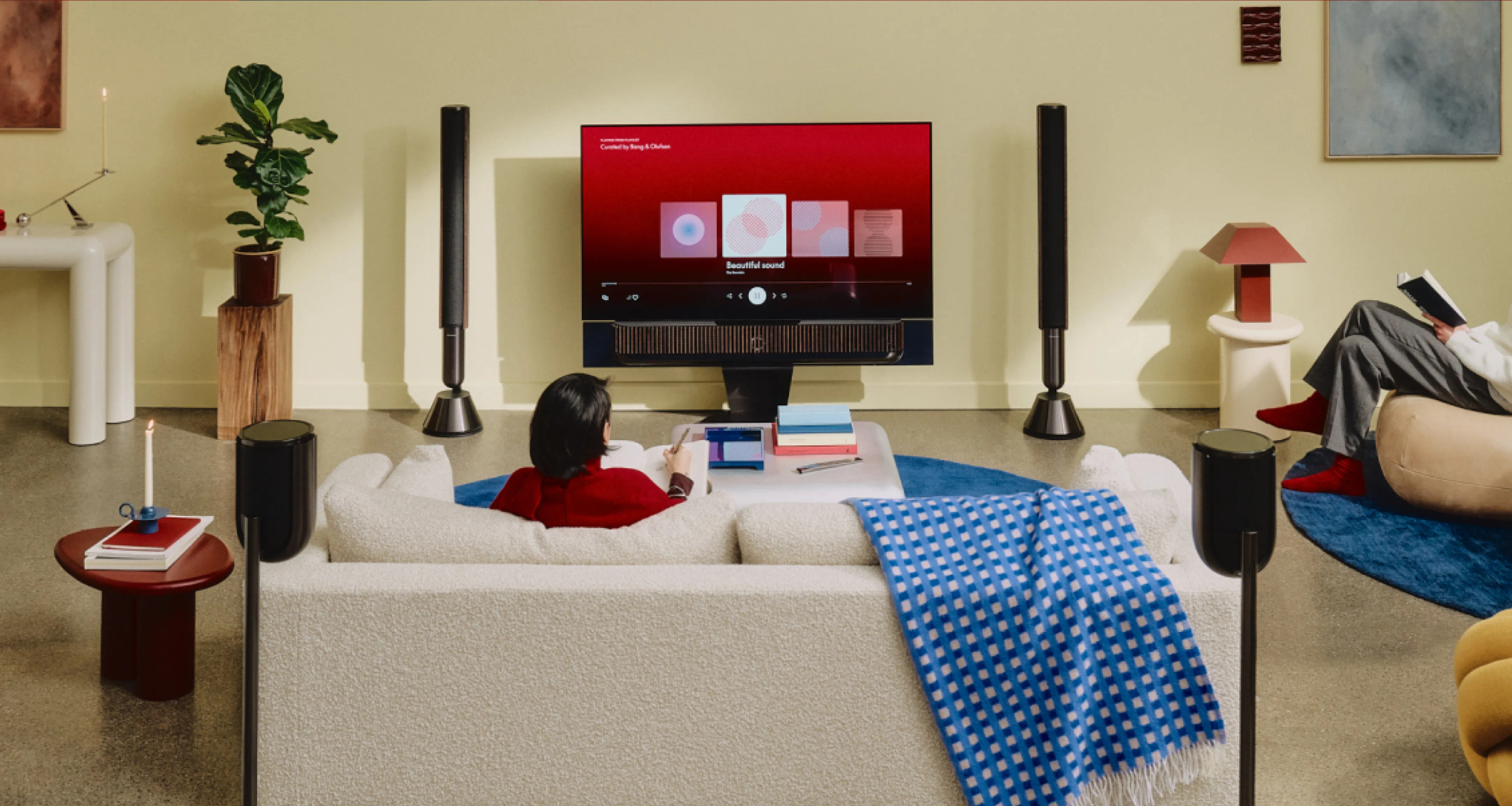
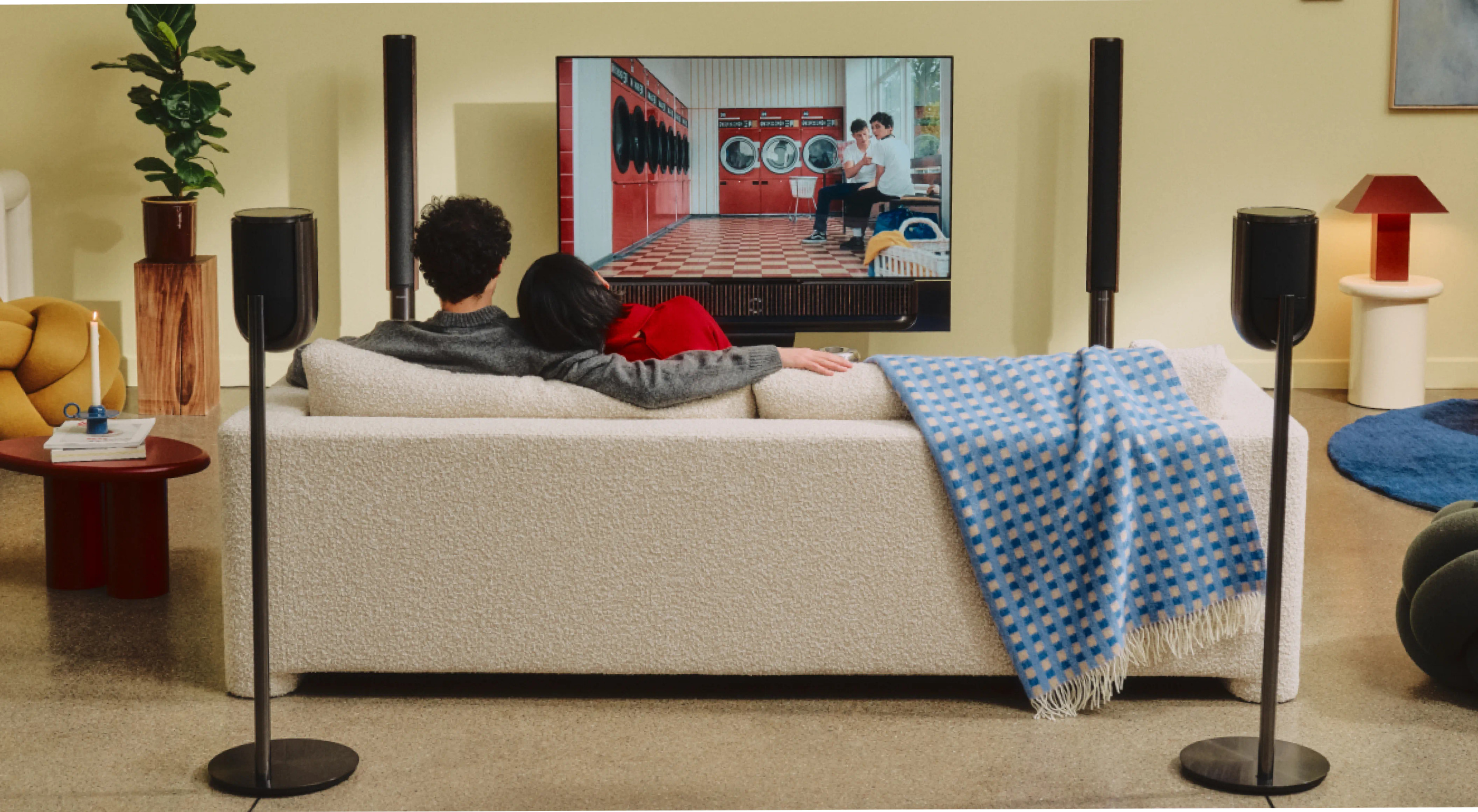
Avoid treating the number of visible objects as a quality score. The right arrangement is the one that meets the brief and can be configured properly. The room images are useful because they put the system back into inhabited space, where circulation and sightlines are as real as the connections.
An installation brief
The best brief includes what the room should feel like when the screen is off. A television wall is present all day, even if films occupy only part of the evening. The soundbar’s visible width, cover and relationship to the furniture therefore deserve the same attention as the composition during playback. Look at the proposed installation in ordinary daylight before judging it only against an illuminated screen.
There is a useful separation between an installation that is visually quiet and one that hides everything. Quiet can mean a clear horizontal line, restrained materials and a simple daily routine. Concealment can create awkward access or make an object sit in a place that was never part of its intended installation. The mounting and configuration guidance should govern the technical decisions; the room brief should make their visual consequences explicit.
The official photographs also show why a plan should include the rest of the room. A companion speaker beside a screen participates in the front elevation, while another placed near seating can affect circulation and the view across the sofa. Neither should be added to the drawing as a small symbol after the furniture has already been fixed. Establish the footprint and position of the actual equipment with the person responsible for the installation.
Finally, consider how somebody else will use the system. A beautifully composed room loses some of its ease if only one household member understands the controls. Demonstrate the intended source selection and ordinary volume routine, including how to return to a familiar state. Operational clarity is a design quality: it lets the room feel considered without requiring its occupants to become system administrators.
| Topic | Establish before ordering | Retain at handover |
|---|---|---|
| Position | Wall or cabinet relationship to the screen | Mounting and clearance information |
| Appearance | Exact front cover and finish | The supplied-item specification |
| Seating | The listening positions the system must serve | The agreed configuration record |
| Sources | Devices and connection requirements | A simple connection diagram |
| Change | Access for a future television replacement | Model and mounting-part identities |
| Use | How everyday playback should be selected | A demonstration for the actual users |
Longevity needs a service path
Modularity becomes useful when somebody can act on it. Ask who will support the installed configuration, how the relevant parts are identified and what a later service enquiry will require. These questions are more revealing than a broad claim that a product is future-proof.
The room photographs also suggest an aesthetic reason to take that care. A well-placed soundbar becomes part of the room’s composition, so replacing it casually can affect more than sound. Making change possible from the beginning helps protect the design effort invested in furniture, position and materials.
The Luxe Digital view
Beosound Theatre is an interesting ownership proposition because it separates the room’s design from the life of one screen. Its value is clearest when the installer makes that separation practical: accessible connections, a defined mounting arrangement and a system the owner understands. The refined object is only the beginning of the installation.
Beosound Theatre is an interesting ownership proposition because it separates the room’s design from the life of one screen.
Sources & credits
Sources and methodology
Independent editorial analysis of the documented product and official source imagery, checked on 14 October 2026. Visual interpretation is distinguished from manufacturer specifications. No handling, driving or acoustic test is implied; exact references and archival dates are retained.
- Bang & Olufsen — source 1: Current Dolby Atmos, twelve drivers, interchangeable covers, mounting choices and official system visuals.
- Bang & Olufsen — source 2: Historic 2022/23 annual-report modular design ambition, explicitly distinguished from a future compatibility guarantee.