The Beolab 90 makes an unusually explicit proposition: a loudspeaker can change how it sends sound into a room. Its many-sided enclosure is visually striking, but the more useful ownership story lies in the relationship between listening position, room boundaries and control. That is where Bang & Olufsen’s technical guide deserves to be read alongside the product photography.


The room is part of the system
A loudspeaker operates in a space with floors, walls, furniture and people. The Beolab 90’s technical documentation addresses that relationship through control of radiation and room compensation. Understanding those functions is more useful than reading the object as a sculptural enclosure followed by a detached list of components.
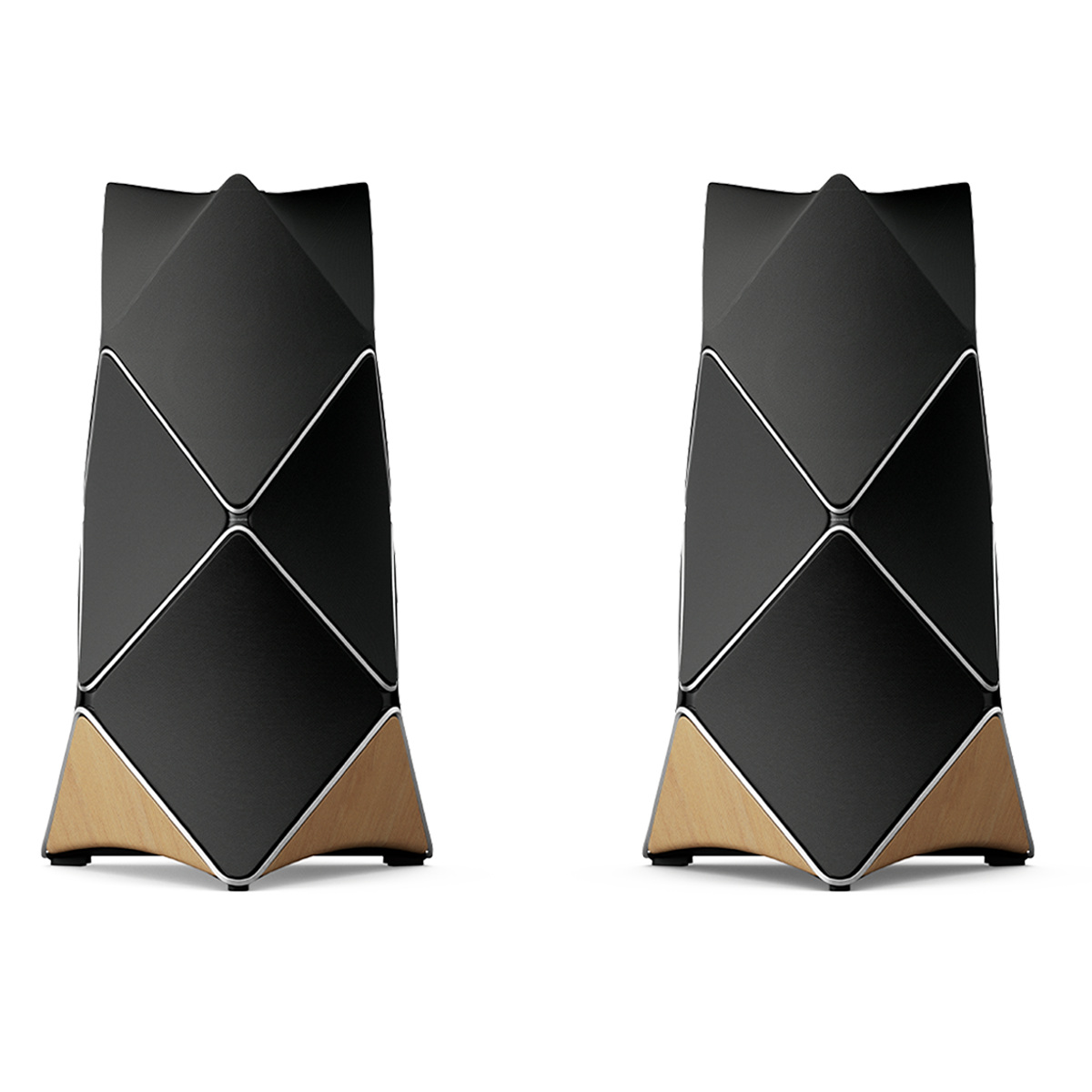
The official images give the enclosure an architectural presence. Its surfaces face in several directions, so it does not offer one simple front and an otherwise anonymous back. That form makes the directional question visible, although a photograph cannot establish the sound field or the result in any particular room.
For an owner, the starting point should be the intended pattern of listening. A dedicated seat, several seats arranged together and people moving through a room are different situations. They may call for different settings and expectations. The system’s controls provide ways to address those situations; they do not eliminate the need to define what the room is expected to support.
Beam width and beam direction are different decisions
Bang & Olufsen documents beam-width and beam-direction control for Beolab 90. Width concerns the spread of the sound field; direction concerns where it is aimed. Separating those ideas prevents an attractive feature name from being treated as a single, universal solution for every listening arrangement.
The guide’s explanation should be read as a system of settings and conditions. A narrower field intended for a focused listening position and a broader field intended for a larger occupied area serve different priorities. The sensible question is not which option is always superior, but which behaviour supports the way the owner wants to use the room.
Direction control introduces another practical consideration: a listening position need not always align with the simplest visual orientation of a room. However, the available settings and their effects must be established during installation and demonstrated in the actual space. This feature does not claim a measured benefit from a setting that has not been auditioned.
The distinction also helps an owner evaluate a demonstration. Switching settings without keeping the listening position and programme material clear can make it difficult to understand what changed. A useful comparison should state the configuration, let the listener remain in a defined position and then explain which function is being altered.
Calibration begins with an identified place
The manufacturer describes Active Room Compensation as part of the system. Its documentation gives a process for measurements and listening positions rather than suggesting that a room becomes acoustically irrelevant. That is a more credible ownership model: the system is configured for a real space, with boundaries and positions that need to be known.
An installation discussion should therefore identify the seats that matter, the likely changes in furniture arrangement and the points from which measurements will be taken. If a room has several uses, the owner should understand which configuration belongs to each one. A saved setting is valuable only when the household knows what situation it represents.
The practical question is how those configurations will be maintained. Moving furniture, changing a preferred seat or substantially altering the room can justify revisiting the setup. This is an ownership process, not a reason to promise effortless perfection. The technical capability is most useful when its operation remains understandable after the installer has left.
A substantial object still needs a placement plan
Beolab 90’s photographs invite a sculptural reading, and that deserves space within a design feature. The enclosure has a strong presence from multiple angles; its material changes separate larger planes and smaller details. A whole-object view establishes that presence, while a closer image reveals the transitions between surfaces.
Placement, however, has to answer more than the photographer’s preferred angle. Clearances, routes through the room, power and signal connections belong in the plan. The exact dimensions and installation guidance should come from the current product documentation for the selected version, rather than being inferred from a styled image containing a person or furniture.
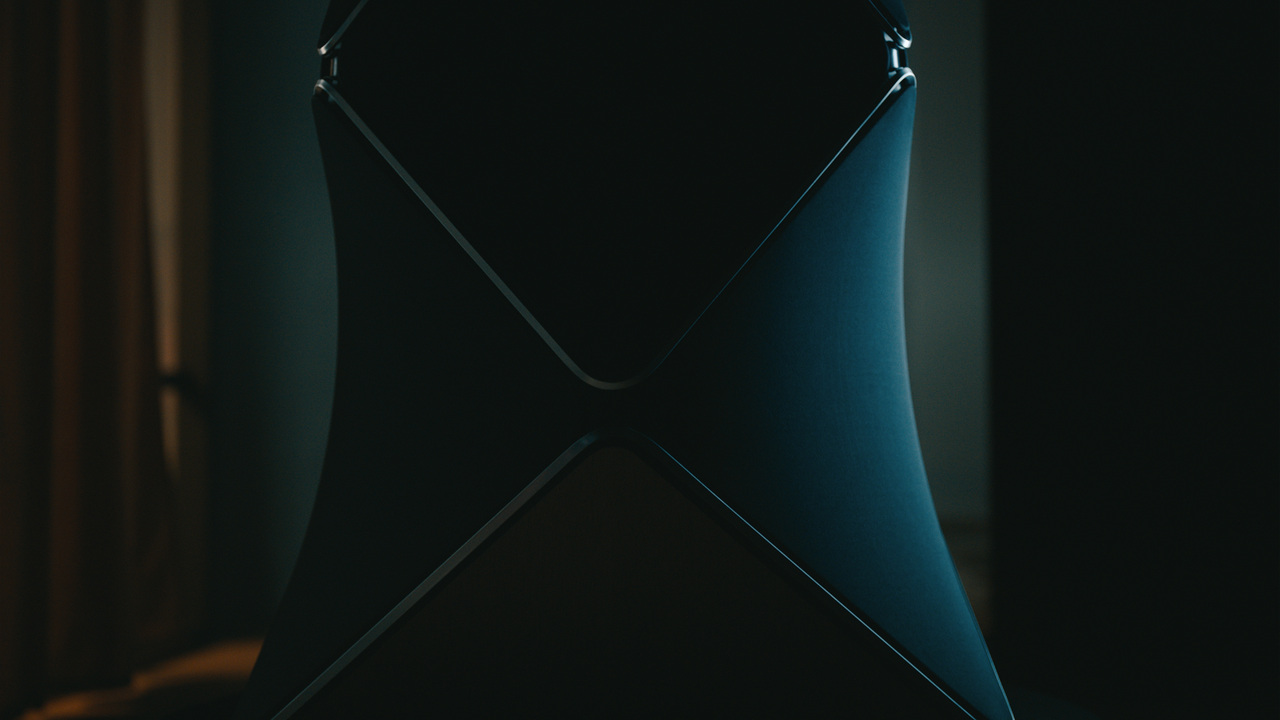
The images shown here are official Beolab 90 product and campaign studies. Styled settings are identified as such and do not represent listening rooms measured by LuxeDigital. Their value is in establishing scale and physical character. They remain separate from the technical evidence used to explain the controls.
That separation is particularly important with finish choices. A photograph can show how one documented presentation catches light, but the order should identify the specific finish and version. Broader campaign imagery must not be treated as a guarantee that every visual detail belongs to the standard configuration being quoted.
Eighteen drivers are a means, not the conclusion
The manufacturer documents an array of 18 drivers in each loudspeaker. The significance of that number lies in the system it enables, including the directional functions explained in the technical guide. Counting components without connecting them to the control scheme would leave the most consequential part of the design unexplained.
Equally, the array does not establish a universal ranking of listening quality. Such a claim would need defined conditions, comparative evidence and direct evaluation. The useful editorial conclusion is narrower: Beolab 90 offers an unusually extensive set of ways to configure the relationship between a loudspeaker, a room and its occupied positions.
For an owner, that suggests a demonstration based on actual use. Listen from the principal seat, then from the other places that matter. Ask which setting is active and why. The purpose is to establish whether the system’s capabilities answer the household’s priorities, rather than simply to witness a technically impressive change.
An installation brief that makes the controls useful
The table turns the technical vocabulary into questions for a specification and demonstration meeting. It is a guide to commissioning the installation, rather than a substitute for the manufacturer’s instructions or an acoustic report on an unvisited room.
| Decision | Function to understand | Evidence to request |
|---|---|---|
| Principal listening seat | Focused listening configuration | A demonstration at the defined position |
| Several occupied seats | Beam-width choice | Comparison from the seats that matter |
| Alternative listening position | Beam-direction control | The documented setting and its intended use |
| Room response | Active Room Compensation | Measurement process and saved configuration |
| Physical placement | Enclosure, connections and clearances | A room plan using the selected product’s dimensions |
| Everyday operation | Switching between configurations | A clear handover for the household |
| Later room changes | Reassessment of the setup | Instructions for when to revisit calibration |
The handover deserves particular attention. A system that has been carefully configured can still be poorly used if the controls are left unexplained. The owner should know the purpose of each relevant setting and how to return to a familiar configuration. That is part of the quality of an installation, rather than an optional technical footnote.
The ownership advantage is intelligibility
Beolab 90’s strongest proposition is a relationship between visible form and controllable behaviour. The enclosure makes the directional nature of the system a subject worth examining; the guide explains the choices that turn that idea into an installation.
The ownership advantage depends on making those choices intelligible. When a household understands which configuration supports a particular seat or gathering, the controls become practical. When they remain unexplained, the same capability can feel like unnecessary complexity. A serious presentation should therefore give the physical object room to impress, then give the owner the evidence needed to use it with confidence.
Beolab 90’s strongest proposition is a relationship between visible form and controllable behaviour.
Sources & credits
Methodology and sources
This analysis uses Bang & Olufsen’s current Beolab 90 product presentation, technical sound guide version 9 and official support record. It is not a listening test, an acoustic measurement or a claim of superiority over another system. Functions are manufacturer-documented; the installation questions and ownership interpretation are LuxeDigital’s own.