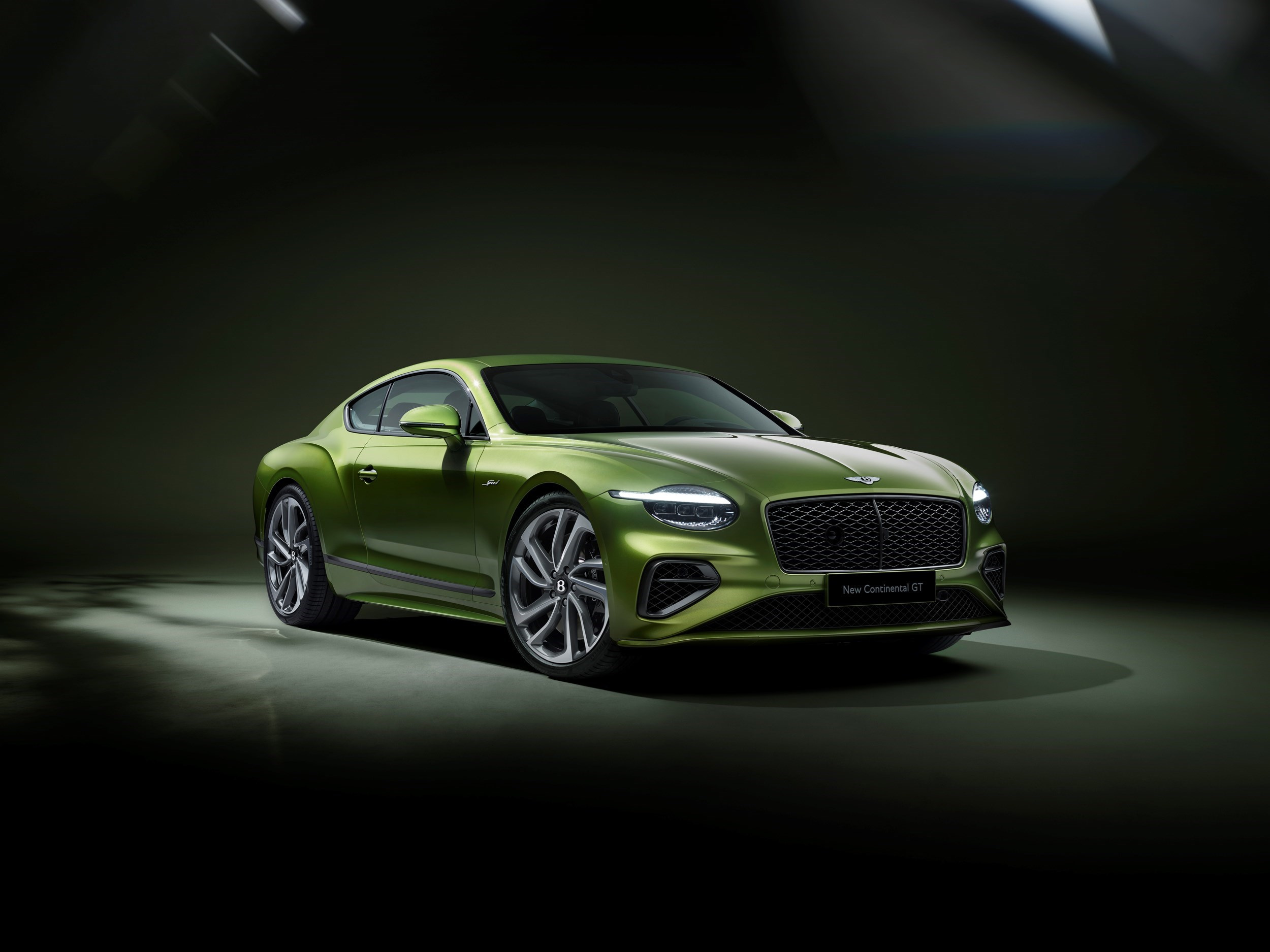
The fourth-generation Bentley Continental GT Speed changes its energy architecture without abandoning the recognisable grand-touring shape. A new single headlamp sharpens the face, while the roofline still gathers four seats beneath a long, low body. The useful question is how that familiar object now accommodates a V8, electrical assistance and the everyday spaces expected of a Continental.
A new face on a recognisable volume
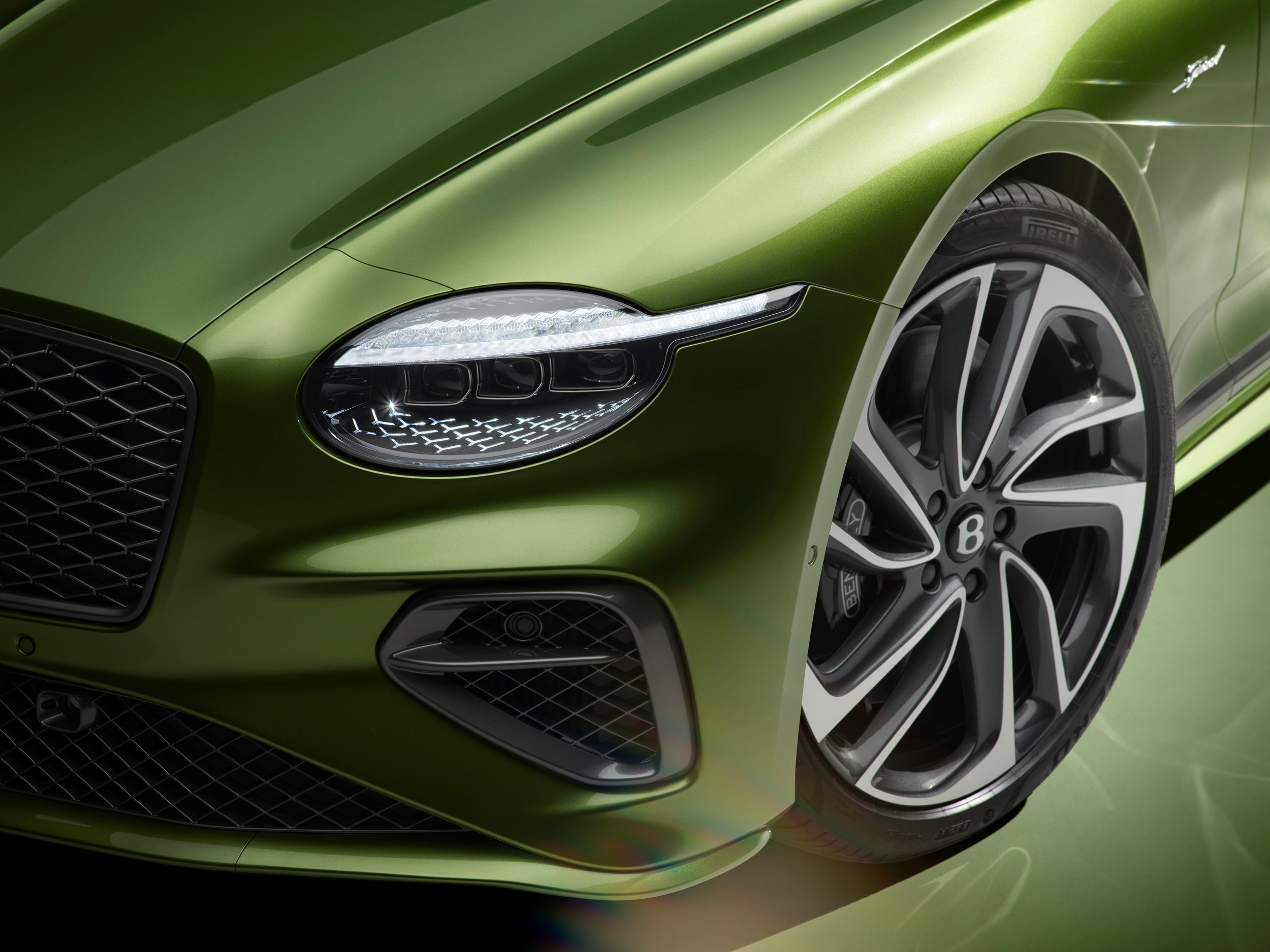
The official green studio car makes the change in lighting immediately visible. A single headlamp replaces the previous paired arrangement, giving the front corner a more concentrated graphic. It is a small area of the total body, but one with an unusually large effect on recognition.
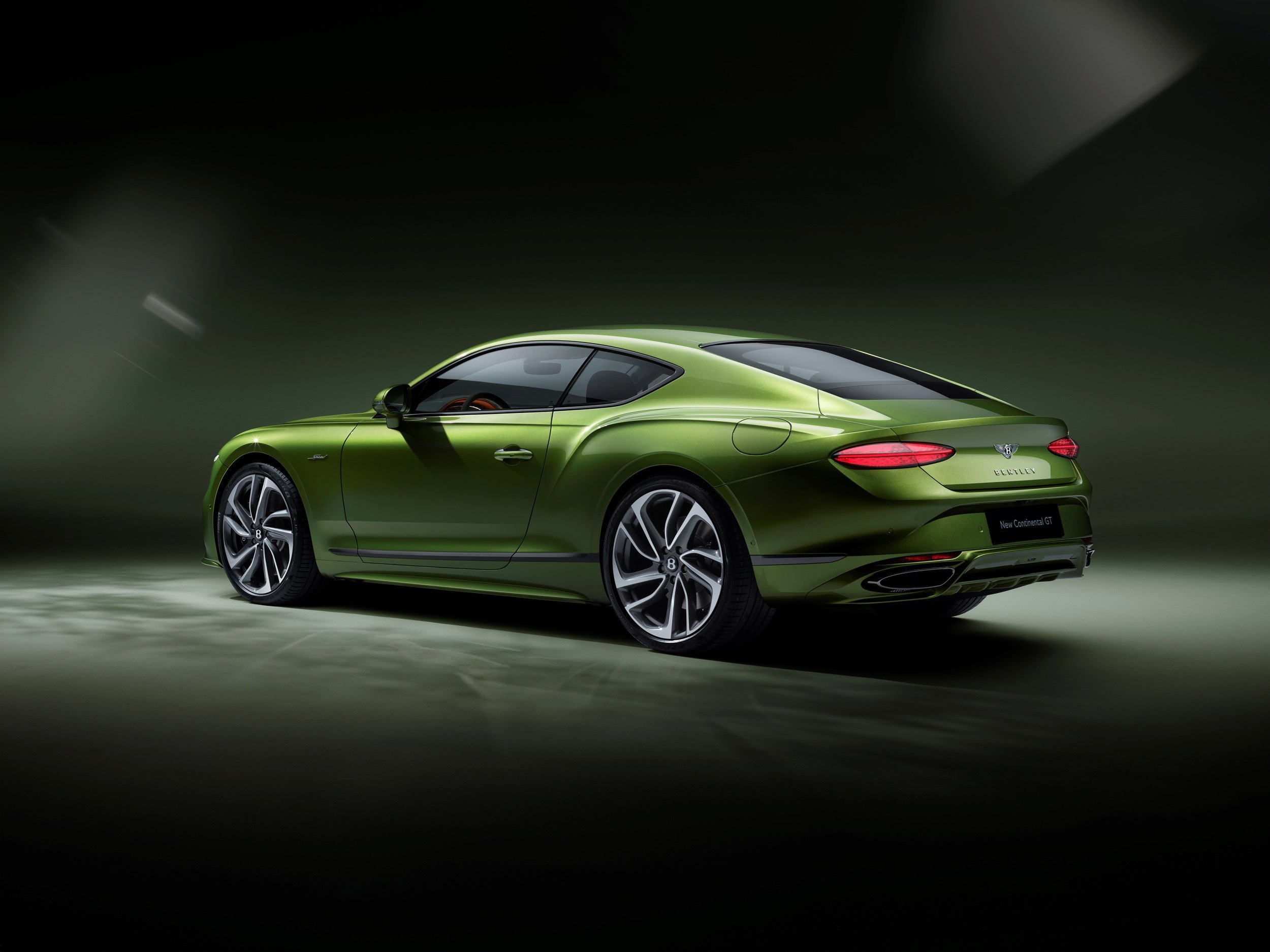
From the rear quarter, the continuity is clearer. The long door, falling roof and broad rear shoulder remain the principal elements of the coupe’s volume. The new face does not require the entire car to become visually unfamiliar. Instead, a few concentrated changes revise the way an established shape is read.
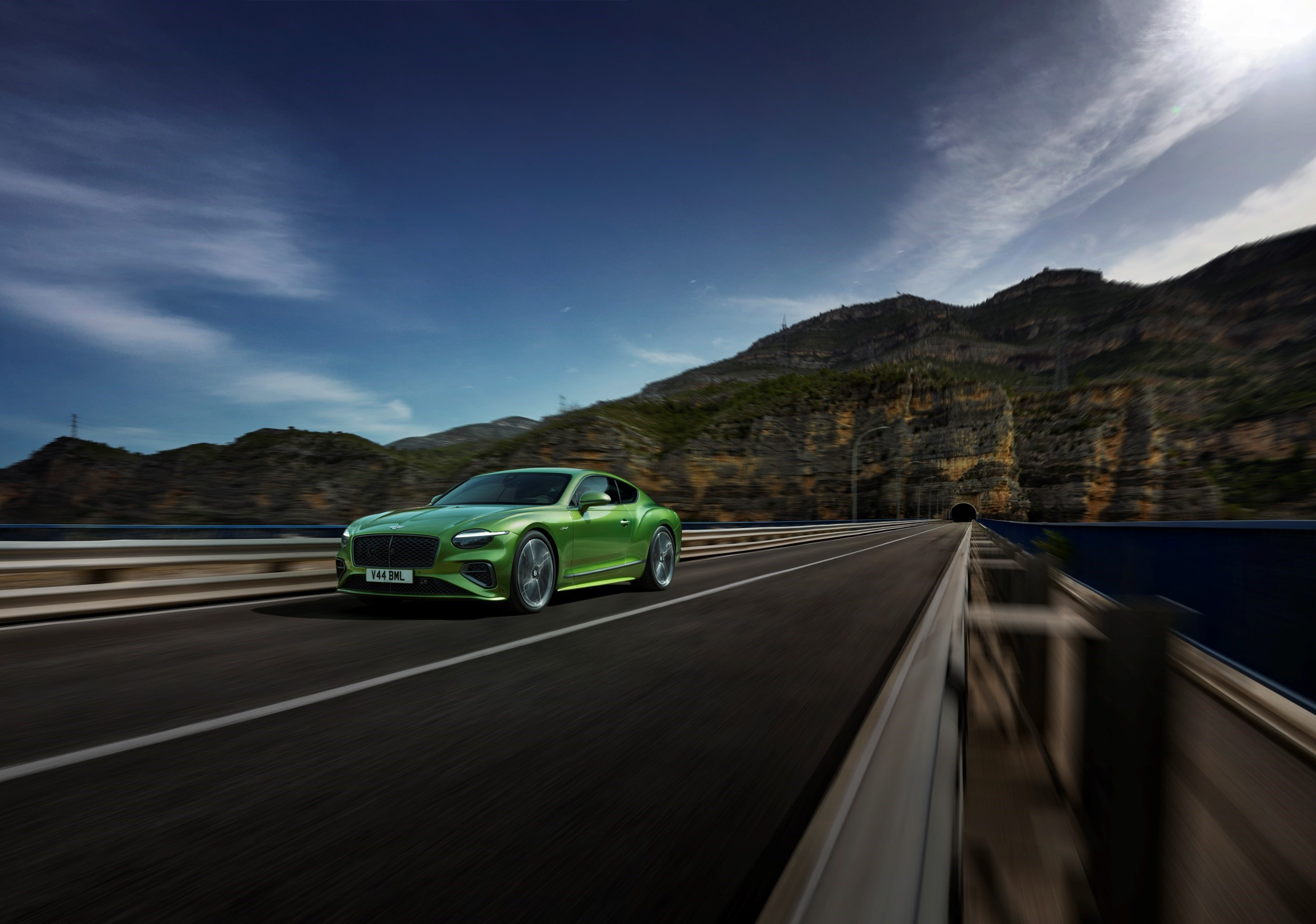
That balance is useful in a model with a strong ownership identity. The complete studio view establishes the object; moving images on a mountain road make its length and height easier to place. Neither needs an exaggerated background to explain that this is a substantial four-seat grand tourer rather than a narrowly packaged two-seat sports car.
The hybrid layout has a geography
Bentley’s June 2024 introduction describes a 4.0-litre V8 working with an electric motor. The launch system output is 782 PS, with 1,000 Nm of torque. The figures identify the fourth-generation Speed’s declared specification; the more interesting design question is where the components sit.
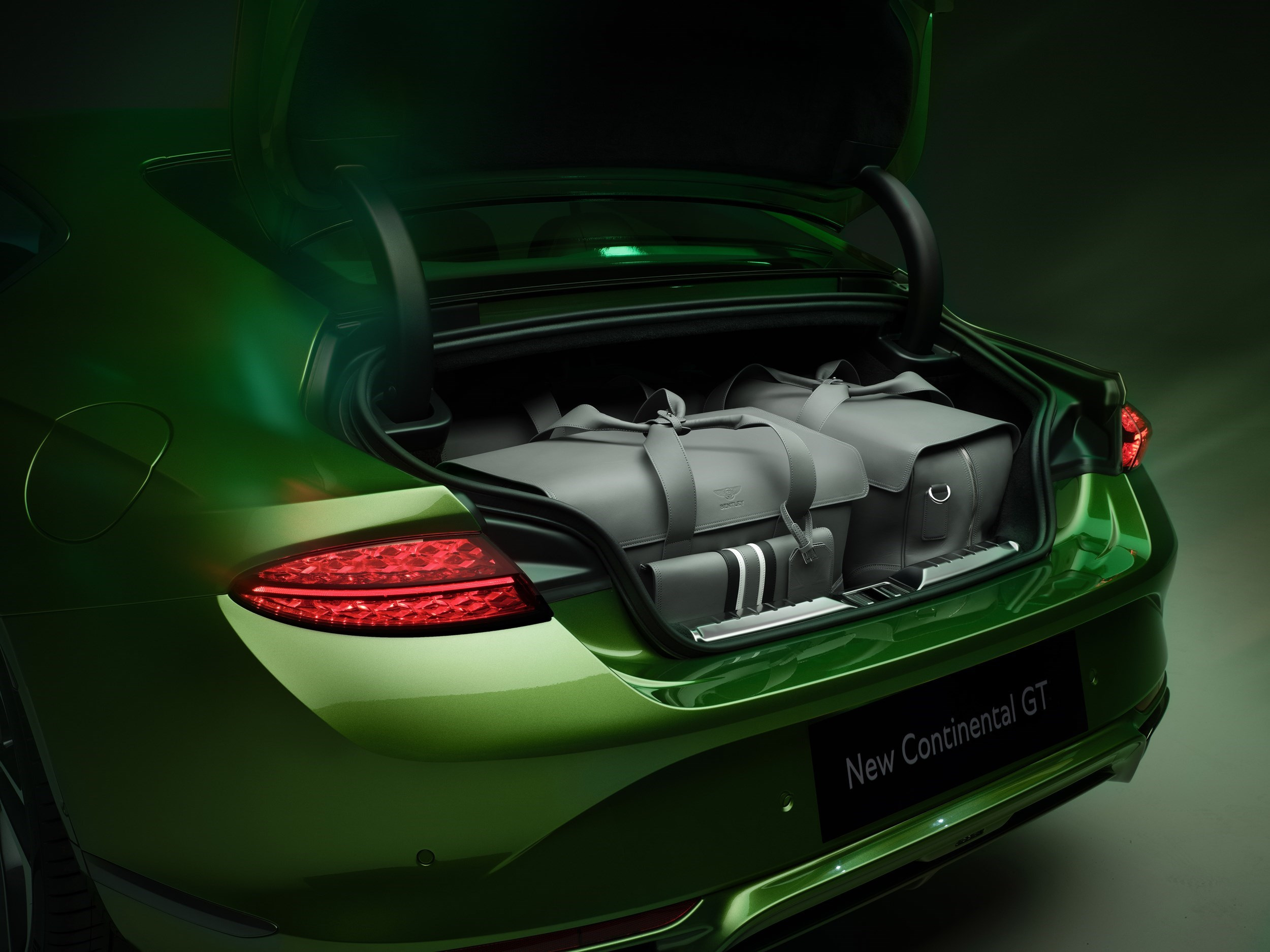
The launch account places the electric motor within the transmission housing and the 25.9 kWh battery behind the rear axle. Those locations give the hybrid system a geography inside the car. Electrical assistance is not an abstract badge applied to the bonnet: it requires physical space, with consequences for the organisation of the complete vehicle.
Bentley’s official luggage-compartment image is valuable for precisely that reason. It shows the owner’s usable volume rather than only the machinery. The technical layout and the luggage photograph describe different sides of the same packaging problem, connecting an engineering decision to the practical scale of a journey.
Four seats give the cabin another responsibility
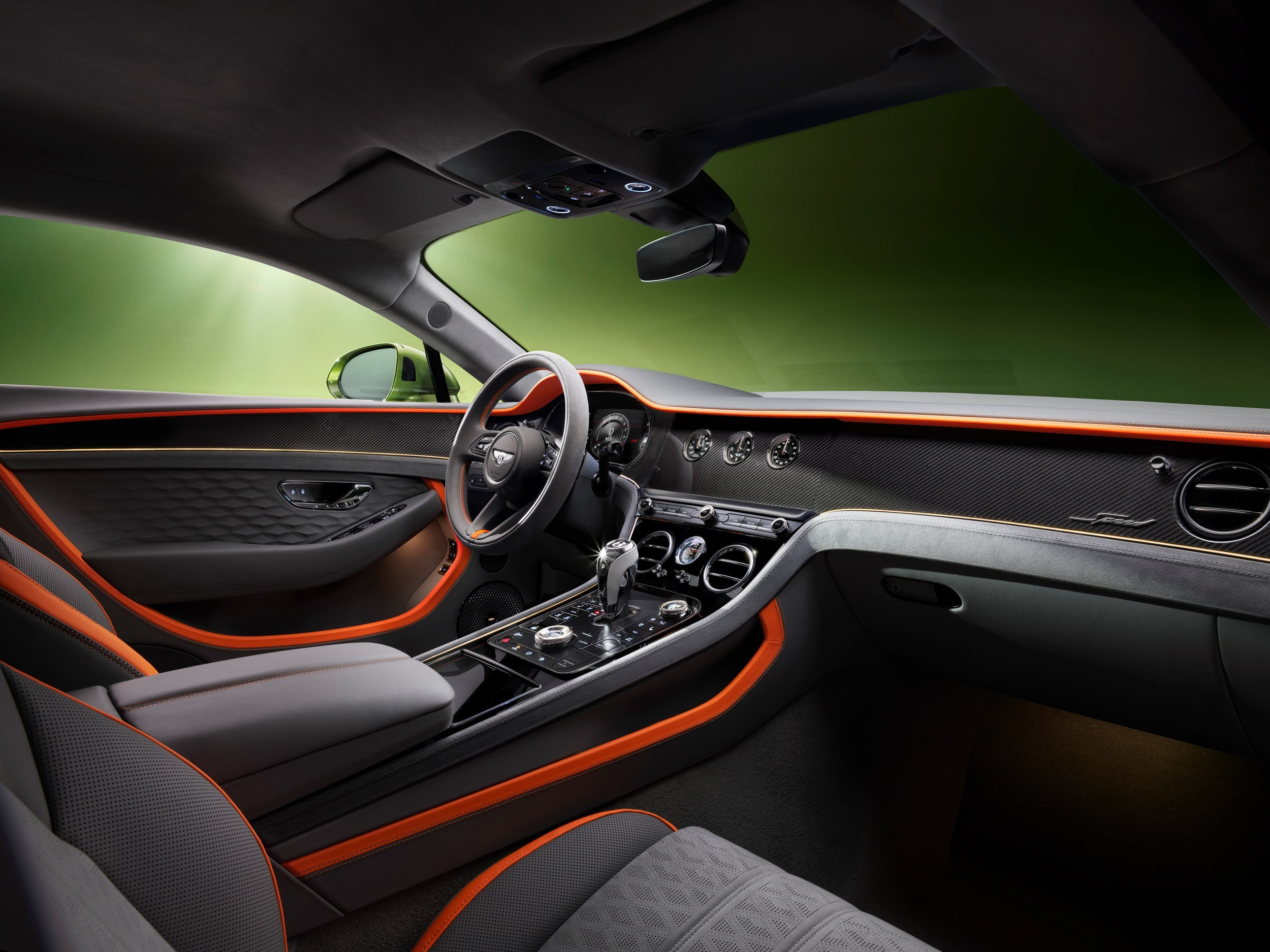
The front interior is arranged as a broad horizontal composition. Instruments, central controls and the passenger side are held within an apparently continuous dashboard, with contrasting trim making selected edges more visible. The eye can follow that line without losing the separate places occupied by driver and passenger.
The rear-seat photograph adds a necessary second account. A four-seat interior should be understood as four actual positions within a body, rather than as a single category label. Seat shapes, the central division and the fall of the surrounding trim make the rear compartment legible even before questions of individual fit are considered.
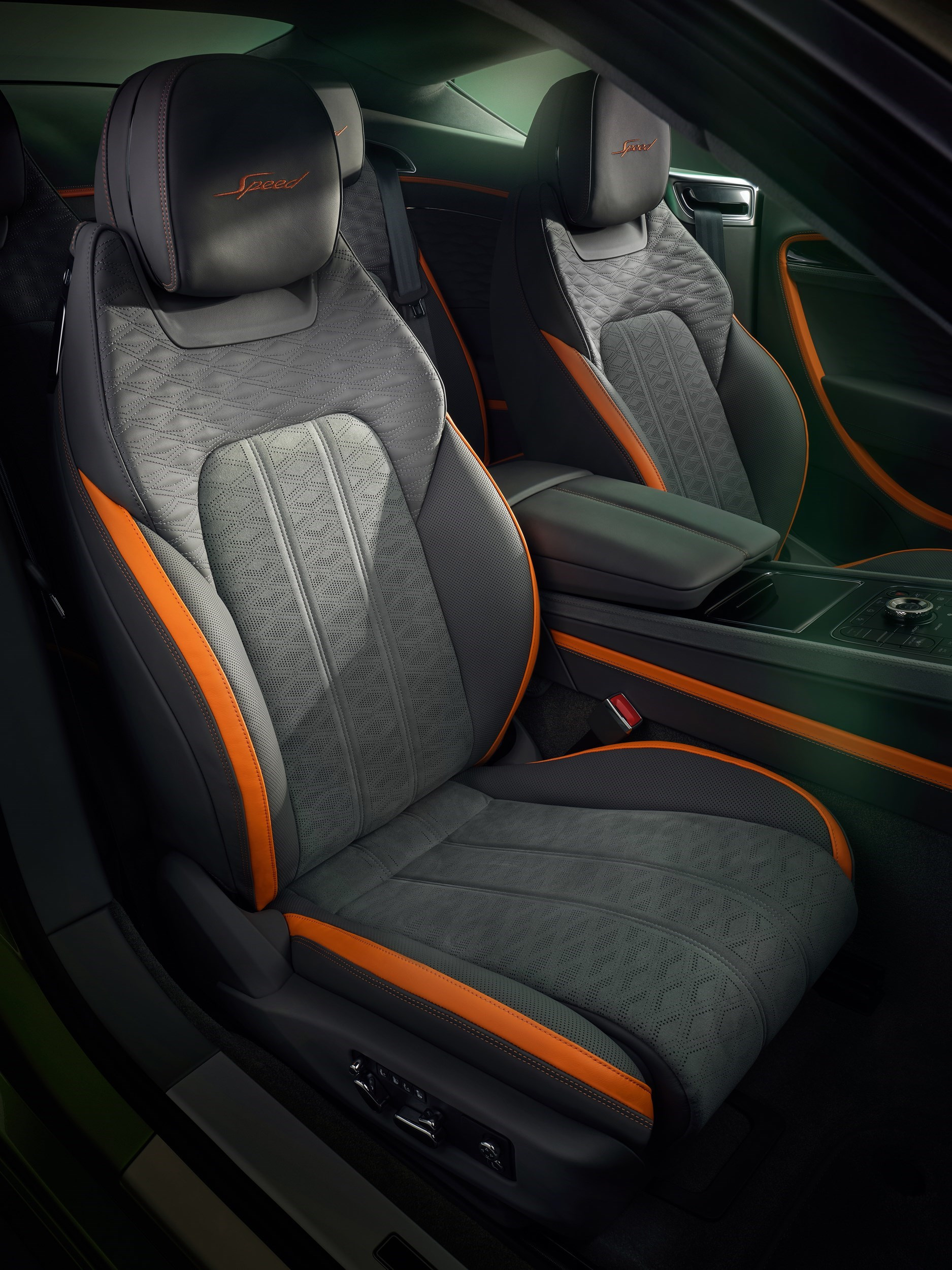
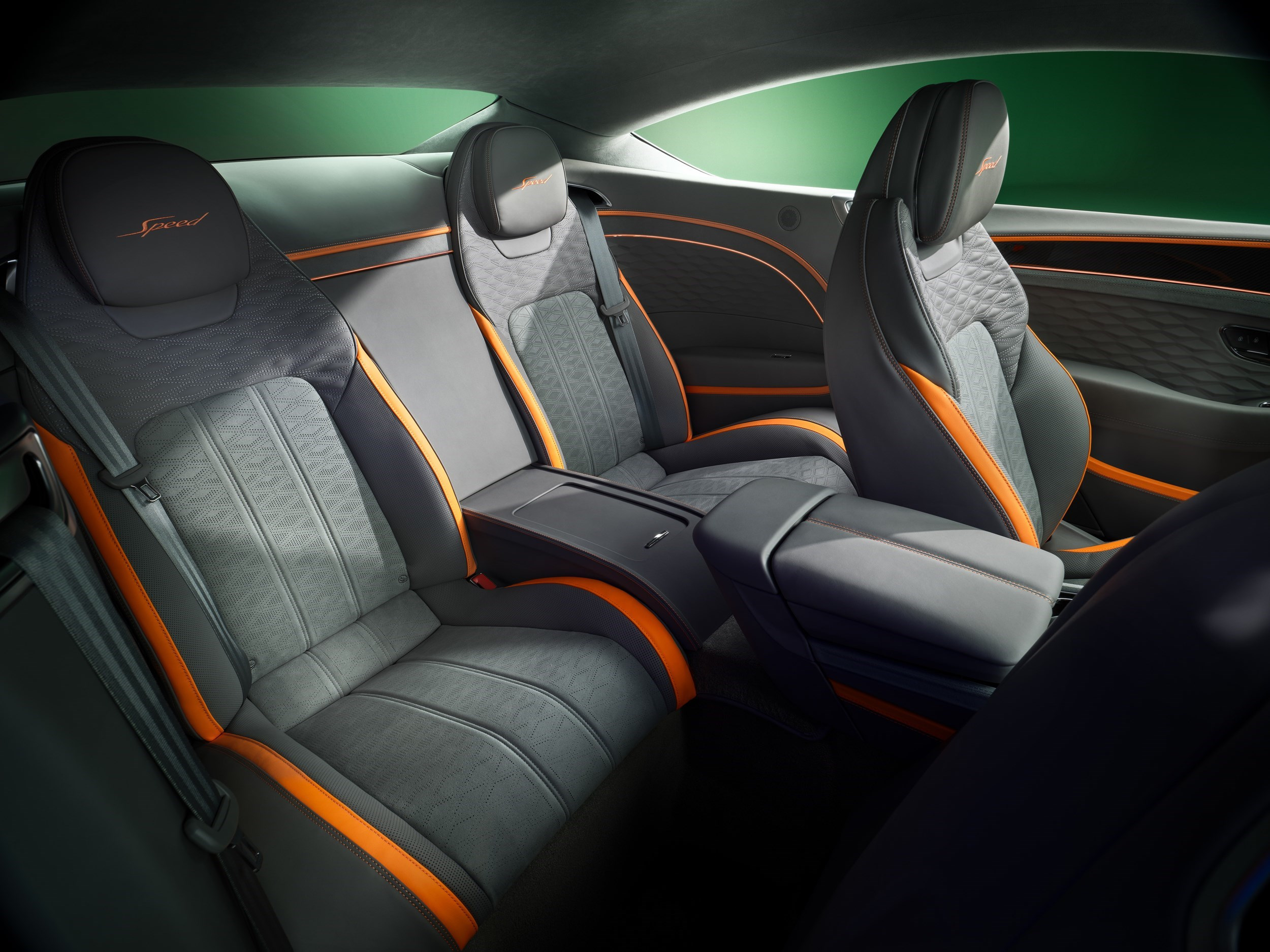
Photographs can establish that arrangement, but personal access is needed to judge headroom, entry and comfort. The useful editorial response is to show the space clearly and leave room for those questions. A grand tourer’s appeal depends on the relationship between the complete car and the people it is expected to carry.
Surface treatment changes the sense of scale
The green exterior and the darker cabin do different work. Outside, broad reflections make the shoulder and wheel arches easy to follow. Inside, upholstery, stitching and contrasting lines break larger surfaces down into the smaller areas encountered by a seated person.
A close view of the headlamp reveals another change of scale. The front of the car can read as a simple graphic from a distance, while the lamp itself contains a more intricate arrangement. The same is true of the interior: the dashboard is a single broad gesture until a detail image reveals the junction between materials and controls.
This is where a considered picture sequence adds value. Moving directly from a distant exterior to a catalogue of equipment would lose the connection. Showing front corner, dashboard, front seat and rear seating in turn makes the Continental’s design easier to understand as a set of related decisions.
The specification and the journey
The 2024 launch record is the basis for the figures below. Bentley subsequently announced the first fourth-generation production example in September that year. Neither date should be confused with the publication date of this design study, or with the specification of later derivatives carrying related names.
| Area | Fourth-generation launch account | Ownership question it raises |
|---|---|---|
| Combustion engine | 4.0-litre V8 | Which driving and servicing pattern suits the intended use? |
| Hybrid output | 782 PS and 1,000 Nm | Which exact Speed generation is being specified? |
| Battery | 25.9 kWh, behind the rear axle | How do charging routine and luggage needs fit together? |
| Cabin | Four-seat arrangement | Who will use the rear compartment, and for what journeys? |
| Exterior | Single-headlamp front graphic | Which body and trim details distinguish this generation? |
These questions turn a specification into a more useful conversation. They do not require invented consumption results or an assumed electric range for a particular trip. The owner can begin with the documented layout, then establish how a real example fits the intended pattern of travel.
The Luxe Digital view
The Continental GT Speed’s strongest design decision is to let a substantial technical change coexist with visual continuity. The hybrid system reorganises the car’s energy account; the body still offers an immediately understandable grand-touring proposition. Familiarity becomes a framework within which the new architecture can be read.
The single headlamp provides the sharpest visual marker, but the cabin and luggage images complete the story. They bring the discussion back to seats, bags, controls and the space used over a journey. Those are essential parts of this car’s identity, even when the power figure receives more attention.
A successful reading therefore moves in both directions: outwards from the machinery to the whole silhouette, and inwards from the silhouette to the occupied room. The fourth-generation Speed becomes most interesting at that meeting point, where a new system has to serve an established idea of a grand tourer.
The Continental GT Speed’s strongest design decision is to let a substantial technical change coexist with visual continuity.
Sources & credits
Sources and methodology
Independent design and reference analysis of the named official records and imagery, checked on 15 October 2026. Launch specifications and later product records retain their own dates and references. Images show the identified configurations. No independent road test or driving access is implied.