A honeycomb is recognisable before it becomes ornament. Its repeated cells can form a line, turn into a circle or settle around a wrist while remaining part of the same visual language. Bee de Chaumet uses that flexibility to move between graphic abstraction and the small, figurative presence of a bee.
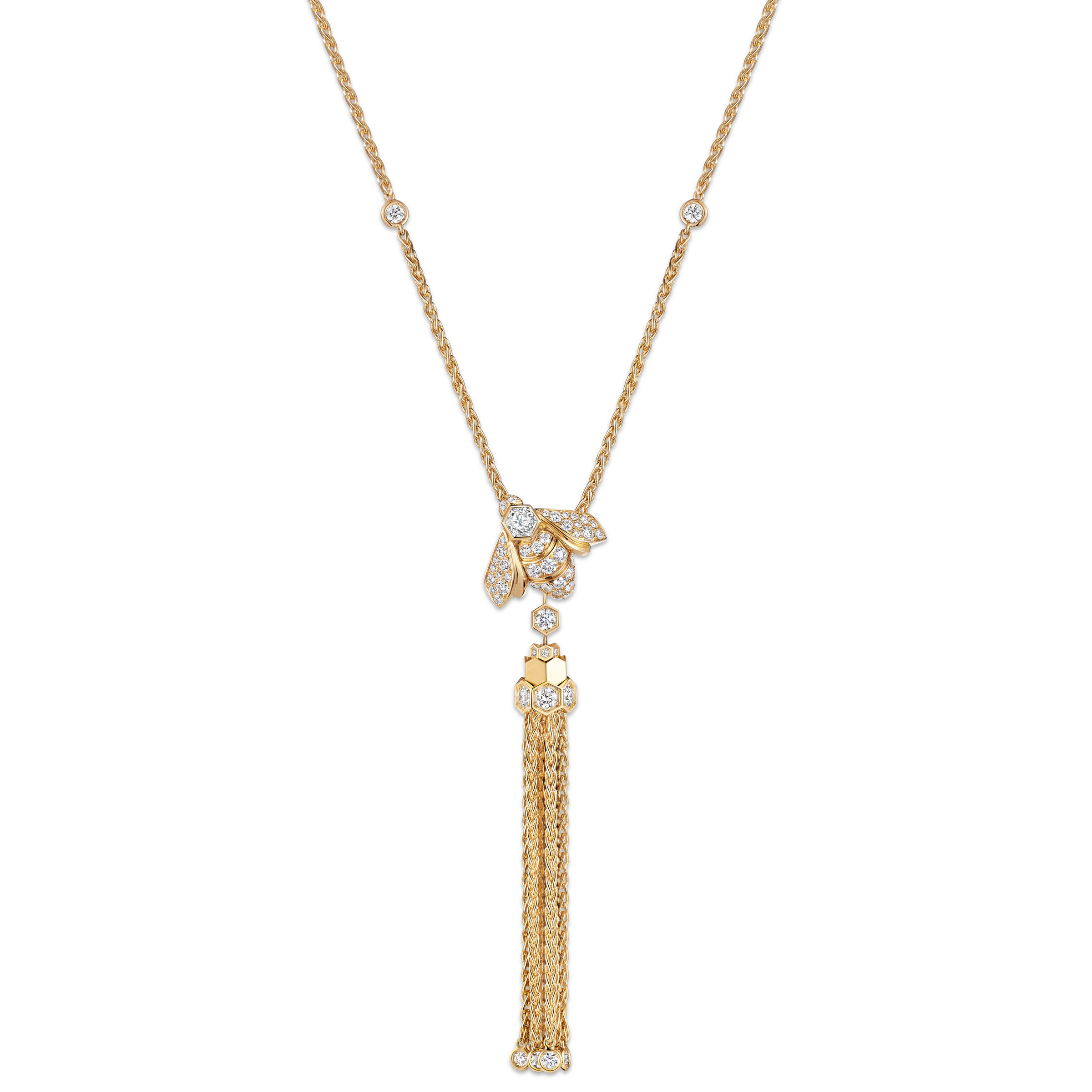
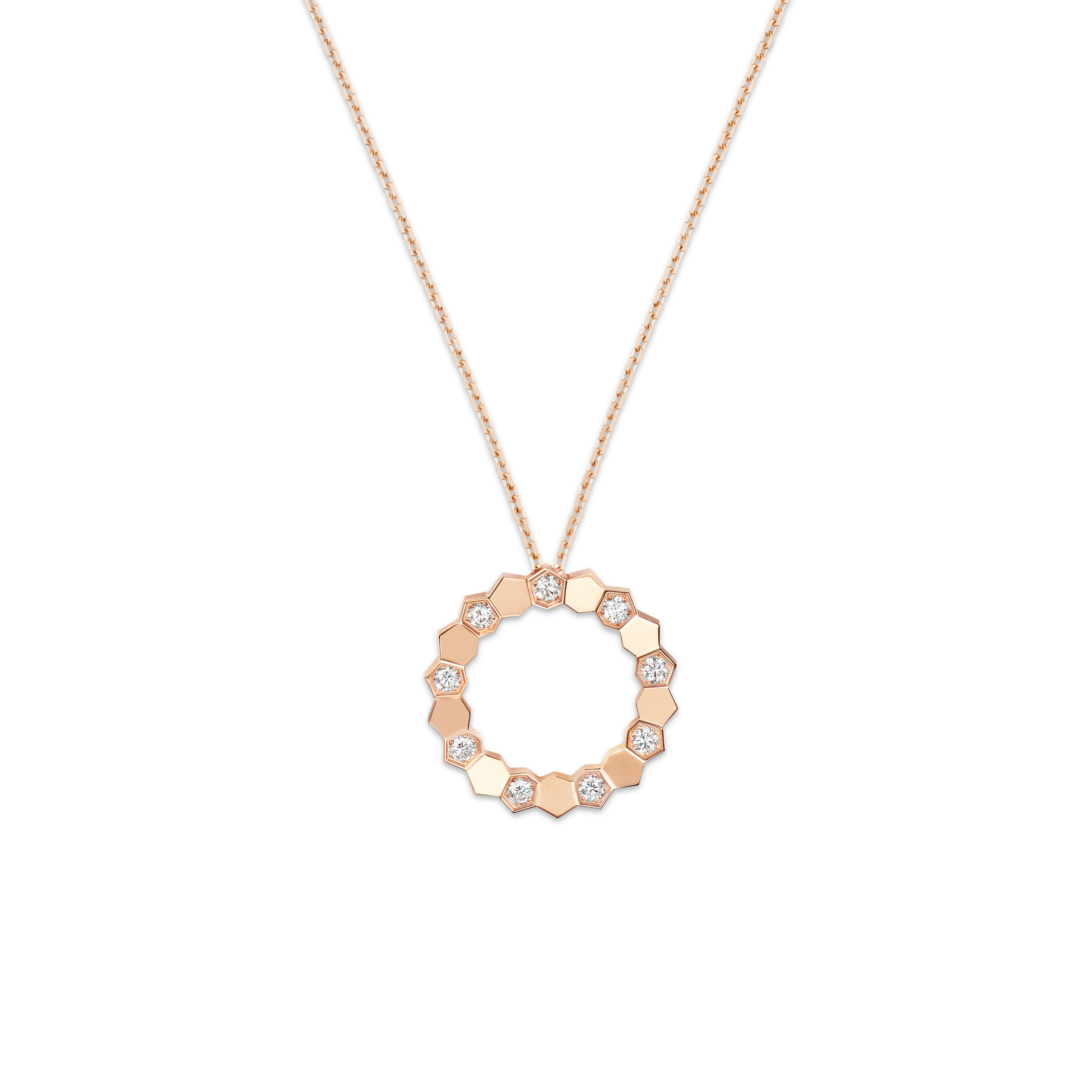
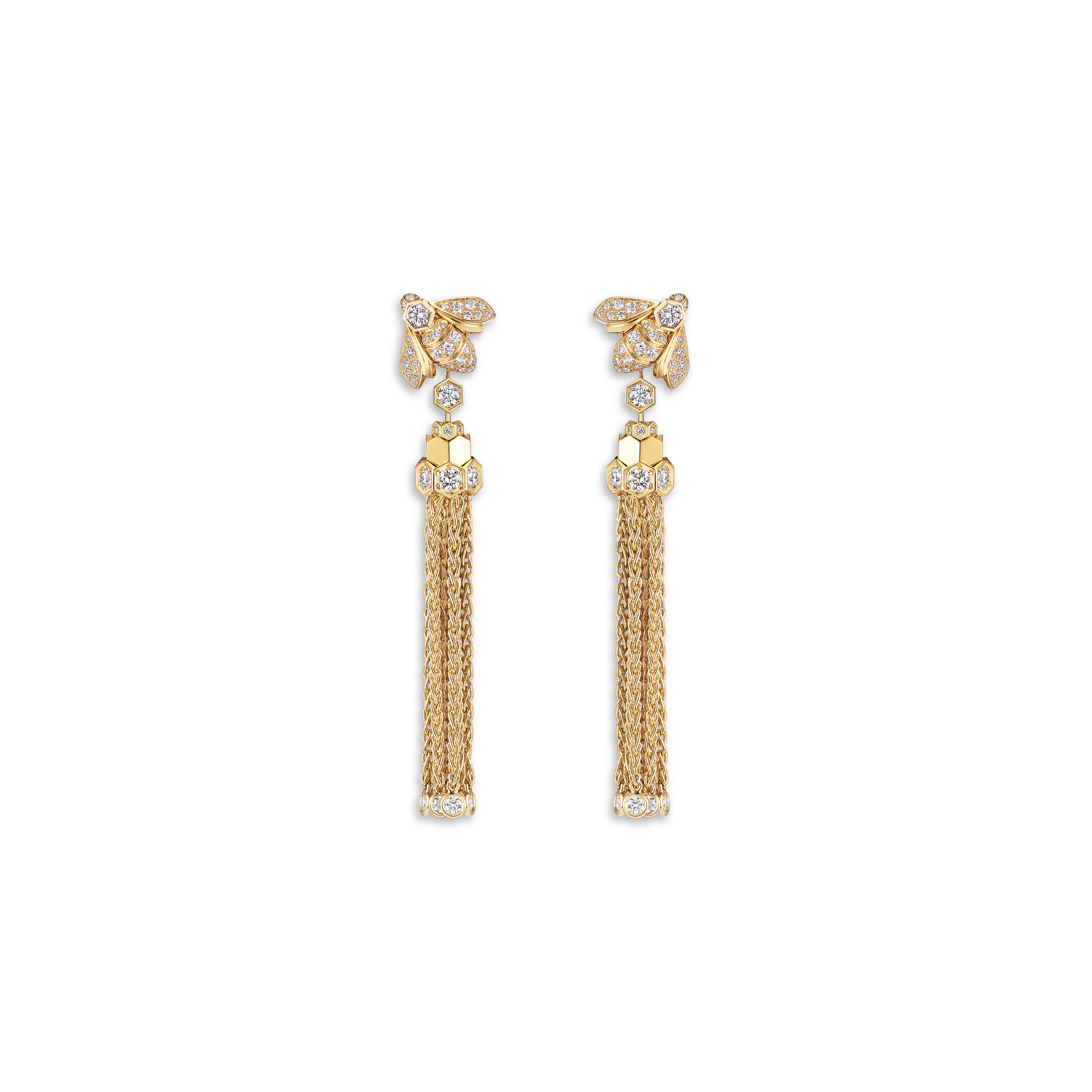
One motif, several scales
Chaumet’s current collection presentation distinguishes the bee and the honeycomb as its defining motifs. Rings, bracelets, earrings and pendants translate those motifs into different relationships with the body. This is a design reading of the collection, using official campaign and product imagery; it makes no claim of an independent wear test.
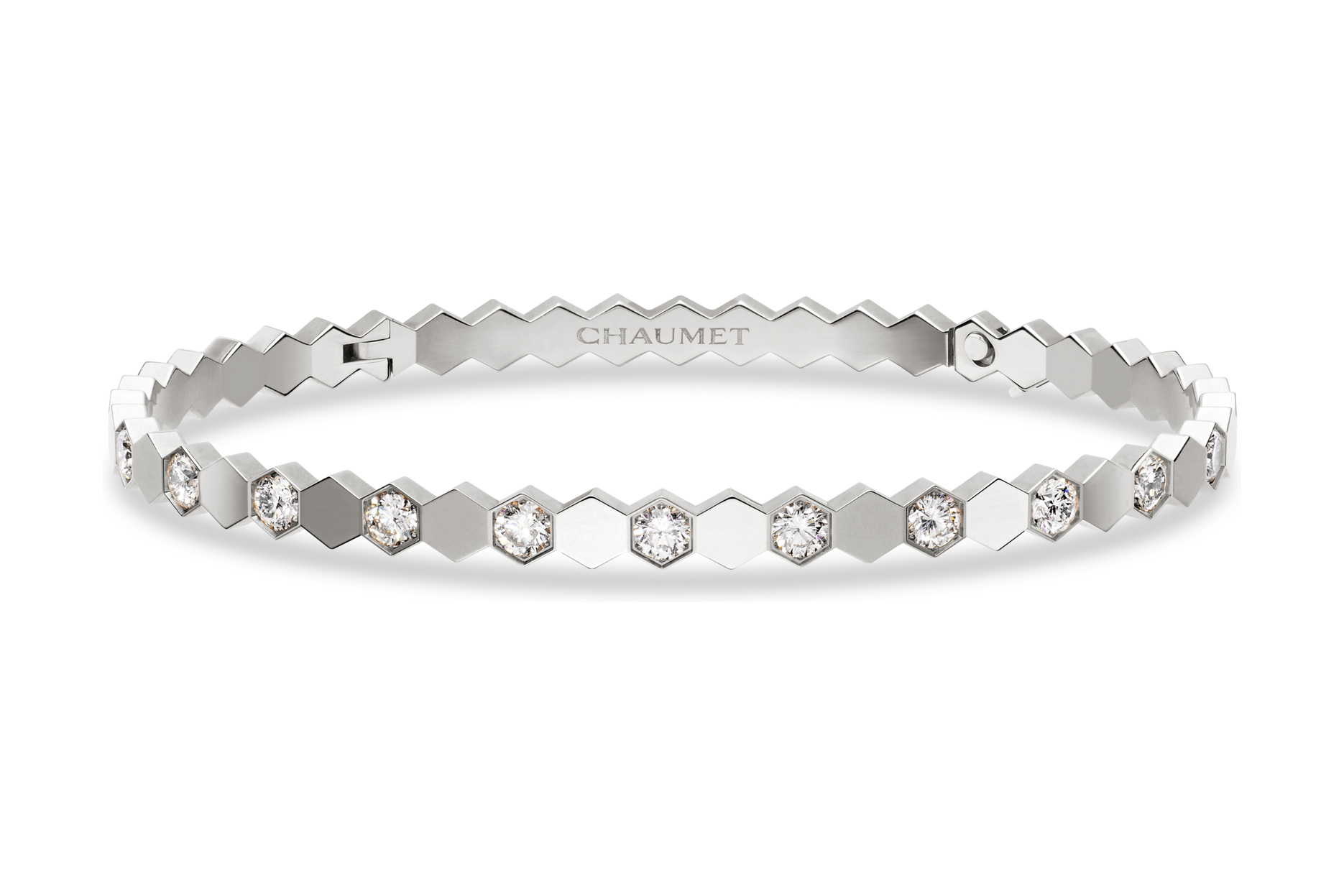
The geometry is particularly clear in the isolated views. A repeating band reads as a continuous pattern, while a pendant can gather the cells into a complete shape suspended from a finer line. The change is more than scale. The bracelet creates an edge around the wrist; the pendant introduces a small centre of gravity below the face.
Keeping those different behaviours in view makes the collection more interesting than a simple catalogue of matching pieces. A motif that works across categories still needs to respect the place where it is worn. Length, orientation and the distance from another jewel determine whether the pattern remains clear or becomes part of a crowded surface.
Light follows the cell
The official photographs show the honeycomb’s repeating edges catching light at different angles. Instead of one unbroken reflective plane, the eye meets a sequence of small facets and shadows. The resulting rhythm explains why the form remains readable even when it occupies a narrow band.
This visual reading should be kept separate from claims about gem performance. The brightness of a campaign image is shaped by lighting, camera position and presentation. It cannot establish how a particular stone will appear in every setting, nor replace documentation for an individual piece. The geometry is visible; the buying decision still belongs to the exact reference.
The contrast between an isolated jewel and an image on the body is useful here. The first makes the pattern legible without distraction. The second restores scale, showing how much of the wrist, ear or neckline the piece occupies. Neither view is sufficient alone: an enlarged product image can make a delicate object seem substantial, while a styled photograph can obscure a small connection or edge.
The bee and the abstraction
The figurative bee introduces a different kind of movement. It gives the eye a small recognisable subject within an otherwise repeating geometry. In the official pendant and earring views, the motif is carried by the outline of a complete jewel rather than used merely as a surface emblem.
Chaumet places the bee within its historical identity, including its association with Napoléon I. That is the maison’s documented account of the motif; it does not date a particular modern reference or turn a contemporary piece into a historical artefact. For this collection study, the more immediate question is how the figurative element relates to the surrounding cells.
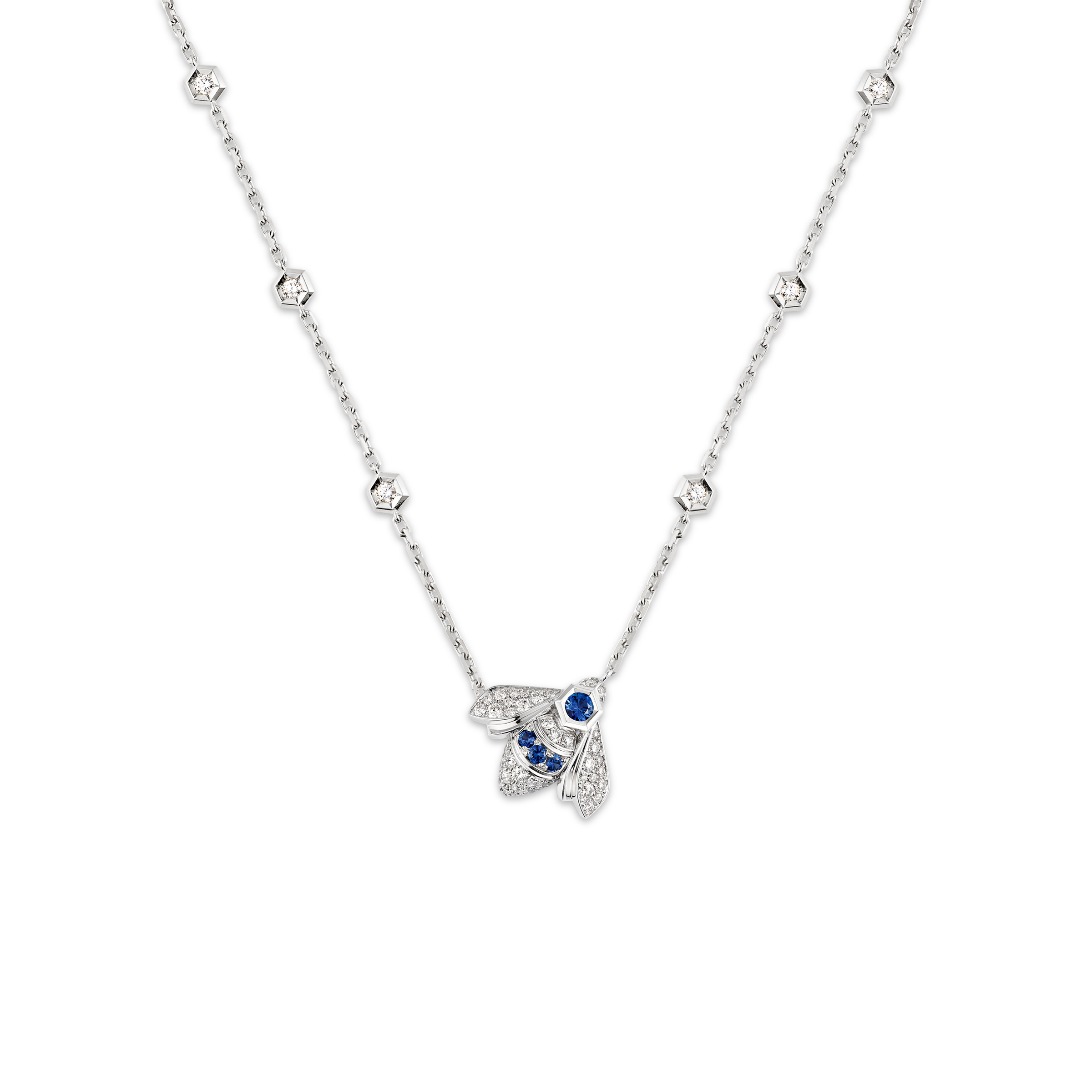
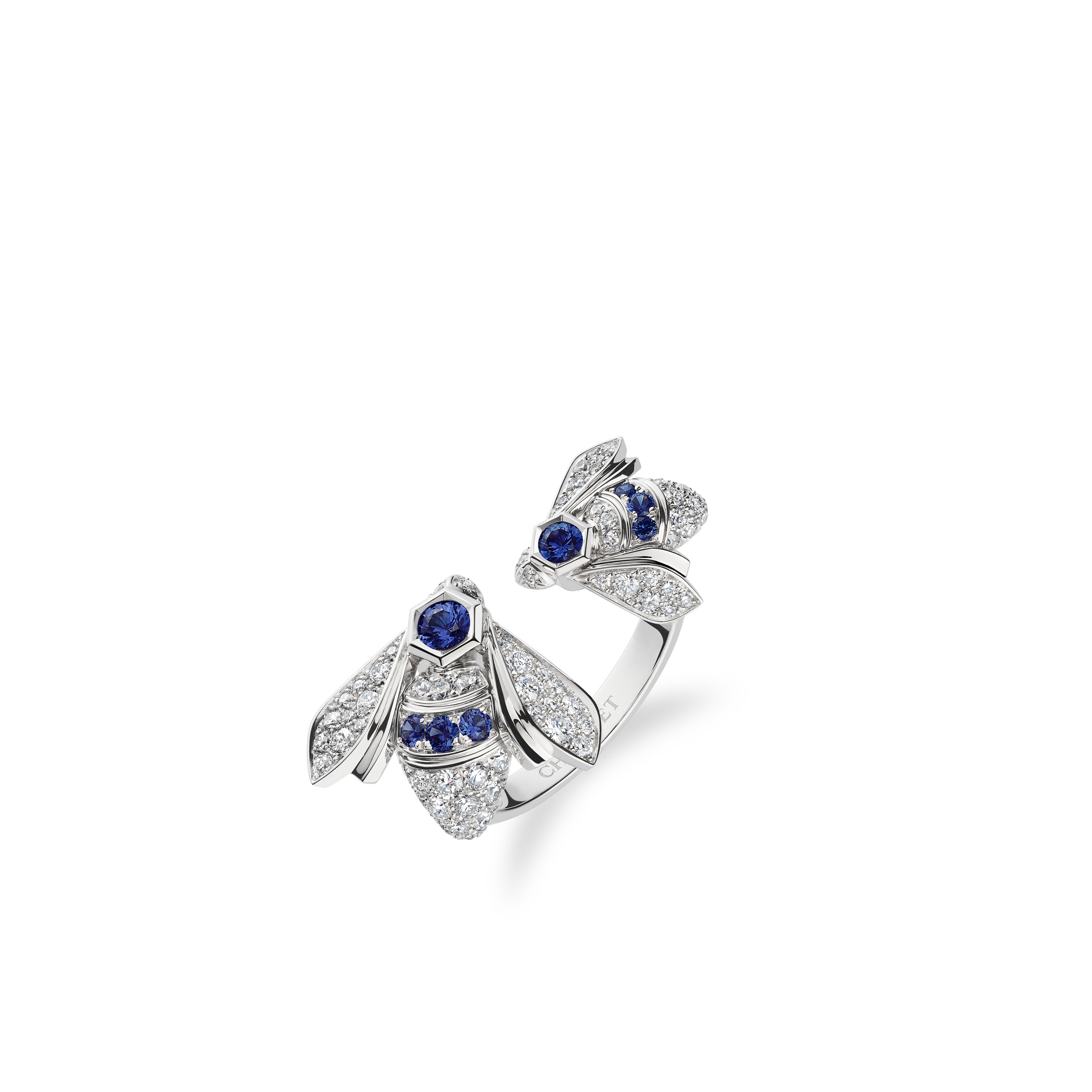
A small bee can offer a focal point when several graphic pieces are worn together. It can also make a composition more literal. The choice is aesthetic rather than hierarchical: someone drawn to the clean repeat may prefer the honeycomb alone, while another wearer may value the character introduced by a recognisable figure.
Stacking needs space
The campaign imagery presents several bracelets together, making repetition one of the collection’s themes. It is an effective visual idea, but a picture does not establish that every combination will fit comfortably or that two references can be worn in contact without consequences. Sizing, edges and movement should be checked with the actual pieces.
Begin with the role of the first jewel. A single band can establish the rhythm clearly; adding another can change the pattern rather than simply increase its quantity. The space left between pieces matters, as does their relationship to a cuff or another object on the wrist. A composition should feel deliberate when the hand moves, not only when it is arranged for a photograph.
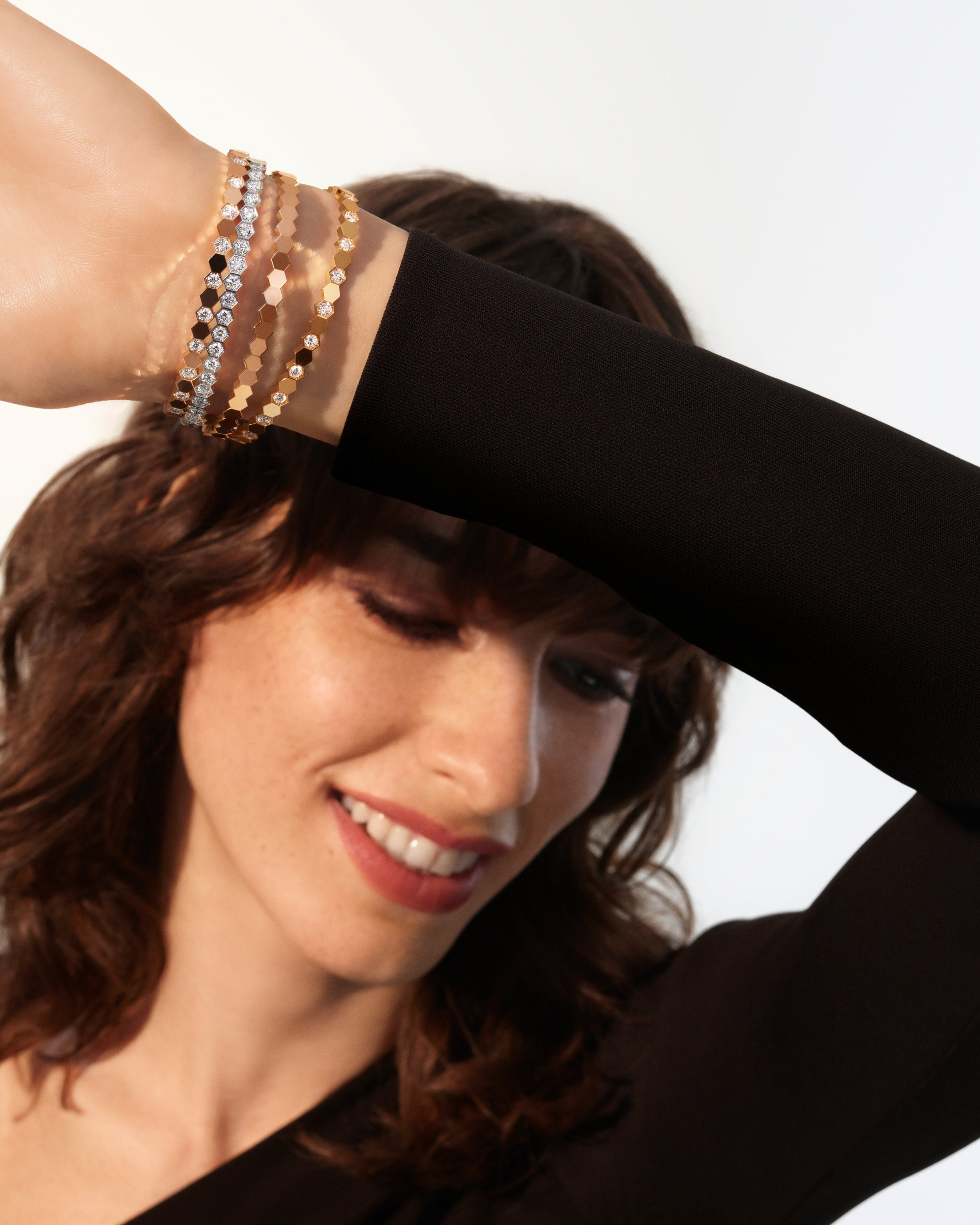
For rings, consider neighbouring fingers and the way an edge meets the hand. For pendants, consider the position of the motif against an actual neckline. These practical observations need no invented rules about the correct number of pieces. The useful objective is to keep the geometry readable while allowing the body to move naturally.
A reference for the choice
| Reading | What the images establish | What to check in person |
|---|---|---|
| Single band | The rhythm of the honeycomb outline | The fit of the exact reference |
| Bracelet group | A deliberate composition of repeated cells | Contact, movement and sizing |
| Pendant | A focal point below the neckline | Chain position and the chosen garment |
| Earrings | The motif’s relationship to the face | Scale, fastening and personal comfort |
| Bee motif | A figurative centre within the collection | Whether it supports the intended composition |
| Finish | The appearance in official studio lighting | Material specification and real-light appearance |
A collection is not one specification
The current range includes several metals and stone treatments. Those choices belong to individual references; they should not be applied indiscriminately to every photograph in a collection feature. The captions here identify the form shown, while the official product record should govern an order’s metal, dimensions, stone information and care.
Retain that record with the piece. A collection name is useful for understanding a design language, but it is too broad to resolve later questions about size or service. Good presentation should make the object more legible without replacing the documents that identify it.
The Luxe Digital view
Bee de Chaumet makes repetition expressive by letting a simple geometry follow the body. Its strongest compositions preserve the clarity of the individual cell, whether the result is one quiet band or a more elaborate group. The pleasure lies in seeing a shared language behave differently at each scale.
Bee de Chaumet makes repetition expressive by letting a simple geometry follow the body.
Sources & credits
Sources and methodology
Independent editorial analysis of the documented product and official source imagery, checked on 14 October 2026. Visual interpretation is distinguished from manufacturer specifications. No handling, driving or acoustic test is implied; exact references and archival dates are retained.
- Chaumet — source 1: Current collection, bee/honeycomb design language and documented Napoleonic association.
- Chaumet — source 2: Current rings, bracelets, earrings and pendants; individual material variants and official product imagery.