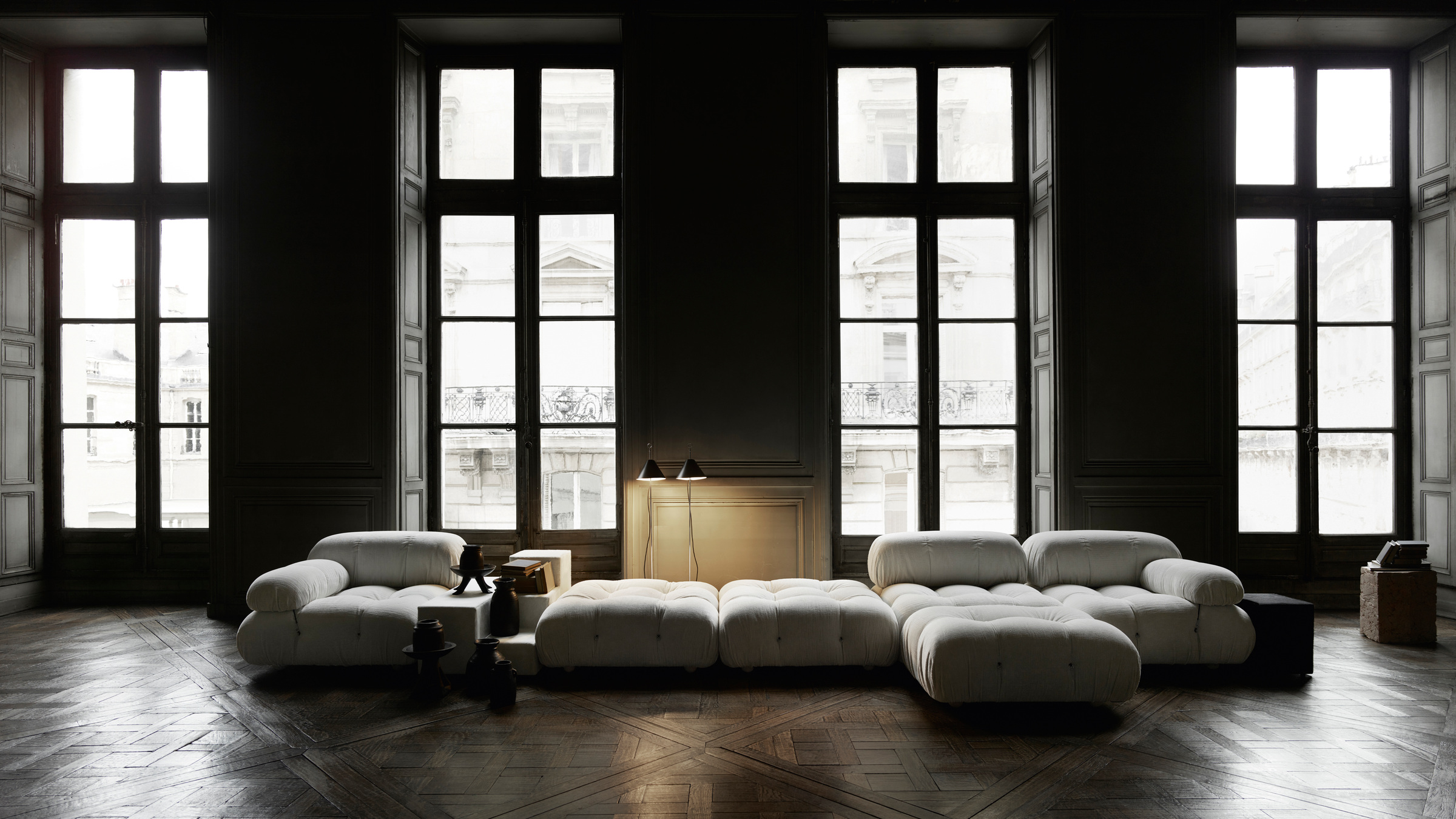
Camaleonda looks soft, but its most important idea is structural. Mario Bellini’s seating system treats a sofa as a set of elements that can change their relationship to one another. The room is not forced to accept a single fixed shape. It can be organised through seats, backs and arms that create different arrangements around the same underlying vocabulary.
Designed in 1970 and reissued by B&B Italia in 2020, Camaleonda has an unusually recognisable surface language: rounded volumes, deep divisions and a repeating rhythm. Yet the product becomes more interesting when those features are connected to its modular logic. The visual identity and the capacity for rearrangement are parts of the same design.
A sofa that can organise a room
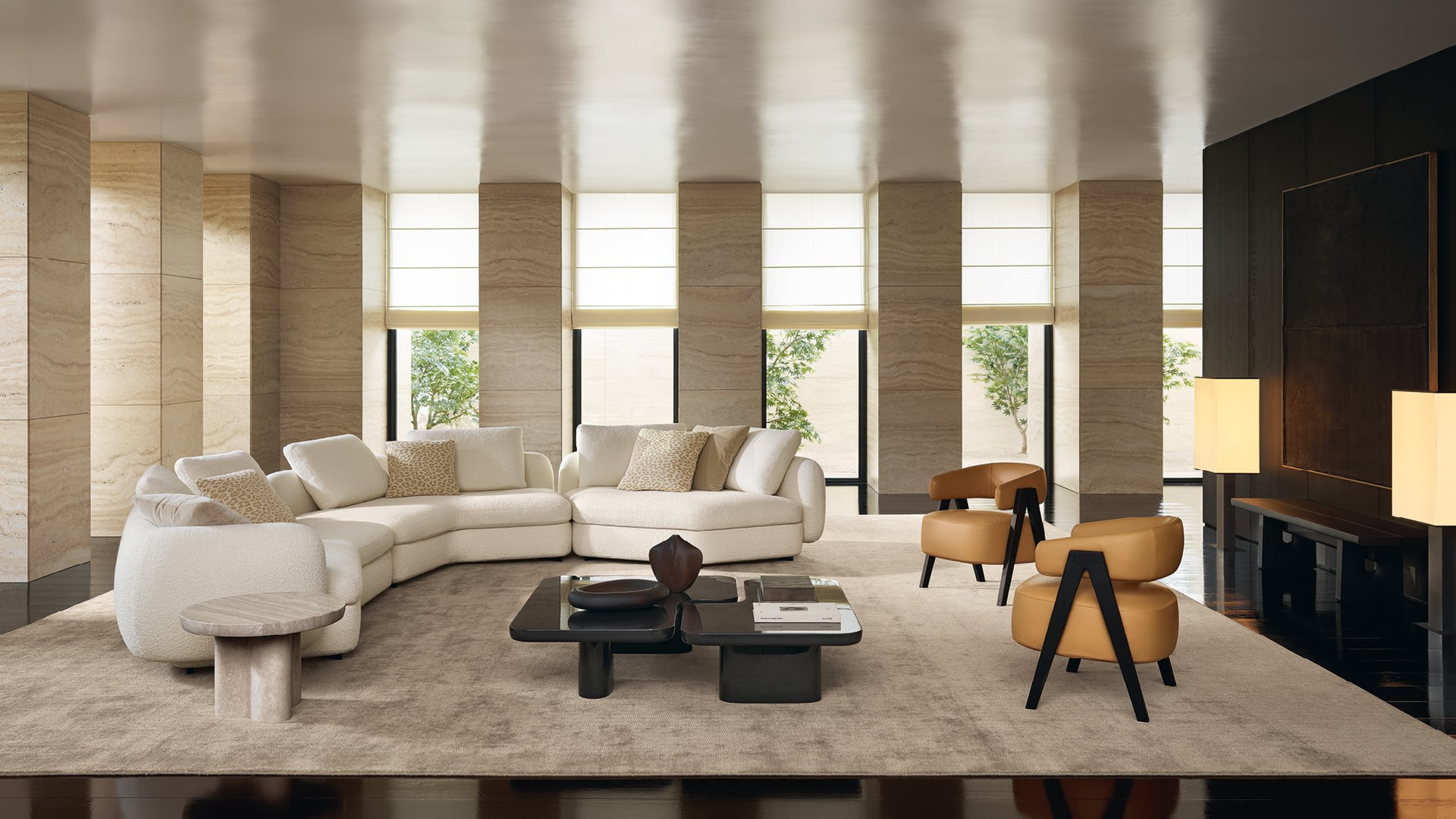
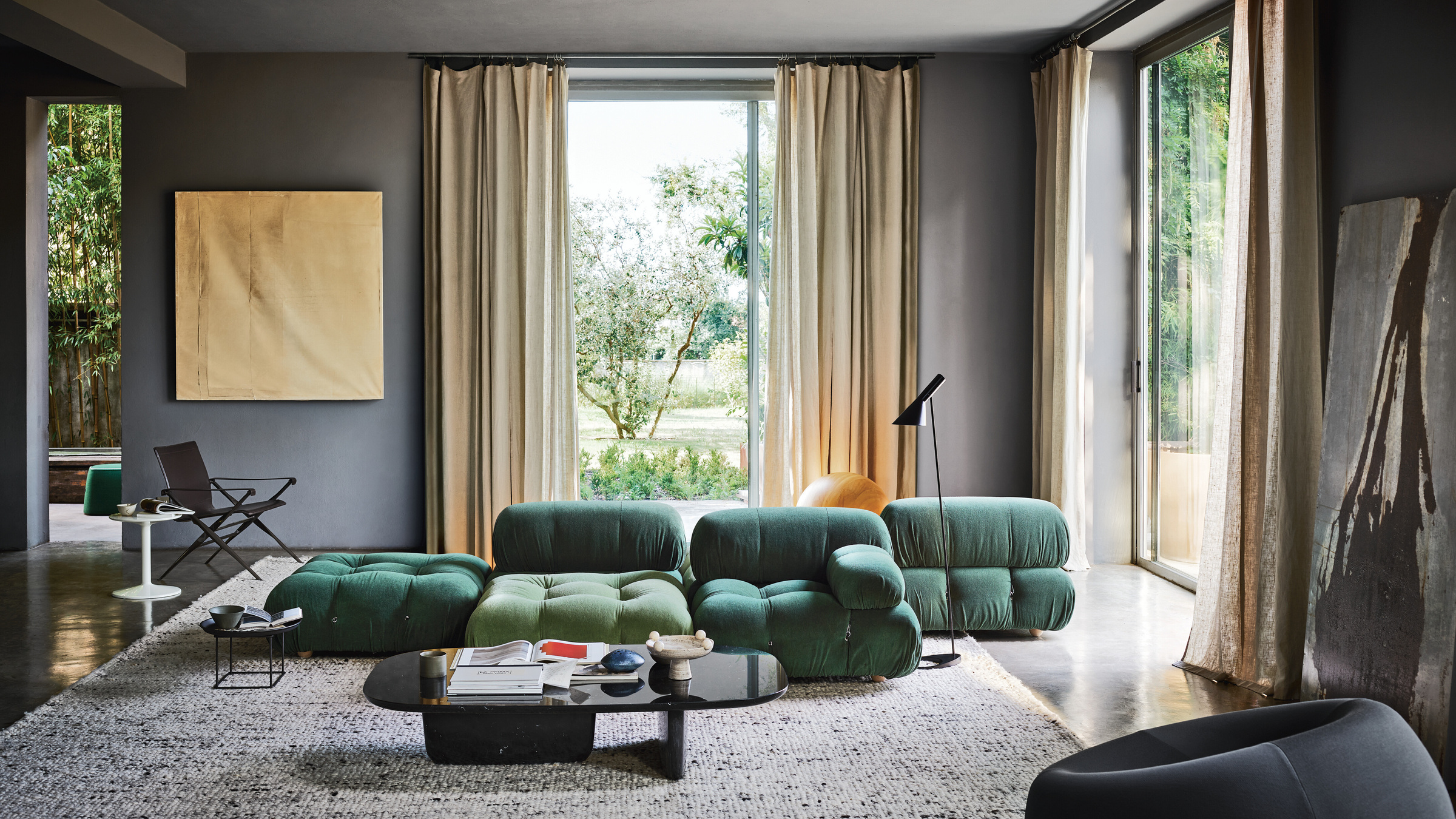
In B&B Italia’s room photographs, the seating does more than sit against a wall. It can create an island, establish a direction towards the windows or define a place for conversation inside a larger space. The modules make the composition legible, while the overall arrangement determines how the room will be occupied.
That is a different design problem from selecting a large conventional sofa. With a modular system, the question becomes how many places to create, which direction each should face and where a route through the room must remain clear. A generous arrangement can still be badly planned if it blocks the space that people need to cross.
The official photographs are useful examples, not scale plans for a reader’s home. They show relationships between sofa, tables, glazing and floor, but the actual project requires measured dimensions. The product’s visual flexibility should be translated into a specific arrangement rather than treated as a promise that any combination will work anywhere.
The module is the unit of thought
B&B Italia describes the seat module as 90 by 90 centimetres. That repeating unit gives the system a practical basis: the composition can be developed from parts with known dimensions. The backs and arms then change how those parts behave as places to sit, lean or turn towards another person.
The connecting system uses cables, hooks and rings, according to the manufacturer. That detail matters because the modules are intended to operate together while retaining the possibility of rearrangement. The sofa’s adaptability is therefore more than a visual suggestion. It is supported by a physical method of connection, which should be understood before an arrangement is specified.
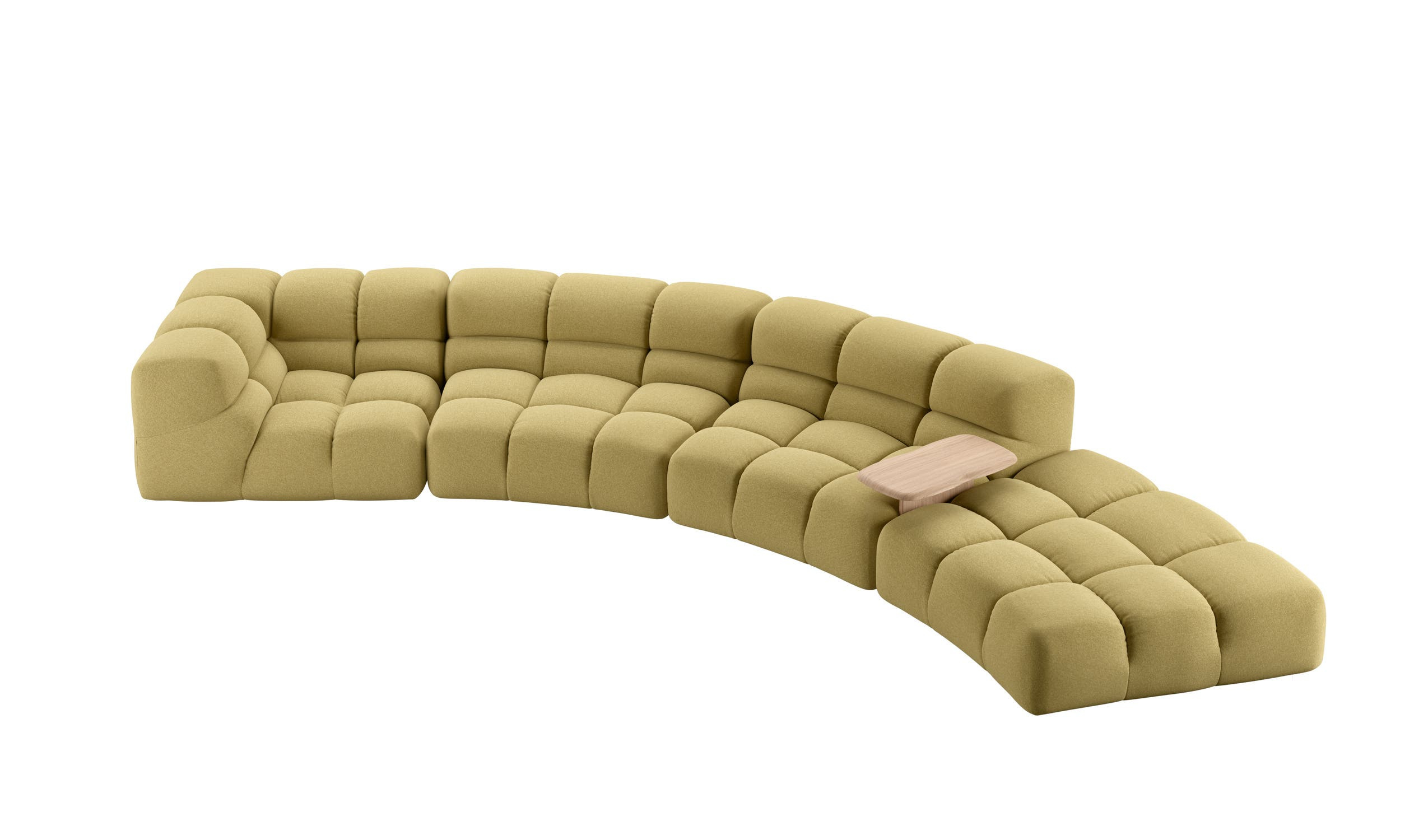
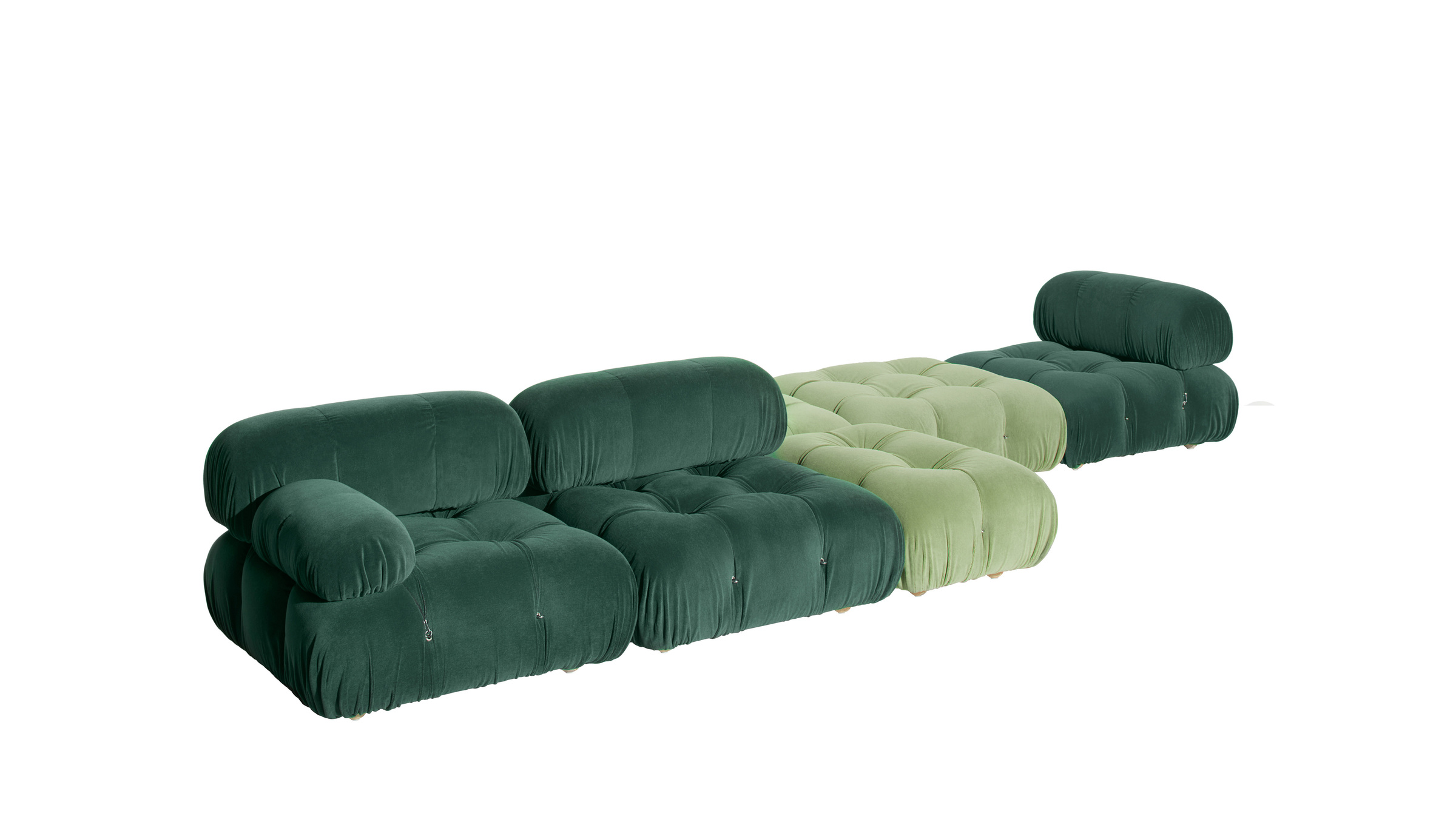
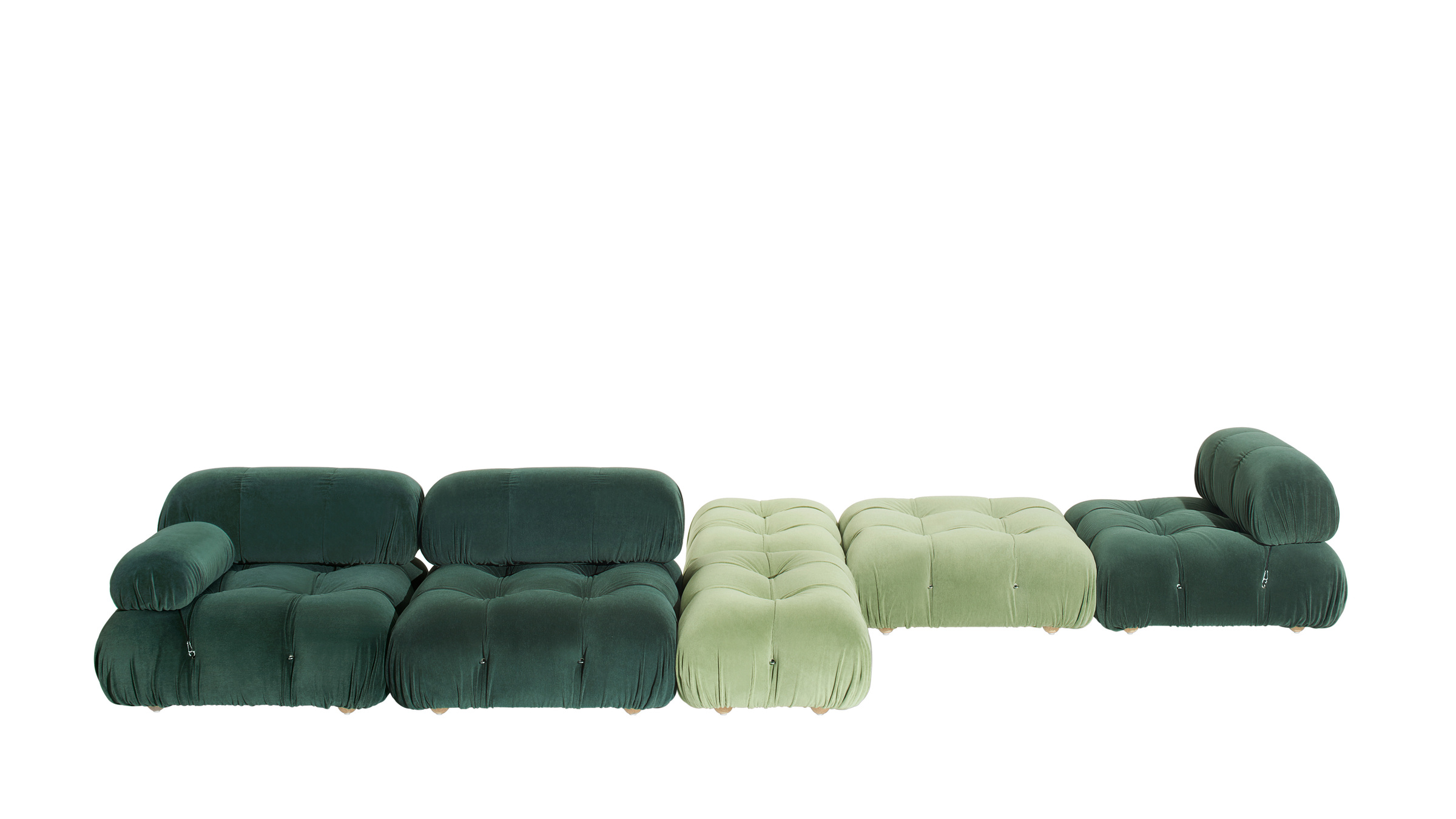
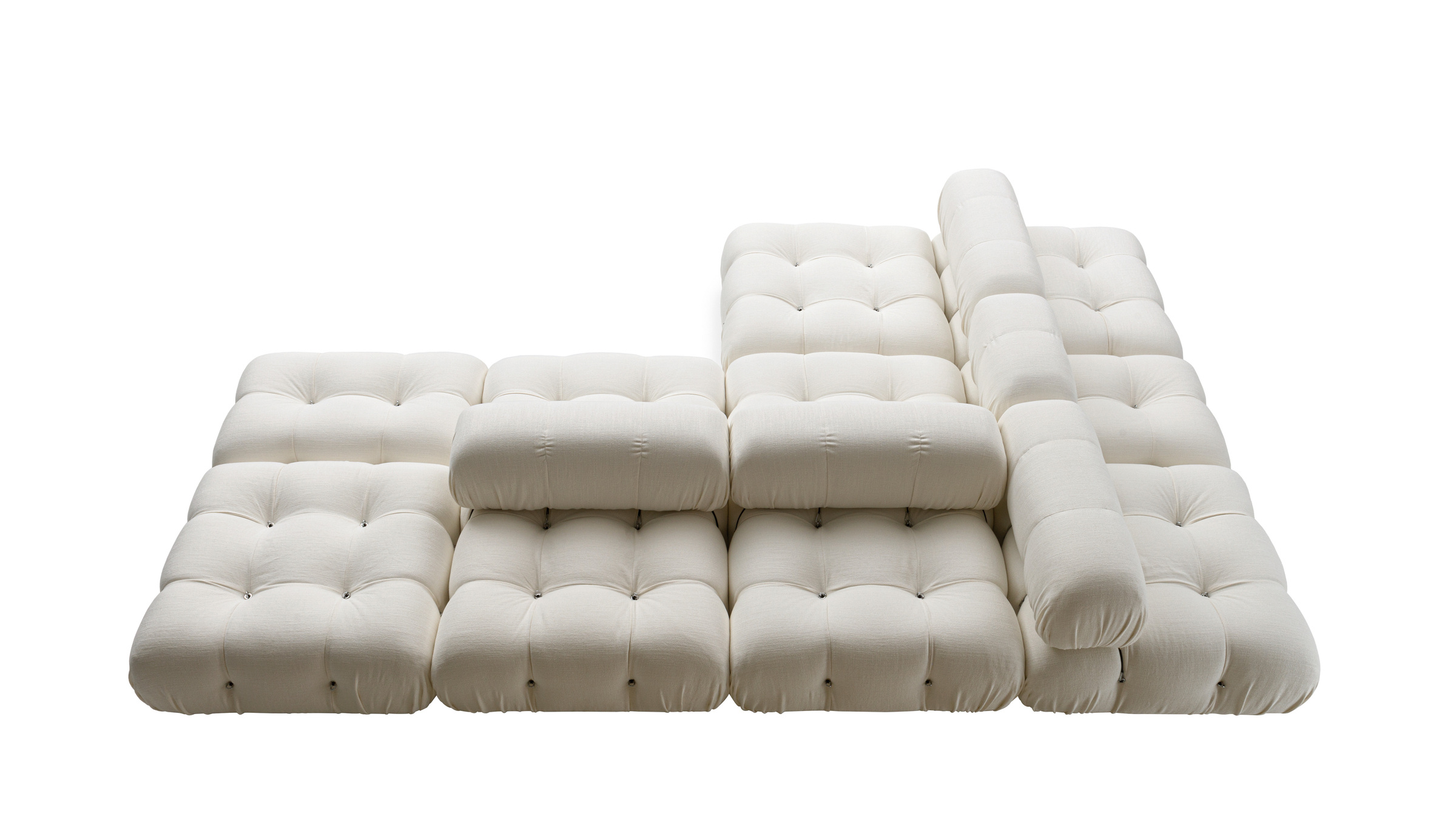
The isolated product images make the differences particularly clear. A long linear composition establishes one kind of boundary. An L-shaped arrangement wraps around a shared centre. A more open island gives several sides a role. Showing these alternatives together is more informative than repeating the same room from slightly different angles.
Softness is drawn into the surface
Move closer and the familiar outline becomes a study of seams, buttons and rounded transitions. The surface is not smooth in the way of a single upholstered block. It is divided into a repeatable pattern that gives each module a presence while allowing several modules to read as one larger composition.
The macro photographs are important here. They let the reader examine how the upholstery turns around an edge and how the divisions between volumes create shadows. A room photograph can establish the sofa’s role in the space, but it cannot communicate those transitions at the same scale. From across the room, the divisions organise the mass of the sofa. Close to the surface, they give upholstery and light a repeated meeting point. The same design feature explains both the recognisable silhouette and the tactile character of an individual place to sit.
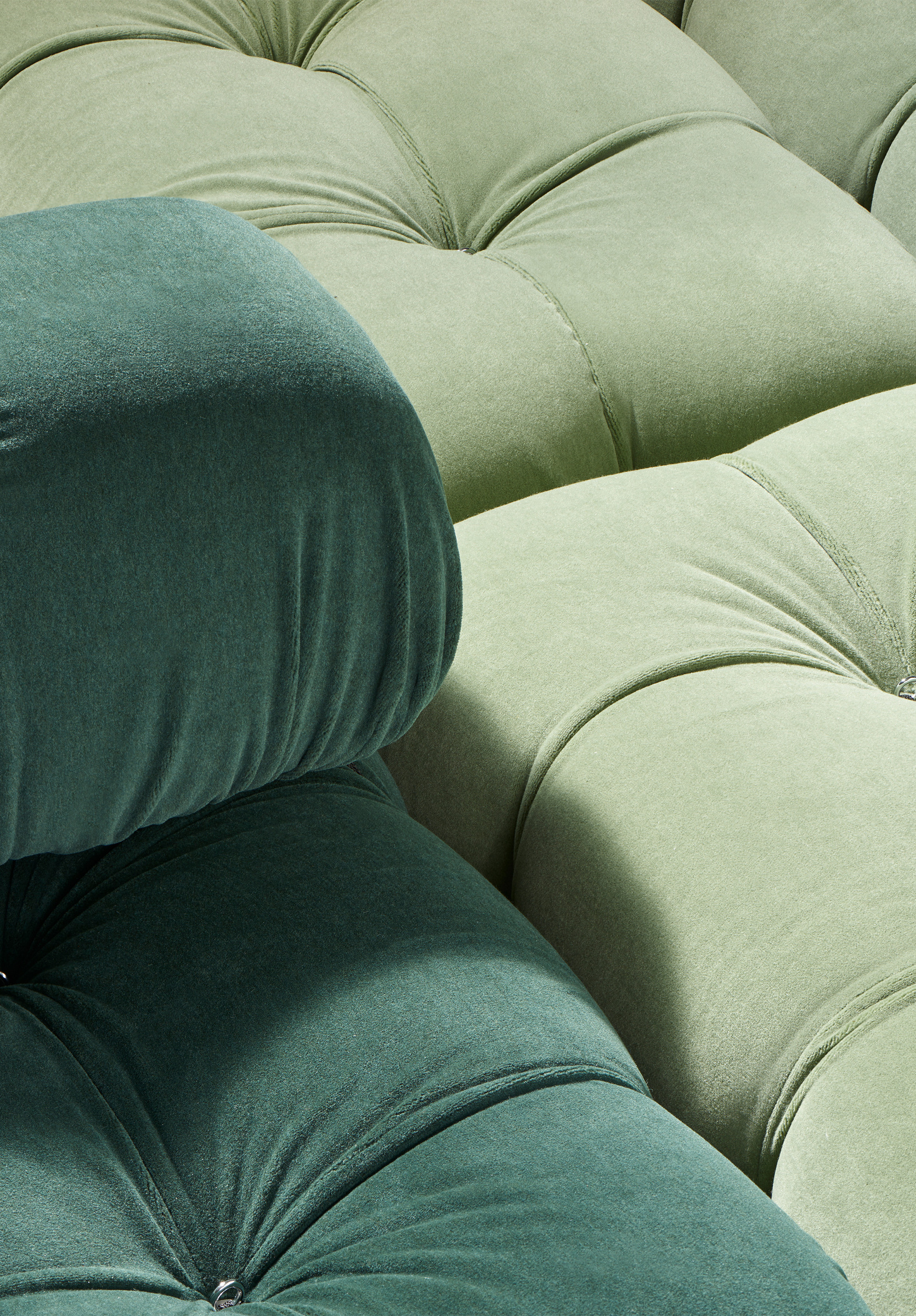
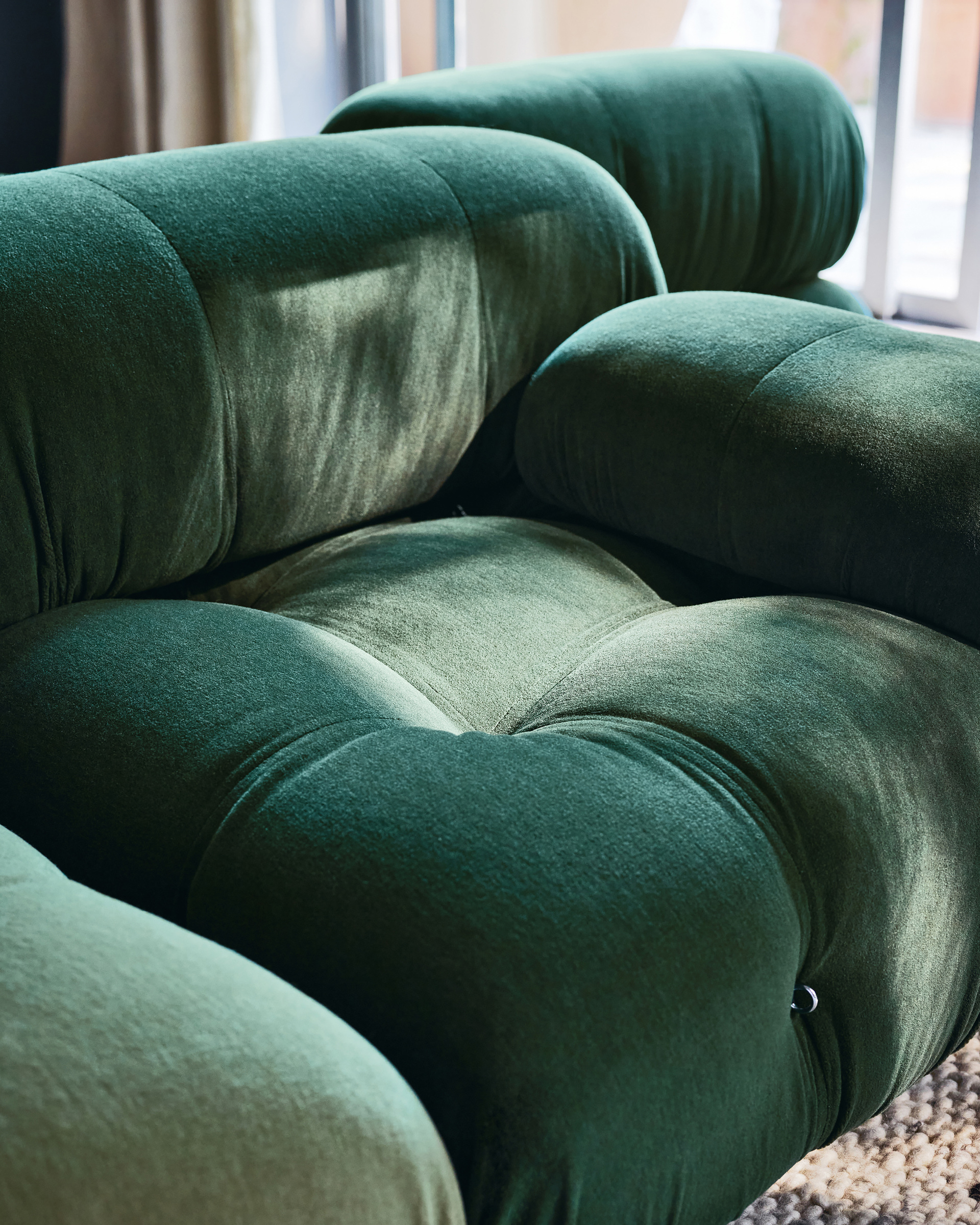

The selected green upholstery photographs are studies of the manufacturer’s presentation, not proof of a fabric’s performance in every home. Resistance to stains, sunlight, abrasion or a particular cleaning routine depends on the chosen covering and its care instructions. A beautiful material image should lead to a precise specification question rather than an unsupported durability claim.
Colour changes the architecture of the arrangement
The green product study gives different modules different tones. The pale island reads as a more continuous mass. In the room photographs, these choices meet timber flooring, dark tables and large areas of glazing. Colour operates between the units, then between the complete composition and the interior around it. A single tone makes the overall mass easier to read. Alternating tones can reveal the individual units or create a directional pattern. A darker composition may draw a stronger boundary against a light room; a paler one may make that boundary less emphatic.
These are design choices, not fixed rules. The surrounding floor, light and other furniture determine how the arrangement will read in a particular interior. The same product cutout can look quite different once placed against timber, stone or a richly coloured wall. The room images restore some of that context after the isolated compositions have explained the system.
The more useful question is whether the selected colours support the intended organisation of the space. If the sofa is meant to anchor a large room, its visual mass may be welcome. If it is meant to create several lighter settings, a more varied composition might be appropriate. The modules provide a vocabulary; the room determines the sentence.
A reissue can preserve the idea and revisit the construction
The 2020 return matters because it distinguishes the current product from a vintage example made decades earlier. B&B Italia describes a revised internal construction, with separable layers and materials selected with disassembly and recycling in mind. Those are manufacturer statements about the reissue, not a guarantee that every local waste system can recycle every component.
That distinction is worth retaining. A design can be visually continuous with its earlier form while its internal materials and production methods change. For an owner, the relevant questions include which parts can be separated, how the covering is maintained and what service or replacement arrangements apply to the actual product supplied.
It would be misleading to let the product’s recognised history answer those questions automatically. Vintage provenance, current construction and future care are different subjects. A responsible presentation can show the continuity of the design while keeping those distinctions clear enough to guide a serious specification conversation.
Plan the composition before choosing the covering
The following reference puts the room’s requirements first. It is intended as a brief for a measured interior plan, rather than a substitute for the manufacturer’s technical drawings or an authorised dealer’s specification.
| Decision | What to establish | Design consequence |
|---|---|---|
| Overall arrangement | Seats, orientation and room dimensions | Determines whether the sofa forms a line, corner or island. |
| Circulation | Routes around and through the setting | Keeps modular freedom from becoming an obstacle. |
| Back and arm positions | How each place will be used | Defines the relationship between individual seat and shared composition. |
| Covering | Exact fabric or leather and care information | Changes colour, texture and maintenance requirements. |
| Future changes | Connection and rearrangement requirements | Makes adaptability a practical decision rather than a visual claim. |
The usefulness of the system comes from this sequence. Establishing the layout first makes it possible to choose material and colour in relation to a coherent room plan. Reversing the process can produce a compelling object that has no comfortable place in the interior around it.
A landscape made from repeatable parts
Camaleonda’s identity survives changes of scale because its basic unit remains visible. A small group and a larger island share the same rounded rhythm, while the arrangement can change the way people gather. The room images, product studies and material details each explain one part of that relationship.
Camaleonda is best understood as a way of composing a room, not simply filling it. That is the lasting design argument. Its distinctive surface makes the object recognisable; its modular logic makes the architecture of the surrounding space part of the decision. The most convincing presentation keeps those two ideas together.
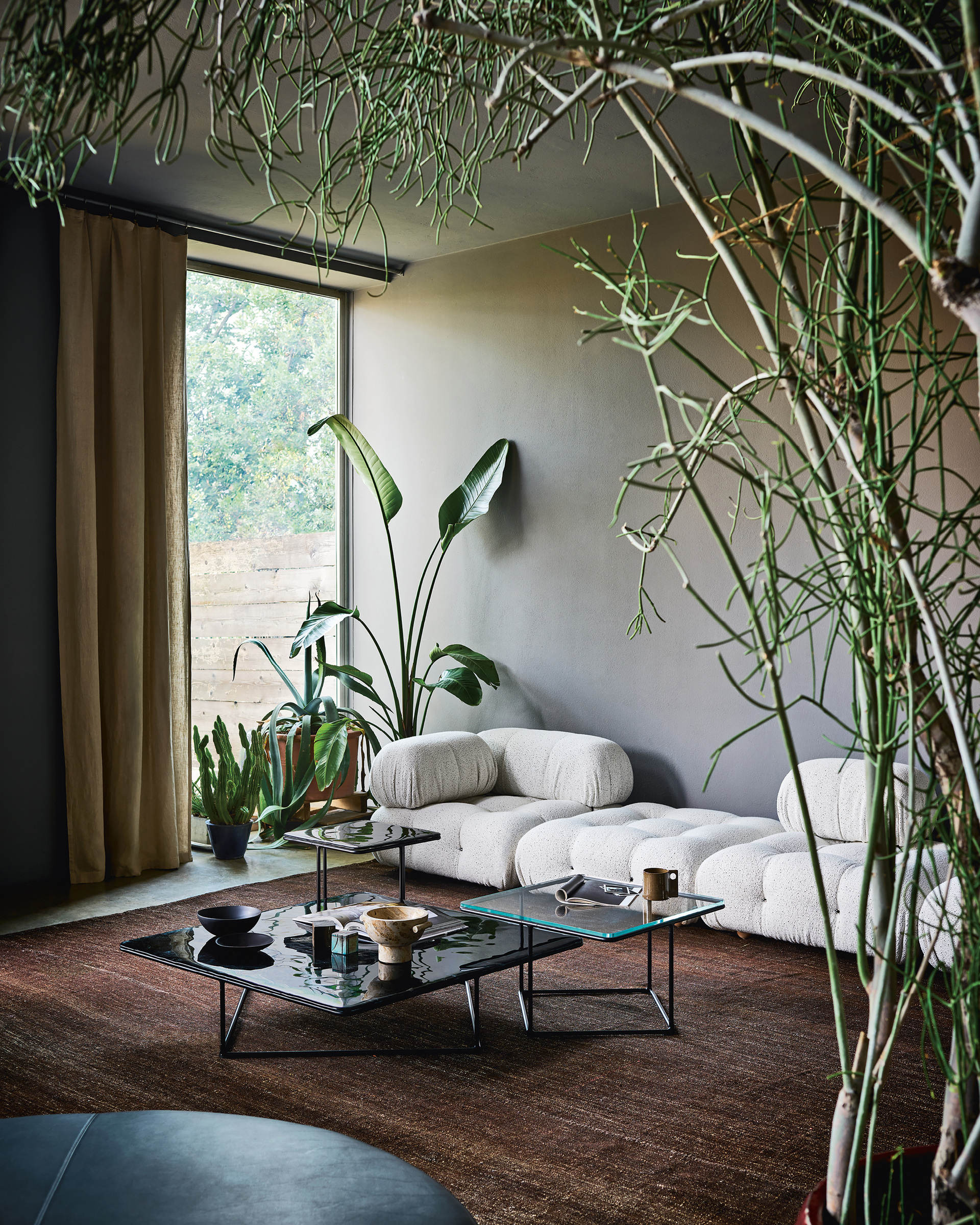
Camaleonda is best understood as a way of composing a room, not simply filling it.
Sources & credits
Methodology and sources
This independent design feature uses B&B Italia’s official current product reference and its Camaleonda collection experience. It distinguishes the 1970 design from the 2020 reissue. No showroom visit, comfort trial or fabric-performance test is implied. Construction and environmental statements remain manufacturer-attributed; actual dimensions, coverings and service arrangements require the applicable technical specification.