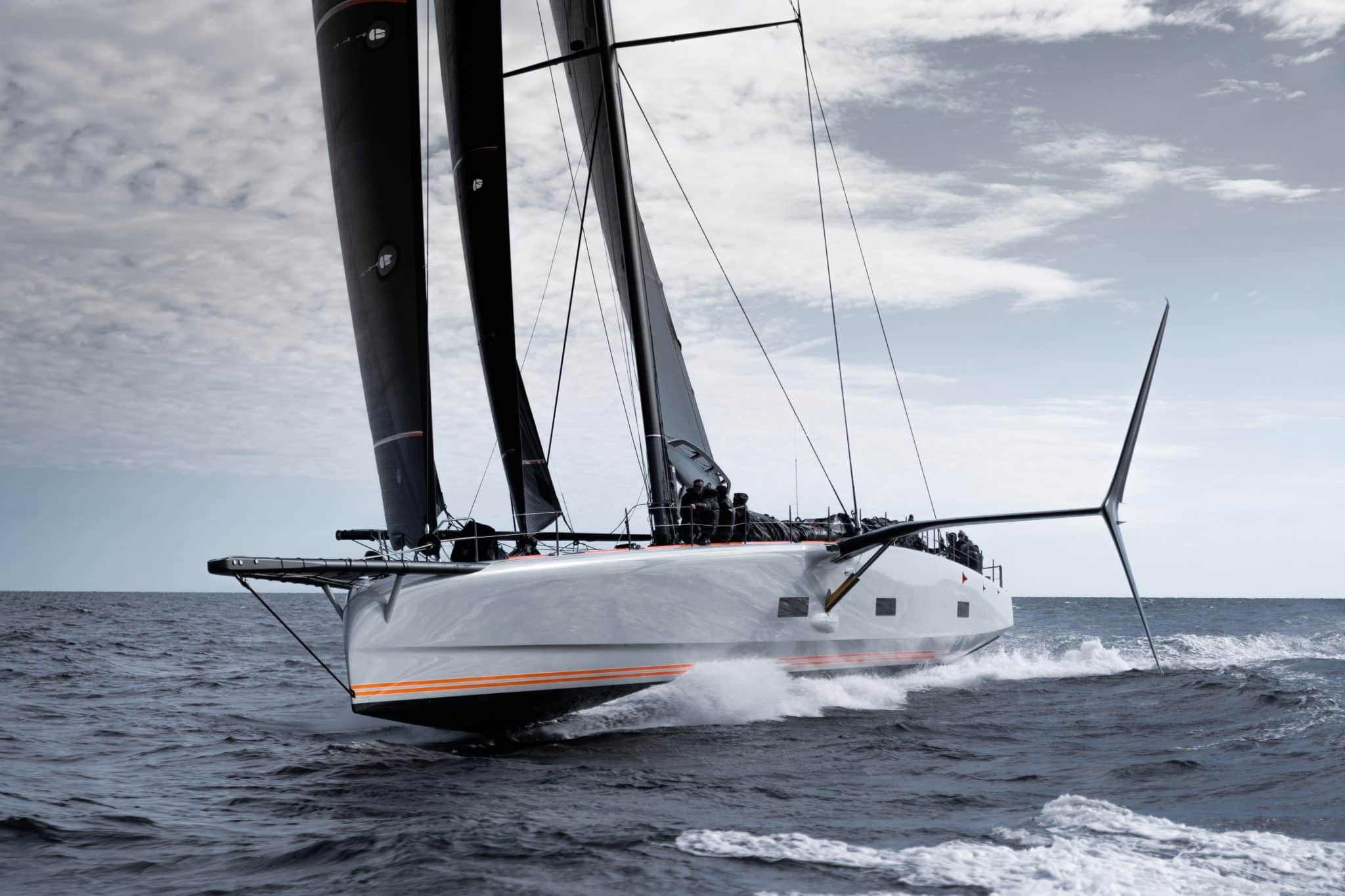
Raven makes its intentions visible. The long black sail plan, the fine hull and the arms projecting out towards the water belong to a yacht organised around motion. Yet the more revealing achievement of this 34-metre Baltic may be below deck: a place to live that allows the structure, rather than a layer of decoration, to set the atmosphere.
The shape of a different sailing brief
Delivered in 2023, the Baltic 111 Raven brings together naval architecture by Botin Partners, interior and exterior design by Jarkko Jämsén, and structural engineering by PURE Design and Engineering. Those credits describe a useful division of thought. A fast hull, an exacting composite structure and an inhabitable interior have to work as one proposition; none can simply be added at the end.
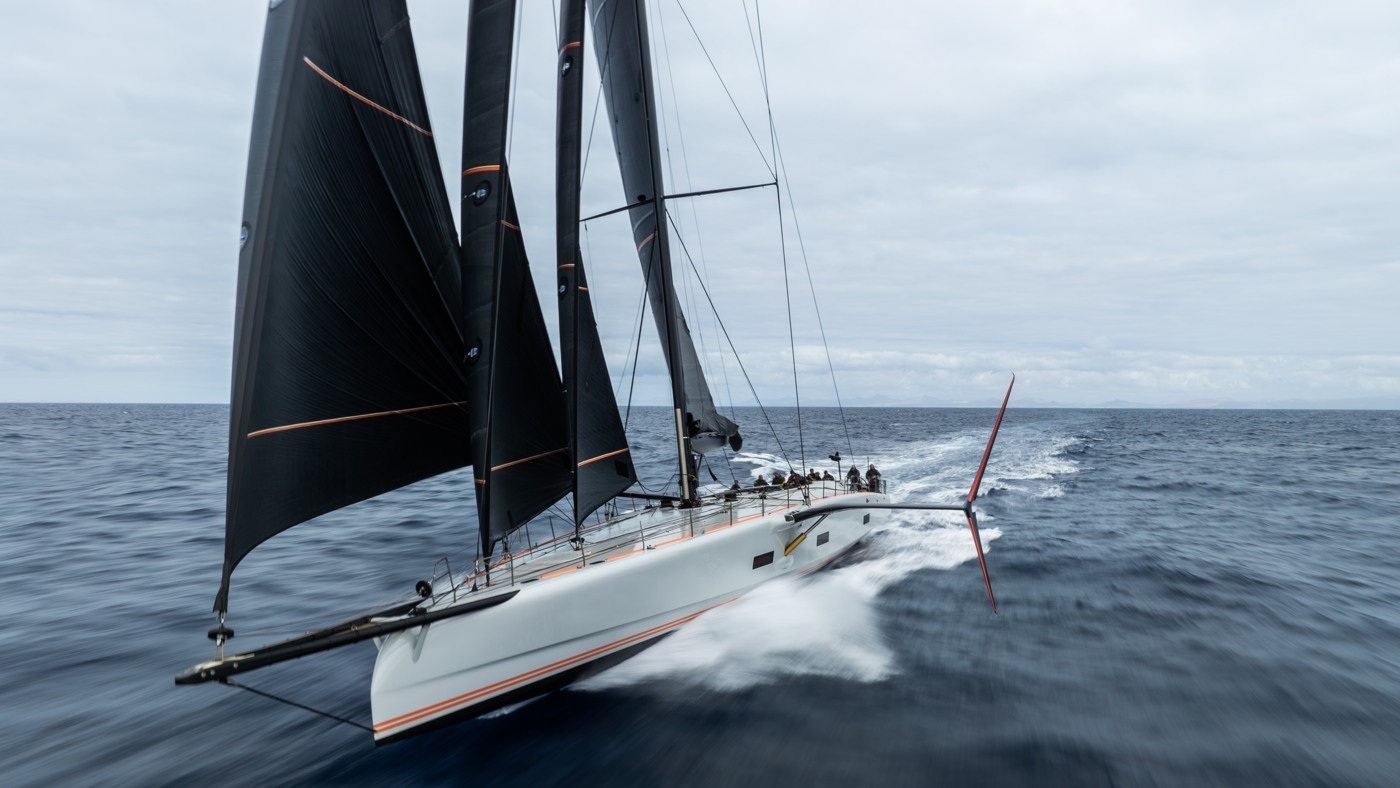
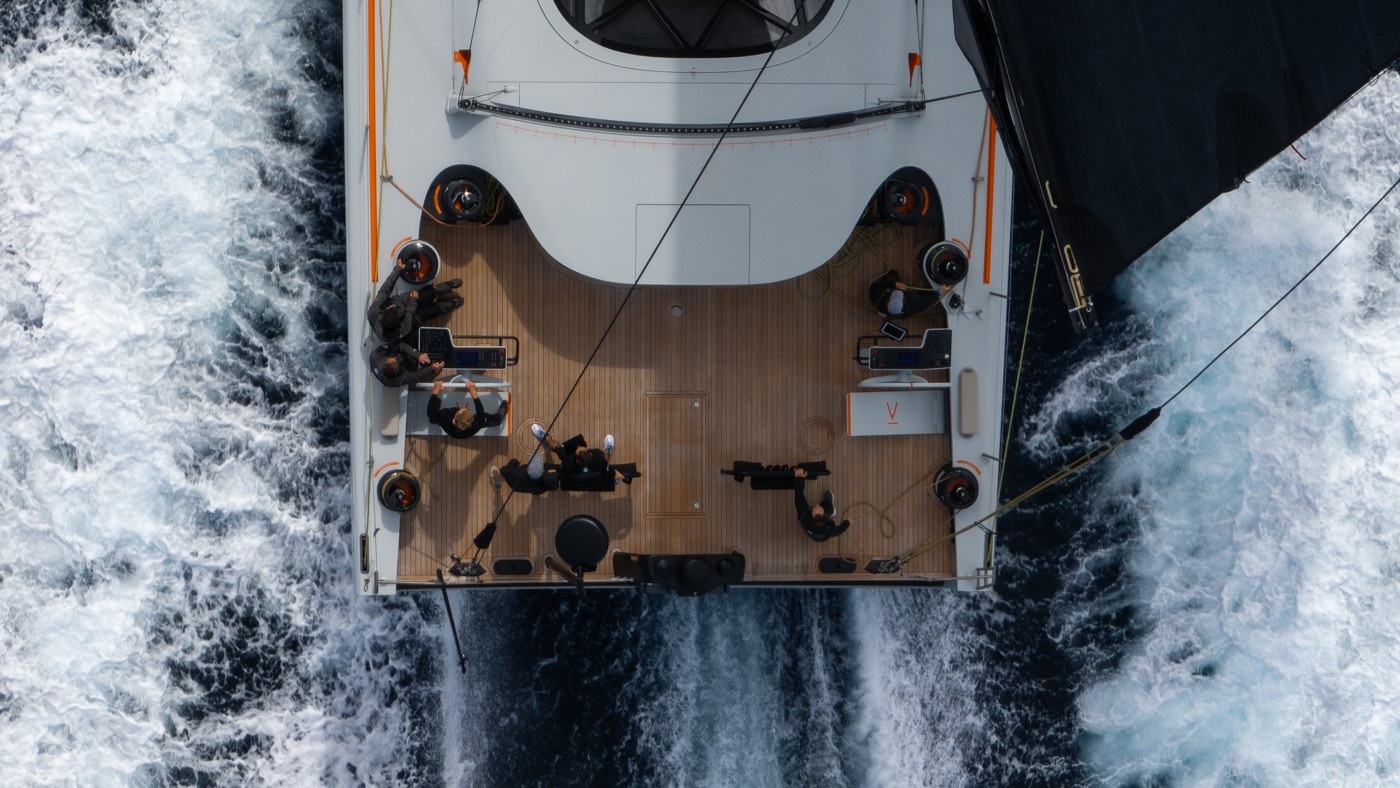
Look at the sailing photographs from above. The deck narrows towards the bow, the working areas remain legible, and the guest cockpit sits within the overall line rather than rising into a separate pavilion. There is little of the architectural stacking familiar from a large motor yacht. Space is made within the sailing machine, with the rig and its loads remaining the dominant facts of the composition.
Baltic describes a design for fast coastal and offshore sailing. That is a more interesting starting point than speed alone. Coastal use and an ocean passage ask different things of the same boat: somewhere to sit, protection from the conditions, working circulation and the equipment of ordinary life. Raven’s distinction lies in accepting those demands while making their physical cost unusually explicit.
Lift without the fantasy of flight
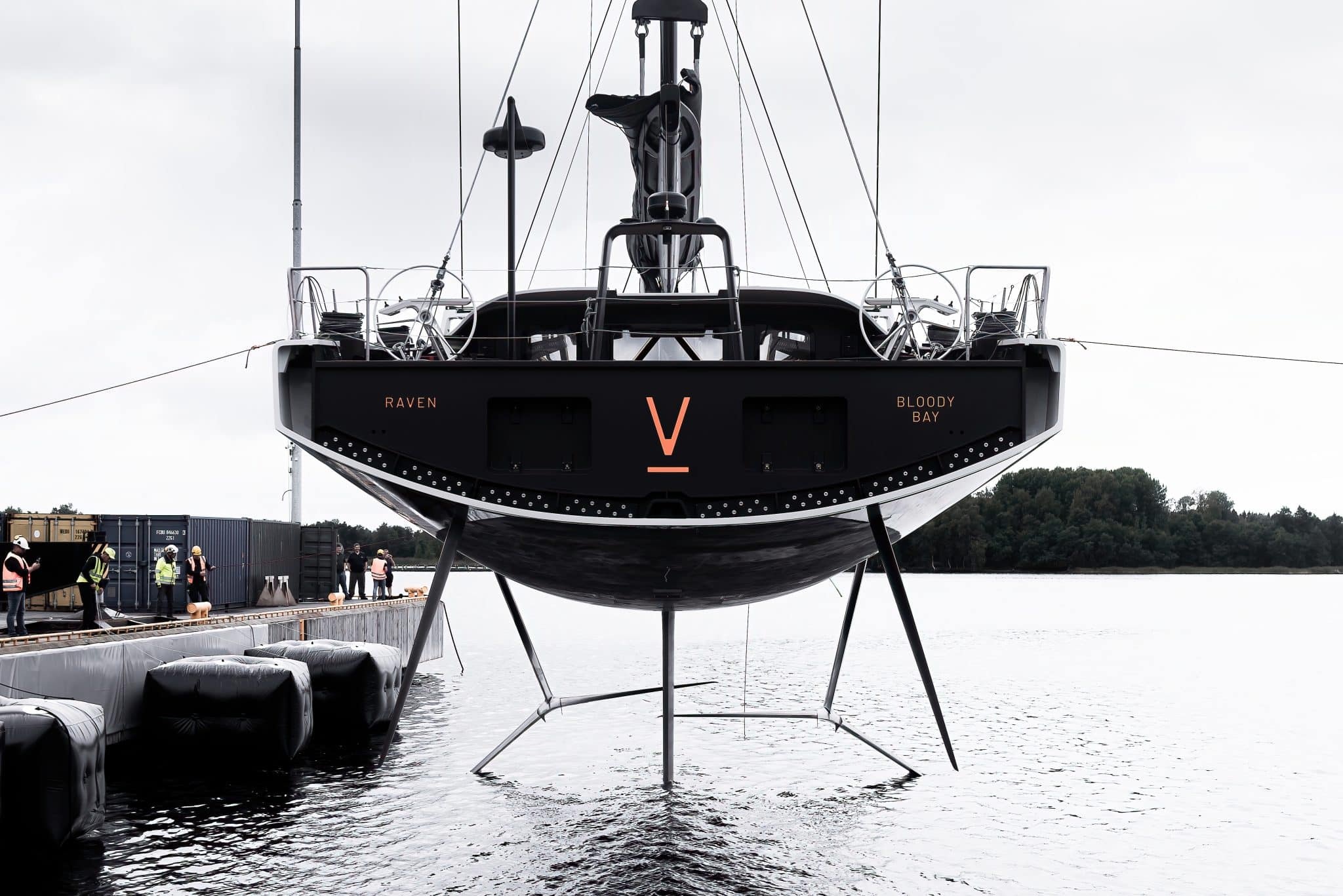
Raven is foil-assisted. The hydrofoils on adjustable side arms support part of the yacht’s displacement and contribute to the performance concept; this is not a claim that the entire yacht flies clear of the sea. The distinction matters when interpreting the photographs. The hull remains part of the waterborne system, while the extended arms give the yacht a breadth that its published hull beam alone cannot explain.
In the builder’s account of the 2026 transatlantic race, skipper Damien Durchon describes the relationship between the foils, hull stability and water ballast. The account makes clear that these are interacting tools, rather than a single device that cancels every other consideration. The sailing photograph is consequently a record of a configuration and a moment, not a universal performance promise.
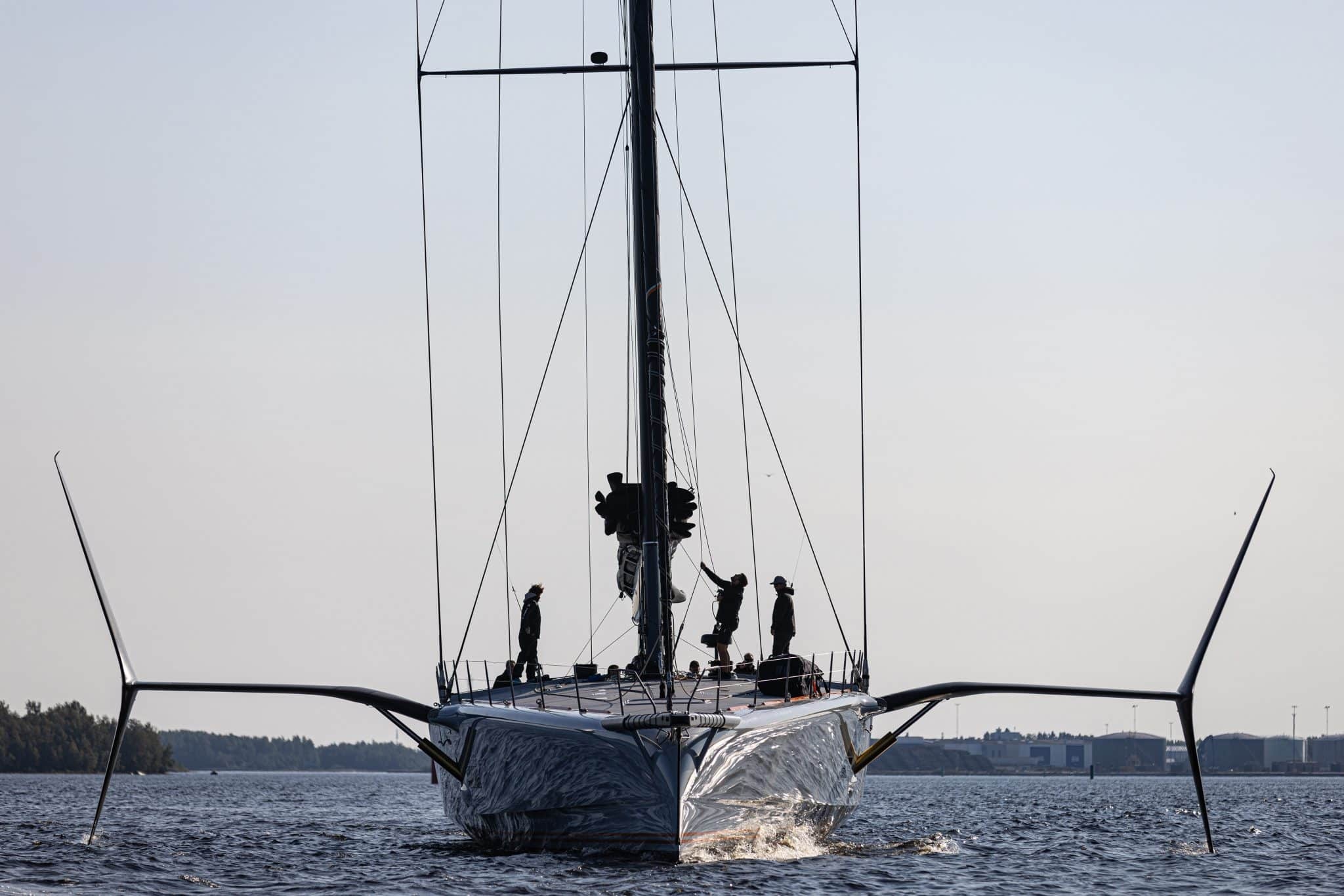
Seen head-on, the arms also change the visual character of a sailing yacht. Raven’s profile is relatively spare; its frontal view is emphatic. That contrast is part of the design’s authority. The engineering is allowed to alter the silhouette, instead of being disguised behind the conventions of a more traditional cruiser.
The cockpit is a piece of architecture
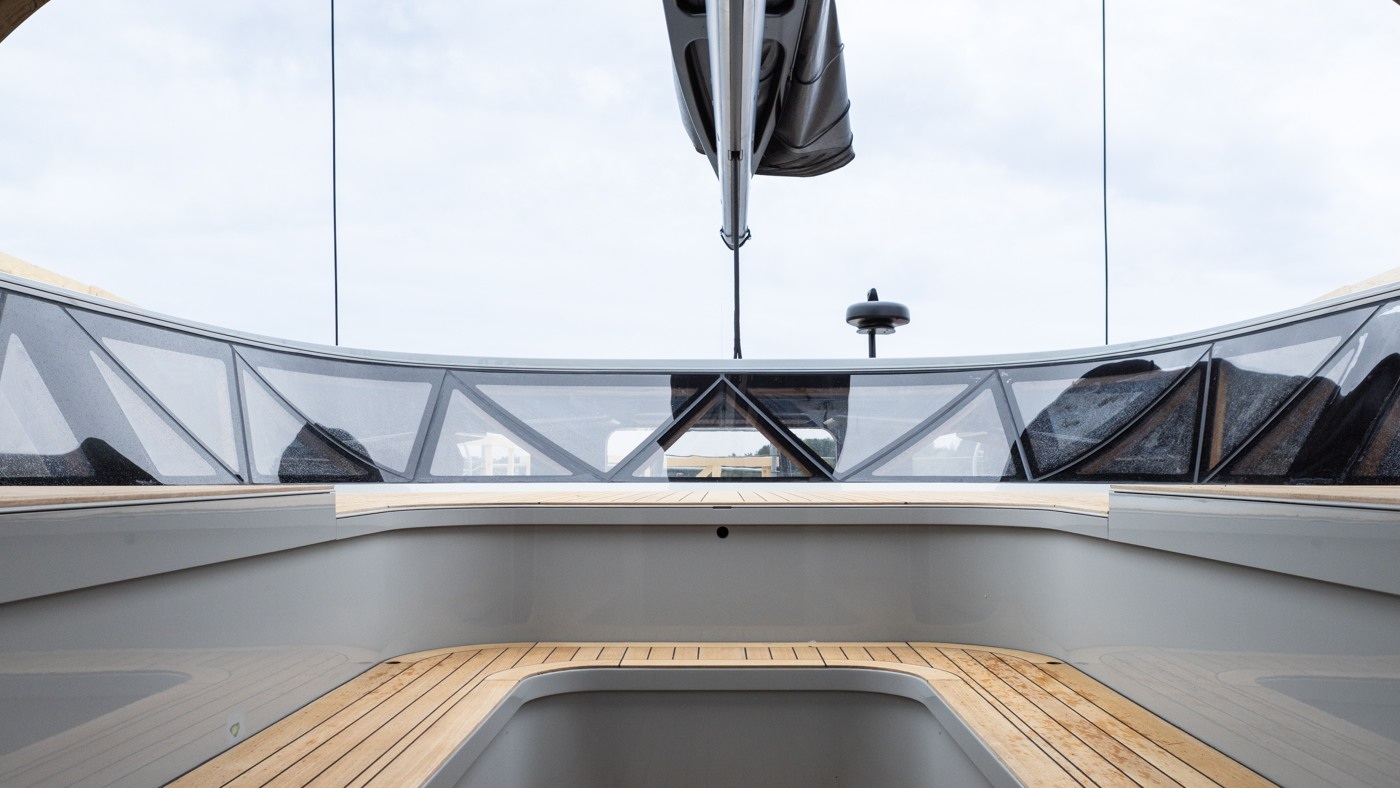
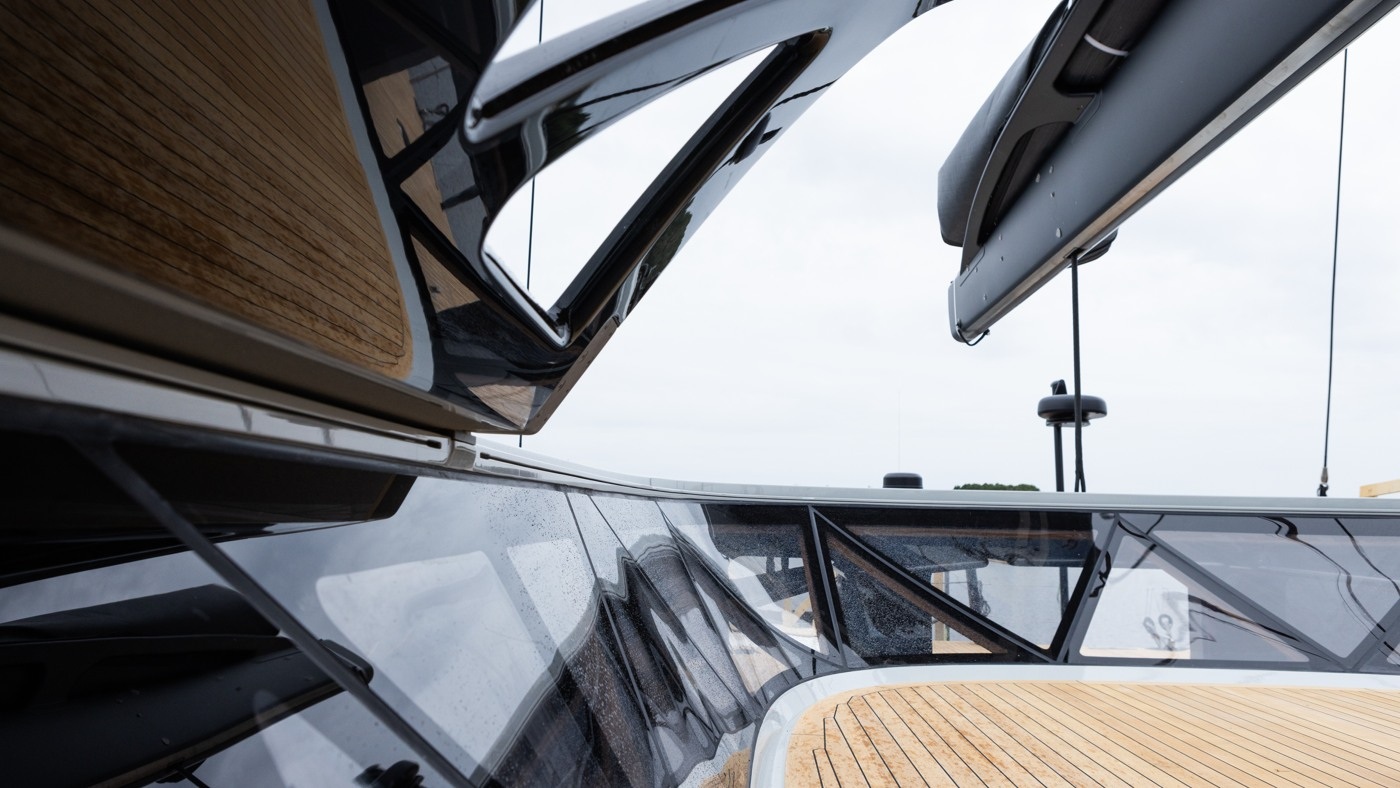
The guest cockpit, called the Bird’s Nest, is the most direct answer to the question of how people inhabit this machine. Baltic identifies the birdcage chassis of the Maserati Tipo 61 as a reference. Here, the intricate frame becomes a protected viewing position within the sailing activity, with a low windscreen and a structure that defines the edge of the space.
The official photographs make that relationship tangible. Looking out from within the cockpit, the frame crosses the view and the timber surface continues towards the deck. It is an enclosure with a particular purpose, rather than a lounge transplanted from a house. The open and sheltered states are important to the idea: the architecture has to mediate between exposure and retreat.
This is also where the usual opposition between performance and hospitality becomes less useful. A well-considered guest position can make the act of sailing intelligible. The quality of the experience comes from its proximity to the working yacht, provided that the crew and conditions support the intended use, rather than from isolating guests in another visual world.
Below deck, the structure stays in the room
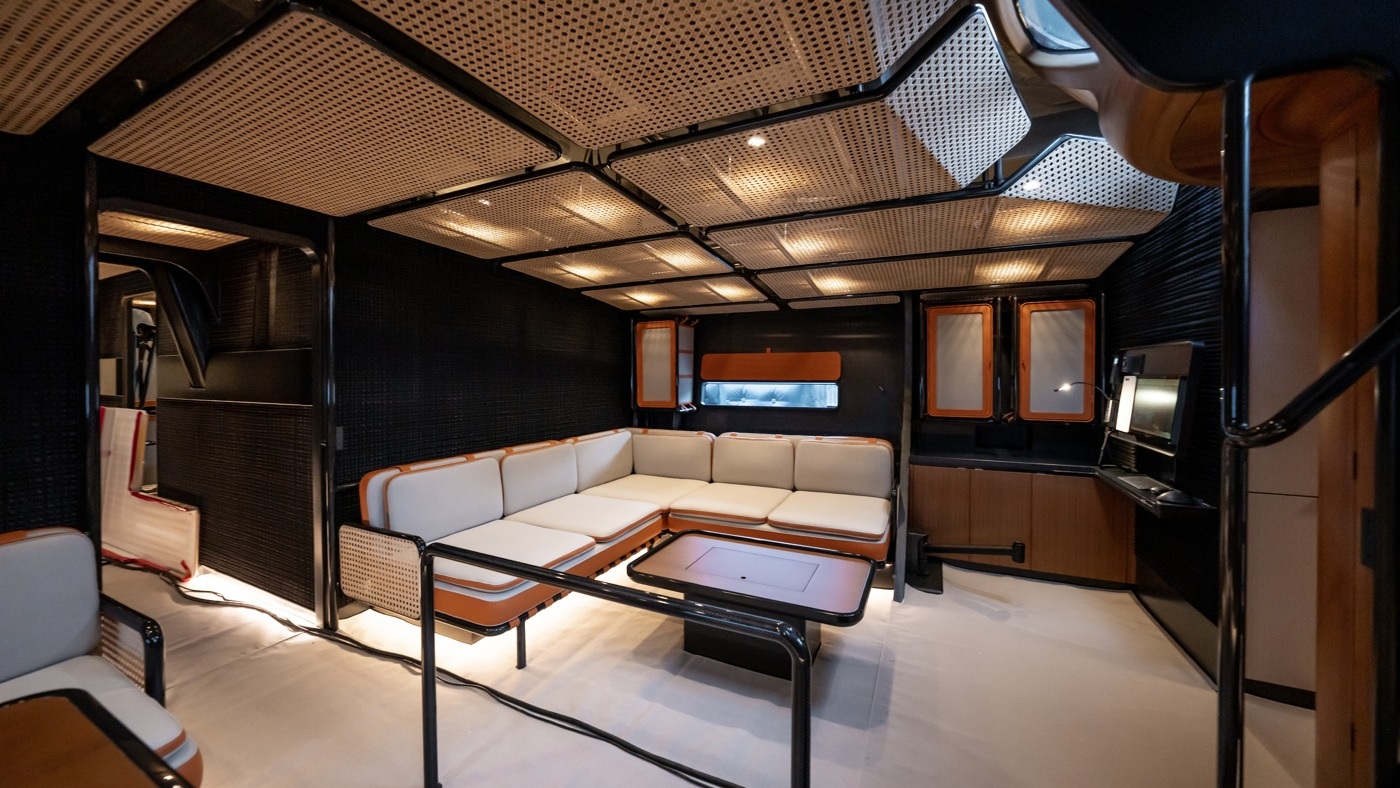
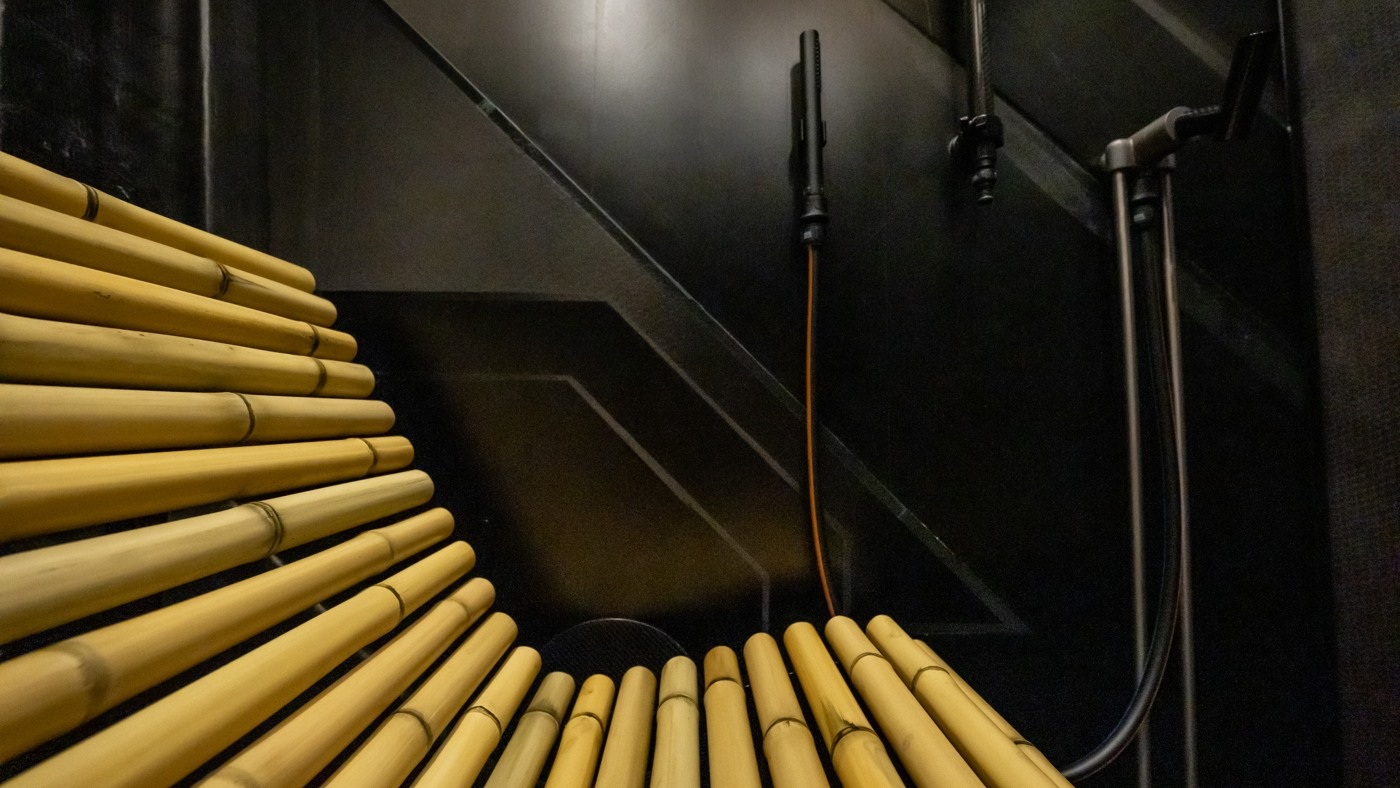
Raven’s interior is warmer than the exterior might suggest. In the photographed saloon, pale upholstery sits against dark structural members and timber-toned surfaces. The framework is neither hidden nor treated as an ornamental motif. Baltic explains that using the structure as part of the interior is one of the measures taken to save weight, with bamboo and rattan among the finishing materials.
That decision creates a distinctive rhythm overhead and along the sides. The eye can follow the members across the room, while the lighter surfaces bring texture and scale to the places people touch. The result depends on the relationship between elements: dark lines establish the construction, softer materials establish the room. Removing visual clutter need not remove character.
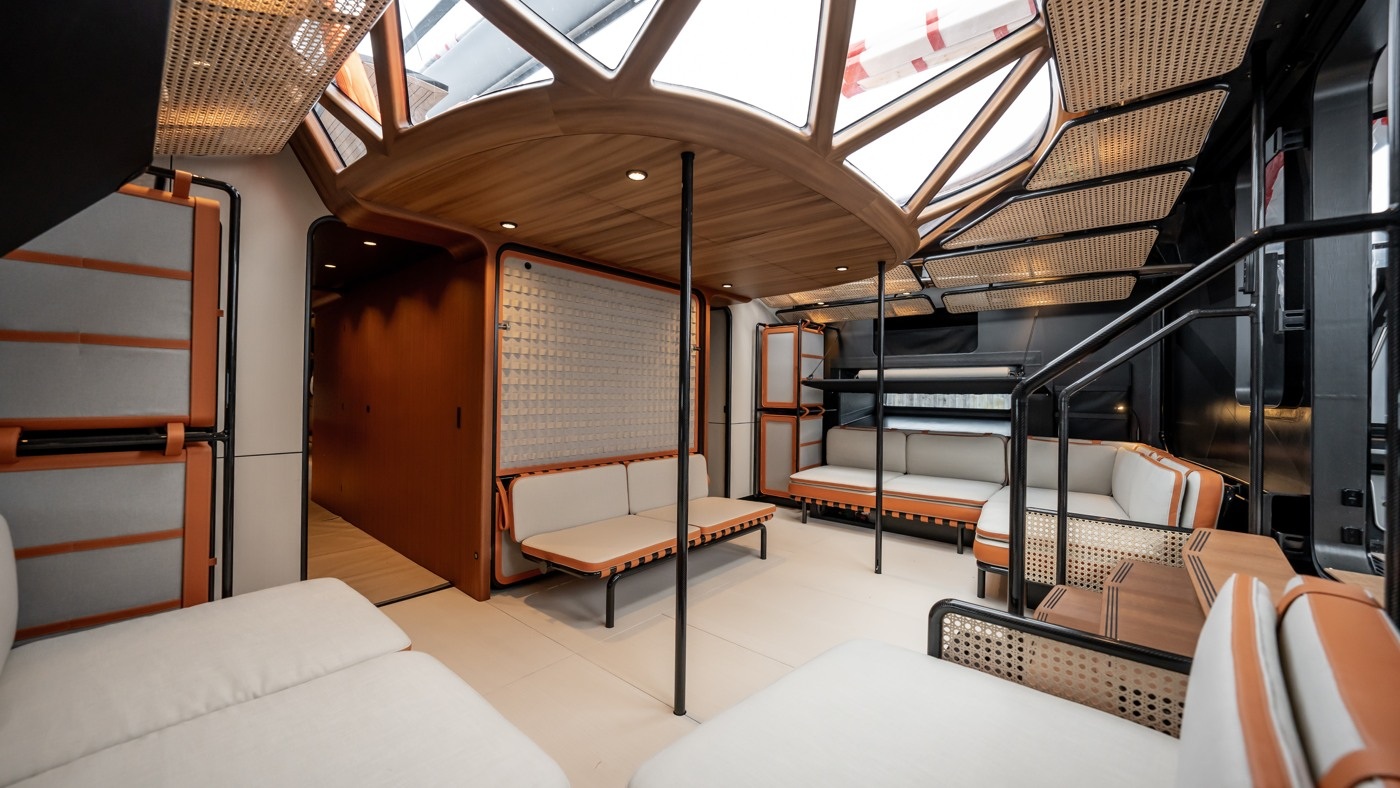
The close photographs reward attention to the transition between those two registers. A woven surface beside a black member carries a different visual weight from a broad veneered wall; a compact sitting area feels related to the enclosure above it. This is a useful lesson beyond sailing yachts. Material restraint becomes persuasive when the underlying organisation is strong enough to remain visible.
Raven nevertheless retains a fully fitted galley and air conditioning, according to the builder. These are not incidental comforts in a lightweight programme. They demonstrate that the brief was not to empty the boat of domestic life, but to decide carefully how that life could fit. A photograph cannot establish acoustic comfort or motion at sea; it can show how thoroughly the everyday spaces have been considered.
A race result with a precise meaning
On 18 January 2026, Raven finished the RORC Transatlantic Race at 10:57:47 UTC. RORC recorded an elapsed time of 6 days, 22 hours, 27 minutes and 47 seconds, monohull line honours and the IMA Trophy. The result gives the project a documented competitive chapter well after its delivery year.
Its meaning should remain exact. The 2026 race ran from Lanzarote to Antigua; the recorded achievement concerns that race and its route. It is not a general Atlantic crossing world record, nor a promise that an owner will reproduce the same passage time. Weather, routing, preparation and the people sailing the boat are part of the event, alongside the design.
What the result does add is a connection between the proposition and a real offshore undertaking. Raven can be read through its construction photographs, its inhabited spaces and a published race outcome. Those forms of evidence complement one another. The trophy does not explain the interior, and the interior does not prove the racing numbers; together they make a more complete portrait.
Raven, in proportion
The builder’s principal dimensions are useful because they locate the design in physical terms. In particular, the displacement figure is explicitly a Light Craft Mass figure; it should not be confused with an all-up racing condition including everything carried on a particular passage.
| Reference | Published figure | How to read it |
|---|---|---|
| Length overall | 34.00 metres | The yacht’s overall scale, not the model number converted into metres. |
| Hull beam | 7.40 metres | A hull dimension; the foil arms alter the visible sailing envelope. |
| Draught | 4.80 metres | A material consideration for itinerary and berth discussions. |
| Displacement | 55 tonnes, Light Craft Mass | The builder’s stated measurement condition, not a passage loading guarantee. |
| Delivery | 2023 | Separate from the documented January 2026 race result. |
The most durable interest of Raven is this alignment between purpose and expression. The exterior shows the machinery of sailing; the cockpit gives people a place within it; the interior admits the structure into the domestic space. Rather than asking luxury to conceal the performance brief, the yacht finds a language of luxury inside it.
Sources & credits
Sources and methodology
This is a source-led design study, not a sea trial or a report of an onboard visit. Dimensions, delivery and design credits were checked against Baltic’s Raven project record. The interior and cockpit were examined through the builder’s 2025 design and photography dossier, with the 2023 trials account used for chronology. The race time and honours come from RORC’s finish report; the foil and ballast discussion is attributed to Baltic’s subsequent race account. Official photographs show different documented stages and conditions, not a single continuous voyage. Sources reviewed on 4 November 2026.